
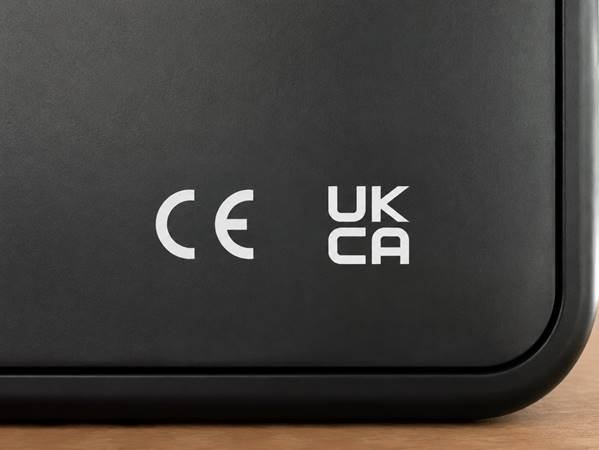
If you have been involved in cross-border trade with Great Britain, or have purchased electronic or toy products sold locally, you may have seen the four-letter “UKCA” mark on the bottom of products or on packaging. Some people regard it as “British quality certification”, some confuse it with the EU CE mark, and some practitioners have misunderstandings about the rules, resulting in products being unable to go on the market normally. The basic logic of the UKCA mark is not complicated, but there are many easily confused boundaries and details.
1. Core Definition and Boundaries of the UKCA Mark
The official full name of UKCA is UK Conformity Assessed (abbreviated as UKCA), which is one of the marks used by manufacturers to declare that products comply with applicable UK domestic regulations. In simple terms, on the premise that the UKCA compliance path is applicable and the corresponding conformity assessment, document preparation and marking requirements have been completed, affixing the UKCA mark means that the manufacturer confirms that the product meets the basic requirements such as safety and environmental protection stipulated by the corresponding UK regulations. It should be particularly noted that UKCA is only a part of the compliance declaration, and cannot alone prove that the product fully meets all marketing conditions; the current Great Britain market still accepts the use of the CE mark for some eligible products, and UKCA is not the only compliance mark.
The UKCA mark is affixed by the manufacturer or its authorized entity, and indicates that the manufacturer has completed the conformity assessment in accordance with applicable UK regulations; most products can be assessed by the manufacturer themselves, but for products that require third-party participation as stipulated by regulations, the assessment by the specified UK Approved Body must be completed first. It is not a “certification certificate” issued by a third-party institution, nor does it require prior review and sealing by the UK government. For example, for products such as ordinary USB chargers that are eligible for the self-declaration path, manufacturers can affix the mark in accordance with regulations after completing tests and confirming that they meet the requirements — this is significantly different from the perception of many people that “the mark can only be affixed after government or third-party certification”.
Regarding the role of UKCA, there are three common misunderstandings that need to be clarified in advance:
First, it is not a proof of quality grade. UKCA only means that the product meets the minimum safety compliance requirements stipulated by UK regulations, such as no basic safety problems like electric leakage or excessive toxic and harmful substances, but it does not mean that the product’s performance and durability reach “excellent” or “high quality” levels, similar to how passing an exam does not mean getting a full score.
Second, it is not an endorsement of the UK government, nor is it a “Made in UK” origin mark. No matter which country or region the product is produced in, as long as it meets the requirements of the corresponding UK regulations, it can be affixed with the UKCA mark in accordance with the regulations. It has no direct connection with the place of origin, nor does it mean that the UK government guarantees the product quality.
Third, affixing the UKCA mark does not equal compliance. The mark is just an external visual marker, which must be supported by complete compliance assessment and technical documents. If the corresponding materials cannot be provided during random inspections by regulatory authorities, even if the mark is affixed, it is considered false compliance and corresponding responsibilities shall be borne.
There are three main groups of people who need to pay attention to UKCA rules: first, product manufacturers, cross-border exporters, and e-commerce sellers — as long as regulated products are to be sold in Great Britain, they need to comply with the corresponding compliance marking rules; second, local UK importers, distributors, and brand owners — they need to verify whether the marks of the products they operate meet the requirements, and shall not sell products that they know are non-compliant; third, ordinary consumers — they can use the UKCA mark as a preliminary reference clue for compliance, but need to note that the mark itself may be used incorrectly or falsely, and cannot directly judge the product’s quality, safety level or whether it has passed third-party testing based solely on the mark.
2. Launch Background and Legal Positioning
The core background of the emergence of the UKCA mark is Brexit. The UK officially withdrew from the EU on January 31, 2020, and the Brexit transition period ended on December 31, 2020. Before that, as an EU member state, products entering the UK market only needed to comply with the EU CE mark rules, without a separate UK domestic mark. To establish an independent domestic product safety supervision system, the UK officially implemented the UKCA mark system on January 1, 2021.
In the initial stage of the implementation of the UKCA system, most technical requirements were converted from EU EN standards to UK BS standards, with small differences from CE requirements; if the UK adjusts its domestic regulations in the future, the technical requirements of the two may gradually diverge.
In the UK’s product safety supervision system, the UKCA mark is a “compliance result mark”. The entire system can be divided into three layers: the top layer is regulations, that is, legal provisions, which stipulate which products need to be regulated and what basic requirements they need to meet, for example, electronic products must not leak electricity, and toys must not have easily detachable small parts; the middle layer is standards, that is, specific operation methods, which tell enterprises how to test and how to prove that products meet regulatory requirements, equivalent to a unified “operation instruction manual”; the bottom layer is compliance marks, including UKCA, eligible CE, etc., which are marks affixed by enterprises after completing compliance assessment and confirming that products meet the requirements, used to inform regulatory authorities and consumers that the product has completed the compliance process in accordance with the rules.
UKCA is a type of statutory compliance mark. Regulated products need to use the currently applicable statutory marks (including UKCA, eligible CE or other special marks) and meet all requirements of the corresponding path before they can be marketed and sold in Great Britain. In case of violation, penalties such as product removal from shelves, confiscation, and fines may be imposed, and relevant responsible persons with serious circumstances shall also bear corresponding legal liabilities.
3. Scope of Application: Region, Product and Boundaries
The first misunderstanding many people have about UKCA is that “UKCA is required throughout the UK”. In fact, there are obvious differences in marking rules in different regions of the UK. UKCA is a conformity assessment mark mainly corresponding to the Great Britain (GB, i.e., England, Scotland, Wales) market; due to the special arrangements of the Brexit agreement, the applicable mark for Northern Ireland (NI) depends on the specific product regulations and conformity assessment path, usually based on the CE mark. When a UK Approved Body is used to complete the third-party assessment, the UKNI mark must also be affixed, and the UKCA mark alone has no compliance effect in the Northern Ireland market.
After confirming that the sales market is the GB region, the next step is to determine whether the product is within the scope of control of UKCA-related regulations. Whether it is regulated shall be judged according to the intended use, function of the product and the specific designated regulations applicable, not just by the product name. The following are examples of common categories regulated by UK product safety or technical regulations, whether UKCA is required, whether CE is accepted, and whether third-party assessment is required shall all be subject to the regulatory requirements of the corresponding category:
• Electronic and electrical products (small home appliances, chargers, digital accessories, ordinary radio equipment, etc.)
• Toys, children’s products, ordinary personal protective equipment
• Ordinary machinery, construction products, Class I medical devices, pressure equipment, ordinary measuring instruments
In short, most industrial products that previously required the CE mark in the EU market usually need to consider the corresponding compliance marking requirements when entering the GB market, but CE categories cannot be directly equated with UKCA categories.
Products or situations that are usually not handled according to the UKCA general path mainly include the following categories. If the product falls under a UKCA designated regulation at the same time, it must still be checked separately according to that regulation:
• Food, pharmaceuticals, cosmetics, chemicals, etc. are subject to special regulations (e.g., chemicals are subject to UK REACH regulations), and marking requirements shall be implemented in accordance with the corresponding special rules;
• Medical devices, construction products, vehicles, etc. are subject to special type approval or classified supervision systems, and marking requirements and transition arrangements shall be confirmed separately according to specific categories, and general rules cannot be directly applied;
• Service-type non-physical products such as education, consulting, and finance are not subject to product compliance marking rules;
• Non-commercial items for personal use and products only exported to non-GB markets do not need to consider UKCA requirements.
Even for products within the scope of control, compliance requirements cannot be simply judged by the “low risk/high risk” dichotomy. Whether a product requires the participation of a third-party institution depends corely on the conformity assessment module stipulated by the corresponding regulations, and the risk level can only be used as a preliminary judgment clue: most ordinary low-risk consumer products can follow the self-declaration path without the intervention of a third-party institution; some medium and high-risk products require the participation of a UK officially recognized conformity assessment body, that is, a UK Approved Body, in the assessment. The final requirements must be subject to the regulations of the corresponding category. In addition, boundary situations such as customized products, small-batch products, R&D samples, and second-hand products also need to be verified separately according to the regulations of the corresponding category, and general rules cannot be directly applied.
4. Compliance Prerequisites and Operation Procedures
No matter which compliance path is adopted, the following core matters need to be confirmed before affixing the UKCA mark (specific requirements are subject to applicable regulations):
First, the product does meet the basic requirements such as safety and performance of the corresponding UK regulations, which is the basis of compliance;
Second, complete technical documents are available, including product design specifications, test reports, risk assessment reports, instruction manuals, etc. The documents shall be kept in accordance with regulations and can be provided to regulatory authorities for verification at any time;
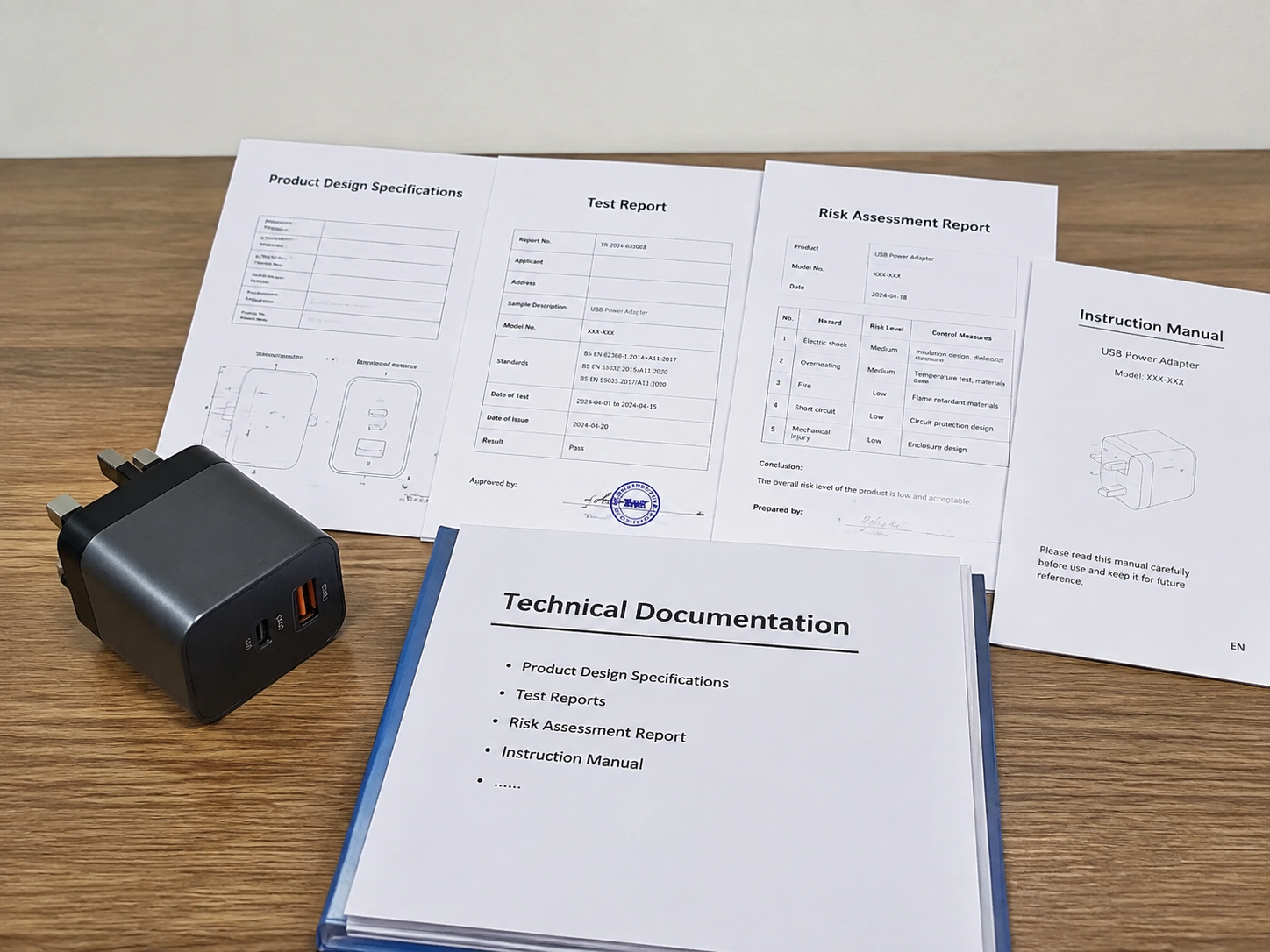
Third, confirm first who will act as the importer for the GB market or the UK domestic responsible entity required by regulations, as well as its name, address and document retention obligations;
Fourth, if regulations require third-party conformity assessment, relevant assessment documents issued by a UK Approved Body with corresponding category qualifications must be obtained.
For products eligible for the self-declaration path, the operation usually follows the following steps:
Step 1: Confirm the UK designated regulations and corresponding standards applicable to the product — different categories such as home appliances, chargers, lamps, and radio equipment correspond to different regulations and standards, and the same rule cannot be applied indiscriminately. The following are only examples: ordinary small home appliances are mostly subject to the Electrical Equipment (Safety) Regulations, and the corresponding safety standards are mostly the BS EN 60335 series. It is necessary to check the applicable requirements in combination with the specific functions of the product to avoid misapplying regulations or standards;
Step 2: Complete the product compliance assessment by yourself, including necessary tests and risk assessments, to ensure that the product meets all applicable requirements;
Step 3: Organize a full set of technical documents, including design drawings, test reports, risk assessment reports, instructions for use, manufacturer information, etc., and keep them for inspection as required;
Step 4: Sign the UK Declaration of Conformity (UK DoC), which is a compliance commitment letter issued by the enterprise, which must clearly indicate product information, applicable regulations and standards, information of the manufacturer and relevant responsible entities, etc.;
Step 5: Affix the UKCA mark in accordance with official specifications, and the product can be officially marketed in the GB region.
If applicable regulations require third-party conformity assessment, in addition to completing the above basic work, it is necessary to entrust a UK Approved Body with corresponding category qualifications to participate in the assessment of the corresponding module — the assessment form may include type testing, quality system audit, etc., and a unified “conformity assessment report” is not issued. The number of the corresponding UK Approved Body needs to be marked next to the UKCA mark only when the corresponding regulations require the marking of the institution number.
Regarding the document retention period, the retention period of technical documents and declarations of conformity shall be implemented in accordance with the corresponding regulations. For most common products, it is 10 years, and for special categories, it may be longer or shorter.
The role boundaries of different responsible entities shall be subject to the regulatory requirements of the corresponding category, and there is no unified role setting applicable to all products. Under normal circumstances: the manufacturer bears the primary responsibility for product compliance, and is responsible for product design, compliance assessment and issuance of the declaration of conformity; the importer who first places products from overseas into the GB market needs to verify the validity of the product mark, confirm that its own information marking meets regulatory requirements, and keep relevant compliance documents as required; distributors need to ensure that the marks of the products they sell meet the appearance specifications, and shall not sell products that they know are non-compliant. If applicable regulations clearly require, non-UK manufacturers need to designate a UK domestic responsible entity (the specific name may be compliance responsible person, authorized representative, responsible economic operator, etc., subject to the wording of the corresponding regulations) to bear joint and several liability under the corresponding regulations.
5. Differences and Coexistence Rules of UKCA, CE and UKNI Marks
Many people are most concerned about the difference between the UKCA mark and the EU CE mark. First, let’s clarify the premise of the comparison: the following comparisons are all for conformity declaration marks for product market access, covering common categories such as ordinary consumer electronics, toys, and ordinary machinery. The core logic is “determine the sales market first, then talk about marking requirements”, and do not discuss the validity of marks without reference to the market.
For ease of understanding, the core differences are sorted out as follows:
| Comparison Dimension | UKCA Mark | CE Mark |
| Main Applicable Market | Great Britain (GB) region of the UK | EU/European Economic Area (EEA) |
| Legal Basis | UK domestic designated regulations | EU directives/regulations |
| Third-Party Institution Requirements | Whether a UK Approved Body is required depends on applicable regulations and conformity assessment modules | Whether an EU Notified Body (NB) is required depends on applicable EU regulations and conformity assessment modules |
| Domestic Responsible Entity Requirements | Confirm whether a UK domestic responsible economic operator is required according to corresponding UK regulations | Confirm whether an EU domestic responsible economic operator is required according to corresponding EU regulations |
| Standard Source | Initially mostly UK BS standards converted from EU EN standards, may be adjusted with UK regulations in the future | EU unified EN standards |
Many enterprises that have completed CE compliance will ask: can products with the CE mark still be sold in the GB region? According to the currently publicly available rules of the UK government, the acceptance of the CE mark in the GB region is limited to product categories that the UK authorities still explicitly accept CE for. Eligible products can continue to use the CE mark without being forced to replace it with UKCA; special categories such as medical devices, construction products, vehicles, and some radio equipment are judged according to their respective transition periods or separate lists, and general rules do not apply. Products applicable to this rule must check three conditions item by item: first, whether the regulations applicable to the product are within the scope of CE explicitly accepted by the UK; second, the conformity assessment institution and assessment process used for the product meet the requirements of the regulation; third, the use of the CE mark complies with the specifications of the corresponding EU regulations. The specific acceptance scope and conditions shall be subject to the latest list published on GOV.UK. UKCA-related rules are still being dynamically adjusted, and transition period information from early years on the internet is easily outdated.
If the product is targeted at both the EU and GB markets, both CE and UKCA marks can be affixed at the same time, as long as three conditions are met: first, the product meets the corresponding regulatory requirements of both the UK and the EU, and you cannot affix both marks if it only meets the requirements of one side; second, the two marks do not cover each other, and their respective sizes and clarity meet their own specification requirements; third, a full set of technical documents and declarations of conformity required by both sides are available at the same time.
Finally, let’s clarify the marking rules for the Northern Ireland (NI) market, which are divided into three core situations: first, most regulated products still need to meet EU requirements and have the CE mark, and the UKCA mark alone is invalid in the NI market; second, if the third-party conformity assessment of the product is completed by a UK Approved Body (rather than an EU Notified Body NB), the UKNI mark must be affixed next to the CE mark, and UKNI cannot be used alone; third, the marking requirements for special categories such as medical devices need to be confirmed separately according to the corresponding special regulations.
6. Appearance Specifications and Correct Affixing Methods
The UKCA mark has clear official specifications, and incorrect affixing may also be judged as non-compliant.
First are the style requirements: the UKCA mark consists of four uppercase letters “UKCA”, with officially fixed proportions and spacing. It should use the official pattern published on GOV.UK or be reproduced according to its proportions. Do not copy it from e-commerce pictures, font files or materials with national flag patterns, let alone stretch, flatten, change the font at will, or add additional decorative patterns. Special reminder here: there is no “round UKCA mark with the British flag”, and such marks are all incorrect styles.
Second are the size requirements: except for very small products or as otherwise stipulated by corresponding regulations, the minimum height of the UKCA mark shall not be less than 5mm.
There are no mandatory requirements for color. It can be monochrome, reversed white or other colors, as long as it has a clear contrast with the background and is not easy to fade. If corresponding regulations have special requirements, those shall prevail.
The marking position needs to be judged according to hierarchical logic, and is limited by applicable regulations and the affixability of the product: usually, it is preferred to affix it on a conspicuous position of the product body (such as the bottom, side) to facilitate identification by supervisors and consumers; it can only be affixed on the minimum sales packaging when the product itself is too small to be directly marked, or when applicable regulations allow; if regulations require marking in accompanying documents, it is necessary to ensure that the mark is clearly associated with the core product information (model, responsible entity information, etc.) and easy to find. No matter where it is affixed, the mark shall be clear, visible and durable, and it is forbidden to affix it on positions that are easy to wear, easy to fall off, or will be covered.
The following are several of the most common incorrect marking situations, which can be checked against:
1. The mark size is less than 5mm (except for very small products or as otherwise stipulated by regulations);
2. Overlapping and covering with other marks, making it impossible to clearly identify;
3. Modifying the proportion or font of the mark without authorization, or adding additional decorative patterns;
4. Affixing the mark in advance before the product has completed the compliance assessment, which is false marking, and the penalty is relatively heavy once found.
7. Quick Judgment Methods and Common Misunderstanding Avoidance
For most ordinary scenarios, the core judgment logic can be quickly sorted out in three steps, and the final conclusion shall be subject to corresponding regulations and the latest official rules:
Step 1: Look at the sales market: Is the product sold to England, Scotland, Wales (Great Britain/GB) region? When sold to Northern Ireland (NI), the EU or other markets, UKCA is not the access mark for that market, and it needs to be judged according to locally applicable marks and special regulations.
Step 2: Look at the product category and applicable regulations: Confirm whether it falls within the scope of designated regulations covered by UKCA according to the product’s function and intended use; for food, pharmaceuticals, cosmetics, chemicals, etc., priority should be given to checking special systems, and do not draw conclusions only based on “whether it is a physical product”.
Step 3: Look at the conformity assessment path: If the product is within the scope of UKCA control, then judge according to regulatory requirements whether to follow the self-declaration path or the third-party assessment path that requires the participation of a UK Approved Body.
After completing the three-step core judgment, two more details can be checked additionally: first, whether the product is within the scope of the CE mark accepted by the UK authorities, and if eligible, the CE mark can be used directly without being forced to replace it with UKCA; second, the responsible entity, technical document retention and mark affixing specifications required by corresponding regulations can be implemented as required.
The most common pitfalls for beginners mainly include the following categories, which can be avoided in advance:
Misunderstandings about scope of application:
• Mistaking that UKCA is universally applicable in the EU: The EU only recognizes the CE mark, and UKCA has no compliance effect in the EU market. Even if the product is affixed with UKCA, it will still be judged as non-compliant when sold to the EU.
• Mistaking that all products sold in the UK require UKCA: Only physical products regulated by UK designated product safety regulations need to consider UKCA. Food, pharmaceuticals, service products, and non-commercial items for personal use are not within the general coverage. Products with composite functions need to be judged separately according to the main applicable regulations.
Policy misunderstandings:
• Mistaking that the transition period for all products is the same: The transition arrangements for different categories vary greatly. Special categories such as medical devices, construction products, and vehicles have independent rules, and the policies for ordinary industrial products cannot be directly applied.
• Mistaking that the CE mark has completely become invalid in the UK: As of now, most eligible ordinary industrial products can still use the CE mark in the GB region without being forced to replace it with UKCA. Specifically, it is necessary to check whether the applicable regulations for the product are within the acceptance scope.
Operational misunderstandings:
• Mistaking that self-declaration means affixing the mark casually: Self-declaration only means that prior review by a third-party institution is not required, but enterprises must have complete technical documents, test reports, risk assessments and other materials as support. If they cannot be provided during regulatory random inspections, they will also face penalties.
• Mistaking that any testing institution can conduct UKCA-related assessments: Reports from testing laboratories can be used as evidence for technical documents; but when applicable regulations require the participation of a UK Approved Body, laboratory reports cannot replace the statutory conformity assessment completed by that body. Only UK Approved Bodies with corresponding category qualifications can undertake the third-party conformity assessment work required by regulations.
Responsibility misunderstandings:
• Mistaking that overseas sellers definitely do not need a UK domestic responsible entity: Whether a UK domestic responsible economic operator is required depends on the requirements of the corresponding product regulations. Some regulations clearly require non-UK manufacturers to designate a domestic authorized representative or for the importer to bear corresponding responsibilities, which needs to be checked in advance.
If you encounter uncertain situations, prioritize verifying information through the following official channels:
First, the product compliance and UKCA special page on the UK government’s GOV.UK website, which is the most authoritative source of general rules and the fastest to update;
Second, the official website of the UK regulatory authority for the corresponding product category. For example, for medical devices, you can check the relevant pages of the Medicines and Healthcare products Regulatory Agency (MHRA). Special rules for different categories will be issued by the corresponding competent authorities;
Third, the UK Approved Body directory officially published by the UK, where you can query institutions with corresponding category qualifications, and consult the institutions for specific assessment issues.
It should be noted that the rules for Great Britain and Northern Ireland are different. For special situations such as customized products, R&D samples, and second-hand products, do not directly apply the general rules. All rules are subject to the latest official announcements.
Core Judgment Abilities to Master After Learning
In general, UKCA is one of the product conformity assessment marks for the Great Britain market, and its essence is the manufacturer’s compliance declaration. You can avoid most common misunderstandings by checking the market, category, and assessment path in order according to the rules. After reading this article, you will have the following basic judgment abilities:
1. Able to accurately explain the essence and role of the UKCA mark, and distinguish it from quality grade certificates, government endorsements, and origin marks
2. Able to clarify the applicable region of UKCA, and distinguish the different marking requirements between Great Britain (GB) and Northern Ireland (NI) of the UK
3. Able to quickly judge whether the products you operate are within the scope of UKCA control and whether they need to be marked
4. Able to distinguish the applicable scenarios and coexistence conditions of the three marks UKCA, CE, and UKNI
5. Able to identify the correct style of the UKCA mark and check common marking errors
6. Know which official channels to use to query the latest requirements when rules are uncertain