
Merchants selling charging products to the South African market are often confused by ICASA wireless certification: some say all chargers need it, some say FCC certification can replace it, and others say wireless charging receivers don’t need it at all, with all kinds of conflicting claims. Today, focusing on the actual scenarios of charging products, we will thoroughly explain South Africa’s ICASA wireless certification from basic judgment to pitfall avoidance tips, to help you avoid detours.
Basic Knowledge: Mandatory Access Rules for Wireless Devices in South Africa
ICASA stands for the Independent Communications Authority of South Africa, the official body that regulates wireless spectrum and communication equipment in South Africa. The “ICASA wireless certification” we often refer to has the official name **ICASA Wireless Equipment Type Approval**. For radio equipment that falls within ICASA’s regulatory scope and is not covered by current exemptions, type approval is usually required before entering the South African market, being sold or used; the specific situation still needs to be verified against equipment category, frequency band, intended use and current exemption regulations.
A core rule must be clarified first: type approval is usually tied to the product model and its radio frequency configuration specified in the application, and cannot automatically cover other products based solely on brand or product series. Whether supplementary or re-approval is required for different hardware, antennas, frequency bands or wireless configurations shall be confirmed item by item by ICASA or an accredited body. For example, a 15W wireless charger and a 25W wireless charger of the same brand cannot naturally share one certificate; even the Bluetooth version and WiFi version of the same product need to be judged whether separate assessment is required based on specific wireless configuration and technical parameters.
Many people ask why South Africa has this certification. In fact, the logic is very simple: radio frequency bands are like public roads, each lane has a specified purpose — some are for mobile phone communication, some for WiFi, and others are dedicated frequency bands for aviation and emergency services. If unqualified wireless devices randomly “grab lanes”, it will cause communication chaos, which may interfere with household electronic devices at best, and affect public safety at worst. ICASA’s wireless certification serves as the entry gate to ensure that all wireless devices on the market use frequency bands in accordance with regulations and will not cause random interference.
If you are in the charging product business, here is a quick judgment conclusion for you first, so you don’t have to read the whole article first:
• **Most likely required**: Charging/power products with active wireless transmission functions, such as wireless charging transmitter bases, smart chargers with Bluetooth or WiFi, shared power banks with cellular modules, etc.;
• **Most likely not required**: Purely wired products without any radio modules, such as ordinary wired chargers, conventional USB-C data cables, etc.;
• **Doubtful and need verification**: Wireless charging receivers (such as power banks with wireless charging input), very low-power wireless devices, products with built-in wireless modules but not publicly promoted — these cannot be decided directly, and need to be confirmed in combination with regulations and product parameters.
How to Judge Whether My Charging Product Needs ICASA Certification?
The quick conclusion only applies to common situations. For products with blurred boundaries, a more systematic framework is needed for judgment. Let’s start with the boundaries of different device types:
The first type is charging products with Bluetooth and WiFi transmission functions, such as smart chargers that can connect to an APP to adjust power, and multi-port charging stations with WiFi. Such products usually need to undergo ICASA applicability assessment; if they are not within the current exemption scope, type approval is usually required, and the final conclusion shall be confirmed in combination with frequency band, power, bandwidth and equipment category.
The second type is charging products with cellular modules, such as shared power banks with 4G and outdoor power supplies with 5G. These belong to public mobile communication equipment and usually require ICASA certification. Some products may also involve operator network access requirements, which will be explained in detail later.
The third type is wireless charging transmitters, that is, the wireless charging bases where we usually place our phones. Such products involve near-field power transmission. Whether certification is required needs to be confirmed in combination with operating frequency, power and corresponding technical standards. **Compliance cannot be judged solely by whether there is a Qi mark** — Qi is an industry standard for wireless charging, which is completely different from South Africa’s regulatory requirements.
The fourth type is wireless charging receivers, such as power banks with wireless charging input function. For such products, we cannot directly say “definitely not required”. We must first confirm whether the product contains radio reception or wireless power transmission functions regulated by ICASA, and then judge in combination with operating frequency, field strength or power, intended use and current exemption regulations. Wireless charging receivers are not necessarily subject to ICASA type approval, nor can it be concluded that certification is mandatory or unnecessary solely based on “having wireless charging reception function”.
The fifth type is purely wired charging and transmission products, such as ordinary USB-C chargers, data cables, and wired power banks. Such products do not have radio transmission, reception or wireless power transmission functions regulated by ICASA, and usually do not involve ICASA wireless approval, but need to meet other South African import requirements such as safety and energy efficiency.
For combined devices with multiple wireless functions, such as charging stations with WiFi, Bluetooth and wireless charging functions at the same time, all wireless functions must be assessed separately, and the strictest requirements shall be followed.
5 Boundary Scenarios That Are Most Easily Misjudged
In actual operation, many people fall into pitfalls here, so be sure to pay attention:
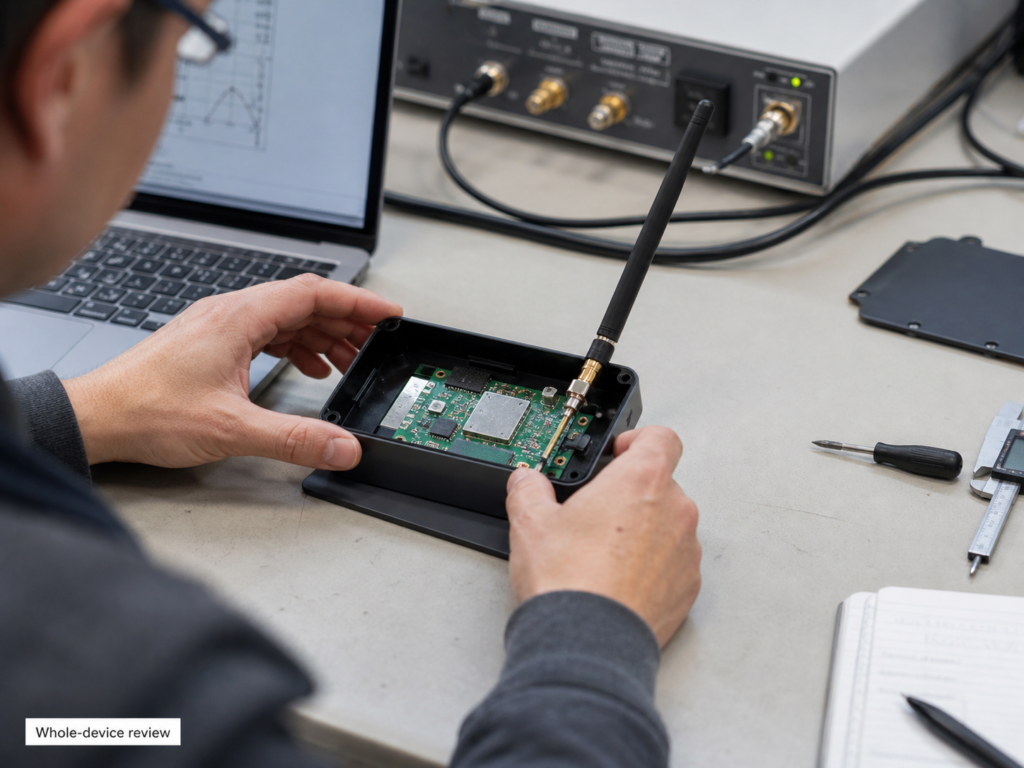
1. **Certified wireless module ≠ whole machine exemption from certification**: Using a wireless module that has passed ICASA certification only proves that the module itself is compliant, and cannot replace the whole machine certification. After the module is installed in the whole machine, the housing, antenna and circuit layout will all affect the final radio frequency performance, so the whole machine still needs to be assessed, but some test items may be simplified.
2. **Products with built-in wireless modules but not promoted still need assessment**: You cannot only check whether the product detail page mentions wireless functions. Some products may have built-in Bluetooth or WiFi modules to implement certain hidden functions (such as automatic firmware upgrade and data upload). As long as there is such a module, assessment is required, regardless of whether it is promoted or not.
3. **Multiple configurations of the same product cannot naturally share one certificate**: For example, the same charging station has a Bluetooth version, a WiFi version and a cellular version. Different configurations have different wireless parameters, so they must be judged and certified separately, and one certificate cannot be assumed to be universally applicable. Whether they can be included in the same approval scope depends on the hardware, antenna, software configuration and ICASA’s review results.
4. **There is no general exemption rule for non-sale samples for engineering/display/testing**: Non-sale samples shall not be naturally regarded as exempt from certification. Before import, it is necessary to confirm with ICASA, local importers and customs whether temporary permits, exemption documents or other declaration materials are required according to the purpose of testing, display or temporary use.
5. **Very low-power devices cannot be self-judged as exempt**: Don’t think “my product has very low power, so it definitely doesn’t need a certificate”. Whether exemption applies must be checked against ICASA’s current exemption list. Those not on the list cannot be exempted, and self-judgment is prone to errors.
5-Step Preliminary Screening Method (for reference only, does not replace official conclusions)
If you want to make a rough judgment by yourself first, you can follow these 5 steps, but remember that this is only preliminary screening, and the final conclusion shall be subject to the assessment of ICASA or its accredited body:
Step 1: Comprehensively check wireless functions: Carefully verify the hardware configuration of the product, and first confirm whether the product contains radio transmission, reception or wireless power transmission functions regulated by ICASA. The regulatory classifications of functions such as Bluetooth, WiFi, cellular and wireless charging may be different. It cannot be concluded that certification is mandatory or unnecessary solely because the product has “wireless charging reception” function, nor should you only look at the promotion page.
Step 2: Confirm core parameters: Find the wireless parameters of the product such as operating frequency, transmission power and occupied bandwidth. These can usually be found in the product specification sheet or the module’s datasheet. If not, ask the supplier for them.
Step 3: Check the exemption list: Check ICASA’s current exemption list or the special management category for short-range devices to see if your product is within the exemption scope.
Step 4: Confirm usage scenarios: If your product is to be officially imported, sold or used for a long time in South Africa, you must follow the requirements; if it is a personal item brought temporarily, the rules will be different, but commercial sales definitely require certification.
Step 5: Consult a professional body if in doubt: If you are not sure, directly contact an ICASA-accredited testing body or a local South African agent for assessment. Don’t make a forced decision by yourself, so as to avoid problems later.
What Exactly Does ICASA Certification Check?
Many people think that ICASA certification is just a “formality”. In fact, it has clear evaluation criteria, and the core is to ensure that the product’s radio frequency will not interfere with South Africa’s communication order. Let’s first talk about 3 common basic compliance requirements. The specific scope of application still depends on equipment category, technical standards and exemption regulations:
The first is **frequency band compliance**: Equipment must operate in the frequency bands and under the conditions permitted by South Africa’s national frequency allocation and applicable spectrum regulations; without corresponding authorization, frequency bands allocated to other services or protected frequency bands shall not be used.
The second is **power compliance**: Power limits must be judged according to the indicators specified in the applicable frequency band and equipment standards, such as transmission power, EIRP/ERP, power density or field strength, and verified according to the specified antenna, bandwidth and measurement conditions. Many manufacturers arbitrarily increase the power in order to improve the charging distance or speed of wireless chargers, which is the most common pitfall.
The third is **labeling compliance**: The ICASA mark and unique approval number must be printed on the product body, packaging and user manual. There are clear specifications for their position and size, and they cannot be printed too small to be seen. If you want to use electronic labels (for example, displayed on the product screen), you must obtain special approval from ICASA in advance, and you cannot do it arbitrarily. Compliant products usually print the label on the bottom of the product, the side of the packaging or a prominent position in the user manual for easy inspection.
For common wireless technologies used in charging products, the focus of assessment is also different:
• Bluetooth and WiFi products: The core assessment covers frequency band, occupied bandwidth, transmission power, spurious emission (that is, whether signals of other frequency bands will leak out to interfere with others besides the main frequency band), and frequency accuracy (whether there is frequency offset).
• Cellular (4G/5G) products: The core assessment covers radio frequency performance, frequency band compliance and spurious interference to ensure that they will not affect the normal operation of mobile networks.
• Wireless charging products: The core assessment covers operating frequency, field strength (that is, the strength of magnetic/electric field), spurious emission and electromagnetic compatibility requirements. The specific test items will be determined according to the corresponding technical standards, and not all wireless chargers are tested for the same content.
Certificate Validity Period and Change Rules
Many people ask how long the ICASA certificate is valid. It shall be implemented in accordance with the ICASA Type Approval Regulations and the validity period, renewal and change requirements specified in the certificate; certificates usually have a specified validity period, and whether supplementary or re-approval is required due to product or regulatory changes shall be confirmed by ICASA or an accredited body. Regulatory updates will not automatically invalidate existing certificates immediately in all cases, but whether products need to be handled according to new requirements should still be verified in a timely manner.
In what cases is re-certification or supplementary certification required? For example, replacing the wireless module or antenna, adjusting the power or frequency band, modifying the wireless protocol or modulation method — these will all affect radio frequency performance, and the process must be repeated.
If you only change the text on the outer packaging, perform a firmware upgrade that does not involve wireless parameters, or make minor appearance adjustments that do not affect radio frequency performance, re-certification is most likely not required, but it is best to confirm with the compliance party instead of making a decision by yourself.
In addition, pay attention to common situations of certificate invalidation: for example, certification is revoked due to product violations, renewal is not carried out as required, the actual product configuration is inconsistent with that at the time of certification and no report is made, etc. Regulatory updates or product changes themselves do not necessarily invalidate the certificate immediately and automatically, but may trigger requirements for supplementary assessment, change or re-approval.
General Process for Novices to Apply for ICASA Certification
After understanding the requirements, many novices will ask: How to apply for this certification? Let’s first talk about what to prepare before applying:
First is **document preparation**: Product specification sheet, wireless function description, module qualification documents, appearance and nameplate drawings, circuit schematic diagrams, etc. are required. The specific required documents shall be subject to the requirements of the agent or laboratory. You don’t have to prepare blindly by yourself, just ask for the list clearly in advance.
Then is **sample preparation**: Usually 1-2 finalized mass-produced samples are required. For devices with more complex functions, more may be required, depending on the laboratory’s test plan.
Finally is **entity preparation**: The application usually needs to meet the requirements for applicants, South African contact address or local responsible entity specified by ICASA. Overseas manufacturers shall confirm whether they can apply directly through the ICASA system, or the application shall be submitted by a South African importer, agent or authorized representative who shall bear corresponding responsibilities. The rights and responsibilities of each role shall be clarified in advance.
After preparation, the process can be roughly divided into 4 steps:
Step 1: **Test preparation**: First confirm the applicable technical standards, accredited laboratories and report format according to the equipment category, then complete the tests or submit acceptable test materials in accordance with ICASA requirements. Whether existing reports are accepted and whether full testing or supplementary testing is required shall be finally decided by ICASA’s review. If there are unqualified items in the test, rectification is required before retesting, so adjusting the parameters well in the early stage can save a lot of trouble.
Step 2: **Submit application**: Upload test reports, product materials, qualification documents of the local entity and other materials through ICASA’s online application system.
Step 3: **Review and certification**: After receiving the application, ICASA will conduct a review. After passing the review, it will issue a type approval certificate and a unique approval number, which is the number to be printed on the product.
Step 4: **Labeling implementation**: In accordance with ICASA’s specification requirements, affix the mark and approval number to the designated positions on the product body, packaging and user manual to ensure compliance with size and position requirements, before the product can be legally marketed in accordance with applicable requirements.
Reference for Cycle and Cost
Regarding the cycle and cost, the values given here are market references, not official unified prices. Quotations and cycles of different institutions will vary, so you can have a rough expectation:
• **Cycle reference**: If the documents are complete, the test passes at one time, and there is no supplementary material, ordinary Bluetooth and wireless charging products take about 4-8 weeks. If the test fails and rectification is required, or there are problems with the documents that need to be supplemented, the cycle will be extended accordingly.
• **Cost composition**: Generally includes testing fee, official application fee, local agent service fee, report review fee. If there is supplementary testing, there will be supplementary testing fee; if there is label rectification, there will be rectification fee; if there is subsequent renewal, there will be renewal fee.
• **Factors affecting cost**: The more complex the wireless function, the more test items, the higher the cost; low test pass rate and more supplementary tests will also increase the cost; if additional supplementary assessment is required, or the agent’s service scope is relatively wide (such as helping you with rectification and customs clearance docking), the cost will also be higher accordingly. So when looking for an institution, don’t just look at the low price, confirm the service scope and qualification to avoid later price increases.
How to Check the Authenticity of Certification? How to Check Compliance When Selecting Products?
When doing procurement or product selection, you often encounter suppliers saying “we have ICASA certification”. How to confirm the authenticity at this time? How to judge whether it is really compliant? You can use the double verification method:
The first is **official channel verification**: Don’t just trust the certificate photo provided by the supplier. Be sure to go to the query system on ICASA’s official website and enter the approval number on the certificate to check the information. If it cannot be found in the database, or the information does not match, do not directly judge it as fake. It may be that the database is not updated in time. You can contact ICASA or the certificate holder for written confirmation.
The second is **physical cross-verification**: Check whether the model, hardware version, wireless configuration and certificate holder on the certificate are completely consistent with the actual product and the documents provided by the supplier. For example, if the certificate says Model A but you get Model B, that’s definitely not okay; if the certificate holder is Company A and the supplier is Company B, you need to check whether B has A’s legal authorization.
If you encounter situations where the certificate cannot be found in the database, the certificate has expired, or the authorization is unclear, be sure to contact the certificate holder or ICASA first to confirm the validity, and do not rush to purchase goods, otherwise it will be troublesome if the goods are detained during customs clearance.
Compliance Checklist for Product Selection and Procurement
When selecting products, you can check one by one according to the following points to ensure compliance:
1. **Certificate information check**: Brand, model, wireless configuration and certificate status must all be completely consistent with the actual product, with no discrepancies.
2. **Product label check**: The product body, packaging and user manual must all have compliant ICASA marks and approval numbers. They cannot be missing, nor can they be printed too small to meet the requirements.
3. **Change record confirmation**: Confirm whether the product has unreported wireless hardware changes, or firmware upgrades involving radio frequency parameters. If so, first confirm whether they trigger supplementary or re-approval requirements.
4. **Authorization relationship verification**: If it is an OEM/ODM product, for example, you find a factory to manufacture it and the certificate holder is the factory, you need to confirm whether the authorization given to you by the factory covers the import and sale of the corresponding model, to avoid subsequent authorization disputes.
Don’t Confuse: Differences Between ICASA and Other South African Compliance Requirements
Many people confuse ICASA with other certifications in South Africa, thinking that passing ICASA means full compliance, but that’s not the case. ICASA only manages the wireless radio frequency part. Charging products entering South Africa also need to meet other compliance requirements. Let’s compare several common ones with a table:
| Compliance Requirement | Regulatory Content | Applicable Scope of Charging Products | Mandatory Attribute |
| ICASA Type Approval | Wireless radio frequency, spectrum compliance | Charging products with regulated wireless functions | Mandatory (within the corresponding scope) |
| NRCS LOA (Letter of Authorization) | Electrical safety, plug requirements, etc. | Some wired charging products, verified according to product category | Mandatory (within the corresponding scope) |
| Energy Efficiency Requirements | Power conversion efficiency, etc. | Some power adapters and chargers, determined according to power and product category | Mandatory (for corresponding categories and requirements) |
| EMC (Electromagnetic Compatibility) Requirements | Electromagnetic interference and anti-interference ability | May be part of ICASA wireless equipment type approval testing, or may be proposed by other applicable product regulations | Whether an independent report or certificate is required shall be confirmed according to product category and applicable standards |
| Operator Network Access Certification | Mobile network compatibility | Only charging products with cellular modules | Mandatory by operators, not a universal government requirement |
What Documents Are Required for Customs Clearance?
The documents required for customs clearance are related to the product type, and the specific requirements also depend on the HS code and the regulations of the port of entry. Here is a rough reference:
• **Purely wired charging products**: Usually do not involve ICASA type approval, but still need to check NRCS LOA, electrical safety, energy efficiency, plug or other import documents according to specific product categories and applicable mandatory specifications; it cannot be assumed that all wired chargers and data cables require LOA or energy efficiency certificates.
• **Charging products with wireless functions**: Usually need to provide ICASA certificate, as well as relevant documents such as safety and energy efficiency. The specific requirements still need to be confirmed according to product category, applicable regulations, HS code and port regulations.
3 Most Easily Confused Concepts
Finally, let’s clarify several most easily confused concepts:
1. **Difference from spectrum license**: ICASA type approval manages whether the radio frequency of the product itself is compliant, which is equivalent to an “access permit” for the product; a spectrum license is the right to use a specific frequency band when carrying out business, which is equivalent to a “frequency use permit” for the business. Some Bluetooth, WiFi and other short-range devices can operate in spectrum-license-exempt frequency bands and under technical conditions specified by ICASA, but they must still comply with spectrum regulations and applicable type approval requirements; whether wireless charging devices are eligible for license-exempt arrangements shall be confirmed according to frequency, field strength and device category.
2. **Difference from quality/safety certification**: ICASA only manages wireless radio frequency matters, and does not care about charging speed, product durability, or electric shock risk. These are managed by electrical safety and quality certifications, so don’t confuse them.
3. **Difference from operator certification**: ICASA is a government-mandated market access requirement, while operator certification is a test conducted by operators to ensure that products are compatible with their own networks. Only products with cellular modules may need it, not all products.
Pitfall Avoidance Guide: High-Frequency Misconceptions and Risk Prevention and Control
Finally, let’s talk about the most common misconceptions and risks to help you avoid pitfalls.
5 Most Common Cognitive Misconceptions
1. **Misconception 1: All chargers need ICASA certification**
Correct answer: Only products with regulated wireless functions may need it, and purely wired charging products usually do not. For example, an ordinary 20W USB-C wired charger most likely does not need ICASA certification.
2. **Misconception 2: CE/FCC wireless certification can directly replace ICASA**
Correct answer: South Africa does not directly recognize overseas certifications. CE and FCC test reports can only be used as technical references at most, and ICASA certification must be applied for separately. For example, a Bluetooth smart charger with FCC certification still needs ICASA certification to enter South Africa.
3. **Misconception 3: If a certified wireless module is used, the whole machine does not need certification**
Correct answer: Module certification cannot replace whole machine certification. It may only simplify some test items, and the radio frequency performance of the whole machine still needs to be assessed. For example, a multi-port charging station using a certified Bluetooth module still needs to undergo ICASA assessment for the whole machine.
4. **Misconception 4: Wireless charging receivers definitely do not need ICASA certification**
Correct answer: Whether wireless charging receivers are exempt needs to be checked in combination with the product’s wireless functions and current regulations, and cannot be generalized. For example, for a power bank with only wireless charging input, it is necessary to verify the parameters before judging whether certification is required.
5. **Misconception 5: Passing ICASA means full compliance**
Correct answer: ICASA only manages the wireless radio frequency part. Products also need to meet other requirements such as safety and energy efficiency. If they violate regulations, they may still be detained or punished. For example, a wireless charger with ICASA certification but no safety certification may still be detained by customs.
High-Frequency Reasons for Certification Failure of Charging Products
According to industry experience, the most common reasons for the failure of ICASA certification for charging products are as follows:
• Wireless transmission power exceeds the standard. For example, in order to improve the speed or distance of wireless charging, the power is arbitrarily increased, exceeding the upper limit of applicable requirements.
• Using frequency bands not opened in South Africa, or failing to meet the management requirements for short-range devices. For example, some frequency bands commonly used in China are not opened in South Africa, so the certification cannot be passed.
• The submitted documents or samples are inconsistent with the actual mass-produced version. For example, the sample sent for testing is a prototype with modified parameters, while the mass-produced version is another version. If found out, the certification will fail.
• Labels do not comply with ICASA specifications, such as the mark being too small, the position being wrong, the number being printed incorrectly, etc.
Practical Tips for Controlling Cost and Time
If you want to spend less money and get the certificate quickly, you can try these practical tips:
1. Check the frequency band and power parameters in advance during the design stage, avoid frequency bands not opened in South Africa, and reduce the risk of retesting from the source.
2. You can give priority to assessing wireless modules that have obtained ICASA type approval and whose certificate conditions are consistent with the installation method of the whole machine, but you still need to confirm whether the whole machine needs supplementary testing or re-approval. This cannot guarantee the reduction of test items or shortening of the cycle.
3. Prepare all documents in advance to ensure that the documents are completely consistent with the mass-produced version, so as to avoid delays due to supplementary materials.
4. Confirm the label layout before mass production to meet ICASA’s specification requirements, so as to avoid rework and rectification after production.
5. Confirm the qualification and service scope of the local agent in advance, and find a reliable agent to avoid layers of subcontracting and price increases in the middle, which also delays things.
Summary
In general, South Africa’s ICASA wireless certification seems complicated, but as long as you grasp the two cores: “whether there are regulated wireless functions” and “whether wireless parameters meet South Africa’s requirements”, you can sort out most problems. It should also be specially noted that whether type approval is required cannot be judged only by the product name or whether it has the word “wireless”, but should be judged in combination with equipment category, frequency band, power, intended use and current exemption regulations.
For novices who have just come into contact with the South African market, as long as you can do these three points, it is enough for daily work: know how to use the 5-step preliminary screening method to judge whether a charging product most likely needs ICASA certification, can clearly state the core requirements of ICASA, the general application process and reference cycle, and can distinguish the differences between ICASA and other common South African compliance requirements.
If you want to be more professional and reach a semi-proficient level, you can also master these three points: can avoid the 5 high-frequency misconceptions we mentioned, and identify common compliance risks in advance; know how to use the double verification method to check the authenticity of certification, and independently complete the compliance check of product selection; can sort out the compliance documents required for South African import, and plan the certification cycle in advance without delaying the product launch.
As long as you fully understand these contents, you can avoid most ICASA-related pitfalls and successfully sell charging products to the South African market.