
Merchants selling charging products in the South African market can easily fall into cognitive pitfalls when first encountering ICASA certification: Do all chargers and charging cables need it? What is the difference between it and NRCS or FCC certification? Will goods be detained at the port only to find they are non-compliant? In this article, we will thoroughly explain ICASA certification from entry-level judgment to the full application process, especially the boundary determination for charging products. After reading, you can conduct a preliminary risk screening on your own and avoid common misconceptions.
1. First, Understand: What Exactly Does ICASA Regulate?
The official full name of ICASA is the Independent Communications Authority of South Africa, which is the official regulatory body for the communications and radio sectors in South Africa. It has three core responsibilities: type approval of radio and telecommunications terminal equipment, spectrum resource management, and communication interference control. Its regulatory logic is simple: through technical compliance review, it prevents products from illegally occupying specified frequency bands and interfering with normal communication order, which is completely different from charging safety.
Many people confuse ICASA with other certifications, so let’s clarify the boundaries first:
• Difference from South African NRCS certification: ICASA is responsible for the compliance of radio and telecommunications equipment within its regulatory scope; NRCS is responsible for South African compulsory specifications and related compliance supervision for applicable products, which may include some electrical safety requirements. Whether a specific product requires NRCS-related compliance shall be checked separately against applicable compulsory specifications, and the two cannot replace each other.
• Difference from overseas FCC/CE certification: For products within ICASA’s regulatory scope, FCC, CE and other reports cannot directly replace ICASA type approval, and applications for review usually still need to be submitted in accordance with ICASA requirements; except for equipment that meets official exemptions or other applicable simplified paths.
• Difference from spectrum use license: ICASA type approval is a compliance certificate for **product models**, proving that this model of product meets spectrum use requirements; while a spectrum license is a permit for **frequency band use rights**. The two are completely different things and cannot replace each other.
For importers and sellers, ICASA’s regulatory boundary is clear: it only covers regulated radio and telecommunications terminal equipment, not all charging products. If you sell non-compliant products in violation of regulations, you may face penalties such as cargo detention, fines, and mandatory removal from the market, subject to the latest official regulations. The core value of compliance is to prove that products meet South African radio/telecommunications specifications, reduce interference risks, and avoid problems after launch.
2. Does Your Charging Product Need ICASA Certification? Check at a Glance
ICASA mainly regulates radio equipment, communication equipment, and terminal equipment that can access public telecommunications networks as defined in its main regulatory legislation. Equipment may only have a transmit function or only a receive function, and type approval requirements cannot be excluded just because there is no two-way communication; the final confirmation shall be made in combination with equipment category, operating frequency, technical characteristics, and current exemption regulations.
For the charging products that everyone is most concerned about, we have compiled a direct comparison judgment table, and most common products can be judged at a glance:
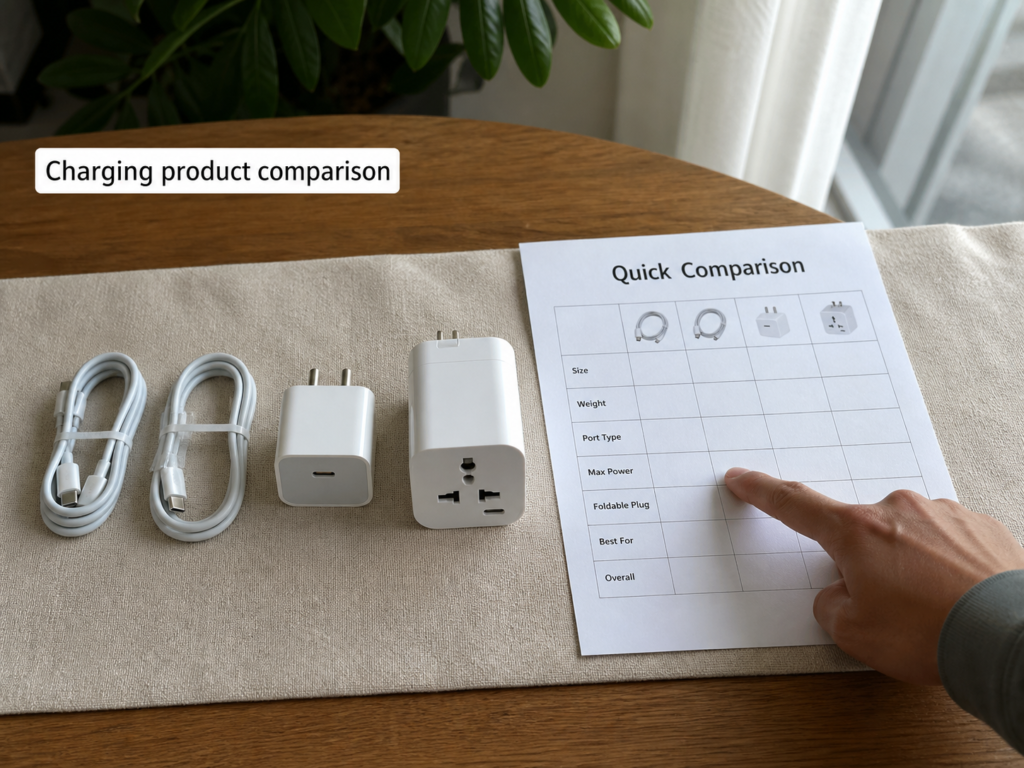
| Product Type | Subject to ICASA Regulation | Determination Reason |
| Ordinary wired charger/power adapter | No | No wireless/communication function, only wired power supply |
| Wired USB-C PD fast charger | No | Fast charging is negotiated via wired CC pins, no radio frequency (RF) transmission |
| Ordinary charging cable/USB data cable | No | Only conducts electricity or local wired transmission, no active RF |
| USB-C cable with E-Marker | No | E-Marker is only used for wired protocol negotiation, no wireless function |
| Pure magnetic induction Qi wireless charger | To be confirmed in conjunction with regulations | Qi wireless charging mainly transmits energy through near-field magnetic coupling, and some implementations also include near-field information interaction for power control. Whether ICASA type approval is required must be confirmed in combination with the specific implementation, frequency, transmission characteristics, equipment category and current exemption regulations, and cannot be concluded solely on the basis of “pure Qi” or “for power transmission” |
| Charging equipment with NFC/Bluetooth/Wi-Fi | Yes | Contains regulated active wireless communication modules |
| Charging equipment with cellular network access | Yes | Can access public telecommunications networks, belongs to telecommunications terminal equipment |
| Smart charging cabinets/networked power management equipment | Yes | Has active wireless communication functions, falls within the regulatory scope |
If you encounter products with ambiguous boundaries, you can use the four-step judgment method for preliminary screening by yourself:
1. **Step 1: Check RF functions**: Check whether the product has the function of transmitting or receiving regulated RF signals, not just whether it has two-way communication. Qi wireless charging mainly transmits energy through near-field magnetic coupling, and specific products may also have a near-field communication mechanism for power control. Judgment should be made based on the actual circuit, frequency, transmission characteristics and current ICASA regulations, rather than simply stating “no communication RF”. Wired data transmission is carried out through wires and usually does not belong to radio functions, but it is still necessary to confirm whether there are actual wireless communication modules in the product, such as Bluetooth and Wi-Fi modules.
2. **Step 2: Check public network access capability**: Check whether the product has hardware or functions to access public telecommunications networks, such as SIM card slots and fixed-line interfaces. Equipment that can directly access the operator’s public network usually belongs to telecommunications terminal equipment, and in principle needs to comply with ICASA requirements; if regulations provide for exemption or simplified procedures for specific equipment, they shall be implemented in accordance with the corresponding provisions.
3. **Step 3: Check module and complete machine configuration**: If the product uses a ready-made certified wireless module, first confirm the compliance status of the module itself, and also check whether the complete machine has RF-related configuration changes such as antenna modification, power adjustment, frequency band modification, etc. If there are changes, the module certification cannot be directly applied.
4. **Step 4: Verify the latest official regulations**: Finally, be sure to confirm against ICASA’s current equipment list, applicable standards and exemption regulations, as the regulatory scope may be adjusted, and the final decision shall be subject to official requirements.
There are also several special situations to note: Completely passive accessories (such as adapters without any electronic circuits, ordinary charging cables) usually do not require ICASA type approval; but whether personal use or small-volume import involves customs declaration, import restrictions and type approval should be checked against South African customs rules and ICASA regulations respectively, and personal use does not automatically exempt from applicable ICASA requirements. Equipment for industrial use and using non-public frequency bands is not automatically exempt either, and it is still necessary to judge whether type approval is required in accordance with regulations.
3. Core Rules of ICASA Certification: Avoid Cognitive Blind Spots
1. Mainstream Compliance Path: Type Approval
ICASA’s most important compliance path is called **type approval**. Simply put, it is a comprehensive technical compliance review of the product model by the official authority, and a formal certificate is issued after passing, proving that this model meets South Africa’s radio and telecommunications specifications. Only specific low-risk equipment can be eligible for exemption or simplified procedures, and there is no universal Declaration of Conformity (DoC) path — that is to say, you cannot write a compliance statement yourself and put the product on the market; you must go through the applicable official path. For charging products, most products with wireless functions need to go through the type approval process.
2. Certified Module ≠ No Certification Required for the Complete Machine
Many merchants will ask: The wireless module I use has already passed ICASA certification, so does the complete machine not need to be certified? The answer is: **A certified module can only simplify part of the testing, and cannot replace complete machine certification**.
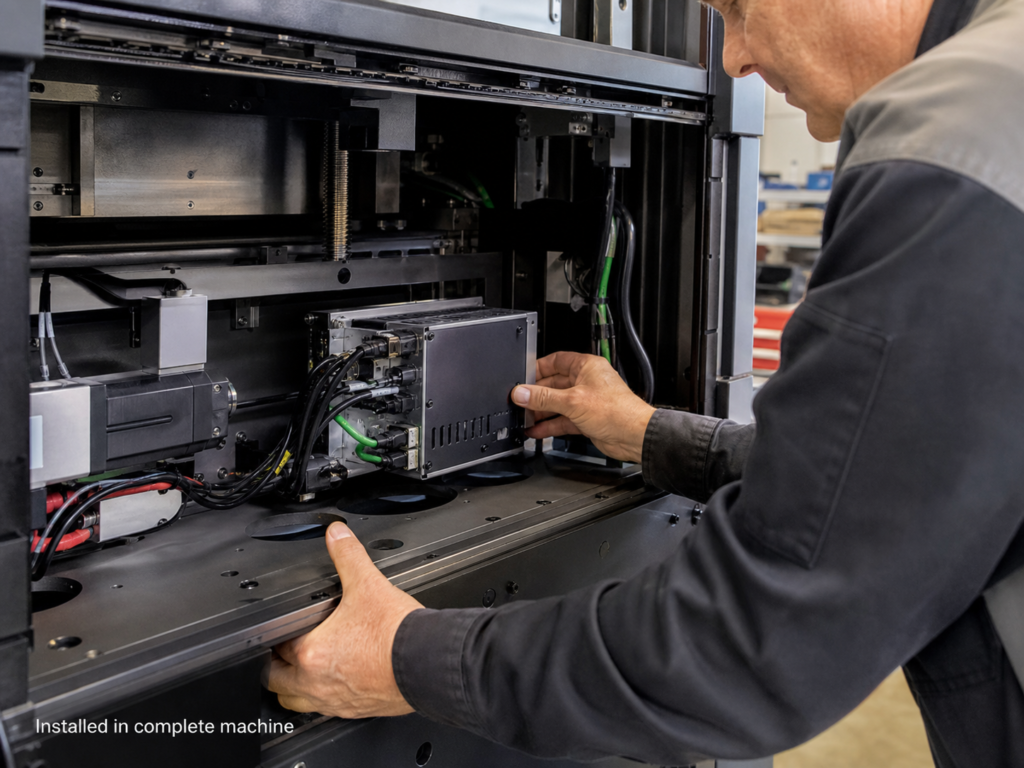
Because when the module is certified separately, the actual impact of being installed in the complete machine will not be considered, and these factors need to be re-evaluated for the complete machine:
• Whether the power supply noise of the charging circuit will interfere with RF performance
• Whether the antenna installation position and the shielding effect of the complete machine housing will change RF parameters
• Whether multiple modules will interfere with each other when coexisting
• Whether the control logic of the complete machine for RF parameters has changed
If the complete machine has made these changes, the compliance must be re-evaluated: changing the antenna/module, adjusting power/frequency band, changing the installation method, upgrading RF firmware, adding wireless functions. If it is just changing the shell color, changing the packaging, or making minor adjustments not related to RF, there is no need for re-evaluation. For example, a smart wireless charger with a certified Bluetooth module must undergo a complete machine evaluation even if the module itself is compliant.
3. Certificate Validity and Change Rules
Type approval is usually valid as long as the equipment is not modified and the relevant technical requirements remain applicable; if the product undergoes changes that affect the approved parameters, or ICASA issues re-evaluation, change or certificate renewal requirements due to updates to regulations or standards, it shall be handled in accordance with the specific notice. It cannot be generally considered that the certificate is permanently valid or that an application must be re-submitted every time the regulations are updated.
4. Overseas Manufacturers Cannot Apply Directly
Overseas manufacturers cannot submit applications directly to ICASA, and must designate a legally registered compliance entity in South Africa as the applicant, which can be an importer or an authorized compliance representative. The local entity is responsible for submitting applications, responding to official supplementary requests, and cooperating with post-market inspections. When selecting a local entity, prioritize those with experience in certification of charging wireless products, and do not choose service providers that only provide nominal services. Otherwise, if they cannot answer official technical questions, it is easy to delay the progress or even fail the review.
4. Complete ICASA Certification Process (Charging Product Adapted Version)
The ICASA certification process can be divided into five steps, and there are several unique points for charging products, which we will mark separately:
Step 1: Preliminary Judgment and Document Preparation
First, use the four-step judgment method mentioned above to confirm whether the product is within the regulatory scope, determine which compliance path to take, and then prepare the corresponding documents.
Documents are mainly divided into four categories:
• Basic general documents: model variant description, manufacturer qualification documents, user manual, label design draft, circuit block diagram
• Wireless-related documents: module model and certification information, antenna parameters, operating frequency band and transmission power, firmware version, RF function description
• Special documents for charging products: input and output parameters, supported charging protocols, layout description of wireless module and charging circuit (this part is very important, the charging circuit too close to the wireless module is prone to noise interference, which is a common reason for failure)
• Overseas test reports (if any, such as FCC, CE test reports)
After preparing the documents, do a self-check first: the wireless parameters must be consistent with the actual product, and the parameters in different documents cannot be contradictory, otherwise the review will be directly rejected.
Step 2: Select Testing Laboratory and Local Entity
When selecting a testing laboratory, check three points: whether it has the testing accreditation scope for the corresponding project, whether the testing standard used is the latest version required by ICASA, and whether it has the qualification to issue reports that meet the requirements. Note here: just because a testing laboratory has ILAC mutual recognition qualification, it does not mean that ICASA will definitely accept its report; the final acceptance is up to the official authority.
The selection of local entities has been mentioned earlier: choose an institution that is legally registered in South Africa, has experience in charging wireless certification, and can cooperate with official communication. Never believe promises of “guaranteed pass” or “get certificate in a very short cycle” — ICASA’s review is conducted independently by the official authority, no one can guarantee it, and those who say this are basically scammers.
Step 3: Product Testing and Document Organization
There is no unified requirement for test items, which shall be determined according to the equipment category and applicable standards. Common ones include RF performance test, spectrum compliance test, electromagnetic compatibility test, etc. If there are previous overseas test reports that meet the requirements, they can be submitted to the official for evaluation, and some items may be exempted from testing, but the specific result shall be subject to the official review.
For testing, complete samples with fully normal functions are required, and the quantity shall be in accordance with the requirements of the official or testing laboratory. It is recommended to do a pre-test before the formal test, especially for charging products, which are prone to the problem of charging circuit noise interfering with RF. Finding and adjusting in advance is cheaper and faster than retesting after failing the formal test.
After the test is completed, organize and bind the test report, product documents, manufacturer’s declaration, etc. in accordance with ICASA requirements, and check again: does the standard used in the report meet the requirements? Are the parameters consistent with the mass-produced product? Do not apply with the parameters of the test sample and then change them during mass production, as there will be problems in subsequent spot checks.
Step 4: Submit Application and Official Review
The application must be submitted by a South African local entity through ICASA’s official system, and overseas manufacturers cannot submit it themselves. The official review mainly covers three items: whether the documents are complete, whether the test report is compliant, and whether the RF/telecom parameters meet South African requirements. If there are problems, the official will issue a correction notice, and supplementary materials or adjustments must be made within the specified time limit.
There are several common reasons for failure of charging products: inconsistent model parameters, non-compliant frequency band/power, charging circuit noise affecting RF performance, inconsistent label design and application documents, which can be focused on during preliminary preparation.
Step 5: Obtain Certificate and Post-Market Maintenance
After passing the review, ICASA will issue a type approval certificate; if the product meets the exemption or simplified procedures, a corresponding notice will be issued. Don’t rush to launch the product after getting the certificate, first check the key information on the certificate: product model, manufacturer name, wireless parameters, etc., to see if they are consistent with the actual product, and don’t get the model wrong.
Regarding labeling, equipment that has obtained type approval usually needs to be marked with the ICASA approval mark and type approval number in accordance with ICASA’s current labeling requirements; the specific format, location, applicability of electronic labels and exceptions of the mark shall be subject to current regulations and approval conditions, and the ICASA mark shall not be used or modified without authorization.
It is not all smooth sailing after the product is launched. All certification documents must be kept, wireless-related product changes must be controlled, official spot checks must be cooperated with, and the South African local applicant entity must be kept valid — if the local entity is deregistered and the official cannot find the contact person, there may be problems with the certificate.
5. Timeline and Cost: Why Is There No Unified Quotation?
Many people ask “How long does ICASA take? How much does it cost?” as soon as they come up, but there is no unified fixed answer, because each product is different.
Factors Affecting Timeline
It mainly depends on four aspects: the complexity of wireless standards (for example, a single Bluetooth product is much faster than a product with 4G + Wi-Fi + Bluetooth), the completeness of document preparation, the number of corrections/retests, and the official review cycle. For charging products, products with cellular and multiple wireless functions will definitely have a longer cycle than single-mode Bluetooth products. The specific duration is subject to the actual progress, and there is no unified standard.
Factors Affecting Cost
The cost is mainly related to the number of test items, product complexity, retest requirements, service content, and official fees. Among charging products, the cost of single-mode Bluetooth charging products is much lower than that of products with cellular and multiple wireless functions. Similarly, there is no unified fixed price, which shall be subject to the official fees and the actual quotation of the service provider.
6. Common Misconceptions to Avoid and Certificate Verification
Misconceptions About Scope of Application
1. **Misconception: All charging/data cables require ICASA** — Only products with regulated radio/telecommunications terminal functions require it, ordinary wired products do not.
2. **Misconception: Products with USB-C/PD fast charging require ICASA** — PD fast charging negotiation is completed through wired CC pins, which belongs to wired communication and has no RF transmission, so it is not required.
3. **Misconception: All wireless chargers require/do not require ICASA** — Those with active communication RF (such as Bluetooth, Wi-Fi) definitely require it; pure magnetic induction Qi wireless chargers need to be confirmed in combination with specific implementation, frequency, transmission characteristics and exemption regulations, and cannot be generalized.
4. **Misconception: All charging products with NFC require ICASA** — Passive NFC tags have no independent power supply, but interact with readers through near-field coupling and load modulation; it cannot be concluded that ICASA is not required just because they are passive tags. It should be confirmed according to the specific NFC equipment, operating frequency, product integration method and current exemption regulations.
5. **Misconception: ICASA regulates charging safety** — ICASA is responsible for the compliance of radio and telecommunications equipment within its regulatory scope; NRCS is responsible for South African compulsory specifications and related compliance supervision for applicable products, which may include some electrical safety requirements. Specific products shall be checked separately against applicable compulsory specifications.
Misconceptions About Process Compliance
1. **Misconception: FCC/CE reports can be directly exchanged for ICASA certificates** — Only some test items can be used as reference, and must be reviewed and certified by ICASA official, and cannot be directly exchanged for certificates.
2. **Misconception: Certified wireless module = no certification required for the complete machine** — A certified module can only simplify part of the testing, and the complete machine still needs to be evaluated for compliance.
3. **Misconception: Product parameters can be adjusted during the review period** — Especially RF-related parameters, unauthorized adjustment may directly lead to failure of the review.
4. **Misconception: Once you get the certificate, it’s all done once and for all** — If the product has RF-related changes, or ICASA issues re-evaluation, change or certificate renewal requirements due to updates to regulations or standards, compliance shall be re-evaluated in accordance with specific provisions.
Multi-Compliance Coordination Description
ICASA only solves the compliance problems of radio/telecom spectrum and interference. To enter the South African market, other compliance may also be required: such as applicable compulsory specifications under NRCS, energy efficiency certification, compliance of plug specifications, relevant specifications of power adapters, etc. ICASA cannot replace other certifications, and regulated products often need to apply for multiple certifications at the same time.
Certificate Validity Verification
If you want to verify the authenticity of a certificate, you can query it through the query system on ICASA’s official website, but not all types of certificates support public query. The certificate number, product model, and manufacturer name are required for the query.
To judge whether a certificate is valid, look at three points: the certificate status is valid, the model parameters on the certificate are consistent with the actual product, and the applicant entity information is compliant. Common invalid situations include: forged certificates (no record found), model mismatch, product has undergone RF changes but no re-evaluation, and fraudulent use of others’ certification certificates.
Final: Pre-Application Self-Check and Information Verification Tips
After reading this article, you should be able to quickly judge whether common charging products need ICASA compliance, master the basic application process and key risk points, avoid common misconceptions, also be able to independently query the validity of certificates, and distinguish the boundaries between ICASA and other certifications.
Before formal application, you can do a quick self-check:
• Scope determination: The regulatory scope of the product has been confirmed using the four-step judgment method
• Document preparation: Basic documents such as model description, wireless parameters, module information, circuit block diagram, etc. have been sorted out
• Entity confirmation: The South African local applicant entity has been confirmed, and the division of labor has been clarified
• Test preparation: The qualification of the testing laboratory has been confirmed, and pre-testing has been completed if necessary
• Risk prediction: Review risks such as RF parameters and charging circuit interference have been evaluated
In addition, ICASA’s regulations and requirements may be updated. Before applying, be sure to check the latest type approval regulations, equipment category list, test standard versions, exemption procedure requirements, applicant entity qualifications, labeling requirements, and official fee standards on the official website. Everything shall be subject to the latest official release.