
If you have bought electronic products sold in the EU market, or have engaged in cross-border e-commerce in Europe, you have most likely seen the “crossed-out wheeled bin” mark on products. Xiao Zhou, who runs a cross-border e-commerce business, has recently been troubled by this mark: he just shipped a batch of electric toothbrushes to a German FBA warehouse when he received a notification from the platform requiring him to submit a WEEE registration number, otherwise the products would be removed from the shelves. He was a bit confused: for these small toothbrushes that cost only a few dozen yuan, do I still need to apply for EU recycling qualifications?
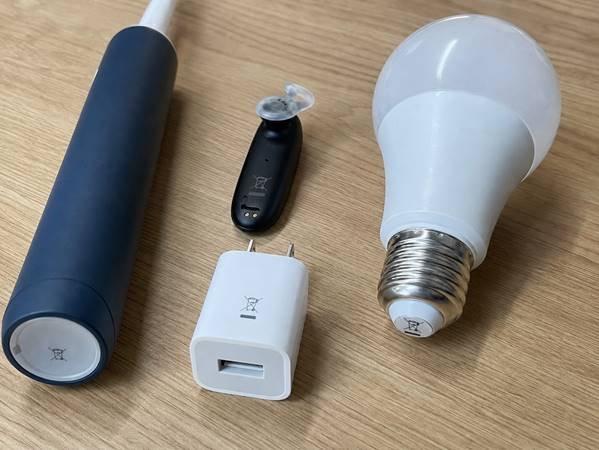
Not only sellers, but many ordinary consumers are also confused about this mark: some think it is a quality certification, some think it is a recyclable mark — in fact, behind it is a mandatory recycling rule that the EU has implemented for more than 20 years: the WEEE Directive. What exactly is the WEEE Directive? Which products does it cover? Who is responsible? What should ordinary consumers and sellers pay attention to respectively? This article explains the core issues thoroughly, from basic common sense to practical judgment.
1. First, get the basics straight: What exactly is the WEEE Directive
The full English name of WEEE is Waste Electrical and Electronic Equipment. Plainly speaking, it is the EU’s mandatory recycling regulation for e-waste, commonly known as the “E-Waste Recycling Directive”.
Its core logic is called “Extended Producer Responsibility” (EPR for short), and the core is the entity that first places electrical and electronic equipment on the EU market shall bear the responsibility for financing and organizing the recycling of products after they are scrapped. To put it simply: whoever first legally sells products to the EU market must pay for and take full responsibility for the recycling and treatment of these products after they “retire”, and cannot pass the cost on to the government and ordinary taxpayers. The final cost of this set of responsibilities may be passed on through product prices, explicit environmental fees and other methods. Public institutions of member states may also participate in part of the collection process, but the core responsible entity is still the producer that first places the products on the market. The familiar crossed-out bin mark is the most intuitive manifestation of this set of rules, and the specific specifications will be explained in detail later.
The EU has introduced this set of rules with four core purposes: first, to solve the pollution problem of e-waste. After all, electronic equipment contains harmful substances such as lead, mercury, cadmium, and flame retardants, and random landfill and incineration will pollute soil and water sources; second, to recover valuable resources such as copper, gold, and rare earths, which is equivalent to developing “urban mines”, which is more environmentally friendly and economical than mining primary ores; third, to unify the recycling rules of EU countries. In the past, each country had different requirements, and merchants had to go through repeated procedures when doing cross-border business. Now with a unified framework, trade barriers can be eliminated; finally, it forces manufacturers to consider easy disassembly and recycling when designing products, and promotes the circular economy.
The current mainstream basic version in force is Directive 2012/19/EU (commonly known as WEEE 2.0), which has been transposed into national laws by member states for implementation since 2014. Since August 15, 2018, the EU has officially implemented the “open scope” rule: products that meet the definition of electrical and electronic equipment are subject to jurisdiction by default, and only categories clearly listed in the regulations can be exempted. Compared with the old model of “only regulating listed categories”, the coverage has been greatly expanded, and they are uniformly managed in 6 categories. The revised directive Directive (EU) 2024/884 issued by the EU in 2024 mainly adjusts the producer financing responsibility for photovoltaic panels and part of historical WEEE. This directive has entered into force after being published in the Official Journal of the EU, and member states need to transpose it into national law within the specified period. The specific applicable time and obligations shall be subject to the transposed regulations officially issued by each country.
In terms of applicable regions, the WEEE Directive applies to the 27 EU countries and some European Economic Area (EEA) countries. After Brexit, the UK launched its own UK WEEE regulations, which are not interoperable with the EU system, and will be discussed separately later.
2. Which products need to comply? The core logic for judging jurisdictional boundaries
Many people are not sure whether their products fall within the scope of WEEE jurisdiction. In fact, as long as you grasp the core judgment logic, combined with the exemption list and classification rules, you can make a quick judgment. The core is divided into four steps:
Step 1: Function and voltage standards: The core function of the product must rely on electric current or electromagnetic fields, and the working voltage shall not exceed 1000V AC or 1500V DC. For example, high-voltage power transmission equipment whose voltage exceeds the threshold is not within the scope of jurisdiction.
Step 2: Commercial placement standard: It must be a commercial placement behavior targeting the EU market — including normal sales, gifts, samples, free trials, and cross-border direct shipping, while items carried into the country for personal private use are not included.
Step 3: Exclusion clause check: After the open scope was implemented in 2018, the principle of “included by default, explicitly exempted” is adopted. Products that meet the first two standards are subject to jurisdiction by default, and only exemption categories clearly listed in the regulations are exempt from compliance. Responsibility cannot be evaded on the grounds that “it is not stated to be regulated”.
Step 4: Classification confirmation: Corresponding to the official classification according to the core function, size, etc. of the product, and declare according to the applicable main category. The specific classification rules shall be subject to the implementation rules of member states and the requirements of the registration system.
Products that meet the jurisdictional requirements are uniformly managed by the EU in 6 categories. When classifying, priority is given to the most matching main category according to the core function:
| Category Number | Category Name | Typical Product Examples |
| 1 | Temperature exchange equipment | Refrigerators, air conditioners, heat pumps |
| 2 | Screens, monitors and equipment with screens | Televisions, computer monitors, large-screen advertising machines |
| 3 | Lamps | LED lights, fluorescent lamps, table lamps |
| 4 | Large equipment | Washing machines, photovoltaic panels, escalators |
| 5 | Small equipment | Hair dryers, electric toothbrushes, electric tools |
| 6 | Small IT and telecommunications equipment | Headphones, routers, smart watches |
Of course, there are also clearly exempted categories. Even if these products meet the requirements of electronic functions, they do not need to comply with the WEEE Directive: for example, electronic equipment dedicated to military or national security, medical electronic equipment implanted in the human body (such as pacemakers), large stationary industrial installations or special industrial tools, special electronic components designed exclusively as parts of other equipment, means of transport (including on-board electronics), marine and avionics, electronic equipment on non-road mobile machinery, and test equipment dedicated to research and development. The specific criteria for determining exemptions shall be subject to the implementation rules of member states.
There are still many easily confused boundaries in actual scenarios, which can be judged according to the following rules:
• Non-electronic products with electronic auxiliary functions: Only those whose electronic functions account for the core value are included. For example, for a thermos cup with temperature display, the electronic function is only additional, and the core is heat preservation, so it is not included; but the core function of an electric toothbrush is driven by a motor, so it falls within the scope of jurisdiction.
• Second-hand equipment: Personal idle transfer is not considered commercial placement. For example, if you sell your old mobile phone on a second-hand platform, you do not need to bear WEEE responsibility; but if you are a merchant specializing in second-hand electronics business, selling second-hand equipment in batches counts as commercial placement and you need to comply with the corresponding rules.
• Accessories and spare parts: The core of judgment is whether the component itself has independent electronic functions and whether it is commercially placed separately. Chargers, USB data cables, etc. that are sold independently and rely on electric current/electromagnetic fields themselves usually belong to the small equipment category and need to be separately compliant; accessories or maintenance spare parts that are given away with the main equipment and not placed at a separate price are usually compliant together with the main equipment, and the specific requirements are still subject to the rules of the target country; special electronic components designed exclusively for non-WEEE equipment and with no independent use may be eligible for exemption clauses.
• Photovoltaic panels: They were already included in the scope of WEEE as early as the 2012 version of the directive. The 2024 revised version only adjusts the producer financing responsibility for a specific historical period, and they are not a newly added category.
We can use several common products for practice to help you quickly get familiar with the judgment logic:
• Bluetooth headsets: The core function relies on Bluetooth signals and electric current drive, belonging to small IT and telecommunications equipment, and requires compliance;
• Independently sold USB data cables: They have conductive functions themselves and are placed on the market separately, belonging to small equipment, and require compliance; those given away with mobile phones and not priced separately only need to be compliant together with the main device;
• Electric toothbrushes: The core function is realized by motor drive, belonging to small equipment, and requires compliance;
• Fitness equipment with electronic screens: The core function relies on electronic systems, and is classified as small or large equipment according to size, both of which require compliance;
• Independently sold battery packs: They fall within the scope of the EU Battery Regulation, not under WEEE jurisdiction;
• Ordinary mobile phone cases without electronic functions sold in German FBA warehouses: They do not have electronic functions themselves, and do not fall within the scope of WEEE jurisdiction, but may involve other producer responsibilities such as packaging regulations; FBA storage is only a logistics link and does not change the attribute judgment of the product itself. Whether compliance is required is still subject to product functions, placement behavior and corresponding regulations.
3. Who bears the responsibility? Don’t get the obligated entity wrong
Many people think that “producer” refers to the factory that manufactures the product. In fact, the core of the “producer” determination in the WEEE Directive is not who produces it, but who first places electrical and electronic equipment on the market of a member state, which has no necessary relationship with whether it is a manufacturer.
Common responsible entities include three categories: own-brand manufacturers within the EU, EU importers, and OEM brand owners that place products on the market under their own brands.
If a non-EU entity sells directly to end users in EU member states (such as cross-border direct shipping, using local warehouses for delivery), it will usually be recognized as the first placement entity, and needs to appoint a local authorized representative in accordance with the requirements of the corresponding member state. Taking Germany as an example, non-EU producers usually need to first appoint a German authorized representative, and then the authorized representative handles producer registration and other related matters in the Stiftung ear system; sales scenarios using local warehouses such as FBA are usually recognized as completing commercial placement in that country, but the specific responsible entity still needs to be comprehensively judged in combination with the import chain and the first placement entity, and the storage location cannot be used as the sole basis.
Sellers generally do not build their own recycling systems. At this time, they need to connect with Producer Responsibility Organizations (PRO for short). PROs are specialized institutions officially authorized by member states, whose core function is to help producers handle registration and declaration, collect and treat waste equipment, and manage recycling funds. Different PROs cover different categories and have different charging standards. When choosing, you must first confirm its official qualification and service scope.
In addition to producers, other participants also have their own responsibility boundaries, and specific requirements vary according to the rules of member states:
• Offline retailers and distributors: It is generally required that when selling large electronic equipment, they need to provide consumers with “trade-in” free recycling services; the recycling obligation for small equipment is usually linked to the sales area of the store, and stores of a certain scale need to set up recycling points. All retailers are not allowed to sell products without compliant WEEE marks, and the specific rules are subject to local requirements.
• E-commerce platforms: Many countries require sellers on the platform to submit the WEEE registration number of the corresponding member state, otherwise product listing will be restricted. For example, Amazon Germany and Amazon France have clear compliance requirements.
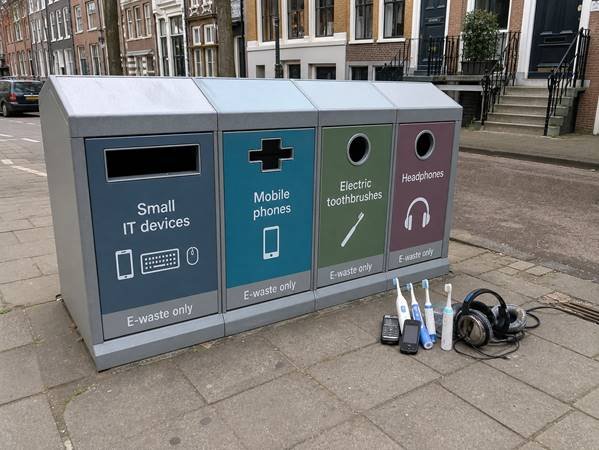
• Consumers: They can return waste electronic equipment for free through formal channels, and shall not mix it with ordinary domestic waste; incorrect disposal may trigger penalties under local waste management regulations, and the specific responsibilities and amounts are subject to local laws.
In addition, there are clear rules for the division of responsibilities in B2C and B2B scenarios, and the ownership of responsibility for historical waste:
• B2C (household equipment): For equipment sold to ordinary households, producers shall bear the core responsibility for recycling financing, and consumers have the legal right to return waste equipment for free.
• B2B (professional equipment): For equipment for professional use by enterprises, the buyer and seller can agree on the method of bearing recycling costs and the specific recycling process through contracts, but such agreements cannot exclude the producer’s statutory obligations of registration, declaration, information disclosure and ensuring the environmentally sound treatment of waste.
• Historical waste responsibility: Legacy WEEE from household sources (i.e., waste generated from the scrapping of products placed on the market before the implementation of the regulations) is usually jointly financed by producers currently on the market of the country according to their respective market shares; for historical waste in B2B scenarios, the ownership of responsibility needs to be judged in combination with whether equivalent new equipment is replaced, contractual agreements and the specific rules of member states, and there is no unified universal standard.
4. Core compliance requirements: Registration, marking, and declaration are all indispensable
If your product falls within the scope of WEEE jurisdiction, you must complete compliance as required. There are four core things: registration and declaration, marking compliance, participation in the recycling system, and performance of information disclosure obligations.
First is registration, declaration and fee payment. WEEE does not have a EU-wide registration qualification. The specific registration entity, brand requirements, equipment categories, authorized representatives and PRO joining rules must be confirmed one by one in accordance with the implementation rules of the target member state. Usually, registration must be completed before the first placement of products in that country, and the specific time limit is subject to local requirements.
After registration is completed, it is necessary to report the category, quantity and weight of placed products according to the cycle specified by the member state (annual, quarterly, monthly are all possible), and then pay recycling fees according to the category, weight and the charging standard of the corresponding PRO.
Compliance materials that need to be retained include sales records, weight calculation basis, customs declaration materials, registration certificates, declaration receipts and payment vouchers, etc. The retention period shall be implemented in accordance with the laws of member states, registration agencies or PRO requirements, and the common requirement is several years.
Second is marking specifications. The core meaning of the crossed-out wheeled bin mark is “prohibited from being mixed with ordinary domestic waste”, and it is not a recyclable mark. In principle, the mark should be affixed to the product body. Only when the product cannot be reasonably marked due to size and functional limitations can it be transferred to the packaging, manual or warranty documents.
In addition, products placed on the market after August 13, 2005 need to be marked with a mark that can distinguish the placement time (common practice complies with the EN 50419 standard, that is, affixing a horizontal bar or production date mark), to facilitate the distinction of batches in the recycling process. The specific form and requirements are subject to the implementation rules of the target member state.
Third is statutory collection targets. Many people think that this target is set for individual enterprises, but this is not the case: since 2019, the EU’s minimum requirement is one of two options, that is, member states need to reach “65% of the average weight of products placed on the market in the previous three years”, or “85% of the amount of waste electrical and electronic equipment generated”. This is an overall collection target at the member state level, not a recovery rate that individual enterprises must achieve. Producers participate in this recycling system through obligations such as registration, declaration, fee payment, information disclosure and data retention. The specific scope of responsibility is subject to the rules of member states. Long-term targets will be adjusted with the revision of EU regulations, and official updates need to be followed.
Finally, information disclosure obligation. Producers shall inform consumers of recycling channels and correct disposal methods, and also provide recycling institutions with basic disassembly guidelines for products to facilitate recycling and treatment. Some member states also require the display of the corresponding country’s WEEE registration number on product sales pages, invoices and other scenarios. For example, Germany requires e-commerce sellers to publicize the registration number on the store page.
5. Don’t confuse: The difference between WEEE and other EU electronic regulations
There are many EU regulations for electronic products, and many novices tend to confuse WEEE with other rules. For example, the current battery rules have gradually replaced the original Battery Directive with the “EU Battery Regulation (Regulation (EU) 2023/1542)”, and packaging regulations are also being updated and iterated. Here is a table to help you sort out the core differences:
| Regulation/Mark | Core Management Scope | Main Compliance Requirements | Relationship with WEEE |
| WEEE Directive | Recycling and treatment of waste electrical and electronic equipment | Registration and fee payment, affixing crossed-out bin mark, declaring placement volume, information disclosure | A special regulation focusing on the e-waste recycling link |
| RoHS Directive | Restriction of hazardous substances in the production stage of electrical and electronic products | Hazardous substances such as lead, mercury and cadmium in products meet the limit requirements | The vast majority of electrical and electronic products need to meet both WEEE and RoHS requirements |
| CE mark | Conformity certification that products meet EU harmonized regulations (safety, health, environmental protection, etc.) | Products meet the requirements of corresponding EU harmonized regulations and are affixed with the CE mark | It is independent of WEEE’s recycling obligations. Having the CE mark does not mean WEEE compliance, and they need to be handled separately |
| EU Battery Regulation | Full life cycle management of batteries (including recycling, hazardous substance restriction, etc.) | Separate battery registration, affixing corresponding marks, meeting hazardous substance limits and recycling requirements | Batteries are not under WEEE jurisdiction. Electronic equipment containing batteries may need to meet both sets of rules |
| Packaging and Packaging Waste Regulation | Recycling and environmental protection requirements for product packaging materials | Packaging registration, declaration, meeting recycling and material requirements | Packaging recycling obligations are not within the scope of WEEE and require separate compliance |
| REACH Regulation | Registration, evaluation and restriction of chemicals in all categories of products | Chemical substances in products meet REACH-related restriction and registration requirements | The scope of application of REACH is much larger than that of WEEE, which only focuses on e-waste recycling |
6. Why can’t one set of rules apply to the whole of Europe? Version and regional differences
Many people will ask: Doesn’t the EU have a unified directive? Why do we need to handle compliance separately for each country? This is because the EU’s WEEE Directive only sets a minimum framework, and the specific implementation rules are formulated by each member state. Coupled with version iterations, there is no such thing as “one certificate for the whole of Europe”.
First look at the iterative changes of versions:
• 2002 old version (2002/96/EC): Initially, the core target was to collect 4 kg of e-waste per capita per year. Later, there were supplementary calculation calibers for subdivided categories. It only covered listed categories, and the division of responsibilities was relatively vague. It has now been replaced.
• 2012 current version (2012/19/EU): Changed to set collection targets according to the proportion of placed weight. It has been transposed and implemented by member states since 2014. Since August 2018, the “open scope + 6 categories” management model has been officially implemented, which strengthens extended producer responsibility. It is the current mainstream version in force.
• 2024 revised version (Directive (EU) 2024/884): The core adjustment is the producer financing responsibility for photovoltaic panels and part of historical WEEE. This directive has entered into force after being published in the Official Journal of the EU, and member states need to transpose it into national law within the specified period. The specific applicable time and obligations shall be subject to the transposed regulations officially issued by each country.
Looking at the implementation differences between member states, since EU directives only set a minimum framework and specific implementation rules are formulated by each country, the differences are mainly reflected in these aspects: registration entity requirements, authorized representative rules, declaration cycle, category coding, PRO charging schemes, sales page information disclosure requirements, recycling channel settings and law enforcement agencies, etc. Before compliance, enterprises need to check the specific rules of the target country one by one, and cannot apply the experience of other countries for granted.
There are also rules for several special regions that need attention:
• UK: After Brexit, it implements its own UK WEEE regulations, which are not interoperable with the EU system. Products sold to the UK need to be registered separately, and the WEEE registration number of EU member states cannot be used.
• European Economic Area (EEA) countries: EEA countries such as Norway, Iceland and Liechtenstein implement WEEE-related requirements through the EEA framework and their respective national laws. Rules for registration, authorized representatives, declaration and fees need to be inquired and handled separately, and cannot be directly covered by the registration of EU member states.
7. Pitfall avoidance guide: Common misconceptions and entry-level practical operations
Most of the pitfalls that novices are most likely to step on come from cognitive misconceptions. Here are several high-frequency errors corrected centrally:
1. Misconception: WEEE is a product quality certification
Correction: It is a regulation for the e-waste recycling system, which does not require product quality or performance testing. The core requirements are registration and fee payment, marking compliance, and declaration of placement volume, which have no direct relationship with product quality.
2. Misconception: WEEE registration is valid across the EU
Correction: WEEE does not have a EU-wide registration qualification. Registration requirements in each country are independent of each other, and registration in one member state cannot cover sales in other countries.
3. Misconception: Small sellers and small-volume products do not need to comply
Correction: WEEE responsibility cannot be automatically exempted solely on the grounds of small sales volume or small product size. As long as the product falls within the scope of jurisdiction for commercial placement, it must comply with the corresponding rules. The specific exemption circumstances are subject to those clearly listed in the regulations of member states.
4. Misconception: There is no responsibility after the product is discontinued
Correction: Responsibilities such as recycling and declaration corresponding to products that have been placed on the market cannot be exempted solely on the grounds of product discontinuation. The specific obligation period is subject to the rules of the target country.
5. Misconception: The crossed-out bin is a recyclable mark
Correction: The core meaning of this mark is “prohibited from being mixed with ordinary domestic waste”, which has no direct relationship with whether the product is recyclable.
6. Misconception: For direct shipping, you only need to register in the main sales country
Correction: As long as you actually sell products to a member state, you need to perform the compliance obligations of that country. You cannot cover remote sales across Europe by only registering in the main sales country.
The consequences of violations vary depending on the law enforcement intensity of member states and the circumstances of the violation. Common ones include customs detention of goods, removal of products from e-commerce platforms, fines based on sales volume or violation circumstances, restriction of entry into the EU market for serious cases, and the need to bear the recycling and rectification costs of products that have been placed on the market. The specific consequences are subject to local law enforcement rules.
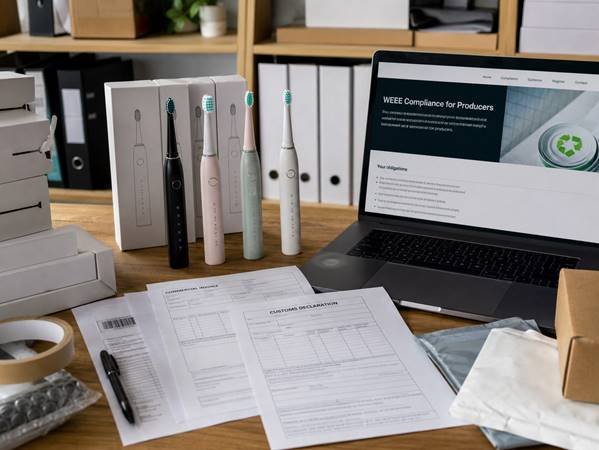
For small merchants who are new to this, entry-level compliance can be promoted according to the following steps:
1. Confirm product attributes and target market: First, confirm whether the product falls within the scope of WEEE jurisdiction through the judgment logic in this article, and then clarify the list of member states where the product is actually placed;
2. Clarify the responsible entity and authorization requirements: Non-EU producers need to appoint a local authorized representative in accordance with the requirements of the target country to handle compliance matters;
3. Select an officially authorized PRO: Check the PRO’s official qualification, covered categories, fee transparency and service scope, and select a matching institution;
4. Complete marking compliance: Affix compliant WEEE marks on the product body, packaging or manual in accordance with the requirements of the target country;
5. Declare and pay fees on time: Report the placement volume and pay recycling fees according to the specified cycle;
6. Retain compliance evidence: Properly keep all registration, declaration, fee payment and sales-related materials for inspection.
If you want to check the most authoritative rules, you can use three official channels: the WEEE special page of the European Environment Agency (EEA), which has unified rules at the EU level; the official websites of the environmental authorities of each member state, such as Germany’s UBA and France’s ADEME, which have local specific implementation requirements; and the public guidelines of officially authorized PROs, which are practical instructions that comply with local regulations.
8. What you can master after learning these
For ordinary consumers, after reading this article, you only need to remember three core points: WEEE is the EU’s recycling regulation for e-waste, and the crossed-out bin mark is a warning of “prohibited from being mixed with ordinary domestic waste”; waste electronic equipment should be handed over to formal recycling points and cannot be mixed with domestic waste; you have the legal right to return waste electronic equipment for free.
For cross-border sellers or industry practitioners, you can use the judgment framework in this article to quickly confirm whether the product falls within the scope of WEEE jurisdiction and what responsibilities you have. At the same time, you can distinguish the differences between WEEE and other EU rules such as RoHS, CE, and battery regulations, avoid common cognitive misconceptions, and plan a basic compliance path.
The WEEE Directive is the core rule for electronic categories in the EU’s circular economy system. Its essence is to reduce e-waste pollution and promote the recycling of resources by clarifying the responsibilities of all parties. Clarifying the boundaries of the rules is not only a prerequisite for avoiding pitfalls, but also the foundation for participating in environmental protection.