
If you have ever bought home appliances while living in the EU, or run a cross-border business planning to sell products to the European market, you have most likely seen the abbreviation “ErP”. Some say it is a type of certification, some say it is just the energy label, and others say all electrical appliances sold in Europe must meet its requirements — none of these statements are entirely accurate.
As one of the most easily confused environmental regulations for EU market access, ErP is neither a single official certificate nor a scattered set of rules only for power saving. Instead, it is a mandatory regulatory framework that sets constraints for energy-related products starting from the design stage. This article will break down ErP from aspects including basic definitions, scope of application, compliance logic, and common misconceptions, to help you understand its core rules, learn to initially judge product compliance, and avoid common cognitive pitfalls.
First Things First: Plain-Language Definition and Core Positioning of ErP
Plain-Language Explanation and Clarification of Core Terms
You can think of the ErP Directive as the design-stage rules set by the EU for all energy-related products: measures to reduce energy consumption, cut waste, and extend service life must be considered from the drawing stage, rather than being patched up temporarily after the product is manufactured.
Let’s first clarify the core terms and prerequisites to avoid confusion later:
- Term correspondence: ErP is the abbreviation of Energy-related Products, which is both the subject governed by this set of rules and a common industry abbreviation for the entire regulatory system; its official full name is the Directive establishing a framework for the setting of ecodesign requirements for energy-related products, and it is also often directly referred to as the Ecodesign Directive.
- Clarification of core nature: There is no official unified “ErP certification certificate”. It is essentially a mandatory compliance requirement system, not a single stamped paper document. The core proof of compliance is the declaration of conformity issued by the enterprise itself plus a full set of technical documentation. Do not be misled by marketing claims of “ErP certification” on the market.
- Prerequisite for application: Not all products sold in the EU must comply with ErP. Only products that are energy-related and for which the EU has specifically issued corresponding implementing measures need to fulfill compliance obligations.
Position in the EU Regulatory System
EU market access rules are numerous and detailed. ErP is a general environmental framework directive, and its position can be understood from three perspectives:
It is one of the core environmental rules for EU market access, targeting the environmental impact of products throughout their entire life cycle, rather than environmental protection requirements for a single link;
It is one of the important regulatory bases behind the CE marking — only when a product is subject to a certain ErP implementing measure and that measure is included in the scope of CE conformity assessment, must it first meet ErP requirements before the CE mark can be legally affixed;
It is also a core policy tool for the EU’s green transition, not a temporary short-term regulation, but a long-term implemented market access rule.
Version Evolution and Details of Current Rules
ErP rules are not static. Since its introduction, it has undergone three major stage adjustments. Understanding its evolution will help you find the correct current basis for compliance:
The first stage was the period of the old EuP Directive (2005/32/EC): the original version introduced in 2005 had a very narrow scope at that time, only covering products that directly consume energy, such as refrigerators and air conditioners that work when plugged in; products that indirectly affect energy consumption were not within the scope of governance.
The second stage is the current ErP framework period (2009/125/EC): issued in 2009, it officially replaced the 2005 EuP framework, and the scope was expanded to all energy-related products. It is itself a framework law that only sets general rules (such as the general compliance process, basic assessment principles, technical documentation requirements, etc.), and does not directly specify specific parameters for a certain type of product. The mandatory requirements for specific products come from the implementing measures (abbreviated as IM, also often referred to as implementing rules) separately issued by the EU for each product category later; these implementing measures are the direct basis for compliance. Current implementing measures cover product groups in multiple fields such as household, lighting, industry, and construction. The specific number is dynamically adjusted with the revision, repeal, and addition of regulations. Common statistical calibers cover more than 40 categories of common products, and the latest list shall be subject to the official release of the EU.
The third stage is the ESPR transition period: the new Ecodesign for Sustainable Products Regulation (abbreviated as ESPR) was adopted and officially entered into force in 2024, and its scope will be further expanded to more physical products such as textiles and furniture. ESPR will be gradually implemented through follow-up work plans and batch-by-batch product rules. The replacement and repeal of the 2009/125/EC framework and existing ErP implementing measures will be promoted in phases according to the transition periods stipulated in the regulation. The existing ErP implementing measures remain valid within their respective applicable transition periods, and the core framework basis for judging compliance at this stage is still Directive 2009/125/EC.
Why It Matters: Purpose of Introduction and Actual Impacts of ErP
Many people think environmental protection regulations add burdens to enterprises, but in fact, the logic of ErP is fundamentally different: product design significantly affects its environmental performance and long-term use cost throughout the life cycle. The cost of modification after manufacturing is extremely high, so it is better to set rules from the source.
Core Legislative Objectives
The EU introduced ErP for three main purposes:
First, to reduce energy consumption and environmental impact of products throughout their life cycle from the design source. For example, reducing standby power consumption and increasing the recyclable ratio is much more efficient than treating pollution later;
Second, to unify the environmental protection requirements of EU countries and eliminate trade barriers between member states — otherwise, 27 countries each set their own energy efficiency standards, and enterprises have to go through 27 checkpoints to sell goods, which is too costly;
Third, to eliminate backward product designs with high energy consumption, short service life, and difficult maintenance, force the entire industry to upgrade, and reduce the space for enterprises to profit from low-durability products.
Actual Benefits for Ordinary Consumers
For ordinary people, ErP is not an invisible policy, but a benefit that can be directly realized:
First, long-term cost savings: products that meet ErP requirements usually have higher energy efficiency levels, and can save a lot of electricity bills after long-term use. The specific savings range varies by product category, usage habits, and the strictness of the corresponding implementing measures, and shall be subject to actual test results and corresponding rules.
Second, more guaranteed maintenance for some products: only product groups for which the corresponding implementing measures clearly specify requirements for disassembly, supply period of core spare parts, maintenance convenience, or software support will have such constraints; for ErP products that do not cover these requirements, it cannot be inferred that they must be more durable just because they are compliant.
Finally, more transparent purchase decisions: regulated products are required to disclose energy efficiency parameters, maintenance information, recycling methods, etc. as required. You don’t have to listen to merchants’ empty claims of “power saving” or “durable”, as there are clear parameters for comparison.
Actual Impacts on Enterprises/Sellers
For enterprises and sellers operating in the EU market, ErP is an unavoidable access threshold for regulated products:
It is a mandatory requirement for regulated products to enter the EU market, and non-compliant products cannot be legally put on sale at all;
It affects the entire process from design to market launch — when selecting parts, power consumption requirements must be considered, compliance tests must be carried out, and the supply chain and launch schedule must be adjusted accordingly;
Compliance does require investment, but it is always less costly than the price of non-compliance: once non-compliance is found, the lightest consequence is removal from shelves and recall, and the heaviest is fines or even seizure of the entire batch of goods, with losses far greater than the investment in compliance.
What Products Are Regulated: Scope of Application and Boundary Judgment of ErP
Many people think that all plug-in products must comply with ErP, but that is not the case. Its scope of governance has clear boundaries, and judgment must be carried out step by step. As mentioned earlier, the core prerequisite for judging whether compliance is required is: whether the EU has issued implementing measures corresponding to this type of product. If there is no corresponding implementing measure, even if it is an energy-related product, there is no need to comply with ErP for the time being.
Plain-Language Definition of Regulated Subjects
ErP regulates “energy-related products”, which are specifically divided into two categories:
One category is products that directly consume energy, that is, products that use electricity, heat, or burn fuel, such as refrigerators, air conditioners, LED lights, and gas boilers, which is easy to understand;
The other category is products that indirectly affect energy consumption, that is, products that do not use energy themselves but can significantly reduce energy consumption, such as specific thermal insulation materials or energy-saving windows, which may theoretically fall into the category of energy-related products; whether they are actually subject to mandatory ErP requirements must be checked against whether the EU has issued implementing measures covering this product group and their scope clauses.
Classification and Examples of Common Regulated Products
Currently, products for which the EU has issued implementing measures can be roughly divided into three categories for preliminary reference:
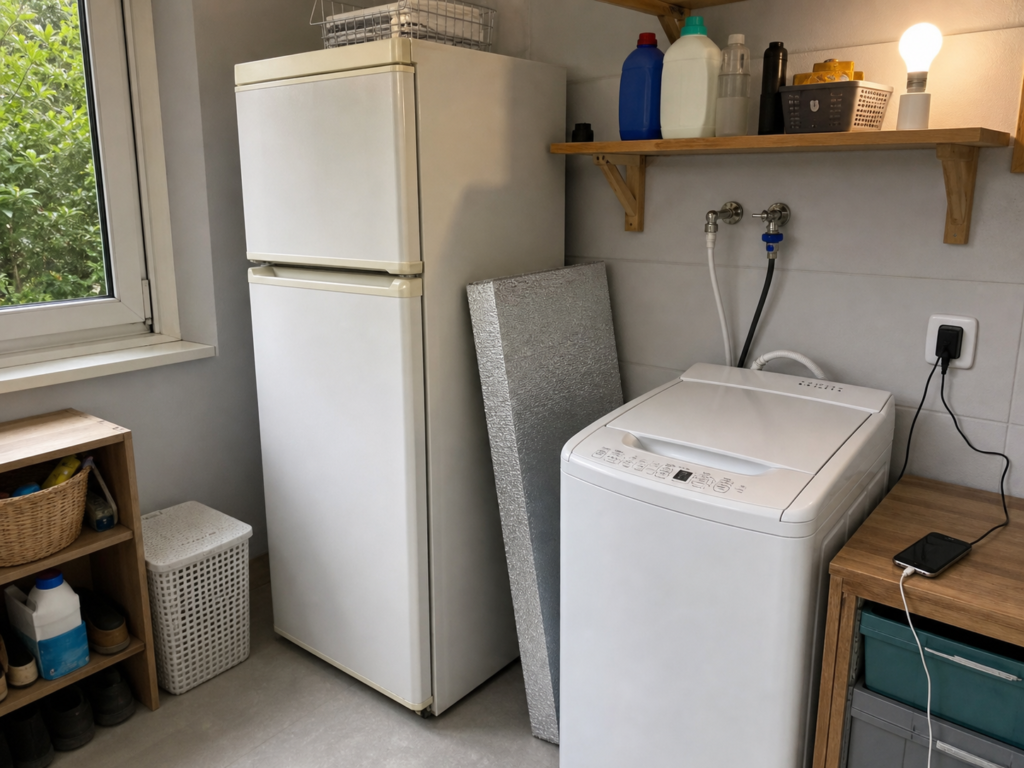
Household consumer products: refrigerators, washing machines, dishwashers, kitchen appliances, LED lighting, televisions, monitors, air conditioners and other products that people contact most in daily life;
Industrial and construction products: motors, water pumps, boilers, thermal insulation boards, fans, transformers and other products in the industrial and construction fields;
Electronic accessories: external power supplies (such as mobile phone chargers), LED drivers, independent control devices and other core accessories sold separately.
The specific list of regulated products shall be subject to the latest implementing measures officially issued by the EU.
Framework Exclusions and Implementing Measure Exemptions
For several types of products, the governance rules need to distinguish between “framework-level exclusions” and “individual exemptions in implementing measures”, and cannot be generalized:
First, products generally excluded at the framework level: civil/commercial means of transport, such as cars, airplanes, and ships, are mainly subject to EU transport regulations, and are generally not included in the scope of the ErP framework. The specific situation shall still be subject to the exclusion clauses of the implementing measures.
Second, products that need to be judged in combination with special regulations or implementing rules: medicines for humans and animals, and specific medical devices are governed by special EU medical regulations. Whether ErP applies shall be judged in combination with product functions and the scope of implementing measures; military products belong to a special category related to public security, and shall be subject to official explicit exclusion clauses; for customized one-time scientific research equipment, it is necessary to check whether there are exemption clauses for scientific research purposes in the implementing measures, and exemption cannot be assumed by default.
Finally, products that are not automatically exempt: second-hand products and small-batch handmade customized products are not uniformly exempted by the ErP framework directive. The provisions of implementing measures for different products vary. Compliance cannot be assumed to be unnecessary by default, and the specific rules for the corresponding product must be checked.
Preliminary Judgment Rules for Confusing Boundaries
When encountering uncertain products, you can make a preliminary judgment based on these basic principles first, and the final conclusion shall still be subject to the provisions of the implementing measures:
Regarding refurbished products: for products that are re-placed on the market after refurbishment or major modification, it should first be judged whether the product still falls into the category of the original compliant product, whether its regulated energy-using performance has changed, and whether the specific implementing measures include refurbished products in the scope of governance; if core energy-using components are replaced, or major adjustments are made to the product’s energy-using functions, compliance and the corresponding responsible entity need to be re-evaluated, and conclusions cannot be drawn directly based solely on the type of replaced components.
Regarding industrial special equipment: do not take it for granted that “industrial use does not require compliance”. It must be judged against the scope clauses in the specific implementing measures. If the rules do not state exemption, even industrial use must meet the requirements.
Regarding accessory products: judgment cannot be based solely on the sales method, but must be checked according to three layers of logic: first, check the product definition of the corresponding implementing measures to see whether such components and accessories are clearly included in the regulated scope, or whether there are separate performance requirements for components; second, check whether the accessory is placed on the market as an independent commodity and whether it has independent energy-using functions and nominal parameters; finally, check whether there are clear compliance requirements for built-in accessories in the implementing measures for finished products. The sales method (sold with the whole machine or separately) itself cannot directly determine whether there is exemption, and must be subject to regulatory provisions.
How It Works: Core Logic and Compliance Process of ErP
Many people find ErP rules complicated because they do not understand its “two-tier structure” — it is not a single regulation, but a system where two tiers of rules operate in coordination.
Two-Tier Management Structure: Framework Directive + Product Implementing Measures
The core of ErP is a “two-story” structure, and understanding this means you understand half of it:
The first tier is the framework directive, which is what we often call ErP itself (2009/125/EC). It only sets general rules: for example, the general compliance process, basic assessment principles, and what content technical documentation should include, and does not care about the specific energy efficiency that a certain type of product must achieve.
The second tier is product implementing measures, which are specific mandatory requirements issued separately for each product category: for example, what is the minimum energy efficiency of LED lights, what is the maximum standby power consumption, and how many years spare parts must be supplied. These are the direct basis for compliance.
For analogy, the framework directive is the school’s general school rule that says “students must dress appropriately”, and the implementing measures are the specific requirements of each class: boys’ hair cannot exceed a certain length, girls cannot wear jewelry, and specific implementation depends on class rules.
Common Types of Compliance Requirements
Implementing measures vary for different products, and the core requirements are roughly divided into three categories. All requirements apply only when explicitly specified in the implementing measures of the corresponding product, and are not unified requirements for all energy-related products:
The first category is energy efficiency requirements, which are also the most familiar to everyone: for example, minimum operating energy efficiency, maximum standby power consumption, off-mode power consumption, and even clear limits on the networked standby power consumption of smart products. Non-operating energy consumption requirements such as standby and networked standby are often core restriction items in the implementing measures of some products, and are also high-incidence points of non-compliance.
The second category is ecological attribute requirements: for example, product disassembly, recyclability, supply period of core spare parts, maintenance convenience, etc. The specific applicable objects, time limits, and technical conditions shall be subject to the corresponding implementing measures. It should be noted here that the limits of hazardous substances in electrical and electronic products are mainly directly stipulated by the RoHS regulation, and ErP tests or declarations cannot replace RoHS compliance obligations; however, some ErP implementing measures may also involve material selection, resource efficiency, disassembly requirements or related information disclosure. The two sets of rules apply in parallel and do not replace each other, and need to be checked separately.
The third category is information disclosure requirements: it may be required to mark energy efficiency parameters, maintenance information, and environmental protection instructions on manuals, product labels, or officially designated platforms. The specific form and content of disclosure shall be subject to the implementing measures.
In addition, the familiar EU energy label is stipulated by separate energy label regulations and corresponding product rules, and is not a direct requirement of the ErP Ecodesign Directive. Some products are subject to both sets of rules at the same time.
Basic Plain-Language Compliance Process for Manufacturers
Many people think that compliance requires many complicated official processes, but in fact, the subject of compliance responsibility for ErP is the enterprise itself. The basic process is very clear, and each step has clear actions and judgment criteria:
Step 1: Confirm the corresponding implementing measures
First check whether there are effective ErP implementing measures for the target product. If not, there is no need to comply with ErP. Even if the product belongs to an energy-related category, as long as no corresponding implementing measures have been issued, ErP obligations are not triggered for the time being.
Step 2: Complete testing or assessment in accordance with legal requirements
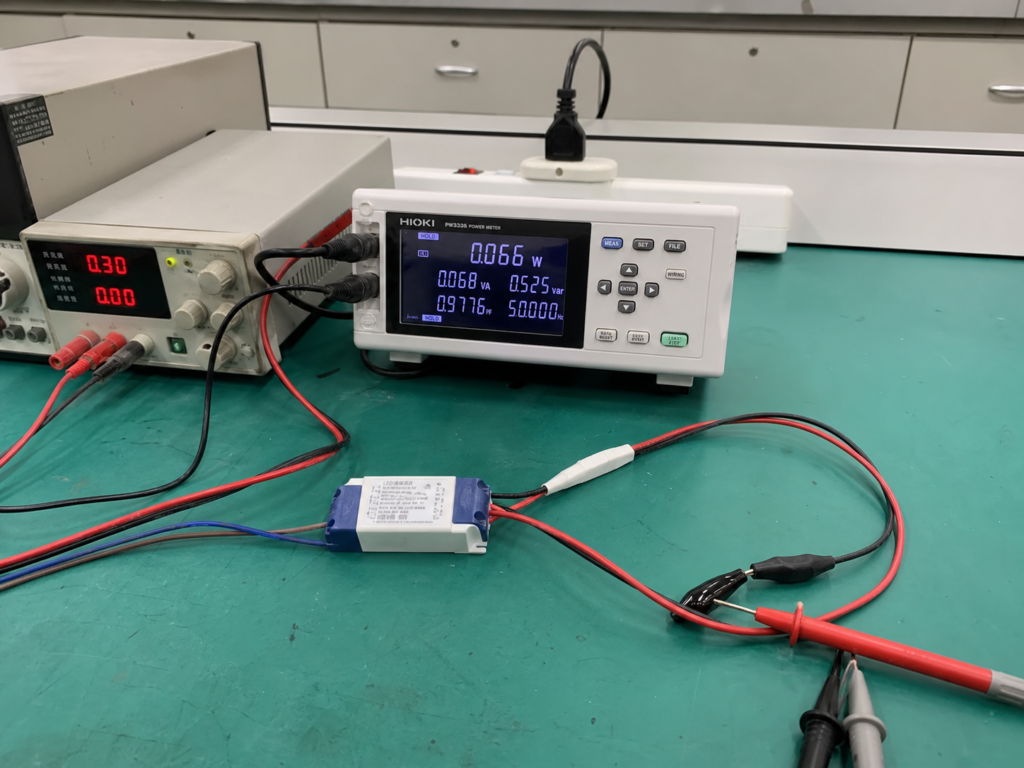
Assessments must be carried out strictly in accordance with the test conditions, methods, and referenced standards specified in the corresponding implementing measures. Test conditions may involve various parameters such as voltage, frequency, load, usage mode, and network connection status. Enterprises can complete the test by themselves or entrust a capable third-party laboratory; there is no mandatory requirement to use a specific official institution.
Step 3: Organize technical documentation and sign the declaration of conformity
A full set of technical documentation (including test reports, design drawings, calculation instructions, etc.) must be retained, and the EU Declaration of Conformity (DoC, equivalent to a compliance commitment letter issued by the enterprise itself) must be signed by the responsible entity. Technical documentation and DoC are the core proof of compliance, and must be kept for a sufficient number of years as required for regulatory spot checks.
Step 4: Affix the marking after completing all CE-related compliance
Only when the product meets all applicable EU regulations that need to be included in CE conformity assessment (such as low voltage, electromagnetic compatibility, radio equipment, RoHS, etc., including applicable ErP implementing measures) and completes all conformity assessments, can the CE marking be affixed and the product placed on the market as required.
It should be noted that the EU energy label is an independent parallel obligation. If the product is subject to energy label rules, it needs to be fulfilled separately, and is not a prerequisite for the CE marking.
Market Supervision and Consequences of Non-Compliance
Of course, it is not up to the enterprise itself to claim compliance. The EU has a corresponding supervision mechanism: market supervision authorities of each member state will verify the compliance of products on sale through online spot checks, offline store inspections, etc. Customs can cooperate with market supervision departments to carry out compliance checks on imported products and suspend the release of suspicious products.
If non-compliance is verified, market supervision authorities may take measures such as requiring rectification, restricting sales, withdrawing products, and recalling; specific consequences such as fines, entry bans, or sales bans depend on the laws of member states, the circumstances of the violation, and the product risk level, and not all violation cases will apply the strictest measures.
Don’t Confuse: Differences Between ErP and Common EU Regulations/Markings
People who are new to EU market rules can easily confuse ErP with other common markings and regulations. The table below sorts out the core differences for quick comparison:
| Name | Core Function | Scope of Application | Relationship with ErP |
|---|---|---|---|
| CE marking | EU market access conformity marking, proving that the product meets all applicable EU mandatory regulatory requirements | All EU market regulated products that are legally required to bear the CE marking | If a product is subject to an ErP implementing measure and that measure is included in the scope of CE conformity assessment, ErP is one of the bases for its CE compliance; CE may also cover other regulations such as low voltage, electromagnetic compatibility, and radio equipment, so ErP compliance cannot be judged solely by the CE marking |
| EU energy label | Energy efficiency grading display tool to help consumers intuitively compare the energy efficiency levels of similar products; common labels use A-G grade classification | Only applicable to specific product groups for which special energy label rules have been issued; specific grades, test methods and label obligations shall be subject to the corresponding label regulations | The two are independent legal tools. Some products are subject to both ecodesign requirements and energy label rules, and need to fulfill obligations separately. Meeting ErP requirements is not an inevitable guarantee of obtaining a high-grade energy label |
| RoHS Regulation | Restricts hazardous substances (lead, mercury, etc.) in electrical and electronic products | Electrical and electronic products | Applies in parallel with ErP, and the requirements do not replace each other |
| REACH Regulation | Regulates the registration, evaluation, authorization and restriction of chemicals | Registration, information, authorization or restriction obligations for substances, mixtures and articles under corresponding conditions | Applies in parallel with ErP, and the requirements do not replace each other |
Regarding REACH, it should be added that whether a product triggers REACH obligations must be judged in combination with material composition, supply chain role, and specific substance status, and a unified conclusion cannot be drawn directly just because the product contains chemical substances.
In addition, ErP is the minimum access threshold for regulated products, and the energy label is a grading display tool. There is no unified “pass line corresponding to grade” relationship between the two. The A-G grades of the energy label are the relative energy efficiency ranking of similar products, and the specific grade division shall be subject to the label rules of the corresponding product.
Practical Method: Quickly Judge Whether a Product Requires ErP Compliance
After talking about the core rules, the most practical thing is how to quickly judge compliance obligations — whether you are a consumer buying things or a seller selling goods, there are corresponding reference steps.
Consumer Version: 3 Steps to Preliminary Check Compliance Risks
If you buy home appliances in the EU and want to preliminarily check whether the product has compliance risks, you don’t need to check complicated regulations, just follow these three steps. Note that this is only a preliminary risk check and cannot be used as a sufficient basis for confirming ErP compliance:

Step 1: First confirm whether the purchased product belongs to a common category with ErP implementing measures (such as large home appliances, lighting products, etc.). If the category itself is not regulated, there is no need to consider ErP requirements.
Step 2: If the product belongs to a category that requires the CE marking, check whether there is a CE marking on the product, packaging, or manual. Note: The CE marking only indicates that the product may be subject to and has completed conformity assessment of several EU regulations. It cannot alone prove ErP compliance, and further judgment must be made in combination with the product category. Products that should bear the CE marking but do not have overall compliance risks.
Step 3: If the product is also subject to energy label rules, check whether there is a corresponding energy label, and then check whether there are parameters such as energy efficiency, maintenance, and recycling required by the corresponding implementing measures in the manual or official disclosure information. Only information that is clearly required to be disclosed by the implementing measures constitutes a basis for judgment. Disclosure requirements vary for different products, and missing information may indicate non-compliance problems.
Seller/Manufacturer Version: 4 Steps to Judge Compliance Obligations
If you are a seller or manufacturer operating in the EU market, judging whether ErP compliance is required must be more rigorous, and official basis must be checked at each step:
Step 1: Judge whether it is an energy-related product
First confirm whether the product is a product that directly consumes energy (uses electricity, heat, or fuel) or can significantly reduce energy consumption. If not, ErP obligations are directly excluded. It should be noted that meeting the definition of energy-related products is only a prerequisite, and whether compliance is ultimately required depends on whether there are corresponding implementing measures.
Step 2: Query the official list of effective implementing measures
Check whether there are effective implementing measures for the corresponding product through the EU EUR-Lex official website (search by regulation number, product category or implementing measure name) or the EU official platform for ecodesign and energy labelling, and at the same time confirm the regulation number, revised version, mandatory effective date, transition period and scope of application. If there is no corresponding effective implementing measure, even energy-related products do not need ErP compliance.
Step 3: Confirm the applicable rules of the target sales market
The 27 EU countries and Norway, Iceland, and Liechtenstein within the European Economic Area (EEA) apply EU ErP rules; other European countries such as the UK and Switzerland have their own market access rules, and local requirements must be checked separately, and EU ErP cannot be directly applied.
Step 4: Check the phased entry into force arrangements
Some implementing measures set phased tightening limits or requirements. Old compliance conclusions may become invalid due to rule updates, and judgment must be made based on the latest rules corresponding to the planned time of placing on the market.
Key Variables Affecting Judgment Results
There are several variables that are easily overlooked during judgment, which directly affect the result:
First, product subcategory: even within the broad category of “electrical appliances”, the requirements for different subcategories may be completely different. For example, the rules for refrigerators and ovens are different, and even for lighting products, the requirements for LED lights and halogen lamps are different. You cannot blindly apply rules by broad category.
Second, rule timeliness: some implementing measures will be revised or set phased effective limits. Compliance conclusions are not valid for life, and must be judged based on the latest effective version and time nodes.
Finally, test caliber: energy consumption results must be judged according to the test conditions and methods specified by the regulations. Single-point results measured by yourself under non-standard conditions are not valid. For example, if you measure that a refrigerator uses one kilowatt-hour of electricity a day at home, the result may be very different from that measured under standard conditions.
Pitfall Avoidance Guide: Common Misconceptions and Rule Boundaries
ErP rules are not as complicated as they seem, but there are many pitfalls that are easy to step into in practice. Here we have sorted out the most common cognitive misconceptions, practical pitfall avoidance points, and rule boundary precautions to help you avoid detours.
Reminders of Core Cognitive Misconceptions
In addition to the basic nature issues mentioned earlier, there are several practical cognitions that are easy to get wrong, which require special attention:
Misconception 1: As long as the product’s actual energy efficiency is high, it complies with ErP. Wrong. ErP requirements may cover multiple dimensions such as standby power consumption, ecodesign, and information disclosure, and energy efficiency results must be evaluated according to the test caliber specified by the regulations. High energy efficiency performance measured by oneself cannot be used as a basis for compliance.
Misconception 2: ErP compliance is valid for life once done. Wrong. Implementing measures are regularly revised and limits are tightened. Products that originally met the requirements may no longer be compliant after new rules take effect, and it is necessary to continuously track rule updates.
Misconception 3: Reports issued by third-party laboratories are “ErP certification”. Wrong. Third-party test reports are only supporting materials for technical documentation, not official certification. The core proof of compliance is still the declaration of conformity signed by the enterprise and the full set of technical documentation.
Common Practical Pitfall Avoidance Points
First, do not only trust the supplier’s verbal compliance statement. Many sellers directly believe it when the supplier says “my product is ErP compliant” when sourcing goods — if it is actually found to be non-compliant, the responsible entity for placing the product on the market (importer or seller) will bear the consequences of the violation. It is recommended to require suppliers to provide version descriptions of the corresponding implementing measures, complete technical documentation and declarations of conformity, and check the scope of application and rule validity by yourself.
Second, do not ignore non-operating energy consumption requirements such as standby and networked standby. Many people think that as long as the energy efficiency during operation is sufficient, in fact, the core restrictions of many product implementing measures are precisely the power consumption in low-load states such as standby, off-mode, and networked standby. Compliance assessment must cover all energy consumption scenarios specified in the implementing measures.
Third, do not ignore the version updates and transition periods of rules. Some implementing measures will tighten limits in phases. For example, a certain type of product that met the requirements in 2020 may no longer be compliant in 2025 due to the entry into force of new standards. It is necessary to regularly track the rule updates of target products to avoid using old compliance conclusions to meet new requirements.
Precautions for Rule Boundaries
First, there are differences in regulatory enforcement among member states. ErP is a unified EU framework rule, but the regulatory resources, spot check priorities, and penalty procedures of each member state are implemented by their own competent authorities in accordance with domestic law. Enterprises should directly query the official regulatory information of the competent authority of the target market, and do not credulously believe unofficial rumors about “strict or lenient enforcement”.
Second, the roles of third-party laboratories and notified bodies must be clearly distinguished. The conformity assessment of many ErP products can adopt the internal production control mode, but the specific assessment modules are jointly determined by the framework rules, corresponding implementing measures and other applicable regulations. Enterprises can complete tests, compile technical documentation, and sign declarations of conformity by themselves, or entrust capable third-party laboratories to carry out tests; test reports issued by third-party laboratories are only supporting materials for technical documentation, not equal to official certification, and cannot replace DoC and complete technical documentation. If the product is also subject to other EU regulations that require the involvement of notified bodies (such as the Radio Equipment Directive), it shall be implemented in accordance with the requirements of the corresponding regulations.
Finally, exemptions and exclusions must have clear regulatory basis. Do not claim on your own that the product falls into the “exemption scope”. All exclusion, transition period, and exemption clauses must have clear provisions in the corresponding implementing measures and meet the applicable conditions before they can be used as a basis for compliance.
Learning Summary
After reading this article, you can master three core judgment abilities:
First, you can quickly distinguish the differences between ErP and common EU market rules such as CE marking, energy label, RoHS, and REACH, and will not be misled by marketing claims such as “ErP certification”;
Second, you can judge step by step whether a product needs to fulfill ErP compliance obligations, and know to check the implementing measures, scope of application, version timeliness and target market;
Third, you can avoid many common cognitive and practical pitfalls, and know to query first-hand rules from official channels instead of making blind judgments based on experience or product names.
If you need to check the rules for specific products, it is recommended to directly visit the EU EUR-Lex official website or the EU official platform for ecodesign and energy labelling to query the latest information to ensure accurate conclusions.