
For friends doing EU cross-border e-commerce, most have probably encountered the situation where platforms require a WEEE registration number: you already have CE and RoHS, why do you still need WEEE? What exactly is this number? Do I need to apply for it? How much does it cost? How long does it take to get it? Many people, because they do not understand the rules, either have their listings taken down, or waste money on useless numbers. This article will explain the entire WEEE registration process thoroughly, from determining whether you need to apply, to preparing materials, applying for the number, subsequent maintenance, and how to avoid common pitfalls. After reading it, you can handle most compliance issues on your own.
First, Determine: Do You Need to Apply for WEEE Registration
Before starting the registration, take a few minutes to confirm whether you really need to apply, to avoid wasting money.
Core Rules of WEEE
WEEE is the abbreviation of the EU Waste Electrical and Electronic Equipment Directive. You can think of it as the “recycling responsibility ID card” for electronic products — as long as you sell electrical and electronic products to the EU market, you must bear the responsibility for recycling and treatment of the products after they are scrapped, and WEEE registration is the official registration procedure for you to fulfill this responsibility.
Here is the most core rule that you must remember first: the EU only sets a unified overall framework, and each member state independently implements registration and supervision. There is no EU-wide WEEE registration number, and a single-country registration number is only valid in the country of registration. All subsequent rules involving multi-country registration are based on this premise.
WEEE has three main functions: meeting the access requirements of e-commerce platforms, avoiding regulatory penalties, and fulfilling the statutory scrapping and recycling responsibility.
Entities That Need to Register
Many people think that only factories need to register WEEE, but that is not the case. The core criterion for judgment is: whoever is the entity that first puts electrical and electronic products on the market of a member state (i.e., the “producer”) needs to register.
Specifically, the following types of entities must register:
• Manufacturers and brand owners within the EU
• Importers who import products into the EU
• Brand owners who sell under private labels (even if you just change the logo, you are still considered a producer)
• Sellers who remotely sell directly from outside the EU to end users in the EU (for example, Chinese sellers doing EU self-delivery, or using EU FBA)
Entities that do not need to register are also clear:
• Pure distributors that only sell compliant products and are not involved in own brands or imports
• Third-party logistics and platform fulfillment warehouses that only provide warehousing and distribution services
• Individual consumers
There is an easy-to-overlook point here: if you just find a factory to do OEM and sell under your own brand, even if the factory has a WEEE registration number, you still need to register yourself — because you are the entity that puts the product on the market, and the factory’s registration number does not cover your brand and sales activities.
Covered Product Scope
It is very simple to judge in plain language: as long as the product relies on electric current, electromagnetic fields or batteries to operate, it is basically within the scope of WEEE.
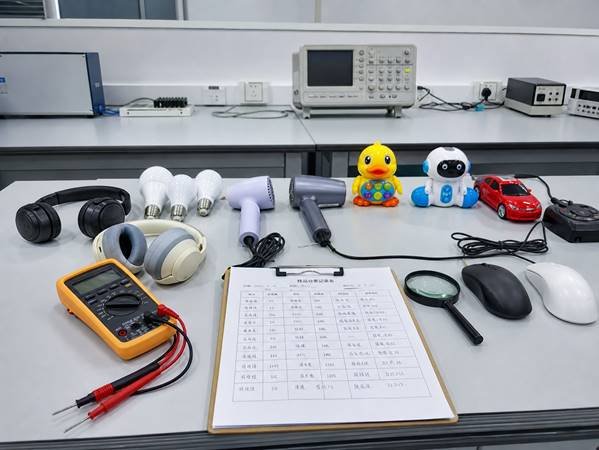
After 2018, the EU unified all electrical and electronic products into six categories: temperature exchange equipment (such as air conditioners, refrigerators), screens/display devices (such as monitors, TVs), lamps, large equipment (such as washing machines, machine tools), small equipment (such as hair dryers, electric toys), and small IT and telecommunications equipment (such as mobile phones, headphones).
However, this is only a unified framework, and each member state can subdivide categories according to local rules. The final classification shall be subject to the official list of the target country. Common covered categories include large home appliances, small home appliances, mobile phones and computers, LED lights, electronic toys, electric tools, etc.
There are also some products that are exempt from registration, such as:
• Products with pure mechanical structure and no electricity
• Second-hand idle items for personal use
• Special equipment for military and aerospace use
• Implantable medical devices
• Large fixed industrial installations and tools
• Large vehicles for public transport (such as buses, subways, but light personal mobility devices such as electric scooters and electric balance bikes are not exempt)
If you are not sure whether your product needs to be registered, do not guess by the product name. Check the official classification list of the target country and judge according to the function and use of the product. For example, for a smart speaker with a screen, you cannot just look at the word “speaker”; you need to see whether its core function is audio playback or display, and then correspond to the classification.
Actual Consequences of Non-Compliance
If you should register but do not, you will face three types of risks:
• Platform side: Platforms such as Amazon and AliExpress will take down non-compliant listings, and even restrict sales permissions. This is the first problem most cross-border sellers encounter.
• Customs clearance side: Customs may require you to provide WEEE compliance certificates. If you do not have one, it will affect the progress of customs clearance, and even lead to goods being detained.
• Regulatory side: Penalty standards vary by member state. Common ones include fines, sales bans, orders to pay back recycling fees and late fees, etc. The specific ones shall be subject to local regulations.
Pre-Registration Preparation: Define Scope, Prepare Materials, Choose Path
After confirming that you need to register, do these preparations first, which can help you avoid many detours and save time and costs.
Determine the Member States to Register
Many people will ask: I do pan-European FBA, and all my goods are stored in the German warehouse. Do I only need to register in Germany? The answer is not necessarily.
The core basis for judging the registration country is the sales country where you actually put the products, not the warehousing country. For example, if you use a German warehouse to deliver to consumers in France and Italy, you also need to register in France and Italy, because the products are finally put on the local market.
In practice, the advice for newbies is: prioritize registering your main sales countries, and gradually expand to other sites after sales volume increases. You do not need to register in the entire EU at the beginning, which will waste costs.
Notes on Preparing Registration Materials
Material requirements vary slightly from country to country, but the core materials are similar, mainly divided into four categories:
1. Entity certificate: Business license or company registration documents (need to be translated into the official language of the target country or English, depending on national requirements), tax number or VAT number.
2. Product information: Product list, corresponding WEEE classification, brand information, estimated annual placement volume (calculated by unit or weight), whether the product is B2C or B2B.
3. Compliance guarantee materials: Some countries (such as Germany) require a recycling responsibility deposit or financing guarantee. If you join an officially authorized PRO (which will be discussed later), this part is usually automatically covered and you do not need to prepare it separately.
4. Qualification documents: Information of the authorized representative or local responsible entity in the target country (required for overseas sellers), trademark registration certificate (if any).
There is a very important check point here: the company name and brand information must be exactly the same as those on your platform store and tax documents. A single letter difference may lead to failure of subsequent registration or platform review.
Must-Read for Overseas Sellers: Local Authorized Representative Requirements
If you are a seller outside the EU and sell products directly to end users in EU member states, you must designate a local authorized representative (also called a local responsible entity) in each target sales country.
You can think of the authorized representative as your “compliance contact” locally in the EU. Official notices and letters will be sent to them first, and then they will forward them to you. At the same time, they will also assist you in supplementing materials and cooperating with official inspections.
Here we should pay special attention to the boundary of responsibility. Many people cannot figure out who should bear the registration responsibility:
• If an overseas seller directly sells remotely to end users: the overseas seller is the producer and needs to designate an authorized representative and register WEEE by themselves.
• If an EU importer is the entity that puts the product on the market (for example, the importer buys your goods and sells them themselves): the importer is the producer, and the overseas seller does not need to register on their own.
• Platforms and fulfillment warehouses only provide warehousing and distribution services and do not bear the producer’s WEEE responsibility.
• If it is brand-authorized sales: the brand holder that puts the product on the market is the producer, and the authorized distributor only needs to be responsible for sales and does not need to register.
In addition, some countries allow officially authorized PROs to also serve as local authorized representatives, so you do not need to find a third party separately, which can save some costs.
How to Choose Between Two Registration Paths
There are two main paths for WEEE registration, and you can choose according to your own situation:
1. Register directly with the official authority: Contact the official registration agency of the target country to submit an application by yourself. It is suitable for large enterprises that understand the local language and have a dedicated compliance team. The advantage is transparent fees, but the disadvantage is that the process is cumbersome, you need to handle all links such as recycling guarantee and declaration by yourself, and no one will remind you if there is a problem.
2. Join a Producer Responsibility Organization (PRO): A PRO is an officially authorized recycling compliance agency, equivalent to a one-stop service provider, which will help you complete the entire process of registration, declaration, recycling docking, etc. It is suitable for most small and medium-sized cross-border sellers.
If you choose the PRO path, focus on these dimensions when selecting: whether it has the official authorization qualification of the target country, the covered categories and countries, whether the charging model is transparent, whether there is Chinese or English support, and whether the subsequent declaration services are complete.
Pitfall avoidance reminder: Never look for intermediaries without official authorization, otherwise you may get an invalid registration number, spend money and still fail the platform review.
Core Process of Applying for a WEEE Registration Number
After the preparations are done, you can officially apply for the registration number. The registration logic of mainstream EU member states is basically the same, roughly divided into five steps:
Step 1: Match the Correct Product Classification
The first step of registration is to classify your products into the corresponding WEEE categories according to function, size and use, against the official classification table of the target country.
Do not underestimate this step. Incorrect classification will lead to incorrect subsequent cost calculation, and even directly lead to the official rejection of the application. If you are not sure how to classify, do not guess randomly. Consult the official agency of the target country or the PRO you choose directly, and get an accurate answer before submitting.
Step 2: Submit Registration Application and Materials
If you take the PRO path, you need to sign a formal service contract with the PRO first, confirm the arrangement of the recycling guarantee, and then the PRO will submit the application to the official authority uniformly, without you having to handle it yourself.
The submission channel is generally the official registration system of the target country, or the PRO’s online platform. Overseas sellers cannot directly submit applications to the official authority, and must submit them through the authorized representative or PRO of the target country.
After submission, be sure to confirm that the system shows “accepted” and keep the application number for future progress inquiries. Also note that all materials must meet the language requirements of the target country, and the information must be strictly checked in accordance with the consistency standard mentioned earlier.
Step 3: Pay Relevant Fees
After the application is accepted, you need to pay the relevant fees. The fee generally consists of three parts: official registration fee + recycling treatment prepayment calculated based on the estimated placement volume, and some countries also require a deposit to be paid at the same time.
You need to pay the money to the official designated account, or the PRO’s official account. Be sure to keep the payment voucher, which may be used for subsequent declarations and audits.
Here is a reference range for you: the total first-year cost for small electronic categories in a single country is usually between a few hundred and a few thousand euros. The specific amount will vary according to the country, category, and placement volume, and there is no unified price.
Step 4: Wait for Review and Obtain the Official Registration Number
When the materials are complete, the review cycle is generally 2 to 8 weeks. The efficiency varies from country to country, which will be discussed in detail later.
If the review fails, the common reasons are as follows: incomplete materials, incorrect product classification, unqualified entity qualification, invalid authorization documents. After receiving the supplementary notice, you can supplement the materials in time as required.
When is the registration considered complete? It is completed when you get the official registration certificate with a unique number. After getting the number, do not rush to use it. First check several pieces of information: whether the registered entity corresponding to the registration number, the covered brands, categories, and effective countries are consistent with your actual situation. If there is an error, contact the official or PRO to modify it in time.
In addition, some countries require the registration number to be publicized on the official system or designated channels, just operate as required.
Step 5: Comply with Regulations and Launch After Multi-End Filing
Key reminder: Before obtaining a valid WEEE registration number, you must not put products on the market of the target country, otherwise it will be a violation.
After getting the registration number, you also need to complete the filing in three places:
1. Customs clearance side: Synchronize the registration information to your importer or supply chain team to facilitate cooperation with customs inspections and avoid customs clearance delays.
2. Platform side: Upload to the e-commerce platform compliance center of the corresponding country site, such as the EPR compliance port of Amazon EU sites. The information to be filled in includes the registration number, name of the registered entity, covered brands, corresponding categories, and effective date.
Common reasons for platform review failure include: inconsistent entity/brand/category with registration information, incorrect registration number format, wrong country matching. If the registration information changes later, you should also re-upload and submit for review in time.
3. Product side: Use the WEEE recycling mark (the crossed-out trash can logo) as required. It is preferred to print it on the product body. If the product size is too small or function is limited, it can also be printed on the packaging, manual or warranty documents. Some countries require a black stripe below the mark, just implement it according to local rules.
How to Divide Registration Responsibilities in Different Scenarios
In actual operation, registration requirements vary with different sales entities, sales models, and product types. The following describes the judgment methods for several common scenarios.
Division of Responsibilities for Different Sales Entities
• Brand owners and manufacturers within the EU: just submit the registration application in their own name.
• Overseas cross-border sellers: those who sell directly remotely need to entrust an authorized representative or PRO in the target country to handle it.
• Multi-store sellers: if multiple stores are under the same registered entity and in the same sales country, they can share the same WEEE registration number, and there is no need to register separately for each store.
• OEM/ODM model: the brand owner or importer that puts the product on the market is responsible for registration. If the OEM factory is only responsible for OEM production and not responsible for product placement, it does not need to register. For example, a Shenzhen OEM factory produces hair dryers for a German brand. The OEM factory does not need to register WEEE, and the German brand owner bears the responsibility.
Registration Requirements for Different Sales Models
• Local warehousing/FBA: There is no sales volume threshold. As long as you put the product in the local warehouse and prepare to put it on the market, you need to register, even if you have not sold a single order yet.
• Self-delivery (overseas remote sales): It usually also triggers registration obligations. Even if the sales volume is very small, it may only simplify the declaration frequency or reduce the recycling fee, but it will not exempt the registration responsibility, and the platform may require you to complete compliance in advance.
• B2B vs B2C: Both need to be registered, but there are differences in cost calculation and declaration requirements. The specific implementation shall be subject to the rules of the target country, and statistics shall be separated during declaration.
Registration Notes for Special Categories
• Products with built-in batteries: Just classify them according to the main function of the product, and there is no need to register WEEE separately and repeatedly. But they need to meet the compliance requirements of the EU Battery Law at the same time. For example, wireless headphones are registered as small IT/telecommunications equipment for WEEE, and at the same time need to complete the compliance of the Battery Law.
• Accessories (data cables, chargers, mice, etc.): Generally classified as small IT/electronic accessories, with relatively low recycling fees.
• Large home appliances/refrigeration equipment: Additional product weight and material information are required, and recycling fees are also higher.
• Combined products (such as speakers with screens): Just classify them according to the main function of the product, and there is no need to split them into multiple categories for registration. For example, for a smart speaker with a screen, if the core function is audio playback, it is classified as small equipment; if the core function is display, it is classified as screen/display equipment.
Scheme Selection for Multi-Country Sales
If you sell in multiple EU countries, there are two main registration schemes:
• Single-country separate registration: It has the highest compliance, is suitable for sellers who only do 2-3 main countries, has strong pertinence, and the cost is controllable.
• Unified handling by multi-country PRO: Find a large PRO that covers multiple countries to handle it uniformly, which can save a lot of communication costs and is suitable for sellers with multi-site layouts.
Note: Even if you find a PRO that covers the entire EU, each country will still issue a separate registration number. There is no universal registration number. This has been emphasized before, do not be fooled by bad service providers.
Registration Differences of Mainstream EU Member States
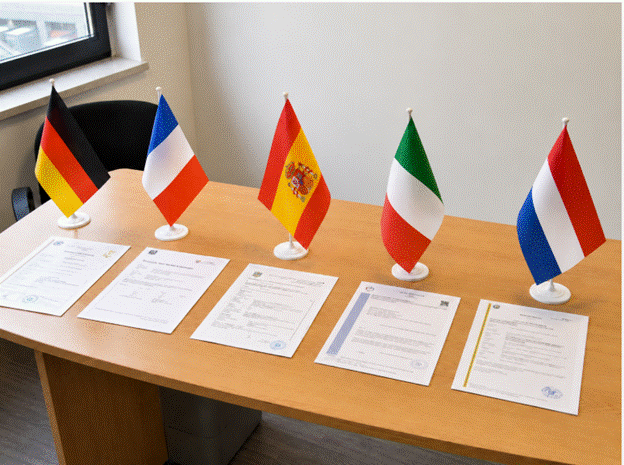
Although the EU has a unified framework, the registration process and requirements of each country are different. The following are the core differences of several mainstream sales countries, organized into a table for your comparison:
| Country | Competent/Registration Authority | Number Type | Standard Review Cycle (with complete materials) | Special Notes |
| Germany | German EAR Foundation (Stiftung EAR) | WEEE-Reg.-Nr. | 4-6 weeks | A local German authorized representative must be designated; a recycling responsibility guarantee is required (can be covered through PRO); brands and equipment categories must be registered item by item; the review is strict, and platform review requirements are high |
| France | Supervised by the French Environment and Energy Management Agency (ADEME), SYDEREP is the registration management system | Unique Identification Number (UIN) | 2-4 weeks | It falls under the category of French EPR (Extended Producer Responsibility) compliance, and is often declared jointly with the Packaging Law and Battery Law; the platform will verify the matching of UIN with the registered entity, brand, category, and eco-organization contract |
| Spain | Spanish National Registry of Waste Electrical and Electronic Equipment (RAEE) | RAEE Registration Number | 3-5 weeks | You must first sign a contract with an officially authorized PRO, and then the PRO will submit the official registration; application materials must be translated into Spanish; Spanish tax identification information (NIF/VAT) may be required |
| Italy | National RAEE Registry under the Italian Ministry of Environment | RAEE Registration Code | 4-7 weeks | Must join an officially authorized PRO; a local Italian responsible entity must be designated; there are many declaration requirements (including annual MUD waste declaration); penalties for overdue are relatively heavy |
| Netherlands | Supervised by the Dutch Ministry of Infrastructure and Water Management, National (W)EEE Register is the official registration system | WEEE Registration Code | 2-5 weeks | Accepts English application materials; small and medium-sized enterprises can apply the simplified declaration process; can register directly with the official authority or through an authorized PRO |
In addition to these mainstream countries, WEEE registration in niche member states such as Eastern Europe and Northern Europe generally has the characteristics of high local language requirements and high unit cost for separate registration. If your sales are mainly concentrated in a few countries, it is recommended to prioritize registering in the main markets; if you really need to lay out multiple countries, you can choose a large PRO with wide coverage to handle it uniformly, reducing communication and time costs.
Reference for WEEE Fees and Cycles
Many people are most concerned about the cost and time. Here is a reference range for you, and the specific situation shall prevail in practice.
What Are the Components of the Fee
WEEE fees are divided into two categories: one-time fees and recurring fees:
• One-time fees: Official registration fee, authorized representative/local responsible entity service fee, material translation/notarization fee, deposit (refundable upon cancellation in some countries).
• Recurring fees: PRO annual management fee, recycling treatment fee (calculated based on actual placement volume/weight), declaration service fee.
Core explanation: There is no EU-wide unified quotation for WEEE, and the specific cost needs to be calculated according to the target country, product category, placement weight, and B2C/B2B attribute.
Let’s give an estimation example, taking small wireless headphones sold in B2C as an example:
The calculation formula is: estimated total placement weight × corresponding category rate + annual registration/service fee + deposit (if any)
Assuming a single headphone weighs 0.05kg, with an annual placement of 10,000 units, the total weight is 500kg:
• Germany has a high rate and requires a deposit, so the total first-year cost is about 1200-1800 euros;
• Spain has a lower rate and no mandatory deposit, so the total first-year cost is about 600-1000 euros.
The above is only for reference, and the actual cost shall be subject to the quotation of the official or formal institutions.
Key Factors Affecting Fees
• Product category: Large home appliances/refrigeration equipment > small electronics > IT accessories. The larger the category and the higher the recycling difficulty, the more expensive the fee.
• Placement volume/weight: The larger the declared placement volume and the heavier the total weight, the higher the recycling fee.
• Selected PRO: The quotations of different institutions vary greatly. Be sure to compare the fee details, not just the total price.
• Country: The unit cost of separate registration in niche member states is higher than that in mainstream countries.
• Sales attribute: The recycling fee rates for B2B and B2C may be different, and generally the B2C rate is higher.
Overall Timeline Reference
From preparation to getting the registration number, the overall cycle is usually about 3-10 weeks, which is specifically divided into two stages:
• Preparation stage: 1-2 weeks, mainly to collect materials and select a PRO or authorized representative.
• Review stage: 2-8 weeks with complete materials, depending on the review efficiency of different countries.
If the materials are incomplete and need to be supplemented, or the classification is wrong and needs to be modified, the cycle will be extended accordingly. In addition, the duration of the guarantee process will also affect the overall progress.
Do Not Forget Continuous Compliance Maintenance After Registration
Many people think that getting a WEEE registration number means everything is fine, but that is not the case — WEEE registration is not a one-and-done thing. Just like you have to file taxes after getting a business license, there are subsequent ongoing compliance obligations, otherwise the registration number may become invalid, and you may even face penalties.
Regularly Declare Placement Data
The core maintenance obligation is to regularly declare your product placement data to the official authority or PRO.
• Declaration cycle: Depends on the rules of the member state, common ones are monthly, quarterly, and annual declarations.
• Declaration caliber: Declare according to the quantity or weight of products actually placed on the market of the target member state, not according to the place of shipment. The placement volumes of B2B and B2C should be counted separately, because the applicable rates are different. Returns that are compliantly returned and no longer placed on the market can be deducted, and those that are refurbished and re-placed must be re-included.
• Zero declaration requirement: Some countries require that even if there is no sales/placement in a certain period, you must submit a zero declaration, otherwise your registration number may be cancelled.
• Consequences of overdue: Overdue declaration will incur late fees, and in serious cases, the registration number will be cancelled, and the platform will also restrict your sales permissions.
• Traceability requirement: Regulatory authorities in some countries will require supplementary declaration of historical placement data and payment of corresponding recycling fees, so do not take chances and delay registration.
Information Change and Cancellation
If your business situation changes, you must handle the WEEE information change in time:
• Situations that require change: change of company entity, addition or removal of brands, adjustment of product scope, replacement of authorized representatives, etc. You must apply to the official authority or PRO for information change in time to avoid violations caused by inconsistent information.
• Adding a sales country: You need to separately handle WEEE registration for the corresponding country, and you cannot directly use the registration number of an existing country.
• Stopping sales/exiting the market: If you decide to stop doing business in a certain country, you must apply for cancellation of WEEE registration according to the local process, otherwise annual fees may continue to be incurred, or you may be deemed to be in violation.
Preservation of Compliance Records
You need to properly keep all WEEE-related materials, including registration certificates, declaration forms, payment vouchers, placement/sales data, product classification basis, guarantee documents, etc.
The retention period depends on the requirements of the member state, usually 4-10 years. These materials are mainly used to respond to regulatory spot checks, platform compliance reviews and audit verifications, so be sure to keep them well.
Usage Specifications of the Recycling Mark
The meaning of the WEEE recycling mark (crossed-out trash can) is: the product cannot be discarded as ordinary domestic waste and needs special recycling treatment.
When using it, note: it is preferred to print it on the product body. If the size or function is limited, it can be printed on the packaging, manual or warranty documents. Do not arbitrarily reduce the mark or change the proportion. Some countries require the registered entity or registration number to be marked next to the mark, which shall be implemented according to local rules.
Common Misconceptions and Pitfall Avoidance Guide
There are many pitfalls in WEEE registration. Here are the most common misconceptions and pitfall avoidance methods to help you avoid wasting money.
7 Most Common Cognitive Misconceptions
1. Misconception: CE/RoHS/REACH/Packaging Law/Battery Law compliance can replace WEEE
Correct answer: These regulations govern completely different dimensions — CE is about safety, RoHS is about hazardous substances, Packaging Law is about packaging recycling, Battery Law is about battery recycling, and WEEE is about the overall scrapping and recycling of electrical and electronic products. They cannot replace each other.
2. Misconception: There is an EU-wide WEEE registration number
Correct answer: The EU only has a unified framework, and each country registers independently. A single-country registration number is only valid in the country of registration, and there is no universal number.
3. Misconception: If the supplier has a WEEE registration number, my own sales are compliant
Correct answer: If you put the product on the market under your own brand, or as an importer introduce the product into the EU, you are the producer. The supplier’s registration number does not cover your sales entity and brand, and you need to register yourself.
4. Misconception: If you find a PRO with EU-wide coverage, you will have a universal registration number
Correct answer: A PRO can help you handle registration in multiple countries, but each country will still issue a separate registration number, and there is no universal number.
5. Misconception: One registration is valid for life
Correct answer: WEEE requires regular declaration of placement volume and payment of recycling fees. If you do not declare or pay fees, the registration number will become invalid.
6. Misconception: A searchable registration number is valid
Correct answer: A searchable registration number only means that the number is real, not that it covers your brand, category, sales entity or target country. Use beyond the scope is invalid.
7. Misconception: Only products with batteries need to register WEEE
Correct answer: Products that are plugged in or operate by electromagnetic fields are also within the scope of WEEE. For example, ordinary plug-in desk lamps and wired mice all need to be registered.
Pitfall Avoidance Points in the Registration Stage
• Do not guess the product classification randomly. If you are not sure, consult the official or authorized PRO. Incorrect classification will waste a lot of time.
• Company information and brand information must be exactly the same as those on the platform and tax documents. Check them several times before submitting.
• Overseas sellers should not directly submit applications to the official authority. They must first designate an authorized representative or PRO in the target country, otherwise the application will be rejected.
• Be wary of false propaganda such as “guaranteed number in 3 days” and “EU-wide universal number”, which are basically scams.
How to Verify the Validity of a Registration Number
If you have got a registration number and want to verify whether it is real, you can follow this method:
1. Log in to the official WEEE query system of the corresponding member state and enter the registration number to search.
2. Do not just check whether it can be found. Be sure to verify the following information: whether the registered entity, covered categories, effective country, and matching brands are consistent with your actual situation.
Remember: being searchable only means that the number is real, not that you can use it. It is valid only when all information matches.
How to Choose a Reliable PRO/Service Provider
When choosing a service provider, follow these four steps, and you basically will not step into pitfalls:
1. Check qualifications: First confirm whether the other party is on the official authorized PRO list of the target country. If there is no authorization, directly pass.
2. Look at the contract and details: Require the other party to provide a written service agreement and clear fee details. Be wary of low-price traps — many intermediaries quote very low prices, but will charge high declaration fees and recycling fees later.
3. Ask about follow-up services: Confirm whether the other party has follow-up services such as declaration reminders, data verification, and compliance warnings. Otherwise, no one will take care of you after registration, and it is easy to have problems.
4. Avoid false propaganda: Anyone who promises “EU-wide universal number” or “extremely fast number issuance” is basically unreliable, so avoid them directly.
Overall, the logic of WEEE registration is not complicated: first determine whether you need to apply and in which countries, then choose the right compliance path, prepare the materials, apply for the number according to the process, and then do a good job of regular declaration and information maintenance, then you can meet the compliance requirements of platforms and regulators.
As long as you remember the two core principles of “no EU-wide universal number” and “the producer is the entity that puts the product on the market”, avoid the common pitfalls mentioned above, and find the right formal service institution, the whole process will not be too troublesome. For newbies who have just started doing the EU market, it is recommended to start registering from the main sales countries and expand gradually, which can not only control costs, but also gradually get familiar with the compliance rules.