
Cross-border sellers who sell electronic products in the EU have most likely received compliance notices from platforms such as Amazon, requiring them to submit a WEEE registration number, otherwise their products will be removed from the shelves. Many people are confused at first: Is this the same as the CE and RoHS certifications I did before? Do small sellers with low sales volume also need to do it? How much does it cost?
This article will thoroughly explain the core logic, judgment methods, practical steps, and common pitfalls of WEEE Extended Producer Responsibility (EPR), so that you can go from a beginner to being able to make basic compliance judgments independently, without being confused by various terms.
First, Understand: What Exactly is WEEE EPR?
If you sell an electric toothbrush to Germany, and the consumer throws it away after it breaks, in the past, the disposal cost of this e-waste was paid by the German government with taxpayers’ money. Now the EU has changed the rules: Whoever first places a product on the EU market for sale shall bear the cost and responsibility for recycling and disposal of the product after it is scrapped — this is Extended Producer Responsibility, abbreviated as EPR.
The WEEE we often refer to is the EU’s waste recycling regulation specifically for electrical and electronic products, with the full name of the Waste Electrical and Electronic Equipment Directive. In essence, it is the specific application of the EPR principle in the electronics field. In other words, EPR is a large regulatory system that covers not only electronic products but also categories such as packaging, batteries, and textiles, and WEEE is just one of them. Many people equate EPR with WEEE, which is the most common misunderstanding.
Don’t Confuse: The Difference Between WEEE and 4 Common Compliance Requirements
Many sellers confuse WEEE with the certifications they have done before. In fact, they regulate completely different links and cannot replace each other. Here is a table to clarify:
| Compliance Requirement | Core Regulatory Content | Relationship with WEEE EPR |
| CE Certification | Basic access requirements related to product safety, health, and environmental protection | Completely independent. One regulates whether the product can be used safely, the other regulates how to dispose of it after scrapping. They cannot replace each other. |
| RoHS Directive | Restricts the content of harmful substances such as lead and mercury in products | Completely independent. RoHS regulates the material composition at the production end, while WEEE regulates recycling and disposal after scrapping. |
| Battery EPR | Waste recycling responsibility for batteries and accumulators | Different applicable categories. Electronic products with batteries need to meet both requirements at the same time. |
| Packaging EPR | Waste recycling responsibility for product outer packaging and sales packaging | Different applicable categories. WEEE regulates the electronic equipment itself, and packaging needs to be compliant separately. |
Why Must Cross-Border Sellers Pay Attention to It?
This is not an option, but a mandatory EU regulation. The core impacts are as follows:
• Non-compliance means you cannot legally enter the EU market, which constitutes illegal sales.
• Mainstream platforms such as Amazon have already connected to compliance checks. If non-compliance is found, products will be directly removed from the shelves, and in severe cases, traffic will be restricted or even the store will be banned.
• Violations may also face penalties such as fines, product recalls, and customs seizure of goods, with fines ranging from thousands to hundreds of thousands of euros.
• It is not a one-time certificate, but an obligation that must be continuously fulfilled throughout the entire sales cycle. It is not just a matter of getting a number.
Current Regulatory Trends
The core regulatory trends can be grasped from three directions:
First, the EU has set minimum recycling targets for each member state: since 2019, each country must either reach 65% of the weight of products placed on the market that year, or 85% of the weight of e-waste generated. There are also subdivided recycling and reuse targets for different categories, which are specifically implemented by each country on its own.
Second, platform inspections will become increasingly strict: in markets with strengthened platform supervision such as Germany and France, platforms may bear inspection or joint liability due to local rules, so they will actively require sellers to submit WEEE numbers, UINs or PRO certificates.
Third, in the long run, the EU’s ecodesign rules will require products to be easier to disassemble and recycle, which will gradually affect compliance costs. You don’t need to study it in depth at the introductory stage, just be aware of this trend.
Do You Need to Bear Responsibility? The Core Depends on “First Placement”
Many people struggle with “am I a WEEE producer?” In fact, the judgment criterion is very simple: Whoever first sells a product to the corresponding EU country is the responsible entity.
The “producer” here does not refer to the factory that actually produces the product, but the “first placement entity” in the legal sense — that is, the natural or legal person who first places electrical and electronic products on the market of an EU member state. Even if you are a Chinese seller, as long as you are the first to sell the product to Germany, you are a WEEE producer in Germany and must bear the corresponding responsibility. If the same product is sold to multiple EU countries, it must be judged separately according to the rules of each country.
4 Common Types of Responsible Entities
Anyone who meets any of the following conditions shall bear WEEE EPR responsibility:
1. Private brand manufacturers within the EU: they produce products themselves and sell them in the EU under their own brands.
2. Importers within the EU: they import products from non-EU regions to the EU and then sell them.
3. Brand owners/OEM sellers: they resell products produced by others under their own brands. Regardless of whether the factory is in the EU or not, as long as it is your brand, you are the responsible entity.
4. Non-EU distance selling sellers: they sell directly to EU consumers through e-commerce platforms or independent websites, and there is no responsible importer within the EU — this is also the identity of the vast majority of Chinese cross-border sellers.
Special Identity Judgment for Cross-Border Sellers
For several common sales models, how is the responsibility calculated:
• Using EU local warehouses (FBA/overseas warehouses): If an EU importer has already completed the placement and registration in the country as the legal producer, the seller needs to verify the contract agreement, invoice entity, brand ownership, and platform submission requirements; if there is no such pre-compliance entity, the country where the warehouse is located is the country of first placement of the product, and the seller shall bear the WEEE responsibility of that country.
• Self-shipping direct mail to the EU: The vast majority of countries will recognize you as a distance selling producer, and you need to be compliant in the target sales country.
• Dropshipping model: Don’t think that you don’t have to bear responsibility just because the goods are not in your hands. As long as you are the entity of the first sale, you still have to bear responsibility according to the rules, regardless of where the goods are stored.
These 3 Types of Entities Do Not Need to Bear Responsibility (Pay Attention to the Boundaries)
Not all entities related to electronic products have to bear responsibility. The following three categories are excluded, but pay attention to the boundaries and don’t apply them randomly:
1. Ordinary consumers resell their used second-hand electronic products, such as individuals selling their old mobile phones on second-hand platforms, do not need to bear responsibility.
2. Service providers that only provide logistics, warehousing, and transportation services, such as freight forwarders and overseas warehouses that only provide warehousing services, do not need to bear producer responsibility.
3. Second-hand product dealers: They are exempt from responsibility only if the resold second-hand products have been compliantly placed on the market within the EU; if they import second-hand electronic equipment from outside the EU, or re-place them on the market after refurbishment and affixing their own brand, they still have to bear producer responsibility.
Special Notes on B2B Sales
Many sellers think that “I sell to enterprises, not individuals, so I don’t need to do WEEE”, which is wrong.
B2B electronic equipment still falls within the scope of WEEE, and the legal responsibility of producers cannot be exempted. Some countries allow producers and enterprise customers to agree on the distribution of recycling responsibilities through contracts, but basic obligations such as registration and declaration still need to be fulfilled. You cannot skip compliance just because you “sell to enterprises”.
Which Products Need to Be Registered? Two Core Criteria
To judge whether a product needs WEEE, you don’t need to memorize complex categories. First, look at two core criteria:
1. The main function relies on electric current or electromagnetic fields to be realized: Whether it is plug-in, battery, USB, or solar power, as long as it works with electricity, even small low-voltage products may be included.
2. The designed operating voltage does not exceed 1000V AC or 1500V DC: Basically, all civilian and commercial electronic products are within this range.
In short, as long as it is an electrical and electronic product that “works with electricity”, it is basically within the scope. But pay attention to a boundary: if the electronic function is only an auxiliary display function of the product, cannot work independently, and is not the core purpose of the product, you cannot directly judge it as a WEEE-covered product just based on the built-in battery or circuit. It needs to be comprehensively confirmed in combination with the main function of the product, whether the electronic components can be sold separately, and the classification rules of the competent authority of the target country.
Don’t arbitrarily exclude products just because they are low-priced, small in size, or are gifts — for example, the small LED lights you give away when selling large appliances are also counted as long as they use electricity.
6 Common Covered Categories
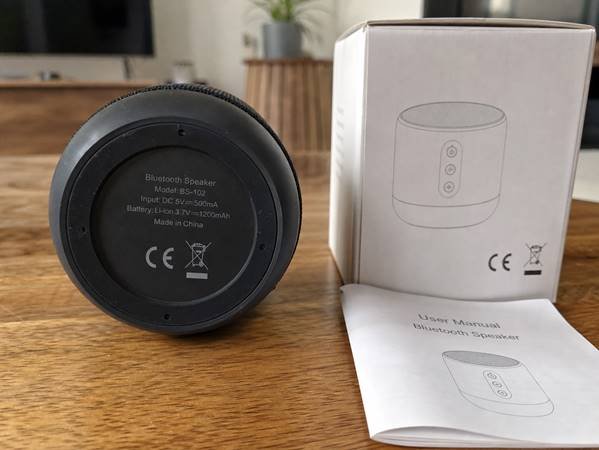
After 2018, the EU unified the product classification of WEEE, with a total of 6 categories, which basically cover the products of the vast majority of cross-border sellers:
1. Temperature exchange equipment: refrigerators, air conditioners, heat pumps, water dispensers, dehumidifiers, etc.
2. Screen/display equipment: TVs, computer monitors, tablets, electronic billboards, navigators, etc.
3. Lighting equipment: LED lights, desk lamps, stage lights, lighting control devices, street lights, etc.
4. Large equipment: washing machines, dishwashers, large power tools, vending machines, elevator electronic components, etc.
5. Small equipment: vacuum cleaners, coffee machines, electric toys, electronic watches, electric toothbrushes, small kitchen appliances, etc.
6. Small IT and telecommunications equipment: mobile phones, computers, routers, headphones, keyboards, USB flash drives, cameras, etc.
How to Judge Boundary Products That Are Uncertain?
Some products are relatively vague, and you can’t go wrong by judging according to the following rules:
• Furniture, clothing, and toys with electronic modules: as long as the electronic function can work independently, they fall within the scope. For example, pillows with Bluetooth speakers and sports shoes with LED lights are counted as long as the speakers and lights can be used separately.
• Set/combined products: the electronic components inside are judged separately. If the electronic components are part of the core function, the whole product is included. For example, an electric fan with a remote control is counted as a WEEE product as a whole; a small facial cleansing device given away when buying skin care products is counted separately.
• Spare parts sold separately: electronic spare parts such as chargers, power adapters, and control boards with circuit functions sold separately usually need to be judged according to WEEE; batteries sold separately are usually not treated as WEEE equipment, but will trigger battery EPR/battery regulation obligations, while complete machines with batteries are judged for both WEEE and battery obligations at the same time.
• Refurbished/re-branded products: re-placing them on the EU market after changing the brand is equivalent to a new placement, and producer responsibility must be borne again.
• Products with batteries: they trigger both WEEE EPR and battery EPR obligations, and both must be completed.
Clearly Exempted Categories (Don’t Apply Them Randomly)
The following products are clearly not within the scope of WEEE, but note that the scope of exemption may have slight differences from country to country. If you are unsure, it is best to check the official regulations of the target country and do not make your own judgment:
• Special equipment for military security purposes, such as electronic equipment related to weapons and ammunition.
• Space equipment, prototype equipment specifically for research and development.
• Large fixed industrial tools: large industrial electronic equipment permanently installed in industrial premises and operated by professionals, with specific definitions varying from country to country.
• Large fixed installations: large electronic systems that are permanently fixed in buildings or infrastructure and installed and maintained by professionals, such as building fire control central systems.
• Medical electronic equipment implanted in the human body or with infection risks, such as pacemakers.
• Components in means of transport (including non-road mobile machinery) that are not part of the core functions of electrical and electronic products have relatively vague boundaries, and it is recommended to follow the rules of the target country.
• Products only exported outside the EU, manual tools/decorations/ordinary packaging materials without electrical functions, these are definitely not counted.
Registration Is Only the First Step: 7 Mandatory Legal Obligations
Many people think that getting a WEEE registration number means compliance. In fact, registration is just the beginning. Throughout the entire sales cycle, you also have to fulfill the following 7 obligations, and missing any one is considered a violation.
1. Registration Obligation: Obtain Compliance Identity Before Entering the Market
• There is no EU-wide WEEE number. You need to register separately in each member state where you sell. For example, if you sell to Germany and France at the same time, you need to register WEEE numbers for both countries respectively.
• The name of the registration number varies from country to country. For example, it is called WEEE-Reg.-Nr. in Germany and UIN (Unique Identification Number) in France.
• Registration must be completed before the first sale. Selling first and making up for registration later is a violation. Even if you only sold for a few days without registration, you will be fined if found out.
2. Authorized Representative Obligation: Local Docking Requirements for Non-EU Enterprises
If you are a company registered in a non-EU country, most EU member states require you to designate an authorized representative within the EU to help you connect with regulatory authorities, complete registration and declaration, and also bear joint legal liability.
Note: An authorized representative is not the same as a PRO (Producer Responsibility Organization). You can find different institutions to act as authorized representative and PRO respectively, or you can find the same institution to provide both services at the same time, depending on your own needs.
3. Financial Guarantee and Payment Obligation: Bear the Actual Recycling Cost
The core logic is very simple: how many products you sell, you have to bear the corresponding costs of recycling, transportation, and disposal of scrapped products.
• B2C products need to provide sufficient financial guarantee for future scrapping and recycling, which is usually completed synchronously when joining a PRO, so you don’t need to handle it separately.
• The fee is approved according to the product category, weight, and recycling difficulty, and the fees for B2C and B2B may be different.
• Most countries collect fees uniformly through PRO. If there are unsold products or returns, you can apply for a refund or deduct the next period’s fee according to the rules.
4. Labeling Obligation: Inform Consumers of Sorting and Recycling
This is the common crossed-out trash can icon, also known as the WEEE mark.
• It is preferred to be affixed to the product itself. If the product is too small or cannot be affixed due to functional reasons, it can be printed on the outer packaging, manual, or warranty documents.
• Products placed on the market after August 13, 2005 must also be marked with the producer’s identification information. Some countries require the marking of the placement date or black bar mark, depending on the requirements of the target country.
• Don’t think that affixing the mark means compliance. Labeling is only an obligation to inform, and cannot replace core obligations such as registration, payment, and declaration.
5. Declaration Obligation: Regularly Report Sales Data
• The declaration content includes product category, weight/quantity, B2C/B2B attribute, and actual sales data.
• The declaration cycle varies from country to country. Most are annual declarations, and some countries require quarterly or even monthly declarations.
• The data must be true and traceable. False or omitted declarations will trigger supplementary fees, or even fines.
6. Recycling and Disposal Obligation: Ensure Waste Products Go Through Formal Channels
Waste electronic equipment must be environmentally disposed of by qualified institutions and cannot flow into ordinary garbage.
Most sellers fulfill this obligation by joining a PRO. The PRO will uniformly build a recycling network and connect with disposal institutions, so you don’t have to find recycling points yourself. Some countries also require distributors to cooperate with “trade-in” recycling points, so pay attention if you have offline distributors.
7. Information and Record Keeping Obligation: Keep Good Accounts for Inspection
• For consumers: inform them of the recycling channels and sorting placement requirements for waste products, for example, explain them on the product detail page or in the manual.
• For disposal institutions: provide information such as product disassembly guidelines and the location of harmful substances to facilitate environmental protection disposal.
• Accounts such as sales data, weight vouchers, and declaration records must be kept for 3-5 years (the specific number of years depends on the requirements of each country), and must be available when regulatory authorities inspect.
Practical Implementation: How Small and Medium Sellers Can Quickly Achieve Compliance
You don’t have to handle all WEEE compliance by yourself. There are two implementation modes, and you can choose according to your own scale.
How to Choose Between the Two Compliance Modes?
• Join a PRO (Producer Responsibility Organization): the first choice for small and medium sellers. A PRO is an institution that specifically helps producers fulfill their EPR obligations. It will handle the entire process of registration, recycling, and declaration on your behalf. You just need to pay the fee and provide the data, which is worry-free and labor-saving.
• Self-built recycling network: only suitable for top brands with extremely high annual sales volume. It requires building a local recycling system and applying for qualifications by yourself, with very high thresholds and high costs.
Generally speaking, sellers with annual sales volume of less than 100,000 units (slightly different in different countries) should prioritize the PRO mode. This number is only a commercial reference for choosing between PRO and self-built recycling network, not a WEEE registration exemption line; whether registration is required still depends on the product, responsible entity, and target country rules.
Basic Steps to Join a PRO
1. First, clarify your target sales country, the WEEE category your product belongs to, and the estimated annual sales volume.
2. Choose a PRO institution that covers the corresponding categories, has formal qualifications, and is recognized by e-commerce platforms.
3. Submit registration materials, and complete the confirmation synchronously if an authorized representative is required.
4. After paying the fee, get the WEEE registration number and submit it to the backend according to the platform requirements.
5. Regularly report the actual sales volume data, and refund or make up the difference according to the actual usage.
Documents to Prepare Before Registration
• Company entity certification documents, brand information.
• WEEE category of the product, net weight data of a single SKU.
• Estimated annual sales volume, B2C/B2B sales ratio.
• Authorized representative documents (if required), PRO service contract.
Common Documents Submitted to Platforms
• Official proof of WEEE registration number (registration certificate or official query screenshot).
• PRO service contract, authorized representative certificate (if required by the platform).
• Product classification and weight description (if required by the platform).
Composition of Compliance Costs
WEEE compliance costs are divided into two parts. There is no unified EU rate. The fees vary by country, category, and sales volume. For specific inquiries, you need to contact the PRO of the target country:
• Fixed costs: registration fee, PRO annual membership fee, authorized representative service fee (if required).
• Variable costs: recycling and disposal fees calculated based on product weight/category, which vary with sales volume.
How to Handle Cross-Country Sales? Differences in National Rules and Registration Country Judgment
Sellers who sell across countries often wonder: can a WEEE number from one country cover the entire EU? This starts with the essence of WEEE rules.
Why Are the Rules Different from Country to Country?
WEEE is an EU framework directive, which is equivalent to setting minimum standards for each country. The specific implementation rules must be converted into national laws by each member state. Therefore, the registration agencies, numbering rules, fee standards, and declaration cycles vary from country to country. E-commerce platforms also check compliance qualifications according to the country where the sale takes place. Using a WEEE number from one country to cover all EU markets is a very common violation.
Core Difference Dimensions of National Rules
The differences in national rules are mainly concentrated in four dimensions:
• Registration requirements: some countries mandate that non-EU enterprises have an authorized representative within the EU.
• Declaration cycle: ranging from annual to monthly, with most countries having annual declarations.
• Cost level: recycling costs in Western European countries are generally higher than in Eastern European countries.
• Recycling targets: each country can increase the local recycling rate on the basis of the EU’s minimum requirements.
Compliance Characteristics of Key Markets
Several markets that Chinese sellers often operate in have their own characteristics:
• Germany: the competent authority is the EAR Foundation, platform inspections are very strict, and detailed product classification information is required for registration.
• France: registered through the SYDEREP system, the UIN number is directly bound to the platform, and it is usually necessary to handle multiple types of EPR such as packaging and batteries at the same time.
• United Kingdom: after Brexit, it is no longer part of the EU WEEE system, and a separate UK WEEE registration is required. Special arrangements apply to Northern Ireland, and the rules need to be checked separately.
• Italy/Spain/Netherlands: all have independent registration systems, the overall process is similar to Germany and France, with slight differences in details.
Judgment Logic of Registration Country for Cross-Country Sales (By Priority)
In practice, you cannot simply use one WEEE number to cover the EU, nor can you mechanically understand that all countries have exactly the same process; you should check one by one according to the country of first placement, the country of local warehouse, and the target country of distance selling. The core judgment priorities are as follows:
1. Step 1: Determine the member state where the product is first placed on the market, and register in that country.
2. Step 2: As long as you have a local warehouse (FBA/overseas warehouse) in a certain country, you must register in that country.
3. Step 3: For distance selling from a single EU warehouse to other member states, many member states will require distance selling producers to register in the target country. You cannot only rely on the registration number of the warehouse country to cover, and you need to verify the distance selling compliance rules of the target country in advance.
Basic Compliance Strategy for Cross-Country Sales
• Prioritize compliance in countries with high sales volume and strict platform requirements, such as Germany and France. These countries have strict inspections, so handle the highest risks first.
• For test markets with low sales volume, you can first declare according to the lowest sales volume tier, but you must not be exempted. Even if you only sell a few units a year, you need to be compliant.
• Basic data such as product classification and weight can be reused, as long as they adapt to the registration requirements of different countries, and you don’t need to reorganize them for each country.
Pitfall Avoidance Guide: Never Step Into These Misconceptions
The following are the most common WEEE compliance misconceptions for cross-border sellers, covering the vast majority of high-frequency violation risks:
5 Most Common Compliance Misconceptions
1. Misconception: Small sellers/low sales volume do not need to do WEEE
Correct answer: The vast majority of EU countries do not have minimum sales volume exemptions. Even if you only sell 1 product, you must fulfill the WEEE EPR obligation. Don’t take chances.
2. Misconception: Affixing the WEEE mark/having CE/RoHS certification means compliance
Correct answer: None of these can replace the WEEE obligations of registration, payment, and declaration. They are completely different compliance requirements and cannot replace each other.
3. Misconception: The factory has already done WEEE, so the seller doesn’t need to worry about it
Correct answer: The responsible entity of WEEE is the “entity that first places the product on the market”, not the manufacturing factory. Usually, if you sell under your own brand, you are the legal first placement entity, and the factory’s registration cannot automatically cover your sales obligations. If the factory or EU importer completes the registration in the target country in its own name and brand and bears the corresponding placement responsibility, you need to verify in advance the contract agreement, brand ownership, scope of registered countries, and whether the platform accepts this compliance method; non-EU entities can also fulfill WEEE obligations by designating an EU authorized representative.
4. Misconception: One registration means permanent compliance
Correct answer: WEEE is an obligation that is continuously fulfilled, not a one-time certificate. Registration information must be updated in time when sales volume or categories change, and declarations must be made on time every year. It is not a once-and-for-all matter after registration.
5. Misconception: Only selling B2B products does not require fulfilling obligations
Correct answer: B2B products are also within the scope of WEEE, and legal responsibilities cannot be exempted. It’s just that some countries allow the distribution of recycling responsibilities to be agreed with enterprise customers through contracts, but basic obligations such as registration and declaration still need to be fulfilled.
Actual Consequences of Violations
• Platform side: product listings are removed, store traffic is restricted, or even accounts are banned. Mainstream platforms have all connected to compliance checks, and the processing speed is very fast.
• Regulatory side: fines range from thousands to hundreds of thousands of euros, depending on the violation circumstances and country. In severe cases, product recalls and prohibition of sales in the country will be required.
• Customs side: goods may be seized and customs clearance delayed. Subsequent disposal needs to be determined in combination with the target country’s law enforcement rules, possibility of correction, and status of the goods. It may require correction of compliance materials, return, destruction, or prohibition of entry for sale, which will cause additional logistics and inventory losses.
Entry-Level Self-Check List (4 Steps)
If you are not sure whether you are compliant, just check according to these 4 steps:
1. Product side: confirm whether the product falls within the scope of WEEE, and whether it involves other EPR obligations such as batteries and packaging at the same time.
2. Entity side: confirm whether you are a WEEE producer in the target sales country, that is, whether you are the one who first places the product on the market of that country.
3. Country side: confirm that WEEE registration has been completed in all EU countries where you sell, with no omissions.
4. Obligation side: confirm that labeling, regular declaration, and timely payment of fees have been completed as required, with no missing legal obligations.
Final Summary
WEEE EPR is not a one-time access certification with a number, but a set of continuous obligations formed around producer identity, product coverage, member state registration, payment and declaration, labeling, and recycling and disposal. When making compliance judgments, cross-border sellers should first confirm whether the product is within the scope and whether they are the responsible entity, then check the registration requirements, PRO selection, authorized representative, and platform submission rules one by one according to the sales country, and use the self-check list to investigate risks, so as to avoid consequences such as product removal, fines, or cargo seizure due to cognitive deviations.