
1. Basic Understanding: Fundamentals of VCCI and Electromagnetic Emission Testing
1.1 Core Attributes of VCCI
VCCI is a control requirement for unintentional electromagnetic interference formulated by a self-regulatory organization of Japan’s electronic information industry, with its core basis being the current VCCI specifications and the VCCI-CISPR 32 standard. It is not a mandatory certification of the Japanese government, but due to the general requirements of Japanese electronic and electrical channels and purchasers, it has become a de facto access condition for entering the Japanese market.
The scope of VCCI’s regulation is clear: it only covers unintentional electromagnetic emissions emitted by products, and does not involve other requirements such as electrical safety, wireless transmission performance, and immunity. For products with wireless transmission functions such as Wi-Fi and Bluetooth, the legal use of their wireless functions needs to separately comply with the relevant regulations of Japan’s Ministry of Internal Affairs and Communications (MIC), and they cannot replace each other with VCCI requirements.
1.2 Meaning of Electromagnetic Emission Testing
The essence of electromagnetic emission testing is to detect the intensity of electromagnetic noise that is unintentionally leaked outward when the product is in operation, with the purpose of preventing such noise from interfering with the normal operation of surrounding electronic devices such as TVs, mobile phones, Wi-Fi devices, and medical equipment.
It should be clarified that VCCI emission testing only measures “interference emitted by the product”, and does not measure “the ability of the product to resist external interference”. The latter falls within the scope of immunity testing and is not covered by VCCI emission testing.
1.3 Quick Reference of Key Terms
To facilitate understanding of the subsequent content, four core terms are first explained in plain language:
• EMC (Electromagnetic Compatibility): The overall ability of a product to neither cause unacceptable electromagnetic interference to the outside world nor withstand certain external interference, including two core dimensions: emission and immunity.
• Electromagnetic Emission (Emission): Electromagnetic disturbance emitted outward by a product, which is the core object of VCCI emission testing.
• Immunity: The ability of a product to resist external electromagnetic interference, which is not within the scope of VCCI emission testing.
• VCCI-CISPR 32: The current core test standard framework of VCCI, which is converted based on the international CISPR 32 standard and adjusted in combination with local Japanese rules. The specific requirements shall be subject to the current valid version officially released.
2. Applicability Judgment: Whether the Product Falls Within the VCCI Scope and Which Grade to Use for Testing
To determine whether a product needs VCCI testing and which grade to use for testing, you can screen in two steps: first confirm whether it is within the coverage scope, and then determine the test grade.
2.1 Pre-screening: First Verify Whether the Product Belongs to the VCCI Coverage Scope
The core covered categories are Information Technology Equipment (ITE) and multimedia equipment, and the specific scope shall be subject to the current provisions of VCCI-CISPR 32. A preliminary judgment can be made from the following dimensions:
• Whether the main function of the product belongs to IT or multimedia categories such as computers, network equipment, audio-visual equipment, and office equipment;
• Whether the product contains digital circuits or high-frequency circuits inside;
• Whether it has external power ports and communication ports;
• Whether it is special industry equipment with dedicated EMC regulations such as medical, automotive, aerospace, etc.
Special attention should be paid: if a product is subject to other regulations (such as the Pharmaceutical Affairs Law for medical products, JASO standards for automotive products), it does not mean that it is automatically exempt from VCCI, and it is still necessary to check the applicable clauses of VCCI item by item.
If you have doubts about self-judgment, you can check the product classification list officially released by VCCI, or consult a VCCI registered laboratory or the VCCI Secretariat for confirmation.
2.2 Situations That May Not Fall Within the VCCI Scope or Require Other Evaluation Paths
The following types of products usually do not need to undergo separate VCCI emission testing, or apply special rules:
• Pure mechanical/passive products: Products with no active electronic components at all, such as ordinary keyboard wrist rests and passive speakers, do not generate electromagnetic emissions and do not require testing.
• Equipment explicitly excluded by VCCI: Categories that are explicitly listed as inapplicable in the current specifications shall be subject to the latest official clauses, and cannot be judged solely based on experience.
• Components not sold to end users: Semi-finished products that are not directly sold to end consumers, such as built-in motherboards of laptops and power modules. VCCI compliance is the responsibility of the complete machine manufacturer, and no separate testing is required.
• Professionally installed fixed equipment: For example, large fixed IT monitoring systems specially installed in industrial control rooms, it is necessary to check whether special rules apply based on the installation scenario and product category.
• Equipment with wireless transmission functions: Intentional wireless signals (such as Wi-Fi, Bluetooth) are regulated by MIC regulations and require relevant MIC licenses; however, the unintentional electromagnetic noise generated by the product during operation still needs to be checked against VCCI requirements, and the two types of compliance cannot replace each other.
2.3 Grade Classification of Class A and Class B
VCCI test grades are only divided according to the intended use environment of the product, and have nothing to do with other parameters. There are two categories in total:
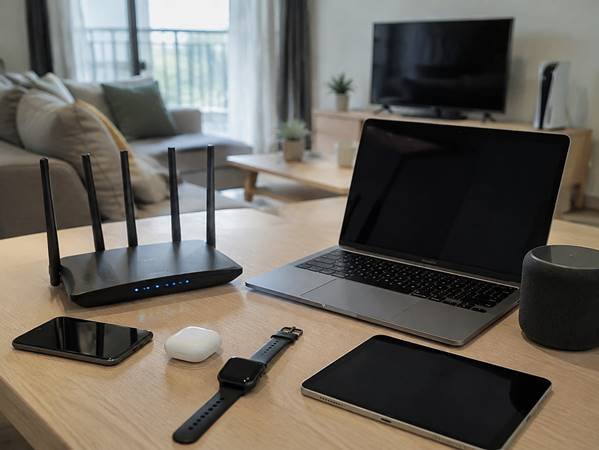
• Class B (for residential environment use): Applicable to scenarios where the public can enter freely, such as family residences, coffee shops, ordinary offices, and shopping malls. In such scenarios, the equipment density is high and the distance from users is close, so the limits are stricter. Typical products include home routers, laptops, consumer-grade digital products, etc.
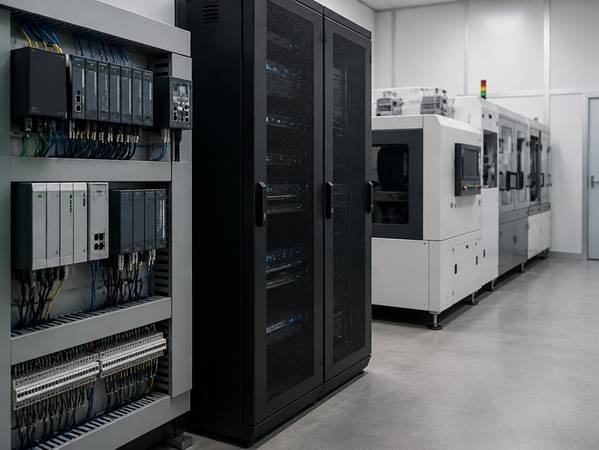
• Class A (for non-residential environment use): Applicable to closed scenarios that the public does not normally enter freely, such as industrial factories, operator-specific equipment rooms, and closed industrial control sites. In such scenarios, there are relatively few equipment and professional personnel manage them, so the limits are relatively lenient. Typical products include industrial controllers, equipment room-specific servers, large-scale production and testing equipment, etc.
2.4 Method for Determining Product Grade
The core basis for determining the product grade is the intended use environment of the product and the target user officially declared by the manufacturer, which can be comprehensively judged by referring to the use scenario description and installation requirements in the product manual and sales copy. For example, if a projector’s manual clearly states “suitable for home theater use”, even if it also has commercial attributes, it must be evaluated according to Class B.
When encountering ambiguous scenarios, the principle of strictness is usually followed: if the product can be purchased by ordinary consumers and it is reasonably foreseeable that it will be used in a residential environment, it is generally evaluated according to Class B, and the final classification shall be subject to the current VCCI rules.
It should be particularly emphasized that the grade is only determined by the intended use environment, and has no direct relationship with the product’s power, volume, and price. Commercial products do not necessarily belong to Class A.
3. Core Test Items: What Exactly Does VCCI Electromagnetic Emission Test
The following discussion of test items is based on the premise that the product has fallen within the coverage scope of VCCI-CISPR 32. According to the interference propagation path, VCCI electromagnetic emission testing is mainly divided into three categories: conducted emission at power ports, conducted emission at wired ports, and radiated emission. The core difference is the propagation medium of interference: the first two propagate along cables, and the third propagates through air.
3.1 Conducted Emission at Power Ports: Interference Transmitted Along Power Cables
Plain language explanation: The electromagnetic noise generated when the product is in operation is conducted along the power cord to the power grid, thereby interfering with other equipment in the same power grid. For example, after a low-quality charger is plugged into a power strip, the nearby speaker makes noise, which is most likely caused by power conducted interference.
• Typical test frequency band: 150kHz-30MHz (may be adjusted for special products, subject to standard requirements);
• Detection methods: quasi-peak, average value, different frequency bands correspond to different limit requirements;
• Applicable conditions: products with external AC/DC power ports; devices powered purely by batteries and without external charging cables (such as disposable electronic toys) do not need to test power port conducted emission;
• Common noise sources: switching power supplies, DC-DC converters, unreasonable ground loop design.
3.2 Conducted Emission at Communication and Other Wired Ports: Interference Transmitted Along Signal Lines
Plain language explanation: Electromagnetic noise is transmitted outward through wired communication/signal ports such as network cables, USB, and HDMI. For example, the common-mode noise of high-speed network ports may enter the building wiring system along the network cable, increasing the risk of interference to adjacent equipment; VCCI testing focuses on whether the disturbance level injected outward by the port is lower than the limit, rather than directly verifying whether a certain peripheral device will fail.
• Typical test frequency band: determined according to port type and standard requirements, mostly in the range of 150kHz-30MHz;
• Applicable conditions: ports with external long cables and communication/data transmission functions; short-distance interfaces inside the device (such as the built-in memory slot of a laptop) do not need to be tested;
• Common noise sources: high-speed interface chips, unreasonable signal trace design, insufficient port filtering.
3.3 Radiated Emission Test: Interference Radiated into the Air
Plain language explanation: Electromagnetic wave interference directly radiated by the product into the air, similar to an invisible low-power small radio station leaking signals outward.
• Typical test frequency band: 30MHz-1GHz; testing above 1GHz needs to be determined whether to expand based on the highest internal clock/signal frequency of the device and standard clauses;
• Test distance: usually 3 meters or 10 meters. Different distances correspond to different limits and cannot be directly compared horizontally;
• Applicable conditions: products that fall within the VCCI scope and contain digital/high-frequency circuits usually need to consider radiated emission testing, including battery-powered products without external cables (such as pure Bluetooth headsets);
• Common noise sources: high-speed CPU/memory, display/network interfaces, chassis gaps, external cables (cables will act as antennas to amplify radiation).
3.4 Correlation of Test Items and Common Misconceptions
Most consumer electronics with external power supplies and wired interfaces need to perform power port conducted emission + radiated emission tests at the same time; if they have wired communication ports, they also need to add conducted emission tests for the corresponding ports.
Two common misconceptions need attention:
First, there is no inevitable pass correlation between conducted and radiated tests – their propagation paths, noise sources, and rectification directions are all different. Passing the conducted test does not mean passing the radiated test, and vice versa, both need to be tested separately;
Second, not all products with cables need to undergo conducted testing. It needs to be comprehensively judged based on port type, power supply method, and standard requirements. For example, a pure battery-powered headset only has a charging cable and no external power supply operating mode, so there is no need to test power conducted emission.
4. Prerequisites for Test Validity: Under What Conditions Are Test Results Recognized
Not all VCCI test reports can be used for compliance declaration or channel audit. Only test results that meet the four categories of requirements: facilities, samples, layout, and standard version have formal validity.
4.1 Recognition Boundaries of Test Facilities and Reports
Formal data used for VCCI conformity confirmation, enterprise notification, or channel audit should usually come from VCCI registered measurement facilities, and the list of relevant facilities can be queried on the VCCI official website. If data from unregistered facilities is used, it should first be confirmed whether it is acceptable in accordance with current VCCI rules, target channels, and customer requirements.
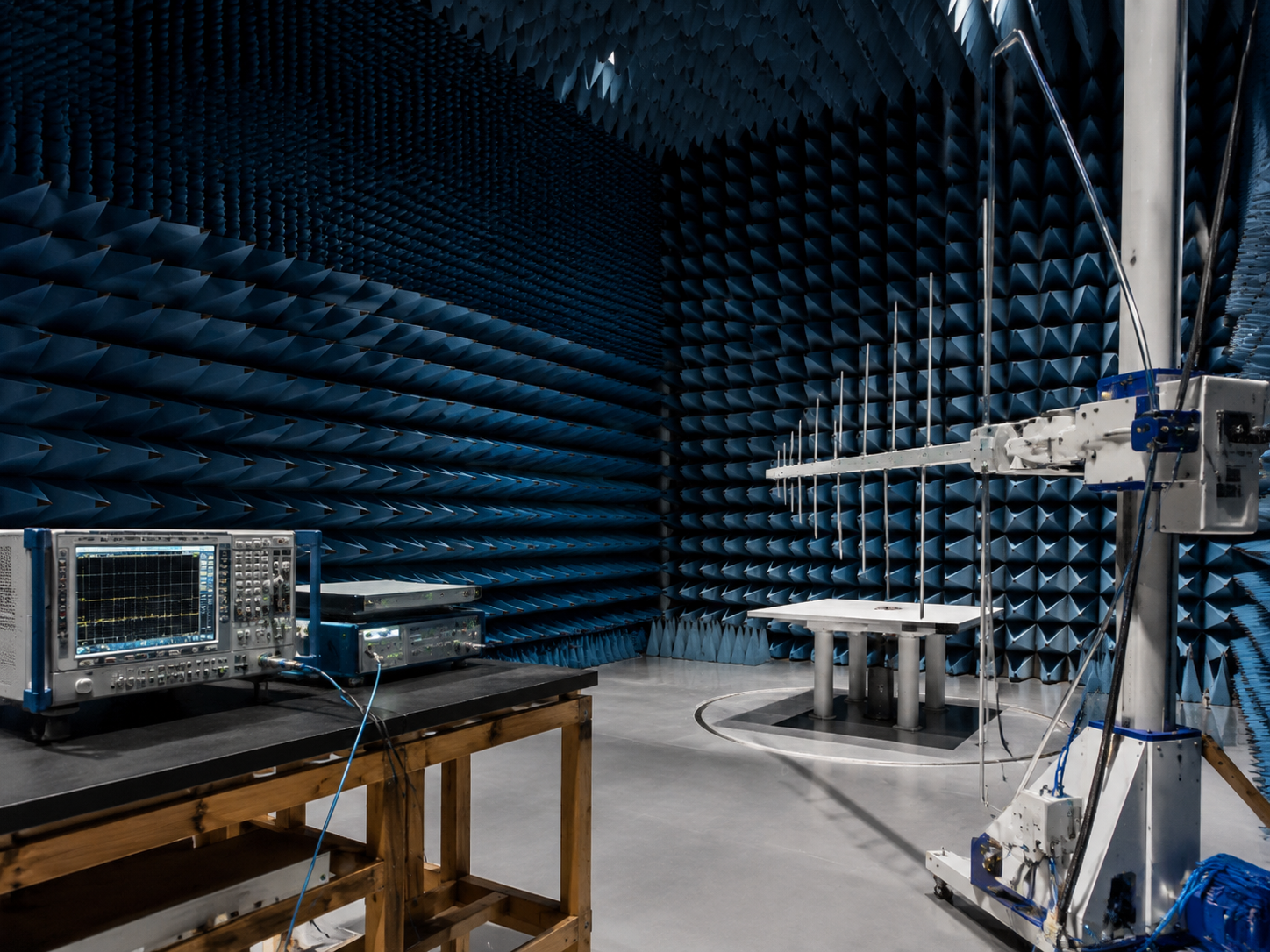
Radiated testing has high requirements for the site, and needs to be carried out in a shielded anechoic chamber or a VCCI-recognized open area test site. Both the test site and instruments need to be calibrated regularly to ensure the accuracy of results.
Pre-scans and internal tests carried out by enterprises themselves can only be used for engineering debugging and problem investigation, and cannot be directly used as formal conformity evidence.
4.2 Status Requirements for the Tested Product
Test samples must be able to represent the final mass production state, and specially optimized prototypes (such as temporarily adding additional filter devices for passing the test and then removing them during mass production) shall not be used. Otherwise, the test results can hardly represent the compliance of mass-produced products.
During testing, representative operating modes that may generate maximum emissions during normal use should be selected, such as a router transmitting data at full speed, a monitor displaying a high-contrast picture with the screen on; there is no need to test extreme combination modes that users almost never use, but the states most prone to exceeding the limit must be covered.
The test must be matched with standard accessories for normal sales, such as original power cords, standard adapters, and default peripherals. It is not allowed to deliberately select accessories with better filtering performance to make up the number.
Information such as the product’s operating mode, port terminal configuration, auxiliary equipment, and software load must be clearly recorded in the report to confirm the traceability of the test.
4.3 Consistency Requirements for Test Layout
Electromagnetic emission test results are very sensitive to layout: slight differences in cable length and routing, equipment placement height and angle may cause significant fluctuations in results. Therefore, the standard has clear and unified regulations on the test layout, which must be strictly implemented. Otherwise, the results will not be comparable.
At the same time, the software version and hardware configuration used in the test must be completely consistent with the mass-produced and sold products. If the engineering version software is used for testing and the version is changed during mass production, the original test results cannot be directly used.
Test results from different test distances and different sites cannot be directly compared horizontally, and must be judged separately corresponding to their respective limits.
4.4 Standard Version and Transition Period Rules
The test must adopt the currently valid test specification version of VCCI. When the standard version is updated, VCCI will announce an official transition period. During the transition period, old version reports are still valid, and after the transition period, tests must be conducted according to the new version.
There is no unified fixed validity period of 3 or 5 years for VCCI reports; whether it can continue to be used needs to be comprehensively judged based on the standard version and transition period, whether the product hardware/software/key accessories have changed, the enterprise notification/registration status, and the target channel requirements. When the standard remains unchanged and the product has not been changed, the report can usually be used as the basis for continuous compliance, but changes in official rules should still be reviewed regularly.
5. Result Interpretation: How to Read VCCI Test Reports and Judge Compliance
After getting the VCCI test report, you can quickly check the validity and compliance according to the following steps, without being troubled by complex spectrograms.
5.1 Steps for Checking Basic Information of the Report
Quickly confirm the validity of the report in four steps:
1. Check product information: The product model, hardware version, software version, and configuration are completely consistent with the mass-produced product to be sold;
2. Check classification and standards: The test grade (Class A/Class B) matches the intended use environment of the product, and the applicable standard is the current valid version of VCCI-CISPR 32;
3. Check test coverage: The test items, covered frequency bands, test distances, and port types all cover all requirements of the product;
4. Check test qualifications and records: The test facility is a VCCI registered institution, and the test date, layout records, and operating mode records are complete.
5.2 Correct Method for Matching Limits
To judge whether a test point is qualified, the following conditions must be matched at the same time, and limits cannot be randomly found for comparison:
1. Product grade (Class A/Class B);
2. Test type (power conducted/wired port conducted/radiated);
3. Frequency band;
4. Detection method (quasi-peak/average value).
If it is a radiated test, the test distance (3 meters/10 meters) must also be additionally matched.
At the same time, attention should be paid to the difference in units: the unit of conducted test is dBµV (voltage level), and the unit of radiated test is dBµV/m (field strength). The two are different physical quantities and cannot be confused for comparison.
5.3 Official Compliance Judgment Rules
VCCI compliance judgment must meet the following requirements at the same time, and cannot be directly judged solely based on a single spectrogram or a single peak:
First, the measured values at all required frequency points and under all detection methods are lower than the corresponding limits;
Second, the report should list the measurement uncertainty and handle it in accordance with VCCI applicable standards and laboratory judgment rules;
Third, the tested product configuration and status are completely consistent with the mass-produced and sold products.
If the measured value is close to the limit in the enterprise’s internal test, even if the report judges it as passed, the batch compliance risk should be evaluated in combination with mass production fluctuations and uncertainty.
5.4 Reference Significance of Margin
Margin refers to the value by which the test value is lower than the limit, which is equivalent to the design safety margin. For example, if the test value is 3dB lower than the limit, the margin is 3dB. The higher the margin, the stronger the product’s ability to cope with component differences and assembly errors, and the lower the risk of exceeding the limit during mass production.
It should be noted that the 3dB margin is only a commonly used design reference or supply chain risk control indicator within the enterprise, and is not a mandatory requirement of VCCI. VCCI only requires that all frequency points be lower than the limit, and the level of margin is balanced by the enterprise based on cost and performance requirements.
5.5 Patterns of Common Unqualified Frequency Points
If the test fails, the problem direction can be roughly judged through the exceeding frequency points:
• Unqualified power port conducted emission: mostly concentrated in the low frequency band, usually related to the operating frequency of the power circuit (such as the switching frequency of the switching power supply and its harmonics), and most likely due to insufficient power filter design;
• Unqualified radiated emission: mostly concentrated in the medium and high frequency bands, usually related to the clock frequency and its harmonics of CPU, memory, and high-speed interfaces, and most likely due to insufficient shielding or filtering design of high-speed circuits.
The above are general rules, and the specific reasons need to be analyzed in combination with the actual situation of the product.
6. Beginner Troubleshooting: Basic Positioning and Handling Ideas When Failing the Test
If the test fails, there is no need to rush to rectify. In many cases, it is caused by test layout or configuration problems. Even if you don’t understand circuits, you can do preliminary troubleshooting according to the following steps.
6.1 Common Causes of Conducted and Radiated Emission Exceeding Limits
The common causes of failure in different test items are significantly different:
• Conducted emission exceeding the limit: Common causes include insufficient design of the switching power supply filter circuit, improper grounding method or excessive ground loop, and excessive interference of the external power adapter itself; if the wired port conducted emission is unqualified, it may also be caused by insufficient port filtering.
• Radiated emission exceeding the limit: Common causes include electromagnetic leakage of high-speed clocks and interface traces, insufficient shielding of chassis gaps and connector openings, and power cords and signal cables acting as antennas to amplify radiation.
6.2 Beginner-level Positioning Method (No Circuit Foundation Required)
Step 1: First eliminate test layout problems. Check whether the cable length and routing, equipment operating mode, and accessories meet the standard requirements, and confirm whether the result is high due to irregular layout. There is no need to adjust the product design at the beginning.
Step 2: Roughly locate the noise source using the elimination method. For example, when the radiated emission exceeds the limit, you can try to turn off specific functions, replace standard accessories, disconnect specific cables, observe the value changes, and initially judge the noise source module.
Step 3: Further narrow the scope. The specific leakage location can be located through the correspondence between unqualified frequency points and the operating frequency of internal components of the product (for example, the exceeding frequency point is exactly the CPU clock frequency), near-field probe detection, etc.
Step 4: It is not recommended for non-professionals to rectify by themselves without evaluation. Randomly adding filters or changing the grounding method may affect the electrical safety, wireless performance or other functions of the product. It is recommended to contact the testing agency or professional design party to provide a rectification plan.
6.3 Precautions for Rectification and Retest
Rectification requires comprehensive evaluation, and other core performances such as safety, wireless performance, and heat dissipation of the product cannot be sacrificed in order to pass the test.
During the retest, the same configuration, site, and operating mode as the original test must be maintained to ensure the comparability of results; if the rectification involves configuration changes (such as adding filter devices), it must be clearly stated in the report, and it must be confirmed that the mass-produced products will adopt the same configuration.
After the rectification is completed, the consistency under the mass production state must be verified. It is not allowed to only modify the test prototype to avoid that batch products still do not meet the requirements.
7. Pitfall Avoidance and Compliance Key Points: Common Misconceptions and Process Requirements
7.1 Comparison Table of Common Misconceptions
| Misconception Type | Wrong Perception | Correct Explanation |
| Regulatory attribute | VCCI is a mandatory legal certification of the Japanese government | It is an industry self-regulatory norm, not mandatory by the government, but it is generally required by mainstream Japanese channels and is a de facto access requirement |
| Scope of application | All electronic appliances with digital circuits need to undergo VCCI | It only covers information technology/multimedia equipment specified in VCCI-CISPR 32, and applicable clauses need to be checked item by item |
| Scope of application | Battery-powered low-power products do not need to be tested for VCCI | As long as they belong to the covered category and have high-speed digital circuits, even if they are battery-powered, they need to undergo radiated emission testing |
| Grade classification | Commercial products must belong to Class A | If they are expected to be used in a residential environment, even commercial products need to be evaluated according to Class B |
| Grade classification | The smaller the power and volume, the looser the grade | The grade is only determined by the intended use environment, and has no direct relationship with power, volume, and price |
| Relationship with other certifications | Passing CE/FCC EMC testing is equivalent to passing VCCI | Although the standard basis is similar, there are differences in limits, classification, and processes, and there is no general mutual recognition arrangement, so it cannot be directly replaced |
| Relationship with other certifications | Passing VCCI = wireless function is legal in Japan | The use of wireless frequency bands requires separate MIC mandatory certification, and VCCI only manages unintentional electromagnetic emissions |
| Relationship with other certifications | VCCI is a safety certification | It only tests electromagnetic emissions, and does not care about electrical safety such as electric shock and fire (safety belongs to the scope of regulations such as PSE) |
| Test requirements | All products with cables need to undergo conducted testing | Conducted testing needs to be judged based on port type, power supply method, and standard requirements. Products with pure battery and no external cables do not need to test power conducted emission |
7.2 Enterprise Compliance Process and Document Requirements
The basic process for formally carrying out VCCI compliance is as follows, and the specific requirements shall be subject to the latest official VCCI rules:
1. Conformity confirmation: Complete the test according to VCCI standards and confirm that the product meets the requirements of the corresponding grade;
2. Enterprise notification/registration: Submit enterprise and product related information in accordance with current VCCI rules, and the specific operation shall be subject to the requirements of the official registration system;
3. Marking and declaration: Products that meet the requirements can use the VCCI mark in accordance with VCCI regulations, or provide a conformity declaration with the product;
4. Document preservation: Properly keep test reports and technical documents for market spot checks or channel verification;
5. Retest after change: When the product replaces the circuit board, power supply, shell or adjusts the core configuration, the conformity needs to be re-evaluated, and if necessary, re-tested, and the original report cannot be directly used.
7.3 Division of Responsible Subjects
Manufacturers or importers within Japan usually bear the main responsibility for VCCI conformity confirmation, notification/registration, and technical document preservation.
Although sellers are generally not directly responsible for test implementation, they need to verify the consistency between the conformity certificate, mark/declaration provided by the supplier and the product model. Otherwise, they may face risks such as channel removal, return, customer claim, or need for re-testing.
7.4 Common Pitfalls for Cross-border Sellers
Cross-border sellers targeting the Japanese market need to pay special attention to the following common problems:
• Do not test civilian products according to Class A grade to save costs, as they are likely to be rejected by channels or required to retest, which will delay the listing cycle instead;
• Do not use prototype test reports to replace mass-produced machine reports. Consistency verification must be done before mass production to avoid batch unqualified products in large goods;
• Do not choose institutions that “guarantee pass but no actual test”. Once spot-checked by the market or verified by channels, it may lead to losses such as product removal and return;
• Do not ignore the transition period requirements of the standard version. When getting an old report, you must first confirm whether it still meets the current rules and channel requirements.
8. Decision-Making Tools and Summary
8.1 Quick Checklist for VCCI Electromagnetic Emission Testing
You can quickly check the VCCI compliance requirements of the product according to the following four steps:
• Scope check: Whether the product belongs to information technology/multimedia equipment covered by VCCI-CISPR 32, and whether it belongs to a clearly excluded category;
• Grade check: Whether the intended use environment of the product is residential or non-residential, and whether it needs to be evaluated according to the stricter Class B;
• Test item check: Whether power/wired port conducted emission and radiated emission tests are required, and which frequency bands need to be covered;
• Report check: Whether the test facility is a VCCI registered institution, whether the grade, configuration, and standard version match, and whether the margin meets the internal risk control requirements.
8.2 Reference Case: Home Wi-Fi 6 Router
Taking the common home Wi-Fi 6 router as an example, the complete VCCI judgment process is as follows (the intentional emission compliance of the Wi-Fi function needs to separately meet MIC requirements, and this case only discusses the unintentional emission part covered by VCCI):
• Scope judgment: It belongs to multimedia network equipment, is within the coverage scope of VCCI-CISPR 32, and needs to undergo VCCI testing;
• Grade judgment: Sold to home consumers, expected to be used in a residential environment, tested according to Class B grade;
• Test items: With an external power adapter, power port conducted emission needs to be tested; with network cable ports and USB ports, corresponding wired port conducted emission needs to be tested; with high-speed CPU and radio frequency circuits, radiated emission testing is required, with typical frequency bands covering 30MHz-1GHz, and the part above 1GHz shall be confirmed whether to expand according to the highest internal clock frequency of the product;
• Test configuration: During the test, the router runs data transmission at full speed, is connected to a standard power adapter, network cable, and USB storage device, and the 3-meter method is used for radiated testing;
• Report check: Confirm that the report is tested according to Class B and VCCI-CISPR 32, all ports and frequency bands are covered, and it is issued by a VCCI registered facility;
• Change judgment: If the power adapter is replaced later, the power port conducted emission needs to be re-tested, and the impact on radiated emission needs to be evaluated. The original report cannot be directly used.
8.3 Core Judgment Ability List
After mastering the above content, you can independently solve the following core problems:
• Judge whether your own product falls within the coverage scope of VCCI electromagnetic emission testing;
• Determine whether the product should be tested according to Class A or Class B grade;
• Clarify the specific test items that the product needs to cover;
• After getting the test report, judge whether it meets VCCI requirements and can be used for Japanese market access;
• Avoid common cognitive misconceptions, pitfalls in testing institution selection, and cross-border compliance pitfalls;
• When the test fails, can roughly locate the problem direction and clarify the next processing path.
8.4 Frequently Asked Questions
• Do battery-powered products need to undergo VCCI?
As long as they belong to the categories covered by VCCI and have digital/high-frequency circuits, they need to undergo radiated emission testing. For example, a pure battery-powered Bluetooth headset does not need to test power conducted emission, but still needs to complete radiated emission testing.
• What is the difference between VCCI and MIC certification?
VCCI manages the unintentional electromagnetic emissions of products (i.e., noise unintentionally leaked during operation), which is an industry self-regulatory requirement; MIC manages the legal use of wireless transmission functions (such as frequency bands and power of Wi-Fi and Bluetooth), which is a government mandatory license. Products with wireless functions usually need to meet both types of requirements.
• Can CE/FCC EMC reports replace VCCI?
They cannot be directly replaced. Although the EMC tests of CE and FCC have the same source as the basic standards of VCCI, VCCI has local requirements in terms of limits, classification, and processes, and there is currently no general mutual recognition arrangement. Usually, separate testing is required according to VCCI standards. For details, you can consult a VCCI registered laboratory for confirmation.
The core logic of VCCI electromagnetic emission testing is to ensure the normal operation of multi-device coexistence scenarios by controlling the unintentional electromagnetic disturbance of information technology and multimedia equipment. Practitioners targeting the Japanese market do not need to be EMC professionals. Mastering basic judgment methods and report checking capabilities can cope with most compliance scenarios; when encountering doubtful questions, it is recommended to directly consult a VCCI registered laboratory or the VCCI Secretariat, subject to official rules.