
If you run an electronics business in the Japanese market, or often buy Japanese digital accessories via cross-border shopping, you have most likely seen the small label printed with “VCCI” on the bottom of products. Many people have questions when they first encounter it: Does my product need VCCI? Do all electronic products sold to Japan require it? What is the difference between it and the commonly mentioned PSE and Radio Law?
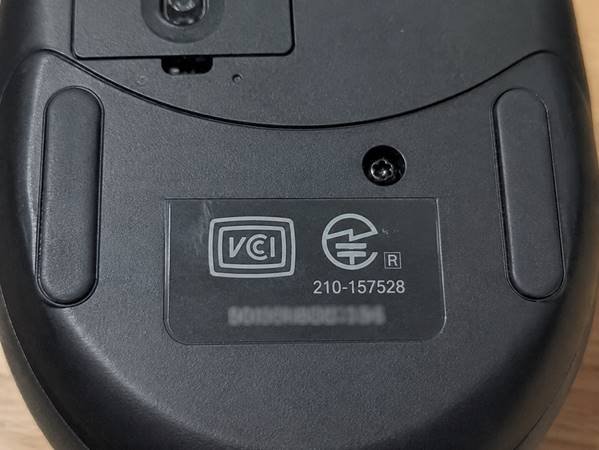
This article will thoroughly explain the scope of VCCI application: from the most basic definition, to the core judgment logic, how to classify Class A and Class B, which products do not need to be considered, how to check products with vague boundaries, and common misconceptions to avoid. After reading, you can conduct a preliminary screening of your products by yourself and reduce unnecessary compliance expenses.
1. First, Understand: What Exactly is VCCI, What It Regulates and What It Doesn’t
1.1 It is Not a Mandatory Government Certification, but a Voluntary Industry Compliance System
Many people are used to calling it “VCCI certification”, but strictly speaking, it is not a mandatory statutory certification of the Japanese government. Its full name is the Voluntary Control Council for Information Technology Equipment (VCCI), a self-regulatory organization spontaneously established by the Japanese electronics industry, which has launched a set of compliance standards for electromagnetic disturbance of information equipment.
For example, the electromagnetic waves that accidentally “leak” out when the equipment is working are just like the buzzing sound a mobile phone makes when placed next to an old-fashioned speaker. Such non-active emitted electromagnetic waves are the object of VCCI specifications. Its core function is to regulate the unintentional electromagnetic wave emission level of information equipment, so as to prevent them from interfering with the normal operation of broadcasting, communications or other electronic equipment.
Enterprises shall confirm whether it is necessary to carry out testing, submit materials, complete registration and use compliance marks in accordance with the current VCCI rules and their own distribution methods. The VCCI system is a voluntary industry self-regulatory requirement, not a statutory mandatory obligation of the government, but participation requires compliance with the corresponding rules.
1.2 Regulatory Boundary: It Only Regulates Unintentional Electromagnetic Emission, and Is Not Equivalent to Full EMC
Many people equate VCCI with complete electromagnetic compatibility (EMC, simply put, the ability of electronic equipment to neither randomly emit electromagnetic waves to interfere with others nor withstand external electromagnetic wave interference), but in fact, its regulatory scope is very narrow.
In the judgment of the scope of application, the object of VCCI’s attention can be understood as unintentional radio disturbance/electromagnetic emission generated by information equipment. Common tests focus on two types: radiated emission (electromagnetic waves propagating through space) and conducted emission (electromagnetic waves propagating through power lines and signal lines); specific terms, ports and limits shall be subject to the current VCCI technical requirements.
It regulates the following content:
• Unintentional radio disturbance limits for information equipment
It does NOT regulate the following content:
• The ability of equipment to resist external electromagnetic interference (electromagnetic immunity)
• Electric shock and fire risks of equipment (electrical safety)
• Active emission of wireless functions (such as the signal frequency and power of Bluetooth, Wi-Fi)
• Access requirements for communication terminals to connect to operator networks
In short, VCCI is only one part of EMC, not the whole.
1.3 Practical Significance of Understanding the Scope of Application
For different people, understanding the scope of VCCI application has different practical significance:
For merchants exporting to Japan, early judgment can save unnecessary testing and registration costs, and also avoid finding that they do not meet channel requirements after stock preparation;
For cross-border e-commerce sellers, they can prepare compliance materials in advance to avoid being removed from the platform;
For users who often buy Japanese electronic products via cross-border shopping, they can understand the meaning of the VCCI mark on the product and will not be misled by vague publicity;
If your product is originally not within the scope of application, you don’t need to spend time and energy on it at all.
1.4 Differences from Other Common Japanese Compliance Requirements
Many people confuse VCCI with PSE and the Radio Law, but the three regulate completely independent content, and some products may need to meet multiple requirements at the same time. We have compiled a simple comparison table:
| Japanese Compliance Requirement | Core Regulatory Content | Relationship with VCCI |
| VCCI | Unintentional electromagnetic emission of information equipment (whether it will interfere with other equipment) | Voluntary industry compliance, only applicable to information equipment |
| PSE (Electrical Appliance and Material Safety Law) | Safety risks of electrical products (electric shock, fire, etc.), only applicable to legally designated electrical appliances and materials | Completely independent regulatory scope; some information equipment and their supporting power adapters may involve both PSE and VCCI requirements, which need to be confirmed according to product categories |
| Japan Radio Law | Intentional emission of wireless functions (whether frequency, power, etc. are compliant) | Regulates the wireless function itself; information equipment with wireless functions may need to comply with both the Radio Law and VCCI |
For example: a home router, if it falls into the category of information equipment, first involves VCCI’s electromagnetic emission requirements; if its supporting AC power adapter is a PSE-designated electrical appliance, the adapter needs to meet PSE requirements, and whether the router body involves PSE needs to be confirmed according to the product structure and legally designated items; if the router has Wi-Fi function, it also needs to meet the intentional emission requirements of the Japan Radio Law.
1.5 First, Distinguish: Differences Between Equipment Scope, Compliance Obligations and Channel Requirements
Many people confuse VCCI-related requirements at different levels, such as directly equating “belonging to applicable equipment” with “must be certified”, which is the most common misunderstanding. Before talking about the specific judgment method, we first clearly distinguish four concepts at different levels, so that the following content is not easy to be confused:
1. VCCI-covered equipment scope: The judgment object is the function and category of the product itself. It only depends on whether the product belongs to the category of Information Technology Equipment (ITE), Multimedia Equipment (MME), etc. defined by VCCI rules. It is completely determined by product attributes, and has nothing to do with how it is sold, who sells it, and whether compliance is done — this is the question of “whether the product is a type of equipment regulated by VCCI”.
2. Technical compliance: The judgment object is the electromagnetic emission level of the product, to see whether it meets the VCCI technical limit requirements. It is a technical level compliance judgment, and has nothing to do with whether it is registered or has a label.
3. Registration and labeling obligations: The judgment object is the enterprise’s distribution method and subject identity. Only applicable equipment commercially distributed to the Japanese market needs to confirm whether it is necessary to submit materials, complete registration and use compliance marks in accordance with the current VCCI rules — this is the question of “whether to go through the VCCI system process”, not all applicable equipment must go through it, which depends on the distribution scenario and rule requirements.
4. Channel/purchaser requirements: Refers to whether market entities such as e-commerce platforms, offline stores, and importers take VCCI compliance as a prerequisite for listing or procurement. It is a market requirement at the contract level and has nothing to do with the rule effectiveness of VCCI itself.
2. How to Judge Quickly? Core Logic of VCCI Applicability
2.1 Four-Factor Preliminary Screening Method (for preliminary screening only, cannot replace official rules)
You can first quickly judge the basic situation of the product from four dimensions to have a rough idea — note that this is only preliminary screening and cannot replace the verification of official rules. You should still carefully confirm when encountering boundary products:
The first dimension is equipment category: Check whether the product belongs to the category of Information Technology Equipment (ITE, that is, equipment used to process, store and transmit information, such as computers and routers) or Multimedia Equipment (MME, that is, equipment with both audio and video playback and information processing functions, such as set-top boxes and smart speakers).
The second dimension is functional composition: Whether information processing, transmission and storage are one of the core functions of the product. If it only has a small information function and the core use is not information-related, it does not count.
The third dimension is intended use environment: Whether the product is designed for home use, or for industrial and commercial environments such as factories and offices — this is mainly used to classify Class A and Class B later, and does not affect the judgment of whether it belongs to the equipment coverage scope.
The fourth dimension is distribution method: Whether the product is publicly and commercially sold to the Japanese market, or for self-use, internal use or R&D use — this affects whether to actively perform registration and labeling obligations, and does not affect whether the product itself belongs to the VCCI-covered equipment type.
There are two common cognitive biases that must be corrected:
First, not only products with digital chips will produce electromagnetic disturbance. Old-fashioned active oscillation circuits and analog circuits will also produce unintentional emission, so you can’t judge just by whether there is a chip.
Second, having wireless functions does not mean that it must fall within the VCCI scope. The core function must be information-related; otherwise, even if only a Bluetooth or Wi-Fi module is added, it does not count.
2.2 Special Categories: Products Subject to Other Regulations May Also Be Simultaneously Applicable to VCCI
Many people think that as long as a product is regulated by other industry EMC or wireless regulations, it automatically does not need VCCI, but that is not the case. For equipment with exclusive industry requirements such as medical, automotive, dedicated radio transmission, and industrial dedicated high-frequency equipment, whether VCCI applies simultaneously needs to be judged in combination with the category of the product itself, and cannot be directly excluded.
For example, medical electronic equipment has its own industry EMC standards, but if a medical device also belongs to the category of information equipment, it may still need to meet VCCI requirements; automotive electronic equipment is优先 subject to automotive EMC regulations, but information accessories such as automotive infotainment systems still need to be combined with VCCI rules to judge whether compliance is required; the intentional emission of dedicated radio transmission equipment is regulated by the Radio Law, but whether the unintentional electromagnetic emission of the equipment itself needs to meet VCCI still depends on whether the equipment is information-related.
Industrial dedicated high-frequency equipment may be subject to special high-frequency utilization equipment or industry EMC requirements; if the product also undertakes information equipment functions such as data processing, transmission and storage, it is still necessary to confirm whether it applies simultaneously in accordance with the current VCCI classification and exclusion clauses.
In short: other regulations regulate their own areas, VCCI regulates its own, the two do not conflict and may apply simultaneously.
2.3 Distribution Method and Boundary of Compliance Obligations
The distribution scenario does not affect whether the product belongs to the VCCI-covered equipment scope, but it will directly affect whether the enterprise needs to actively perform in-system obligations such as registration and labeling, and whether it needs to meet channel requirements.
Commercial distribution scenarios that trigger active compliance consideration
If it falls into the following public commercial distribution scenarios for the Japanese market, it is usually necessary to actively check VCCI rules and confirm relevant compliance arrangements:
• Bulk import to Japan for sale
• Online and offline public sale
• Distributed as commercial promotional gifts
• Displayed and sold on product pages (commonly known as listings in the industry) targeting Japanese users
Non-commercial scenarios that usually do not trigger active compliance
If it is a non-commercial distribution scenario, enterprises usually do not need to actively carry out VCCI registration, labeling and other actions, including:
• Products carried into the country for personal use
• Prototypes for R&D and testing
• Customized internal accessories not for sale to the public
It should be noted that these scenarios only affect whether it is necessary to actively perform registration and labeling obligations, and do not change whether the equipment itself falls within the VCCI coverage scope; if customs, purchasers or other partners have additional requirements, separate confirmation is required.
3. How to Classify Applicable Products? Differences Between Class A and Class B
If the product is preliminarily screened to be within the VCCI applicable equipment scope, the next step is to judge whether it belongs to Class A or Class B — the limit requirements of the two are different, Class B is stricter, and the corresponding testing and compliance costs are also higher.
3.1 Core of Classification: Intended Use Environment Determines the Strictness of Limits
The formal classification basis of VCCI is mainly the intended use environment of the product and the official statement of the manufacturer:
• Class B (for residential environment): The limit requirements are usually stricter. Since there are a large number of civilian receiving equipment such as broadcasting, television and mobile communications in the residential environment, the protection requirements for electromagnetic disturbance are higher, so the emission limits of residential equipment are stricter.
• Class A (for industrial/commercial environment): The limits are relatively lenient. The use scenarios of industrial and commercial environments are more professional, and the protection requirements for receiving equipment are different from those of residences, so the limits are relatively lenient.
Specific limit values and test requirements shall be subject to the current VCCI technical requirements.
3.2 Precautions for Classification
Regarding classification, there are two points to pay special attention to avoid confusing rules and practical operation strategies:
First, in the formal VCCI rules, there is no absolute regulation that “as long as the product may be used in residences, it shall be classified as Class B”. The core of classification is the manufacturer’s official positioning of the product’s intended use environment. As long as it can be clearly limited that the product is only used in industrial/commercial environments, it can be assessed as Class A.
Second, if your product is sold to ordinary consumers, or cannot guarantee that it is only used in industrial/commercial environments, from the perspective of compliance risk control, it is recommended to check according to Class B requirements first — this is a practical strategy for enterprises to actively prevent and control risks, not a mandatory classification requirement in VCCI rules.
The final classification shall still be subject to the current VCCI technical requirements and the official description of the product.
3.3 Reference of Common Applicable Products (non-exhaustive, subject to official rules)
We have compiled some common Class A and Class B applicable products as references, but the product name cannot be directly equated with the application conclusion, and the specific still needs to be judged according to the product’s function, configuration and current VCCI rules:
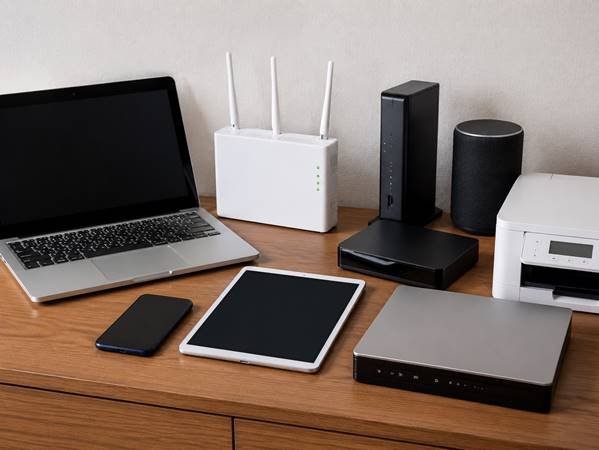
• Common Class B (residential use) references: Consumer-grade computing and communication terminals, such as laptops, tablets, mobile phones, etc., can be used as Class B verification references; among them, products with cellular, Wi-Fi, Bluetooth and other wireless functions also need to confirm Japan Radio Law and communication-related requirements separately. Wireless regulations do not automatically replace or exclude VCCI’s judgment on the unintentional emission of the main unit. Home routers, set-top boxes, smart speakers, home printers, scanners, etc., usually also fall into the category of residential information/multimedia equipment.
• Common Class A (industrial/commercial use) references: Enterprise-level servers, industrial switches, enterprise routers, large commercial copiers, conference terminals, industrial control computers, industrial data collection terminals, etc., usually fall into the category of industrial/commercial information equipment.
3.4 Applicable Rules for Accessories/Modules
Many people can’t figure out whether accessories and modules need VCCI. In fact, you can’t just look at the name, nor can you draw a conclusion solely based on “active/passive”. You need to make a comprehensive judgment in combination with multiple dimensions:
1. Whether it is classified as peripheral information equipment under VCCI rules
2. Whether it is sold independently as a finished device
3. Whether it has independent information processing/transmission functions
4. Whether there are applicable component exemptions or exception clauses
Active oscillation/clock circuits, active data processing circuits, etc. can only be used as auxiliary judgment clues and cannot alone determine applicability.
Specifically, it can be divided into two common situations:
• Independently sold peripheral equipment: For example, separately sold external cameras, Bluetooth adapters, USB docks, etc., should be judged based on their own functions and intended use environment combined with the above dimensions, and will not follow the host sold together — for example, a separately sold consumer-grade USB dock, even if it can be used with industrial computers, as long as it is sold to ordinary consumers, it is still used as a Class B preliminary screening reference.
• Components only for internal assembly: For example, passive cables, built-in network cards, chips/parts only used in complete machines, usually are not subject to VCCI separately, and only need to comply with the requirements together with the complete machine.
Here we need to focus on a few accessories with vague boundaries: USB docks, Bluetooth adapters, external cameras, USB adapters — some of these products have active data processing circuits, and some are passive pure adapters. They need to be checked item by item in combination with VCCI rules and cannot be generalized.
4. Which Products Are Not Applicable or Require Special Judgment?
After talking about applicable ones, let’s talk about which products are not applicable or need special judgment, to avoid you investing too much energy in unnecessary places.
4.1 Pure Electrical/Mechanical Products with Non-Information Core Functions
If the core function of the product is power supply, heating, mechanical movement, etc., it does not fall into the category of Information Technology Equipment (ITE) or Multimedia Equipment (MME), and does not fall into the current VCCI applicable product catalog, it is usually not applicable to VCCI.
For example, ordinary electric kettles, mechanical desk lamps, basic power strips, and traditional electric fans, even if they have simple control circuits, their core functions are not processing, transmitting or storing information, so they do not fall within the scope of VCCI application.
4.2 Special Equipment with Exclusive Industry Requirements (require special judgment)
As we mentioned earlier, medical electronic equipment, automotive electronic equipment, dedicated radio transmission equipment, and industrial dedicated high-frequency equipment, these products have their own corresponding industry regulations to regulate EMC or wireless requirements. Whether VCCI applies simultaneously needs special judgment in combination with the specific category of the product, and cannot be directly said to be applicable or not.
4.3 Products in Non-Commercial Distribution Special Scenarios
Products carried into the country for personal use, R&D test prototypes, and customized non-sale internal accessories usually do not trigger active VCCI registration and labeling obligations. This is only an obligation-level exemption brought by the distribution scenario, does not change the technical attributes of the product itself, and does not exclude customs, purchasers or partners from separately requiring proof materials related to electromagnetic emission.
4.4 Products with Smart Functions That Are Most Easily Misjudged
Now many home appliances and toys have added functions such as screens, Wi-Fi, and Bluetooth, but not all products with smart functions fall within the scope of VCCI application. The core of judgment is: whether information processing, transmission or multimedia function is one of the core functions of the product, or only an auxiliary function.
For example, a smart refrigerator with a display screen has a core function of refrigeration, and the screen and Wi-Fi are only auxiliary functions for adjusting temperature and viewing recipes, so it usually does not fall into the category of information equipment; similarly, electric toothbrushes with Bluetooth, air conditioners with Wi-Fi, ordinary children’s electronic toys, etc., their core uses are cleaning, temperature adjustment, and entertainment respectively, and information functions are only auxiliary, so they are usually not applicable to VCCI.
But note: if the information processing and multimedia functions of a product have become one of the core selling points or core functions, such as children’s tablets focusing on learning functions and smart screen speakers with independent operating systems, they need to be judged as information equipment and cannot be directly excluded based on traditional product categories.
4.5 Not Applicable to VCCI ≠ No Need for Other Japanese Compliance
It must be reminded here that even if the product is not applicable to VCCI, it does not mean that it does not need to comply with other Japanese compliance requirements.
For example, a smart air conditioner with Wi-Fi, although it does not need VCCI, its Wi-Fi function needs to comply with the requirements of the Japan Radio Law; if the product itself or its supporting power adapter is a designated electrical appliance under the , it needs to comply with PSE electrical safety requirements; special categories such as medical and automotive also need to comply with corresponding industry EMC or safety standards. Don’t think that no need for VCCI means everything is fine.
5. How to Confirm Products with Vague Boundaries?
There are always products stuck on the boundary, such as smart door locks and industrial sensors. It is correct to say they are information equipment, and it is also correct to say they are other categories. How to confirm at this time?
5.1 Prepare These Materials First
Before confirming with the official or professional institutions, you must first prepare the basic information of the product, otherwise the other party cannot give you an accurate judgment:
First, the basic information of the product: manual, circuit block diagram, interface list;
Then functions and configurations: wireless specifications, power supply method, core component configuration;
Also sales and use information: intended use environment, sales target, whether it is sold independently or only for internal assembly;
If judging the same series of products, change records of key components are also required.
5.2 Verification Process with Official Rules as Priority
The judgment of boundary products must be based on VCCI official rules as the highest basis, and do not speculate solely based on experience or similar products. You can check step by step as follows:
1. Check the current official rules
Log in to the VCCI official website to query the latest equipment classification catalog, exclusion clauses, technical requirements and registration rules. When querying, record at least four items:
• Query date
• Rule name or page path
• Rule version/effective date
• Corresponding applicable or exclusion clauses
Because VCCI rules are updated from time to time, archiving records can avoid disputes caused by subsequent rule changes.
2. Compare product information item by item
Correspond the prepared product materials (function, circuit, interface, sales status, use environment, etc.) with the clauses of the official rules item by item to get a preliminary judgment.
3. Auxiliary reference when boundaries are vague
If you are still unsure after self-check, you can consult compliance service institutions familiar with Japan VCCI rules, but institutional opinions are only professional auxiliary references and are not directly equivalent to VCCI official conclusions.
In addition, the compliance status of products of the same category in Japanese formal channels can only be used as cross-reference, and cannot directly prove the applicable status of your own products — products of different brands may have differences in configuration and functional positioning, and cannot be directly applied.
5.3 Reference of Three Typical Boundary Cases (for reasoning reference only)
We have sorted out the preliminary screening judgment ideas of the three most common boundary products for your reference — note that this is only a reasoning reference, not enough to directly confirm the applicable conclusion, and the final shall be subject to VCCI official rules and actual product configuration.
1. Household consumer-grade smart door lock
Known conditions: with fingerprint/password unlock, Wi-Fi remote control, unlock record storage function, sold to ordinary consumers, intended use scenario is family residence.
Judgment disagreement: belongs to security equipment or network information equipment.
Official rule points to be supplemented and checked: VCCI’s definition of information equipment, exclusion clauses for security equipment, judgment standard for whether the core function of the product includes information storage/transmission, classification rules for interface and power supply structure.
Preliminary screening reference direction: if the product’s unlock information storage and remote data transmission are one of the core functions and comply with VCCI information equipment classification rules, it can usually be used as Class B preliminary screening; if the core function is focused on security control and falls into the exclusion scope, it may not be applicable.
2. Industrial data collection sensor with Wi-Fi
Known conditions: used for industrial field data collection, wireless transmission to background management system, intended use scenario is industrial environments such as factories, sold to industrial customers.
Judgment disagreement: belongs to industrial measurement equipment or information transmission equipment.
Official rule points to be supplemented and checked: VCCI’s definition of industrial information equipment, exclusion clauses for measurement/control equipment, judgment standard for data collection and transmission functions.
Preliminary screening reference direction: if the core function of the product is data collection, transmission and storage, which falls into the category of industrial information equipment, it can usually be used as Class A preliminary screening; if it is a pure industrial measurement sensor with only simple data output function, it may not be applicable.
3. Independently sold consumer-grade USB dock
Known conditions: with USB interface expansion, PD fast charging, data transmission function, retailed to ordinary consumers, built-in active data processing circuit.
Judgment disagreement: belongs to peripheral information equipment or pure adapter component.
Official rule points to be supplemented and checked: VCCI’s definition of peripheral equipment, exemption clauses for adapter components, judgment of the role of active circuits in classification.
Preliminary screening reference direction: if it is a consumer-grade peripheral device with active data processing function and sold independently, it can usually be used as Class B preliminary screening; if it is a pure passive simple adapter, it may not fall into the applicable scope.
6. Avoiding Common Judgment Misconceptions
We have sorted out 8 most frequent judgment misconceptions to help you avoid most common judgment deviations:
6.1 Misconceptions About Rule Nature
Misconception 1: All electronic products sold to Japan require VCCI
Correct understanding: Only products belonging to the category of general information equipment are within the scope of VCCI application; pure home appliances, mechanical products, pure electrical accessories, etc. are usually not applicable.
Misconception 2: VCCI is a mandatory statutory certification of the Japanese government
Correct understanding: VCCI is essentially a voluntary self-regulatory compliance system of the Japanese electronics industry, with no legal mandatory force, but many channels and purchasers will take it as a prerequisite for listing or procurement.
Misconception 3: Only products with VCCI mark are within the applicable scope, and no need to care if there is no mark
Correct understanding: The scope of application is determined by the product’s function, category and other attributes, and has nothing to do with whether compliance is done or whether there is a mark. No mark does not mean it is not within the applicable scope, and having a mark does not mean it must meet the requirements.
6.2 Misconceptions About Product Judgment
Misconception 4: All products with wireless functions fall within the VCCI scope
Correct understanding: It is only applicable if it belongs to the category of information equipment; products with only wireless functions but non-information core uses are not within the scope of VCCI application.
Misconception 5: Only products with wireless functions need to consider VCCI
Correct understanding: Many wired information equipment (such as wired printers, wired keyboards, USB flash drives, etc.) may still fall within the applicable scope, which needs to be confirmed according to the equipment definition and independent sales status; wireless function cannot be used as the only judgment standard.
Misconception 6: Products with chips/small size must do VCCI
Correct understanding: Applicability depends on equipment category, core function, independent sales status and current rules; home appliances with control chips and small passive accessories are usually not within the applicable scope; cannot be judged solely by “having chips” or “small size”.
6.3 Misconceptions About Compliance Operations
Misconception 7: Overseas EMC certifications such as CE/FCC can directly replace VCCI
Correct understanding: Overseas test reports can be used as technical data reference, but cannot automatically replace the VCCI compliance process, and relevant actions still need to be completed in accordance with current VCCI rules.
Misconception 8: Products of the same series can directly share VCCI application conclusions
Correct understanding: Whether the same series of products can use the same applicability judgment or test data depends on VCCI rules, the impact of product changes on emission characteristics and registration requirements; if key components such as main control chip, clock circuit, power module, interface, wireless module are changed, re-evaluation is required, and conclusions cannot be shared only by series name.
7. 3-Step Quick Preliminary Screening for Your Product
Finally, we have compiled a 3-step preliminary screening checklist, you can go through it with your own product — again, this is only a preliminary screening tool and cannot replace the check of VCCI official rules, and boundary products must be confirmed through formal channels.
7.1 Step 1: Check Equipment Attributes
First confirm two core questions:
1. Does the core function of the product include information processing, transmission and storage, and does it fall into the category of Information Technology Equipment (ITE) or Multimedia Equipment (MME)?
2. Is it a special equipment that requires special judgment, such as medical, automotive, dedicated radio transmission, industrial dedicated high-frequency?
If the core function belongs to the information category and is not a special category, it is preliminarily screened as within the VCCI-covered equipment scope; if the core function is non-information, it is preliminarily screened as not within the coverage scope.
7.2 Step 2: Check Distribution Scenario and Product Form
Then confirm three questions:
1. Is the product publicly and commercially sold to the Japanese market?
2. Is the intended use environment residential, or industrial/commercial?
3. Is it a complete machine/peripheral device sold independently, or a component only for internal assembly?
The above questions are used to judge the level of compliance obligations and do not affect the judgment of the product’s own equipment attributes.
7.3 Step 3: Draw Preliminary Screening Conclusion and Follow-up Actions
According to the previous answers, draw the preliminary screening conclusion:
• Preliminarily screened as within the coverage scope and sold commercially in Japan: need to further check VCCI official rules, and preliminarily judge Class A/B according to the intended use environment; if the residential use scenario cannot be clearly excluded, it is recommended to prioritize Class B for risk prevention and control verification.
• Preliminarily screened as not applicable: you don’t need to invest too much energy in VCCI compliance, but still need to confirm other Japanese compliance requirements.
• Vague boundary and unsure: prepare materials according to the boundary judgment method in Chapter 5 and then confirm through official channels.
8. Frequently Asked Questions and Summary
8.1 Frequently Asked Questions
Do products with Wi-Fi must do VCCI?
Not necessarily, it depends on whether they belong to the category of information equipment. Home appliances with Wi-Fi have non-information core functions and are usually not applicable; information equipment such as routers with Wi-Fi may fall within the applicable scope, which needs to be confirmed according to rules.
Can PSE certification replace VCCI?
No, the two have completely independent regulatory scopes: PSE regulates electrical safety, and VCCI regulates unintentional electromagnetic emission of information equipment. Some products may involve both requirements.
Is VCCI a mandatory certification?
No, it is a voluntary industry self-regulatory system for Japanese information equipment, with no legal mandatory force, but many channels and purchasers will take it as a prerequisite for listing or procurement.
Can CE/FCC certification replace VCCI?
No. Overseas EMC test reports can be used as technical reference, but cannot automatically replace the VCCI compliance process.
Do small accessories need to do VCCI?
It needs to be judged in combination with whether they are sold independently, whether they belong to peripheral information equipment, whether they comply with component exemption rules, etc.; passive cables, ordinary adapters, and components only for internal assembly usually do not need to be applied separately.
How to choose between VCCI Class A and Class B?
The classification basis is the product’s intended use environment and manufacturer’s declaration. For products sold to ordinary consumers that cannot be clearly limited to industrial/commercial use only, it is recommended to prioritize Class B verification from the perspective of risk prevention and control.
8.2 Final Summary
To judge VCCI-related issues, there are two core steps: first, check whether the product itself falls into the category of information/multimedia equipment covered by VCCI rules, then combine the distribution scenario and product form to confirm whether it is necessary to perform compliance obligations such as registration and labeling.
It is necessary to distinguish between four different levels of concepts: equipment coverage scope, technical compliance, registration and labeling obligations, and channel requirements, and do not confuse them.
Ordinary products can be preliminarily screened by yourself, and categories with vague boundaries must be subject to the current official VCCI rules, and consult professional institutions if necessary, to avoid compliance risks caused by experience-based judgment.