
Many merchants entering the Japanese market for the first time often feel confused when checking quotes for PSE certification: some agencies quote several thousand yuan, while others quote tens of thousands of yuan, with a price difference of up to 10 times. How much does PSE certification actually cost? Why is the price difference so large? How to tell if a quote is a trap?
In fact, there is no unified official pricing for PSE certification, and the cost is completely linked to product type, compliance process, and selected services. Before understanding the costs, you should first confirm whether the product is subject to DENAN regulation and whether it falls under round or diamond PSE.
1. First Understand the Core Logic of PSE Costs (Must-Read for Beginners)
PSE Fees Are for Buying Compliance Services, Not the Mark
The first common misunderstanding about PSE is that it is “money for stickers” — that after paying, you get a round or diamond mark, stick it on the product, and you can sell it in Japan. This is actually completely not the case.
The legal basis for PSE certification is Japan’s (abbreviated as DENAN, the core law governing the safety of electrical products in Japan). All products included in the control list must meet Japan’s safety technical requirements before they can be sold, otherwise they may be detained, fined, or even banned from the market. The PSE fees we pay are essentially service remuneration for entrusting professional institutions to conduct compliance testing and auditing, not money paid to the government for the mark. The fees are paid to testing and certification institutions, not directly to the Japanese government.
Precisely because different products have different regulatory requirements and compliance processes, institutions set their own prices, which is why there is a huge price difference.
The First Cost Dividing Line: First Check If Certification Is Needed, Then Determine If It Is Round or Diamond PSE
The first step in calculating PSE costs is not to ask “how much”, but to first confirm two questions: Is your product on DENAN’s control list? If yes, does it belong to “specified electrical appliances” or “non-specified electrical appliances”?
Not all electrical products require PSE certification. Common regulated products include AC-powered home appliances, specified lithium-ion batteries, plugs and sockets, etc. If the product has wireless functions (such as Bluetooth, Wi-Fi), the wireless part is governed by Japan’s and requires separate TELEC (Technical Conformity) certification, which is not within the scope of PSE, and the cost must be calculated separately.
After confirming that the product is on the control list, you need to check its classification, which is the biggest factor affecting costs:
• Non-specified electrical appliances (Round PSE): The legal obligation is for the importer or manufacturer to self-confirm that the product meets technical standards and keep compliance records, and there is no mandatory requirement to use a third-party institution for testing. However, in practice, Japanese customs and e-commerce platforms such as Amazon usually require third-party test reports, so most merchants still entrust institutions to conduct testing, and the overall cost is relatively low.
• Specified electrical appliances (Diamond PSE): The law mandates that testing and factory inspection must be completed by a “conformity inspection body” registered with the Ministry of Economy, Trade and Industry of Japan (abbreviated as METI, the government department responsible for PSE supervision) and whose registration scope covers the corresponding product category, and a conformity inspection certificate must be issued; the validity of the certificate comes from the regulatory recognition of the institution’s qualifications, not from direct government certification or charging. The process is more complex and the cost is much higher.
If you are not sure which category your product belongs to, the fastest way is to check METI’s official DENAN control list, or find a formal certification institution for a free assessment. Do not guess blindly.
2 Basic Pitfalls Beginners Are Most Likely to Fall Into
People who are new to PSE are prone to detours on these two points:
First, it is not a one-time payment that finishes everything. Especially for diamond PSE, the certificate has a validity period, during which maintenance and change fees may be incurred; if the product design or key components are modified later, notification or re-testing is required, which will also generate additional expenses.
Second, the more expensive, the more authoritative is not true. The core of judging whether an institution is reliable depends on “qualification matching” — that is, whether it has METI registration qualifications for the corresponding product category and whether the report meets Japanese standards. It has no direct relationship with whether the institution is in Japan or how high the fee is. Some people spend twice as much to find a local Japanese institution without qualifications for the corresponding category, and in the end the certificate is not recognized, which is a waste of money.
2. Where Does the PSE Certification Money Go: Complete Cost Composition
PSE costs can be divided into three categories: mandatory basic costs, optional service costs, and easily overlooked hidden and synchronous costs.
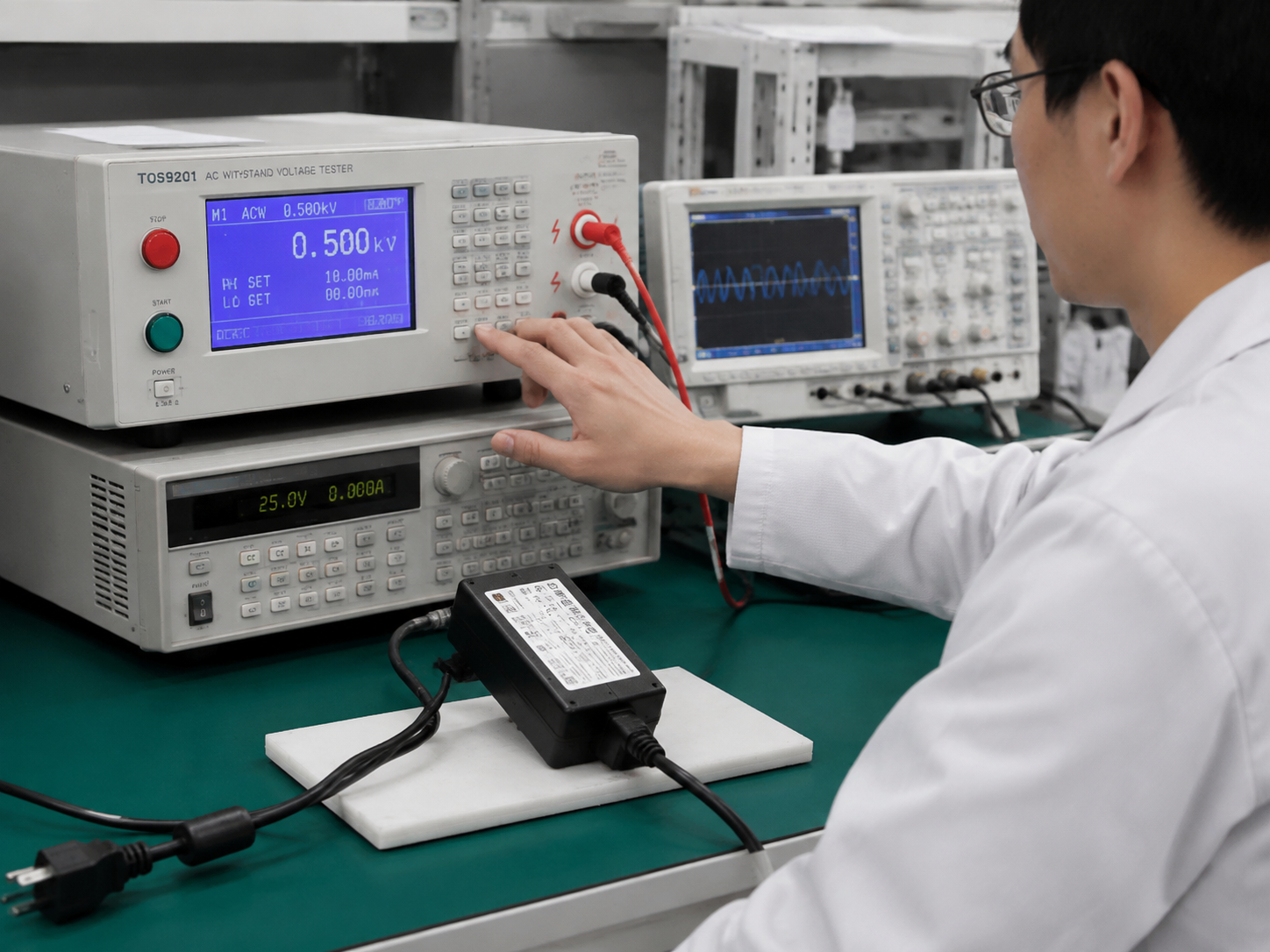
Mandatory Costs: Necessary Expenses to Obtain Valid Compliance Certificates
Mandatory costs refer to the money that must be paid to obtain a legal and valid PSE compliance certificate. The mandatory items for different types of PSE are different:
• Mandatory costs for round PSE: Common third-party testing fees in practice (although not legally mandatory, they may be required by platforms, customers, or some customs document review scenarios), plus basic miscellaneous fees for sample production/procurement and sample shipping logistics. There are no statutory registration fees or factory inspection fees.
• Statutory mandatory costs for diamond PSE: Conformity inspection fee (that is, the fee for product testing + certificate issuance), initial factory inspection fee, plus basic miscellaneous fees for samples and sample shipping. Special attention should be paid here: the diamond PSE certificate must be issued by a METI-registered conformity inspection body, and the institution’s registration scope must cover your product category, otherwise the certificate is completely invalid, and no amount of money spent will help.
Optional Service Fees: Non-Essential Expenses for Convenience or Acceleration
If you want to save time and worry less, you can choose some additional services. These are not mandatory, just choose according to your own situation:
• Agency service fee: Helps you handle the entire process, organize documents, and liaise with institutions, so you don’t have to run the process yourself. The common industry fee is 10%-30% of the total cost, and the more complex the project, the higher the fee.
• Expedited service fee: Prioritizes testing and auditing to shorten the certification cycle, usually with an additional 30%-50% fee. The specific time saved depends on the complexity of the project, and there is no fixed standard.
• Document service fee: Helps you translate Japanese manuals, nameplates, and organize technical documents. If you can produce qualified Japanese documents yourself, you can save this money.
• Rectification guidance fee: If the test fails, this is the fee for the institution to guide you to modify the product until it passes. If you have your own compliance technical team, you can also do the rectification yourself without paying this fee.
Easily Overlooked Hidden and Synchronous Costs
There are many costs that are not written in the certification quote, but are very likely to be incurred, even more than the certification fee itself. Including them in the budget in advance will prevent you from being caught off guard:
One category is hidden costs during the certification process: for example, re-testing fees and sample replacement fees for failed tests, production costs for product rectification, and losses caused by delayed market launch due to failed certification — many people only calculate the direct money spent, but in fact the profit loss from one month of delayed sales may be higher than the certification fee.
The other category is synchronous market access costs outside regulations — these are not within the scope of PSE certification fees, but are usually required for products to enter the Japanese market, mainly including 5 items:
1. Costs related to business notification: These are fees incurred by the importer (notifying business operator) to fulfill the market entry notification obligation to METI, not a fixed official fee from METI. They usually appear as the importer’s internal compliance costs, document preparation fees, or agency compliance service fees;
2. Japanese label production fee: The production cost for products to comply with local Japanese label specifications;
3. Daily compliance service fee for importers (notifying business operators): The service fee for the importer to bear subsequent compliance responsibilities;
4. Other regulatory testing fees: Testing costs for other Japanese market access regulations such as TELEC (Technical Conformity), RoHS/J-Moss, etc.;
5. Market spot check response costs: Expenses related to cooperation, rectification, etc. for subsequent Japanese market regulatory spot checks.
3. Why PSE Quotes Differ by 10 Times: Core Influencing Variables
Once you understand the cost composition, you will understand why quotes differ so much — mainly due to the following variables.
Regulation Type: The Biggest Influencing Factor
This is the first dividing line we mentioned earlier, and also the biggest factor affecting costs. Because diamond PSE has two additional statutory links: conformity inspection and initial factory inspection, the total cost is usually 2-5 times higher than that of round PSE, and the specific difference depends on the product category.
If the regulation category is judged incorrectly, the budget will deviate greatly: doing diamond PSE for a product that only needs round PSE will waste tens of thousands of yuan; doing round PSE for a product that requires diamond PSE seems to save money, but in fact the compliance is invalid, and the goods will be detained when they arrive in Japan, causing greater losses.
Product’s Own Situation: The Core Determinant of Testing Fees
Testing fees are the largest part of PSE costs, and the level of testing fees is completely determined by the product’s own situation:
• Category risk level: High-risk categories (such as electric water heaters, AC adapters) have more test items, so the cost is naturally higher; low-risk small appliances have fewer test items, so the cost is lower.
• Functional and structural complexity: If the product has a specified battery module or multi-circuit functions, the test items will increase accordingly; but note that wireless functions do not affect PSE testing fees, because the wireless part is not subject to PSE regulation and requires separate TELEC fees.
• Parameter level: The higher the voltage and power of the product, the stricter the safety test requirements, and the higher the cost.
• Number of models: If it is a series of models with the same core circuit, same key components, and same functions, they can be tested together, and the cost per model is lower when shared; if the core circuit and key components are different, separate testing and separate charging are required.
• Document and sample status: If the technical documents (circuit diagrams, specifications, component lists, etc.) are complete and the samples are consistent with the mass production status, there will be no additional document modification or sample replacement fees; if the documents are incomplete and the samples are repeatedly modified, additional costs will increase a lot.
Institution Qualifications and Location
Fees vary greatly among different institutions, and the core depends on two points:
First is qualification matching. For diamond PSE, you must choose an institution registered with METI and covering the corresponding category, otherwise the certificate is completely invalid; for round PSE, the legal obligation is for the notifying business operator to self-confirm compliance and keep records. Entrusting third-party testing is mainly to meet the document requirements of platforms, customers, or customs, and it is not legally required to be issued by a METI-registered institution. When choosing, priority should be given to institutions with corresponding product testing capabilities and reports that meet DENAN technical standards and Japanese standards. In practice, reports from METI-recognized laboratories have higher recognition, and customs clearance and platform review are smoother.
Second is location difference. For diamond PSE, as long as it is a conformity inspection body registered with METI and whose registration scope covers the corresponding category, the conformity inspection certificate issued has exactly the same legal effect regardless of its location; local Japanese institutions usually charge 30%-50% more than overseas institutions with the same qualifications under the premise of the same qualifications and service scope, due to higher labor costs. For round PSE, since third-party test reports are practical proof materials, there is no unified “certificate validity” judgment standard. The core depends on whether the laboratory has the testing capability for the corresponding DENAN technical standards and whether the report can be accepted by platforms/customers or customs scenarios; overseas laboratories with the same testing capability usually charge about 30%-50% less than local Japanese institutions. In addition, the distance between the factory and the institution will also affect the travel cost of factory inspection: the closer the distance, the lower the travel cost.
Reuse Potential of Existing Compliance Reports
If you have done other international certifications before and have qualified test reports, you can apply for exemption from some PSE test items, which can save a lot of money.
Among them, the most reusable is the CB report — because CB is the mutual recognition system of IECEE (International Electrotechnical Commission System for Conformity Testing and Certification of Electrotechnical Equipment and Components), and Japan is also a member state, so applying for PSE with a CB report has the highest probability of test item exemption.
If it is other international reports such as CE and UL, as long as the corresponding standards are close to Japanese standards, they can also be submitted to the institution for evaluation to apply for partial test item exemption.
However, note that there is no fixed exemption ratio for report reuse, and it needs to be evaluated item by item by the institution; and several prerequisites must be met: the report is within the validity period, it is the same model and same key components as the applied product, the corresponding standard version is consistent, the report content is complete, and the different items can be supplemented by testing.
4. Reference Range of PSE Certification Costs (For Budget Estimation Only)
What many people care about most is “how much will it cost roughly”. Here is a common industry experience range. Note that this is not official pricing, but only for preliminary budget estimation. The actual cost will fluctuate up and down due to the variables mentioned earlier.
Reference Prerequisites
The cost ranges below are based on several basic conditions. If they are not met, the cost will deviate:
• The pricing unit is RMB, which is a common industry experience range, not an official fee standard;
• Basic conditions: single model, selecting an overseas institution with corresponding qualifications, complete technical documents, passing the test in one go, no additional optional services;
• Excluded scope: VAT/consumption tax, sample production fee, product rectification fee, other regulatory certification fees, importer service fees.
| Certification Type | Common Product Examples | Single Model Cost Range | Core Cost Composition |
| Round PSE (Non-specified · Standard) | AC desk fans, ordinary AC table lamps | 3,000-10,000 RMB | Third-party testing fee + basic miscellaneous fees |
| Round PSE (Non-specified · Relatively Complex Structure) | AC small home appliances with multi-function circuits | 8,000-20,000 RMB | Third-party testing fee + basic miscellaneous fees |
| Diamond PSE (Specified · Small Accessories) | Mobile phone chargers, AC adapters, plugs and sockets | 15,000-40,000 RMB | Conformity inspection fee (testing + certificate) + initial factory inspection fee + basic miscellaneous fees |
| Diamond PSE (Specified · High-Risk Products) | Electric water heaters, fixed cooking electric heating appliances | 30,000-80,000 RMB | Conformity inspection fee (testing + certificate) + initial factory inspection fee + basic miscellaneous fees |
Note: The specific value within the above range is mainly determined by product complexity and project status: single-model products with simple structure, low power, no special heating components, complete documents, and passing the test in one go usually fall in the lower range; products with high power, multiple circuits, complex key safety components, requiring supplementary testing, or high factory inspection travel costs will tend to the higher range. In addition, lithium-ion batteries that meet DENAN regulatory conditions must first be judged as specified or non-specified electrical appliances, and cannot be directly budgeted for diamond PSE by default. The specific category shall be subject to METI’s official list or professional institution assessment.
Common Additional Fee Reference
In addition to the basic single-model fee, there are some common additional fees:
• Series model additional fee: If it is a series of models with the same core circuit, each additional model usually incurs an additional 10%-30% testing fee, no need to redo at full price.
• Diamond PSE certificate maintenance fee: The validity period of diamond PSE certificates ranges from 3 to 7 years depending on the category. During the period, there may be fees for factory supervision inspections, change audits, etc. The annual average is about 30%-50% of the initial factory inspection fee. It is not charged annually, but depends on the institution’s supervision arrangement.
5. Understand the Quote and Identify Low-Price Traps
When you get a quote, don’t just look at the total price. Learn to break down the content to avoid unreliable low-price traps.
4 Core Steps to Disassemble a Quote
First, first check the qualifications and deliverables of the quoting entity. If it is diamond PSE, first confirm whether the institution has METI registration qualifications for the corresponding category, ask the other party to provide the query path on METI’s official website, and verify it yourself; at the same time, clarify what the deliverables corresponding to the quote are — whether it is an ordinary safety test report, or a conformity inspection certificate issued by a METI-registered conformity inspection body, and whether it includes a factory inspection report and label review opinions; special attention should be paid that label review opinions cannot replace test reports or conformity inspection certificates, and the compliance validity and applicable scenarios of different deliverables are vastly different.
Second, split fixed fees and variable fees. Fixed fees are money that is definitely to be spent, such as testing fees, certificate fees, initial factory inspection fees; variable fees are fees that may or may not be incurred, such as re-testing fees, rectification fees, sample replacement fees, document modification fees. Many low-price quotes quote very low fixed fees, hide variable fees, and then charge exorbitant prices later.
Third, check the service scope. Confirm whether the quote only provides test reports, or covers the entire process; whether it includes details such as translation, sample shipping, factory inspection travel, and first re-test. For example, some quotes seem cheap, but as a result, you have to pay extra for travel and accommodation for factory inspection, and in the end the total is more expensive.
Fourth, confirm payment and additional terms. For example, what is the advance payment ratio (usually 30%-50% in the industry, matching the project progress), what is the quote currency, whether it includes taxes, how long is the certificate validity period, what are the charging rules for subsequent product changes, model expansion, and certificate renewal. All these must be written clearly in advance, not agreed orally.
5 Common Low-Price Traps
The low-price traps on the market basically fall into these types. Be more vigilant when you encounter them:
1. Unqualified institutions issuing invalid compliance documents: For diamond PSE, using a report issued by an institution without METI registration qualifications for the corresponding category, even if the report itself is a real test result, cannot replace the legally required conformity inspection certificate. It may not be recognized by Japanese customs, platform review, or market supervision, which means you spend money in vain without obtaining a valid compliance certificate.
2. Ordinary reports pretending to be PSE reports: Using general safety test reports to pretend to be PSE compliance reports that meet DENAN technical standards. It looks like the real thing, but actually does not meet Japanese regulatory requirements.
3. Splitting test items and adding fees later: The quote only includes some basic test items. After you pay, they say there are “Japan-specific items” that need supplementary testing, and force additional fees. In the end, the total price is higher.
4. Concealing statutory mandatory fees: Diamond PSE quotes deliberately do not mention factory inspection fees and certificate maintenance fees. After the test is completed, they tell you that factory inspection is required to get the certificate, and demand high fees.
5. Deliberately splitting models to charge more: Series models that can obviously be tested together are deliberately split into multiple separate models for charging, earning several times more money for no reason.
Hidden Fee Check List
Afraid of hidden fees? You can ask the institution these points, and if you ask all clearly, you won’t fall into traps:
• Can you provide a detailed quote listing all fee items?
• How are re-testing fees and rectification guidance fees charged if the test fails?
• Who bears the travel and accommodation costs for factory inspection?
• What are the charging standards for certificate changes, model expansion, and renewal?
• How to check the institution’s METI registration qualifications, and can you provide the official query path?
Common “Fool’s Tax” Items
There are also some fees that are completely unnecessary, belonging to the “fool’s tax” category:
• “Officially designated agency” premium: Diamond PSE does require certificates to be issued by METI-registered conformity inspection bodies, but there is no sole “officially designated agency”; on the premise that the institution’s registration scope covers the corresponding category and the issued documents meet Japanese regulatory requirements, the certificates of all METI-registered institutions have exactly the same legal effect. Higher fees are only because the institution’s operating costs (such as local labor, venue) are higher, not because the certificate is more valid.
• “Guaranteed pass” service fee: PSE has clear safety technical standards. If the product does not meet the requirements, no one can guarantee a pass. The so-called “guaranteed pass” is either a scam, or the rectification fee is included in advance, making it more expensive instead.
• Unnecessary Japanese document fee: If you can provide qualified Japanese manuals and nameplates yourself, you don’t need to buy the institution’s document service, and this money can be completely saved.
6. Practical Methods to Reduce the Total Cost of PSE Certification
If you want to save money on the premise of compliance, you can try these practical methods, which are commonly used in the industry.
Do Category Judgment in Advance to Avoid Wrong Certification Type
This is the most basic and important step: first confirm whether the product is within the regulatory scope and whether it is round or diamond PSE through METI’s official list or free assessment by an institution. Don’t take it for granted. Doing diamond PSE for a round PSE product wastes tens of thousands of yuan, or doing round PSE for a diamond PSE product leads to invalid compliance, and rework costs more.
Plan Models Reasonably to Reduce Repeated Testing
If you have multiple product models, try to apply for series products with the same core circuit, same key components, and same functions together. Combined testing can save a lot of money. Confirm the model coverage rules with the institution in advance. Don’t split randomly by yourself, and don’t be fooled by the institution to split items that can be combined.
Fully Reuse Existing Compliance Documents
As mentioned earlier, existing compliance reports can be used for testing fee exemption, so when applying, try to submit all previous CB, CE, UL and other reports to the institution for evaluation, especially CB reports, which have the highest probability of exemption. In addition, selecting key components that already have compliance certification (such as power adapters, batteries) at the product design stage can also reduce the test items of the whole machine and lower costs.
Choose Matching Institutions and Services
When choosing an institution, you don’t have to blindly pursue local Japanese ones, nor do you have to choose the most expensive one. As long as the qualifications match and can meet your needs, it’s fine. For diamond PSE, as long as it is a conformity inspection body registered with METI and covering the corresponding category, the certificates issued have the same legal effect. Under the premise of the same qualifications and service scope, overseas institutions are usually 30%-50% cheaper than local Japanese ones; for round PSE, you can prioritize choosing laboratories with corresponding DENAN technical standard testing capabilities and report recognition that meets your own business needs. Overseas institutions with the same capabilities generally charge lower fees. If you have your own compliance team and understand the process, you can directly liaise with the laboratory to save agency fees; if you are a novice, finding a reliable agent is more cost-effective — otherwise, operation errors caused by your own mistakes will lead to rework, which costs more than the agency fee.
Improve the One-Time Pass Rate to Reduce Re-Testing Costs
Re-testing fees are very common additional expenses. To save this money, you need to improve the one-time pass rate:
• Align with Japanese requirements at the product design stage, for example, use Japanese PSE specifications for plugs, adapt voltage to 100V, use Japanese for labels and warnings, lock in key BOM components in advance, and do not replace them casually;
• Do pre-testing/mock testing before formal testing to find problems in advance, do not send samples for testing directly;
• Prepare complete technical documents in advance, such as circuit diagrams, specifications, component lists, and do not have missing items.
Plan the Cycle Reasonably to Avoid Expedited Fees
Expedited fees usually charge 30%-50%. In fact, as long as you plan in advance, this money can be completely saved. It is recommended to plan certification 3-6 months in advance, reserve enough buffer time for testing and auditing, so that even if there are small problems in the middle, there is time to fix them, and you don’t have to waste money on expedited services.
7. Clarification of Common Cost Misconceptions
Regarding PSE costs, there are many widely circulated false statements. Here is a unified clarification:
Misconception 1: PSE certification fee is “money for buying the mark”
Correct answer: The fee is service remuneration for compliance testing and auditing. The mark is only an identifier of compliance certification. Affixing the mark privately without completing compliance confirmation is an illegal act.
Misconception 2: One-time payment, lifetime validity
Correct answer: Diamond PSE certificates have a validity period of 3-7 years (depending on the category), during which supervision inspections and product changes may incur additional fees; for both round and diamond PSE, compliance must be reconfirmed after changes to product core parameters or key components.
Misconception 3: One certificate can cover all models
Correct answer: Only series models with basically the same core circuit, key components, and functions can share the compliance certificate. Sharing among models with similar appearance but different internal structures will lead to invalid compliance.
Misconception 4: Certificates from local Japanese institutions are more authoritative
Correct answer: For diamond PSE, on the premise that the institution’s registration scope covers the corresponding category, the certificates issued by all METI-registered institutions have exactly the same validity; the recognition of round PSE reports depends on whether the testing capability matches DENAN requirements. The price difference mainly comes from the institution’s operating costs and service scope, and has no direct relationship with location.
Misconception 5: PSE certification fee is the total cost of Japanese market access
Correct answer: PSE is only part of electrical safety compliance. Market access costs such as business notification, importer services, and other regulatory certifications also need to be borne.
Misconception 6: Products with wireless functions only need PSE certification
Correct answer: Wireless functions are governed by Japan’s and require separate TELEC/Technical Conformity certification. The cost is not within the scope of PSE, and the two cannot replace each other.
Misconception 7: Amazon Japan’s PSE requirements are equivalent to Japanese regulatory requirements
Correct answer: Platform requirements may be stricter than regulations (for example, round PSE can legally self-confirm compliance, but platforms usually require third-party test reports), so both regulations and platform rules must be met.
Misconception 8: Affixing the PSE mark means the importer does not need to bear responsibility
Correct answer: The Japanese importer (notifying business operator) is the first responsible party for PSE compliance, and needs to bear responsibilities such as record keeping and market spot check response. Related costs need to be planned in advance.
8. Frequently Asked Questions
How much does PSE certification cost?
Round PSE for a single model usually costs 3,000-20,000 RMB, and diamond PSE for a single model usually costs 15,000-80,000 RMB. The specific cost depends on factors such as product category, institution selection, and service content, and there is no unified price.
Which is more expensive, round PSE or diamond PSE?
Diamond PSE is more expensive, usually 2-5 times higher than round PSE. Because in addition to general DENAN compliance obligations, diamond PSE requires the involvement of a METI-registered conformity inspection body covering the corresponding category, and adds conformity inspection and factory inspection links, making the process more complex.
Who applies for PSE certification?
The Japanese importer (notifying business operator) is the statutory responsible entity. Domestic manufacturers and exporters can entrust certification institutions to handle related processes on their behalf.
Can existing CB/CE reports save PSE costs?
Since CB reports belong to the international mutual recognition system, there is a high probability that part of the testing fee can be exempted; other international reports such as CE and UL need to be evaluated item by item by the institution, and partial exemption can be applied for if the standards are close.
Is there a re-testing fee if PSE testing fails?
Usually yes. The specific charging rules depend on the institution. It is recommended to confirm in advance. You can also do pre-testing before formal testing to improve the pass rate and reduce the possibility of re-testing.
How long is the PSE certification cycle?
Round PSE usually takes 2-4 weeks, and diamond PSE usually takes 4-8 weeks. It can be shortened with expedited service, and the specific time depends on the complexity of the project.
9. Core Judgment Abilities
After mastering the above logic, enterprises can use it for the following judgments:
• Quickly judge whether the product is within the PSE regulatory scope, and the corresponding round or diamond type, and estimate the approximate cost level;
• Understand the details of PSE certification quotes, and identify common low-price traps and hidden fees;
• Combine their own product situation and use various methods to reasonably reduce the total certification cost;
• Clearly distinguish the difference between PSE certification fees and the overall Japanese market access cost.