
Whether you are a cross-border seller operating in the North American market, or an ordinary person who has just moved to the US and is always reminded to look for the UL mark when buying electrical appliances, most questions about UL Listing focus on applicable products, usage scenarios, authenticity of the mark, and whether modified models can retain the certification. To understand its scope of application, we must first start with what UL Listing itself is.
First, Understand: What Exactly is UL Listing
Plain-Language Definition: It is Not a “Quality Certification”, But a “Safety Baseline Certification”
UL is an independent safety science organization in the US with over 100 years of history, and it is not a government department. Its core business is safety testing and certification for various products. “Listing” is a safety certification service it launches for complete end products, which only verifies one core thing: when the product is used normally according to the instructions, it meets corresponding safety standards to control foreseeable risks such as electric shock, fire, and mechanical injury.
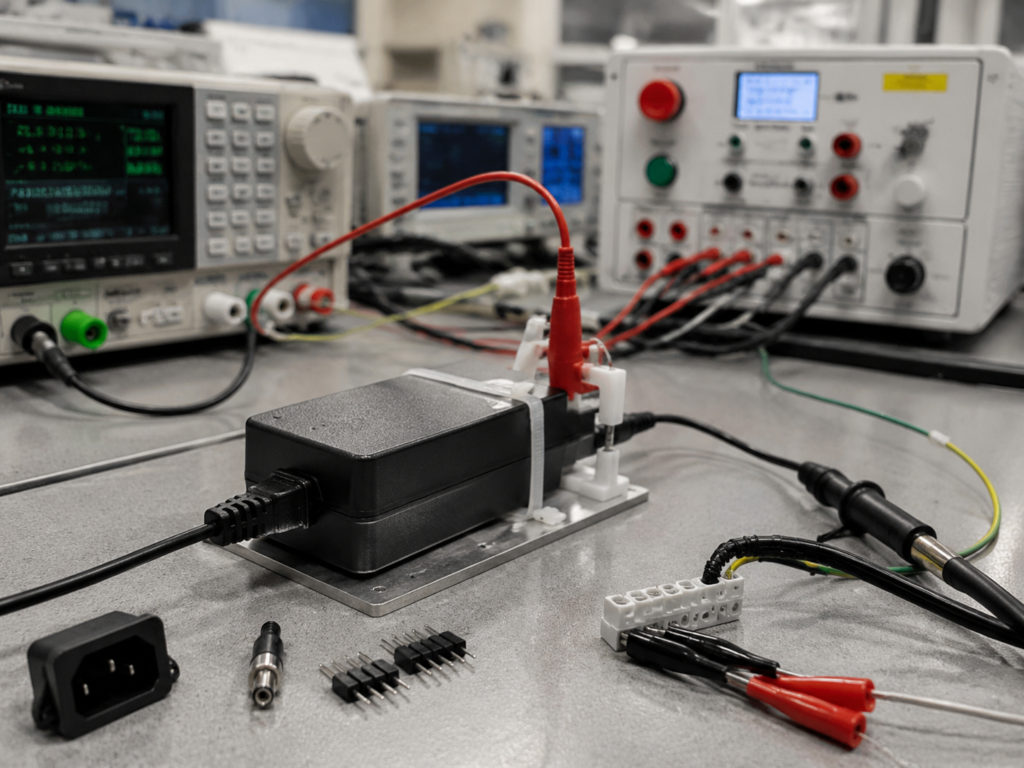
It does not test the performance or service life of the product — for example, how fast a charger charges, or how good the sound quality of headphones is, these are not within the assessment scope of UL Listing. Products that pass the certification will bear the exclusive “UL LISTED” mark. To judge whether the certification is valid and applicable, it can be measured mainly from four core dimensions: the product itself, usage scenario, rated parameters, and certification subject.
Its Actual Relationship with US Regulations: Not Federally Mandatory, But a “De Facto Access Requirement”
Many people think UL Listing is a mandatory requirement under US federal law, but that is not the case. It is essentially a voluntary third-party certification, and there is no federal law requiring all products to obtain UL Listing.
But the reason it has become a “must-have certification” in people’s mouths is that it is widely referenced by many regulators, channels, and institutions: for example, the Occupational Safety and Health Administration (OSHA for short, the federal department in charge of workplace safety) has established the NRTL (Nationally Recognized Testing Laboratory) accreditation system. In some workplace electrical equipment and installation scenarios, OSHA-related rules, local codes, or the AHJ will require products to have listing from an OSHA-recognized laboratory, and UL is one of the OSHA-recognized NRTLs; another example is that local building codes and electrical codes of US states and cities (such as California’s CEC Electrical Code) often require installed electrical products to be listed or marked by a recognized laboratory; UL Listing is the most commonly accepted type, but other OSHA-recognized NRTL certifications such as ETL and CSA may also be equivalent under the regulatory framework. Whether UL is specified depends on the explicit requirements of the specific code, channel, or buyer; mainstream channels such as Amazon and Walmart, as well as property insurance companies, also take UL Listing as a prerequisite for access or underwriting.
In short: UL Listing itself is not a mandatory requirement, but when your sales or usage scenarios involve these requiring parties, it becomes a condition that must be met — whether you need to obtain it specifically is subject to the requirements of corresponding regulations, platforms, buyers, or insurance companies.
Don’t Confuse Them: Differences Between Several Common UL-Related Certifications
UL offers several types of certification services, and many people confuse them with UL Listing. Some merchants even deliberately mislead consumers by swapping concepts. The table below can help you quickly distinguish them:
| Certification Type | Target Object | Can It Be Directly Used as Compliance Basis for Finished Products | Core Features |
|---|---|---|---|
| UL Listing (LISTED) | Complete end products | Yes | Full safety testing, covering risks from normal use |
| UL Recognition (RECOGNIZED) | Internal product components/raw materials | No | Only verifies the safety of the component itself, can only be used when integrated into a finished product |
| UL Classification (CLASSIFIED) | Finished products or components | Only valid for corresponding specific indicators | Only tests 1-2 specified indicators (such as fire resistance rating, anti-theft rating), not a full-item finished product safety certification |
| UL Field Evaluation | Large systems assembled on-site/old installed equipment | Only valid for the corresponding single on-site device | For non-mass-produced, installed custom equipment, not applicable to mass-produced finished products |
| Other NRTL certifications (ETL/CSA, etc.) | End products or components | Yes (equivalent to UL under the OSHA framework) | Also belong to OSHA-recognized third-party certifications, only some channels or regions explicitly specify UL as a requirement |
Which Products Fall Within the Scope of UL Listing
UL Listing covers a very wide range of product categories. You don’t need to memorize thick catalogs by rote; you can understand it from two levels: “statutory requirements” and “channel requirements”, and then make a preliminary judgment by yourself using general standards.
High-Risk Finished Products Explicitly Required by Regulations
These are products for which regulators explicitly require NRTL certification (UL Listing is the most common type), mainly targeting categories with higher safety risks:
- Regulators are mainly OSHA (for equipment used in some workplaces), and state/city electrical or building code departments (such as regions with strict requirements like California and New York);
- Common categories include major home appliances, power adapters, wires and sockets, smoke alarms, fixed lighting fixtures, circuit breakers, etc.;
- Whether these categories must provide UL Listing or other NRTL certification is jointly determined by the NEC (National Electrical Code)/local building or fire code adopted at the installation site, the corresponding UL product standard, and the AHJ’s acceptance requirements, and cannot be directly judged solely by the category name; among them, life safety products such as smoke alarms usually also involve special fire protection system standards and local fire acceptance, and should not be handled according to the ordinary consumer electronics process.
- It should be noted that mandatory categories vary by state and city. Special categories such as medical devices, products with wireless functions, and commercial cooking equipment also need to comply with corresponding special UL standards, which cannot be covered by ordinary listing.
Civilian Categories Generally Required by Channels (Not Mandatory But Almost Always Required)
There is no mandatory legal requirement for these products, but if you want to enter mainstream North American sales channels, you are usually required to provide UL Listing or equivalent NRTL safety certification/compliance documents. This is the type most commonly encountered by cross-border sellers:
- Requiring parties are mainly North American e-commerce platforms, offline supermarkets, and building material markets such as Amazon, Walmart, and The Home Depot;
- Common categories include mobile phone chargers, Bluetooth headsets, electric toys, small kitchen appliances, LED light strips, office equipment, etc.;
- In short: as long as it is a civilian finished product with electricity or batteries sold to ordinary consumers, most channels will require corresponding safety certification. Many new sellers get rejected on their first listing mostly because they fail to provide required safety compliance documents. The final requirements are subject to the corresponding category rules in the platform backend and the buyer’s compliance checklist.
3 Preliminary Judgment Criteria Without Checking the Catalog
If you are not sure whether your product falls within the scope of UL Listing, you can first make a preliminary judgment against these three conditions. If all three are met, it is highly likely to be within the applicable scope:
- It is a complete finished product: sold directly to end users, ready to use out of the box, no additional processing or assembly of other parts required;
- It has safety risks: risks such as electric shock, fire, mechanical injury may occur during normal use — for example, products with electricity, lithium batteries, that generate heat during use, or have moving parts;
- It has clear usage instructions: it has clear rated parameters (such as voltage, power) and usage scenario descriptions, and is not an unmarked, undocumented product.
What Scenarios is UL Listing Applicable To?
In addition to the product itself, the applicable scenarios of UL Listing also have clear boundaries, mainly focusing on two categories: sales access and usage acceptance.
Sales Access Scenarios
UL Listing has the highest recognition in the field of civilian and commercial finished product sales in North America (the United States, Canada), covering almost all mainstream sales channels. It should be noted that when used in the Canadian market, it is necessary to confirm whether the certification covers local Canadian standards, such as bearing marks applicable to Canada like cUL, cULus, or ULC. The final acceptance is subject to the local AHJ and installation codes.
- Online channels include mainstream e-commerce platforms such as Amazon. North American sites of some cross-border platforms may also require submission of UL or equivalent safety certification documents by category;
- Offline channels include supermarkets, building material markets, and electrical appliance chains such as Walmart, The Home Depot, and Best Buy;
- It also includes B-end sales scenarios such as corporate procurement, government project bidding, and large customer customization. Many enterprise customers take UL Listing as a basic access condition.
Usage and Acceptance Scenarios
In addition to being used during sales, UL Listing is also often used during product installation and use:
- Installation of electrical equipment in places such as homes, office buildings, and shopping malls — for example, when installing chandeliers, replacing sockets, or installing commercial kitchen equipment, construction parties usually prioritize products with UL Listing;
- When the local competent department in charge of construction and electrical safety acceptance (commonly referred to as AHJ in the industry; the specific department name may vary by city) conducts safety inspections, it will check whether relevant products have UL Listing, and non-compliant products may be required to be rectified;
- Underwriting-related requirements of property insurance companies: if an accident such as a fire is caused by electrical appliance failure, whether the involved product has UL Listing may affect the claim determination. The specific details are subject to the terms of the insurance contract and local relevant rules.
These Situations Are Not Applicable, and There Are Several Vague Boundaries to Note
Not all products and scenarios require UL Listing. Some situations can be directly excluded, and there are some vague boundary situations that require separate evaluation.
Situations Where UL Listing Is Completely Unnecessary
If it falls into any of the following three categories, you don’t need to consider UL Listing for ordinary civilian finished products:
- Inconsistent product form: separately sold components, raw materials, semi-finished products, such as separately sold battery cells, circuit boards, plastic shells. Such products can only apply for component certifications such as UL Recognition, and cannot directly apply for listing as finished products; there are also large industrial professional equipment, such as CNC machine tools and industrial boilers in factories. Such equipment usually cannot be directly judged according to the UL Listing path for ordinary end civilian products, and may require special industrial equipment standards, NRTL evaluation, or UL Field Evaluation.
- Inconsistent regulatory area: The compliance of food, drugs, and cosmetics themselves is not proven by UL Listing. The market supervision of such products falls under the FDA (U.S. Food and Drug Administration); if it is related electrical production equipment, food processing/contact utensils, or industrial supporting equipment, UL safety certification and other special requirements still need to be evaluated separately. In addition, intangible products such as software and cloud services, as well as purely energy efficiency or purely performance-related claims (such as “first-level energy efficiency” and “100W fast charging”), are also not within the coverage of UL Listing.
- Inconsistent scenario: non-civilian products used only in laboratories or special professional scenarios, such as high-precision testing instruments dedicated to laboratories; there are also products imported in small quantities for personal use (such as chargers brought back from overseas travel for personal use), which usually do not involve UL Listing requirements at the market access level, but if they are later involved in resale, or are required to provide safety certificates by entities such as property management or insurance companies, relevant rules still need to be verified separately.
Situations With Vague Boundaries That Require Separate Evaluation
Some products cannot be directly judged as applicable or not, and need to be judged in combination with specific uses and usage scenarios:
- Wearables with electronic functions: civilian models are within the applicable scope, such as heating scarves and heating socks worn by ordinary people in winter; industrial-specific protective wearables are not, such as industrial heating suits for workers working in low temperatures, which are industrial protective equipment and have special standards.
- Second-hand/refurbished finished products: UL Listing is only valid for brand-new, original factory-produced products. If a second-hand product has been refurbished and has core safety components replaced (for example, a refurbished phone has its battery replaced), the original certification becomes invalid and needs to be re-evaluated.
- Products used across environments: products that are clearly specified for indoor use during certification cannot be directly used outdoors; household models cannot be directly used in industrial scenarios — for example, a small household oven is designed to be used 1-2 hours a day. If it is used in a restaurant for full-day commercial use, it is not within the coverage of the original certification, and additional evaluation for the corresponding scenario is required.
Cannot Be Used Casually Even With Certification: Applicable Limitations of UL Listing
Many people think that getting a UL Listing certificate means everything is fine and it can be used freely, but that’s not the case. The application of UL Listing has strict restrictions. Using it beyond the scope not only makes the certification invalid, but may also result in penalties from UL.
Only Valid for the Product Model and Structure at the Time of Certification
UL Listing does not mean “all products of the entire brand are certified”, but is only valid for the specific model, structure, core components, and rated parameters submitted at the time of certification. If the following changes occur, re-evaluation is mandatory, and the original certification cannot be directly carried over:
- Modifying the safety structure of the product or replacing core safety components (such as batteries, power boards, fuses);
- Modifying the rated parameters of the product, such as rated voltage, power, current;
- Changing the installation method of the product, such as from desktop to wall-mounted, from indoor to outdoor;
- Change of production factory, which requires re-auditing the production qualification of the new factory.
If only the appearance is changed (such as changing the shell color or modifying the logo), which does not involve the safety structure and core components, you only need to report to UL for confirmation, and there is no need to redo the full set of tests.
There Are Clear Rules for Mark Usage
The UL Listing mark cannot be printed or used casually; there are strict specifications:
- It can only be used on products, packaging, and manuals of the corresponding certified models. Uncertified models of the same series cannot share the mark, let alone use the UL Recognition mark of components as the listing mark of finished products;
- It must be printed according to the style, size, and position specified by UL. The shape and color of the mark cannot be modified without permission, it cannot be deliberately enlarged or reduced, and the word “LISTED” cannot be removed;
- The UL Listing mark cannot be used to promote product performance. For example, you cannot say “UL certified super fast charging”, because UL does not test charging speed, it only indicates that the product’s safety meets requirements.
Certification Status and Compliance Scope Have Limitations
In addition to the limitations of products and marks, the validity of the certification itself also has boundaries:
- UL Listing has no fixed validity period, and its validity is maintained through regular factory inspections by UL. If the inspection fails, annual fees are owed, or the mark is used in violation of regulations, the certification will be suspended or even revoked. Using the mark after revocation is a violation.
- It only covers safety-related requirements and cannot replace other compliance certifications — for example, products with wireless transmission or radio frequency functions need to comply with the corresponding equipment authorization rules of the FCC (Federal Communications Commission), and some digital, non-wireless electronic products with unintentional radiation may also involve corresponding FCC compliance requirements; some products covered by energy efficiency regulations may need to meet the energy efficiency requirements of the DOE (Department of Energy); materials or components in electrical appliances that come into direct contact with food may involve FDA or corresponding state food contact material safety requirements, none of which can be replaced by UL Listing.
- Geographically, UL Listing has the highest recognition in North America (the United States, Canada). Products sold to other regions such as the European Union and Asia need to meet local certification requirements (such as CE in the EU, CCC in China), and UL Listing cannot be used directly.
Practical Methods to Quickly Judge Applicability
If you have a product or certification in hand and want to quickly judge whether UL Listing applies, you can use the following methods.
4-Step Self-Test Method That Ordinary People Can Use
No need to consult experts; you can make a preliminary judgment by following these four steps:
- Check product form: Is it a complete finished product sold directly to end users? Does it have safety risks such as electric shock or fire? If it is a component or a product with no safety risks at all, you don’t need to consider it.
- Check scenario requirements: Is it sold to the United States or Canada? Is there a clear requirement from channels, regulations, buyers, or insurance companies to have UL Listing? If it is only sold to other regions or for personal use, it is not needed.
- Check environment match: Is the product’s usage scenario civilian or industrial? Indoor or outdoor? Household or commercial? It must match the applicable environment at the time of certification, and cannot be used across scenarios casually.
- Check parameters and model: Are the product model, rated voltage, power and other parameters of the product in hand within the coverage of the certification certificate? If only Model A is on the certificate and you are selling Model B, then it does not apply.
Not Sure? Check These Official Channels
If you are still not sure after the self-test, you can confirm through authoritative channels:
- UL Product iQ official database: This is UL’s official inquiry channel, which can usually be queried after registering an account. After entering the file number or model, you need to check whether the mark type is LISTED, product category, applicant/manufacturer, specific model, rated parameters, applicable environment and restrictions; if only similar models are found or only component recognition records are found, it cannot be regarded as the finished product having obtained UL Listing. This is the most authoritative verification method.
- Other channels: You can contact a formal UL-authorized service agency for consultation, or directly ask your corresponding requiring party — such as the platform’s compliance team, the local construction acceptance department, or your buyer. They will give clear requirements.
The 5 Most Common Misconceptions About Applicable Scope
Many people have misunderstandings about the scope of application of UL Listing. Here are the 5 most common ones to help you avoid pitfalls:
Misconception 1: A product with a UL mark is UL Listed
Wrong. UL has multiple certification marks under its umbrella. Component Recognition, Classification certification, and other NRTL certifications are not equal to UL Listing.
How to avoid: First check if the mark has the word “LISTED”, then verify whether the corresponding model, parameters, and use match through the UL Product iQ official database.
Misconception 2: UL Listing is a US federal mandatory certification
Wrong. UL Listing itself is a voluntary third-party certification, and only becomes a mandatory requirement when explicitly referenced by regulations, channels, insurance, or buyers.
How to avoid: First confirm the clear rules of the specific requiring party, and do not apply blindly.
Misconception 3: With UL Listing, it can be used in all scenarios and globally
Wrong. UL Listing is only valid for the model, use, usage environment, and region specified at the time of certification, and is not universally applicable to all scenarios or globally.
How to avoid: After receiving the certificate, check the product description, applicable environment, rated parameters, and geographical scope, and do not use it beyond the scope.
Misconception 4: Certification is valid for life with one application, and modified models automatically retain it
Wrong. UL Listing has no fixed validity period, and its validity is maintained through regular factory inspections; when product modifications touch the core safety elements, the original certification becomes invalid.
How to avoid: Regularly check the certification status, and evaluate whether the modification involves core safety elements before modifying the model.
Misconception 5: With UL Listing, no other compliance is needed
Wrong. UL Listing only covers safety requirements and cannot replace other compliance requirements such as FCC electromagnetic compatibility, DOE energy efficiency, and FDA food contact.
How to avoid: Sort out all compliance requirements according to the product category to avoid omissions.
Finally: 4 Things You Can Independently Judge After Reading
Overall, UL Listing is a very important safety access credential in the North American market, but its scope of application has clear boundaries. After reading this article, you can basically independently judge four things: first, whether your product or the product you plan to buy falls within the categories covered by UL Listing; second, whether the sales or usage scenario you are in really requires UL Listing certification; third, whether the UL Listing certification in hand is used beyond the scope, such as unreported model modifications, cross-scenario misuse, non-compliant marks, etc.; fourth, when you are not sure, which official channel to query or which institutions to contact for confirmation.
When in doubt, the response from the UL Product iQ official database, formal UL-authorized service agencies, or the specific requiring party shall prevail.