
For anyone selling charging products in the Indian market, almost everyone will encounter this question: Does my product need WPC certification? Some say any product with “wireless” in its name must get it, some say products using unlicensed frequency bands don’t need it, and others confuse WPC with BIS. In the end, they either waste certification fees for nothing, or have their goods detained at customs in a dilemma.
Today we will clarify this issue from the root: from a 30-second quick preliminary judgment to core rule breakdowns, then to practical judgment methods and key pitfall avoidance tips. Even if you are new to Indian compliance, you can judge the WPC requirements for most charging products on your own and avoid detours.
Beginner’s Basics: Core Concepts of WPC/ETA and Regulatory Boundaries
If you just want to quickly judge your own product, you probably have a direction by now. But if you want to understand the logic behind it and avoid pitfalls, let’s break down a few core concepts clearly. These are all must-knows for beginners, with no hard-to-understand jargon.
What Exactly Is the Relationship Between WPC and ETA
Let’s first thoroughly explain the two most commonly confused concepts:
WPC (Wireless Planning and Coordination Bureau) is India’s official wireless regulatory authority, under the Ministry of Communications. Its core responsibilities are allocating frequency bands for different radio uses, approving radio frequency (RF) equipment, and controlling signal interference — it is equivalent to what we often call the “wireless spectrum steward”.
ETA (Equipment Type Approval) is a type approval certificate issued by WPC for RF equipment in **unlicensed frequency bands**. Put simply, it is proof that “the RF parameters of your product comply with Indian regulations, will not arbitrarily interfere with other signals, and can be legally sold and used in India”. It is also the core compliance document for customs clearance and listing of consumer wireless products.
As for equipment using licensed frequency bands, additional import permits or spectrum use permits may be required in addition to ETA. However, charging products almost never involve licensed frequency bands, so we will not elaborate further here.
Unlicensed Frequency Bands ≠ No ETA Required, Don’t Confuse Them
This is the pitfall that most people fall into, so it must be clarified first:
Many people think “unlicensed frequency bands” mean no certification is required, but that is not the case. **What unlicensed frequency bands exempt you from is “applying for a separate frequency use permit”** — that is to say, this frequency band is open to the public, and you do not need to apply for authorization from WPC specifically to use this frequency, but the premise is that your equipment must meet the parameter requirements of this frequency band (for example, the power must not exceed the limit).
For imported products, ETA self-declaration usually requires meeting two conditions at the same time: First, the equipment operates within the unlicensed frequency bands and technical limits specified in applicable G.S.R. notifications; second, the equipment is exempt from import permits under DGFT import policies. Products that do not meet the latter condition cannot directly apply ETA self-declaration just because they use unlicensed frequency bands, but must go through separate procedures according to applicable regular ETA, import permits, or requirements of other competent authorities.
Moreover, this rule is not static; it is dynamically adjusted along with official Indian G.S.R. notifications (official Indian regulatory notifications) and equipment parameter requirements. You cannot rigidly apply old rules from several years ago.
The Dual-Track Judgment Logic of WPC and BIS
Many people are confused about when WPC is required and when BIS is required. In fact, it is very simple: the two are completely independent tracks. When making a judgment, assess each separately, and combine the results to get the conclusion:
• Horizontal axis (WPC dimension): Does the product have applicable RF or inductive application requirements? Does it need ETA?
• Vertical axis (BIS dimension): Is the product in BIS’s mandatory certification catalog? Does it need BIS certification?
When the two dimensions intersect, there are four possible outcomes:
| No ETA Required | ETA Required | |
| BIS Required (in mandatory catalog) | Only BIS required (e.g., ordinary wired fast charger) | Both BIS and ETA required (e.g., smart charger with Bluetooth) |
| No BIS Required (not in mandatory catalog) | Neither required (e.g., ordinary USB-A to C data cable) | Only ETA required (e.g., niche charging accessory with NFC, if not included in BIS catalog) |
Remember one principle: WPC focuses on spectrum and RF compliance; whether BIS CRS applies and the specific conformity requirements depend on whether the product is included in the mandatory catalog and the corresponding Indian standards. They must be judged separately, and obtaining one does not exempt you from the other.
Practical Method: 4 Steps to Complete ETA Applicability Judgment
Now that we’ve covered the judgment dimensions, let’s talk about how to operate specifically — here is a 4-step judgment method. Follow it and you can complete the ETA applicability judgment for most charging products on your own.
Before starting the judgment, you need to prepare these materials first, otherwise it is easy to make a wrong judgment:
• Product BOM (bill of materials), wireless module model (if any), and whether the module has ETA (if yes, get the certificate number);
• Antenna specification sheet, RF test report, and complete product specification sheet;
• Firmware country code / frequency band switch description (that is, which frequency bands are enabled and which functions are disabled in the Indian version);
• Specific functional configuration of the Indian sales SKU, product manufacturing location, import entity, and sales/use purpose.
Once the materials are ready, you can follow the four steps:
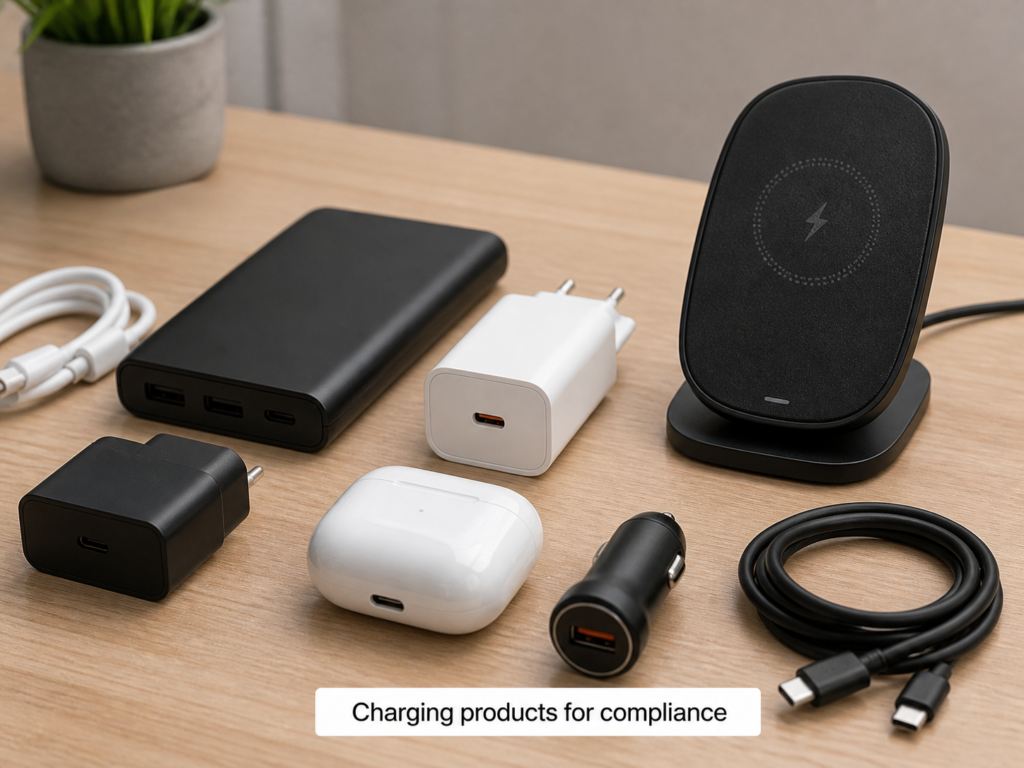
Step 1: Check for Intentional RF Transmission and Inductive Application Functions
First, go through the product specification sheet and function description to look for keywords such as Bluetooth, WiFi, NFC, RF remote control, and wireless communication.
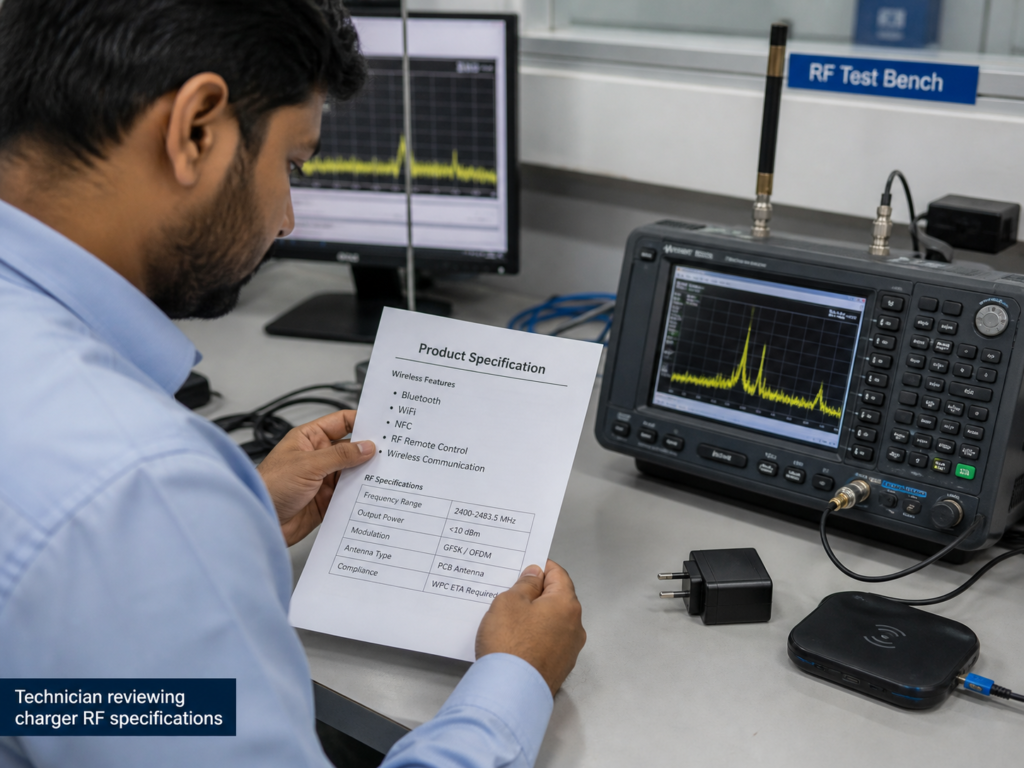
It is important to distinguish between purely inductive wireless charging and wireless charging with RF communication. Even if a purely inductive wireless charger has no communication module, ETA cannot be directly ruled out; it is necessary to further verify whether its operating frequency, magnetic field strength, bandwidth, coil or antenna configuration comply with applicable inductive application rules. For products with functions such as Bluetooth connection to a mobile phone for power adjustment, or NFC tap-to-start, these communication functions must also be included in the judgment.
At the same time, non-RF functions must be excluded: wired E-Marker chips, fast charging protocol chips, and infrared remote controls do not count and do not need to be included in the judgment.
Step 2: Verify the Actual RF Parameters of the Indian Version
Emphasis again: The parameters must be based on the **actually enabled** parameters of the Indian sales version. Do not refer to unenabled functions of the global version. For example, if your product’s hardware supports 6G WiFi, but the Indian version firmware does not enable it, then it cannot be counted.
Extract the core parameters: operating frequency band, maximum transmit power or field strength, antenna configuration; if it is an inductive wireless charging product, it should also include magnetic field strength, bandwidth, and coil configuration. Then check against WPC’s latest unlicensed frequency band and inductive application notifications. Common 2.4G/5G WiFi, Bluetooth, and NFC are all within the unlicensed range, but whether ETA self-declaration can be applied also requires confirming whether the product meets applicable conditions such as DGFT import permit exemption.
Step 3: Confirm Manufacturing Location and Use Scenario
First, check where the product is manufactured and how it enters India:
• If it is a finished product manufactured overseas and imported to India for sale, those that meet ETA conditions usually require a whole-device ETA;
• If it is a finished product manufactured locally in India, using a wireless module that already has ETA, and the RF parameters and antenna have not been modified, whether the finished product needs a separate ETA should be confirmed according to WPC’s current requirements and actual audit conclusions.
If the product is not for formal sale, such as test samples or exhibition samples, you must never determine exemption on your own. Before shipment, you must obtain written confirmation from Indian Customs or WPC based on the product situation, quantity, importer, purpose, and stay period. Otherwise, it is very easy to have the goods detained.
Step 4: Verification Channels When in Doubt
If you encounter unclear boundaries or are unsure, do not guess blindly. You can verify through the following channels:
1. Log in to the official WPC website to check the latest exemption list, licensed frequency band list, and G.S.R. notifications;
2. If the boundaries are really unclear, entrust a local qualified compliance agency in India to confirm. They have practical experience and are more efficient than checking on your own;
3. If you are not sure whether the product’s RF circuit has transmission function, or whether the inductive charging parameters comply with the rules, directly ask the product R&D team or supplier for a clear technical explanation.
After completing these four steps, you can basically draw four types of clear conclusions:
• **Category A**: No intentional RF transmission, and not an inductive application device requiring ETA → WPC ETA is usually not applicable, only BIS requirements need to be judged;
• **Category B**: Overseas-manufactured finished products with intentional RF transmission in unlicensed frequency bands, or inductive wireless charging devices covered by applicable rules → Prepare to apply for ETA through the applicable path;
• **Category C**: Locally manufactured in India, using an ETA-certified and unmodified RF module → Whether the finished product does not need a separate ETA needs to be confirmed according to WPC’s current rules;
• **Category D**: Using non-unlicensed frequency bands, parameters exceeding limits, unclear import conditions, or unclear purpose → Do not ship first, go through the WPC case-by-case confirmation process.
Intermediate Essentials: Basic Rules for ETA Applications for Charging Products
If you have confirmed that your product needs ETA and want to understand the basic application rules, the following content is for you — these are all entry-level application common sense to help you avoid detours.
Common Application Methods
Currently, for wireless devices that have been granted unlicensed status under G.S.R. notifications, ETA is usually processed via self-declaration on SARAL Sanchar. For imported products, they must also meet conditions such as operating within applicable unlicensed frequency bands and technical limits, and being exempt from import permits under DGFT import policies.
If the product does not meet the DGFT import permit exemption conditions, it should apply for regular ETA procedures to the corresponding WPC Regional Licensing Office (RLO). It should be noted that ETA does not replace DGFT NOC, import permits, or other applicable import regulatory requirements; whether other permits are needed must be judged independently based on the product and import arrangement.
Application Materials and Responsible Entities
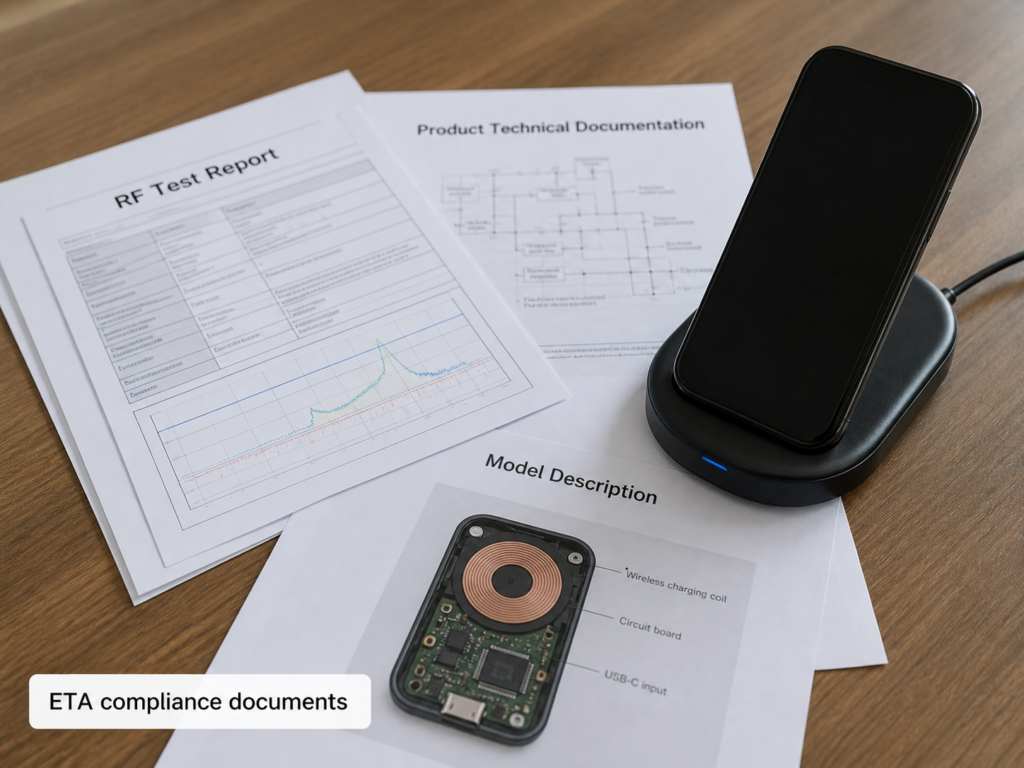
The core materials for ETA application include: RF test report issued by a laboratory with applicable accreditation qualifications, product technical documentation, and model description of the module or whole device. The test report should be able to prove that the Indian version of the product, or the unmodified RF module, complies with the technical parameters in the corresponding G.S.R. notification; if the product contains multiple RF modules, test reports for the relevant unmodified modules should also be prepared according to current requirements.
Who can submit the application? Import self-declarations are usually submitted by the Indian importer or an authorized Indian representative according to the SARAL Sanchar process. When overseas manufacturers participate in the application or authorization arrangement, it shall be subject to the current portal rules and actual import entity arrangement.
Regarding fees, the officially announced WPC application fee is 10,000 Indian rupees per application. The specific amount shall be subject to the latest requirements on the official page on the day of application submission. In addition, whether test reports from overseas laboratories are accepted and whether supplementary testing is required shall be subject to current WPC review requirements and are not fixed.
Validity Period and Change Rules
Many people ask how long the ETA validity period is. In fact, under normal circumstances, ETA has no fixed validity period and does not require renewal, unless it is revoked by WPC.
However, if the following situations occur, it is necessary to reconfirm ETA applicability and may require re-application:
• The RF module or antenna is replaced;
• The operating frequency band, transmit power, or modulation protocol is modified;
• New frequency bands are enabled after firmware update;
• The product model is changed.
If only the product appearance is changed, or non-RF parts are replaced, and the RF parameters are exactly the same as the original ETA, re-application is usually not required.
A special reminder here: For products whose existing ETA only covers 2.4GHz and/or 5GHz, and which plan to subsequently enable 5925–6425MHz in India, and the same device model technically has the capability for this frequency band, you should first apply for technical cancellation of the original ETA in accordance with WPC’s notification on this frequency band, and then apply for a new ETA covering all actually enabled frequency bands; new models should truthfully cover all actually enabled frequency bands when applying for the first time.
How to Handle Multi-Model Products
If you have multiple product models, even if the RF parts are exactly the same, do not assume that you can apply for “series certification” or combine them into the same ETA.
The correct approach is to confirm whether separate applications and payments are required based on the actual product model or device type, and the current form requirements of SARAL Sanchar. Unless WPC confirms in writing in a specific application that other clearly listed models can be covered, multiple whole-device models of the same brand, same wireless platform, or with the same RF parameters should not be defaulted to be combinable into one ETA.
High-Frequency FAQs for Charging Products
Finally, we have compiled the 6 most frequent questions about WPC ETA for charging products and answer them collectively.
Do Wired Chargers and Data Cables Need ETA?
No. Purely wired charging products have no intentional RF transmission and are not inductive wireless charging devices, so they are usually not within the scope of ETA regulation. Even high-power fast chargers and wired products with E-Marker chips do not need it. However, if the product is in the BIS mandatory certification catalog, BIS certification needs to be applied for separately.
Is ETA Mandatory for Qi Wireless Charging Pads?
A direct conclusion cannot be drawn; it must be verified based on specific parameters.
You cannot assume that ETA is not required just because it has no communication modules such as Bluetooth, WiFi, or NFC. For purely inductive wireless charging pads, parameters such as operating frequency, magnetic field strength, bandwidth, coil or antenna configuration should be checked to see if they comply with applicable Indian notifications on inductive applications and low-power RF devices; inductive wireless charging devices that fall under relevant rules should themselves obtain ETA.
If the product also has RF communication functions such as Bluetooth, WiFi, or NFC, these functions should also be included in the ETA technical documentation and model judgment for the corresponding frequency bands. Overseas-manufactured finished products usually require a whole-device ETA.
Similarly, BIS requirements must be judged separately based on product category and corresponding standards, and are not the same as ETA.
Do Smart Chargers with Bluetooth/WiFi Need ETA?
It depends on the situation:
• If it is an overseas-manufactured finished product, Bluetooth and WiFi are both within the coverage of India’s unlicensed frequency bands, and a whole-device ETA is usually required; if you plan to use ETA self-declaration, you should also confirm that applicable conditions such as DGFT import permit exemption are met;
• If it is a locally manufactured finished product in India, the wireless module used has already obtained ETA, and the RF parameters and antenna of the module have not been modified, whether the finished product needs a separate ETA should be confirmed according to WPC’s current rules and actual audit conclusions.
Is ETA Still Required If There Is FCC ID/CE RED?
Yes. India does not directly recognize wireless certifications from other countries or regions. FCC ID or CE RED certificates themselves cannot replace the RF test report required for ETA; test materials that can prove the product or unmodified RF module complies with applicable Indian technical parameters should be submitted.
Whether specific materials are accepted and whether supplementary testing is required shall be subject to WPC’s review conclusion. Ultimately, compliance is only achieved after obtaining the official WPC ETA approval.
If a Certified Module Is Used, Does the Whole Device Still Need ETA?
It still depends on the manufacturing location:
• Finished products imported from overseas: Usually require a separate ETA application based on the whole device model, and the module certification cannot be used directly;
• Finished products manufactured locally in India: Even if the RF parameters and antenna of the module are not modified, whether the finished product needs a separate application should also be confirmed according to WPC’s current rules and specific audit conclusions.
The final conclusion shall be subject to the official audit result of WPC.
Do Temporary Exhibition Charging Samples Need ETA?
You must never determine exemption on your own. Before shipment, you must obtain written confirmation from Indian Customs or WPC based on product type, quantity, import entity, purpose, and stay arrangement. Moreover, exhibition samples cannot be used for commercial sale. If they exceed the scope of restrictions, formal ETA is still required.
Summary
By now, you should be able to independently complete the WPC ETA applicability judgment for most charging products:
• You can use the actual wireless and inductive functions of the product to make a preliminary classification of common charging products;
• Use the 4-step self-check method + essential material list to complete the ETA judgment for any charging product;
• You can avoid 6 common cognitive misunderstandings and 4 charging-specific pitfalls;
• You can draw four types of standard judgment conclusions and know when to find a professional agency for verification;
• You can distinguish the dual-track logic of WPC ETA and BIS, and will not confuse the regulatory scopes of the two.
Finally, a regulatory verification statement: This article is compiled based on the public rules of the Indian Ministry of Communications (DoT), WPC, and BIS at the time of publication. Since frequency band notifications, application system requirements, and the BIS mandatory catalog are all dynamically updated, before shipping, listing, or submitting a certification application, you must be subject to the latest official requirements and written confirmation results on that day to avoid losses due to rule changes.