
Sellers who export charging products to Mexico have most likely encountered these problems: after goods arrive in Mexico, they are required to supplement IFT-related documents, and they are not sure whether their products need to be processed; platforms such as Amazon Mexico and Mercado Libre require submission of compliance materials during review; some people confuse IFT with NOM, thinking that one is enough. Today we will clearly explain the core rules, scope of application, processing procedures and common pitfalls of the IFT-related system at one go, from entry-level judgment to compliance and pit avoidance, which you can use right after reading.
First, understand: What exactly is IFT certification?
First of all, it should be clear that the commonly referred to “IFT certification” is not a unified “certificate” directly issued by the IFT. It mainly consists of two parts: the product complies with the applicable technical regulations of Mexico and obtains the corresponding conformity documents, and applying for **Homologación** (type approval) from the Federal Institute of Telecommunications (Instituto Federal de Telecomunicaciones, abbreviated as IFT) of Mexico.
Homologación is an administrative procedure handled by the IFT; conformity testing and assessment are usually completed by laboratories and certification bodies with corresponding accreditation and authorization scopes. The specific documents required and the subject that submits them depend on the equipment type, applicable technical regulations and the current processing procedures.
Its core function is to confirm that regulated telecommunications and radio equipment comply with the applicable technical requirements of Mexico, including spectrum use, wireless transmission, electromagnetic compatibility, as well as some public telecommunications network access and interoperability requirements. It does not focus on whether the product will cause electric shock, but whether the equipment can work locally in compliance, whether it may interfere with communication networks or cannot access the public telecommunications system normally.
For sellers operating in the Mexican market, IFT-related compliance has three main direct impacts:
The first is **customs clearance and import risks**: For equipment that legally falls within the scope of Homologación and is imported for commercial purposes such as sale, the lack of necessary type approval or conformity documents may lead to customs clearance delays, regulatory disposal, return of goods or administrative penalties. The specific consequences depend on the product classification, import method and the determination of the customs or regulatory authority.
The second is **platform review risks**: Some e-commerce platforms or specific categories may require submission of IFT-related numbers or compliance documents. Missing information, wrong numbers, or inconsistency between the brand, model and the actual product may affect listing and sales.
The third is **market supervision responsibility**: If regulated equipment enters the market without completing relevant procedures as required, importers, sellers or other responsible subjects may face regulatory treatment. Specific responsibilities and penalties shall be determined according to the product, import method and actual violation situation.
Many people confuse IFT with Mexico’s NOM, but in fact the two have different divisions of labor. It should be noted that NOM is not a unified “safety certification”, but the official Mexican standard system. Whether a certain charger, adapter or cable is subject to NOM, which mandatory NOM applies, and whether certification is required depend on the product category, rated parameters, import and sales methods, and the mandatory standards in force at the time.
| Comparison Item | IFT-related Homologación | NOM-related Requirements |
| Jurisdiction Scope | Wireless, radio frequency, telecommunications compliance, including spectrum use, network access and related technical requirements | Depending on the specific NOM, may involve requirements such as electrical safety, energy efficiency, labeling, etc. |
| Trigger Conditions | The equipment falls within the scope of telecommunications, radio or public telecommunications network terminal equipment applicable in Mexico, and falls under the corresponding technical regulations | Applicability depends on product category, rated parameters, mandatory NOM catalog, etc. |
| Typical Applicable Charging Products | Smart chargers with Bluetooth/Wi-Fi, portable chargers with cellular communication function, etc. | Some electrical products such as chargers and adapters may be subject to corresponding NOM; charging cables cannot be generalized |
| Overlapping Scenarios | Smart charging products with wireless functions may need to meet both IFT and NOM-related requirements | Whether it is necessary to handle and which requirements to apply shall be confirmed according to the applicable NOM |
For example: an ordinary wired charger usually does not trigger IFT type approval due to its wired charging function, but it still needs to confirm requirements such as electrical safety, energy efficiency, and labeling according to the product category, rated voltage and applicable mandatory NOM. It cannot be generally stated that all ordinary chargers or charging cables must undergo the same type of NOM.
If it is a smart charger with Bluetooth that can connect to an APP to adjust power, in addition to checking the applicable NOM requirements, it is also necessary to determine whether it falls within the scope of IFT Homologación and handle it in accordance with the corresponding regulations. The two sets of requirements focus on different matters, and one set cannot automatically replace the other.
Do charging products need IFT? You’ll know how to judge after reading
After understanding the basic positioning of IFT, the next is the core judgment question: does the charging product I sell need IFT processing? Here you can’t just look at the product name, nor can you draw a conclusion directly when you see the word “wireless”.
Trigger conditions: First confirm whether it falls within the applicable scope
If the equipment falls within the scope of telecommunications, radio or public telecommunications network terminal equipment applicable in Mexico and falls under the corresponding technical regulations, Homologación is usually required. The final confirmation shall be made item by item in combination with the following factors:
1. Whether the product has wireless communication or radio transmission functions, such as Wi-Fi, Bluetooth, NFC, FM or cellular communication;
2. Whether the product accesses the Mexican public telecommunications network, such as using a SIM card to access the operator’s network;
3. Whether the used wireless system, frequency band, power, antenna and interface fall under specific technical regulations;
4. Whether the product is for commercial sale, domestic use, or for special purposes such as temporary import, testing, research and development;
5. What are the provisions of the currently applicable regulations, technical regulations, Homologación materials and possible exemption clauses of the IFT.
Here you can first remember a practical judgment: **pure wired charging and pure wired data transmission usually do not trigger IFT type approval because of “wired” itself**. For example, even if an ordinary USB-C charging cable supports data transmission, it is not a radio device. However, if a wireless communication module is added to the same product, it still needs to be re-judged, and you can’t just look at whether it can be charged by wire.
Clarify charging products that usually require further processing
Combined with common products in the charging category, the following two types usually require key verification of IFT requirements:
The first type is products with active wireless communication functions, such as smart chargers with Wi-Fi, Bluetooth, NFC or FM functions, wireless chargers with Bluetooth that can connect to APPs, and car chargers with NFC interaction functions.
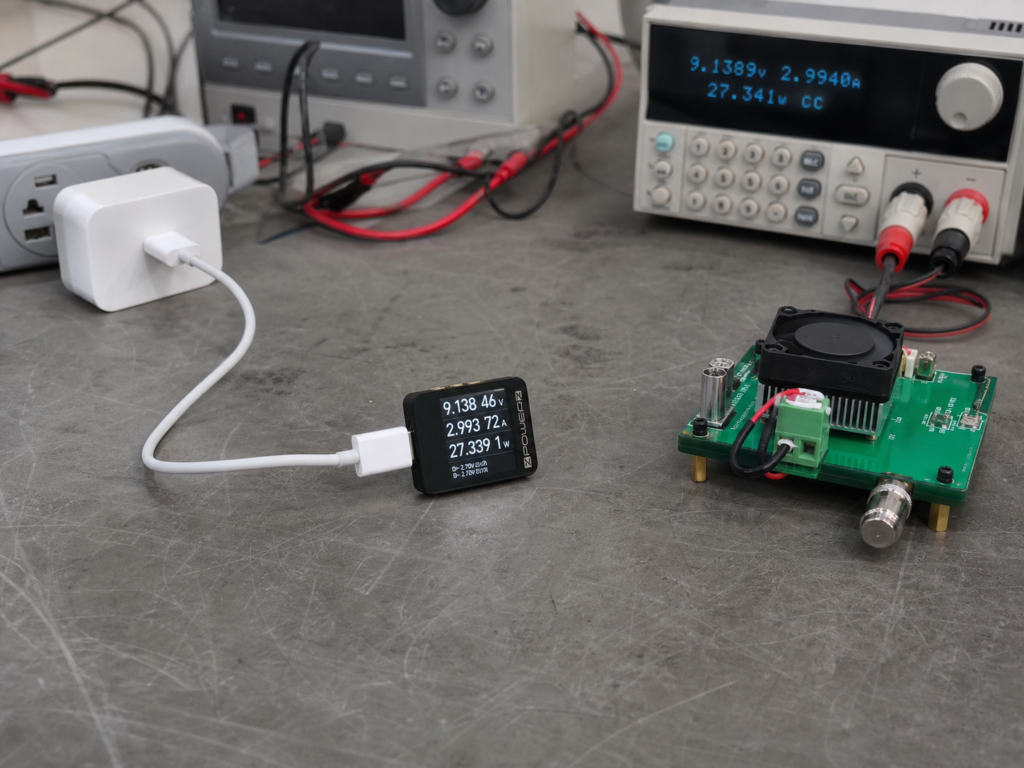
The second type is products that access the public telecommunications network, such as 2-in-1 portable WiFi charging products with SIM cards, outdoor power supplies with cellular networking functions, etc.
However, “having a certain function” does not mean that the final classification can be completed only by the function name. It still needs to be confirmed in combination with the actual working mode of the equipment, frequency band, transmission parameters, technical regulations and product use.
Clarify charging products that are usually not triggered by IFT functions
Ordinary chargers, power adapters, charging cables and wired car chargers without wireless or telecommunications functions usually do not undergo IFT Homologación due to charging or wired data transmission functions. But this does not mean that they are automatically exempt from other regulatory requirements, and applicable NOM, labeling, energy efficiency or other product compliance requirements still need to be checked.
For wireless charging products, if they only have wireless power supply function and no wireless communication or public telecommunications network access function, they usually do not undergo IFT Homologación due to Qi power supply itself. However, its operating frequency, unintentional radiation, additional functions and applicable NOM or other technical requirements should still be verified.
Here we should particularly distinguish between “wireless power supply” and “wireless communication”: wireless charging uses electromagnetic methods to transmit energy, while functions such as Bluetooth, Wi-Fi and NFC are used for communication or data interaction. The two are not the same thing, but an absolute exemption judgment cannot be made solely on the basis of “low power” or “no obvious communication function”.
How to judge products with blurred boundaries?
In actual product selection, uncertain situations are often encountered. The core judgment logic is: **first confirm whether the product belongs to telecommunications, radio or public telecommunications network terminal equipment referred to in Mexican IFT regulations, and then check whether its functions, frequency bands, power, interfaces and uses fall under specific technical regulations.**
Here are several common scenarios:
• **USB-C cable with data transmission**: Wired data transmission is not equal to radio transmission, and usually does not undergo IFT Homologación due to this function, but other applicable requirements still need to be checked;
• **Multi-version chargers of the same series**: Ordinary wired versions usually do not trigger IFT, while smart versions with Bluetooth or Wi-Fi need to be judged separately, and documents cannot be shared just because they look similar;
• **Charging base with NFC**: If it does have NFC interaction or data transmission function, IFT requirements should be verified; if it is only pure charging, it is usually not triggered by the NFC function;
• **Low-power wireless chargers**: Power level is not the only basis for judgment. Products with only wireless power supply function usually do not undergo IFT due to power supply itself, but still need to verify operating frequency, parasitic radiation, additional functions and other technical requirements.
When verifying materials, it is recommended to first compare with the Federal Telecommunications and Broadcasting Law, applicable IFT technical regulations and IFT official Homologación materials. In case of disputes, you can consult a certification body with corresponding accreditation and authorization scope; if it is still uncertain, you can apply to the IFT or obtain formal written confirmation as needed. Certification bodies can provide technical opinions or carry out conformity assessment, but they do not necessarily have the authority to make binding classification decisions for all products.
Applicable regions and exemption scenarios
If a product enters the domestic market for the purpose of sale, use or provision of telecommunications services in Mexico, it usually shall meet the applicable IFT requirements. As for what documents need to be submitted at the entry stage and when the product is deemed to have entered the domestic market when the product is in a bonded warehouse, free trade zone or other specific customs regimes, it shall be confirmed in accordance with the corresponding customs regimes and regulatory provisions. It cannot be simply asserted that all products in bonded warehouses or free trade zones have triggered the same Homologación obligations.
Certain temporary imports, exhibitions, testing, research and development or personal non-commercial use may be subject to specific exemption or simplified requirements. However, the scope, quantity, duration of exemption and conditions such as no sale must be confirmed in accordance with specific regulations and customs regimes. “Exhibition samples” and “small personal items” cannot be generalized as the only two types of exemptions, nor can “bringing 1-2 chargers” be used as the unified standard for all personal items.
What compliance requirements must be met for IFT certification?
After confirming that the product may need Homologación, the next step is to understand the core compliance requirements, which are mainly divided into three parts: technical requirements, application materials and labeling.
Exclusive technical requirements for charging products
For charging products with wireless or telecommunications functions, technical review usually focuses on the following aspects:
The first is **radio frequency requirements**: that is, radio signal transmission parameters. The transmission frequency, transmission power and occupied frequency band of the product must comply with the applicable spectrum regulations of Mexico. For example, Bluetooth devices usually use the 2.4GHz frequency band, but the specific allowed parameters and test requirements are still subject to the applicable technical regulations, and cannot be judged only by the product manual.
The second is **electromagnetic compatibility requirements**: simply put, when the product is working, it must not cause unacceptable interference to surrounding telecommunications equipment, and at the same time it must have anti-interference ability within the specified range.
The third is **telecommunications access requirements**: if it is a product with cellular function, such as a portable charging device with a SIM card, it is necessary to verify the Mexican operator’s network system, frequency band and related access requirements to ensure that the device can work normally locally.
Application material requirements
The materials required to handle IFT-related procedures depend on the specific type of Homologación and applicable technical regulations. Common materials include:
The first is **product materials**: such as specifications marked with wireless parameters, wireless module information, antenna information, product photos, user manuals, as well as circuit block diagrams or system block diagrams that can explain the working mode of the equipment.
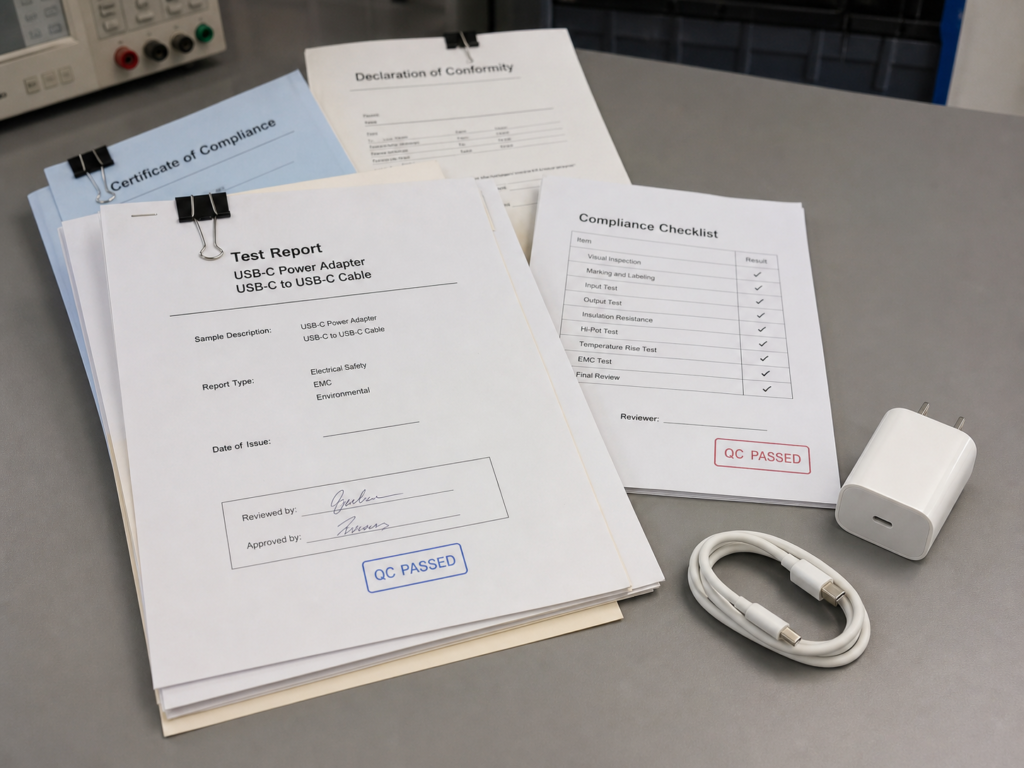
Then there are **test and conformity documents**: tests shall be carried out by accredited laboratories with corresponding scope qualifications in accordance with applicable technical regulations, and conformity assessment shall be carried out and corresponding documents shall be issued by accredited and authorized certification bodies. Not all IFT-related applications use the same type of laboratory report as the only material, and the specific submission content shall be subject to the requirements of the corresponding procedure.
Finally, there is **subject information**: the application shall be submitted by a subject that meets the requirements of the specific Homologación procedure. Overseas manufacturers or sellers usually need to handle notifications, documents and market responsibilities through local importers, agents or authorized representatives that meet the requirements of Mexican procedures. However, whether a local representative must be the applicant subject shall be confirmed by the current procedures and acceptance requirements of the IFT.
Labeling requirements
After obtaining Homologación or relevant conformity documents, the corresponding marks shall be used in accordance with the current marking regulations of the IFT and applicable technical regulations.
Usually, the corresponding Homologación number or specified mark shall be marked at the designated position of the equipment, packaging or accompanying materials. The specific content to be marked, whether it should be placed on the product body or the packaging, and whether small equipment is allowed to use packaging or instructions for marking shall be subject to applicable regulations and document conditions.
The size, color, proportion and usage method of the IFT mark cannot be modified at will. When designing products and packaging, the current official marking specifications should be confirmed in advance to avoid re-production later due to non-compliance of position, size or marking content.
From preparation to certificate acquisition: Disassembly of the entire IFT processing process
The IFT processing process is not complicated, but the specific steps may vary for different equipment and Homologación types. The following is explained in the common order, and there are checkpoints to pay attention to at each stage, don’t miss them.
Stage 1: Pre-preparation
Before formal testing, do three things first:
The first is **product self-inspection**: compare with IFT regulations, applicable technical regulations and Homologación materials to confirm whether the product is within the regulated scope, and whether there are conditions for temporary import, testing or other special purposes.
The second is **material sorting**: prepare product specifications, wireless module and antenna materials, circuit or system block diagrams, product photos, manuals and subject documents according to specific procedures to ensure that the parameters are accurate and consistent.
The third is **screening of laboratories and certification bodies**: verify whether the relevant institutions have accreditation and authorization qualifications within the applicable scope, and confirm that the test or conformity documents issued by them can be used for the corresponding procedures, so as to avoid obtaining unusable reports.
The core checkpoint at this stage is: **the function and technical parameters of the final mass-produced and sold product version must be consistent with the self-inspection, test submission and declaration materials**. For example, if it was originally an ordinary charger, and the Bluetooth function is added during mass production, the applicable scope must be re-judged, and the compliance conclusion of the ordinary version cannot continue to be used.
Stage 2: Sample testing
After preparation, samples can be sent for testing in accordance with the requirements of the laboratory and applicable technical regulations. The number of samples, test items and sample configurations are not necessarily the same, and shall be subject to the specific product and institutional requirements.
Common test focuses include radio frequency parameters, electromagnetic compatibility, and related network access items for devices with cellular functions. If the test fails, it is usually necessary to analyze the cause, adjust the product and retest or supplement materials according to the procedure.
The checkpoint at this stage is very important: **the test sample must be consistent with the subsequent mass production version in terms of software and hardware, wireless module, antenna, firmware and key parameters**. It is not allowed to specially make a sample different from the mass-produced product in order to pass the test, otherwise the actual product sold later may not be covered by the original documents.
Stage 3: Conformity assessment and Homologación processing
After the test is completed, the conformity assessment shall be completed first in accordance with the applicable technical regulations, and then the applicant subject or its agent that meets the procedural requirements shall handle the corresponding Homologación with the IFT.
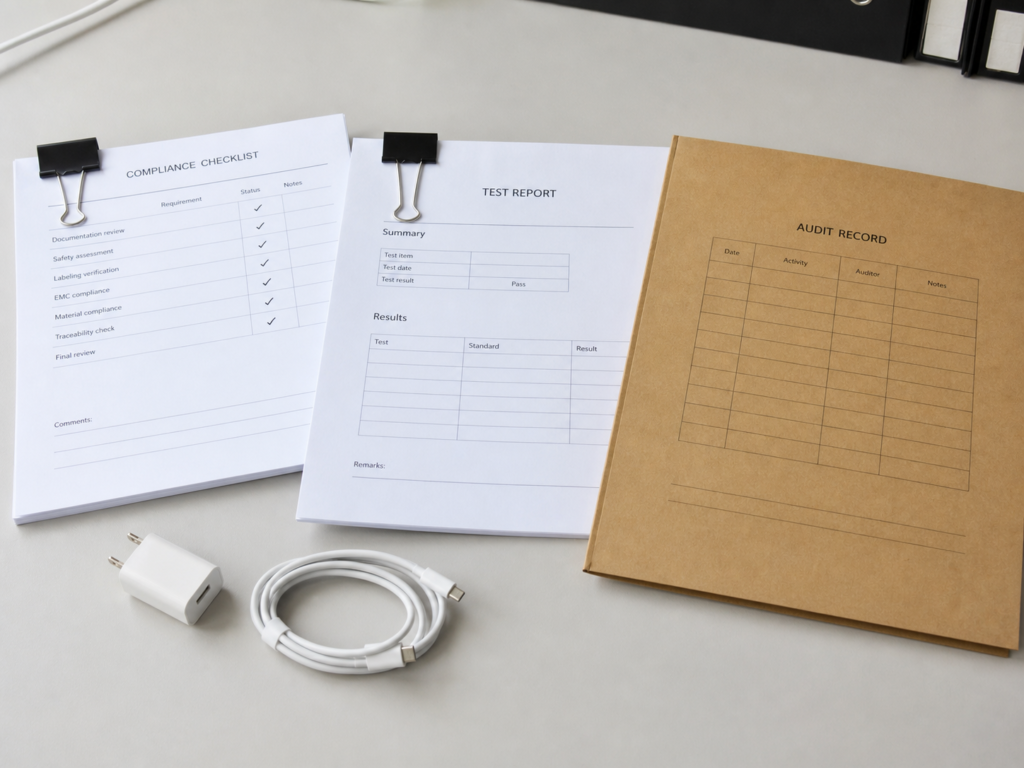
Whether it must be submitted through a certification body, and whether the certification body undertakes the testing or conformity assessment link depends on the specific type of Homologación and the current IFT procedures. It cannot be generalized that all applications must be submitted uniformly by the certification body, nor can the conformity documents issued by the certification body be confused with the Homologación decision made by the IFT.
There is no unified 4-12 week guarantee period for processing time applicable to all products. The actual cycle will be affected by product complexity, test arrangement, conformity assessment, application type, material completeness, supplementary material situation and IFT acceptance progress. Time should be reserved in advance according to the current procedures and the time limit instructions of the accepting institution.
The checkpoint at this stage is: **the brand, model and product version in the application must be consistent with the actually sold goods**. For example, if the model on the document is ABC-100 but it is changed to ABC-101 when sold, it may not be possible to prove that the document covers the products on sale.
Stage 4: Document acquisition and maintenance
After the processing is completed, the corresponding Homologación documents and conformity documents shall be obtained. The document form, number, validity period and conditions for continued validity depend on the type of Homologación, conformity certificate and specific procedural provisions.
The validity period cannot be generalized as a unified 5 years, and shall be subject to the Homologación documents issued by the IFT, relevant conformity certificates and the markings of applicable regulations. Some documents may have a clear term, while others may be accompanied by conditions such as continued compliance, change management or other conditions.
It is not all smooth sailing after getting the documents. If you want to replace the wireless module, radio frequency chip, antenna, firmware or other components that may affect the tested parameters, the impact shall be evaluated by the certification body before the change, and by the IFT when necessary. Depending on the content of the change, it may be necessary to handle changes, supplementary tests, modify conformity documents or re-apply for Homologación. Without confirmation, do not directly use the original documents to cover the changed products.
The checkpoint at this stage is: **the brand, model, wireless function and key technical parameters marked in the document must match the products on sale**. As long as the product has changes that may affect the compliance conclusion, the change assessment should be completed first.
Use and validity management of Homologación documents
After getting the documents, how to confirm that the documents are authentic and valid? How to avoid out-of-scope use? You can focus on the following matters.
The first is **validity inquiry**: you can check the number, applicant subject, brand, model and status through the Homologación inquiry provided by the IFT or relevant public registration channels. The query fields, public scope and update status are subject to the actual functions of the system. When necessary, the original documents and current status shall also be verified with the certification body that issued the conformity documents or the IFT.
Then there are **document usage specifications**: relevant documents can only be used for the brand, model, specification and version marked on the document, and cannot be automatically shared just because the products are of the same series or similar in appearance. The IFT mark and number cannot be altered, lent or used for other products. If the certificate holder, brand, product name or technical configuration changes, the change shall be handled in accordance with the applicable procedures, instead of modifying the content of the document without authorization.
Finally, let’s talk about **common situations where documents become invalid or no longer cover products**, mainly including: the period specified in the document expires and is not handled as required; the product has changes that affect the compliance conclusion but the change assessment is not completed; and the product no longer complies with applicable regulations, technical regulations or document conditions, and the competent authority has taken revocation or other regulatory measures.
The most common IFT compliance pitfalls, don’t fall for them
Finally, we have sorted out the IFT compliance pitfalls that everyone is most likely to fall into, divided into three links: cognition, processing, and sales. Avoiding them in advance can save a lot of money and time.
High-frequency misunderstandings in cognition, don’t get them wrong again
1. **”All charging products need IFT”**: Wrong. Ordinary wired charging and pure wired data transmission usually do not trigger IFT Homologación due to these functions; however, whether it is necessary to handle it still needs to be confirmed in combination with whether the equipment is within the regulated scope and applicable technical regulations.
2. **”Having FCC/CE certification can replace IFT”**: Wrong. Overseas certifications such as FCC and CE cannot automatically replace the Homologación required by Mexico. Whether overseas test reports or conformity documents can be accepted depends on applicable technical regulations, accreditation or mutual recognition arrangements, as well as the specific review of the IFT or certification body.
3. **”All wireless chargers need IFT”**: Wrong. Products with only wireless power supply function usually do not need IFT due to Qi power supply itself, but still need to check the operating frequency, unintentional radiation, additional communication functions and other applicable requirements.
4. **”IFT is in charge of the safety of charging products”**: Wrong. IFT mainly deals with telecommunications, radio and related technical compliance; requirements such as electrical safety, energy efficiency and labeling shall be checked for applicable NOM and other regulations according to product categories, and NOM cannot be simply understood as a unified safety certification.
Key points for avoiding pitfalls in the processing process
1. It is best to do pre-testing before sending samples, especially for items that are prone to problems such as radio frequency power and electromagnetic compatibility. Finding problems in advance can reduce rework and retesting.
2. For products of the same series, if the core components are different, such as using different Bluetooth modules, radio frequency chips or antennas, you cannot directly share a set of documents just because the product names are similar. You should first conduct a change impact assessment.
3. When designing products and packaging, confirm the position and format of the Homologación number or specified mark in advance. Don’t wait until the packaging is printed to find that it does not meet the current marking requirements.
4. Overseas sellers should confirm in advance the arrangement of importers, agents or authorized representatives that meet the requirements of IFT procedures, and verify their specific roles in applications, documents and market responsibilities. Don’t wait until the application is submitted to handle it temporarily.
Key points for avoiding pitfalls in market sales
1. Some platforms or specific categories may require submission of IFT-related numbers or compliance documents. Sellers shall submit materials in accordance with the current platform policies and ensure that the brand, model and product version are consistent with the documents. Inconsistent materials may lead to review failure, sales restriction or removal, and specific measures shall be subject to platform rules.
2. Regulated equipment sold, delivered or put into use to domestic consumers in Mexico from bonded warehouses or free trade zones shall usually meet applicable IFT and other compliance requirements before entering the domestic market. The customs regime itself does not constitute a general exemption, and specific responsibilities and penalties depend on applicable regulations and actual conduct.
3. The documents of the smart version product cannot be used to cover the ordinary version product, nor can the Homologación documents of one model, wireless module or technical configuration be used to prove the compliance of another actual version. In case of version changes, the applicable change assessment should be completed first.
In general, to judge whether a charging product needs IFT processing, you can’t just look at “whether it is a charger” or “whether it is wireless”, but confirm whether the equipment falls within the scope of telecommunications, radio or public telecommunications network terminal equipment applicable in Mexico, and further check the functions, frequency bands, power, interfaces, uses and specific technical regulations.
When processing, it is usually necessary to first complete product classification and material preparation, then conduct testing and conformity assessment in accordance with applicable regulations, and then the applicant subject or its agent that meets the procedural requirements shall handle Homologación with the IFT. There is no unified standard for processing time and document validity period applicable to all products, which shall be subject to the current procedures, accepting institution and final documents.
Just remember a few core principles: pure wired functions usually do not need to be processed due to IFT requirements, but other regulations still need to be checked; pure wireless power supply cannot be regarded as an absolute exemption just because of “low power”; overseas certifications such as FCC and CE cannot automatically replace Mexican Homologación; whether special arrangements apply to bonded warehouses, free trade zones and personal items must also be confirmed in combination with specific customs regimes and uses. Only in this way can compliance risks in customs clearance, listing and subsequent sales be reduced.