
Sellers and importers of electronic products targeting the U.S. market, and even individuals who only bring electronic devices to the U.S. for personal use, have most likely heard of FCC certification. Many people think that once they get the certification certificate and print the FCC ID on the product, they can sit back and relax — until one day they receive an official letter from the FCC, either asking for supplementary materials or directly issuing a fine, then they panic: Didn’t we already get certified? Why are we still being investigated?
In fact, FCC enforcement is far more than just “checking whether there is a certification”. From product labeling, promotional language to actual performance, all links related to radio frequency (RF) compliance are within the scope of supervision. Today we will explain in full the FCC’s enforcement mechanisms and penalty rules for equipment certification, from the most basic “whether you are subject to regulation” to how to respond when you receive a fine. After reading this, you will have a clear understanding.
First Define the Boundary: Whether FCC Certification Enforcement Applies to You
First of all, we need to clarify the focus of this article: all content is only related to the enforcement rules of FCC equipment certification — that is, the compliance supervision of electronic products with RF functions. If you are concerned about other areas under FCC jurisdiction such as broadcast content compliance, telemarketing harassment, or spectrum auctions, this article may not help you, and you can skip it directly.
Which Products Are Within the Jurisdiction
Simply put, all electronic products that can emit radio waves need to meet FCC certification requirements to be sold and used in the U.S. market. The WiFi/Bluetooth devices, drones, smart home products, walkie-talkies, vehicle-mounted transmitters, mobile phones, etc. that we often talk about all fall into this category.
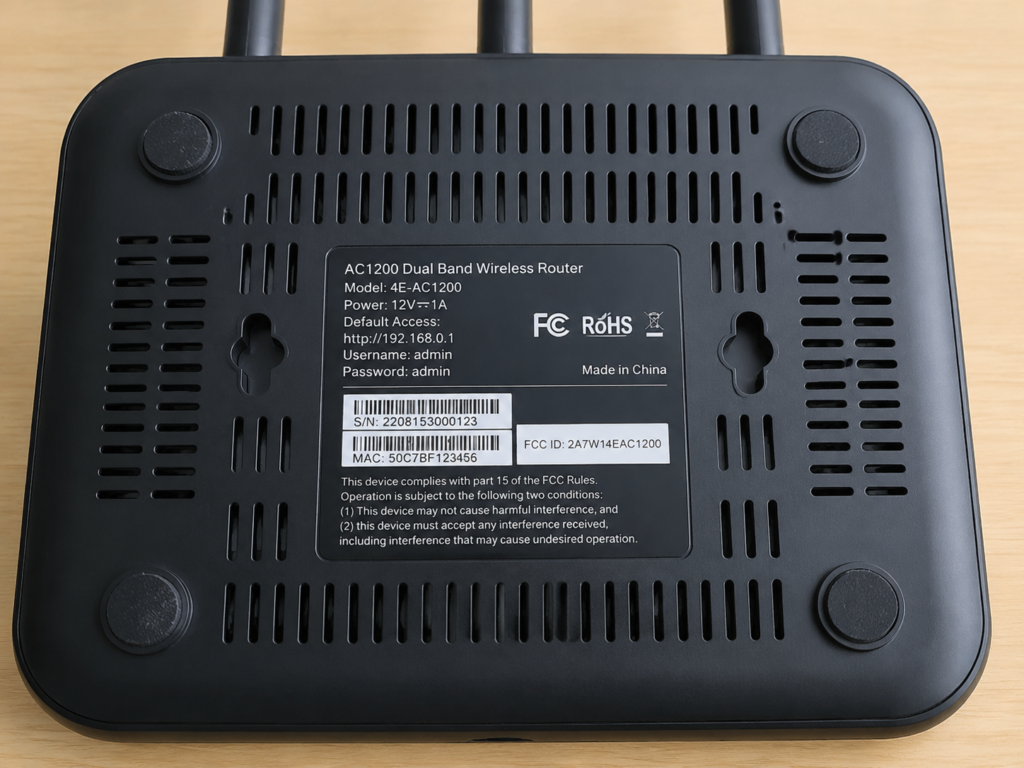
A core credential needs to be mentioned here: the FCC ID. You can think of it as the compliance ID card of the product, a unique number obtained after the product passes FCC certification. But note: the FCC ID is not a lifelong exemption amulet; getting it does not mean you will never be inspected.
The core purpose of the FCC’s regulation of these matters is to prevent RF signals from different devices from interfering with each other, especially to protect dedicated frequency bands related to public safety such as aviation, medical care, and emergency communications from being interfered with at will.
Who Will Be Held Accountable (Sorted by Priority)
Many people think that only manufacturers will be held accountable, but that is not the case. The FCC has clear priorities for accountability:
The first responsible party is the U.S. importer — no matter where your factory is located, as long as the product enters the U.S., the importer is the direct contact in customs clearance and enforcement links, and they will be the first to be contacted if there is a problem.
Next are U.S.-based manufacturers, distributors, and offline retailers; as long as they participate in the sales and distribution chain, they may be held accountable.
Then come sellers on cross-border e-commerce platforms; the FCC can hold them accountable through the platform or through the corresponding importer.
Finally, overseas sellers — don’t think you’ll be fine just because you’re located overseas. If your company has assets or branches in the U.S., or continues to sell in the U.S. market, the FCC may also directly initiate accountability against you.
3 Types of Situations Clearly Excluded from Jurisdiction
Of course, not all electronics-related issues are under the jurisdiction of the FCC. There are three types of situations that are clearly outside the scope of equipment certification enforcement:
The first type is ordinary electronic products with no RF transmission function at all, such as wired mice and ordinary non-smart home appliances. These do not emit radio waves, so naturally they do not require FCC RF certification.
The second type is areas under the exclusive jurisdiction of other federal agencies such as the FAA (Federal Aviation Administration) and FDA (Food and Drug Administration). For example, special equipment on aircraft and some compliance requirements for medical devices are the responsibility of the corresponding agencies, and the FCC will not exceed its authority.
The third type is ordinary civil consumer disputes in each state. For example, if you buy a broken product and want a refund, or claim compensation for quality problems, these are civil issues under the jurisdiction of state law, and the FCC does not handle them.
The #1 Beginner Misconception: Getting Certified ≠ Everything Is Fine
Here we must first break the most common misconception: the FCC can conduct random inspections of the compliance of products on sale at any time. Even if you passed the certification initially, subsequent changes to product hardware, incorrect labeling, or non-compliant promotional content may trigger enforcement. Many sellers stumble because they think “I have a certificate”, but the certificate corresponds to the original sample; if the mass-produced or modified version does not comply, it is still considered a violation.
Core Roles and Enforcement Documents: Who Is Inspecting, and What Are the Documents You Receive
Now that you’ve figured out whether you are subject to regulation, you must want to know: if you are really inspected, who will do the inspection? What do the various documents with English abbreviations you receive mean? Will they impose a fine right away?
Core Enforcement and Coordinating Agencies
There are three most critical agencies involved in FCC equipment certification enforcement:
The first is the FCC’s own Enforcement Bureau (EB), which is the department within the FCC specifically responsible for investigation, evidence collection, and initiating penalties. It also has regional offices that conduct on-site signal monitoring and sampling inspections.
The second is U.S. Customs and Border Protection (CBP), which is equivalent to the first checkpoint for entry. They conduct random inspections during the import process, and if they find devices without an FCC ID or suspicious devices, they will detain them and hand them over to the FCC for handling.
The third is the U.S. Department of Justice (DOJ). They are not needed for ordinary civil fines, but if criminal accountability is involved (such as intentional fraud or perjury), or if the fine is refused to be paid and requires compulsory enforcement, the case will be handed over to the DOJ.
Common Enforcement Documents (Sorted by Risk from Low to High)
Many people panic when they receive an FCC letter for the first time. In fact, different documents have very different risk levels. We have compiled a comparison table, so after receiving the document, you can first compare it to judge the severity:
| Document Name | Risk Level | Core Meaning | Key Response Points |
|---|---|---|---|
| Letter of Inquiry (LOI) | Low | A formal inquiry requiring the provision of relevant materials, which is not a penalty in itself | Must reply within the time limit, do not omit the required materials |
| Citation | Low | A warning for first-time or minor violations, with no fine | Rectify in time as required, keep compliance records, and avoid recurrence |
| Notice of Apparent Liability (NAL) | Medium-High | The FCC preliminarily determines a violation and informs the proposed penalty amount | Usually there is a defense period of about 30 days (subject to the mark on the document), and evidence can be submitted for appeal |
| Formal Forfeiture Order | High | A final and effective fine decision with legal effect | You can apply for internal review or appeal; overdue payment will incur additional interest and enforcement costs |
| Consent Decree | Medium | An agreement reached by both parties on rectification + acceptance of penalty | The fine is usually lower than the proposed fine amount; you need to promise future compliance, and repeated violations will result in heavier penalties |
| FCC ID Revocation Notice | High | Directly revokes the product’s compliance number | The product must immediately stop being sold and imported; otherwise, it will be treated as uncertified |
Document Escalation Rules
Under normal circumstances, FCC enforcement documents escalate according to the process: after discovering clues of a violation, they first send a Letter of Inquiry to request materials. If a problem is confirmed, they will either issue a Citation (for minor violations) or a Notice of Apparent Liability (for more serious violations), and finally issue a Formal Forfeiture Order. However, in the case of serious violations, such as large-scale sale of prohibited devices with forged certifications, or when public safety hazards have been caused, the FCC can also skip the intermediate steps and directly issue a Notice of Apparent Liability or even a Formal Forfeiture Order, without giving you advance notice.
Full Enforcement Process: The Complete Chain from Violation Discovery to Final Handling
Now that you know who is inspecting and what documents will be issued, let’s string together the entire enforcement process — from how the FCC discovers your violation to the final result, what rights you have at each step, and what you should do.
5 Common Channels for Violation Discovery
Many people think the FCC always takes the initiative to conduct on-site inspections. In fact, there are many sources of violation clues, and there are five common ones:
The first and most common is customs import interception. CBP conducts random inspections during entry, especially for high-risk products. If they find products without an FCC ID, mismatched models, or suspicious certificates, they will detain the goods and hand them over to the FCC.
The second is market random inspection and data comparison. The FCC regularly samples products from offline retail stores or conducts inspections on online e-commerce platforms, and compares the found products in the FCC’s official database to check whether the certification is real, the model matches, and there are no problems with parameters.
The third is complaints and reports. Competitors, consumers, and industry associations can all submit evidence of violations to the FCC. For example, if the device you sell interferes with a neighbor’s WiFi, or a competitor finds that you are using someone else’s certification fraudulently, they can report it, and the FCC will verify it after receiving the report.
The fourth is reverse investigation from interference incidents. If abnormal RF interference occurs in a certain place, such as affecting airport communications or hospital equipment, the FCC will track the interference source through spectrum monitoring and trace it back to the corresponding product and manufacturer. In such cases, penalties are generally relatively heavy.
The fifth is voluntary disclosure by enterprises. If an enterprise finds compliance problems on its own and voluntarily reports them to the FCC, this will be used as a basis for lighter penalties, which is much better than being caught.
Core Steps of Investigation
After the FCC obtains clues, it will not directly issue a fine, but will follow a standard investigation process:
The first step is preliminary screening: first judge whether the matter is under the jurisdiction of the FCC and whether the existing evidence is sufficient. If it is a minor matter or the evidence is insufficient, it will be directly filed and you will not be contacted.
The second step is to send a letter to initiate the investigation, that is, to send a Letter of Inquiry (LOI), requiring you to provide materials such as certification certificates, test reports, sales records, and supply chain certificates within the time limit.
The third step is evidence collection and verification. After receiving your materials, the FCC will check their authenticity, and may also require you to supplement materials, sample products for testing, and even conduct on-site inspections at your warehouse or sales points. Special attention should be paid here: providing false materials will trigger perjury liability, which is much more serious than the original violation.
The fourth step is violation determination: based on all evidence, judge whether there is a violation, and then issue a preliminary handling opinion.
The Responsible Party’s Right to Defend and Precautions
If the FCC preliminarily determines that you have violated the rules and issues a Notice of Apparent Liability, you have the right to defend yourself:
The general defense period is about 30 days, depending on the deadline written on the document, and it must not be overdue. You can submit compliance certificates, rectification plans, and situation statements to appeal. For example, if you can prove that the product does meet the requirements, or that you have voluntarily rectified the problem, you may be able to get lighter treatment.
If you fail to respond after the deadline, the FCC will directly determine the violation and impose a heavier penalty, which is equivalent to you giving up the opportunity to defend yourself.
Final Decision and Remedy Channels
After the investigation is completed, the FCC will issue a final handling result, which may be a warning, fine, revocation of certification, settlement, etc. If you are not satisfied with the result, there are two remedy channels:
The first is internal remedy, that is, applying to the FCC for reconsideration, submitting new evidence or appeal reasons, and asking the FCC to re-investigate.
The second is judicial remedy. If you are still not satisfied with the FCC’s final decision, you can appeal to the U.S. Federal Court of Appeals. But note: during the appeal period, the execution of the fine is generally not suspended, which means you still have to pay the fine first, and it will be refunded to you if you win the appeal.
If the final fine decision takes effect and you refuse to pay it, the FCC will hand over the case to the DOJ for collection, and will also add interest and enforcement costs. In serious cases, it will affect your credit in the U.S., and you may even be blacklisted by customs.
Common Violation Types: A Pitfall List Sorted by Risk Level
Now that you know the process, what you care about most must be: what behaviors will be fined? What are the high-risk pitfalls? We have sorted common violations by risk from high to low, and you can check against your own situation:
| Risk Level | Common Violation Behaviors | Possible Consequences |
|---|---|---|
| High Risk (Prone to Heavy Penalties) | 1. Importing/selling RF devices without obtaining FCC certification 2. Using forged, expired, or fraudulently used FCC IDs 3. Product hardware/RF functions (module replacement, power modification, firmware update, etc.) are inconsistent with the certified sample, without re-certification 4. Using a supplier’s FCC certificate that does not cover your own model and has no legal authorization | High fines, product confiscation, certification revocation, customs blacklist |
| Medium Risk (May Occur Even With Certification) | 1. Actual RF radiation/interference intensity exceeds FCC limits 2. Failure to use the specified frequency band and transmission power as required by certification 3. Selling/using devices explicitly prohibited by the U.S. (such as signal jammers, which are illegal even for personal use) | Fines, product removal and recall, customs detention of goods |
| Low Risk (Easily Overlooked) | 1. The FCC ID is not printed on the product body, or is in the wrong position or blurred 2. Product manuals and packaging are not marked with compliance statements as required 3. Promotional materials (including e-commerce product detail pages) use the misleading expression “FCC Approved” 4. Failure to provide compliance certification documents to customs during import | Warnings, rectification within a time limit, goods detention; fines may also be imposed in serious cases |
Many people think low-risk violations are trivial, such as wrong labeling or wrong promotional wording. But in fact, if the batch is large or you refuse to rectify, you will still be fined, and even the entire batch of goods may be detained, so don’t take it lightly. Especially for signal jammers, many people think it’s okay to buy them to help their kids quit mobile phones or prevent cheating, but their sale and use are explicitly prohibited in the U.S. Even if you buy only one for personal use, it will be confiscated or even fined if found.
Penalty Rules: Penalty Types, Amount Ranges and Discretionary Standards
Since there are violations, there are corresponding penalties. Next, we will talk about the penalty rules that everyone is most concerned about: whether to fine, how to fine, how much to fine, and what standards are used to determine them.
3 Core Principles of Penalty
FCC penalties are not set arbitrarily; there are three core principles:
The first is proportionate penalty: negligent violations and first-time violations are fined lightly, while intentional violations and repeated violations are fined heavily.
The second is education first: if it is a first-time minor violation, it may only give a warning or require rectification within a time limit, and will not impose a fine right away. The core is to make you compliant, not to collect fines.
The third is hazard surcharge: if the violation causes public safety hazards, such as interfering with aviation communications or hospital medical equipment, the penalty will be significantly increased. Even if it is your first offense, you may be fined heavily.
Common Penalty Types (Sorted from Light to Heavy)
There are many types of FCC penalties, which are roughly divided into five categories from light to heavy:
The first category is warning type, that is, Citation. There is no fine, but it will leave a violation record, and the next violation will be punished more severely.
The second category is rectification type, such as requiring you to rectify within a time limit, removing products from shelves and recalling them, detaining and returning goods by customs or even confiscating them. These are penalties that require you to correct the violation.
The third category is qualification type, such as revoking your FCC ID and prohibiting you from selling related products, which is equivalent to directly abolishing the product’s compliance qualification.
The fourth category is civil fines, which is the most common form of penalty, and the amount is determined according to the circumstances of the violation.
The fifth category is criminal accountability, which is very rare. It will only be handed over to the DOJ for handling in cases of intentional fraud, perjury, or serious harm to public safety, and in serious cases, it may lead to imprisonment.
Reference Range and Calculation Logic of Fine Amounts
Many people ask “how much is the fine for XX violation”. In fact, the FCC does not have a fixed price list. The upper limit of fines is adjusted annually for inflation, and the specific amount is subject to the standards announced by the FCC that year. We can give you a common reference range:
For minor violations, such as labeling errors or first-time small-batch non-filing, the fine is generally from several thousand to tens of thousands of dollars.
For general intentional violations, such as fraudulent use of certification or medium-batch sale of uncertified products, the common fine is from tens of thousands to hundreds of thousands of dollars.
For serious violations, such as forged certification, large-scale sale of prohibited devices, or interference with public safety, the fine can reach hundreds of thousands or even millions of dollars.
The specific fine amount will be based on several factors considered by the FCC: how long the violation lasted, how many units were sold / what the value of the goods was, whether it was intentional, whether actual harm was caused, and whether you cooperate with the investigation. Therefore, taking the initiative to cooperate and rectify in advance can effectively reduce the fine amount.
Special Rules for Settlement
Many people hear the term “settlement”, which is the FCC’s Consent Decree. Here we need to clarify its special rules:
Settlement does not mean you plead guilty, but you need to acknowledge that the FCC has sufficient evidence to find you in violation, which is equivalent to you not fighting the FCC and accepting rectification and fines.
A settlement agreement usually includes three parts: paying a one-time fine, promising future compliance, and heavier penalties for repeated violations.
Generally speaking, the final fine amount of a settlement is lower than the amount on the Notice of Apparent Liability (NAL). Therefore, if there is indeed a violation and the evidence is relatively sufficient, many enterprises will choose to settle, which can not only reduce the fine, but also resolve the matter as soon as possible without dragging on for a long time.
Enforcement Characteristics by Scenario: Quickly Match Your Situation to Judge Risks
For different business scenarios, the enforcement focus and risks are also different. We have compiled the four most common scenarios, and you can directly match your situation to judge where your risk points are.
Customs Entry Scenario: The First Checkpoint
Customs random inspections are not completely random. High-risk products such as high-power RF devices and WiFi/Bluetooth products have a higher probability of being inspected. Their focus is on the authenticity of the FCC ID and whether the product model matches the certification.
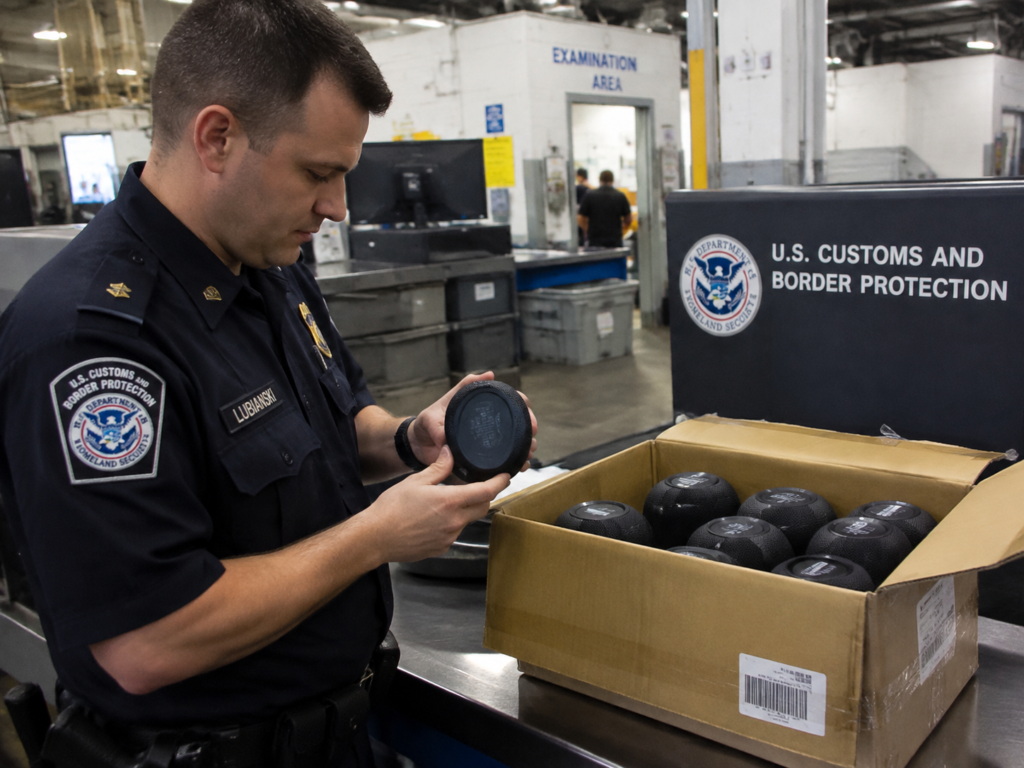
If non-compliance is found, the goods will generally be detained first, giving you time to supplement materials. If you cannot produce compliance certificates, the goods will be returned or confiscated. In this scenario, the first responsible party is the U.S. importer, so many importers strictly require suppliers to provide FCC certification when purchasing goods.
Cross-Border E-Commerce Scenario: Most Commonly Encountered by Sellers
Now there is a lot of linkage between the FCC and e-commerce platforms. The FCC can require platforms to remove non-compliant products, and platforms themselves will also take the initiative to conduct inspections to avoid being held responsible.
Their focus of inspection is whether the FCC certification marks and certificates on e-commerce product detail pages are real and whether they are fraudulently used. Common consequences include product removal and store traffic restriction; in serious cases, the store will be directly closed, and the platform may even submit the seller’s information to the FCC.
Special reminder here: platform penalties are commercial acts, which are matters between the platform and the seller. The FCC is an independent law enforcement agency. Even if the platform has already fined you and asked you to remove the products, the FCC can still independently initiate investigations and penalties. It is not that everything is fine after the platform handles it.
Personal Use Scenario: The Boundary of Exemption
If it is a small amount for personal use, usually 1-2 units, the certification requirement is generally exempted. For example, it is fine to bring your own mobile phone, Bluetooth headset, or drone to travel in the U.S.
But if the quantity is too large, for example, you bring more than a dozen devices of the same model, customs will determine that they are for commercial sale, and they need to meet FCC certification requirements, otherwise they will be detained.
There is also an exception: prohibited devices such as signal jammers will be confiscated or even fined even if you bring only one for personal use, so never touch them.
Overseas Seller Scenario: Enforcement Boundary
Under normal circumstances, the FCC will prioritize holding U.S.-based importers, partners, or e-commerce platforms accountable, and will not directly contact overseas sellers. But this does not mean you are fine:
If your company has assets or branches in the U.S., or continues to have sales in the U.S. market, the FCC may also directly initiate accountability against you.
In case of serious violations, you will be blacklisted by U.S. Customs, and all your products will not be able to enter the U.S. in the future.
Even if you have no assets in the U.S., the fine can be enforced by seizing your payment for goods or platform funds in the U.S., or through international judicial assistance. It is not that you can ignore it just by hiding overseas.
Pitfall Avoidance Guide: Common Misconceptions and Correct Response Actions
After talking about so many rules, finally we have compiled the most common cognitive misconceptions and the correct response methods when you actually encounter enforcement, to help you avoid detours.
8 Most Common Cognitive Misconceptions
Many people stumble because of these misconceptions. You can check if you have any of them:
- Thinking that with FCC certification you will not be subject to enforcement — in fact, if the product is inconsistent with the certified sample, or the labeling or promotion is non-compliant, you will still be inspected even if you have a certificate.
- Thinking that small sellers or small batches will not be inspected — FCC random inspections and complaints do not consider scale. Even if you are a small seller with only a few people, as long as you are randomly selected or reported, you will still be investigated.
- Thinking that using a supplier’s FCC certificate is fine — you must confirm that the supplier’s certificate covers your product model and has legal authorization. Otherwise, even if the supplier has a certificate, your use of it is still a violation.
- Thinking that the FCC cannot reach overseas sellers — the FCC can hold you accountable through platforms or importers, and will also add you to the customs blacklist, so your goods cannot enter the U.S. in the future. In serious cases, fines can be collected through judicial assistance.
- Thinking that wrong labeling or promotion is a trivial matter — if the batch is large or you refuse to rectify, you will still be fined, and even the entire batch of goods may be detained. Many sellers have been complained about because the product detail page says “FCC Approved”, and they suffer from this mistake.
- Thinking that certifications from other countries (such as CE, SRRC, TELEC) can replace FCC — the U.S. only recognizes certifications authorized by the FCC. Certifications from other countries are invalid and cannot be used for customs clearance or sales.
- Thinking that no actual interference means no violation — as long as you sell RF devices without certification, it already constitutes a violation, regardless of whether it interferes with others. It’s like driving without a license; even if you don’t hit anyone, it’s still illegal.
- Thinking that platform removal and fines mean everything is fine — platform penalties are commercial acts, and the FCC enforces independently. The two do not affect each other. After the platform fines you, the FCC can still fine you again.
Correct Handling Steps After Receiving an FCC Enforcement Notice
If you really receive an FCC enforcement notice, don’t panic, follow these steps:
Step 1: First verify the authenticity of the notice. Now there are many scammers who impersonate the FCC to send emails or letters to defraud money. You can verify it through official FCC channels, such as checking the corresponding case number on the FCC official website, or contacting the FCC’s public consultation channel to confirm. Don’t transfer money to strangers casually.
Step 2: Clarify the deadline for reply, and never be overdue. Whether you have violated the rules or not, failing to reply after the deadline will be directly determined as a violation and will be punished more severely. So first write down the deadline and leave enough preparation time.
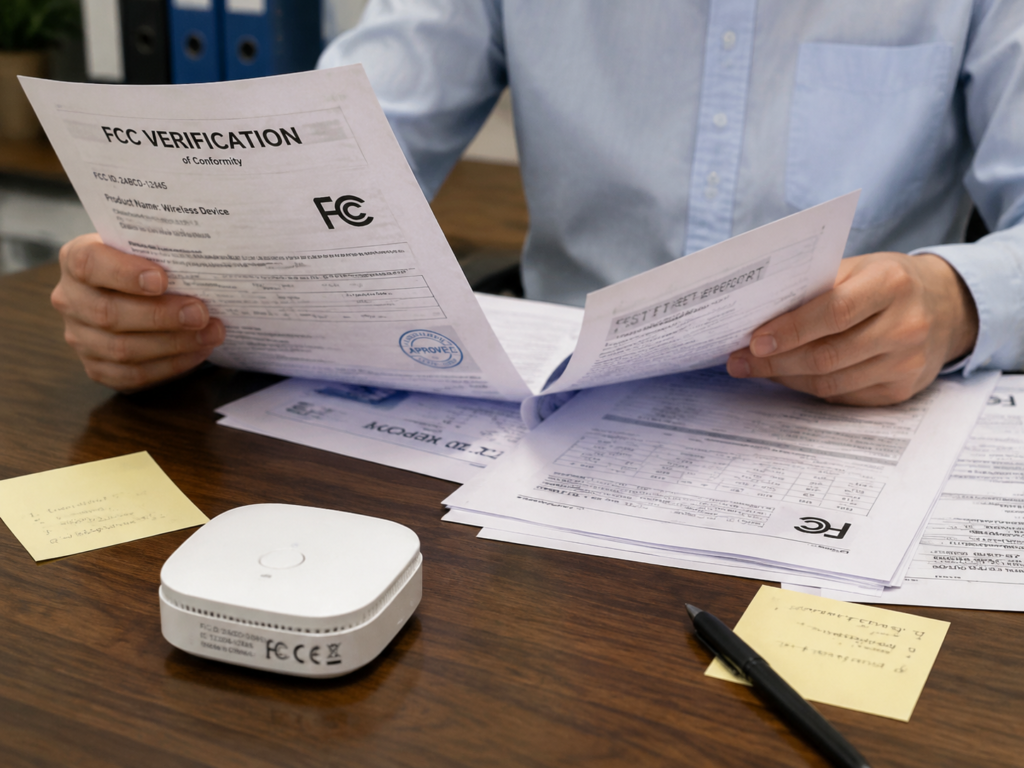
Step 3: Sort out all relevant materials, including certification certificates, test reports, sales records, product label samples, supply chain certificates, etc. Find all materials that can prove your compliance.
Step 4: Prioritize seeking assistance from compliance personnel or lawyers familiar with FCC rules, and do not reply casually on your own. FCC letters have many professional terms and legal requirements. If you reply incorrectly, you will dig a hole for yourself. It is safer to find professional help.
Step 5: If there is indeed a violation, voluntarily submit a rectification plan, such as removing products from shelves, recalling them, making up for certification, etc. If you take the initiative to cooperate and rectify in advance, the FCC will generally handle it leniently.
Step 6: It is strictly forbidden to submit false materials, such as forged certificates or modified test reports. These acts will trigger perjury liability, which is much more serious than the original violation, and may even involve criminal penalties. Never do this.
Core Actions for Daily Compliance and Pitfall Avoidance
In fact, the best response is to comply in advance, so you don’t have to rush when something goes wrong. Doing these few actions well in daily work can avoid most pitfalls:
During the product selection and purchasing stage, you must check the authenticity of the FCC ID in the FCC’s official database, confirm that this ID covers your product model and hardware version. Don’t just listen to the supplier say “we have a certificate”; check it yourself to be assured.
Before the product goes on the market, check whether the compliance markings on the product body, manual, packaging, and e-commerce product detail pages are correct. Do not use misleading expressions such as “FCC Approved”, but use the officially recognized “FCC authorized” or “FCC certified”.
When the supply chain or product changes, such as changing the RF chip, antenna, OEM factory, or modifying firmware or transmission power, as long as the change involves the RF part, you must re-evaluate whether supplementary certification is needed. Don’t think “it’s just a small change” and it will be fine.
It is recommended to keep all certification documents, test reports, and change records for at least 3 years for FCC verification. If they are lost, you will not be able to produce evidence at that time, which will be very troublesome.
Provide basic training for the operation and customer service teams to let them understand FCC promotional specifications. Do not say misleading words such as “FCC approved” or “FCC certified is absolutely safe” in detail pages or customer service replies, to avoid unnecessary complaints.
Summary
Overall, the FCC’s enforcement logic is actually very clear: first clarify the jurisdiction boundary, adopt different handling methods for different degrees of violations, and the core purpose is to ensure RF order and public safety, not to collect fines.
After reading this article, you should be able to quickly judge whether your products and business are within the enforcement jurisdiction of FCC certification, identify common enforcement documents and their corresponding risk levels, and distinguish which violations are high, medium, and low risk, so as to avoid core pitfalls in advance. You can also roughly judge the corresponding penalty severity based on the nature, scale, and cooperation degree of the violation, and also know the enforcement requirements for different scenarios such as customs, e-commerce, personal use, and overseas sellers, as well as the correct handling process after receiving an enforcement notice and the core actions for daily compliance.
For practitioners in the U.S. market, there is no need to panic excessively, but you should not take it lightly either — as long as you figure out the rules in advance, do a good job of daily compliance, and respond to problems in a timely manner, you can minimize risks.