
Practitioners who have just entered the Japanese electrical product market are often confused by terms such as METI, PSE, the Den’an Law, and business notification: some say they need to complete METI filing, some say they need to affix the PSE mark, and others treat the two as the same type of certification, wasting money and falling into compliance pitfalls. In fact, the access logic for Japanese electrical appliances is not complicated; the core consists of two things: “clear responsible entity + product safety compliance”, and METI and PSE correspond to these two core links respectively. This article gradually expands from introductory concepts to practical scenario judgment, helping you sort out the relationship and differences between the two.
First Things First: Core Positions of METI and PSE
Many people mix up the two, essentially because they fail to distinguish between the “regulatory authority” and the “compliance mark”.
What is METI: The Top Government Department in Charge of Japan’s Electrical Compliance
The full name of METI is the Ministry of Economy, Trade and Industry of Japan. Generally speaking, it is the core government department in Japan in charge of industrial development, international trade, and product safety, similar to the comprehensive department of economy and trade + market regulation in many countries.
In the field of electrical safety, METI has three core functions: first, formulating compliance rules and product catalogs for electrical products; second, accrediting third-party institutions qualified to conduct PSE testing; third, carrying out market spot checks and penalties for violations. For overseas sellers, there is a key point to remember: METI does not directly accept applications from overseas entities, and all compliance procedures need to be handled through a responsible entity within Japan.
What is PSE: The Mandatory Safety Conformity Mark for Japanese Electrical Products
The full name of PSE is Product Safety Electrical Appliance & Materials. You can think of it as the “safety access label” for Japanese electrical products — only products that meet Japanese electrical safety standards can be affixed with this mark to enter the market.
It should be noted that PSE is a safety compliance certificate, not a quality certification. It only verifies whether the product has electrical safety risks such as electric shock and fire, and does not represent the product’s performance, durability or other quality levels.
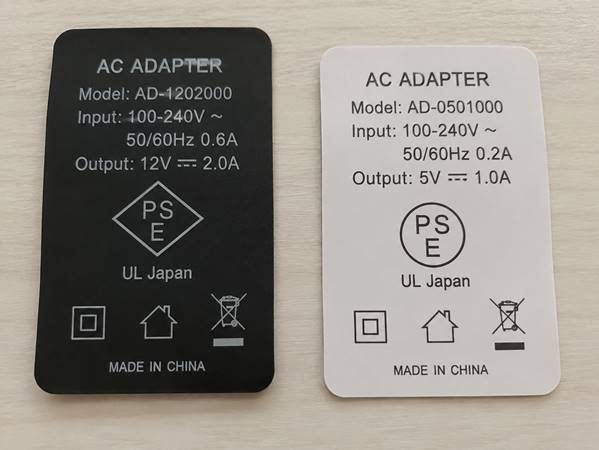
PSE is divided into two categories, corresponding to products with different risk levels: high-risk “specified electrical appliances” need to be affixed with the diamond-shaped PSE mark, which must pass the testing of a third-party institution accredited by METI; low-risk “non-specified electrical appliances” are affixed with the round PSE mark, and enterprises can independently complete testing and confirmation. Usually, the PSE mark is marked on the product body, nameplate, packaging or manual, which is an intuitive basis for consumers and regulators to judge whether the product is compliant.
Why the Two Are Always Mentioned Together
METI is the regulatory authority, and PSE is the product compliance mark. They are originally concepts at different levels, but because they are two core supporting links for market access of electrical appliances in Japan, both are indispensable, so they are often mentioned together.
To use a common analogy: if you open a restaurant, PSE is like a food hygiene certificate, proving that the food you sell is safe; while the “business notification” (commonly known as METI filing) led by METI is like the entity filing of the restaurant, proving who is the person in charge of the restaurant and who to contact if something goes wrong. Both are required for legal operation, and neither is dispensable — the “indispensable” here specifically refers to the typical scenario where electrical appliances within the PSE catalog enter the Japanese market through Japanese domestic manufacturers/importers; products outside the catalog, ordinary sellers, or scenarios covered by other regulations need to be judged separately. This is also the most common misunderstanding for beginners: the two are compliance requirements of completely different dimensions, not two optional certifications, and there is no such thing as “doing one is enough”.
Legal Basis: All Rules Come from the Electrical Appliance and Material Safety Law
Many people encounter similar terms such as “Electricity Business Act” and “Den’an Law” when searching for information. In fact, the two are completely unrelated. The only core law for Japanese electrical product compliance is the Electrical Appliance and Material Safety Law, abbreviated as DENAN in the industry, and also commonly called the Den’an Law.
Core Position of the Den’an Law
The Den’an Law is a regulation specifically targeting the safety of electrical products. Its core purpose is to prevent electrical accidents such as electric shock and fire, and it controls the entire process of manufacturing, importing, and selling electrical appliances in the catalog. METI is the competent authority of this law, responsible for issuing and adjusting the catalog of electrical products, formulating specific technical standards and compliance rules.
Boundaries of Three Core Concepts Under the Den’an Law
Many people cannot figure out the relationship between METI filing, testing, and the PSE mark, essentially because they have not distinguished the three core concepts under the Den’an Law:
The first is business notification (commonly known as METI filing): this is the entity registration procedure for Japanese domestic manufacturers or importers to report their business information to METI. Note that it is only “entity filing”, not product certification, and METI will not conduct any substantive review of the actual safety performance of the product when accepting the notification.
The second is conformity inspection / confirmation of conformity to technical standards: this is the testing link to prove that the product meets Japanese electrical safety technical standards — specified electrical appliances need to be tested by a qualified third-party institution and issued a certificate, while non-specified electrical appliances can be tested independently by the enterprise.
The third is PSE marking: this is the statutory marking after the product completes compliance. It is not a “certification certificate” issued by a testing institution, but is marked on the product by the responsible entity (notifying business operator) that has completed the business notification in accordance with regulations.
In short, business notification is “registering the responsible person”, testing is “proving product safety”, and PSE marking is “external display of compliance”. The three are in a progressive relationship.
What is the “Electricity Business Act” That Is Often Searched by Mistake
Many people mix up the “Electrical Appliance and Material Safety Law” and the “Electricity Business Act” when searching for information. Here is a special clarification: the Electricity Business Act is a regulation that governs power supply, grid operation, and the qualifications of power enterprises. It is equivalent to regulating “power generation, power transmission, and power sales”, and has nothing to do with the sale and import of ordinary electrical products. Only enterprises in the power industry need to pay attention to it.
If you want to search for accurate compliance information, it is recommended to use the combination keywords of “PSE + Electrical Appliance and Material Safety Law + business notification” to avoid a lot of irrelevant content.
Four Key Roles in the Compliance Chain
To sort out the entire compliance logic, you also need to know the four core roles and their respective obligations:
First, registered inspection bodies, that is, third-party testing institutions with corresponding qualifications. Only they are qualified to conduct conformity inspections on specified electrical appliances and issue certificates.
Second, notifying business operators, that is, Japanese domestic importers or manufacturers that have completed business notification. They are the first responsible persons for compliance, and their obligations include: handling business notification, ensuring that products meet technical standards, keeping complete inspection records, marking the PSE mark in accordance with regulations, reporting in a timely manner when entity or product information changes, and cooperating with METI’s market spot checks.
Third, sellers/platform sellers: although they do not need to handle business notification, they have the obligation to ensure that the products they sell are compliant, cannot sell non-compliant products, and must cooperate with the verification of the platform or regulators.
Finally, overseas factories/brands: they need to provide product technical materials, cooperate with production consistency inspections, and ensure that mass-produced products are consistent with test samples.
Core Relationship: Division of Labor, Binding and Differences Between Business Notification and PSE
After clarifying the basic concepts, we will thoroughly explain the relationship between the two from the dimensions of regulation, process, division of labor, etc.
Subordinate Relationship at the Regulatory Level
From the perspective of the regulatory system, METI is the top-level rule-maker and regulator. All rules of the PSE system and business notification are formulated and adjusted under the leadership of METI. Registered inspection bodies that conduct PSE testing of corresponding categories need to obtain corresponding registration or accreditation qualifications in accordance with the rules formulated by METI.
Therefore, the two are not two parallel certifications, but upper and lower links belonging to the Japanese electrical appliance safety compliance system: METI is in charge of rule-making and market supervision, PSE is the product compliance mark under the rules, and business notification is the entity registration requirement under the rules.
Correct Order of the Compliance Chain
Many people reverse the order of compliance, for example, doing testing first and then finding a responsible entity. In fact, the correct process logic is:
Step 1: First judge whether the product is in the PSE catalog. If not, there is no need to go through the compliance process of the Den’an Law.
Step 2: Determine the notifying business operator within Japan, that is, the entity that bears compliance responsibility.
Step 3: Handle business notification (commonly known as METI filing) — it should be noted here that the law does not mandate that business notification must be completed after PSE testing, and the timing can be flexibly adjusted; Japanese domestic manufacturers/importers should perform the notification obligation when carrying out relevant manufacturing/import business in accordance with the Den’an Law. In practice, the confirmation of the responsible entity and the closure of documents should be completed before the product is launched for sale.
Step 4: Complete the confirmation of conformity to technical standards / conformity inspection of the product. For specified categories, find a qualified institution for testing, and for non-specified categories, it can be completed independently.
Step 5: Keep complete inspection records for spot checks.
Step 6: The notifying business operator shall mark the PSE mark on the product in accordance with regulations.
Step 7: The product is officially launched for sale.
Core Division of Labor Differences
The two solve completely different compliance problems:
Business notification (METI registration) solves the problem of “who is the responsible entity and who the regulator should contact”. It only registers the business information of the entity and does not involve any substantive review of product safety.
PSE compliance (testing + marking) solves the problem of “whether the product itself is safe”, and verifies that the product meets Japanese electrical safety technical standards through testing.
There is a key permission requirement here: only Japanese responsible entities that have completed business notification are qualified to mark the PSE mark in accordance with regulations. Even if an overseas factory obtains a third-party test report on its own, it cannot directly affix the PSE mark to the product and sell it in Japan — because it does not have the identity of a notifying business operator within Japan and does not have the statutory marking qualification.
Corresponding Rules for Product Scope
The scope of application of the two is bound, but there are also clear premises:
First, the obligatory subjects of business notification are only Japanese domestic manufacturers and importers. Ordinary sellers have no notification obligation, but need to ensure that the products they sell are compliant.
Second, only products in the PSE catalog require the corresponding notifying business operator to complete entity registration and product compliance. To judge whether a product is in the catalog, you cannot only look at the product name. You must comprehensively judge based on factors such as rated voltage, AC/DC type, purpose, structure, and whether it is circulated separately as a component. For example, for the same power adapter, those used for consumer electronic products may be in the catalog, while those dedicated to industrial equipment may not. Many pure battery-powered products are not in the PSE catalog, but it is still necessary to check the official list based on the specific product name, structure, and purpose, and cannot be judged solely by the power supply method.
Finally, if the product is not in the PSE catalog, naturally there is no need to handle the corresponding business notification, but it may be subject to other regulations. For example, products with wireless functions must meet the requirements of TELEC (Radio Law), and consumer products with lithium batteries need to be checked for corresponding regulatory requirements according to specific categories.
Linkage Rules for Validity Period and Renewal
The validity period association between the two needs to be viewed at different levels and cannot be simply bound:
The validity period of the conformity inspection certificate for specified electrical appliances (diamond-shaped PSE) is usually 3 years, 5 years or 7 years depending on the product category, and re-testing and renewal are required upon expiration.
There is no unified certificate validity period for non-specified electrical appliances (round PSE), but they need to continuously meet the technical standards and keep complete inspection records. As long as the product changes, the compliance needs to be reconfirmed.
The business notification itself has no fixed validity period, and its existence is directly related to the operating status of the notifying entity and the registered business category. If the conformity inspection certificate for specified electrical appliances expires without renewal, or the compliance is not reconfirmed after the product is changed, it will affect the compliance basis for continuing to mark PSE on the product and selling it in the Japanese market. As for whether the business notification needs to be changed or abolished, it should be judged based on whether the notifying business operator entity, the notified business category, and the manufacturing/import business have changed. The expiration of product compliance documents alone should not be directly equated with the invalidation of the business notification.
Common Differences in Practical Dimensions
To more intuitively distinguish the differences between the two in practice, we have sorted out the core comparison items:
| Comparison Dimension | Business Notification (METI Registration) | PSE Compliance (Testing + Marking) |
| Applicant Subject | Must be submitted by Japanese domestic importers/manufacturers; overseas entities cannot apply directly | PSE testing/verification can be entrusted by overseas factories or brands, but the PSE marking, data storage and compliance responsibility in the Japanese market are still undertaken by the notifying business operator; among them, round PSE can be independently confirmed or entrusted for testing, which is not equivalent to obtaining an official certificate |
| Cost Composition | Mainly Japanese entity service fees and data sorting fees | Mainly testing fees; specified electrical appliances (diamond-shaped PSE) have higher costs |
| Processing Cycle | 1-2 weeks when materials are complete (only the acceptance cycle, no product safety review involved) | 2-8 weeks, depending on the product category and the number of testing items |
| Verification Method | Based on the materials submitted by the notifying entity, there is no unified public product-level query entry | Based on the reports/certificates issued by testing institutions and product markings; the official only publicizes the qualifications of testing institutions |
Document and Marking Consistency: Core Requirement for Linkage
Many compliance problems arise from “inconsistent information”, which is also the core requirement for the linkage between the two: the information on the PSE certificate/report, the entity name of the business notification, the rated parameters, model, nameplate content, manual, and sales page information of the product must all be consistent.
For OEM/ODM products, the PSE report held by the brand can be authorized to the Japanese importer for use, but the authorization document is only auxiliary proof and cannot replace the information consistency requirement — the model and specifications on the report must completely correspond to the notified product, otherwise even with authorization, it is not considered compliant.
If the product information or responsible entity changes, the PSE compliance documents and business notification information must be updated simultaneously, and only one of them cannot be updated.
Full Practical Process: Linkage Steps from Product Evaluation to Launch
After explaining the logic, let’s go through the complete practical process from product evaluation to launch to help you put the knowledge into practice.
Step 1: Product Catalog and Category Judgment
First, check the “Classification Catalog of Electrical Appliances” officially released by METI to confirm whether the product is in the catalog. When judging, you cannot only look at the product name. You must comprehensively judge based on power supply method, rated parameters, purpose, structure and other factors, and at the same time clarify whether it belongs to specified electrical appliances (diamond-shaped PSE) or non-specified electrical appliances (round PSE).
If the product is not in the catalog, there is no need to go through the compliance process of the Den’an Law, but you need to check whether it needs to meet the requirements of other regulations such as TELEC and PSC.
Step 2: Determine the Notifying Entity and Complete Registration
You must find a Japanese domestic importer or manufacturer as the notifying business operator. Overseas entities cannot directly apply for business notification.
After submitting materials such as entity qualifications and business categories, as long as the materials meet the requirements, the registration is completed after METI accepts them — note that there is no unified physical certificate for business notification. Usually, the copy of the accepted notification letter, acceptance record or related processing documents are used as platform/customer verification materials. The name and form may vary depending on the processing path and local Bureau of Economy, Trade and Industry, and there is no unified product-level METI certificate. There are two common reasons for rejection: first, the entity qualifications do not meet the requirements (for example, it is not a legal enterprise within Japan), and second, the information on the business category is incomplete and unclear.
Step 3: Complete PSE Compliance Verification by Category
If it is a specified electrical appliance (diamond-shaped PSE), the sample needs to be sent to a registered inspection body with corresponding qualifications for testing to obtain a conformity inspection certificate.
If it is a non-specified electrical appliance (round PSE), you can independently complete the testing in accordance with Japanese technical standards, or entrust a third-party institution for testing, but you must keep complete inspection records and technical documents for spot checks.
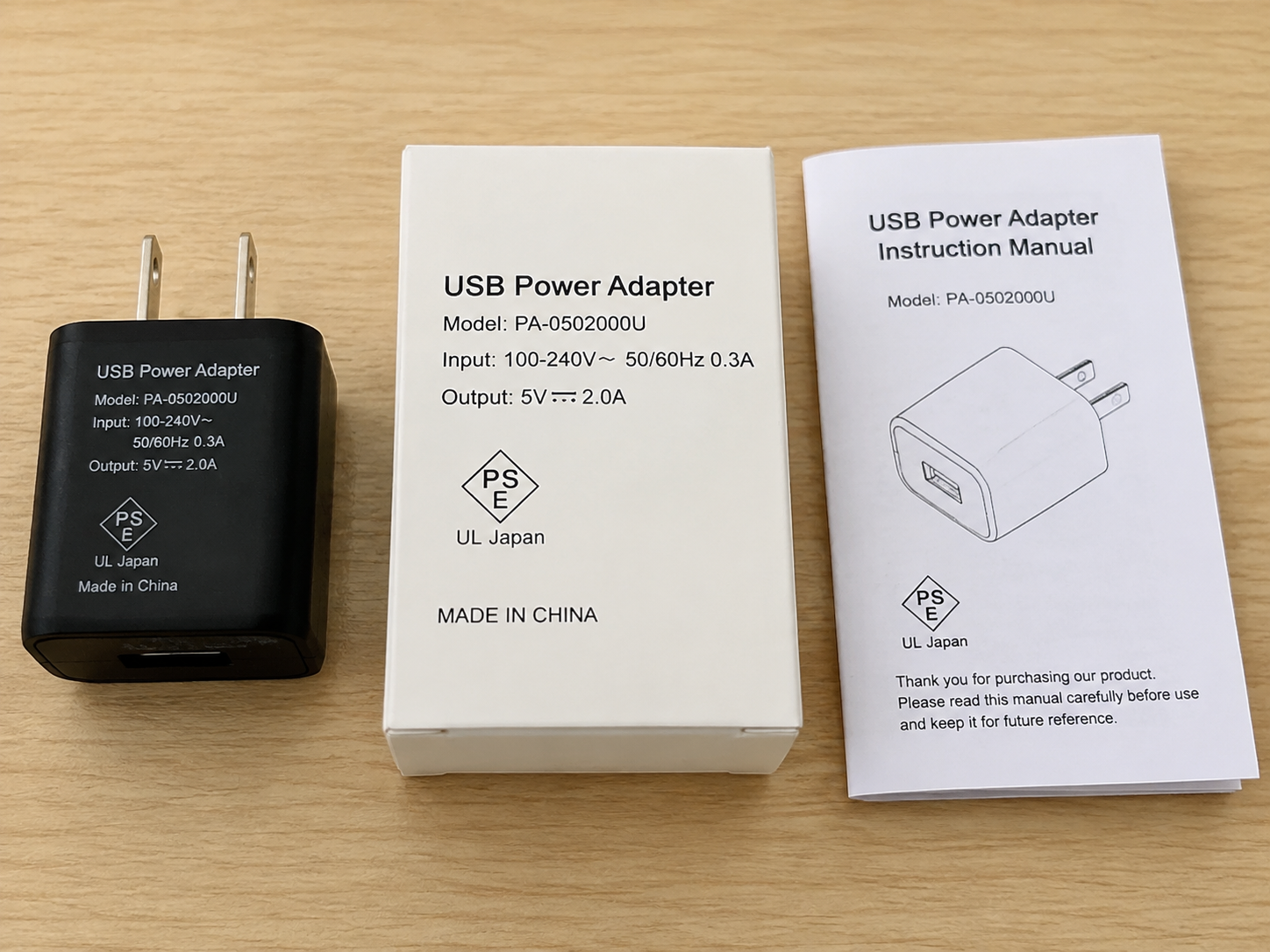
After passing the test, you can design the product nameplate. The nameplate must be marked with the corresponding PSE mark, the name of the notifying business operator and other required information in accordance with regulations.
Step 4: Linkage Maintenance After Launch
Compliance is not a one-time thing. After launch, you must also do a good job of linkage maintenance:
If the product model or parameters change, or the responsible entity changes, the PSE compliance documents and business notification information must be updated simultaneously;
Before the PSE certificate of specified electrical appliances expires, arrange renewal in advance and update the compliance-related information of the corresponding products simultaneously;
When encountering METI’s market spot checks, you need to provide PSE compliance documents, business notification certificates, and complete inspection records at the same time, all three are indispensable.
Intermediate Improvement: Compliance Judgment for Different Sales Models and Scenarios
After mastering the basic logic, let’s look at several scenarios most commonly encountered in practice to help you learn to judge compliance requirements by yourself.
Responsibility Division for Different Sales Models
Different sales models have different responsibility divisions, and the core judgment basis is “who is the importer/responsible entity within Japan”:
• General trade import: The Japanese importer is the notifying business operator and bears all the primary compliance responsibilities;
• Cross-border e-commerce platform sales (FBA/overseas warehouse): There must be a notifying business operator within Japan, and the platform will verify relevant documents of PSE and business notification;
• Cross-border direct mail (self-fulfillment): Although not all platforms mandate verification at present, it is still within the scope of the Den’an Law. As long as the product is in the catalog, compliance must be completed. Do not take chances;
• Pure overseas sellers: Cannot directly become notifying business operators, and must entrust Japanese domestic enterprises to bear compliance responsibilities.
Scenario 1: Products with electrical functions but not in the PSE catalog, do they need to be compliant?
If the product has pure electrical functions and is not in the PSE catalog, there is no need to handle business notification and PSE marking under the Den’an Law, but you need to check corresponding regulations based on other attributes of the product:
• Products with wireless functions: Need to check the compliance requirements of TELEC (Radio Law);
• Consumer products with lithium batteries: First check whether they belong to the categories specified by the PSC (Consumer Products Safety Act). Not all lithium battery products are subject to PSC, and the specific judgment shall be based on the officially announced specified items and purposes;
• Industrial dedicated products, samples, repair parts: Need to be judged based on the specific purpose, quantity, and whether they enter the circulation market — for example, dedicated equipment only used in industrial production lines, and samples given for free and not entering sales channels may not need compliance, but if they are repair parts sold separately to consumers, it depends on whether they are in the PSE catalog.
It should be noted that even if the product is not sold as an ordinary commodity, it should be comprehensively judged based on the purpose of import, whether it is provided to consumers for trial, whether it is attached to product promotion, platform rules and other regulatory requirements, and compliance obligations cannot be directly excluded in the name of “samples” or “gifts”.
Scenario 2: For OEM/ODM products, is it okay if the PSE and the notifying entity are different?
Yes. PSE testing can be entrusted by the factory or brand, while the notifying entity must be a Japanese domestic importer or manufacturer, and the two do not need to be the same company.
But there is a premise: the models and specifications covered by the PSE certificate/report must be completely consistent with the notified products. There cannot be a situation where the report is for model A but the notified product sold is model B. It is recommended to provide the PSE authorization document when handling business notification to avoid questions during platform review or regulatory spot checks.
Scenario 3: How to judge compliance for multi-component products (such as complete machine + adapter)?
It is necessary to split and judge, and cannot default that “component compliance = complete machine compliance”:
First, for independently circulated power supply components (such as adapters, power cords, plugs), it is necessary to check one by one whether they are subject to the PSE catalog, and cannot take it for granted that all accessories need to be individually compliant;
Second, if the complete machine itself is also in the PSE catalog, it is necessary to separately complete the PSE compliance of the complete machine and the corresponding business notification.
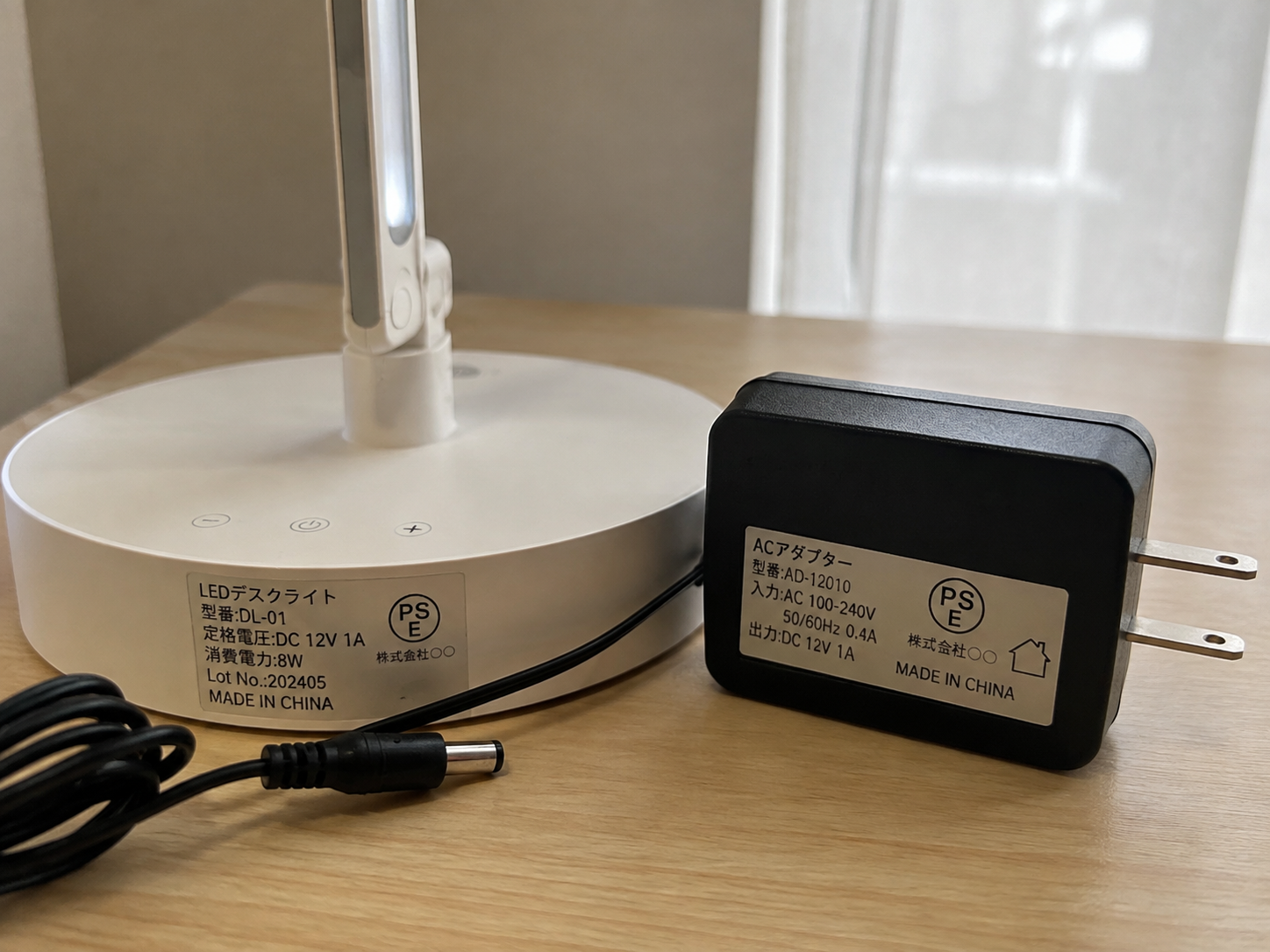
For example: when selling a desktop lamp with an adapter, first check whether the adapter is in the PSE catalog and whether it is individually compliant; then check whether the lamp itself is in the catalog. If it is, you need to separately complete the PSE compliance of the lamp, and you cannot only use the compliance document of the adapter to deem the complete machine compliant.
Scenario 4: With existing CE/UL/FCC reports, can they replace PSE?
They cannot be directly replaced. Electrical safety standards, test items, and marking requirements in different regions are different. CE is the EU standard, UL is the US safety certification, and FCC is the US electromagnetic compatibility requirement, none of which can be directly equated with Japan’s PSE compliance.
However, these reports can be submitted to testing institutions as technical references, which may reduce the workload of some repeated tests, but the overall PSE compliance process still needs to be followed, and reports from other regions cannot be directly used as a substitute.
Scenario 5: Does passing platform review mean compliance?
No. E-commerce platforms such as Amazon Japan may require sellers to submit PSE certificates/reports, business notification-related documents, nameplate photos and other materials, but the platform’s review is only a formal check, which only confirms whether you have submitted the corresponding materials. It will not verify whether the product really fully meets the standards, nor will it check all compliance details.
The ultimate compliance responsibility is still borne by the notifying business operator. Even if the platform review passes, if you encounter METI’s market spot checks, you still need to provide complete compliance materials, and those that do not meet the requirements will still be punished.
Common Pitfall Avoidance: 5 Most Common Cognitive Misconceptions
We have sorted out the cognitive pitfalls that beginners are most likely to fall into, to help you avoid them in advance:
Misconception 1: METI filing is product certification, doing one is enough / can replace PSE
This is the most common beginner misunderstanding, essentially confusing the boundary between entity registration and product compliance: business notification (commonly known as METI filing) is only a formal registration of the Japanese domestic responsible entity. METI does not check the actual safety performance of the product. It is neither a product certification nor can it replace PSE. The two are supporting relationships. For products in the PSE catalog, Japanese domestic manufacturing/import entities need to complete both entity registration and product compliance. Completing only one of them is a violation, which may face penalties such as improvement orders, prohibition of marking, product recall/removal from shelves, and fines. The specific consequences depend on the type of violation and the type of entity.
Misconception 2: All electrical products need PSE + METI filing
Only products in the catalog of the Electrical Appliance and Material Safety Law need to fulfill corresponding obligations, and not all electrical products need to be handled. For example, many pure battery-powered consumer products are not in the catalog, but the final confirmation still needs to be checked against the official list, and cannot be directly judged solely by the power supply method or product name.
Misconception 3: Round PSE does not need testing, just mark it casually
The non-specified electrical appliances corresponding to the round PSE only allow enterprises to independently complete compliance confirmation, not that no testing is required. The product still needs to meet Japanese official technical standards, and complete test reports and technical documents must be kept. Those that cannot be provided during market spot checks will be treated as violations.
Misconception 4: Overseas companies can directly apply for METI filing
As mentioned earlier, the subject of business notification must be a Japanese domestic importer or manufacturer. Overseas brands or factories need to complete registration through a local legal entity in Japan and cannot directly submit applications to METI.
Misconception 5: The PSE certificate is directly issued by METI
The conformity inspection certificate for specified electrical appliances is issued by a third-party registered inspection body with corresponding qualifications. METI itself does not directly issue any PSE-related certificates. For the round PSE of non-specified electrical appliances, there is no need for an institution to issue a certificate. After the enterprise independently passes the test, the notifying business operator can mark the mark in accordance with regulations.
Quick Self-Check and Capability Summary
Quick Checklist for METI and PSE Compliance Matching
If you are already doing business in the Japanese market, you can use the following checklist to quickly check for compliance loopholes:
• Product level: Confirmed whether the product is in the PSE catalog, distinguished between diamond-shaped/round PSE, and independently judged compliance for supporting independently circulated components;
• Entity level: Clarified the notifying business operator within Japan, and sorted out the responsibility division of all parties;
• Document level: The PSE report/certificate covers the actually sold models, and the notification information is completely consistent with the PSE documents;
• Sales level: The information on the product nameplate and sales page is consistent with the compliance documents, and there is a mechanism for synchronous update when the product or entity changes.
Core Capabilities to Master After Learning
After reading this article, readers at different stages can master these corresponding capabilities:
• Beginner level (understand and use): Can accurately distinguish the essential differences between METI and PSE, sort out the compliance logic and binding relationship between the two, and distinguish the applicable scenarios of diamond-shaped and round PSE;
• Intermediate level (able to judge and avoid pitfalls): Can initially judge whether a product needs both PSE and business notification, troubleshoot common reasons for business notification rejection, and identify high-frequency compliance misunderstandings;
• Semi-proficient level (basic decision-making): Can sort out compliance priorities according to different sales models (general trade/cross-border e-commerce/direct mail), clarify which compliance documents need to be updated simultaneously when products or entities change, and distinguish the applicable boundaries between PSE and other Japanese compliance requirements such as TELEC and PSC.
The compliance of Japanese electrical appliances seems to have many terms and detailed rules, but the core logic is actually very simple: clarify the responsible entity within Japan, ensure that the product meets safety standards, and then complete registration and marking in accordance with requirements. Sorting out the relationship and division of labor between METI and PSE will help accurately grasp compliance requirements.