
Anyone doing business related to electric power and electrical facilities in Japan has almost certainly heard of the term “METI filing”. But when it comes to the validity period, many people easily get confused: some say it needs to be renewed every 5 years, some say it is valid for life once obtained, and others use PSE-related filings for power generation projects, only to end up in compliance pitfalls. In fact, the root of the problem is that the “METI filing” people often refer to are not the same type of procedure at all, and their validity period rules are completely different. Today we will thoroughly explain the validity period of METI procedures under the Japanese Electricity Business Act, covering classification, judgment methods, and handling of changes and renewals. After reading this, you will be able to identify risks on your own and avoid most basic confusions.
First Confirm: What Type of Procedure Does Your “METI Filing” Belong To
When many people consult about the “validity period of METI filing”, they do not even figure out what type of procedure they have handled, which instead increases ineffective communication costs. First clarifying the two most easily confused categories will help you quickly find the rule basis.
Core Differences Between Two Commonly Confused “METI Filing” Types
Both types of procedures are compliance requirements submitted to the Ministry of Economy, Trade and Industry (METI) of Japan, but their legal bases are completely different, and their jurisdictions do not overlap:
• One category falls under the scope of the Electricity Business Act (which is the core of this article): it covers businesses such as power generation, power transmission and distribution, construction/operation of electrical facilities, and electricity-related services. Simply put, it is the procedure required for “doing business in power/electrical facilities”.
• The other category falls under the scope of the Electrical Appliance and Material Safety Act (often bound to PSE certification): it covers the sales safety of electrical products such as home appliances and electronic equipment. Simply put, it is the procedure required for “selling electrical products”.
Quick distinction method: if you are carrying out power generation projects, installing large-scale electrical facilities, or providing electrical services in Japan, refer to the rules of the former; if you are selling home appliances or consumer electronics, refer to the rules of the latter — the two sets of rules are completely incompatible, please pay attention to the distinction.
6 Common Procedures Under the Electricity Business Act: Don’t Call Them All “Filing”
Even METI procedures under the Electricity Business Act are divided into 6 common types. The “filing” people refer to verbally is only one of them. Different types have very different term rules, and there is no unified “validity period” statement at all:
1. Registration: After approval by the competent authority, the entity is included in the official compliance list. It is required to continuously meet the registration conditions. If requirements are violated, consequences such as correction, rectification order, or cancellation of registration may apply, which shall be handled in accordance with the corresponding provisions.
2. License: For high-risk businesses, they must be approved by METI in advance before being carried out, usually with explicit conditions or terms, and subject to the strictest supervision.
3. Notification: That is what people often call “filing/reporting”, for low-risk businesses. The procedure is completed when the required materials are submitted and formally accepted by the competent authority. This is also the type most commonly referred to as “METI filing”. It should be noted that although notification is not a prior license approval, if the materials are incomplete, the content is inconsistent, or the subsequent operation status changes, you may still be required to make corrections, resubmit, or accept subsequent regulatory handling. It is not permanently valid after submission.
4. Approval: Qualification certification for specific facilities or systems, such as qualifications for special electrical facilities, which may have a separate validity period.
5. Report: Information materials submitted regularly or when specific events occur. It does not have a separate validity period itself and is part of compliance obligations.
6. Inspection Certificate: A voucher for passing the safety inspection of facilities, with a fixed inspection cycle, but it is not equal to the validity period of the filing itself.
Who Sets the Rules? Understand the Priority
If you have disputes with agents or partners about the rules, remember that Japan’s regulatory rules are hierarchical, with priority decreasing from top to bottom:
• The top level is the enacted by the National Diet of Japan, which is the highest legal basis;
• The middle level is the enforcement rules and ministerial ordinances issued by METI, that is, the specific implementation details;
• The bottom level is official guidelines and practical requirements of local Industrial Safety and Inspection Departments.
The final rules shall always be subject to the original Japanese text and the official interpretation of the competent authority. Do not readily believe second-hand Chinese materials or verbal promises from intermediaries.
Who Is This Article For? Clarify the Scope First
This article only explains the rules for judging the term/validity of various METI procedures under the *Electricity Business Act*, and is suitable for three types of overseas users: enterprises investing in power generation projects in Japan, suppliers exporting large-scale electrical facilities, and institutions carrying out electricity-related services in Japan.
As for METI procedures for electrical appliances bound to PSE, this article will only make comparisons in the misconception section to avoid confusion, and will not explain them in detail.
Core Basics: Three-Level Logic for Judging Validity Period
After clarifying the scope, let’s first explain the underlying logic of the “validity period” — it is not a simple “expiry date”, but a set of rules for judging compliance status.
First Understand the Basic Concept: What Exactly Is the Validity Period
The “validity period of METI filing” we talk about, in plain terms, is the length of time that the procedure documents issued by METI are legally usable. In essence, it is the period for which the regulatory authority recognizes the compliance status of the filing entity and facilities.
Here are a few key concepts to remember first, as they will be used repeatedly later:
• Validity Period: The length of time the procedure is legally usable. Some are clearly written on the document, while some are “invisible” (valid only with continuous compliance).
• Change Notification: If the filed information is changed, a change notification must be submitted as required. This is a necessary procedure to maintain the validity of the filing, not an optional one.
• Substantial Invalidation: Even if the document does not state an expiry date, it is actually unusable because it does not meet compliance requirements, with the same effect as expiration.
Also note: Notification (reporting) ≠ administrative license. The former is a low-risk notification-type procedure with looser supervision, and its term rules are completely different from those of licenses. Do not apply license rules to judge notifications.
Why Overseas Users Must Pay Attention to the Validity Period
The direct consequence of filing invalidation is that the corresponding business and facilities cannot operate legally in Japan. For overseas users, several high-frequency scenarios are particularly prone to pitfalls: such as distributed photovoltaic power generation projects, temporary power facilities at construction sites/exhibitions, and overseas enterprises providing electrical services in Japan.
If you continue to operate after the filing becomes invalid, the consequences of violations will escalate step by step: the mildest is administrative guidance (oral or written reminder to correct), followed by correction requirements (submit supplementary materials or rectify within a time limit). For more serious cases, you will be required to submit reports and accept on-site inspections, followed by improvement orders or business suspension orders. Even more serious cases will result in direct cancellation of registration or license, and the most serious cases may trigger criminal penalties. Specific penalties correspond to different illegal provisions, but it is definitely not as simple as “just making up for it”.
Three-Level Judgment Method: Step by Step from Easy to Difficult
The logic of judging whether a filing is valid is similar to judging whether a Japanese visa is usable, divided into three levels from easy to difficult:
• First Level: Check the term marked on the document: Just like the expiry date on a visa, if the “validity period” is clearly written, calculate directly according to the date on the document.
• Second Level: Check whether statutory obligations are fulfilled: Even if the visa has not expired, if you fail to register as required or engage in activities that do not match the visa type, the visa will become invalid — the same goes for filing. For procedures without a fixed term, you need to continuously fulfill compliance obligations (such as change declaration, cooperating with inspections), otherwise it will be substantially invalidated.
• Third Level: Check whether the actual status matches the filed content: Even if the visa is within the validity period, working with a tourist visa is illegal — the same goes for filing. The entity, facilities, and business scope must be consistent with the filed content, otherwise even if the document has not expired, it is considered substantial invalidation.
Here is a core conclusion first: Most common notification-type procedures under the Electricity Business Act do not have a unified fixed expiry date, but they must continuously meet compliance conditions to remain valid.
Term Types of Different Procedures: Explained Clearly at Once
Now that we know the judgment logic, let’s correspond to specific procedure types to see which have fixed terms and which do not.
Procedures Without Fixed Expiry Date: Not Valid for Life, Just No Fixed Term Stated
Most low-risk notification procedures for fixed facilities do not have a fixed expiry date, such as notifications for fixed distributed power generation projects, notifications for the installation of self-use permanent electrical facilities, etc.
To maintain the validity of such procedures, three prerequisites must be met: no major changes to entity information, no facilities/business scope exceeding the filed content, and no records of revocation due to violations, corresponding to the second and third level judgment logic mentioned earlier.
Quick judgment reference: After receiving the filing notification, you can first check whether there are words such as 「有効期間」 (validity period) or 「期限」 (term). If not marked, you can first investigate in the direction of no fixed expiry date, but final confirmation must be made in combination with the procedure type, the attached conditions of the notification, relevant ministerial ordinances/official guidelines, and requirements of the competent authority.
Procedures With Clear Validity Period: Bound to Project/License Conditions
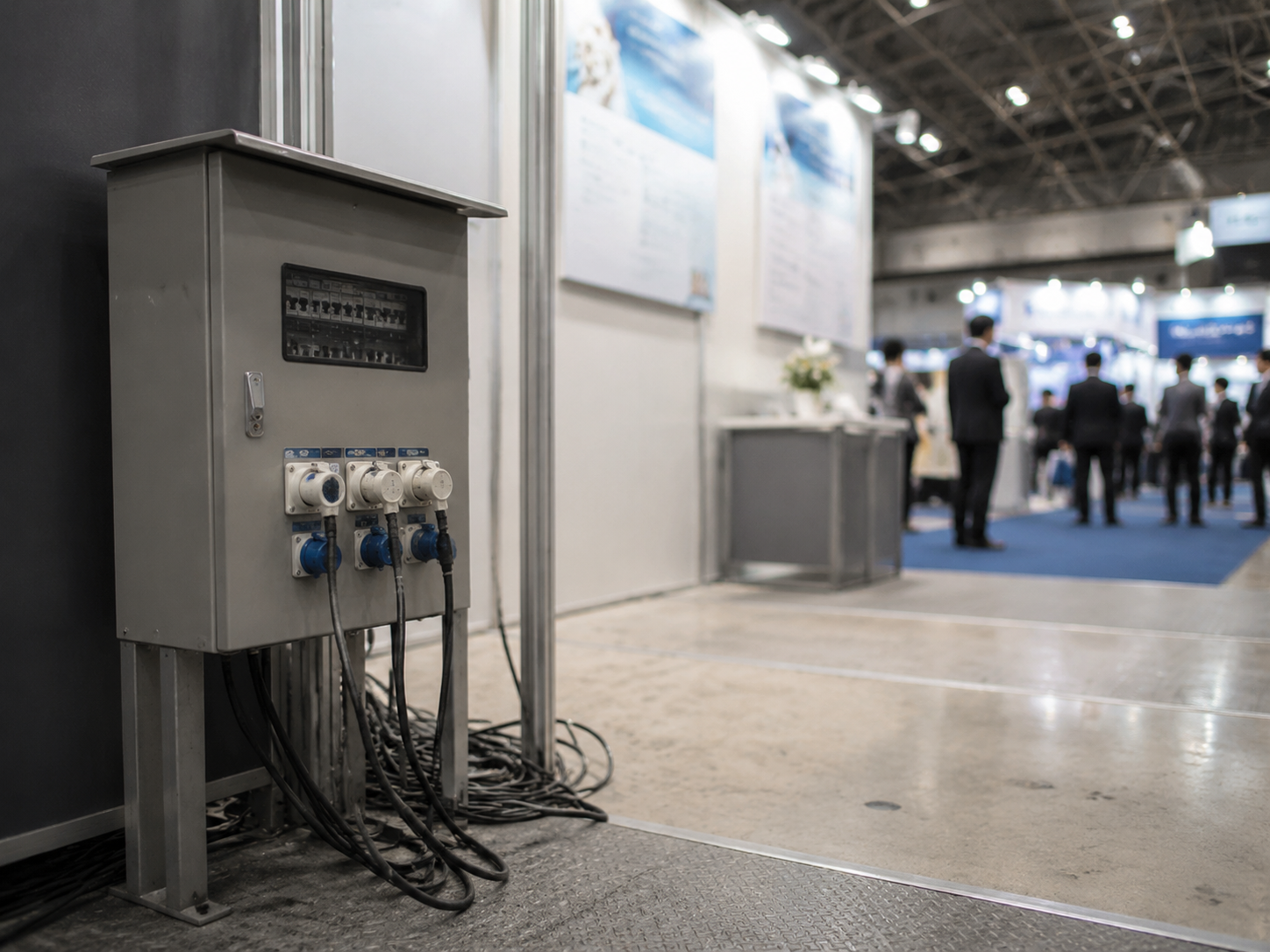
Another type of procedure has a clear validity period, such as procedures for temporary power facilities at construction sites/exhibitions, high-risk licensed businesses, temporary electrical service filings, etc.
The term of such procedures is not unified, but bound to the actual project cycle and license conditions. The specific duration must be based on the marking on the filing notification or approval document, and do not apply the term rules of other projects on your own. The starting time is generally based on the date of document issuance (Japan Standard Time, JST). Different procedures may have differences, and the document description shall prevail. If changes, suspension, or resumption are made midway, the adjustment of the validity period also depends on the requirements of the specific procedure and the marking on the notification.
These Documents Are Not “Proof of Filing Validity Period”: Don’t Confuse Them
Many people take the term of other documents as the validity period of METI filing. Here are the most easily confused categories sorted out to help you distinguish quickly:
| Common Document Name | Scope/Nature | Relationship with the Validity Period of Electricity Business Act Filings |
| Business notification under the Electrical Appliance and Material Safety Act supporting PSE | Electrical Appliance and Material Safety Act (another legal system) | Completely irrelevant, different rules |
| FIT/FIP power generation certification | Electricity tariff subsidy qualification certification | Has a separate validity period, not equal to the filing validity period |
| Grid connection contract | Commercial contract with electric power company | Commercial agreement, irrelevant to the validity of regulatory filing |
| Notification of appointment of chief engineer | Personnel qualification reporting | Personnel changes need to be declared, does not affect the validity period of the filing itself |
| Notification of safety regulations | Operation rule reporting | Regulation changes need to be declared, no separate validity period |
| Construction plan notification | Pre-construction reporting for a single project | Only corresponds to a single project, does not affect the validity of long-term facility filing |
| Pre-use self-inspection record | Enterprise self-compliance document | Has inspection cycle requirements, not equal to the filing validity period |
Practical Self-Inspection: 3 Steps to Judge Whether Your Filing Is Valid
After explaining the rules, let’s talk about how to conduct self-inspection specifically. You don’t need to find an expert; you can make a preliminary judgment by yourself with the documents.

Step 1: First Check the Key Information on the Document
First take out your filing documents and look for these key Japanese keywords: 「有効期間」 (validity period), 「期限」 (term), 「届出年月日」 (notification date), 「受理日」 (acceptance date), 「登録年月日」 (registration date), 「条件」 (conditions), 「附款」 (attached conditions).
If there is a clear 「有効期間」 mark, directly compare the current Japan Standard Time (JST) with the expiry date. Note that do not calculate using your local time, as it is prone to errors.
If there is no validity period mark, first classify it as the “no fixed expiry date” category, then continue the investigation. Also, do not miss the attached pages. Many special conditions and term requirements are written on the attached pages. The content that must be verified includes: filing number, entity name, facility/business scope, issuance date, and attached page instructions.
Step 2: Investigate the Hidden Risk of “Substantial Invalidation”
After completing the verification of document information, it is necessary to further investigate the risk of substantial invalidation — that is, the requirements of “fulfillment of statutory obligations” and “matching of actual status” mentioned in the three-level judgment logic. Specifically, check three dimensions:
• Verify the entity: Are the name, address, and responsible entity on the filing consistent with the actual operating entity? If you entrust an agent to handle it, be sure to confirm that the responsible entity is your own company, not the agency.
• Verify the content: Do the actual facility parameters and business scope exceed the content covered by the filing? For example, if you filed for a 1MW photovoltaic project but actually changed it to 2MW, even if the entity is not changed, it has already exceeded the filing scope.
• Verify the status: Has the filing been revoked or suspended due to penalties for violations?
Be sure to remember this: Existence of a filing number ≠ valid filing. It must match the three conditions of entity, content, and compliance status at the same time; the number alone is useless.
Step 3: If Unsure, Seek Official Verification
If you are still unsure after self-verification, use official verification channels. Do not infer on your own:
• Public information can be checked directly: The official websites of METI and local Industrial Safety and Inspection Departments publish some registered/filed lists and announcements, where public compliance status can be found.
• For non-public information, you can either entrust a licensed Japanese administrative scrivener to inquire, or directly submit an inquiry application to the competent authority.
Whichever method you use, it shall be subject to the official records of METI and the competent authority. Do not readily believe verbal statements from third-party platforms or intermediaries.
Pitfall Avoidance Guide: 5 Most Common Misconceptions for Overseas Users
We have sorted out the 5 most frequently asked and most common pitfalls for overseas users. Avoiding them in advance can save a lot of trouble.
Misconception 1: All METI filings have a fixed term (e.g., 5 years/10 years)
Truth: This is the most common cognitive bias, consistent with the core conclusion mentioned earlier: most notification-type procedures under the Electricity Business Act do not have a unified fixed validity period, and only specific temporary and licensed procedures have clear terms.
Pitfall avoidance method: Look for the 「有効期間」 column as soon as you receive the filing documents. Do not assume a fixed term, let alone apply the term rules of other projects.
Misconception 2: Filings without a fixed term = never need to be managed
Truth: Many people mistakenly think that a filing without a fixed term is a once-and-for-all thing once obtained. This is actually a misunderstanding of “no fixed expiry date” — as mentioned in the three-level logic earlier, no fixed term only means there is no clear expiry date, and you still need to continuously fulfill compliance obligations to maintain validity. If you fail to fulfill obligations such as change declaration and inspection cooperation as required, the filing will be substantially invalidated, with the same effect as expiration.
Pitfall avoidance method: It is recommended to establish a regular verification mechanism, and the frequency can be determined by yourself in combination with project risks, contract nodes, and internal compliance systems; whenever there are changes in information such as entity, address, facility parameters, or business scope, first confirm whether a change declaration is needed, and do not wait until you are inspected to make up for it.
Misconception 3: A filing number is enough for use, and you can borrow others’ filings
Truth 1: As mentioned in the previous self-inspection steps, a filing number only means that this procedure was once accepted, not that it is currently valid. Validity must match the three conditions of entity, content, and compliance status.
Truth 2: The filing entity and the actual responsible entity must be consistent. Borrowing across entities is a violation, which may result in rejection at best and penalties at worst.
Pitfall avoidance method: Do not only look at the number; be sure to verify the entity and facility/business scope; procedures must be handled with your own entity or that of a compliant partner, and you may not borrow filings from other entities.
Misconception 4: The filing validity period is linked to the service life of equipment
Truth: The filing validity period is a compliance requirement at the regulatory level, which is completely different from the warranty and actual service life of equipment.
For example: The design life of photovoltaic panels is 25 years, but if it is a photovoltaic facility temporarily built at a construction site, the corresponding filing validity period may only cover the actual cycle of the project or exhibition. The specific duration is subject to the filing notification, approval document, or requirements of the competent authority, and has nothing to do with how long the photovoltaic panels can be used.
Misconception 5: Just renew after expiration, no consequences
Truth: After the validity period expires, continuing to operate without renewal or re-application violates the , and may result in business suspension, registration cancellation, or even penalties. It is not something that can be solved by just making up the procedure.
Pitfall avoidance method: For filings with a fixed term, be sure to confirm the renewal requirements in advance and reserve enough application time; if it is already overdue, it must be handled in accordance with the requirements of the competent authority, and relevant business must not be carried out during the overdue period.
Practical Decision-Making: How to Handle Changes, Renewals, and Terminations
After knowing how to judge validity, let’s talk about how to handle different situations to avoid hasty handling when the expiration is approaching.
Procedures With Fixed Term: Renew in Advance, Don’t Wait for Expiration
For procedures with a clear validity period, renewal must be planned in advance:
• Application time: It depends on the type of procedure and the requirements on the notification. Usually, it must be submitted before expiration. Do not submit right on the expiry date, as it is prone to a gap period.
• Basic materials: Generally, the original filing documents, operation status description, and relevant certificates of facility compliance (if required) are needed.
• Review result: If the requirements are met, a new document will be issued, and the validity period will be recalculated according to the rules; if the application is not submitted after the deadline, usually the valid status cannot be resumed as originally planned, and you may need to re-apply. The specific situation shall be subject to the renewal rules of the corresponding procedure and the handling opinion of the competent authority.
Special attention: Carrying out business subject to this procedure during the overdue period is a violation. Operations must be resumed after the new procedure is issued. Do not take chances.
Procedures Without Fixed Term: Submit Change Notification in Time When Information Changes
For filings without a fixed term, the core is to maintain consistent information. If there are changes, a change notification must be submitted as required:
• Trigger scenarios: Changes in entity information (such as company name change, address change), major adjustments to facility parameters, and changes in business scope all require declaration.
• Declaration requirements: The declaration time points for different procedures are different. Some require prior declaration, some require timely declaration after the change, and some have clear term requirements. The specific requirements shall be in accordance with the provisions of the corresponding procedure or the requirements on the notification.
• Handling result: If the requirements are met, either a new filing document will be reissued, or a change acceptance certificate will be issued, and the validity period will follow the original rules; if you miss the declaration, you must make up for it as soon as possible, and may face administrative guidance or even penalties.
All filing documents before and after changes, as well as submission vouchers, must be properly kept for subsequent verification.
These Situations Cannot Be Renewed/Changed, You Need to Re-apply
Not all changes can be solved by change or renewal. There are three situations where procedures must be re-handled:
1. The filing entity is changed to another independent legal person, for example, from an overseas parent company to a Japanese subsidiary, which is equivalent to a change of entity. It cannot be changed directly and must be re-handled.
2. The facility or business scope exceeds the category covered by the original filing. For example, the original filing was for photovoltaic power generation, but now it is to be changed to wind power generation, which is not the same category and must be re-handled.
3. After the filing is revoked or suspended, if you want to resume it, you need to re-apply and cannot renew directly.
Stopping the Business? Remember to Handle Termination Filing
Many people think that no additional operations are needed when the business is stopped and the facilities are demolished, but that is not true: if you no longer carry out relevant business, or the facilities are demolished, you must submit a termination notification in accordance with the time limit requirements of the specific procedure.
The purpose of this is to avoid that the information in the official system is not updated and you are mistakenly considered to be still operating continuously, which may be treated as a violation for subsequent investigation. Relevant records of termination filing must also be properly kept for verification.
3 Common Scenario Examples to Help You Correspond to Your Own Situation
Finally, three common scenario examples are used to help you apply the rules:
1. Name change of fixed power generation project: The Japanese subsidiary of a Chinese-funded enterprise changed its name. The original notification for the photovoltaic power generation project has no fixed term. You only need to submit a change notification, and the filing still maintains the attribute of no fixed term, no need to re-handle.
2. Temporary power for exhibitions: A Chinese enterprise goes to Japan to participate in an exhibition and handles a temporary power filing. The validity period is bound to the exhibition cycle. After the exhibition ends, the termination procedure must be handled in time to avoid subsequent investigation by the regulatory authority.
3. Confusing two types of filings: An enterprise carrying out a distributed power generation project mistakenly took the filing under the Electrical Appliance and Material Safety Act supporting PSE as the filing under the Electricity Business Act. As a result, the project did not meet compliance requirements, and the corresponding category of procedures needed to be re-handled, which may affect the project progress.
After Reading This Article, You Can Handle These 3 Things
So far, the content about the validity period of METI filings under Japan’s Electricity Business Act has been explained. After reading this, you can at least handle three things independently:
First, you can accurately distinguish whether your METI procedure falls under the scope of the Electricity Business Act or the Electrical Appliance and Material Safety Act, and you can also judge the term type of the corresponding procedure. You will no longer indiscriminately apply the statements of “5-year validity period” or “lifetime validity”.
Second, you can judge by yourself whether the filing is in a valid state through the method of “verifying documents + investigating substantial risks”, without needing to find an agent for everything.
Third, you know how to handle changes, renewals, and business terminations, and can avoid common violation risks in advance, so you won’t fall into pitfalls due to ignorance of the rules.
If you encounter complex situations that you are unsure about, remember to prioritize consulting licensed professionals in Japan or directly consulting the competent authority. Do not infer on your own based on experience.