
For electronic products sold in the U.S. market, practitioners often encounter multiple FCC-related compliance modes. Among them, the concepts of SDoC and Certification (commonly referred to as FCC ID certification) are easily confused: many novices mistakenly believe that SDoC means “exemption from compliance” and can be handled arbitrarily, or equate it with an official certification mode that issues certificates. This article systematically explains the rules and practical key points of FCC SDoC from six dimensions: basic cognition, applicable boundaries, compliance requirements, application process, path comparison, and risk self-inspection, to help practitioners accurately judge the compliance path.
1. Basic Cognition: What Exactly is FCC SDoC
1.1 Plain Language Explanation: An Enterprise Self-Certification Mode Without Prior Official Certificate Issuance
First, clarify two basic concepts:
The first is FCC (Federal Communications Commission), the federal agency in charge of regulating radio frequency emissions, unintentional radiation, and related equipment authorization in the United States. Simply put, for all electronic products sold in the U.S. that may generate electromagnetic radiation or radio signals, requirements related to spectrum use and electromagnetic interference are under the jurisdiction of the FCC; products may also be subject to special supervision by other federal or state agencies such as the FDA and CPSC.
The second is SDoC (Supplier’s Declaration of Conformity), a simplified compliance path of the FCC for low-risk equipment: after the enterprise completes product testing on its own and confirms that it meets the corresponding FCC requirements, a responsible party located in the United States issues a declaration to prove the product’s compliance, without prior review and certificate issuance by the FCC or its authorized bodies.
The core feature of SDoC is that there is no prior official certificate issuance link, and all compliance responsibilities are borne by the enterprise and the U.S. Responsible Party. It is essentially a simplified compliance channel, not “exemption from compliance” — testing, documentation, and labeling requirements still need to be strictly met; it only omits the official prior review process, which can shorten the time to market and reduce compliance costs.
1.2 Position in the FCC Compliance System
FCC equipment authorization paths are not freely chosen by enterprises, but are divided according to the electromagnetic risk of products from low to high. For common Part 15 devices, there are three main levels:
Exemption → SDoC → Certification
The lower the risk, the simpler the process. SDoC is an intermediate channel for low-risk equipment, only applicable to low-risk categories with clear rules. It should be specially noted that Certification is the formal certification mode of the FCC. Its review and authorization are usually completed by a TCB (Telecommunication Certification Body) authorized by the FCC. After passing, a unique FCC ID will be obtained as the authorization identification number, which can be publicly queried on the FCC official website; FCC ID is the number of Certification authorization, not an independent certification mode.
1.3 Key Terminology Literacy (Plain Language First, Then Technical Terms)
Several core concepts will be repeatedly used later, and they are uniformly explained first:
- Electromagnetic Compatibility (EMC): The core has two requirements — when the product is working, it will not emit excessive electromagnetic waves to interfere with other equipment, and at the same time, it will not work abnormally due to external electromagnetic interference. It is similar to being in a public place: you do not disturb others, and you will not be unable to do your work because of others’ normal communication.
- Unintentional Radiator: A product that does not have the function of transmitting radio signals itself, and only generates a small amount of incidental electromagnetic noise during operation, such as wired mice, ordinary home appliances, computer mainframes, etc.
- Intentional Radiator: A product that realizes its core function by actively transmitting radio signals, such as Bluetooth speakers, smartphones, wireless remote controls, etc.
- U.S. Responsible Party: The first responsible party for SDoC required by FCC rules, must be a company or individual located in the United States, who can actually control or obtain the full set of compliance technical documents, and cannot be a nominal entity only.
- TCB (Telecommunication Certification Body): A third-party organization authorized by the FCC that can conduct Certification reviews and issue authorizations on behalf of the FCC.
- FCC ID: The unique authorization identification number obtained by products under the Certification mode, which can be queried in the FCC official database; products under the SDoC mode do not have this number.
1.4 4 Most Easily Misunderstood Basic Cognitions
Novices who are just getting started are most likely to fall into these cognitive pitfalls, which are clarified in advance:
- Is SDoC an official certification certificate issued by the FCC or its authorized body? Wrong. It belongs to the enterprise self-certification mode, with no prior official review and certificate issuance link, and compliance responsibilities are borne by the enterprise and the U.S. Responsible Party.
- Does SDoC mean no compliance is needed, and just writing a declaration casually is enough? Wrong. It has strict requirements for testing, document retention, and labeling, only omitting the official prior review step.
- Are all products without an FCC ID non-compliant? Wrong. The SDoC mode itself does not require an FCC ID, and it is compliant as long as it meets the rule requirements.
- Can SDoC cover all FCC compliance requirements? Wrong. It only applies to low-risk products with clear rules, and high-risk products must follow the Certification path.
2. Applicable Boundaries: Quickly Judge Whether Your Product Can Adopt the SDoC Path
2.1 Core Applicable Product Scope
The main applicable objects of SDoC are unintentional radiators — that is, ordinary electronic products without active radio transmission functions, which is the most common applicable scenario. Typical examples include ordinary wired earphones, household power strips, non-smart LED lights, computer mainframes, ordinary power supplies, wired keyboards and mice, wired monitors, etc.
It should be noted that “exemption” in FCC rules means that the equipment does not need to meet specific equipment authorization requirements (neither SDoC nor Certification is required), which is not equivalent to automatically applying SDoC; whether a specific product is exempt, SDoC, or Certification shall be judged according to corresponding clauses such as 47 CFR 15.101 and 15.103, and shall not be classified by the enterprise itself.
2.2 Products Usually Not Applicable to SDoC
There are several types of products that usually require priority consideration of the Certification path, and SDoC cannot be directly selected. The final confirmation needs to be combined with specific FCC Part clauses, equipment category, frequency band, power and other parameters:
The first category is conventional intentional radiators with active wireless transmission functions, such as products with Bluetooth, WiFi, cellular network, or wireless remote control functions. Due to their active transmission of radio signals, these products have higher risks and usually need to follow the Certification path.
The second category is special electronic equipment for medical, aviation, maritime, and public safety purposes. The FCC equipment authorization requirements for these products may run parallel to the special supervision of the FDA, FAA, maritime or public safety authorities. They need to meet the rules of multiple parties at the same time, and cannot be directly judged only by application scenarios; corresponding clauses must be checked.
The third category is products included in the FCC mandatory Certification list. As long as they are within the scope of the list, they are required to apply for Certification.
2.3 Judgment Rules for Scenarios with Ambiguous Boundaries
Some products have complex functions or structures that cannot be directly classified, and can be judged according to the following rules:
Complete Machines with Pre-Certified Wireless Modules
If a wireless module that has obtained Certification (i.e., has an FCC ID) is used in the complete machine, it does not mean that the complete machine is automatically compliant, nor does it necessarily need to re-apply for Certification of the complete machine. It needs to be judged in two steps:
Step 1: Check the integration conditions in the module authorization document, including antenna type and gain, installation position, shielding requirements, power supply mode, RF exposure assessment requirements, labeling requirements, etc. If the integration of the complete machine fully meets all conditions, the wireless transmission part can directly use the Certification authorization of the module, without re-applying for certification of the wireless part of the complete machine; if the integration conditions are not met, or the complete machine changes the RF characteristics of the module (such as replacing the antenna, adding a power amplifier), it is necessary to re-evaluate the authorization requirements of the wireless part of the complete machine, and apply for Certification of the complete machine if necessary.
Step 2: Regardless of whether the wireless part uses the module authorization, the digital circuit part of the complete machine still needs to meet the unintentional radiation requirements of FCC Part 15 Subpart B, and complete compliance through the SDoC path.
Multi-Function Complete Machines
If a product has both digital circuit and active wireless transmission functions (such as a monitor with Bluetooth), it must meet the corresponding compliance requirements according to its functions: the wireless transmission part follows the Certification path, and the digital circuit part follows the SDoC path. Compliance with only a single mode cannot be completed.
If it is still impossible to judge through the above rules, the safest way is to check the specific applicable FCC rule clauses, or consult an FCC-authorized compliance agency.
2.4 3-Step Quick Preliminary Screening Method (Only for Preliminary Judgment, Cannot Replace Formal Classification)
If you only need to quickly and preliminarily judge the general compliance direction of the product, you can follow the three steps below:
Step 1: Check whether the product has the function of actively transmitting radio signals. If not, it is necessary to further confirm whether it contains components that may generate unintentional radiation such as digital circuits, clock oscillators, external cables, etc., and does not belong to the exemption category; if yes, there is a high probability that the Certification path is required.
Step 2: Check whether the product belongs to special fields such as medical, aviation, maritime, public safety, or is in the FCC mandatory Certification list. If yes, priority should be given to checking the special rules of the corresponding field and FCC equipment authorization requirements.
Step 3: Make a final confirmation against the specific applicable FCC rule clauses (such as subparts under Part 15). Products with ambiguous boundaries need to consult a professional agency.
2.5 Reference of Common Boundary Cases
For ease of understanding, here are some classification references for common products (the specific situation shall still be subject to actual product parameters and rules):
- Applicable to SDoC: Ordinary wired earphones, non-smart LED ceiling lights, desktop computer power supplies, wired mechanical keyboards
- Usually require Certification: Bluetooth speakers, smart WiFi light bulbs, smartphones, wireless walkie-talkies
- To be determined after evaluation: Smart sockets with certified WiFi modules (need to evaluate whether the module integration method meets the authorization conditions)
3. Core Compliance Requirements: 4 Types of Conditions That Must Be Met for SDoC
SDoC is a self-certification mode, but it still has clear compliance requirements, all of which must be met to be valid.
3.1 Requirements for Responsible Entities
FCC rules clearly require that SDoC must be signed by the U.S. Responsible Party and bear the overall responsibility for compliance. The responsible party must be a company or individual located in the United States, who can actually control or obtain the full set of compliance technical documents, and cannot be a nominal entity only.
The common responsibility boundaries of different participants are as follows:
- Manufacturer: Responsible for ensuring product design meets applicable FCC standards, organizing and completing compliance testing, and sorting out the full set of technical documents;
- U.S. Responsible Party (usually the importer, U.S. local brand owner, or authorized agent): Signs the SDoC declaration of conformity, retains and provides the full set of compliance documents as required by the FCC, and cooperates with regulatory spot checks;
- Importer: Must ensure that products imported into the United States meet FCC equipment authorization requirements, and shall not import products known to be non-compliant;
- Seller: Shall not sell products known to be non-compliant. If a compliance notice is received from the FCC or the responsible party, it must cooperate with work such as stopping sales and recalls. Specific obligations depend on the role in the supply chain and actual circumstances.
3.2 Technical Testing Requirements
Testing is the core foundation of SDoC self-certification. A declaration without a valid test report has no compliance proof effect.
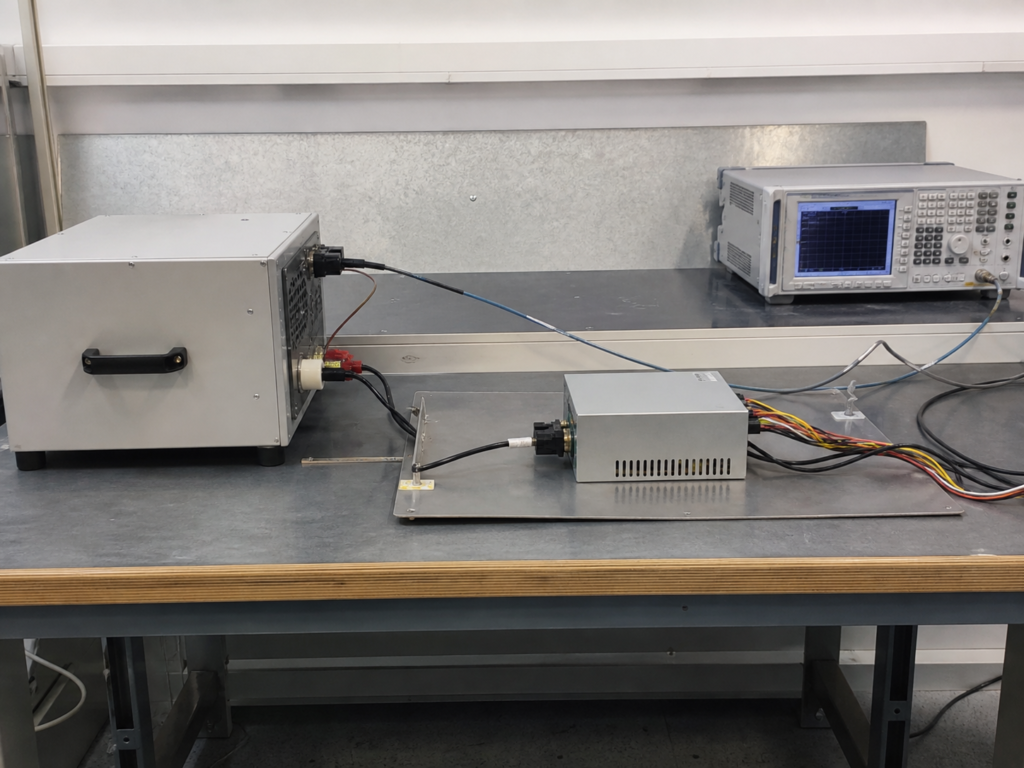
- Core testing content: For typical unintentional radiator products, the testing focus is on conducted disturbance emission and radiated disturbance emission limits, and the most common applicable standard is FCC Part 15 Subpart B; specific test items need to be determined according to equipment category and applicable clauses. The FCC does not uniformly mandate general immunity test requirements for all SDoC devices.
- Grade classification: The FCC divides unintentional radiators into two categories: Class B for civilian consumer use, and Class A for industrial/commercial environment use. The radiation limits of Class B are stricter. The corresponding grade must be selected according to the actual expected use scenario of the product, and the applicable grade shall not be arbitrarily lowered to pass the test.
- Sample requirements: The test sample must be completely consistent with the final mass-produced version to be marketed. Special test samples with different designs from mass production shall not be used; the test must cover the working mode of the product that generates the maximum interference (such as computer running at full load, power supply at maximum output, etc.), otherwise the test result is invalid.
- Laboratory selection: The SDoC mode does not mandate that the testing laboratory obtain specific FCC accreditation (different from the requirements of the Certification mode), but the testing facility must have measurement capabilities, equipment calibration records, and complete test process records that meet the applicable standards. The U.S. Responsible Party is responsible for the validity of the test method and the authenticity of the results; if the testing institution has insufficient capabilities, the FCC may not recognize the test report as compliance evidence during law enforcement.
- Rectification requirements: If the test fails, it is necessary to analyze the root cause according to the over-limit items, implement controlled rectification and record all hardware, software, and configuration changes, re-evaluate all affected test items, and expand the test scope if necessary. It is not allowed to repeatedly submit only the unqualified items for testing while ignoring the impact of changes on other performances.
3.3 Document and Retention Requirements
After passing the test, the full set of compliance documents must be sorted out and retained as required, ready for FCC verification at any time.
- Required documents: Formal test report, “FCC SDoC Declaration of Conformity”, product specification, user manual.
- Mandatory content of SDoC declaration: Product model/name, applicable FCC rule clauses, full name and contact information of the U.S. Responsible Party, corresponding test report number, signature and date of the authorized signatory of the responsible party. The declaration is invalid if any item is missing.
- Retention rules: The full set of compliance documents shall be kept by the U.S. Responsible Party. The retention period must cover the entire production/import cycle of the product, and after the production or import of this model is stopped, it must still be retained for at least 1 year according to the current FCC rules (specific requirements are subject to the latest version of the corresponding clauses of 47 CFR); the documents must be in English. When the FCC requests verification, the U.S. Responsible Party must be able to provide complete documents within the specified time. It is not necessary to physically store all original documents in the United States, but it must be ensured that they can be retrieved in a timely manner.
- Changes trigger re-evaluation: Doing SDoC once does not mean it is done once and for all. If the product’s hardware, core components, functions, materials change, or the applicable FCC standards are updated, or firmware changes change the product’s working mode (such as adding pulse emission, adjusting clock frequency), compliance must be re-evaluated, and if necessary, re-test and update the full set of documents.
3.4 Product and Document Labeling Requirements
Compliance information that meets the rules must be marked on the product body and user manual, and shall not be omitted or misleading at will.
- Product body labeling: Traceable information must be marked, including product model, name of the U.S. Responsible Party (or identifiable brand logo + contact information of the responsible party); products under the SDoC mode do not need to be marked with FCC ID.
- User manual requirements: Must include the compliance statement and interference warning required by the FCC. The content must meet the template requirements of the corresponding rules, generally stating that the product complies with relevant FCC rules, will not cause harmful interference, and if interference occurs, the user needs to take measures to solve it on their own.
- Precautions for label use: The official FCC Seal is a government mark, and private use is strictly prohibited; the use of compliance labels must comply with the rules of the corresponding mode. Products under the SDoC mode shall not use labels only applicable to the Certification mode, and shall not mislead consumers into thinking that the product has obtained official FCC certification.
- Handling of insufficient label space: If the product is too small to mark all information, part of the information can be moved to the user manual or product packaging, but it must meet the requirements of the corresponding FCC rules on label position and accessibility, and shall not be omitted at will.
4. Full Application Process: Steps and Checkpoints from Preparation to Launch
The SDoC application process is mainly divided into three stages, each with key checkpoints.
4.1 Preparatory Stage
Before officially starting the compliance process, three preparatory tasks must be completed first:
First, use the 3-step preliminary screening method in Chapter 2 combined with the rule clauses to confirm that the product is indeed within the applicable scope of SDoC, so as to avoid invalidating all subsequent work due to wrong path selection.
Second, determine a qualified U.S. Responsible Party, ensuring that it is a real and valid entity located in the United States, capable of actually bearing compliance responsibilities, obtaining and retaining the full set of documents.
Third, prepare finalized samples that are completely consistent with the final marketed version, as well as basic materials such as product specifications and user manuals. The samples shall not be unfinalized engineering prototypes.
4.2 Testing and Rectification Stage
After preparation is completed, you can enter the testing link:
Select a laboratory with corresponding testing capabilities, submit samples and complete product materials, and conduct testing in accordance with applicable FCC standards.
If the test fails, it is necessary to analyze the cause, implement controlled rectification and record all changes in accordance with the rectification requirements in Chapter 3, and re-evaluate the affected test items until all items meet the requirements, and the laboratory will issue a formal test report.
4.3 Document Archiving and Launch Stage
After passing the test, complete the last three tasks before launch:
First, draft the “FCC SDoC Declaration of Conformity” as required, which shall be signed and confirmed by the authorized signatory of the U.S. Responsible Party.
Second, hand over the full set of compliance documents to the U.S. Responsible Party for archiving as required, ensuring that they can be retrieved at any time for FCC verification.
Third, print standardized traceable labels on the product body, add compliance statements and interference warnings to the user manual, and then the product can be launched for sale.
4.4 3 Mandatory Checkpoints for Completing SDoC
After the entire process is completed, you can self-check through three checkpoints to ensure compliance is valid:
- Path check: Reconfirm that the product classification is correct and it is indeed within the applicable scope of SDoC, which is the basic prerequisite for valid compliance.
- Test check: The test report corresponds to the final mass-produced version, the test items cover all high-interference working modes, and the rectification process has complete records.
- Document check: The SDoC declaration has complete information, and the full set of compliance documents has been retained by the U.S. Responsible Party as required and can be retrieved at any time.
5. Path Comparison: Differences and Selection Between SDoC and Other FCC Compliance Modes
5.1 Core Differences Between SDoC and Certification (FCC ID)
Practitioners most often compare SDoC and Certification modes. The core differences between the two can be referred to in the following table:
| Comparison Dimension | FCC SDoC | FCC Certification (FCC ID) |
|---|---|---|
| Applicable products | Low-risk unintentional radiators, must meet corresponding FCC rule clauses | High-risk intentional radiators (with Bluetooth/WiFi/cellular, etc.), products in special fields, products in the mandatory certification list |
| Review method | Enterprise self-certification, no official prior review | Requires review and authorization issuance by a TCB authorized by the FCC, with official prior review |
| Public number | No FCC ID | Has a unique FCC ID as the authorization identification number, which can be queried on the FCC official website |
| Cycle and cost | No official prior review link. For conventional unintentional radiator products, if the test passes once, it can usually be completed in 1-2 weeks with low cost *Note: This is an estimate for common projects. The actual situation is affected by product complexity, test rounds, data completeness, etc., and does not constitute a commitment | Requires TCB review and certificate issuance. For conventional wireless products, it usually takes 4-8 weeks to complete with high cost *Note: This is an estimate for common projects. The actual situation is affected by product complexity, review progress, testing conditions, etc., and does not constitute a commitment |
| Responsibility division | All compliance responsibilities are borne by the enterprise/U.S. Responsible Party | Has TCB review endorsement, but the core compliance responsibility still lies with the enterprise |
| Public query | No official public record | Product authorization information can be queried in the FCC official database |
5.2 Differences from Exemption and the Old Verification Mode
Differences from the Exemption Path
The exemption path refers to equipment that meets specific FCC clauses (such as 47 CFR 15.103), which does not need to meet equipment authorization requirements (neither SDoC nor Certification is required), but still needs to meet applicable emission limit requirements; while SDoC is a simplified authorization path that requires completing testing, issuing a declaration, and retaining documents. The compliance requirements of the two are completely different.
Differences from the Verification Mode
Verification is a self-certification mode under the old FCC rules. After the FCC rule reform in 2017, the original Verification and Declaration of Conformity (DoC) systems were integrated into the SDoC framework. Verification or DoC completed historically under the old rules are still valid if the product has not changed and meets the FCC transition rules; currently, only a few specific devices are still subject to the old Verification requirements, and ordinary consumer unintentional radiators are all implemented under SDoC.
5.3 Core Decision-Making Logic for Mode Selection
The core principle for selecting a compliance path is product function and classification determine the path, and SDoC cannot be forced to be selected just to reduce costs. Specifically, it can be judged according to the following logic:
Step 1: First confirm whether the product has an active wireless transmission function. If yes, give priority to the Certification path.
Step 2: Confirm whether the product belongs to a special field or is in the FCC mandatory Certification list. If yes, directly select the Certification path.
Step 3: Products with ambiguous boundaries need to be confirmed against specific FCC rule clauses or by consulting an FCC-authorized compliance agency, and shall not be classified by themselves.
5.4 Special Circumstances Where the Mode Conclusion Will Change
The compliance path is not static. Re-evaluation is required in the following situations:
- If the FCC rules are updated and a certain type of product is adjusted from mandatory Certification to applicable SDoC, and the product meets the requirements of the new rules, it can be changed to comply with the SDoC path.
- When a product is remodeled with new wireless functions, adjusted hardware or antennas, the product that originally followed SDoC needs to switch to the Certification path.
- For complete machines with pre-certified wireless modules, if the integration method does not meet the module authorization conditions, it is necessary to re-evaluate the authorization requirements of the wireless part of the complete machine, and apply for Certification of the complete machine if necessary.
- If FCC rules are updated to adjust product classification, the corresponding compliance mode must be re-evaluated according to the new rules.
6. Pitfall Avoidance and Self-Inspection: Common Risks and Quick Check Methods
The SDoC process is relatively simplified, but there are still many compliance risks that are easy to ignore. The following summarizes common cognitive misconceptions, operational pitfalls, violation consequences and self-inspection methods.
6.1 Common Deep Cognitive Misconceptions
In addition to the 4 basic misconceptions mentioned in Chapter 1, there are several deeper wrong cognitions that many experienced practitioners are also prone to get wrong:
- If the wireless module has an FCC ID, the complete machine automatically meets the SDoC requirements? Wrong. It is necessary to first confirm that the module integration conditions meet the authorization requirements, and the digital circuit part of the complete machine still needs to complete SDoC compliance separately; the module certification only covers its own wireless transmission part.
- Can SDoC be used for life once done? Wrong. Changes in product hardware, functions, firmware, or updates to FCC rules require re-evaluation of compliance, and re-testing if necessary.
- Can EMC reports from other countries such as CE/UKCA directly replace FCC testing? Wrong. The FCC has independent test standards, limits and method requirements, which are not universal with standards of other countries/regions and cannot be directly replaced. Testing must be completed in accordance with FCC requirements.
- Will a test report issued by a laboratory definitely be recognized by the FCC? Wrong. Under the SDoC mode, the responsible party is responsible for the test quality. If the laboratory has insufficient capabilities or the test method does not meet the requirements, the report may not be recognized by the FCC during law enforcement.
- The U.S. Responsible Party is just a nominal figure and does not need to actually participate in compliance? Wrong. The responsible party is the first responsible party under FCC rules, and must be able to actually control or obtain compliance documents and cooperate with spot checks. A fictitious or nominal responsible party will directly lead to invalid compliance.
6.2 5 Most Common Operational Pitfalls
On the premise of correct cognition, the following common problems are also prone to occur in the operation link:
- Selecting a laboratory without corresponding testing capabilities, and the test method or data does not meet the requirements, resulting in the report not being recognized by the FCC.
- Using a fictitious or nominal U.S. Responsible Party, which cannot cooperate during FCC spot checks, directly triggering violation penalties.
- The test sample is inconsistent with the mass-produced product, or does not cover the maximum interference working mode, which is very easy to be found non-compliant during spot checks.
- Compliance document retention does not meet the requirements, or complete documents cannot be provided within the specified time during FCC verification.
- Product labels or user manuals lack the required compliance information, or misleading official labels are used in violation of regulations.
6.3 Actual Consequences of Violations
SDoC is a self-certification mode, but the FCC will carry out law enforcement through spot checks, complaint verification, etc. The consequences of violations are mainly divided into three levels:
- Import link: When products enter the United States, they may be refused entry, detained or returned by customs, depending on the specific law enforcement situation of customs.
- Regulatory level: If found to be in violation by the FCC, it may be required to stop sales and recall products. The U.S. Responsible Party shall bear civil fines. The specific amount depends on the degree of violation and law enforcement results, and there is no unified standard.
- Platform level: E-commerce platforms such as Amazon may require sellers to provide SDoC documents based on their own risk control requirements. Non-compliance may lead to listing removal. This is a requirement of platform rules, not direct FCC law enforcement.
6.4 Quick Self-Inspection Method for SDoC Compliance
If SDoC has been completed, you can quickly self-inspect in four steps to confirm the validity of compliance:
- Check the path: Reconfirm that the product is indeed within the applicable scope of SDoC and the classification is correct.
- Check responsibility: The information of the U.S. Responsible Party is real and valid, it is an entity located in the United States, and can actually bear compliance responsibilities.
- Check documents: There is a formal test report corresponding to the mass-produced version, the SDoC declaration has complete information, and the full set of documents is retained by the U.S. Responsible Party as required and can be retrieved at any time.
- Check the product: The product body has traceable labels, the user manual includes compliance statements and interference warnings, and there are no misleading labels used in violation of regulations.
Generally speaking, FCC SDoC is a simplified compliance path for low-risk unintentional radiators, with the core being enterprise self-certification and self-responsibility. For novice practitioners, as long as they first confirm that the product’s authorization path complies with FCC rules, implement the qualification and document retention requirements of the U.S. Responsible Party, and conduct timely re-evaluation when product design or rules change, they can basically avoid the main compliance risks of SDoC.