
If you frequently purchase rechargeable products in North America, or sell power banks and lithium batteries via cross-border e-commerce, you are certainly no stranger to the term “UL certification”. However, many people’s understanding of it either stops at “American qualification certificate”, or they cannot figure out which standard their product should comply with and how to verify its authenticity. In this article, we will start from the most basic concepts and guide you step by step through all the practical knowledge of UL certification for lithium batteries. It is useful for both ordinary consumers choosing products and new sellers handling compliance.
1. UL Certification Fundamentals: Definition, Functions and Applicable Boundaries
Plain-Language Understanding of UL Certification
Many people think UL certification is a mandatory qualification certificate required by the U.S. government — but it is not. UL’s full name is Underwriters Laboratories, an independent third-party safety organization that is not part of government law enforcement agencies. UL certification for lithium batteries is essentially a systematic verification of product safety performance, with the core purpose of preventing the most common risks of lithium batteries such as thermal runaway, fire, explosion, and electrolyte leakage. It is a voluntary certification, but because it is widely recognized by platforms, retailers, and insurance companies in the North American market, it has almost become an “invisible access threshold” for lithium battery products entering North America.
Coverage and Boundaries
The key coverage objects of UL lithium battery certification are standalone power banks with rated energy ≤100Wh and consumer rechargeable lithium batteries/battery packs — that is, the products we most commonly contact, such as mobile phone power banks, camera spare batteries, and flashlight rechargeable batteries. For products beyond this scope, such as large-capacity home energy storage batteries and electric vehicle power batteries, there are corresponding other UL standards, which will not be elaborated on in this article for specific matching. Primary lithium battery cells may also be subject to UL 1642; whether their battery packs or end products require other standards shall be separately determined based on product structure, application, and certification category.
Here we must first correct a most common misconception: not all lithium batteries require UL certification. Whether to do it and which standard to follow should be judged in combination with the sales region, sales channel, and product application, and cannot be generalized.
Core Functions and Access Nature
UL certification has two core functions: first, to reduce safety risks in daily use through standardized testing and lower the probability of thermal runaway accidents; second, in the event of safety disputes or insurance claims, UL certification is a very important compliance endorsement that can help prove that the product has met mainstream safety requirements.
As for the nature of access, let us emphasize again: there is no universal mandatory requirement at the U.S. federal level that all lithium batteries must have UL certification. Whether it is required specifically shall be verified one by one against your target sales platforms, offline retailers, local building/fire regulatory authorities with law enforcement powers (abbreviated as AHJ), insurance companies, or contractual requirements of partners. There is no unified “mandatory rule”.
2. Certification Objects and Standard Matching: Rules from Components to Complete Products
Many people who encounter UL certification for the first time are most troubled by “which standard does my product correspond to?” Don’t worry. We will start with the object levels of certification, and then give you a clear logic for selecting standards.
Three Certification Object Levels and Core Principles
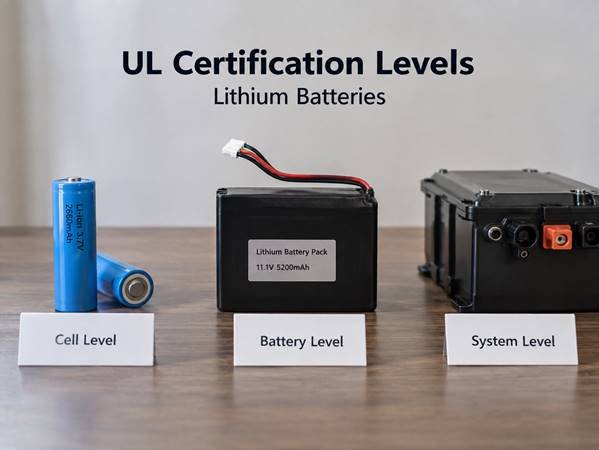
The objects of UL lithium battery certification are divided into three levels, and certifications at each level cannot replace each other:
• Cell: the “energy core” of a lithium battery. The cylindrical, pouch, and prismatic small batteries seen when disassembling a power bank are all cells, which are the smallest unit of energy storage.
• Battery pack: a complete combination of cells plus BMS (Battery Management System, commonly known as protection board, responsible for preventing overcharge and over-discharge), housing, and connectors. For example, separately sold camera spare batteries are typical battery packs.
• Finished device: an end charging product with a battery. For example, the power banks we usually use are finished products with batteries and charge/discharge interfaces.
There is a very important core principle here: the certification object must be completely consistent with the actual complete product sold, and component certification is prohibited from replacing complete product certification. For example, even if the cells inside a power bank have UL certification, it does not mean that the entire power bank has passed UL certification — for standalone power banks that fall within the scope of UL 2056, if target regulations, channels, or customers require UL certification, they should usually undergo complete product evaluation in accordance with UL 2056; whether it is mandatory to obtain this certification shall be verified item by item against target market and channel requirements. Of course, if key components inside (such as cells) already have UL recognition, repeated testing can be reduced during certification, saving time and cost.
Three Steps to Choose the Right UL Standard
Choosing a UL standard is actually not difficult, just follow three steps: first determine whether the product is a cell, battery pack, or finished product, then look at its usage scenario (home portable/energy storage/electric vehicle, etc.), and finally confirm the standard version and certification category.
The three most commonly used core standards for consumer lithium batteries can be quickly matched with reference to the following table:
| Standard Number | Applicable Objects | Core Purpose | Precautions |
| UL 1642 | Lithium battery cells (cylindrical/pouch/prismatic, primary/secondary lithium batteries) | Evaluate the safety performance of the cell itself | Cannot replace certification of battery packs or end finished products |
| UL 2054 | Household/commercial portable lithium battery packs | Evaluate the safety of assembled battery packs | General-purpose battery pack standard, not applicable to power banks |
| UL 2056 | Standalone power banks | Evaluate the complete product safety of power banks | Requires rated energy ≤100Wh, maximum input and output 60Vdc |
If your product does not fall into the above consumer portable category, you need to match the corresponding specialized standards based on product form, application, energy/voltage, and installation method. The final conclusion shall be subject to the judgment of the certification body, and do not force a match on your own. Common specialized standards include: UL 2743 (portable power packs), UL 1973 (batteries for specific stationary, vehicle auxiliary power, and light rail applications), UL 2271 (light electric vehicle batteries), UL 9540 (energy storage systems and equipment). Whether they are applicable shall be determined in combination with the battery or system structure, installation method, end use, and local installation specifications.
Distinction of Four Easily Confused Concepts
Many people are confused by statements such as “compliant with UL standards” and “UL testing”. In fact, these four concepts are completely different, so don’t be fooled by word games:
| Concept | Plain Explanation | Core Nature |
| UL Standard | Technical document specifying safety requirements for lithium batteries | Public rule, any organization can refer to it |
| Testing Laboratory | Qualified laboratory capable of testing in accordance with UL standards | Only responsible for the test results of submitted samples |
| Certification Body | Such as UL Solutions, which issues certificates after reviewing test reports and factory control | Qualified to issue UL certification and authorize the use of the UL mark |
| Mark Authorization | Permission to use the UL registered trademark on products | Must be officially authorized by the certification body, and cannot be printed without permission |
Here we emphasize again the common misconception: “compliant with UL standards” is only a self-declaration by the enterprise, which does not equal obtaining official UL certification, let alone the right to use the UL registered trademark.
Functional Boundaries of Other Common Compliance Items
In addition to UL certification, you may have heard of UN 38.3, FCC, CE and other lithium battery-related compliance requirements. Their functions are completely different and cannot replace each other:
• UN 38.3: It is the core type test requirement for lithium cells/batteries to enter conventional dangerous goods transportation; specific transportation must also check packaging, marking, documentation, and whether there are special provisions or exemptions in accordance with applicable transportation methods and regulations. It has nothing to do with safety certification for daily use of products.
• FCC: Power banks with electronic circuits may involve FCC rules, but whether they apply, whether Part 15 or other rules apply, and whether to adopt the SDoC or Certification procedure shall be determined based on their digital circuits, wireless functions, and exemption conditions. It cannot prove the thermal safety or structural safety of the battery.
• CE: The CE mark only applies to EU harmonized legislation that requires CE marking. When power banks or lithium-containing products are sold in the EU, applicable battery, general product safety, EMC, radio equipment, and other regulations shall be confirmed item by item. CE cannot be generally regarded as the general term for all EU safety and EMC requirements, nor can it replace UL or other North American compliance requirements in the North American region.
• IEC 62133-2: It is a safety standard for sealed secondary lithium cells and batteries for portable applications; primary lithium batteries, power batteries, industrial or stationary energy storage batteries shall select corresponding standards according to their applications, and it cannot directly replace UL certification.
3. UL Certification Testing Logic: Typical Directions and Guarantee Boundaries
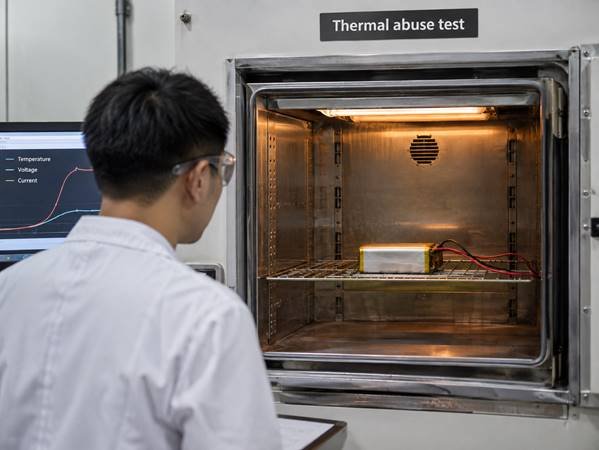
After understanding the standards and objects, you may be curious: what exactly does UL certification test? Is it absolutely safe with certification? Next, we will talk about the core logic of UL testing and its guarantee boundaries — this will help you view the role of UL certification more rationally.
Note: The following are typical evaluation directions for UL certification of consumer lithium batteries, not all test items. The specifics will be adjusted according to the standard version, product design, and certification plan.
Abnormal Charge/Discharge Safety Assessment
This type of test aims to prevent the risk of thermal runaway during charging and discharging, which is also the most core part of lithium battery safety. Typical evaluation directions include overcharge, over-discharge, overcurrent, external short circuit, overload, and reverse charge (specific items depend on product design, for example, products without reverse connection protection will not be tested for corresponding items).
Its result boundary is also very clear: it only verifies the abnormal scenarios specified in the standard, and does not mean that chargers can be matched arbitrarily, or used in violation of the product manual — for example, battery damage caused by using a charger with an output voltage much higher than the product’s requirements is not within the scope of UL’s guarantee.
Physical Accident Safety Assessment
This type of test targets safety risks caused by external force damage, simulating scenarios that may be encountered in daily use such as drop, crush, impact, and transportation vibration, with the goal of ensuring that the product will not catch fire or explode under common external forces.
It should be noted that it only covers the external force intensity specified in the applicable standard, version, and certification plan; specific drop height, number of times, posture, and judgment criteria shall be subject to the corresponding standard and certification documents. It does not guarantee extreme abuse scenarios — for example, throwing from a dozen floors high or deliberately hitting with a heavy object are not within the scope of guarantee.
Environmental Tolerance Safety Assessment
Temperature and humidity changes are also common causes of lithium battery failure. The goal of this type of test is to prevent safety risks caused by temperature and humidity changes. Typical evaluation directions include high and low temperature storage/operation, temperature shock, etc.
Its boundary is that it only covers the environmental range specified in the standard, and does not guarantee use in extreme environments — for example, placing the battery in a closed car exposed to the sun in summer (temperature may exceed 60℃), or using it outdoors in extreme cold for a long time, situations beyond the standard range are not within the scope of guarantee.
Interface-Specific Safety Assessment (for Finished Products with USB/USB-C)
For finished products with USB/USB-C interfaces (such as power banks), there will also be special interface safety assessments, with the goal of preventing interface-related safety risks, such as abnormal interface heating, poor contact, and whether the protection function is effective under abnormal connection conditions.
This type of test only adapts to the interface parameters specified in the standard, and does not guarantee the use of non-compliant accessories — for example, interface damage caused by using a non-compliant fast charging cable is not within the scope of guarantee.
General Boundaries of Certification Guarantee
In addition to the individual boundaries of each test above, UL certification also has several general guarantee bottom lines that must be clearly understood:
• Does not guarantee risks caused by intentional abuse (disassembly, water immersion, puncture, etc.);
• Does not guarantee failures caused by normal product aging or man-made damage;
• The most common misconception: having UL certification ≠ absolutely no problems. It only proves that the product meets the safety requirements within the scope of the standard, which can greatly reduce risks, but cannot 100% eliminate all possibilities.
The compliance bottom line for daily use must be adhered to: do not use damaged, swollen, or leaking products, do not use unqualified chargers, and avoid storage in high temperature and humidity.
4. Full Certification Process: Application, Certification Obtainment and Change Management
If you are a seller or procurement staff, you may be concerned about how to apply for UL certification, how long it takes, how much it costs, and whether you can modify the product after obtaining the certificate. Next, we will explain the full certification process and precautions clearly.
Core Differences Between Three Types of Compliance Documents
Before talking about the process, first clarify three types of easily confused compliance documents, where many people stumble:
• Single test report: Only responsible for the submitted samples, with no production consistency supervision — that is, the laboratory only tests the few samples you submit, and it does not care whether the mass-produced products are the same as the samples.
• UL Solutions certification project: This is what we usually call “official UL certification”. It usually requires samples and documents to pass conformity assessment, and the certification body makes a certification decision; when applicable, Follow-Up Services and initial production inspection will also be initiated to confirm that mass-produced products are consistent with the certified products. The specific timing and method of factory inspection, and whether a limited production plan is applicable, shall be subject to the certification category and project contract.
• Post-certification follow-up service: After obtaining the certificate, the certification body will conduct random inspections at the production factory from time to time. The method and frequency of random inspections depend on the certification category and contract, and it is not all smooth sailing after getting the certificate.
Let us emphasize again the common misconception: “tested according to UL standards” and “compliant with UL requirements” are mostly self-declarations by enterprises, which do not equal official UL certification. Be sure to check whether there is an official certification number and mark authorization.
Required Application Document Package
There are quite a lot of materials to prepare for applying for UL certification, the core of which are related to product safety, mainly including the following:
• Product BOM (i.e. the complete list of all components);
• Specifications of key components, such as parameters of parts that directly affect safety, such as cells, BMS, interfaces, and housing materials;
• Cell-related documents, such as specifications. If there are existing UL certification documents, they should also be attached, which can reduce repeated testing;
• Circuit and parameter materials, such as BMS schematic diagram/software version, cell series-parallel configuration, rated parameters, etc.;
• Structural and labeling materials, such as housing structure diagram, label design draft, product manual;
• Production information, such as factory address, quality control system description.
Explanation of Certification Process, Timeline and Cost
The formal certification process usually includes standard and plan confirmation, document submission, sample and document evaluation, certification decision, as well as applicable Follow-Up Services and initial production inspection.
Regarding timeline and cost, it should be clearly stated here: UL certification has no statutory fixed timeline, nor a unified charging standard. The length of the cycle depends on many factors: if the materials are fully prepared, key components have obtained UL recognition, and all tests pass in the first round, the cycle will be short; if the materials are incomplete or the test fails and requires rectification, the cycle will be lengthened. The cost is also affected by factors such as product complexity, test pass rate, number of models/factories, etc. The specifics must be subject to the official quotation of the certification body, and do not believe claims of “fixed price with guaranteed pass”.
Post-Certification Change Control Rules
Many people think that UL certification is valid for life once passed, but this is not the case at all. After obtaining the certificate, if there are changes in product design or production that affect safety, you must report to the certification body in advance to confirm whether re-testing is required. You cannot secretly modify the product and continue to use the original certification.
There are six types of changes that must be confirmed with emphasis:
1. Cell-related: changes in model, supplier, series-parallel configuration;
2. BMS-related: changes in solution, software version, protection logic;
3. Charging input: changes in parameters, interface type;
4. Output interface: changes in quantity, type, parameters;
5. Housing: changes in material, structural design;
6. Changes in production factory and product model naming rules.
These changes may affect product safety and must be confirmed with the certification body in advance, otherwise the certification may be suspended or even revoked.
5. Verification of UL Certification Authenticity: Operable Checking Methods
Whether it is ordinary consumers buying products or sellers selecting products, one of the most concerned issues is: how to judge whether the UL certification is real or fake? In fact, the method is very simple, just follow the steps, no need to guess.
Step 1: Check Product Body Information
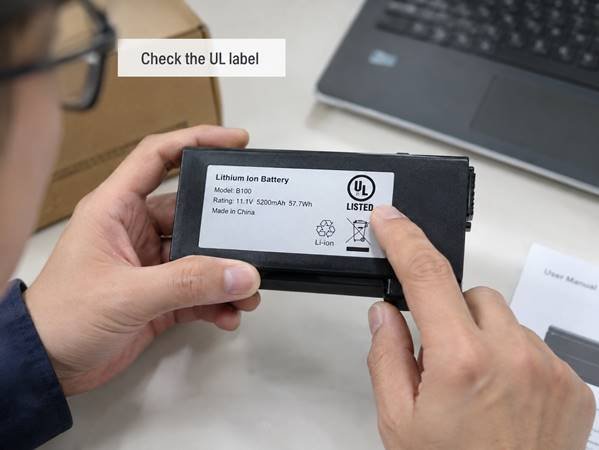
The first step is to look at the label on the product itself. You should first check the UL mark and product identification information actually used on the product, packaging, manual, or certification documents, and then query with available information such as UL file number, company name, model, and Category Control Number (CCN). The UL file number and control number are not the same concept, and the mandatory content of the specific mark shall be judged according to the certification category and approved mark scheme.
Here we must focus on distinguishing two common certification categories, which many people confuse:
• UL Listed: Usually means that the complete product or equipment has been evaluated in accordance with applicable requirements, such as power banks and finished chargers. However, it should be noted that having UL Listing does not mean meeting all sales requirements, and it is also necessary to comply with other regulations such as transportation, EMC, and platform rules.
• UL Recognized: Used for components or subassemblies installed in end products, such as cells and protection boards. This type of certification has restrictions on conditions of use and cannot be used alone as proof of finished product qualification. If a finished power bank only displays the UL Recognized mark, this mark cannot prove that the complete product has been certified; it is necessary to further check whether it has other applicable complete product certification and Product iQ records.
There is also a small label tip: the label form (silk screen, laser engraving, sticker, etc.) must be consistent with the approved marking method, and authenticity cannot be directly judged by material alone; in addition, the UL mark is commonly used in the United States, and the cUL mark is commonly used in Canada. Both belong to the UL system, so do not mistake cUL for fake.
Step 2: Query Method on UL Official Database
After checking the product label, the second step is to query on UL’s official database. This database is called UL Product iQ, which provides free registered query access, and usually requires creating or logging into an account first.
The query method is very simple: enter the product’s UL file number, Category Control Number, model, or manufacturer name, and you can retrieve the corresponding certification information. After finding it, check the core content: whether the publicly available model, manufacturer, certification category, and applicable scope are completely consistent with the product you have. Basic queries can be used to check certification information, and some advanced functions and printable files may be restricted by account permissions.
There is a note here: the public results of the database do not necessarily show the current status of the certification (valid/suspended/revoked). If in doubt, you need to contact UL Solutions directly for confirmation.
Common Identification Signals of Fake Certification
To sum up, common fake certifications have these obvious signals, and you should be vigilant when encountering them:
• Using the file number of other products, with model and manufacturer not matching the query results;
• Blurred label, no valid UL file number or control number;
• Only promoting “compliant with UL standards”, unable to provide certification number or official query path;
• Certification category does not match the product form, for example, a finished product uses component certification to promote as complete product certification.
Supplementary Verification Methods When in Doubt
If you still have questions after checking, you can ask the seller/supplier to provide a complete copy of the UL certification certificate, and then check three points: the model, manufacturer, and applicable scope on the certificate are consistent with the product parameters; the production factory is within the certification coverage — some certifications only cover the production of a certain factory, and changing the factory will not count.
6. Practical Checklists for Different Groups
After talking so much, some people may find it hard to remember. Don’t worry, we have organized practical checklists for people with different needs, just follow them.
Purchase & Use Checklist for Ordinary Users
• Before purchase: Prioritize products from legitimate brands with clear UL marks and file numbers; for standalone power banks that fall within the scope of UL 2056 and whose target channels require UL certification, you can check whether they have completed complete product evaluation in accordance with UL 2056; for separate battery packs, you can pay attention to UL 2054; avoid abnormally low-priced products with no valid brand, manufacturer, or certification.
• After receiving the goods: Check that the product model and label are consistent with the promotional information; verify the certification according to the official query method to confirm that the core information matches.
• During use: Comply with the requirements of the product manual; do not use damaged, swollen, or leaking products, and avoid storage in high temperature and humidity.
Product Selection Compliance Checklist for New Sellers/Small Procurement Staff
• Product matching: Confirm that the certification object is the actual complete finished product sold, and component certification cannot be used as a substitute; check that the certified model, capacity, and interface parameters are completely consistent with the sold product; verify the specific UL requirements of target sales channels and local regulators one by one, there is no universal mandatory rule.
• Qualification verification: Verify the authenticity and coverage of the certification; confirm that the production factory is within the certification coverage, and the supplier can provide a consistency statement for key components.
• Compliance supplement: When the product is revised, require the supplier to provide updated certification proof; simultaneously check other requirements such as transportation compliance and EMC, do not only look at UL.
Study Summary
At this point, the core knowledge about UL certification for lithium batteries is finished. If you have read it carefully, you should already be able to independently make these compliance judgments: you can explain the function, applicable scope, and three certification object levels of lithium battery UL certification; you can match the core UL standards for consumer power banks and battery packs, and know the direction of specialized standards for out-of-scope products; you can verify the authenticity of UL certification through official channels and identify common fake certificate tricks; you can distinguish the different functions of UL from compliance requirements such as UN 38.3, FCC, and CE; you can also complete the initial judgment of purchase or product selection compliance for lithium batteries/power banks according to the corresponding checklist.
UL certification is not a universal “safety guarantee letter”, but it is one of the most mature safety verification systems in the lithium battery industry. Understanding its rules and boundaries can help you avoid the vast majority of safety pitfalls, whether you are buying products or handling compliance.