
If you are a cross-border seller of products such as charging cables, USB-C cables, chargers, and power adapters, and you are entering the Canadian market for the first time, you will most likely encounter two extremes: either you hear people say “Canada is similar to the US, UL certification is enough”, only to have your goods detained as soon as they arrive at the port; or you are afraid of making mistakes, so you want to obtain every possible certification, spend tens of thousands of yuan in wasted money, and finally find that many of them are completely unnecessary.
In fact, compliance for importing electronic products into Canada is not that difficult. As long as you first identify the regulatory path for your product, then check item by item against the core requirements, you can systematically reduce common compliance omissions. However, you still need to confirm item by item based on the product model, sales province, and applicable regulations. In this article, we will clarify all the points that need to be checked, from entry-level judgment to customs clearance and subsequent compliance, so you can directly use it for self-inspection.
Core Check Item 1: Mandatory Electrical Safety Certification (The Threshold Most Likely to Cause Cargo Detention)
If your product falls into the category of products that require key electrical safety assessment, such as wall-mounted chargers, then electrical safety compliance is usually the first important threshold. Electrical safety regulation in Canada is provincial and territorial. Whether certification is mandatory, what mark and license to use depend on the location of sale or use, product category, and applicable standards. You cannot judge the unified national import certification obligation solely based on the product form.
The function of electrical safety certification is simple: to prevent the risks of electric leakage, fire, and electric shock from products. Electrical safety compliance is usually enforced by the electrical safety regulatory systems of each province or territory. Products shall be evaluated by certification bodies or inspection bodies accredited by the Standards Council of Canada (SCC) in accordance with applicable standards, and obtain corresponding Canadian certification or license. Health Canada is responsible for consumer product safety enforcement under the Canada Consumer Product Safety Act (CCPSA for short); ISED is mainly responsible for wireless devices, spectrum and related technical requirements.
Ordinary passive USB cables and connectors are usually not treated as wall-mounted power adapters, and in many cases do not require power equipment certification; however, you still need to confirm whether there are applicable electrical safety standards, consumer safety and labeling requirements based on the rated voltage, structure, intended use, and target province. “Passive” does not mean that no certification or regulation is required in all cases.
Many people are confused about which certifications are recognized in Canada. Here, you cannot just look at whether there is a lowercase “c” on the mark, nor can you make a final judgment solely based on “having c” or “not having c”. You should verify whether the certification body is accredited by the SCC, whether the mark is the official certification mark issued by the body for Canadian applicable standards, and whether the certificate and listing cover the actual model, factory, and rated values. Some North American joint marks may contain both US and Canadian identifiers, and the specific form shall be subject to the official information of the certification body.
Conversely, CE certification, US FCC certification, US version UL/ETL certification without Canadian scope of application, and self-inspection reports issued by the factory itself cannot be used alone as the basis for Canadian electrical safety compliance. The certification mark shall be set in accordance with applicable standards and the mark usage rules of the certification body; most power equipment usually requires clear marking on the product, nameplate, or permanent label, and you cannot assume that printing it only on the packaging is sufficient.
For different types of products, the focus of certification inspection is also different:
• Chargers and power adapters: Check the rated input, output voltage, current, and power covered by the certification certificate and certification listing. The actual rated values must be within the range allowed by the certification documents; if they exceed the range, or if the design affecting safety is changed, the certification body shall first confirm and update the certification.
• USB-C cables with active chips (such as fast charging cables with E-Marker): The certification or inspection evaluation shall cover the built-in circuit and its safety impact, and you cannot directly apply the report of ordinary passive cables.
• Passive charging cables and connectors: Although in many cases they do not require power equipment certification, they still need to meet applicable general safety requirements. For example, the insulation and structure shall be sufficient to prevent risks during normal use, and there shall be no sharp edges that may cause injury. If the product has potential safety hazards, it may still be required to be rectified or removed from the market.
So how do you confirm that the certification you got is real and valid? You can check from these four aspects:
First, check qualifications: Verify whether the body issuing the certification or inspection documents is within the scope of SCC accreditation, and confirm that its accreditation scope covers the product and applicable standards. At the same time, you also need to confirm with the relevant provincial electrical safety authority whether the mark or report is accepted.
Second, check scope: The certificate must cover the model, manufacturer, production factory, and rated values you actually sell. For example, if the factory on the certificate is Factory A, but the actual goods are produced by Factory B, this certificate cannot be directly regarded as covering the actual product.
Third, check changes: If the key components of the product, such as the transformer, main control chip, plug, and housing in the charger, are changed, the certification body shall be asked to evaluate whether the certification needs to be updated. If suppliers secretly replace components to reduce costs, it may affect the scope of the original certification, and the seller usually bears the risk in the end.
Fourth, check authenticity: You can verify by entering information such as product model and manufacturer through the official listing of the certification body, certificate query system, or other official verification methods. Do not rely solely on the QR code or screenshots provided by the supplier.
Core Check Item 3: Energy Efficiency Compliance (The Most Easily Overlooked Item)
Energy efficiency requirements are an item that many sellers easily overlook, because everyone focuses on safety certification and forgets that Canada also has energy efficiency regulation.
First, let’s look at which products need to comply: Judgment shall be made model by model based on the definition of external power supplies, input and output characteristics, power range, and exemption clauses in the Energy Efficiency Act and the current Energy Efficiency Regulations. Wall-mounted chargers and external power adapters may be regulated external power supplies, but you cannot assume that registration is mandatory solely based on the name “wall-mounted charger”. Whether some USB chargers fall into the regulated category also needs to be confirmed in combination with the specific design and rated parameters.
All charging cables, data cables, and connectors that do not have power conversion functions are usually not subject to external power supply energy efficiency regulation, but this shall still be based on the actual functions of the product and current regulations.
The department in charge of energy efficiency is Natural Resources Canada, abbreviated as NRCan. For products that fall into the regulated category, core indicators usually include no-load standby power consumption, average conversion efficiency, etc. The specific indicators, test methods, and product scope shall be subject to current regulations.
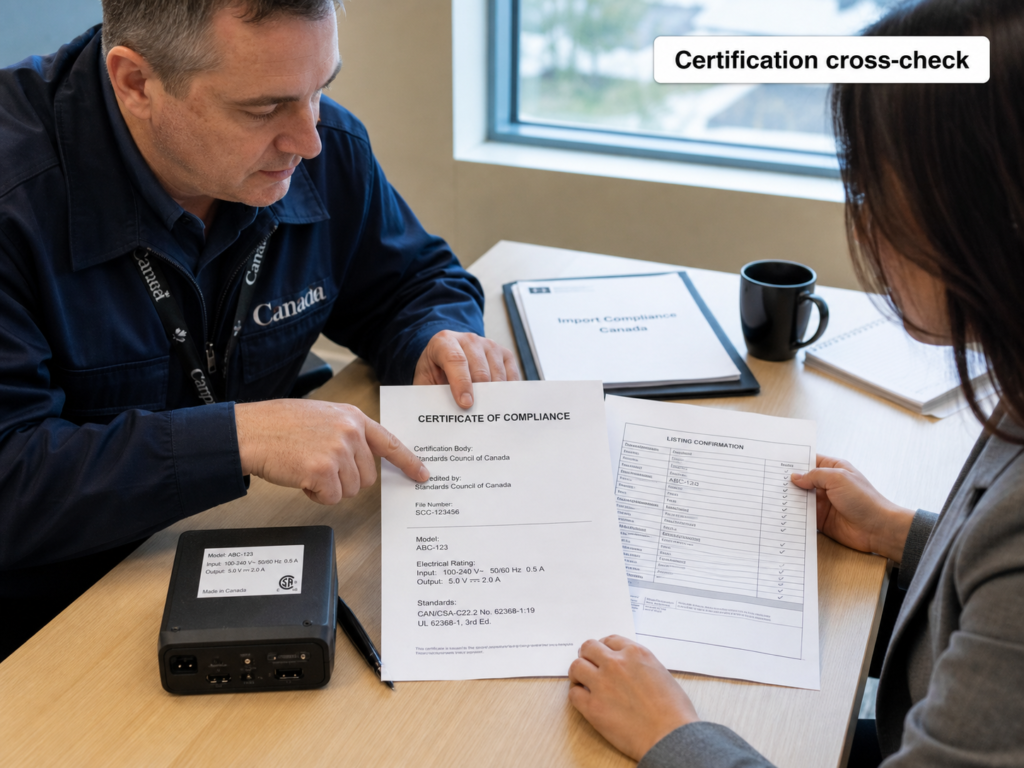
In addition to meeting the test standards, you must also fulfill the obligations of energy efficiency reporting, verification or registration, and record keeping in accordance with NRCan’s current regulations, and use test methods recognized by the regulations and laboratories with qualified qualifications. Specific requirements shall be checked according to product categories, and you cannot apply the same “mandatory registration + SCC laboratory report” process to all chargers and adapters. Whether it is mandatory to affix an energy efficiency label also depends on specific regulations and product categories, and cannot be generalized.
You must pay attention to several pitfalls in energy efficiency compliance:
First, the US DOE energy efficiency report cannot directly replace the requirements of Canada’s NRCan. Even if the test items are similar, you must confirm whether the report uses a method recognized by Canada and covers the requirements of Canadian regulations.
Second, for low-power chargers, remember to check the product scope and exemption clauses in NRCan’s current regulations. Some products may not be within the regulated scope, but you cannot take it for granted that low power means exemption.
Third, the product model, power parameters, and input and output characteristics on the report must be consistent with the actually sold product. If the product exceeds the scope covered by the report or registration materials, you must first confirm whether supplementary testing, updated reports, or re-registration procedures are required.
Full Customs Clearance Process: From Preparing Documents to Reducing the Probability of Cargo Detention
Even if you have done all the previous compliance work well, you cannot take the customs clearance link lightly. Incomplete document preparation, incorrect declaration, or improper tax handling may lead to cargo delays and additional costs.
First of all, clarify the responsibilities and qualifications for import.
The Canada Border Services Agency (CBSA) is responsible for customs, taxes, import prohibitions and restrictions, and border-related requirements. You must first determine the Importer of Record (IOR for short), that is, the entity that bears import declaration, taxes, and related import responsibilities. You cannot default to letting the logistics provider bear this responsibility.
Trade terms must also be confirmed in advance. For example, if you use DDP (Delivered Duty Paid), you must clarify the taxes, declaration responsibilities, and IOR arrangement with the logistics provider, so that you don’t find that no one is responsible when problems arise with the goods.
Commercial importers usually need to set up a Canadian Business Number (BN) and related RM import account, and manage related import business in CARM. Declaration can be handled by the importer itself, or submitted by its authorized formal customs broker in accordance with the current CBSA process. The specific situation shall be subject to the import type and current CARM requirements.
If you do not have a local Canadian company, you should confirm who will act as the IOR, and that entity will complete the BN/RM, tax, and compliance responsibility arrangements. A customs broker is usually only an authorized agent, and will not automatically become the IOR or bear all import responsibilities just because it handles customs declaration on behalf of the importer.
Here is a reminder: the relevant conveniences for personal small parcels usually only apply to personal use. As long as the goods are for sale, even if the quantity is small, they may be classified as commercial imports, and you cannot directly apply the rules for personal parcels.
The documents required for customs clearance can be divided into three categories. Organizing them in advance can save a lot of trouble:
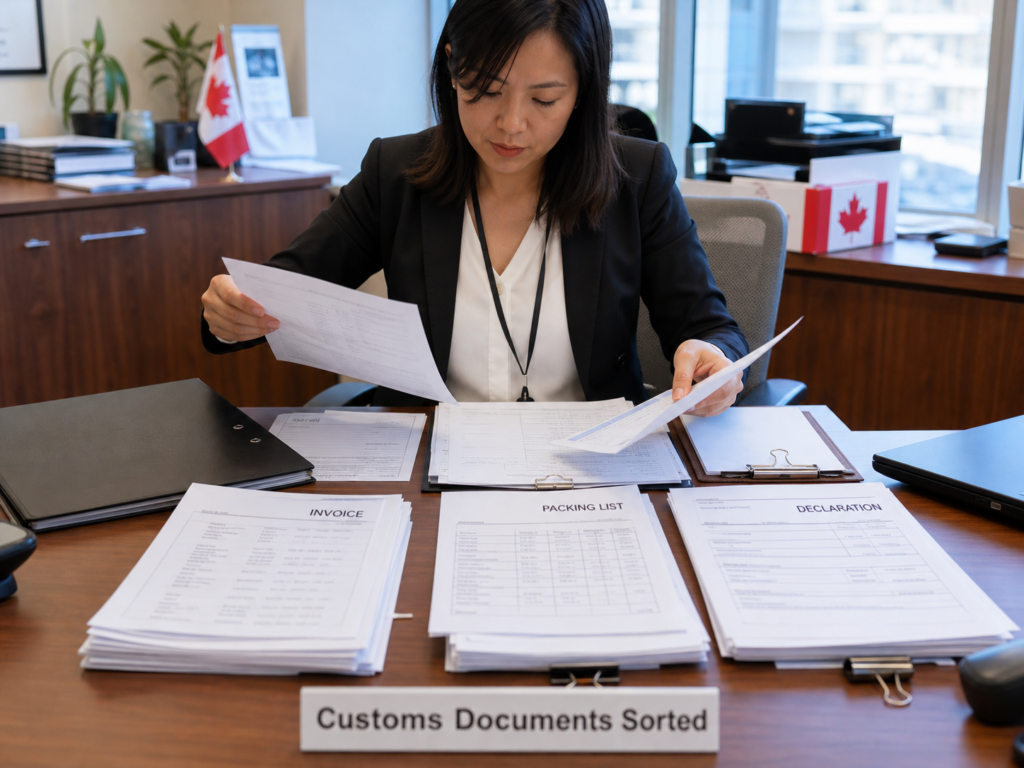
The first category is compliance documents: that is, the aforementioned safety certification or inspection documents, EMC testing and compliance materials, energy efficiency documents, wireless device certification materials, etc. These are provided as needed according to product type, and not all products need to prepare all documents.
The second category is trade documents: including commercial invoices (marked with product name, model, quantity, value, place of origin, trade terms), packing lists, and bills of lading.
The third category is qualification documents: BN/RM information of the Canadian importer, sales or certification authorization documents if necessary, and certificates of origin or related materials required when applying for trade agreement preferences.
Next is the issue of HS codes and tariffs. The HS code is a unified number used by customs to classify products and determine tariffs, which is equivalent to the “customs ID card” of the product.
For charging products we commonly deal with, the common code references are: chargers and power adapters are classified under the 8504 series, USB cables and data cables are classified under the 8544 series. Of course, the specific code must be determined according to the actual function, structure, parameters of the product and the Canadian tariff schedule, and cannot be generalized.
The amount of tariff mainly depends on three factors: HS code, place of origin of the product, and applicable trade agreements, such as the USMCA (United States-Mexico-Canada Agreement). Products that meet the relevant rules of origin may enjoy preferential tax rates. In addition to tariffs, GST is usually required to be paid upon import according to applicable rules; if the goods are in an HST province and subject to the HST system, they shall be handled in accordance with the corresponding HST rules.
Quebec’s QST is administered by Revenu Québec in accordance with its import, sales, and registration rules. You cannot simply use “5% GST plus 9.975% QST” as the tax rate for all import customs clearance. The actual tax and fee shall also be confirmed in combination with the import entity, purpose of the goods, tax registration status, sales location, and current tax rate.
There are also many pitfalls with HS codes: you must never randomly classify products just to pay less tax. Incorrect codes may lead to tax supplementation, delayed customs clearance, or fines. If you are not sure which code your product belongs to, you can apply for an advance ruling from the CBSA to reduce subsequent classification disputes.
Finally, let’s talk about several practical tips to reduce the probability of cargo detention:
First, before shipping, send the labels, certification documents, and product materials to a local Canadian customs broker for pre-audit to confirm that the declaration materials are consistent with the goods.
Second, clearly mark the product name, model, quantity, value, place of origin, and applicable certification or registration information on the commercial invoice to facilitate verification by the CBSA and related agents.
Third, if it is your first shipment, it is recommended to send a small batch trial order first, confirm that all links are problem-free before sending large quantities of goods, to minimize risks.
The CBSA may focus on the authenticity of declarations, cargo descriptions, place of origin, taxes, cargo value, and import documents; product safety or electrical safety authorities may focus on the authenticity of certifications, labels, and whether the product itself meets requirements. The inspection focuses of different agencies are not exactly the same, and you cannot attribute all compliance issues to customs inspection.
Easily Overlooked Compliance Items: Batteries, Environmental Protection, and Ongoing Compliance
Many people think that once the goods are cleared and sold, everything is fine. In fact, there are several easily overlooked compliance items, and the losses will be even greater if problems arise later.
First, the additional requirements for products with lithium batteries.
For products containing lithium batteries, you shall separately check Canada’s Transportation of Dangerous Goods (TDG for short) regulations for the transportation link, air or sea transport rules, UN 38.3 testing and packaging document requirements, and meet the carrier’s requirements for packaging, labeling, and documents according to the mode of transport. The product safety and battery recycling responsibilities of lithium battery products shall also be confirmed in combination with the product’s intended use, structure, and sales province. You cannot generalize that all products with built-in lithium batteries must obtain the same “Canadian battery safety certification”.
Ordinary wall-mounted chargers and passive charging cables usually do not contain lithium batteries, so they do not need to meet battery transportation requirements; only charging products with built-in or included lithium batteries require further evaluation.
Then there is the provincial environmental protection recycling responsibility.
Canada’s e-waste, waste battery, and packaging recycling responsibilities are mainly formulated by each province. The Extended Producer Responsibility (EPR) obligations for electronic equipment, batteries, and packaging need to be judged separately by province, product category, sales method, and the local definition of “producer”. Related responsibilities may involve registration, reporting, joining a compliance organization, or bearing recycling costs, but you cannot generally conclude that all relevant importers in Quebec and Ontario must register and pay fees in the same way.
If you sell through local Canadian distributors, you must confirm in writing in the contract the ownership of environmental protection recycling responsibilities: whether you as the brand owner bear it, or the distributor bears it. At the same time, confirm the responsibilities for registration, declaration, and fees, otherwise it is easy to have disputes when problems arise later.
Next are the requirements for product changes and ongoing compliance.
It is not that once a product is compliant for the first time, it is always compliant. If the key components of the product, such as power, chip, transformer, plug, housing, wireless module, battery, etc., are changed, the compliance shall be re-evaluated to confirm whether supplementary testing, updated certification, or updated energy efficiency, wireless and other materials are required.
All compliance documents, such as certification certificates, test reports, registration vouchers, and product specification materials, must be retained in accordance with applicable regulations and certification body requirements, at least for the specified number of years after the product is discontinued, so that they can be provided when regulatory authorities conduct spot checks.
You should also pay attention to Health Canada’s consumer product safety notifications and CCPSA incident reporting and recall obligations based on product risks, and separately pay attention to ISED’s wireless device enforcement information, NRCan’s energy efficiency regulation updates, and provincial electrical safety authority notices. If a product is found to have safety problems, you shall promptly report, rectify, or cooperate with the recall in accordance with applicable requirements.
Finally, it is recommended that you do a good job in supplier compliance audits to avoid pitfalls from the source:
First, after getting the certification provided by the supplier, you must check whether it is applicable to Canada, whether it is accepted by the relevant authority in the target province, and whether it covers the actually purchased model, rated value, and production factory. Do not directly use US certificates or certificates of other models as a substitute.
Second, the procurement contract must clearly specify the compliance responsibilities for certification and labeling, as well as the obligation to notify in advance of key component changes and cooperate with recalls. It is best to also clearly write the compensation liability for non-compliance, otherwise suppliers can easily shift the blame when problems arise.
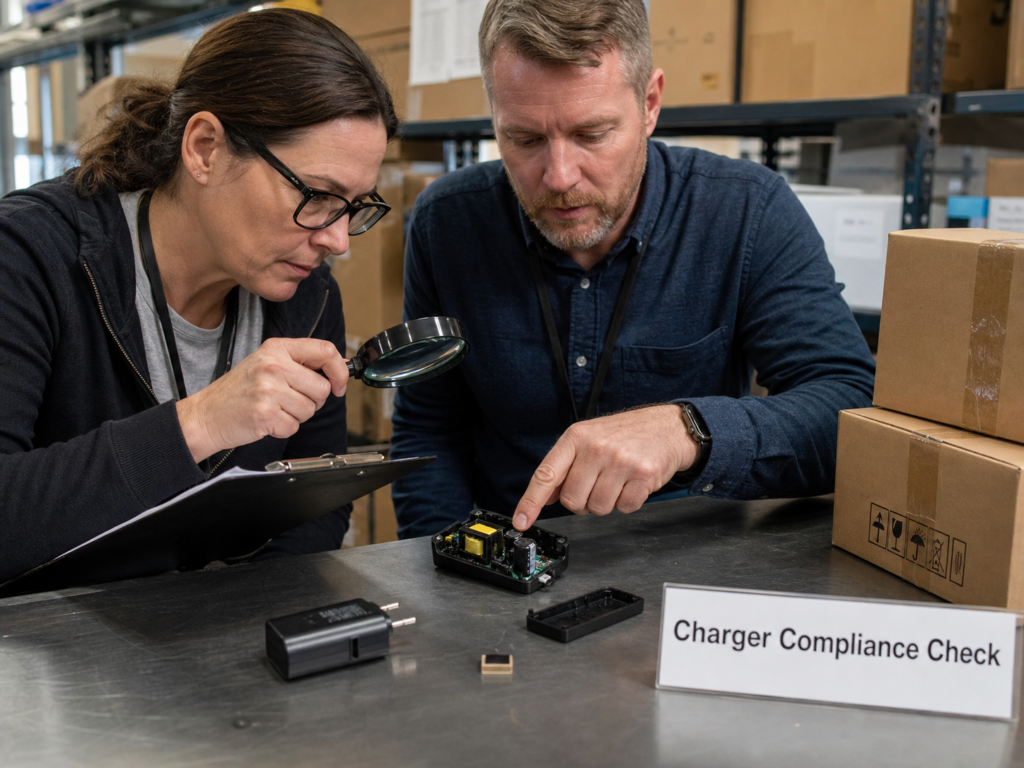
Third, conduct regular spot checks on bulk goods to see if they are consistent with the samples in the certification or test materials, to avoid suppliers secretly replacing key components to reduce costs, and the seller bearing the risk in the end.
Phased Self-Inspection Checklist + Common Misconception Avoidance
At this point, all core compliance items have been covered. To facilitate your self-inspection, we have organized a three-stage inspection checklist. You can directly check off items against it to avoid omissions.
Pre-Shipment Must-Check Checklist (Products + Documents)
1. Product classification confirmation: You have clarified which types of electrical safety, wireless, EMC, energy efficiency, battery, and provincial environmental protection requirements apply to your product, and confirmed whether it has wireless functions and whether it contains lithium batteries.
2. Certification compliance: Confirm the applicable electrical safety certification or inspection mark according to the target province and product category; products with active wireless transmission functions have completed corresponding ISED compliance; confirm whether chargers or adapters are regulated external power supplies according to NRCan regulations, and whether reporting or registration is required.
3. Labeling and packaging: The product body and outer packaging have been marked in accordance with applicable federal, provincial, and certification rules; parts that require bilingualism or French priority in Quebec have been checked; the responsible party information is complete, and the certification mark is clear and legible.
4. Document preparation: Certification or inspection documents, test reports, product specifications, and necessary registration materials are all prepared, and the information on all documents is consistent.
5. Code confirmation: The HS code has been checked, the tariff, rules of origin, and possibly applicable trade agreements have been clarified, and there is no random classification.
Pre-Arrival Customs Clearance Must-Check Checklist
1. Complete customs clearance documents: Commercial invoices, packing lists, bills of lading, compliance documents, and qualification documents are all prepared, with no omissions.
2. Consistent information: The product model, parameters, cargo value, and place of origin information on all documents are completely consistent, with no contradictions.
3. Import qualifications: The IOR has been confirmed, the Canadian importer’s BN/RM account has been established and maintained valid as required, and a formal customs broker has been entrusted or self-declaration arrangements have been completed.
4. Tax estimation: Tariffs, GST/HST and other fees have been estimated based on the HS code, place of origin, trade agreement, and sales province, and payment has been prepared.
Post-Market Ongoing Compliance Checklist
1. All compliance documents are retained as required, and can be provided in a timely manner when regulatory authorities conduct spot checks.
2. The product has not had key components changed without authorization; if there are changes, the compliance has been re-evaluated.
3. The environmental protection recycling responsibilities for electronic equipment, batteries, and packaging in the target province have been implemented: those that need to be registered have been registered, and those that need to be reported or have fees paid have been handled in accordance with requirements.
4. Regularly pay attention to recall, enforcement, and regulation update notices from Health Canada, ISED, NRCan, provincial electrical safety authorities, and relevant provincial environmental protection agencies, and adjust in a timely manner if there are changes.
In addition to the checklist, we have also sorted out 8 of the most common cognitive misconceptions. Many people make mistakes because of these wrong perceptions:
1. **Having US UL/ETL certification means you can enter Canada? Wrong.** Only having the US UL/ETL mark usually cannot prove compliance with Canadian electrical safety requirements. You should confirm whether the product has obtained Canadian or North American joint certification accepted by the relevant Canadian authority, and that it covers the actual model and factory.
2. **All charging cables require mandatory certification? Wrong.** Ordinary passive USB cables and connectors are usually not treated as wall-mounted power equipment, and in many cases do not require power equipment certification; however, applicable requirements still need to be confirmed based on rated voltage, structure, intended use, and target province. Cables with active chips require further evaluation.
3. **CE/FCC certification can replace Canadian certification? Wrong.** CE cannot replace Canadian electrical, wireless, or energy efficiency requirements; FCC materials also cannot automatically replace Canadian EMC requirements. Only when meeting specific rules and conditions may some test materials be referenced or cited.
4. **Customs release = legal sale? Wrong.** The CBSA is mainly responsible for customs and border-related matters. Health Canada, provincial electrical safety authorities, and other competent authorities may still take measures such as inspection, rectification, recall, or sales prohibition after import or in the market link.
5. **Energy efficiency requirements only apply to large home appliances? Wrong.** Some low-power wall-mounted chargers or external power supplies may also be regulated by NRCan, but whether they apply must be confirmed model by model based on product definition, rated values, and current exemption clauses.
6. **Label requirements are the same across Canada? Wrong.** Federal regulations, provincial language regulations, and product safety labeling rules may apply simultaneously. Quebec also needs to confirm the prominence of French and specific exceptions according to the language law, and cannot just handle it as ordinary parallel English and French.
7. **Passing e-commerce platform review = complying with regulations? Wrong.** Platform requirements may be simpler than official regulations, or may only check some items. The final compliance responsibility still depends on applicable regulations and the responsible entity.
8. **Once the product is sold, everything is fine? Wrong.** Subsequent product changes, environmental protection recycling, incident reporting, recalls, and regulatory rectification may all generate ongoing responsibilities, it is not the end of the matter once the product is sold.
If there is a violation, the common consequences are the following categories:
• Mild: Required to supplement materials, rectify, or re-declare, and incur port detention fees, storage fees, delaying the sales rhythm.
• Moderate: Goods are detained, refused release, required to pay supplementary tax, returned or destroyed, and the payment for goods and freight may be lost.
• Severe: Serious or repeated violations may lead to enhanced inspection, refusal of release, administrative penalties, or measures such as sales prohibition, recall, and rectification taken by relevant market regulatory authorities. Whether it will be entered into the risk management system and its impact depend on the specific case.
Summary
Overall, although there seem to be many items for electronic product import compliance in Canada, as long as you first identify the regulatory classification of the product, then check item by item in the order of “electrical safety → wireless/EMC → energy efficiency → labeling → customs clearance → subsequent compliance”, you can systematically reduce common omissions.
After reading this article, you should be able to initially distinguish the regulatory requirements that may be involved in ordinary charging cables, USB-C cables with E-Marker, and wall-mounted chargers, and no longer need to vaguely ask “does my product need certification”; you can also sort out the compliance matters that need further confirmation through questions such as whether the product is connected to mains power, whether it has active wireless transmission, whether it has a battery, whether it is a regulated external power supply, and the sales province.
You can also use this to check certification or inspection documents, labels, customs clearance materials, and provincial environmental protection responsibilities, and conduct self-inspection according to the rhythm of pre-shipment, pre-customs clearance, and post-market. When communicating with suppliers, customs brokers, certification bodies, or relevant authorities, you can also more accurately explain the product model, target province, and actual functions, and will not be misled by simple statements like “the US and Canada are similar”.
If you are entering the Canadian market for the first time, it is recommended to start with a small batch trial order, go through the product classification, customs clearance, tax, and market compliance processes once, and confirm that all links meet the requirements of the target province and product category before sending large quantities of goods.