
Battery Testing Cost Comparison: UN38.3 vs IEC 62133
If you export rechargeable products with built-in batteries — such as USB-C power banks, portable chargers with emergency batteries — you have most likely heard of UN38.3 and IEC 62133. Many newcomers get confused when they first encounter them: both are battery tests, what are the differences? Is it enough to do just one? Which is more expensive? Why do quotations from different laboratories differ by several times?
Today we will break down the cost, cycle, and applicable scenarios of these two tests, from basic认知 to pitfall-avoidance decision-making. After reading, you will be able to judge what to do and how to choose without wasting money.
First, Understand Their Positions: The Two Tests Govern Completely Different Links
The most common mistake many people make is treating these two tests as an either-or option — in fact, they target different links and usually cannot replace each other.
UN38.3: A Requirement Usually to Be Confirmed Before Lithium Battery Transportation
UN38.3 is the transport safety type test requirement for lithium batteries in the . When lithium-ion cells, batteries, and devices containing lithium batteries are transported under dangerous goods transport regulations, they usually need to meet this requirement to prove that they have corresponding safety under specified transport conditions.
However, it does not only apply to cross-border transport. Both international transport and domestic dangerous goods transport regulations may adopt relevant requirements. Whether it is applicable, whether exemptions can be used, and how to pack, declare, and transport shall be confirmed in combination with the regulations, packaging instructions, competent authority requirements, and carrier rules of specific transport modes such as air, sea, and land transport. For example, prototype batteries or small-batch batteries may need to be transported under conditions approved by the competent authority.
Its supervision and review links may involve carriers, freight forwarders, logistics platforms, competent authorities, etc. UN38.3 requires manufacturers and subsequent distributors to prepare and provide test summaries; when required by carriers, platforms, or competent authorities, the document shall be available. Whether the full test report needs to be submitted, whether the test summary needs to be provided with the goods, and whether there is a time limit for the issuance of the document shall be subject to the written rules of the actual channel. UN38.3 itself does not have a unified 12-month validity period requirement.
IEC 62133-2: One of the International Safety Standards for Portable Lithium Batteries
IEC 62133-2 is a safety standard for portable sealed secondary lithium cells and batteries formulated by the International Electrotechnical Commission, focusing on the safety performance of products under normal use, charging, misuse and other conditions.
It is not a globally unified “sales safety pass”. Whether an IEC 62133-2 report is required, or whether certification needs to be applied for based on this standard, depends on the regulations, national differences, product categories of the target country or region, as well as the specific rules of e-commerce platforms, purchasers, or brand owners. Different markets may apply different regulations or standards to lithium batteries, power banks, and complete devices, and you cannot default that you can sell in all markets just with one IEC report.
If issued by an NCB/CBTL within the IECEE CB Scheme system, the IEC 62133-2 CB test certificate and report can be used as technical basis when applying for national certification in other member states. However, the target market may still require supplementary national difference testing, document review, sample evaluation, or other regulatory assessments. EU CE and Australian RCM shall also be handled in accordance with local conformity assessment systems respectively, and it is not possible to directly “convert” a CB report into a local certification certificate.
Which Rechargeable Products Need These Tests?
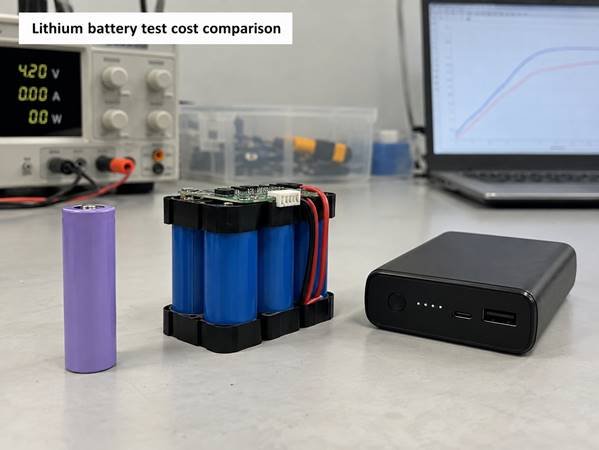
First, clarify three easily confused terms, otherwise it will be messy later:
• Cell: The most basic energy storage unit, such as a single pouch battery cell or a single cylindrical battery cell, which has no protection circuit itself and cannot be directly used in rechargeable products;
• Battery pack: Also commonly known as a battery module, it is a finished product assembled from cells, a protection board, a casing, and charge/discharge interfaces; products such as USB-C power banks use this form;
• Device containing battery: The final finished product with a built-in battery pack, such as a portable charger with an emergency battery. In addition to battery testing, supplementary compliance inspections must be carried out on the complete device.
Corresponding to rechargeable products: Products with built-in lithium batteries, such as power banks and chargers with emergency batteries, usually need to confirm applicable tests according to transport and sales requirements; ordinary chargers, charging cables, and interface converters that do not contain lithium batteries usually do not need to undergo UN38.3 or IEC 62133-2 battery tests.
But “no battery test required” does not mean “no compliance requirements at all”. Ordinary chargers and adapters may still be subject to regulations or standards such as complete device electrical safety, EMC, energy efficiency, and chemical substance restrictions in the target market; whether interface converters involve other requirements also depends on the actual functions and sales market.
First, Fix a Common Misconception
These two tests are not an either-or choice, nor can they replace each other. UN38.3 is a type test requirement that lithium batteries usually need to meet when transported under applicable dangerous goods transport regulations; IEC 62133-2 is one of the international safety standards for portable sealed secondary lithium cells and batteries, and whether it applies to sales access depends on the target market and channel rules. They have different test purposes, items, and judgment criteria, and reports usually cannot be directly used interchangeably.
In addition, it should be noted in advance: this article uses a portable lithium-ion battery product with a nominal capacity of approximately 10000mAh as the sample for cost estimation discussion, but this is not the capacity applicability boundary of UN38.3 and IEC 62133-2. Transport restrictions shall usually be judged by Wh, lithium content, transport mode, and packaging instructions; the applicability of IEC 62133-2 shall be judged by the scope of “portable sealed secondary lithium cells and batteries”.
Unify the Benchmark Before Comparison: Statistical Basis for Cost and Cycle
Quotations found online often differ by several times and are not referenceable at all — the core reason is that the benchmarks for comparison are different: some test cells, some test battery packs, some include expediting fees, and some only quote basic testing fees. We first unify all the premises of comparison, so that you can adjust according to your own products.
Unified Benchmark Sample
We use the industry-common 10000mAh pouch lithium battery pack for USB-C power banks (consumer-grade finished product) as the benchmark sample, excluding separate cell testing, power/energy storage type, and batteries with customized special functions.
However, the actual number of samples submitted cannot be simply estimated by a fixed number. The laboratory will formulate a specific sample submission plan based on whether the test object is a cell or a battery, applicable tests, sample status, whether existing qualified data can be referenced, and whether tests are arranged in parallel.
Unified Scope of Cost Statistics
All quotations shall clarify whether they include: formal testing fees, sample costs, standard report or test summary fees;
It shall also clarify whether they do not include: factory audit fees, rectification and design fees, certification conversion fees, international shipping fees, as well as fees that may arise from expediting, retesting, changes, etc.
The statistical caliber shall be written quotations for a single model, single batch, and with clear test scope. For the same product, if the test standard version, report type, and laboratory qualification requirements are different, the final price may also be significantly different.
Data Premises and Applicable Conditions
UN38.3, IEC 62133-2, ILAC, and IECEE do not stipulate unified commercial quotations, unified sample quantities, unified lead times, or unified expediting fees. ILAC MRA is a mutual recognition arrangement between accreditation bodies and does not issue unified prices for global laboratories.
Therefore, the actual cost, sample quantity, and test cycle shall be subject to the written test plan and quotation issued by the laboratory based on product configuration, standard version, test scope, existing data, and current scheduling.
Initial Testing Cost: Where the Differences Lie in Item-by-Item Comparison
Let’s first look at the core differences that are most worth comparing during initial testing:
| Comparison Item | UN38.3 | IEC 62133-2 |
| Main Purpose | Confirm that lithium-ion cells or batteries meet the type test requirements in applicable transport regulations | Evaluate the use safety of portable sealed secondary lithium cells and batteries |
| Test Object | Lithium-ion cells and lithium batteries; when transporting devices containing batteries, the focus is still on the type of cells or batteries inside | Portable sealed secondary lithium cells and batteries |
| Key Factors Affecting Quotation | Cell or battery type, applicable transport mode, test scope, sample status, and laboratory scheduling | Cell and battery design, report type, national differences, whether to apply for a CB certificate, and laboratory capability |
| Sample Requirement | Determined according to specific applicable tests and test plans | Determined according to specific product design, existing data, and laboratory plans |
| Subsequent Use | Used to support transport regulations and carrier document requirements | Whether it is used for market access depends on target market regulations, certification rules, and procurement requirements |
Why Are IEC 62133 Quotations Often Higher?
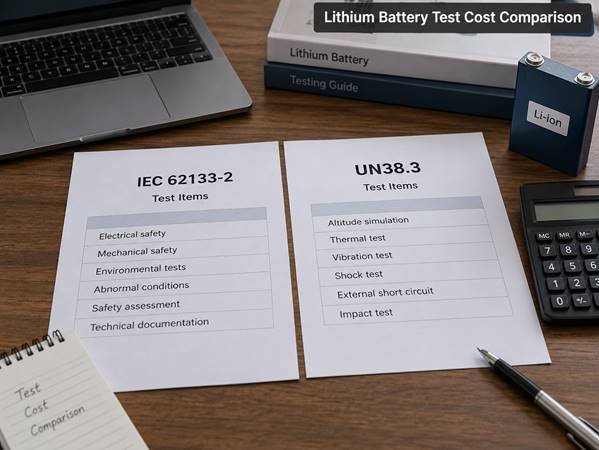
The cost difference between the two usually comes from several reasons.
First, different test purposes and scopes. IEC 62133-2 focuses on the safety performance of cells and batteries under use, charging, and abnormal conditions, and laboratories often need to conduct a relatively complete assessment combined with cell and battery design and relevant technical documents. UN38.3 is a transport safety type test for lithium-ion cells and batteries, and the specific items depend on the test object and applicable requirements.
Second, different report types. The cost structures of ordinary test reports, CB test reports, CB test certificates, as well as the data and assessments required for subsequent national certification are not the same. If IECEE CB system documents are required, an NCB/CBTL within the corresponding scope shall be selected.
Third, different test arrangements. Items such as temperature cycling, thermal abuse, and charge/discharge protection may take a long time; the equipment capacity, sample scheduling, and report review processes of different laboratories will also directly affect the price and lead time.
What Factors Cause Cost Fluctuations?
The actual price will fluctuate up and down due to several key variables:
• Battery type: Different chemical systems and structures such as cylindrical, pouch, lithium iron phosphate, and ternary lithium may lead to different test plans;
• Capacity and rated energy: Capacity, rated energy, chemical system, structure, and test scope may all affect the quotation, but there is no unified capacity threshold for price increases specified by UN38.3 or IEC 62133-2;
• Test object: The test requirements for cells and finished battery packs are different. Cell reports usually cannot directly replace finished battery pack reports;
• Functional complexity: Products with functions such as USB-C fast charging and bidirectional charge/discharge may require additional evaluation of protection logic, structure, and use status;
• Report and market requirements: Whether to apply for CB documents, whether national differences need to be handled, and whether the customer requires specific laboratory qualifications will all affect the final cost.
Testing Cycle and Hidden Time Cost
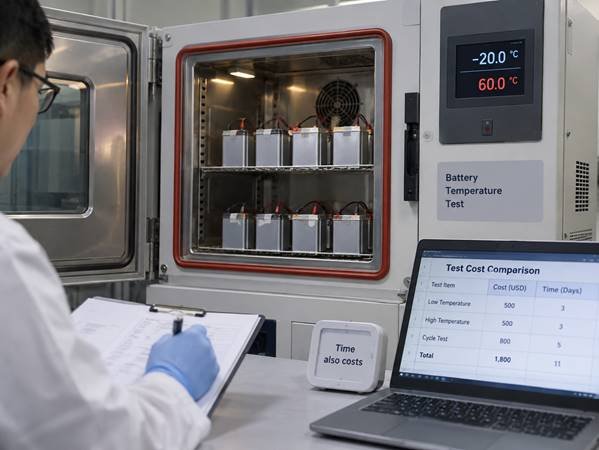
In addition to the direct money spent, time cost is also a major part that many people easily overlook — especially when rushing for promotional seasons such as Black Friday and Christmas, the loss from a one-week delay in launch may be higher than the testing fee itself.
Unified Statistical Caliber for Cycle
The cycle we refer to shall be understood as the time from when samples and documents meet the requirements to when the laboratory issues the agreed documents. Sample shipping, pre-communication and quotation, document supplementation, rectification and retesting, platform review, and local certification processing usually need to be calculated separately.
UN38.3 Cycle and Expediting Cost
The full lead time of UN38.3 shall be calculated based on applicable items and their specified continuous test duration. The laboratory’s expedited service can usually only shorten scheduling, resource arrangement, and report processes, and the full test cannot be shortened by reducing the holding time specified in the standard.
For example, the temperature cycling test in UN38.3 itself has specified cycling and holding requirements; relevant items also have established test sequences. For batteries, the T7 overcharge test applies to rechargeable batteries; the T8 forced discharge test only applies to cells and is not a fixed item for battery packs.
IEC 62133 Cycle and Expediting Cost
The actual cycle of IEC 62133-2 also depends on product design, test scope, number of samples, document completeness, laboratory scheduling, and report type. Some work on cells and batteries can sometimes be coordinated, but whether they can be synchronized and how to arrange them shall be decided by the laboratory according to the test plan.
Even if you choose expedited service, there are fixed time-consuming items that cannot be compressed, such as temperature, charge/discharge, or abnormal condition tests that need to run for a long time. Before expediting, ask the laboratory to clarify: whether the shortened part is scheduling, testing, report review, or all processes, as well as the final promised delivery date.
Why Do Cycles Get Delayed?
No matter which test it is, delays may occur due to several common reasons:
• Sample issues: Insufficient quantity, battery state of charge not meeting test requirements, inconsistent labels or parameters with declaration documents will all affect the start of testing;
• Document issues: Incomplete cell specification sheets, battery structure diagrams, and key component lists make it impossible for the laboratory to complete the assessment;
• Test failure: If the sample fails the test, it needs to be rectified and retested, and both the cycle and cost will increase;
• Scheduling issues: Before the peak sales season, laboratory equipment and report review may be queued, and the lead time will usually be longer.
Easily Overlooked Hidden Time Costs
Getting the report does not mean everything is fine. There may be subsequent reviews by carriers, freight forwarders, platforms, purchasers, or certification bodies in the target market.
Whether UN38.3-related documents require additional review and how long the review takes depends on the processes of carriers and freight forwarders. When an IEC 62133-2 report is used for platform review or applying for local certification, the time required depends on platform rules, certification bodies, national differences, and other applicable regulations.
If you are rushing for a promotional season, be sure to count these times in — sometimes a one-week delay can result in lost sales higher than the entire testing fee.
Long-Term Maintenance and Change Costs: Only by Calculating the Total Cost Can You Know Which Is More Cost-Effective
Many people only look at the initial test quotation, but in fact, the long-term cost logic of these two tests is different.
UN38.3 Subsequent Cost Rules
UN38.3 itself does not have a unified official validity period. The test summary corresponds to the “type” of cell or battery that has passed the test; if carriers, platforms, or freight forwarders have requirements on the date of document issuance, they shall be implemented in accordance with their written rules.
If there are changes to the cell, battery design, rated energy, protection function, or structure, a new type may be formed that requires re-evaluation or re-testing under UN38.3. Manufacturers shall record technical judgments in accordance with relevant rules and confirm the required test scope with the laboratory, competent authority, or carrier, rather than simply assuming that any change requires a full retest.
In addition, some channels may require transport condition appraisal, MSDS, or other documents. Whether they are required, who issues them, and the charging method shall all be confirmed with the actual carrier or freight forwarder.
IEC 62133 Subsequent Cost Rules
Whether existing test reports for unchanged products are still acceptable depends on the report issuing body, target market regulations or certification rules, standard version, and customer requirements, and cannot be simply understood as “valid for a long time”.
Whether changes in capacity, appearance, or other aspects require supplementary evaluation or retesting shall also be judged by the report issuing body or the target market certification body according to the specific change. Even if it is just private labeling, changing the brand logo, or adjusting the appearance, it is necessary to confirm whether the actual cell, battery, and complete device are completely consistent, whether the original report holder authorizes it, and whether the target market accepts model or brand extension.
If you apply for a CB test certificate and report within the IECEE CB Scheme system, it can provide technical basis for subsequent national certification applications; however, whether repeated testing can be reduced and what national differences or documents need to be supplemented shall be confirmed by the NCB of the target market and applicable regulations.
Core Conclusion of Long-Term Cost
• If there is only a transport demand, priority should be given to confirming applicable transport regulations, carrier rules, and UN38.3 document requirements;
• If you plan to sell overseas for a long time, you should confirm the actual applicable regulations, certifications, and platform requirements of the target market as early as possible, and cannot default that only doing IEC 62133-2 is enough;
• If both directions are required, you can ask the same laboratory whether it is possible to coordinate sample submission, test scheduling, or reference existing qualified data. Whether the workload can be reduced and the amount of discount depends on the product, laboratory accreditation scope, and test plan, and a fixed ratio should not be preset.
Cost Solutions for Different Business Scenarios
After explaining the underlying logic, we directly correspond to the common business scenarios of rechargeable products to see how to judge.
Scenario 1: Only Transport Required (Shipping Goods to Overseas Warehouses, Sending Samples)
If the product does not have market sales requirements for the time being, the focus is on confirming transport regulations and carrier document requirements. In addition to the UN38.3 test summary, whether transport condition appraisal, MSDS, or other materials are also required shall be confirmed with the actual carrier or freight forwarder.
Note: It shall be confirmed whether the laboratory is accredited to ISO/IEC 17025 by an accreditation body with relevant mutual recognition qualifications, and the accreditation scope covers the required tests; at the same time, confirm whether the carrier, platform, or freight forwarder accepts the report.
When sending small-batch samples, the rated energy of a single lithium-ion battery may affect certain air packaging, labeling, and declaration conditions. For example, common Wh thresholds affect applicable packaging instructions, but usually do not exempt from UN38.3 type test requirements.
Scenario 2: Overseas Market Sales (E-commerce, Offline, Brand Supply)
First confirm the regulatory requirements of the target market for batteries, power banks, and complete devices, and then decide whether UN38.3, IEC 62133-2, CB documents, or other local compliance materials are needed.
If selling in multiple markets, you can consider applying for applicable CB test certificates and reports to provide technical basis for subsequent member state certification applications. But do not regard it as a shortcut to directly obtain documents such as CE, PSE, and RCM; local national differences, regulatory assessments, and certification procedures may still exist.
Pitfall Avoidance Reminder: It is not necessary to have both tests done in the same laboratory, but before inquiring about prices, you should compare the test scope, qualifications, lead time, whether existing data can be referenced, and the total cost. Whether different laboratories can coordinate samples and data shall be subject to the written test plan.
Scenario 3: Small-Batch Trial Production/New Product Verification
If the product needs to be transported for trial sale first, confirm whether the transport meets UN38.3 and carrier requirements first; if you plan to enter markets that require IEC 62133-2 or other certification materials later, you should also reserve corresponding test and certification time in advance.
Note: The cells, protection boards, and internal structures of trial production samples should be as consistent as possible with the mass production version. Otherwise, after key changes occur in the mass production version, existing materials may not be able to continue to be referenced, and re-evaluation is required.
Risk Warning: If you want to launch quickly after trial sale, do not wait until the sales opportunity arises to confirm market access documents, otherwise you may get stuck in platform review or certification links.
Scenario 4: Private Labeled/Modified Rechargeable Products
Core judgment criterion: First check whether product changes will affect the availability of original reports and certification documents.
Before private labeling or appearance changes, confirm with the original report holder and the issuing laboratory or certification body whether model or brand extension is possible, and whether difference assessment, supplementary tests, or new reports are required. The fee shall also be subject to the written quotation of the institution.
If the cell or protection board is changed, or the rated energy or internal structure is adjusted, it is more likely to affect the original test conclusion, and evaluation should be carried out as early as possible.
Pitfall Avoidance Reminder: Do not use the cell report provided by the supplier to replace the report of the finished battery pack. The risks brought by the battery pack’s protection board, structure, and charge/discharge logic are usually not covered by the cell report.
Scenario 5: Battery Pack Testing with Qualified Cells
Cost optimization: You can provide traceable cell test data to the laboratory, such as reports, specifications, model information, and supply chain consistency data, for the laboratory’s technical evaluation.
However, whether the laboratory can reference these materials and what work can be reduced depends on the report version, issuing body, model and manufacturing consistency, final battery design, and certification rules. The battery pack must still undergo applicable battery-level evaluation according to the final design, and you cannot default that testing is exempt just because the cells already have a report.
6 Most Common Cost Misconceptions to Avoid Unnecessary Waste
Many people step on these pitfalls when doing battery tests for the first time, wasting money and delaying things.
Misconception 1: If You Do One Test, You Don’t Need to Do the Other
Clarification: UN38.3 and IEC 62133-2 have different purposes. UN38.3 is oriented to the type test requirements in applicable transport regulations; whether IEC 62133-2 is required depends on the sales market and channel rules. Reports cannot be defaulted to be universal.
Cost-saving Tip: If both directions are required, you can explain the complete business plan to the laboratory in advance and ask whether it is possible to coordinate sample submission, scheduling, or reference existing materials.
Misconception 2: Choosing the Laboratory with the Lowest Quotation Saves the Most Money
Clarification: Whether a laboratory report is accepted by carriers, platforms, customers, or certification bodies does not only depend on the price.
Pitfall Avoidance Method: First confirm the qualification requirements of the target channel, and then find a laboratory that meets the requirements for quotation. It shall be confirmed whether the laboratory is accredited to ISO/IEC 17025 by an accreditation body with relevant mutual recognition qualifications, and the accreditation scope covers the required tests; if an IECEE CB test certificate or report is required, an NCB/CBTL within the corresponding scope shall be selected.
Misconception 3: If the Cell Is Qualified, the Battery Pack Does Not Need to Be Tested
Clarification: A qualified cell only means that the single unit has undergone corresponding assessment, but the protection board, structure, and charge/discharge logic of the battery pack will bring new risks — for example, overcharge caused by failure of the protection board, and a qualified cell itself cannot replace the battery pack assessment.
Correct Approach: Test or evaluate according to the final delivered finished product form. For example, if you sell power banks, you should confirm the actual compliance requirements of the finished battery pack and complete device used in the power bank, and do not use cell reports to make up the number.
Misconception 4: Falsely Labeling a Lower Battery Capacity Can Reduce Costs
Clarification: Capacity is only one of the factors affecting quotation and transport classification, and applicable requirements cannot be avoided by falsely labeling parameters. The product’s nominal parameters must be true and consistent with technical documents, labels, and the actual product.
Whether capacity verification is required and how to deal with inconsistent parameters shall be determined by applicable regulations, laboratory test plans, and certification rules. False labeling itself brings risks of labeling, technical documents, and market compliance.
Correct Approach: Declare according to actual parameters, and check the consistency of labels, specifications, and mass-produced products in advance to reduce the risk of rework.
Misconception 5: The Initial Quotation Is the Total Cost
Clarification: The initial quotation may not include fees such as retesting, expediting, changes, supplementary document review, and national difference assessment. When samples or documents are unqualified, the actual cost may increase significantly.
Pitfall Avoidance Method: When asking for a quotation, ask the laboratory to list all possible charging items and standards, such as how retesting is charged, what links are included in expediting, how report changes are handled, and whether there are additional document fees.
Misconception 6: Expedited Service Can Shorten the Entire Cycle
Clarification: Expediting usually can only shorten scheduling and report review time. Tests that must run continuously according to the standard cannot be skipped or have their specified duration shortened by paying more.
Correct Approach: When asking about expediting, be sure to ask clearly which links are specifically shortened and what the final promised delivery date is, do not place an order just hearing “expediting is available”.
Ready-to-Use Quick Judgment Tools
Finally, I have sorted out several practical small tools for you. You can complete basic judgment, quotation inquiry, and report verification by yourself without looking for a consultant.
3-Step Quick Judgment of Which Tests Are Needed
Step 1: Look at core needs — if you need transport, confirm applicable transport regulations, UN38.3 status, and carrier document requirements; if you need sales, confirm the safety standards and certification documents required by the target market, platform, or purchaser;
Step 2: Look at product type — rechargeable products without lithium batteries usually do not need to undergo UN38.3 or IEC 62133-2 battery tests; products with lithium batteries shall confirm requirements according to the actual status of cells, battery packs, and final complete devices;
Step 3: Look at target channels — ask clearly in advance what laboratory qualifications, what report versions the channel accepts, and whether test summaries, CB documents, or local certifications are required.
5 Must-Ask Questions for Laboratory Quotations
1. What test items, how many samples, and what final delivery documents are included in the quotation;
2. What is the standard version corresponding to the quotation, and what are the accreditation scope and qualifications of the laboratory;
3. What are the charging standards for retesting, expediting, and report changes;
4. Whether the test cycle includes scheduling and report review time;
5. If both UN38.3 and IEC 62133-2 are involved, whether existing materials, samples, or test arrangements can be coordinated, and how the written test plan explains it.
3 Methods for Quickly Verifying Report Usability
After getting the report, you can quickly judge whether it can be used by checking 3 points by yourself:
1. Check product information: whether the model, capacity or rated energy, cell brand, and internal structure are consistent with your mass-produced product;
2. Check qualification information: confirm that the laboratory’s accreditation scope covers the required tests, and confirm that the carrier, platform, or certification body accepts the report; if a CB test certificate or report is required, confirm whether the issuer is an NCB/CBTL within the corresponding scope;
3. Check timeliness and applicable information: confirm whether the channel has requirements on the date of document issuance, and whether the standard version of the IEC report or certification document meets the requirements of the target market and customers.
Final Summary
UN38.3 and IEC 62133-2 are never a simple either-or relationship. The former is a type test requirement that lithium batteries usually need to meet when transported under applicable transport regulations; the latter is one of the international safety standards for portable sealed secondary lithium cells and batteries, and whether it is required for sales access depends on the target market and channel requirements.
After reading this article, you should be able to do these things: distinguish the positions of the two tests, and clarify which requirements need to be confirmed for your rechargeable products; judge the key variables of cost and cycle according to product type, report type, and target market; avoid common misconceptions combined with business scenarios; and also complete laboratory quotation inquiry and report usability verification by yourself.
For friends who make rechargeable products, remember a core principle: confirm applicable regulations, channel documents, and laboratory capabilities according to the final delivery state as early as possible. This may reduce repeated sample submission, rework, and delays; the actual amount saved shall be evaluated based on the specific test plan and written quotation.