
Friends who do cross-border business with wireless chargers will most likely hit a pitfall when entering the EU market for the first time: they think that sticking a CE mark is enough to ship goods, but as a result, either customs asks them to supplement materials during random inspections, or e-commerce platforms require them to provide RED-related compliance documents. Only then do they realize that CE is not a single “certificate”, and wireless functions also need to be evaluated according to the actual situation.
In fact, CE RED is not that mysterious. In this article, we start from the most basic concepts, and cover everything from how to judge whether it is needed, what requirements are assessed, how to handle it, how to avoid pitfalls, and even how to deal with random inspections after listing. Whether you are a new operator, a small merchant, or an ordinary consumer who wants to learn about compliance, you can use it after reading.
First, Understand What CE RED Is
Many people’s first impression of CE is “a certification certificate”, but that is not the case at all.
CE is a self-declaration mark for EU market access, meaning that the manufacturer voluntarily declares that its products comply with all relevant EU regulations, and it can be used without a “certificate” issued by an official agency. RED is the abbreviation of the EU Radio Equipment Directive, which specifically regulates radio equipment that meets the definition, that is, products that intentionally transmit and/or receive radio waves for radio communication or radio determination – from small Bluetooth headsets to large routers, they may all be under its jurisdiction.
For wireless chargers, whether a wireless charger falls within the scope of RED cannot be judged only by whether the promotional page says “communication” or “handshake”. It should be judged based on the actual function of the product whether it intentionally transmits and/or receives radio waves for radio communication or radio determination, and combined with applicable harmonized standards and technical documents. Products within the scope of RED must comply with the requirements of the RED Directive before being placed on the EU market.
A common misunderstanding should be particularly corrected here: the core evidence of compliance is not a “certificate” printed with CE, but the technical documents compiled and kept by the manufacturer, the EU Declaration of Conformity (DoC) signed by the manufacturer, as well as evidence such as test reports, calculations, and risk assessments that support the conformity conclusion. Customs, market supervision authorities or e-commerce platforms may require relevant compliance materials to be provided during random inspections, complaints, risk control or listing reviews.
Why Must CE RED Be Done?
This is not an optional “bonus item”. If the product falls within the scope of RED, compliance with RED is a legal requirement for placing it on the EU and European Economic Area (EEA) markets. Regulatory authorities, customs or European e-commerce platforms may verify RED compliance materials during random inspections, complaints, risk control or listing reviews.
If it is not compliant, the light consequence is goods detention and removal from shelves, and the serious consequence is fines, sales restrictions or even recalls due to product safety risks or harmful interference. For ordinary consumers, the CE mark and verifiable compliance documents are also an important basis for judging whether a wireless charger enters the market in accordance with EU requirements.
Don’t Confuse: Differences from Common Certifications/Marks
Many people confuse CE RED with other similar marks. Here is a table to clarify:
| Name | Core Function | Nature | Regulated Content | Can It Replace CE RED? |
| Ordinary CE (may involve LVD/EMC) | EU access assessment for non-radio equipment | Depends on the product and regulatory scope | Electrical safety, electromagnetic compatibility, etc. | No, it does not cover the wireless function requirements of RED-applicable products |
| CE RED | EU access for radio equipment | Mandatory (for radio equipment within the applicable scope) | Health and safety, spectrum, electromagnetic compatibility, etc. | Products within the scope of RED shall comply with RED |
| Qi Certification | Compatibility between wireless charging devices | Industry voluntary standard | Charging protocol compatibility, power matching | No, it is not the same thing as EU market access |
| MagSafe Compatible | Adapts to Apple’s magnetic charging system | Product function claim | Magnetic alignment, power adaptation | No, it is neither an official certification nor a substitute for regulatory compliance |
In short: Qi mainly depends on whether it can charge according to the corresponding protocol, and MagSafe compatibility is more of a functional claim; neither can replace RED’s market access requirements. For products within the scope of RED, their basic health and safety requirements are assessed through RED, and LVD is not treated as a parallel directive at the same time.
Where Is CE RED Valid?
The scope of application of CE RED is the 27 EU countries plus Norway, Iceland, and Liechtenstein in the European Economic Area (EEA). Products within the scope of RED placed in these regions need to comply with the corresponding EU rules.
For the UK, a distinction should be made between Great Britain and Northern Ireland. Northern Ireland applies EU goods rules; Great Britain currently continues to recognize the CE mark for most products, including radio equipment. Whether a product requires UKCA or UKNI should be confirmed according to the placement region, product regulations and the official UK policy at that time.
As for other regions such as the United States, China, and Japan, each has its own wireless access requirements, such as FCC in the US, SRRC in China, and TELEC in Japan. CE RED is not directly universal, so don’t think that one certification is enough to sell globally.
Quick Judgment: Does Your Wireless Charger Need CE RED?
After understanding the basic concepts, the most critical question is: does the wireless charger I have need RED? When judging, you can’t just look at the product name, whether it is sold independently, or whether it says “handshake”, but depends on the actual function of the final product.
Core Criteria for Judgment
The key basis is: whether the product intentionally transmits and/or receives radio waves for radio communication or radio determination, and judged in combination with its actual working mode, applicable harmonized standards and technical documents.
Although wireless chargers transmit energy through electromagnetic means, whether they fall within the scope of RED cannot be simply judged by “pure power transmission” or “with handshake” in a one-size-fits-all manner. For products with communication, identification, control, wireless protocols or other wireless functions, it is usually more necessary to focus on evaluating the applicability of RED.
Some people may ask: what is “communication/handshake”? For example, when you put your phone on a wireless charger, the wireless charger will first “connect” with the phone, confirm the device status or supported power, and then adjust the output. This is a wireless working process that requires further verification. Most wireless chargers that support the Qi protocol now have relatively complex control and communication mechanisms, so RED assessment is usually required in combination with specific solutions.
If it is finally confirmed that the product does not fall within the scope of RED, the conclusion that “only LVD+EMC is needed” cannot be directly drawn. Whether LVD is applicable depends on the rated voltage of the product and the scope of application of LVD; EMC and other regulations should also be judged according to the actual situation of the product.
These Wireless Chargers Usually Need Focused RED Assessment
Among daily consumer-grade wireless chargers, the following categories usually require focused assessment according to RED applicability:
• Ordinary wireless chargers supporting Qi/Qi2 protocols: most have communication, control or handshake mechanisms, and should be assessed according to RED in combination with actual solutions;
• Smart wireless chargers with Bluetooth, Wi-Fi, NFC: such as desktop chargers supporting App control, car wireless chargers with one-tap connection, multi-device charging docks;
• Combined products with integrated wireless charging: such as Bluetooth speakers and alarm clocks with wireless charging. As long as the product has relevant wireless communication functions, it must be assessed according to RED;
• Magnetic wireless chargers with device identification and power negotiation: models that can identify device types and automatically adjust power should be judged according to their actual wireless functions.
Don’t Treat These Situations as RED Exemptions
The following situations themselves do not constitute general exemptions from RED, and still need to be assessed according to the actual wireless functions of the final product and applicable regulations:
• So-called pure wireless power transmission models: even if the product has no obvious data communication promotion, it cannot be directly judged that RED is not applicable based on this alone;
• Built-in components not sold independently: for example, wireless charging modules installed in hotel bedside tables and furniture. Whether they are retailed separately is not a general exemption condition for RED, and the whole machine still needs to be assessed;
• Medical use or original automobile supporting products: special medical wireless chargers and in-vehicle wireless chargers are not automatically excluded from RED due to their use; they may also be subject to medical devices, vehicle type approval or other special regulations at the same time.
3-Step Quick Self-Inspection Method
You don’t have to check complex regulations at the beginning. Ordinary people can first make a preliminary judgment in 3 steps:
1. Confirm product attributes: Is it a final product intended to be placed on the EU or EEA market? Whether sold independently or built into the whole machine, the final product placed on the market shall be assessed for applicable regulations.
2. Check wireless functions: Check the product parameter page, manual and hardware solution to see if there are wireless functions such as Qi, Bluetooth, Wi-Fi, NFC, UWB, or working mechanisms such as device identification and power negotiation. As long as relevant functions exist, the applicability of RED should be further verified.
3. Confirm product stage: The hardware, firmware and configuration of the samples finally used for conformity assessment shall be representative of the products placed on the market. Engineering prototypes can be used for preliminary investigation, but if they are different from the mass-produced version, the preliminary results cannot be directly used as the mass production compliance conclusion.
These Changes Will Affect the Assessment Conclusion
Products are not static. As long as there are the following changes, compliance requirements must be re-judged:
• Adding wireless modules such as Bluetooth, Wi-Fi, NFC, UWB: may add RED-related requirements to the product;
• Coil solution upgrade: when changing from a simple power transmission solution to a solution with device identification, data handshake or foreign object detection, the applicable standards and evidence scope should be reconfirmed;
• Change of sales method: when changing from built-in components to independent retail, the previous whole machine assessment results should not be taken for granted, and it should be confirmed whether the existing technical documents still cover the product and sales form.
What Does CE RED Assess? Breakdown of Core Requirements
After confirming that it is needed, you may be curious: what exactly does CE RED test? Will it be very strict? In fact, the core is several types of basic requirements, which we will explain in plain language.
Human Exposure Safety (EMF)
In short, it is to prove that the product will not cause non-compliant electromagnetic field human exposure risks under expected use conditions.
Wireless chargers generate electromagnetic fields when working, but for specific testing or calculation, fixed distances such as “10cm for desktop, 20cm for in-vehicle” cannot be applied. EMF/human exposure assessment shall determine the test or calculation conditions according to the expected use mode of the product, human accessible positions, operating frequency and power, and in accordance with applicable harmonized standards or other technical specifications.
Close-range use may change the exposure assessment conditions, but it does not mean that the regulatory limits will automatically become stricter because the product is called “magnetic model” or “bedside model”. Under different frequencies and technologies, the assessed quantities may also be different, such as external electric or magnetic fields, induced currents, or other applicable exposure indicators.
Radio Frequency Spectrum Requirements (RF)
To put it bluntly, products cannot occupy the spectrum at will or cause harmful interference.
The applicable frequency, field strength or power, out-of-band and spurious limits of wireless charging and NFC shall be determined according to the actual working mode of the product and applicable harmonized standards. It cannot be assumed that the product can be used or has met the RED spectrum requirements solely based on a certain nominal frequency range.
In actual assessment, attention is usually paid to whether the product effectively uses the spectrum, whether it will cause harmful interference, and whether out-of-band and spurious emissions outside the operating frequency band meet applicable requirements.
Electromagnetic Compatibility Requirements (EMC)
This is a two-way requirement: on the one hand, the wireless charger cannot emit excessive interference to the outside, affecting the normal operation of surrounding equipment; on the other hand, it must also be able to resist surrounding electromagnetic interference. For example, when a hair dryer is turned on next to it, it cannot randomly stop charging or jump power.
The test will cover applicable working states, such as standby, charging, foreign object detection, simultaneous charging of multiple devices, etc., to ensure that the product meets the requirements in the corresponding state. If it is an in-vehicle wireless charger, it may also be necessary to evaluate its impact on in-vehicle electronic equipment in combination with the vehicle power supply environment and relevant vehicle regulations.
Electrical and Thermal Safety Requirements
This part is the basic safety requirement, similar to ordinary electrical appliances, but special attention should be paid to actual risks for wireless chargers:
• Basic protection: electric shock protection, short circuit protection, overvoltage protection. For example, when reasonably foreseeable abnormal situations occur, the product shall not bring unreasonable safety risks;
• Thermal safety: the temperature rise of coils, shells, USB-C interfaces and other parts during charging shall meet applicable safety requirements to avoid scalding, deformation or fire risks;
• Metal foreign object risk control: metal objects such as coins and keys placed on the charging surface may heat up. Foreign Object Detection (FOD) can be used as a design measure to reduce such risks, and may be required by Qi specifications or applicable product standards, but it is not an independent mandatory function uniformly stipulated by RED for all wireless chargers. Whether it must be configured and how to judge shall be determined according to specific products and standards.
The safety conclusion of a wireless charger does not only depend on whether a certain function exists, but must prove through risk assessment and applicable safety standards that the product meets the basic health and safety requirements of RED under normal use and reasonably foreseeable misuse.
These Supporting Requirements Must Also Be Met
CE RED is the core requirement for wireless functions, but to enter the EU market, several supporting regulations may also be involved:
• RoHS: Restrict the use of harmful substances such as lead, cadmium and mercury in products to avoid environmental pollution;
• WEEE: E-waste recycling requirements. Products must have recycling marks, and some countries, such as Germany, also require advance registration;
• ErP Ecodesign: Whether wireless chargers and their accompanying adapters are subject to ecodesign requirements shall be judged according to the specific regulatory scope respectively. The standby, off and network standby power consumption regulation (EU) 2023/826 has been applicable since May 9, 2025;
• Accessory compliance: If the product comes with a USB-C adapter and data cable, these accessories shall also be assessed according to their own nature and applicable regulations, and only the compliance of the wireless charger body cannot be done.
A common misunderstanding should be clarified here: the current EU common charger rules are mainly aimed at wired charging terminal devices such as mobile phones and tablets, requiring a unified USB-C interface. Although wireless chargers may use USB-C to get power, they do not assume the USB-C interface obligation of the mobile phone end as a result.
In addition, December 2028 is not the unified start date for all wireless charger ecodesign obligations, but the relevant time node in the common charger rules for further coordinating wireless charging solutions.
Full Process of CE RED Handling: From Preparation to Compliant Listing
Many people think the certification process is very complicated, but in fact it is very simple after sorting out the steps. Let’s explain it step by step.
First Choose the Right Assessment Path
Not all products need to find an “official agency to issue a certificate”. RED has different conformity assessment procedures, which are selected according to the standards adopted by the product:
• Path 1: Internal Production Control (Module A): This path can be used when the manufacturer fully adopts harmonized standards covering all applicable basic requirements. Many ordinary consumer-grade wireless chargers can follow Module A on the premise of fully adopting applicable harmonized standards. Module A does not mandate the use of a third-party laboratory, but the manufacturer still has to complete the conformity assessment, compile technical documents and sign the DoC.
• Path 2: Procedures with Notified Body Participation: If harmonized standards covering all applicable basic requirements are not adopted or not fully adopted, Module B+C or Module H shall be used. In Module B, the notified body conducts EU type examination and issues an EU type examination certificate.
Therefore, whether a NB (Notified Body) is needed does not depend on whether the product is simply called “high power” or “special function”, but on the adoption of harmonized standards and whether these standards cover all applicable basic requirements.
What to Prepare Before Certification?
Preparing these materials in advance can save a lot of time:
• Samples: The number of samples is determined by the test plan and laboratory capacity. There is no unified regulation that 2-3 units must be provided. The key is that the samples, hardware, firmware, accessories and configurations used for conformity assessment can represent the products placed on the market;
• Materials: Product specifications, manuals, parameter sheets, list of key components, such as model parameters of RF chips and coils;
• Parameters to be confirmed: Input/output power, all wireless functions and corresponding frequency bands, accessory models, such as adapter model.
Engineering prototypes can be used for pre-assessment in the R&D stage, but if the hardware, firmware or shell of the final mass-produced version changes, it is necessary to re-judge whether the existing evidence is still applicable.
How to Choose a Testing/Certification Body? Don’t Be Cheated
When choosing a body, note that the requirements for different paths are different:
• Self-declaration path: Module A does not mandate the use of a third-party laboratory; if testing is entrusted, it should be checked whether the laboratory’s ISO/IEC 17025 accreditation scope covers relevant RF, EMC and safety items, not just whether it has “calibration qualification”;
• NB participation path: You must find a notified body officially authorized by the EU, and each NB has a unique 4-digit number.
Special reminder: Ordinary testing bodies can provide test results or reports, but cannot replace notified bodies to implement Module B EU type examination. If someone claims to be able to issue a NB certificate, first check whether its 4-digit number and qualification scope can be found in the EU official database to avoid being cheated.
Test Cycle and Common Problems
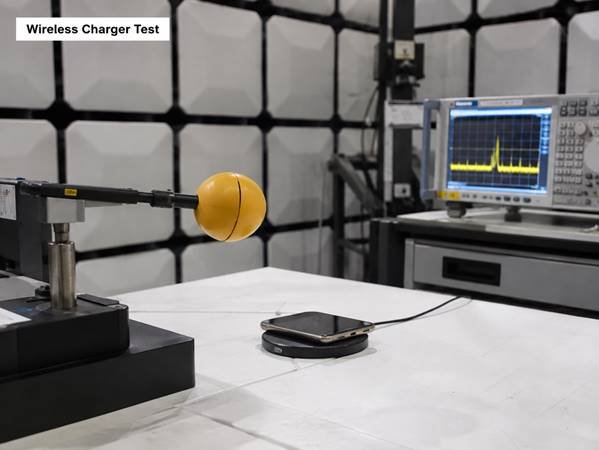
The conventional test cycle is usually 15-30 days, provided that the product has no problems and does not need rectification; if the test fails and rectification is required, the time will be extended accordingly according to the difficulty of rectification.
Problems that may be encountered in the assessment of wireless chargers include human exposure, out-of-band or spurious emissions, electromagnetic compatibility, thermal safety, and overheating risks caused by metal foreign objects. Specific items and judgment conditions depend on product functions, actual working modes and applicable standards, and all products cannot be treated according to the same set of items.
After completing the conformity assessment, the manufacturer shall compile and keep technical documents and sign the EU DoC. Test reports, calculations, risk assessments and other supporting evidence may form part of the technical documents; if a laboratory is entrusted, the laboratory usually provides corresponding test results or reports.
Final Self-Inspection Before Listing: Don’t Miss These 5 Things
Don’t rush to ship when the documents are complete. Check yourself against these points to avoid problems at the last minute:
1. Confirm that the product falls within the applicable scope of RED, and that the samples used for conformity assessment are consistent with the mass-produced version, with no hardware or firmware changes that will affect the conclusion;
2. The technical documents cover all applicable basic requirements, the EU DoC has been signed, and the supporting evidence is fully organized;
3. The CE mark on the product, manufacturer and importer information, manuals, etc. meet EU requirements: the CE mark shall be clear, legible, indelible, and usually not less than 5mm in height; exceptions are only allowed when the nature of the equipment does not allow or is not suitable;
4. Supporting adapters, cables and other components have been assessed according to their respective applicable regulations, don’t miss the accessories;
5. The responsible entity within the EU, such as the importer or authorized representative, has been clarified according to the product supply chain and applicable rules.
How to Verify the Authenticity of CE RED?
Whether you are purchasing products or checking competitors, you may need to judge whether the other party’s CE RED is real. In fact, you don’t need to find an expert. Mastering these methods can initially identify risks.
First Understand the CE Mark on the Product
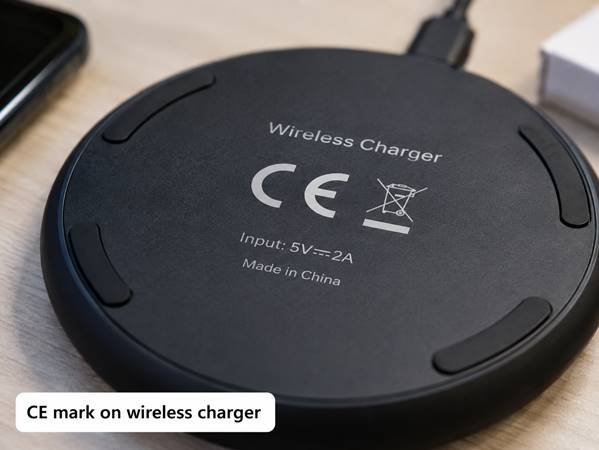
Many people only look at the CE mark roughly, but there are clear requirements:
• The CE mark must be drawn in standard proportion, clear, legible, indelible, and usually not less than 5mm in height; this minimum size may not be met only when the nature of the radio equipment does not allow or is not suitable;
• Regarding the NB number: only when the corresponding assessment procedure requiring the participation of a notified body is adopted, it may be necessary to mark the 4-digit NB number next to the CE mark. Products following the Module A path usually do not need to be marked, so don’t think that no NB number means it is fake;
• Manufacturers and importers shall provide their name or trademark and postal address as required by RED. When it cannot be marked on the equipment due to the nature or size of the equipment, it can be marked on the packaging or accompanying documents. Other marking information shall be determined according to applicable product regulations, standards and manual requirements, and input and output parameters should not be summarized as mandatory nameplate items uniformly stipulated by RED for all products.
How to Check Core Documents?
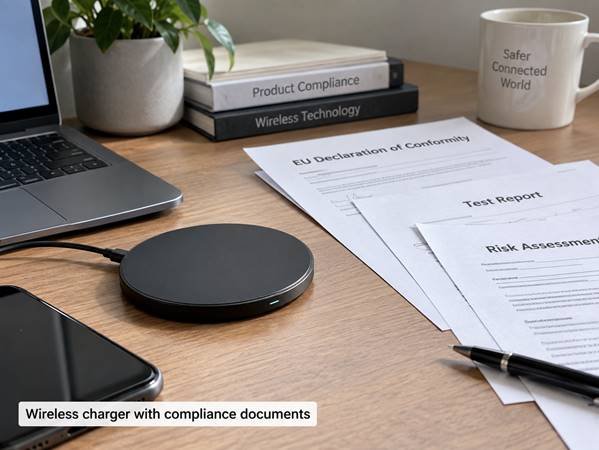
Looking at the mark alone is not enough, you also need to check the documents. The core points are:
• DoC (Declaration of Conformity): The product model on it must be consistent with the actual product, and it must list the EU harmonized legislation actually applicable to the specific product, such as the RED Directive and other actually applicable regulations, such as the applicable RoHS Directive. For radio equipment belonging to RED, the basic health and safety requirements are met through RED Article 3(1)(a), and LVD is not a parallel applicable directive;
• Technical documents and supporting evidence: shall be able to explain the product design, applicable standards, risk assessment and conformity basis. Test reports may be part of them, but they are not necessarily documents that must be disclosed to the purchaser or must be issued separately by a third-party laboratory;
• Consistency of product information: the model, key configuration, wireless functions and parameters of the actual product shall be consistent with the version covered by the DoC and technical documents.
Quick Identification Tips for Fake Certifications
You should be vigilant when encountering the following situations:
1. Only has the CE mark, but cannot provide the corresponding EU DoC, or the provided compliance evidence is obviously inconsistent with the actual product;
2. The model, wireless function, and key parameters on the document do not match the actual product, or “all models are universal” is used to generally cover products with great differences;
3. Claims to have NB participation, but the NB number cannot be found in the EU official database, or the qualification scope of the body is obviously mismatched.
It should be noted that you cannot directly conclude “fake certification” just because the other party has not disclosed a third-party test report. A more reasonable approach is to check whether the DoC, product mark, technical document summary and supporting evidence are consistent.
Compliance Responsibilities of Each Market Entity
The compliance responsibility of CE RED is not borne by one party. Different roles have different obligations:
• Manufacturer/brand party: bears the main responsibility, needs to complete the conformity assessment, sign the DoC, keep technical documents, and ensure that the product meets the requirements;
• EU importer: responsible for verifying the CE mark and DoC, and providing its own name or trademark and postal address as required, as an important responsible party in the EU supply chain;
• Distributors/e-commerce sellers: shall not sell obviously non-compliant products, and need to keep purchase vouchers to ensure traceability.
6 Common Misconceptions to Avoid
Many people are prone to pitfalls during the handling and sales process. We have sorted out the 6 most common misconceptions to help you avoid common troubles.
Misconception 1: All Wireless Chargers Must Have CE RED
Cause of error: Confusing “wireless power transmission” with “radio equipment”, or conversely, taking “no handshake” directly as a RED exemption condition.
Risk: Either missing the applicable RED assessment leads to goods detention, or spending money on unnecessary items without confirming the regulatory scope.
How to avoid: First check whether the product intentionally transmits and/or receives radio waves for radio communication or radio determination, and judge in combination with actual functions, applicable harmonized standards and technical documents. Don’t draw conclusions based solely on marketing descriptions.
Misconception 2: Having the CE Mark Equals Passing CE RED
Cause of error: CE is a mark used under multiple EU regulations. Ordinary products may involve regulations such as EMC, while products within the scope of RED need to meet RED requirements.
Risk: During random inspections by customs or platforms, products are removed from shelves or detained due to lack of RED-related DoC or technical documents.
How to avoid: Don’t just look at the CE mark. Check whether the RED Directive is listed in the DoC, and confirm whether the product model, wireless function and supporting evidence correspond.
Misconception 3: Having Qi Certification Equals Complying with CE RED
Cause of error: Qi is an industry voluntary standard for charging compatibility, and RED is a mandatory EU market access requirement. The two have different purposes and cannot replace each other. Individual safety or functional evidence may overlap, but this does not mean that Qi certification can replace RED assessment.
Risk: Thinking that Qi certification is enough and no RED is needed, resulting in heavy losses when inspected after listing.
How to avoid: Qi certification cannot replace RED. As long as the product meets the applicable conditions of RED, the corresponding assessment must be completed separately.
Misconception 4: If the Wireless Module Has RED Certification, the Whole Machine Does Not Need It
Cause of error: The environment in which the module is tested separately may be different from the environment in which it is installed in the whole machine. The antenna, shell, coil, and power supply noise of the whole machine will affect the wireless performance. Module reports can be used as supporting evidence, but cannot automatically replace the conformity assessment at the whole machine level.
Risk: Only using module reports to cope, and unable to prove that the final product is covered by existing evidence during regulatory random inspections.
How to avoid: It should be assessed whether the final integrated whole machine is still covered by the module evidence; if the structure, wireless performance or safety risk of the whole machine is affected, supplementary testing or re-assessment is required.
Misconception 5: Products with the Same Appearance Can Share the Same RED Report
Cause of error: The same appearance does not mean the same inside. Changes in the motherboard, coil, magnet, wireless module, and firmware may affect wireless performance and safety performance. But conversely, it cannot be considered that any difference necessarily requires all retesting.
Risk: The mass-produced version is inconsistent with the test version, and it is impossible to prove that the existing technical documents cover the actual product during random inspection.
How to avoid: Manage the evidence scope according to the actual hardware and firmware versions. Module reports or series reports can be used as supporting evidence, but the manufacturer should assess whether the product variants are still covered by existing evidence and standards; when affected, supplement testing or re-assess.
Misconception 6: CE RED Certification Is Globally Universal
Cause of error: CE RED is only applicable to the EU and EEA related markets. Each country or region has its own wireless access requirements, which are not universal.
Risk: When sold to other countries, goods are detained due to lack of local certification.
How to avoid: Apply for corresponding certifications for different target markets. Don’t think that CE RED is enough to sell globally.
Post-Listing Maintenance: Response to Changes and Random Inspections
Compliance is not a one-time thing. There are still many things to pay attention to after the product is launched, otherwise previous efforts may be in vain.
These Changes Require Re-assessment of Compliance
Product iteration is normal, but as long as there are the following three types of changes, RED compliance should be re-assessed, and supplementary testing should be done if necessary:
• Hardware changes: Replacing RF chips, coils, antennas, main control boards, or modifying shell materials, all of which may affect wireless performance and safety;
• Software/configuration changes: Firmware upgrades add wireless functions, increase output power, or replace supporting adapters;
• Regulatory changes: When the EU updates harmonized standards or RED Directive requirements, it is necessary to confirm whether the original conformity conclusion is still applicable.
Triggers and Consequences of Market Random Inspections
Many people are afraid of random inspections, but in fact, understanding the trigger logic can avoid them in advance. Common triggers for random inspections include: consumer complaints, customs entry interception, competitor reports, e-commerce platform reviews, and random inspections by regulatory authorities.
If non-compliance is found, the consequences may include goods detention, platform removal, fines, sales restrictions or recalls. Products with serious risks may also be notified by Safety Gate. Safety Gate notifications are used for cross-border risk information exchange. Whether subsequent sales bans, removals or recalls are implemented depends on the measures taken by the relevant competent authorities in accordance with the law, and it is not that a unified EU-wide sales ban is automatically generated as soon as the notification appears.
Post-Listing Document Retention Requirements
Manufacturers shall keep technical documents and EU DoC for at least 10 years after the radio equipment is placed on the market. Supporting evidence such as test reports, calculations, and risk assessments should be retained as part of the technical documents.
When the competent authority makes a reasonable request, the documents shall be provided in a timely manner as required. The regulations do not generally require that technical documents must be physically stored within the EU, but enterprises shall ensure that the documents can be effectively retrieved and provided. Proof of consistency between mass-produced products and prototypes used for conformity assessment shall also be properly retained.
Compliance Responsibility Boundaries of Set Products
If your wireless charger is sold as a set, such as with an adapter and USB-C data cable, pay attention to three boundaries:
1. Components such as the wireless charger body, adapter, and USB-C cable shall be assessed according to their respective natures and applicable regulations. Passive cables do not naturally require CE-type documents;
2. When sold as a set, the compliance materials of all components shall match the actual products, and the parameter promotion shall also be consistent. For example, when claiming 20W fast charging, the supporting adapter and cable shall be able to support the corresponding use conditions, and shall not be falsely marked;
3. If the product does not come with an adapter, power compatibility information required for safe and correct use shall be provided in the accompanying instructions and necessary sales materials. The specific content shall be determined according to product risks, applicable regulations and standards, such as explaining recommended input specifications or compatible power supply requirements.
Final Remarks
In general, CE RED compliance for wireless chargers seems to have many items, but the core logic is actually very clear: first judge whether it falls within the scope of RED according to the actual wireless functions and working methods of the final product; if it does, it must meet the requirements of health and safety, spectrum, electromagnetic compatibility, etc., and prepare DoC, technical documents and supporting evidence.
For beginners, understanding the basic concepts, making a preliminary applicability judgment first, and understanding the basic marks and documents are enough to meet daily needs; if you are a friend in charge of compliance or operation, mastering change judgment, document management and random inspection response can minimize risks.
Compliance is not just going through the process, but a full-chain work from product R&D, mass production consistency to post-listing maintenance. Keeping up with every step can open up the EU market more steadily.