
If you are a seller of charging products targeting the Brazilian market, you have most likely run into pitfalls with this question — either you assume only products with Bluetooth or Wi-Fi are regulated, or you think wired chargers require no certification at all. We will put the core conclusions first to help you make a quick judgment:
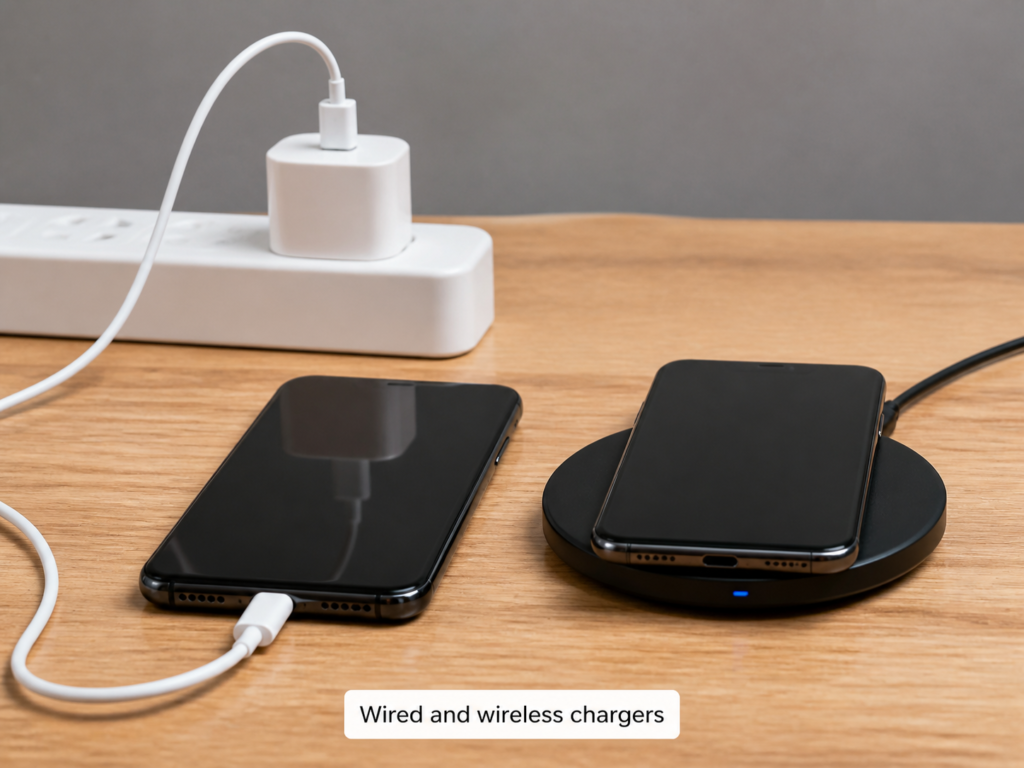
1. Wired mobile phone chargers and wireless chargers generally require ANATEL approval to enter the Brazilian market;
2. For USB/USB-C cables, you cannot directly conclude that ANATEL approval is not required solely based on interface type, whether they are sold separately or in a set, or whether they have an E-marker; whether they fall under regulated data transmission cables or other telecommunication product categories must be confirmed in combination with the cable structure, intended use, and technical specifications;
3. Charging devices with wireless communication functions such as Wi-Fi, Bluetooth, and NFC will be evaluated in accordance with the requirements for telecommunication equipment.
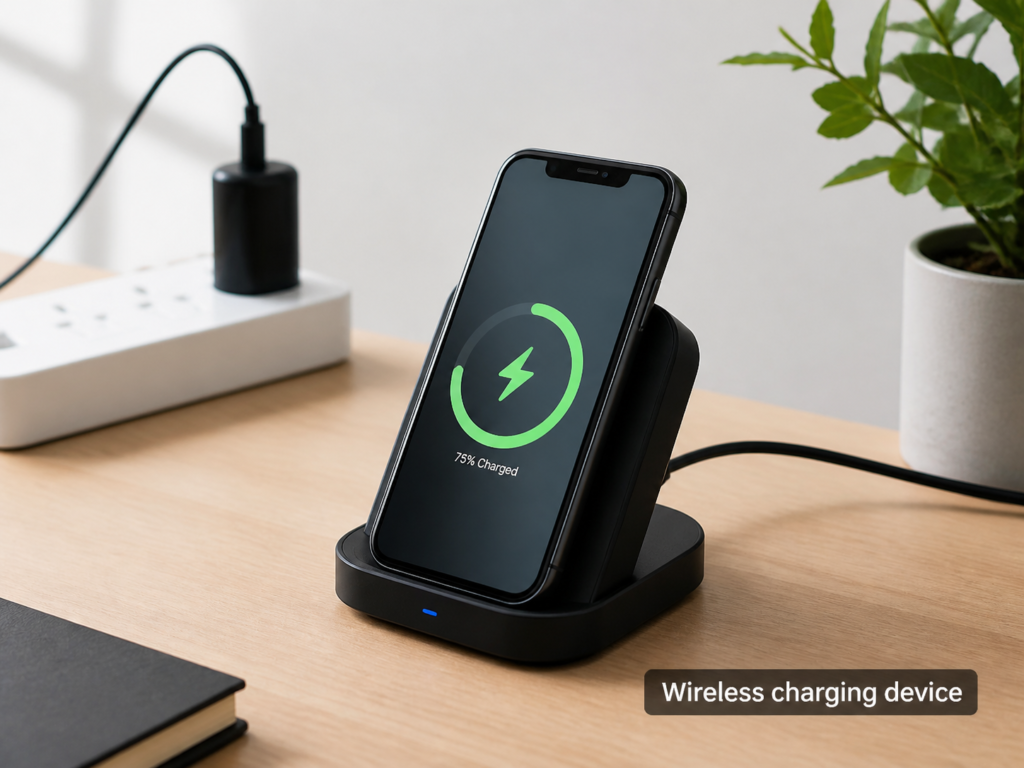
There is a key common pitfall here: **wireless charging ≠ wireless communication**. ANATEL’s regulation is based on product category, not whether the word “wireless” appears in the product name. For example, even if a mobile phone wireless charger has no communication function at all, it may still require approval because it falls under the “mobile phone charger” category.
First, Clarify: Which Products Are Within the Regulatory Scope?
Let’s first draw clear product boundaries to avoid you misapplying rules to products that are not under regular regulation:
Charging products that are usually included in ANATEL evaluation include: mobile phone wall chargers, car chargers, wireless chargers, and charging devices with communication functions (such as smart charging piles and shared charging cabinets). USB/USB-C cables cannot be judged as regulated or not solely by their interface name; if a cable falls under the data transmission cables or other regulated telecommunication product categories specified by ANATEL, it may also need to be evaluated in accordance with applicable requirements.
Charging/power supply equipment for industrial, telecommunication infrastructure, medical, or aviation purposes cannot be deemed not subject to ANATEL regulation solely based on the use label; if the product is a telecommunication network device, regulated cable or accessory, or contains a radio interface, it shall be evaluated according to the specific product category and applicable technical requirements. Medical, aviation and other products may also be subject to the rules of other competent authorities at the same time.
Basic Rules: What is ANATEL, and What Are the Consequences of Non-Compliance?
Simply put, ANATEL is the official agency in Brazil responsible for market access of telecommunication and radio frequency products, with a status similar to the FCC in the United States or the telecommunication equipment access administration department of the Ministry of Industry and Information Technology of China. Its core functions are to manage the order of the radio spectrum and the market access of telecommunication-related products. This approval is a statutory mandatory requirement in Brazil, not optional.
As long as your product enters the Brazilian market for any of the following purposes, you must complete compliance first: sale, offline display, stockpiling, listing on online platforms, leasing, or even being put into commercial use. There is also a new rule effective from 2025: online platforms and sellers are responsible for the authenticity and compliance of the ANATEL approval code disclosed in advertisements. That is to say, you not only need to have the certificate, but also must correctly disclose it on the product page, otherwise it will also be considered a violation.
ANATEL approval essentially verifies that the product meets Brazil’s spectrum requirements, electromagnetic compatibility requirements, and technical specifications for the corresponding product category. After approval is completed, the product will receive an exclusive approval number, be entered into ANATEL’s official database, and must be configured with approval identification information in accordance with the ANATEL operating procedures applicable to the product before it can be legally circulated. The carrier, location, and form of the identification information shall be subject to the corresponding procedures, and shall not be uniformly understood as physical stickers. It should be noted here that daily product classification, testing and review, and preliminary review are all handled by authorized organizations, but the final approval certificate is issued by ANATEL.
What are the consequences of non-compliance?
Goods may be directly detained or returned during the import stage; during the sales stage, products may be removed from platforms or rejected by distributors; in serious cases, you may also face administrative law enforcement or penalties, and even failure to disclose the approval code as required may result in fines. Of course, the specific penalty measures shall be subject to the final judgment of the Brazilian competent authority.
Accurate Judgment: Four-Question Method + Product Matrix
After understanding the basic logic, you can use the “four-question judgment method” we summarized to make a preliminary judgment on your product. This is the core judgment framework:
Question 1: Is your product in the telecommunication product category listed in the LRPT?
Question 2: Is it a charger or accessory specifically for mobile phones?
Question 3: Does it have wireless communication interfaces such as Wi-Fi, Bluetooth, NFC, or cellular network?
Question 4: Is its circulation scenario commercial sale, personal use, or non-sale sample?
After asking these four questions, you can basically draw conclusions in three directions: either approval is usually required, further evaluation is needed, or you must seek a written classification opinion from the OCD to confirm.
For a more intuitive view, we have organized the judgment logic of common charging products into a table, which you can directly refer to:
| Product Type | Judgment Logic | Exceptions | Next Steps |
| Wired Mobile Phone Charger | Falls under the mobile phone accessory category listed in the LRPT, and usually requires approval | If the product is not designed, promoted, or intended for charging mobile phones, a classification confirmation application is required; simply labeling “non-mobile phone use” on the label is not sufficient to automatically exclude it from the mobile phone charger category | Provide complete use instructions, interface/power specifications, packaging and promotional materials to the OCD for confirmation |
| Mobile Phone Wireless (Inductive) Charger | The core trigger is the “mobile phone charger” category; those with communication functions will have additional radio frequency requirements | Chargers only for non-mobile phone devices (such as exclusive chargers for smart watches) require separate evaluation | Follow the corresponding approval process after verifying the use and wireless configuration |
| Charging Devices with Wireless Communication (smart chargers, shared charging cabinets, etc.) | Contain active radio frequency transmission functions, and usually require approval as telecommunication equipment | Special equipment with extremely low power needs to be confirmed in accordance with LRPT rules | Provide wireless specifications, approved module certificates (if any) to the OCD for evaluation |
| USB Charging Cable/Data Cable | Cannot be judged as a regulated product solely based on the USB/USB-C interface type | The E-marker itself usually does not constitute a radio function; however, whether the cable falls under the data transmission cable or other telecommunication product categories specified by ANATEL still needs to be evaluated in combination with structure, intended use, and technical specifications | Confirm the actual structure, function and category of the cable; provide BOM, function description, and technical specifications to the OCD or ANATEL with corresponding scope for confirmation |
| Power Adapters for Non-Mobile Phone Use (laptop/industrial/universal power supplies) | Those that do not belong to mobile phone accessories need to be checked against LRPT classification | Those with wireless communication functions are directly judged as telecommunication equipment | Provide use statement and product parameters to the OCD for confirmation |
Here is a special reminder for sellers of USB charging cables: USB/USB-C cables cannot be directly deemed as not requiring ANATEL approval solely because they are sold separately, sold with mobile phones or chargers in a set, or have an E-marker. Whether they are regulated still depends on their cable structure, actual intended use, technical specifications, and whether they fall under data transmission cables or other categories in ANATEL’s current product scope list.
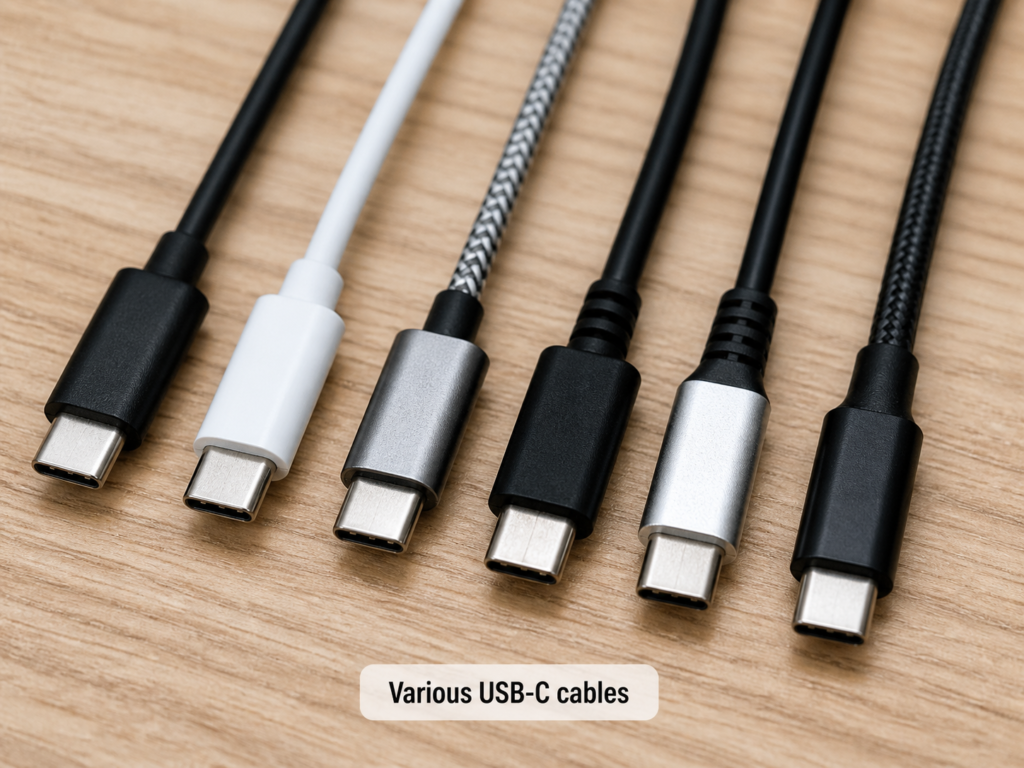
Many people think that a USB-C cable with an E-marker chip will trigger regulation, but in fact, the E-marker itself usually does not constitute a radio function. The E-marker returns cable identity and capability information through CC communication of USB Power Delivery, which is used to identify the current, power or data capability of the cable; but it does not have radio transmission functions. However, this alone cannot lead to the conclusion that the entire cable is automatically not subject to ANATEL requirements. Scenarios that require key evaluation include: whether the cable falls under the data transmission cable category specified by ANATEL, or whether the cable itself integrates regulated communication or radio frequency functions.
Don’t Ignore: These Changes Will Affect Approval Requirements
Many sellers tend to overlook a problem: if the product configuration, intended use, or set composition changes even slightly, the approval requirements may be different. Don’t think that one approval is good for all time. The following 5 changes must be evaluated in advance, don’t wait until problems arise to make up for them:
1. **Change in product use**: For example, if a charger originally dedicated to mobile phones is changed to a universal power supply or industrial-specific use, it will affect the product classification, whether it is regulated, and the applicable technical requirements. It should be noted that you cannot exclude the product from the mobile phone charger category just by writing “non-mobile phone use” on the label; you should send the complete use instructions, interface and power specifications, promotional and packaging materials to the OCD for confirmation.
2. **Change in set composition**: For example, a charger originally sold separately is now sold as a set with a charging cable, or sold together with a mobile phone, or a Bluetooth function is added to a wireless charger. In such cases, evaluation needs to be carried out for the whole set or for individual components respectively, and all regulated components must be compliant on their own. USB cables also cannot be directly judged as regulated products solely because they are sold separately or sold in the same package with chargers or mobile phones. It is best to send the set configuration and component parameters to the OCD for confirmation in advance.
3. **Change in wireless configuration**: For example, if the type of communication function changes, the wireless module is replaced, the antenna gain or transmission power is changed, or the radio frequency parameters in the firmware are updated, these will affect the radio frequency test requirements and whether the previous module data can be reused. You should send the new wireless specifications and module certificate (if any) to the OCD for evaluation.
4. **Change in model/configuration suffix**: For example, the same charger has 18W and 65W versions, or versions with Brazilian plugs and US standard plugs, or is divided into wired and wireless versions. For different SKU suffixes, you need to check whether they are clearly included in the coverage of the corresponding ANATEL certificate or model family. Multiple models that meet applicable rules and pass the OCD’s technical evaluation can be included in the same model family; models not within the coverage scope shall not use this approval code. Confirm whether the approval needs to be updated before making changes.
5. **Integration of additional functions**: For example, if a positioning or communication function is added to an originally ordinary charging cable, or an originally ordinary charging cabinet is converted into a networked shared charging cabinet, these changes may turn originally unregulated products into regulated ones, requiring reclassification. You should send the BOM and function description to the OCD to apply for a written classification opinion.
Self-Verification: 3-Step Self-Check + Official Verification
If you already have an ANATEL number provided by the supplier, or want to first self-check whether there are any problems with the product, you can follow these 3 steps, which can basically avoid 80% of the pitfalls:
Step 1: Verify Basic Product Attributes
• Check use: Look at the nominal applicable objects in the manual, packaging, and promotional materials to see whether it is clearly stated that it is suitable for mobile phones or is universal;
• Check functions: Check whether there are wireless communication marks in the specification sheet, and whether there are components such as antennas or SIM card slots;
• Check configuration: Be sure to confirm the complete model, including the suffix. Many products in the same series have different model suffixes and completely different configurations.
A pitfall to avoid here: never judge solely by the words “wireless” or “charging” in the product name or e-commerce title; you must look at the actual parameters and functions.
Step 2: Confirm the Circulation Scenario
• If it is for online or offline sales, cross-border e-commerce batch delivery, leasing, gifting, or being put into commercial use, these all belong to commercial circulation and require the regular approval process;
• If it is a small amount for personal use, or non-sale samples for R&D/testing/exhibition, you need to follow special procedures and cannot directly follow the regular ones.
The boundary here is: as long as multiple units are imported, stored in a warehouse for resale, or to be delivered to customers, it is considered commercial circulation. Don’t take a chance with the idea that “I’m just giving away a few samples.”
Step 3: Officially Verify the Authenticity of the Approval
ANATEL has a free and public official query system called SCH. You only need to prepare the complete model (including suffix) of the product or the approval number to check on it. When verifying, focus on the following information: whether the product category is correct, who the applicant responsible party is, whether the complete model matches, whether the approval number is correct, and whether the approval status is valid.
After checking, you must do two things: First, record the query date and keep the query voucher, which can be produced if there are problems later; second, check all information: model, approval code, product category, approval identification information, and commercial authorization shall be consistent with the approval records and the actual product. If no record can be found, the information does not match, or the certificate status changes, you must first verify clearly before deciding whether to list or ship the product. For remaining stock that has been placed on the market by the approval applicant before the certificate expires, is suspended, or revoked, you should also judge whether it can continue to be sold in combination with the launch time, the certificate holder’s documents, and whether ANATEL requires a recall.
Entry-Level Compliance Starting Path
If after reading this you are sure that your product requires ANATEL approval and don’t know where to start, we have organized an entry-level compliance starting path for you. Follow this and you won’t get confused:
Preparatory Work: Organize the Consultation Information Package
Prepare the materials first, which can also improve efficiency when consulting the OCD:
• Product materials: complete model (including all suffixes), Portuguese manual and label drafts, use statement, charge and discharge parameters;
• Wireless-related materials: if there is a wireless communication function, prepare wireless specifications, approved module certificates (if any), antenna materials, and BOM;
• Entity materials: commercialized products shall usually be handled by an applicant that meets ANATEL’s entity qualifications and can assume product responsibility in Brazil. The applicant entities listed in the current rules include manufacturers and commercial representatives of foreign legal persons, etc.; in the case of personal use, natural persons or legal persons may also apply in accordance with the applicable personal use procedures. The specific entity qualifications and authorization documents shall be confirmed in accordance with the product procedures.
Basic Compliance Full Process
1. **Classification confirmation**: First contact the OCD to evaluate what category your product belongs to and what technical requirements apply. This step is the foundation; if the classification is wrong, everything that follows will be wrong;
2. **Mode selection**: Confirm the applicable certification mode, such as type certification or other modes, the re-evaluation cycle, and whether factory evaluation is required. All these shall be subject to current regulations;
3. **Testing and evaluation**: Complete the corresponding tests or document evaluation in an ANATEL-accredited laboratory. If there is acceptable overseas test data, it can be submitted at this step;
4. **Approval application**: The applicant that meets ANATEL’s entity qualifications submits an application to ANATEL, and after approval, you will get an exclusive approval number;
5. **Market launch preparation**: Configure approval identification information in accordance with the ANATEL operating procedures applicable to the product; for online sales, the approval number must be correctly disclosed in the advertisement;
6. **Post-certification maintenance**: Regularly confirm the validity of the approval. If there is any change to the product, evaluate in advance whether the approval needs to be updated, don’t wait until after the change is made.
Responsibility Chain and Pitfall Avoidance Tips
Brand owners, importers, certificate holders, distributors, and platforms must confirm the authorization scope and model coverage in advance to avoid the situation of “using someone else’s certificate”. It is absolutely forbidden to borrow approval numbers for products of the same brand, same appearance, same module but with mismatched models or configurations. This is fraud and will be heavily fined if caught.
Finally, here are a few time and cost pitfall avoidance tips for you:
• Applicable ANATEL approval shall be obtained before the product is commercialized or used in Brazil; whether approval must be completed before import, and when the approval identification information should be configured, shall be confirmed in accordance with the current operating procedures, import mode, and requirements of the competent authority applicable to the product. To reduce the risk of customs clearance and market launch delays, it is advisable to complete classification and compliance arrangements as early as possible before shipment;
• The approval cycle and cost are greatly affected by product complexity and data completeness. There is no unified quotation. You should directly inquire with the OCD for pricing, and don’t believe in “fixed price” offers;
• Each actual sales model must be clearly within the coverage of the corresponding ANATEL certificate or model family; multiple models that meet applicable rules and pass the OCD’s technical evaluation can be included in the same model family, and models not evaluated and covered by the certificate shall not use this approval code.
Frequently Asked Questions
After reading this article, you should already be able to do the following: use the four-question method to preliminarily judge the ANATEL requirements for charging products, avoid 6 types of common cognitive misunderstandings, verify the authenticity and matching of approvals through the SCH official database, and distinguish the different procedural requirements for commercial circulation and personal use/non-sale samples. If you need more detailed judgment, you can go back to the previous product judgment matrix chapter for reference.
The following are the most frequently asked questions for your quick lookup:
1. **Do wired mobile phone chargers require ANATEL certification?**
Usually yes. Because it falls under the mobile phone accessory category listed in the LRPT. If the product is not designed, promoted, or intended for charging mobile phones, you can submit complete use instructions, interface and power specifications, packaging and promotional materials for reclassification confirmation by the OCD; simply labeling “non-mobile phone use” on the label is not sufficient to automatically exclude it from the mobile phone charger category.
2. **Is ANATEL approval mandatory for mobile phone wireless chargers?**
Usually yes. The core reason is that it falls under the regulated category of “mobile phone charger”, not because of the wireless charging function; if it has communication functions such as Bluetooth, there will be additional radio frequency requirements; if it is an exclusive charger only for non-mobile phone devices (such as a dedicated charger for smart watches), separate evaluation is required.
3. **Do I need ANATEL certification to bring a charger into Brazil for personal use?**
There is no general exemption rule. First, confirm whether the product is within the regulated scope, and then check whether it meets the conditions for a personal use declaration; the personal use declaration is processed for each specific unit and serial number, and shall not be commercialized or used to provide telecommunication services. Multiple products cannot be covered by a single unit declaration, and the specific path shall be confirmed based on the actual import and use facts. Customs release does not equal ANATEL compliance, and mains-powered mobile phone chargers cannot use overseas certificates to replace local test reports for the simplified path.
4. **Is ANATEL approval still needed if there is FCC/CE certification?**
Yes. Overseas certifications such as FCC and CE cannot automatically replace ANATEL approval. Whether part of the test data can be accepted needs to be evaluated and confirmed by the OCD.
5. **Does a complete machine using an ANATEL-certified module still need to be approved?**
Not necessarily. The approved module can be used as the basis for test data, but it cannot automatically cover the compliance of the whole machine. The OCD needs to evaluate whether the module data can be reused and whether additional radio frequency and electromagnetic compatibility tests for the whole machine are needed; when the module, antenna, power, etc. are changed, you shall report to the OCD before the change and conduct an impact assessment. Whether additional testing, certificate update, or re-approval is required shall be subject to applicable technical requirements and the OCD’s conclusion.
6. **Do ordinary USB charging cables require ANATEL certification?**
You cannot directly judge whether ANATEL approval is required solely based on the USB/USB-C interface type, whether they are sold separately or in a set with mobile phones or chargers, or whether they contain an E-marker. The E-marker itself usually does not constitute a radio function, but this does not mean that the entire cable is automatically not subject to ANATEL requirements. Whether the cable falls under data transmission cables or other telecommunication product categories in ANATEL’s current product scope shall still be confirmed by the OCD or ANATEL with corresponding scope based on the cable structure, intended use, technical specifications, and applicable lists.
7. **How to check if a product has valid ANATEL approval?**
You can use ANATEL’s official free SCH query system, enter the complete model (including suffix) or approval number to verify whether the product category, responsible party, model, approval status and other information match. Remember to keep the query voucher. If the certificate status changes, you should further judge whether the stock can continue to be sold in combination with the time the product was placed on the market, the certificate holder’s documents, and whether ANATEL requires a recall.
8. **What is the difference between ANATEL requirements for wireless charging and wireless communication?**
The regulatory logic is completely different: wireless charging transmits electric energy and does not necessarily trigger radio frequency regulation by itself. Mobile phone wireless chargers are regulated because they fall under the “mobile phone charger” category; wireless communication transmits data or control signals and falls within the scope of radio frequency regulation. Charging devices with such functions will be evaluated as telecommunication equipment, and cannot be judged solely by the word “wireless”.
Regulatory Note
This article is compiled based on ANATEL rules that can be publicly verified as of September 1, 2026. The LRPT list, technical requirements, operating procedures, and relevant platform measures may be dynamically updated. The final compliance judgment shall be subject to ANATEL’s current regulations, official records of the SCH system, and the written opinion of the OCD.
In general, the core of judging whether charging products in the Brazilian market require ANATEL approval is not to see whether there is “wireless” in the name, but to first check whether the product category is in the regulatory list, then check whether it has wireless communication functions, and finally make a comprehensive judgment in combination with the circulation scenario. When in doubt, the safest way is to seek classification confirmation from an ANATEL-authorized OCD, and do not make self-judgments based on experience to avoid unnecessary losses.