
For people doing cross-border e-commerce targeting Brazil, sending electronic products to Brazil, or even just bringing a charger when traveling to Brazil, the first question that comes to mind is: are chargers in Brazil required to have INMETRO certification? In fact, there is no one-size-fits-all answer to this question — chargers for different purposes are overseen by different regulatory bodies, and their compliance paths vary greatly. Getting this wrong may not only lead to cargo detention and fines, but also make it impossible to list the product for sale.
Core Conclusion Quick View: Classified by Product Purpose, No Generalization Allowed
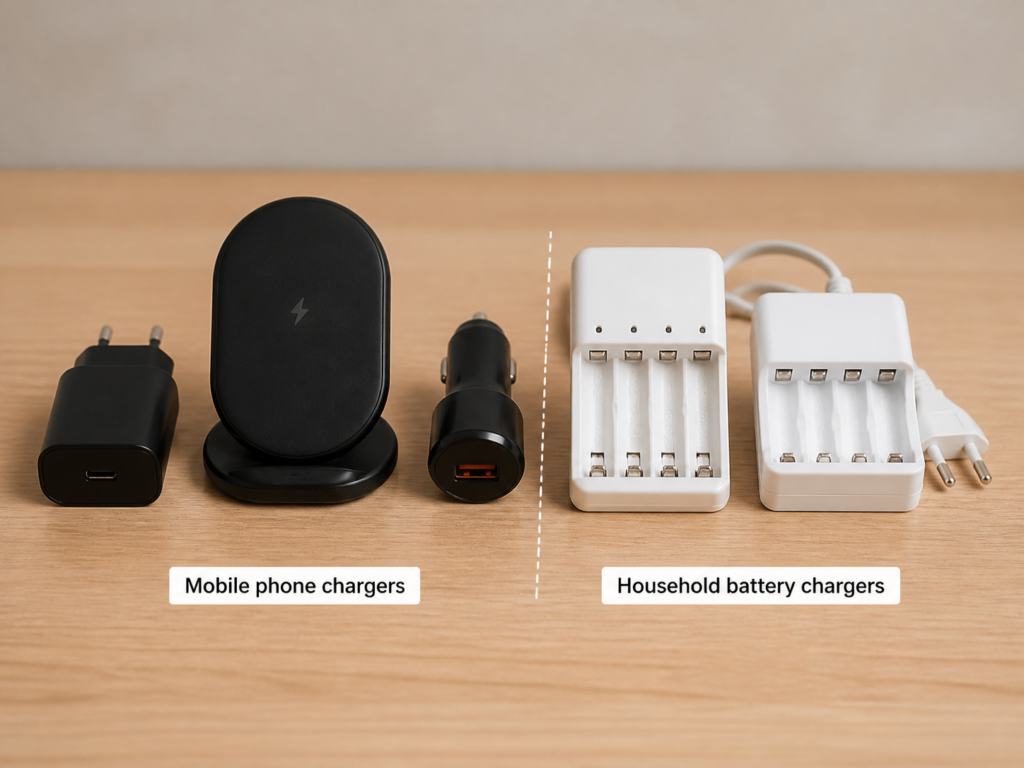
You can first refer to the table below to quickly determine the general regulatory direction of the product, then read the details below:
| Product Type | Competent Authority | Preliminary Conclusion | Next Check Point |
| Wired/wireless/car chargers for mobile phones (including those bundled with mobile phones) | ANATEL (National Telecommunications Agency of Brazil) | ANATEL approval is required; INMETRO household charger certification is not applicable | Confirm the intended use of the product and whether there is a local responsible entity in Brazil |
| AA/AAA household battery chargers | INMETRO (National Institute of Metrology, Quality and Technology of Brazil) | Need to check whether they are included in the INMETRO mandatory certification catalog | Check whether they meet the conditions and exclusion scenarios under Item 21, Table 1, Appendix III of Regulation No. 148/2022 |
| Laptop/universal USB-C PD adapters (not clearly marked as dedicated to mobile phones) | To be confirmed | Need to be classified according to actual use, cannot be determined independently | Consult a local Brazilian certification body or importer to confirm the regulatory path |
There is also an easily overlooked premise: **non-commercial scenarios do not equal exemption from sales compliance**. Non-sales imports are not automatically exempt from compliance requirements, and travel personal belongings, self-use express imports, test samples, exhibition samples, and temporary imports cannot be treated as the same procedure. For mobile phone chargers within ANATEL’s scope and connected to the power grid, overseas certificates cannot replace Brazilian test reports to apply for a self-use conformity declaration; if exhibition, market research or test samples are subject to INMETRO regulation, corresponding LPCO or commitment documents shall be handled according to the specific import purpose. In any case, these rules cannot be used as a reason for exemption from commercial sales — as long as the product enters the circulation link and is sold to consumers, even if it is marked as a “gift”, applicable compliance arrangements must be in place.
Must-Know Basics: First Understand 2 Agencies and 2 Basic Rules
If you are still unsure after reading the table, or want to understand the logic behind it to avoid pitfalls, let’s start with a few most easily confused basic concepts.
Two Core Regulatory Agencies with Completely Different Divisions of Labor
Many people only know INMETRO, but in fact, there are two main agencies in charge of chargers in Brazil, with very different responsibilities:
• **INMETRO**: Mainly responsible for metrology, quality infrastructure, product technical regulations, conformity assessment, etc. Brazilian national standards are usually formulated by ABNT; for products included in the scope of mandatory conformity assessment, INMETRO is responsible for corresponding supervision and registration, and is one of Brazil’s official competent authorities for compliance.
• **ANATEL (National Telecommunications Agency of Brazil)**: Specializes in supervising the compliance of telecommunication terminals and supporting products, covering requirements such as radio frequency, safety, and electromagnetic compatibility. The most commonly used mobile phone chargers, whether wired, wireless or car-mounted, as long as they are clearly intended for mobile phones, fall within ANATEL’s core regulatory scope, and are not under the regulatory line of INMETRO household chargers.
Certification ≠ Approval, Don’t Confuse the Processes
Many people treat “certification” and “approval” as the same thing, but in fact they are two completely different regulatory paths:
• **Certification**: It is a “product conforms to standards” certificate issued by a third-party institution after testing. For example, INMETRO certification is issued by its accredited third-party institution.
• **Approval (locally called homologação)**: It is the official approval and filing of the certification result by the regulatory authority, which will issue a unique approval number. For example, ANATEL approval is finally officially approved by ANATEL, adding an official filing step compared to ordinary certification.
General Premise: International Certifications Cannot Be Directly Substituted
Another common misunderstanding is clarified in advance: international certifications such as CE, FCC, UL, or test reports from ordinary laboratories, **cannot directly replace local Brazilian certification or approval**. Brazil currently has no relevant mutual recognition agreements with most countries, and the compliance process in line with local Brazilian standards must be completed.
Step-by-Step Judgment: What Compliance Path Your Charger Should Take
After understanding the basic concepts, you can follow the three steps below to confirm the compliance requirements of the product step by step.
Step 1: Look at Product Purpose (The Core Judgment Criterion)
Brazil’s supervision of chargers first depends on “who this charger is for”, rather than its appearance, interface or technology type.
1. **Prioritized under ANATEL’s jurisdiction: Chargers clearly intended for mobile phones**
Products that are clearly sold, marked or designed as mobile phone chargers and used to charge the batteries of mobile cellular phones shall be checked in accordance with ANATEL’s requirements for mobile phone chargers. Common scenarios include:
• The packaging and product page clearly mark “suitable for mobile phone charging”;
• It is an original charger bundled with a mobile phone;
• The design, manufacturer’s statement and actual functions of the product all point to charging the battery of a mobile cellular phone.
Protocols such as USB interface, USB-C, PD, PPS, QC cannot determine the classification alone, because these interfaces and protocols are also widely used in laptops, tablets and other electronic devices. For products used for both mobile phones and other devices, confirmation shall be made with the OCD or the Brazilian responsible entity based on complete technical documentation.
Whether it is a wired wall charger, wireless charger or car charger, as long as it meets the applicable scope of mobile phone chargers, it is under ANATEL’s supervision.
2. **Need to check INMETRO’s scope: Non-mobile phone household chargers**
If the charger is clearly a household consumer product not intended for mobile phones, you must first check the mandatory catalog of INMETRO Regulation No. 148/2022 to confirm whether it is within the regulatory scope.
For example, non-mobile phone products shall be checked item by item to see whether they belong to “household and similar purpose battery chargers” under Item 21, Table 1, Appendix III of Regulation No. 148/2022. This item requires that the output is safety extra-low voltage, the rated voltage does not exceed 250 V, and the exclusion scenarios specified in Table 2 must also be excluded. AA/AAA household battery chargers are common check objects.
Ordinary universal power adapters cannot be directly deemed to be applicable to this item just because of low-voltage output. For special categories such as car battery chargers, there are also boundary limits such as current and weight, not all models are in the mandatory catalog, and separate checks are required.
3. **Do not classify boundary products by yourself, confirm with a professional institution**
Some products are between the two categories, or have additional functions. Never decide the classification by yourself, otherwise it is easy to fall into pitfalls:
• Cross-category products: For example, a PD adapter that can charge both mobile phones and laptops cannot be considered “mainly for laptops so under INMETRO” by yourself. You must consult a local Brazilian importer or certification body to confirm the classification;
• Non-mobile phone chargers with radio frequency functions such as Bluetooth and Wi-Fi: In addition to safety certification, ANATEL’s radio frequency requirements must also be additionally checked;
• Built-in charging modules in complete machines, bare board power supplies, industrial dedicated chargers: These do not belong to household consumer chargers, and shall be checked separately according to the corresponding categories;
• Data cables, power banks, car chargers for non-mobile phones: They do not apply to the compliance path of INMETRO household chargers, and their compliance requirements shall be checked separately according to their respective categories.
Step 2: Look at the Nature of Sales and Use
After determining the general regulatory direction, the next step is to look at the product’s usage scenarios. Not all cases require the same entity to complete full commercial compliance.
• **Commercial sales scenario: The product must have applicable and valid compliance documents**
Products commercialized for the Brazilian market must have valid compliance documents applicable to the brand, model and responsible entity before being launched. Whether online or offline, wholesale, dropshipping, private domain sales, or included in a set as a “gift”, products not covered by compliance documents cannot be sold.
But this does not mean that every retailer or dropshipper has to re-apply for certification or approval for the same approved model. Sellers shall confirm that the supply source and sales method are covered by the compliance document, as well as the authorization or responsibility arrangement of the certificate holder.
• **Non-commercial scenarios: Confirm separately according to product and import method**
For non-circulation scenarios such as personal self-use carrying, self-use direct mail, test samples, exhibition samples, and temporary imports, it cannot be simply understood as “no need for commercial sales compliance”. The specific requirements of customs and competent authorities shall be checked separately according to the product and import method.
For mobile phone chargers within ANATEL’s scope and connected to the power grid, overseas certificates cannot replace Brazilian test reports to apply for a self-use conformity declaration. If exhibition, market research or test samples are subject to INMETRO regulation, corresponding LPCO or commitment documents shall also be handled according to the specific import purpose. These products can only be used for the corresponding non-circulation purposes and must never be sold.
Step 3: Before Commercial Launch, Check Three Layers of Risks First
If you are engaged in commercial sales, before the official launch, you must also check the risks of three links, don’t wait until the goods are shipped to have problems:
1. **Import declaration link**: During import, customs will judge compliance based on the import method, HS code, product classification, and local Brazilian responsible entity. If there is no corresponding compliance document, the goods are likely to be detained, returned or even destroyed.
2. **E-commerce platform access**: Most mainstream e-commerce platforms in Brazil require sellers to upload valid compliance documents before listing related products, and they conduct irregular random inspections. If non-compliance is found, the products will be directly removed from the shelves or even the store will be closed.
3. **Offline market supervision**: Offline sales have the risk of random inspections by market supervision departments, and some channels also require additional local distributor filing.
Advanced Explanation: Specific Requirements of the Two Compliance Paths
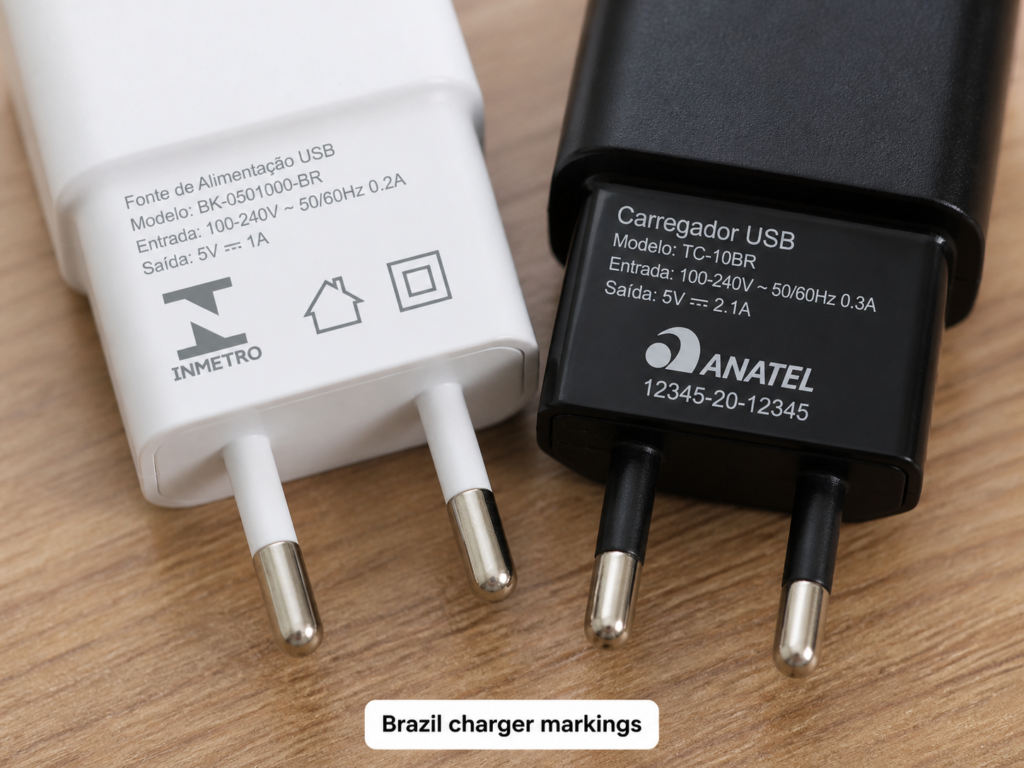
If the regulatory path of the product has been determined, the following are the specific requirements of the two paths, which you can prepare by comparison.
Path A: ANATEL Approval Path for Mobile Phone Chargers
• **Applicable scope**: Wired, wireless, and car chargers clearly intended for mobile phones, including products bundled with mobile phones.
• **Application requirements**: There must be a local responsible entity in Brazil, which can be an importer, local representative or a company registered in Brazil; individuals cannot apply directly.
• **Core process**: For commercialization, usually an OCD designated by ANATEL shall be entrusted first to conduct conformity assessment. After the OCD organizes or accredits the required tests and issues a conformity certificate, it then applies to ANATEL for approval; after passing, a unique approval number will be obtained, and the product can be launched and sold within the approved scope.
• **Labeling requirements**: In principle, mobile phone chargers shall have an ANATEL approval safety label affixed to the product body; if the product structure does not allow affixing, ANATEL may allow it to be affixed in the instruction manual. Other packaging and Portuguese information requirements shall be confirmed item by item in accordance with applicable labeling, consumer information and product regulations.
• **Authenticity verification**: To confirm whether the ANATEL approval of a mobile phone charger is valid, you can check three points: whether there is a clear ANATEL approval number and applicable mark; whether the model, brand, and responsible entity on the approval document are consistent with the product; you can also directly enter the approval number in ANATEL’s official database to query.
Path B: INMETRO Certification Path for Non-Mobile Phone Household Chargers
• **Applicable scope**: First, it is necessary to confirm that the product is in the mandatory certification catalog of INMETRO Regulation No. 148/2022. For “household and similar purpose battery chargers” under Item 21, Table 1, Appendix III, they must simultaneously meet conditions such as output being safety extra-low voltage and rated voltage not exceeding 250 V, and exclude the inapplicable scenarios specified in Table 2. AA/AAA household battery chargers are common check objects; ordinary universal power adapters cannot be directly deemed applicable just because of low-voltage output.
• **Application requirements**: A local Brazilian certificate-holding representative or importer is required, and the certificate is issued by a third-party certification body (OCP for short) officially accredited by INMETRO, rather than directly issued by INMETRO.
• **Core process**: First, the OCP completes product testing, and some certification modes also require factory audits. After passing, the OCP issues a certification certificate, and finally registration must be completed in the INMETRO system.
• **Labeling requirements**: Parameters shall be marked in Portuguese on the product and the minimum sales package, and there must also be the INMETRO mark and the corresponding certification number.
• **Authenticity verification**: When verifying INMETRO certification, check whether there is an INMETRO mark, certification number and Portuguese parameters; the model, parameters, and responsible entity on the certificate issued by the OCP must be consistent with the product; it can also be verified through INMETRO’s official database or the issuing OCP institution.
Compliance Consistency Checklist Applicable to All Paths
No matter which path you take, the following requirements are universal. If even one of them is not met, it may be judged as non-compliant:
1. The product’s brand, model, input and output ratings (including the power of each port for multi-port chargers) must be completely consistent with the approved scope;
2. Port configuration, plug type, and accompanying cables must also be consistent with the content of certification/approval;
3. It shall be confirmed that the actual sales configuration is consistent with the approved configuration. For products with AC plugs that have been evaluated in accordance with ANATEL’s mobile phone charger requirements, plug-related tests are part of the evaluation; if the plug is replaced, a plug converter is additionally provided, or the sales configuration changes, reconfirmation shall be made;
4. Instructions, packaging and sales information for Brazilian consumers shall meet applicable Portuguese consumer information, labeling and advertising rules. Model, rated parameters and performance publicity shall not conflict with the approved scope or provable technical documentation; advertising language shall not be false, misleading or unfounded. Whether comparative or superlative expressions can be used shall be judged on a case-by-case basis in accordance with consumer protection and advertising rules;
5. Only components in the set that are themselves subject to mandatory supervision or not covered by the existing approved scope need to be separately compliant in accordance with their applicable rules. For example, cables that do not perform power conversion or adaptation do not automatically become the object of mobile phone charger certification;
6. Technical or marketing features such as PD, PPS, QC, and GaN do not directly determine the regulatory attribution of the product, but may affect whether models of the same series can share one certificate, so it is best to confirm in advance;
7. The validity period of certification/approval shall be subject to applicable regulations, certification mode, and certificate marking; not all certificates are permanently valid;
8. If the product’s model, power, key components, brand and other information change, reconfirm whether it is still within the scope of the original certificate, and never apply the certificate of other products by yourself.
Common Misconceptions and Pitfall Avoidance Tips
The following are a few most common pitfalls, and avoiding them in advance can save a lot of trouble.
High-Risk Cognitive Misconceptions
1. **Misconception: All chargers require INMETRO certification**
Clarification: This is the most common mistake. For chargers clearly intended for mobile phones, the core regulatory authority is ANATEL, and they follow the approval process, which does not apply to INMETRO’s household charger certification path.
2. **Misconception: ANATEL only regulates wireless products with radio frequency**
Clarification: ANATEL supervises all telecommunication terminals and supporting products. Ordinary wired mobile phone chargers also belong to telecommunication terminal supporting products and are also under ANATEL’s jurisdiction. It is not only wireless chargers that require ANATEL approval.
3. **Misconception: The rules for personal self-use/samples can be applied to commercial sales**
Clarification: Non-commercial scenarios have corresponding declaration and compliance requirements, but the specific procedures depend on the product and import method. As long as it is for sale, even if it is a sample or gift, it cannot be separated from the applicable commercial compliance arrangements.
4. **Misconception: Data cables/power banks do not need compliance because they are not within the scope of INMETRO chargers**
Clarification: Data cables, power banks, and non-mobile phone car chargers just do not apply to the compliance path of INMETRO household chargers. They have their own corresponding regulatory categories and compliance requirements, not that they do not need compliance.
5. **Misconception: International certifications such as CE/FCC/UL can directly replace Brazilian certification**
Clarification: Brazil has no relevant mutual recognition agreements with most countries. International certifications or ordinary laboratory reports cannot directly replace local Brazilian certification or approval, and local compliance in line with Brazilian standards must be completed.
Operational Pitfall Avoidance Tips
• Cross-category products (such as PD adapters for both mobile phones and laptops) must never be classified by yourself. You must consult a qualified local Brazilian certification body or importer for confirmation, otherwise the goods are likely to be detained during import;
• Never use certificates or approval documents of other brands, other models, or other responsible entities. They must correspond one by one, and heavy fines will be imposed if found;
• Compliance obligations cannot be judged solely by HS code. HS code is only for customs declaration. Which agency is in charge and whether certification is required shall be comprehensively judged based on the product’s purpose, structure, and sales target.
Summary: 3-Step Quick Judgment and Role Self-Check
Finally, we have sorted out easy-to-remember judgment formulas and self-check lists for different roles for quick verification.
3-Step Quick Judgment Formula
1. **First look at purpose**: For mobile phone use, check with ANATEL; for non-mobile phone household use, check the INMETRO mandatory catalog;
2. **Second look at nature**: Commercial products must have applicable and valid compliance documents; for non-commercial scenarios, confirm the procedures according to the product and import method;
3. **Third look at boundaries**: Do not classify cross-category products or products with radio frequency functions by yourself, confirm with a professional institution.
Quick Self-Check List for Different Roles
• **Ordinary consumers**: When buying chargers sold in Brazil, first check whether there is a clear compliance mark (ANATEL approval number or INMETRO mark) on the product, whether there are Portuguese parameter markings, and whether the plug meets local Brazilian standards, to avoid buying non-compliant and unsafe products.
• **Cross-border sellers**: Before listing products, first confirm the product classification and the corresponding competent authority, check that the compliance documents in hand are completely consistent with the product model, parameters, and sales page information, and also confirm that the supply source and sales method are covered by a legal local Brazilian responsible entity and valid documents.
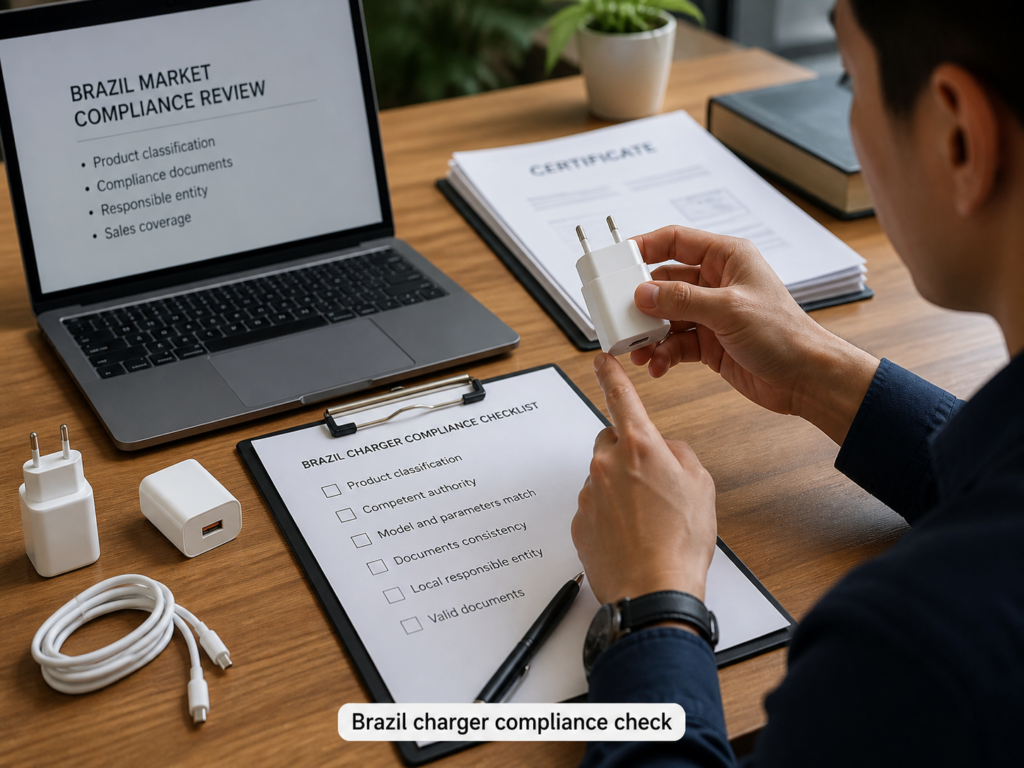
• **Brands/importers**: Confirm the compliance path and classification before mass production of products to avoid finding classification errors after mass production; unify parameters and labels across all channels to avoid inconsistent descriptions online and offline; also establish a compliance review mechanism for key changes, and confirm whether it will affect the validity of compliance before changing models or replacing components.
After reading this article, you should be able to quickly distinguish the Brazilian regulatory authorities for common chargers, avoid common misconceptions such as “all chargers require INMETRO” and “ANATEL only regulates wireless products”, also be able to initially verify the authenticity of ANATEL approval and INMETRO certification, and complete basic compliance self-checks according to your own role.