
First, here are three core conclusions for those in a hurry to check against their situation:
1. Not all charging products with wireless functions require an IC ID, but as long as they are sold in the Canadian market, they must complete an ISED compliance assessment;
2. Purely passive charging accessories (such as ordinary USB cables, passive adapters) do not require radio certification;
3. If a wireless module that has already obtained ISED certification is used and the complete device meets the integration conditions, the formal certification of the complete device can be exempted, but a complete device compliance assessment is still required, and labels must be affixed as required.
This article mainly focuses on common charging products, such as charging cables, USB accessories, chargers, power banks, and charging electronic products with wireless functions (like Qi wireless chargers, fast chargers with Bluetooth, smart power banks with WiFi, wireless charging receiver accessories, etc.). Note that today we only discuss radio and electromagnetic interference compliance under the jurisdiction of ISED, and do not cover electrical safety, environmental protection, or equipment requirements for special fields such as medical and industrial equipment, which require separate assessment.
If products are launched on the market without compliance, you may encounter problems such as customs detention and return, e-commerce platform delisting, regulatory authority investigations, and requirements to stop sales and make rectifications. The penalty intensity is determined based on the specific illegal facts, and there is no unified fixed standard, so do not take chances.
First, Understand What ISED Is and How It Differs from FCC and Safety Certifications
Many new sellers hear the term ISED for the first time, so let’s first cover some basic common sense to help you understand what it regulates.
The full name of ISED is Innovation, Science and Economic Development Canada. Simply put, it is the official Canadian agency that regulates wireless spectrum and electromagnetic interference. The “IC certification” often mentioned by many experienced sellers is supervised by it. Its core responsibility is to manage the use of wireless spectrum to prevent various wireless devices from interfering with each other, especially to avoid affecting the normal operation of important facilities such as airports, hospitals, and public safety.
Many people confuse ISED with other certifications, so let’s clarify them all at once:
• **Difference from the US FCC**: The FCC and ISED are regulatory agencies of the same type, both regulating wireless and electromagnetic interference. Many test items are similar, and test data can be partially reused, but **FCC certification absolutely cannot directly replace ISED requirements**. After all, they are the regulations of two countries, and labels cannot be mixed: IC ID is the exclusive number for Canadian formal certification, and FCC ID is only valid in the United States, so do not affix the wrong one.
• **Difference from electrical safety certification**: Safety certification and ISED are completely independent requirements, and ISED does not regulate electrical safety. The common safety certification is CSA. Whether it is required and which standard to apply depends on the product category and the province of sale, so do not confuse them.
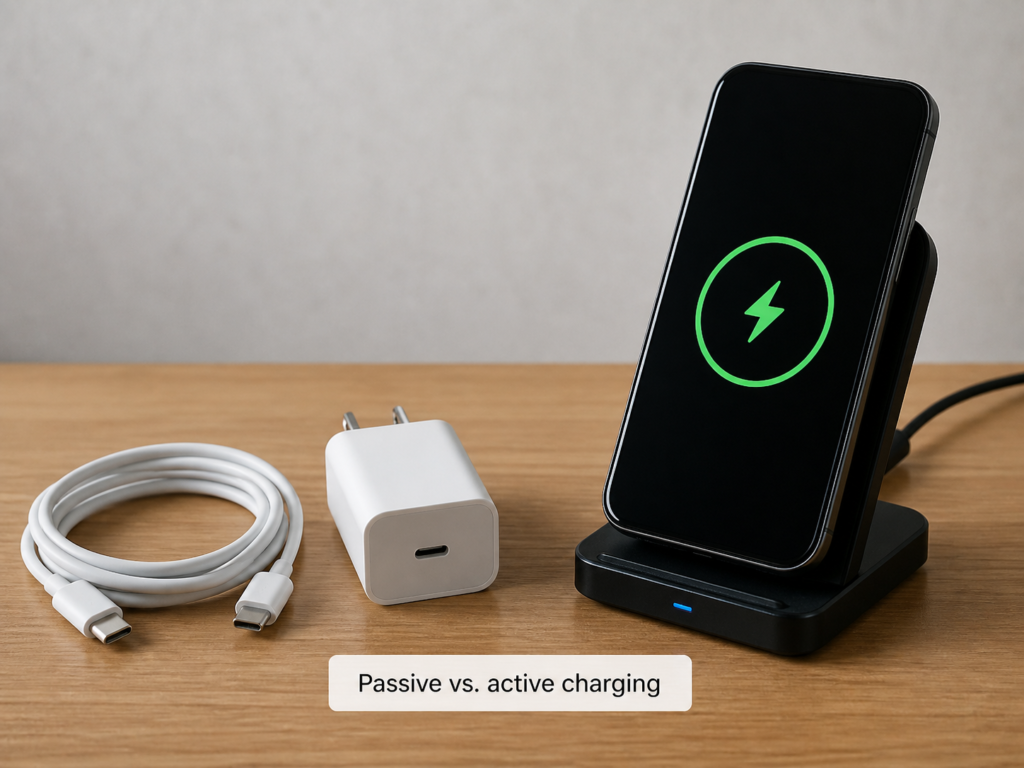
So what is the relationship between ISED and charging products? Simply put: as long as a product has functions that **actively emit electromagnetic energy**, such as wireless charging and wireless communication, an ISED assessment is required. If it is a purely passive charging cable or adapter that does not emit electromagnetic signals itself, you do not need to worry about ISED’s radio requirements. In addition, independently sold external power supplies usually apply to ICES-001; however, if they are specifically used for a device subject to other ICES standards and have been verified with the layout/operation mode of that device in accordance with ICES-Gen regulations, the corresponding ICES standard may apply. Final confirmation shall be made based on product design, sales method, and applicable standards.
3 Steps to Determine Whether Your Charging Product Requires ISED Processing
Now that we understand the basics, let’s look at the most practical 3-step judgment method. Even if you are entering the Canadian market for the first time, you can make a preliminary judgment for your product by following it.
Step 1: Break Down Product Function Types
First, break down the product into individual functions to see which category they belong to: purely wired/passive, with wireless power transfer (WPT) transmitting/receiving functions, with independent wireless communication functions, or a combination of multiple functions. If the product uses a third-party wireless module (such as a Bluetooth module or WiFi module), first ask the supplier for the module’s IC ID certificate to check its certification scope and restrictive conditions, which will be used later.
Step 2: Confirm Commercial Attributes
Many people think that small-batch or dropshipping products do not need to comply, but that is not the case. As long as it is commercial sales targeting the Canadian market, whether it is offline physical stores, cross-border direct mail, commercial samples, gifts, or dropshipping, it falls within the scope of regulation and requires compliance. Whether technical standards, certification, or conformity requirements apply to a product shall be judged based on the equipment category and applicable standards, and shall not be automatically exempted just because it is personally carried, is a sample, a gift, or in small quantity; if statutory exceptions or special import arrangements are involved, confirmation shall be obtained from ISED or a Canadian professional consultant regarding the specific equipment and import purpose.
Step 3: Match the Corresponding Compliance Path
Based on the broken-down functions, match the appropriate compliance path. For single-function products, just correspond directly; for multi-function products, such as those with both wireless charging and Bluetooth, each function must be assessed separately, and then the requirements are superimposed. You cannot only choose the path for one of the functions.
Clarify 3 Common Compliance Paths at Once
You may ask, what are the compliance paths? What situations do they correspond to? We have compiled a comparison table to help you understand at a glance.
| Compliance Path Type | Is IC ID Issued | Publicly Queryable on the REL (Radio Equipment List) | Core Applicable Scenarios | Main Label Requirements | Required Retained Documents | Common Changes Triggering Reassessment |
| Conformity Retention (formerly SDoC) | No | No | Independent external power supplies (usually subject to ICES-001), RSS-216 Type 1/2 wireless chargers | Affix compliance marks in accordance with corresponding standards (e.g., ICES mark, CAN RSS-216) | Test reports for corresponding standards, model/hardware version configuration records | Changes to circuit design, housing shielding, WPT frequency/power/modulation method |
| Category I Formal Certification | Yes | Yes | Products with communication functions such as Bluetooth/WiFi, RSS-216 Type 3 wireless chargers | Mark IC ID and hardware version number (HVIN) | IC ID certificate, corresponding test reports, configuration records | Module replacement, antenna modification, radio frequency parameter adjustment, firmware changes affecting transmission |
| Certified Module Integration (Exempt from Complete Device Certification) | No (module already has one) | Yes (only the module is queryable) | Products that use a wireless module with an IC ID and fully meet integration requirements | Mark the module’s IC ID, and supplement labels as required for the complete device | Module certificate, integration verification records, complete device test report | Any change beyond the restrictive conditions of the module certification |
Below we will explain the details of each path separately:
Conformity Retention Category (No Official Certificate Issued)
This is the path previously commonly referred to as SDoC. Simply put, “no official certificate is required; you can sell after completing testing, retaining documents, and affixing labels as required, and the official authority will conduct random inspections afterwards.” It is mainly divided into two situations:
• **ICES category**: Independently sold external power supplies usually apply to ICES-001; however, if they are specifically used for a device subject to other ICES standards and have been verified with the layout/operation mode of that device in accordance with ICES-Gen regulations, the corresponding ICES standard may apply. Final confirmation shall be made based on product design, sales method, and applicable standards. Just affix the compliance mark in accordance with the applicable standard, and retain the test report and model configuration records. If the circuit design, housing, or shielding structure is modified later, a reassessment is required.
• **WPT Type 1/2 category**: Wireless charging devices that meet the Type 1 or Type 2 requirements in the RSS-216 standard also follow this path. The label must be marked with “CAN RSS-216 / CNR-216”, and the RSS-216 test report, hardware version number, and configuration records must be retained. If the frequency, power, modulation method, or shielding of the wireless charger is changed, retesting is required.
It should be reminded that products under conformity retention cannot be found in ISED’s official REL database, nor do they have officially issued certificates. Do not casually claim to have “ISED official certification”, otherwise there will be a risk of false advertising. An internal declaration of conformity is optional and cannot replace test reports and labels.
Category I Formal Certification Category (IC ID Issued)
This is the path commonly referred to as “obtaining an IC ID”. In plain terms, wireless devices with relatively high risks must be reviewed by an ISED-recognized agency, obtain an exclusive IC ID number, and be entered into the official REL database before they can be sold.
Products with communication transmitters such as Bluetooth and WiFi, as well as Type 3 wireless charging devices in RSS-216, must follow this path. The core requirement of this path is that the IC ID and hardware version number must be marked, and the IC ID certificate, corresponding test reports, and configuration records must be retained. If the module is replaced later, the antenna is modified, the radio frequency parameters are adjusted, or firmware changes affect the transmission performance, a reassessment or even re-certification is required.
Certified Module Integration Category (Exempt from Complete Device Certification)
This is the situation many sellers care about: “If a certified module is used, does the complete device not need certification?” The answer is: if the wireless module itself already has an IC ID and the complete device design fully meets the module’s integration requirements, then the complete device indeed does not need separate formal certification, but this does not mean that nothing needs to be done for the complete device.
The prerequisite for following this path is that you must check four key points. If even one does not meet the requirements, a reassessment is required:
1. The module’s IC ID certificate is valid, and the certification scope covers the functions and parameters you use;
2. The antenna model and gain you use, as well as the module’s installation spacing and shielding measures, all comply with the integration instructions provided by the module manufacturer;
3. If the complete device has multiple wireless functions, it must meet the RSS-102 radio frequency exposure requirements when transmitting simultaneously;
4. The complete device’s labels and bilingual (English and French) user notifications all meet ISED requirements.
In addition, note that the host device must not have other uncertified active wireless transmission functions. For handheld or wearable products, the integration rules will be stricter and require case-by-case confirmation. For products following this path, the label must be marked with the module’s IC ID, and other labels must be supplemented as required for the complete device. The module certificate, integration verification records, and complete device test report must be retained. Any change beyond the restrictive conditions of the module certification requires reassessment.
Finally, let’s emphasize the assessment rules for multi-function products: if a product has multiple wireless functions, each function must be matched with the corresponding RSS or ICES standard, and the radio frequency exposure requirements must be assessed together. Finally, labels, instructions, and retained documents must be integrated according to the most complete complete device configuration. You cannot only choose the path for one of the functions, as that is non-compliant.
How to Specifically Judge Charging Products? Check by Category
After covering the general paths, let’s go back to charging products and break down the specific judgment rules by category, so you can directly check against your product.
General Prerequisite: All Products with Wireless Transmission Must Comply with Radio Frequency Exposure Requirements
The applicability, assessment method, and exemption of RSS-102 shall be judged based on equipment type, usage distance, and transmission configuration. WPT sub-components of WPT client devices are not subject to RSS-102 radio frequency exposure requirements; WPT sub-components of Type 2 WPT sources are exempt from routine radio frequency exposure assessment, and some Type 1 and Type 3 WPT sources may also obtain partial routine assessment exemptions when conditions are met, but must still comply with applicable exposure limits. If the product additionally contains transmission modules such as Bluetooth and WiFi or has simultaneous transmission, applicable co-location and total exposure conformity assessments shall be completed in accordance with RSS-102.
Standard Version and Special Boundaries of Wireless Power Transfer (WPT)
For wireless charging products, ISED has a dedicated RSS-216 standard, and the current latest version is Issue 3. RSS-216 Issue 3 was released on September 3, 2024. The transition period between Issue 2 and Issue 3 expired on September 3, 2025; after that, certification applications and related equipment manufactured, imported, distributed, leased, offered for sale, or sold in Canada must comply with Issue 3.
The following WPT devices must notify ISED via the Special Authorization Form or the method specified in the standard’s foreword before conducting conformity verification in accordance with RSS-216: transmitted WPT power exceeding 500 W; used for electric vehicle charging with a transmission distance exceeding 50 cm; used for non-electric vehicle purposes with a transmission distance exceeding 20 cm; or WPT fundamental frequency higher than 40 GHz. After receiving the initial inquiry, ISED will inform whether additional information is required and the follow-up processing requirements.
Wired Charging Accessories Category (No Wireless Function)
First, let’s look at the simplest wired charging accessories, that is, products without wireless communication or wireless charging functions:
• Purely passive products (such as ordinary USB cables, passive adapters): have no function of actively emitting electromagnetic energy at all, and do not require ISED radio assessment;
• Independently sold external power supplies usually apply to ICES-001; however, if they are specifically used for a device subject to other ICES standards and have been verified with the layout/operation mode of that device in accordance with ICES-Gen regulations, the corresponding ICES standard may apply. Final confirmation shall be made based on product design, sales method, and applicable standards.
• Power supplies sold as accessories: follow the ICES standard of the main device, and only need to be assessed as a combined device, no separate processing is required.
Wireless Power Transfer (WPT) Category
That is, the commonly referred to wireless charging products. Whether it is the transmitting end (such as a wireless charging pad) or the receiving end (such as a wireless charging phone case), they must be classified according to RSS-216. The classification is based on transmission characteristics, modulation function, fundamental frequency, and radiated emission limits, and shall ultimately be subject to testing and engineering documents, not just product promotion.
There are three categories in total:
• **Type 1 (Conformity Retention Path)**: The judgment condition is that it does not emit energy at the WPT frequency, or although it emits, it does not transmit intelligent communication signals and does not use alternative limits. Common examples include unmodulated low-frequency wireless charging receiver cases, and pure wireless charging devices that only transmit energy without data interaction.
• **Type 2 (Conformity Retention Path)**: Four conditions must be met simultaneously: actively transmits energy at the WPT frequency, uses modulation to transmit information at that frequency, fundamental frequency is lower than 490 kHz, and radiated emissions meet the standard’s conventional limits (alternative limits in Section 5.4 of RSS-216 are not used). Common examples include Qi wireless chargers with load modulation power management. Note that you cannot judge it as Type 2 just because it has a foreign object detection function; you must look at the actual modulation situation.
• **Type 3 (Formal Certification Path)**: The judgment condition is that it meets the first two conditions of Type 2 but does not meet any one of the latter two conditions, or uses the alternative limits in Section 5.4 of RSS-216. Common examples include wireless chargers with a fundamental frequency ≥ 490 kHz, and high-power wireless chargers whose radiated emissions do not reach a 40 dB margin.
A special reminder here: if the wireless charger also has independent communication functions such as WiFi and Bluetooth, these functions must be assessed separately and will not directly affect the classification of WPT, so do not confuse them.
Charging Products with Independent Wireless Communication Functions
For example, fast chargers with Bluetooth, smart power banks with WiFi, and charging docks with Bluetooth finding function. In addition to the charging function, these products also have wireless communication functions such as Bluetooth, WiFi, and NFC.
The wireless communication functions of such products usually fall within the scope of formal certification and must comply with the corresponding RSS standards. There are two specific compliance paths:
• **Complete device certification**: If the complete device design exceeds the restrictive conditions of the module certification, the complete device must undergo formal certification to obtain an independent IC ID.
• **Certified module integration (exempt from complete device certification)**: As long as the module used has an IC ID and meets the four key integration points, the complete device does not need separate certification.
For handheld or wearable products, the integration rules will be stricter, so be sure to confirm in advance.
Practical Case: How to Comply for a Qi Wireless Charging Pad with Bluetooth
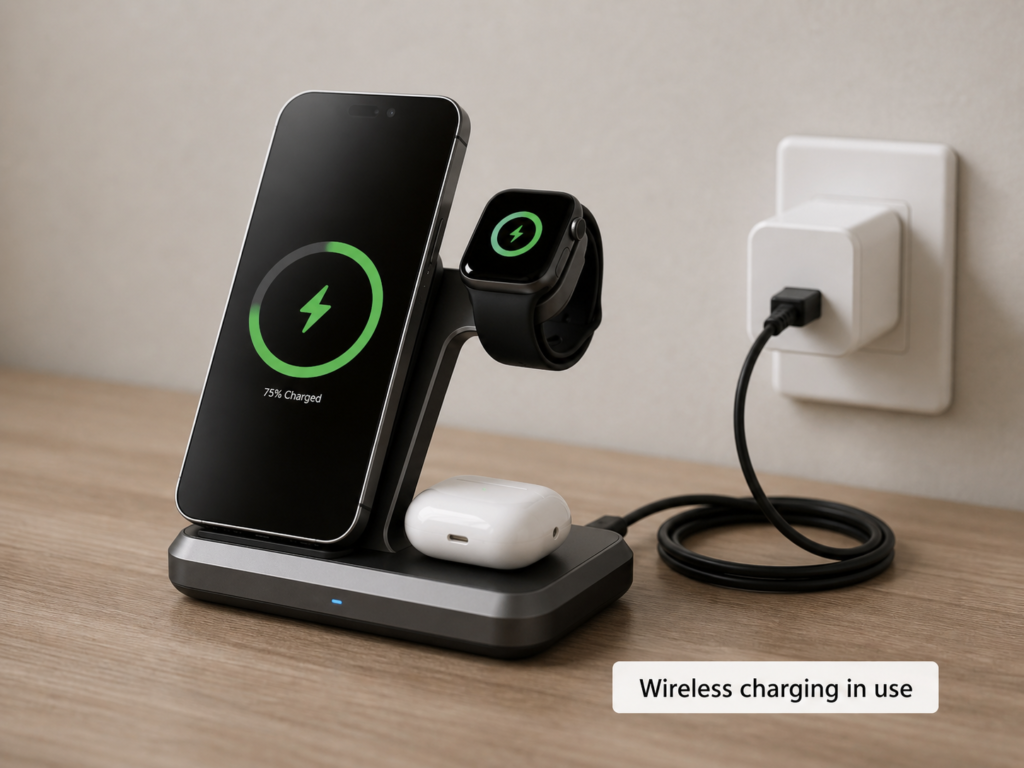
After talking about so many rules, you may still be a bit confused. Let’s take one of the most common combined products as an example to teach you how to judge step by step – a Qi wireless charging pad controlled by a Bluetooth APP.
Step 1: First break down the functions: this product has three ISED-related functions: first, Qi wireless charging transmission (WPT function), second, Bluetooth communication (used to connect to the APP to adjust power and check status), and third, the matching external power supply.
Step 2: Assess each function one by one:
1. **WPT part**: First, in accordance with the requirements of RSS-216 Issue 3, test its fundamental frequency, modulation method, and radiated emission margin to determine whether it is Type 1, Type 2, or Type 3, and then correspond to the conformity retention or formal certification path.
2. **Bluetooth part**: First check if the Bluetooth module used has an IC ID. If yes, check the four key integration points to see if they meet the requirements. If they do, follow the module integration path, and no separate complete device Bluetooth certification is required; if the module is not certified or does not meet the integration requirements, formal Bluetooth certification for the complete device is required.
3. **Power supply part**: Check whether this power supply is sold separately or only sold as a matching accessory for the wireless charger. Independently sold external power supplies usually apply to ICES-001; however, if they are specifically used for a device subject to other ICES standards and have been verified with the layout/operation mode of that device in accordance with ICES-Gen regulations, the corresponding ICES standard may apply. Final confirmation shall be made based on product design, sales method, and applicable standards. If it is sold as a matching accessory, follow the ICES standard of the main device (wireless charger) and be assessed as a combined device.
4. **Radio frequency exposure assessment**: Shall be assessed in accordance with RSS-102 to check whether it meets applicable limits and exemption conditions under simultaneous transmission configuration, after all, two transmission functions work at the same time.
Step 3: Summarize the requirements of all functions to determine the final compliance path: for example, if the WPT is Type 2 (conformity retention), the Bluetooth uses a certified module and meets the integration requirements, and the power supply is sold as a matching accessory, then the complete device does not need a complete device IC ID. Just affix the module’s IC ID and RSS-216 compliance mark as required, and retain all test reports, module certificates, and integration records. If the WPT is Type 3, or the Bluetooth does not meet the module integration requirements, then formal certification of the complete device is required to obtain a complete device IC ID.
8 Most Common Pitfalls, Don’t Wait Until Your Goods Are Detained
Misconception 1: Wireless chargers only need safety certification, no need to worry about ISED
Correction: Incorrect. Wireless charging is a product that actively emits electromagnetic energy, and must complete an ISED assessment in accordance with RSS-216. Whether it is the transmitting end or the receiving end, classification assessment is required, and safety certification cannot replace ISED.
Misconception 2: Bluetooth and WiFi are additional functions, no need for ISED processing
Correction: Incorrect. As long as it has an active wireless transmission function, whether it is the main function or an additional function, it must meet ISED requirements. For example, a fast charger with Bluetooth power adjustment, although its main function is charging, the Bluetooth function also needs to be assessed for compliance.
Misconception 3: With US FCC certification, no need for ISED processing
Correction: Incorrect. The FCC is the US regulatory system, and it is two independent requirements from Canada’s ISED, which cannot be directly replaced. Only some test items are similar and test data can be partially reused, but the assessment and labeling must still be completed in accordance with ISED requirements.
Misconception 4: Small-batch or dropshipping products can skip ISED processing
Correction: Incorrect. As long as it is commercial sales targeting the Canadian market, even dropshipping, samples, or gifts fall within the scope of regulation and have the risk of being randomly inspected. Whether technical standards, certification, or conformity requirements apply to a product shall be judged based on the equipment category and applicable standards, and shall not be automatically exempted just because it is personally carried, is a sample, a gift, or in small quantity; if statutory exceptions or special import arrangements are involved, confirmation shall be obtained from ISED or a Canadian professional consultant regarding the specific equipment and import purpose.
Misconception 5: If a certified wireless module is used, the complete device does not need to worry about ISED
Correction: Incorrect. Module certification only means that the module itself is compliant. The complete device must also check the module’s integration restrictive conditions, and if they are not met, re-certification is required. Even if the conditions are met, a complete device compliance assessment must be completed, the module’s IC ID must be marked, and relevant documents must be retained. It is not that nothing needs to be done.
Misconception 6: Low-power wireless products do not need ISED processing
Correction: Incorrect. The compliance path depends on the product’s frequency band, function, and corresponding standards, not just the power level. For example, ordinary consumer-grade Bluetooth products have very low power, but still require formal certification assessment.
Misconception 7: USB-C data cables printed with wireless marks require ISED processing
Correction: Incorrect. Passive data cables have no active wireless transmission and no WPT function, so they do not require ISED radio assessment. The core of judgment is the actual function of the product, not the promotion on the packaging.
Misconception 8: Wireless chargers with Bluetooth or WiFi belong to WPT Type 3
Correction: Incorrect. WiFi and Bluetooth are independent communication functions that must be assessed separately according to corresponding standards, and will not directly determine the classification of WPT. The classification of WPT only depends on the transmission characteristics of the wireless charging itself.
How to Verify Whether a Product Is Truly Compliant?
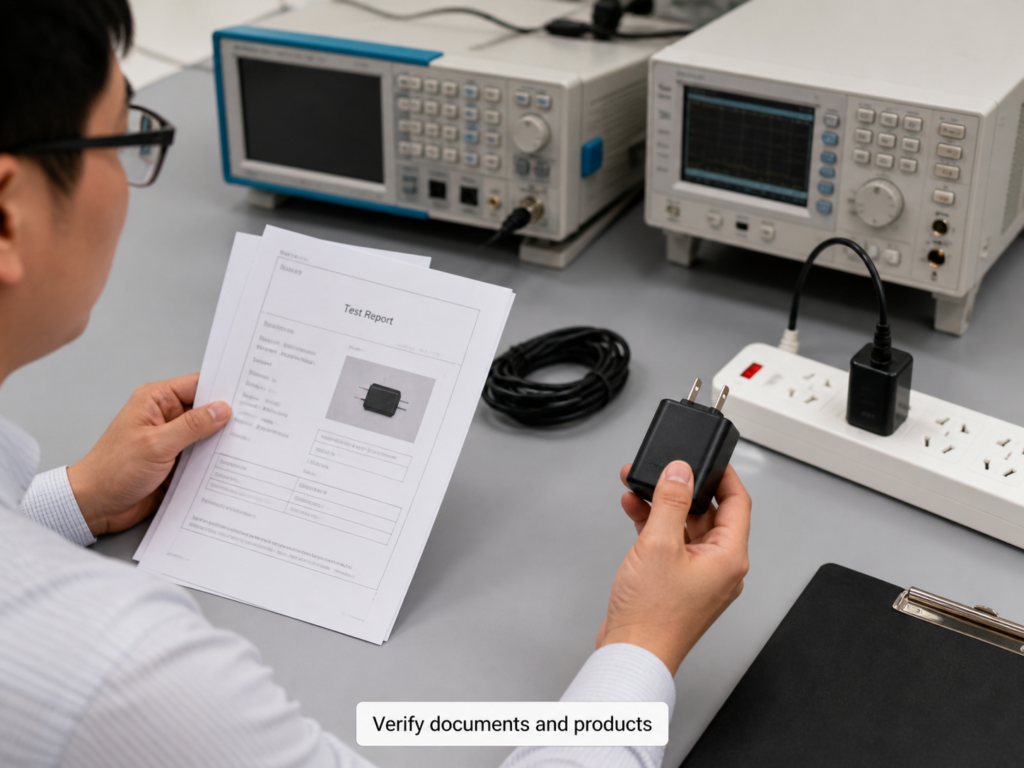
You may ask, how do I know if the product provided by my supplier is truly compliant? Here we will explain the logic of two-level verification to help you avoid pitfalls.
First of all, it should be understood that the public database can only find formally certified products, and conformity retention products cannot be found. Therefore, you cannot rely solely on public queries to judge, and you must also verify documents and physical products.
Level 1: Public Verification via the REL Database
ISED’s official REL (Radio Equipment List) database is publicly queryable, and only applies to Category I formally certified complete devices or modules, that is, products with an IC ID.
The operation method is very simple: find the IC ID on the product, packaging, or electronic label, which is generally in the format “IC: XXXX-YYYYY”, where the first XXXX is the company number and the latter YYYYY is the product number. Then go to ISED’s REL database, enter this number to query, and check whether the found product model, hardware version number, certification number, and firmware version number are consistent with the product you have.
But note its limitations: it can only verify formally certified products. If it is a conformity retention product, there is no record in the REL, and you cannot say that it is non-compliant just because it cannot be found.
Level 2: Document and Physical Product Verification
This level applies to all products under ISED’s jurisdiction, whether they are conformity retention or formal certification.
The verification content includes: test reports for corresponding standards, configuration records of models and versions, compliance labels and marks. If a certified module is used, there must also be module integration verification records.
According to ISED requirements, manufacturers, importers, and distributors must retain these documents throughout the product’s life cycle and be able to provide them when required by regulatory authorities. In addition, it should be noted that a Canadian local contact is not a general mandatory requirement of ISED, and it depends on the platform you cooperate with or the agreement in the import contract.
4 Things New Sellers Need to Do Before Launching Products
If you are a new seller who has just entered the Canadian market, following these 4 steps can help you avoid most pitfalls.
Step 1: Function Breakdown and Information Collection
First, list all active wireless transmission functions of the product, such as WPT transmission/reception, Bluetooth, WiFi, NFC, etc., then collect key parameters: whether a certified wireless module is used, hardware version number, antenna specifications, firmware radio frequency parameters, WPT operating frequency and modulation method. You can ask the supplier for this information.
Step 2: Path Matching and Boundary Check
Compare with the 3-step judgment method and classification rules mentioned earlier to determine the compliance path applicable to each function. If a certified module is used, the check of the four key integration points must be completed. For close-fitting or handheld products, an additional assessment of RSS-102 radio frequency exposure requirements is required.
Step 3: Document and Label Preparation
For formally certified products, check whether the IC ID is consistent with the filing information in the REL database, and mark the IC ID and hardware version number on the product as required.
For conformity retention products, complete testing of corresponding standards, retain test reports and configuration records, and affix compliance labels as required.
In addition, note that the information on e-commerce pages must be accurate. Do not mix FCC and CE certification information. Do not promote conformity retention products as “ISED official certified” to avoid the risk of false advertising.
Step 4: Pre-launch Consistency and Change Management
Before launching, be sure to check whether the model, configuration, and compliance information on the physical product, packaging, instructions, and e-commerce page are completely consistent, and there must be no discrepancies.
If there are subsequent changes to the product, such as replacing the module, modifying the antenna, adjusting power, replacing the housing, etc., as long as it may affect wireless transmission, shielding, or radio frequency exposure, the compliance must be reassessed, and changes cannot be made casually.
Frequently Asked Questions
Do wireless chargers in Canada need an IC ID?
Not necessarily, it depends on the type of wireless charger. If it is Type 1 or Type 2 in RSS-216, follow the conformity retention path and no IC ID is required; if it is Type 3, formal certification is required to obtain an IC ID.
Must Bluetooth chargers in Canada undergo ISED certification?
Yes, as long as it has an active wireless transmission function such as Bluetooth, an ISED compliance assessment must be completed, but a complete device IC ID is not necessarily required – if a certified Bluetooth module is used and meets the integration requirements, the complete device certification can be exempted, and only the complete device assessment and labeling are required.
Can FCC ID replace Canadian ISED requirements?
No. The FCC is the US regulatory system, and it is two independent requirements from ISED. Only part of the test data can be reused, and it cannot be directly replaced. Products cannot enter the Canadian market only with an FCC ID affixed.
If a certified wireless module is used, is complete device ISED certification still required?
Not necessarily. If the complete device fully meets the module’s integration requirements, formal complete device certification is not required, but a complete device compliance assessment must still be completed, the module’s IC ID must be marked, and relevant documents must be retained. If it exceeds the restrictive conditions of the module certification, complete device certification must be redone.
Overall, Canadian ISED compliance is not a multiple-choice question of “either do everything or do nothing”, but requires matching the corresponding path according to the product’s actual functions and sales scenarios. Don’t think of it as too complicated. As long as you do a good job of function breakdown and path matching in advance, and prepare documents and labels as required, you can smoothly enter the Canadian market and avoid unnecessary losses.