
If you are a charging product seller on Amazon US, you’ve most likely struggled when choosing certification: should you get UL or ETL? Some say Amazon only recognizes UL, and getting ETL will get your listing taken down; others say ETL is a knockoff of UL with low credibility. If you are an average consumer buying chargers in the US, you also often see two different safety marks, UL and ETL, on products, not knowing which is more reliable.
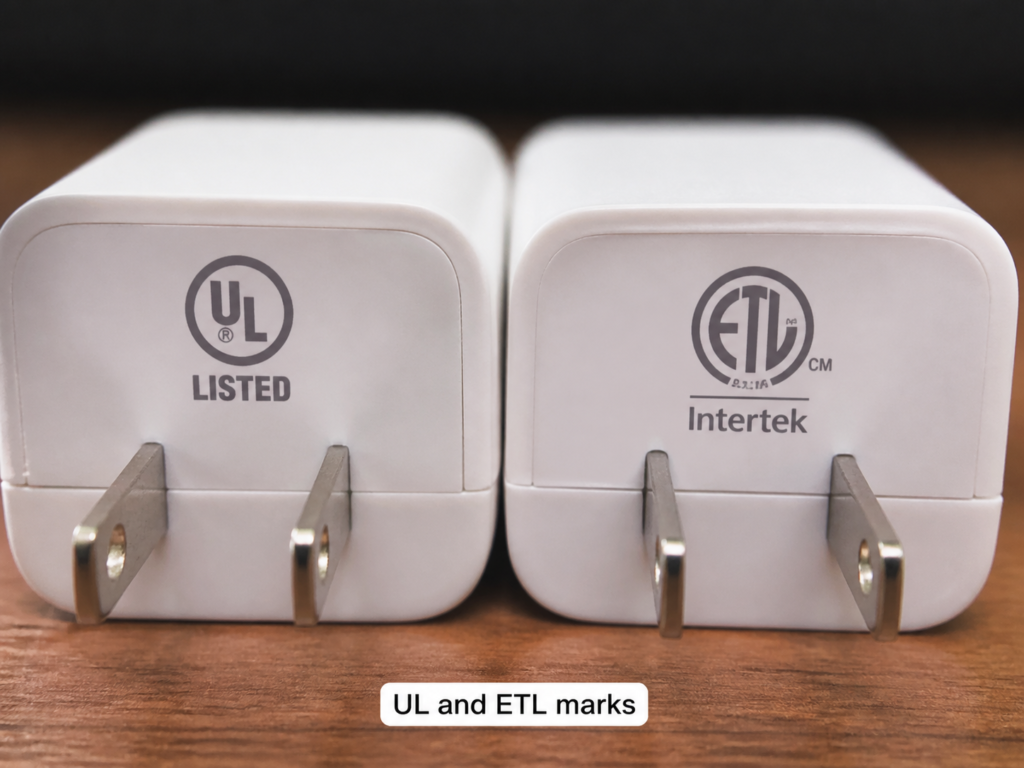
In fact, many claims about these two certifications are wrong. Rumors like “UL is an official US certification” and “ETL cannot pass Amazon’s review” essentially stem from a lack of understanding of the legal basis of both and Amazon’s review rules. This article will thoroughly explain this matter for charging products on Amazon US from multiple dimensions such as compliance, cost, and market recognition, to help you make the most suitable choice for yourself.
Beginner’s Guide: What Exactly Are UL and ETL?
To understand why the above conclusions hold, you must first clarify the basic concepts of the two certifications and their common legal foundation.
UL Certification
UL is an electrical safety certification issued by US-based UL Solutions. It mainly tests whether products have safety risks such as electric shock, fire, and abnormal temperature rise. Because UL was founded early, it has very high recognition among US consumers, and many people specifically look for the UL mark when buying electrical appliances.
ETL Certification
ETL is a product safety certification mark under Intertek. Both Intertek and UL are Nationally Recognized Testing Laboratories (NRTL) recognized by the US Occupational Safety and Health Administration (OSHA). However, the corresponding certifications of the two are only suitable for equivalent comparison when the same applicable standards, certification scope, and product models all match. Specific requirements also depend on the product, usage scenario, state or local regulations, and platform policies.
Under the premise that the same applicable safety standards, certification scope, and product models all match, UL and ETL, as corresponding certifications issued by OSHA-recognized NRTL institutions, usually have equivalent safety compliance status; specifics should still be verified against the institution’s recognition scope, certificates, and local regulatory requirements.
Common Legal Basis: OSHA NRTL System
An important common sense to add here: US electrical safety requirements are not uniformly determined for all products by a single institution, but depend on the specific product, usage scenario, applicable regulations, and the recognized scope of the certification body.
NRTL stands for “Nationally Recognized Testing Laboratory”. OSHA recognizes testing and certification bodies with corresponding capabilities in accordance with relevant regulations, standards, and recognition scopes. For certain products subject to OSHA workplace regulations, state or local electrical codes, or platform policies, certification by an OSHA-recognized NRTL in accordance with applicable standards may be required.
However, this does not mean that all consumer electronics products, all states, and all sales scenarios in the US uniformly require NRTL certification. Whether it is mandatory and what documents are required should be confirmed item by item based on product type, usage scenario, sales state, and specific Amazon notifications.
In short, both UL and Intertek are in the OSHA-recognized NRTL system, but you cannot assume that any document with the words “UL” or “ETL” meets all US electrical regulations. A reliable comparison can only be made when the institution’s recognition scope, applicable standards, certification scope, and actual product all match.
4 Must-Know Confusing Terms (Basics to Avoid Pitfalls)
Many people get scammed because they mix up these concepts; clarifying them in advance can save a lot of detours:
• **Listed Certification**: This is a way for certification bodies to list or certify products that meet specific standards and conditions. The specific product categories and certification scope are determined by applicable standards and the institution’s program. For charging devices that require product safety certification, it should be confirmed that the certification documents cover the complete finished product, model, and configuration being sold. The documents required by Amazon are subject to specific category policies and ASIN compliance notifications, and it cannot be generally stated that all charging products must provide complete product listed certification.
• **Component Recognition**: This only applies to a component inside the product. For example, the transformer and capacitor in a charger may have UL component recognition, but this only means the part itself is qualified, not that the entire charger has passed UL certification. Many unscrupulous service providers use component certification to impersonate complete product certification, so new sellers should be especially careful.
• **Tested**: Many merchants say “the product has undergone UL testing”, but having been tested does not mean obtaining formal certification — it may just be that a certain indicator was tested by a laboratory on their own, without going through the formal certification process, and there is no queryable certificate number. Amazon may not recognize such documents.
• Vague “certification” claims: Only saying “the product has certification” without clarifying the issuing body, testing standards, and covered models is not only detrimental to compliance judgment, but may even constitute false advertising.
Comparison of 5 Core Dimensions: Which Is More Practical in the Amazon Scenario
Since both may be recognized under the same applicable scope and conditions, what are the differences in actual use? We compare them from five core dimensions, and all comparisons must be based on the same safety standards, same product configuration, and same certification scope.
| Comparison Dimension | Unified Comparison Caliber | ETL Certification | UL Certification | Explanation of Exceptions |
| Platform Review Recognition | Specific category and ASIN requirements of the US site, valid product safety documents under the same standard | Recognized when the notification accepts corresponding NRTL certification | Recognized when the notification specifies UL or accepts corresponding NRTL certification | If the notification or contract explicitly specifies UL, it shall be implemented in accordance with written requirements |
| Initial Certification Cost | Same product, same standard, same configuration, same factory, and same service scope | Subject to project quotation | Subject to project quotation | Core components, factory audits, and service scope all affect total cost |
| Certification Cycle | Same samples, documentation, factory, and rectification conditions | Subject to project confirmation | Subject to project confirmation | Sample rectification, factory audits, and configuration changes may extend the cycle |
| Subsequent Maintenance Cost | Continuous supervision, certificate maintenance, and change services | Depends on the project | Depends on the project | Inspection frequency, factory location, and product series affect costs |
| Market Recognition | Average US consumers, B-end procurement, and offline channels | Average consumer recognition is usually lower than UL | Consumer recognition is usually higher | Procurement parties may put forward specific brand or mark requirements |
There are no fixed differences in certification fees, cycles, and subsequent supervision costs applicable to all products. Sellers should obtain written quotations from UL, Intertek, or their authorized institutions under the same safety standards, same product configuration, same factory, and same service scope before comparing. Sample rectification, number of factory audits, and subsequent configuration changes may all affect the final cost and time.
From the perspective of brand recognition, UL usually has higher visibility among US consumers and in some corporate procurement scenarios, which may be helpful for high-end products or offline channel communication. However, this does not mean that UL products are necessarily superior to ETL in actual safety performance, nor can it be directly deduced that products will definitely sell better.
6 Most Common Certification Misconceptions, Don’t Fall Into the Trap
Many people take detours on certification because they believe these rumors.
Misconception 1: Amazon only recognizes UL, ETL cannot pass review
Truth: If the specific requirements accept corresponding NRTL certification, both Intertek and UL may be recognized; but platform requirements vary by product, category, and ASIN notification. Most review failures are due to inapplicable documents, mismatched standards, certification scope not covering the product, or model mismatch, and cannot be generally attributed to the certification brand.
Misconception 2: ETL is a “knockoff UL” with lower credibility
Truth: Under the premise that the same applicable safety standards, certification scope, and product models all match, the corresponding certifications of ETL and UL can be compared for equivalent safety compliance. The main differences between the two are more reflected in brand recognition, service arrangements, and specific project requirements; there is no conclusion that safety level can be judged solely by brand.
Misconception 3: Having UL component certification = complete product UL certification
Truth: Amazon review and regulatory judgment depend on whether the documents cover the actual finished product. Component recognition of internal components is not equal to complete product certification, nor can it prove that the entire charger, docking station, or converter meets all applicable requirements.
Misconception 4: Certification is valid for life once obtained
Truth: UL and ETL listing programs usually include continuous supervision or follow-up services, and the specific inspection frequency and fees depend on the project. Certification status is not necessarily judged by a unified “expiration date”.
Before changing the production factory, key components such as transformers, or modifying the structure, rated parameters, and product configuration, you should report to the certification body and obtain approval for the change. Unapproved changes may cause the original certification to no longer cover the sold version, and may trigger platform compliance actions, but it cannot be simply understood that all changes will automatically lead to certificate invalidation or inevitable listing removal.
Misconception 5: UL-certified products definitely sell better than ETL ones
Truth: Certification is only part of compliance requirements or product trust; the core of conversion also depends on factors such as product, price, listing quality, and reviews. Consumers of low-unit-price high-volume models usually do not specifically distinguish certification marks; only some high-end products, corporate procurement, or offline channels may have an additional preference for UL.
Misconception 6: UL/ETL can replace all US compliance requirements
Truth: UL or ETL product safety certification cannot replace other potentially applicable requirements, such as:
• Radio frequency equipment authorization or conformity procedures for FCC-applicable devices;
• Energy efficiency requirements applicable at the federal level or in California;
• Warning obligations when California Prop 65 applies;
• Transportation requirements and battery documents for products containing lithium batteries.
The applicability and document types of these requirements should be confirmed separately. FCC, energy efficiency regulations, Prop 65, and battery transportation requirements are not a type of “certification” that can be uniformly replaced by UL or ETL.
Decision Guide: Judgment Method for Choosing According to Needs
Should you choose UL or ETL? You can match your situation accordingly.
3-Step Judgment Method for Sellers
If you are a seller, you can make a quick decision in these three steps:
1. **Check the rules**: First look at the category policy or ASIN compliance notification to confirm whether the specific requirement is UL, a certain NRTL certification, or other materials such as test reports and conformity documents;
2. **Define needs**: Clarify the product positioning (high-volume or high-end), budget, and whether the launch cycle is tight;
3. **Look at the long term**: Whether there are plans in the roadmap to enter offline supermarkets, do corporate procurement, or deploy multiple global markets.
3 Scenarios Where ETL Is Preferred
If the following conditions are met, you can prioritize comparing ETL solutions:
1. The specific Amazon notification accepts corresponding NRTL certification and does not specify UL;
2. High-volume charging products with limited budgets that need to control certification investment;
3. Small and medium-sized sellers doing the US site for the first time, who hope to first complete compliance preparation matching their products.
The premise here is: the applicable standards, certification scope, product models, and production factory of the ETL certification are all consistent with the actually sold products, and document effectiveness cannot be ignored just because of price or cycle expectations.
3 Scenarios Where UL Is Preferred
If the following conditions are met, choose UL or at least prioritize evaluating UL solutions:
1. The specific Amazon notification, official written requirements, or customer procurement specifications explicitly specify UL certification;
2. The product is positioned as a mid-to-high-end brand, or will later enter offline channels or do corporate procurement;
3. The core components of the product already have UL certification, and after formal quotation, the overall cost difference is small.
Quick Judgment Logic for Consumer Purchasing
If you are an average consumer, you don’t have to only look at the brand name of UL or ETL. When prices and configurations are similar, UL certification may bring higher psychological trust; but ETL does not automatically mean the product is unsafe just because its brand recognition is lower.
Under the premise that the certification is authentic and verifiable, the certification scope covers the actual model and configuration, no unapproved changes have occurred in production, and other applicable regulations are also met, both ETL and UL can be used as important references for product safety compliance. Certification is not a guarantee of absolute product safety, and consumers should still verify the model, rated parameters, manufacturer, and certification status.
You can check the model and status through the official database or certification query page of the issuing body. However, just because a certain mark is printed on the product, you cannot fully confirm that the mark has not been misused. It is best to also check whether the manufacturer, model, product photos, and rated parameters are consistent.
General Bottom Line (Must Be Followed No Matter Which One You Choose)
No matter you choose UL or ETL, three bottom lines must be adhered to:
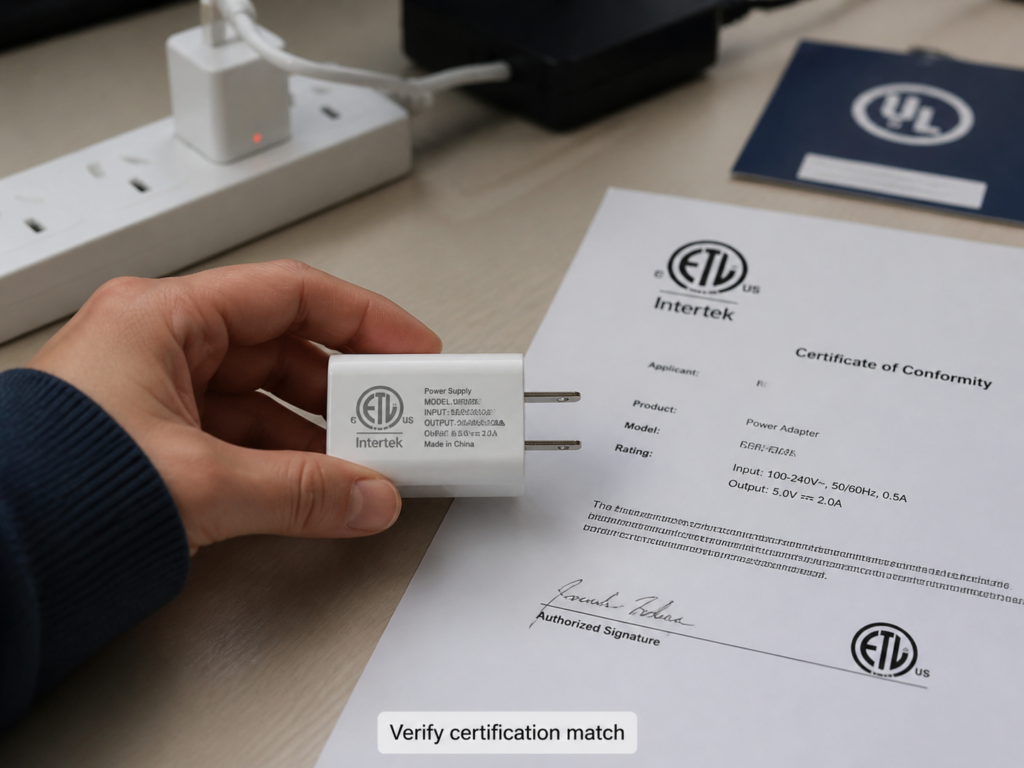
First, the certification is authentic and verifiable, the issuing body and its certification scope are applicable to the product, and the standards and certification scope match the actual product;
Second, the sold model is consistent with the model, manufacturer, address, and key parameters in the certification or test documents, and version swapping is not allowed;
Third, other compliance requirements (FCC, energy efficiency, batteries, etc.) need to be confirmed and handled separately, and you cannot think that everything is fine just because you have safety certification.
Core Summary
Overall, there is no absolute “better” between UL and ETL, only which is more suitable for your specific scenario. Both are important certification bodies in the US NRTL system, but equivalent comparison of corresponding certifications can only be made when applicable standards, certification scope, product models, and production conditions all match. You cannot directly interpret any document with the words UL or ETL as meeting all US electrical regulations.
For regular charging products on Amazon US, sellers should first check the specific category policy and ASIN compliance notification. If the notification accepts corresponding NRTL certification, ETL can be an option to control costs and compliance investment; if the product has clear UL-specified requirements, is positioned as mid-to-high-end, or will later deploy offline channels and corporate procurement, UL may be more suitable.
For average consumers, under the premise that the certification is authentic and verifiable, the certification scope covers the actual model and configuration, the product has no unapproved changes, and other applicable regulations are also met, both UL and ETL can be used as important references for product safety compliance. Certification is not a guarantee of absolute product safety, and you should also focus on verifying the manufacturer, model, rated parameters, and certification status when purchasing.