
Many cross-border sellers of charging products entering the Japanese market for the first time often encounter situations such as cargo being suspended from release, e-commerce listings being taken down, or being required to supplement compliance materials. One possible reason is that wireless products have not completed the applicable Radio Law compliance procedures. Many people have a vague impression of “TELEC certification”: what is the difference between it and PSE? Does the wireless charger I sell need to be processed? How much does it cost to find an institution, and how long does it take to get the certificate? This guide starts from the actual scenarios of charging products, clarifies the key points of TELEC-related compliance from basic judgment to certification maintenance, and helps you complete most of the preliminary judgment and preparation work by yourself.
First, Understand: What Exactly is TELEC Certification
Many people, when they first hear of TELEC, assume it is a unique Japanese product certification. In plain terms, TELEC generally refers to the technical standards conformity certification service for Japanese wireless equipment under the Radio Law. However, it is not a universal “entry ticket” that automatically applies to all wireless products entering the Japanese market.
In terms of official rules, the essence of the relevant system is the requirements of Japan’s Radio Law on the establishment, operation and technical standards conformity of radio stations. According to the equipment category, products may need to apply for **Technical Standards Conformity Certificate**, **Construction Design Certification**, or conduct **Technical Standards Conformity Self-Confirmation** within the scope specified by regulations. Whether it is required to be processed shall be confirmed according to the specific frequency band, transmission intensity, equipment purpose, radio station category and applicable exemption provisions.
It should be specially noted that TELEC is one of the common certification bodies designated by Japan’s Ministry of Internal Affairs and Communications (abbreviated as MIC), and not the only issuing body. Therefore, the commonly mentioned “TELEC certification” in the market is often a colloquial term for the compliance procedures related to technical conformity of Japanese wireless equipment; the specific official system and document names shall be subject to the Radio Law system applicable to the equipment. It governs the radio frequency and technical standards conformity of wireless equipment, not the overall safety or quality certification of the product.
For sellers of charging products, as long as the product has wireless functions such as Bluetooth, Wi-Fi, NFC, and cellular communication, they shall further confirm whether it is a radio station under the jurisdiction of Japan’s Radio Law and whether it is necessary to complete the corresponding conformity procedures. For example, charging devices that can connect to Apps, wireless charging docks with wireless communication functions, and outdoor power supplies with Wi-Fi functions cannot be judged whether certification is required solely by the product name.
The Consequences of Non-Compliance Are More Serious Than You Think
Japan’s Radio Law mainly regulates the establishment, operation and technical standards conformity of radio stations. For wireless equipment that falls within the jurisdiction and requires completion of conformity procedures, if the corresponding certificate or certification is not obtained in accordance with regulations and the technical conformity mark is not correctly marked, they may not be legally used or operated in Japan, and may face administrative dispositions or penalties stipulated in the Radio Law.
In actual cross-border sales, platforms, importers or distributors may also require supplementary materials such as certification numbers, product labels, and test reports. When materials are insufficient, commercial consequences such as product listing removal, sales suspension, return or recall may occur. However, it should be noted that customs detention, return shipping, e-commerce removal and recall do not necessarily occur in all non-compliant cases, and the specific situation depends on the product, violation circumstances, sales channels and regulatory handling.
3 Most Easily Confused Concept Pairs
Sellers who are new to Japanese compliance often confuse TELEC with other systems. Here is a clear comparison in a table:
| Confused Pair | Core Difference | Applicable Scenarios for Charging Products |
| TELEC related Radio Law compliance vs PSE | The Radio Law mainly governs the technical standards conformity and legal operation of wireless equipment; PSE is an electrical product safety regulatory system under the Electrical Appliance and Material Safety Law | Products connected to mains electricity and their AC adapters shall be separately checked to see if they are electrical products subject to PSE and which compliance method applies. Having wireless functions does not automatically mean the entire product requires PSE |
| TELEC related Radio Law compliance vs JATE | JATE falls within the scope of technical standards conformity certification and related certification services for Japanese telecommunications terminal equipment; whether it applies depends on whether the product connects to or accesses public telecommunications networks and is a relevant terminal equipment | Cellular communication products with public telecommunications network terminal functions may involve both the Radio Law and the Telecommunications Business Law. Products that only have Bluetooth or Wi-Fi and do not access as public telecommunications network terminals usually do not fall within the scope of this type of terminal equipment certification |
| TELEC vs technical conformity related systems | Technical standards conformity is a concept in Japan’s wireless equipment compliance system; TELEC is one of the certification bodies designated by MIC | Specifically, systems such as Technical Standards Conformity Certificate, Construction Design Certification, or Technical Standards Conformity Self-Confirmation permitted by regulations shall be selected according to the equipment category |
Check It Yourself: Does Your Charging Product Need TELEC Certification
Do not judge solely by the criterion of “whether it actively transmits”. A more reliable approach is to first confirm whether the product is a radio station defined in Japan’s Radio Law, and then check the latest technical standards, exemption and license-free provisions of the Ministry of Internal Affairs and Communications according to the frequency band, transmission power or electric field strength at specified locations, modulation method, antenna, purpose and equipment category.
Whether some equipment can be exempted is not simply based on the “low power” in product promotion or the nominal output power of the wireless chip, but may depend on the electric field strength under specified conditions, usage distance, frequency band and equipment structure. Therefore, the following judgments can only be used as preliminary screening and cannot replace the formal confirmation of the institution:
First, the product is planned to be sold, imported or used in Japan;
Second, the product contains wireless transmission, inductive communication or other functions that may be classified as radio stations;
Third, according to its frequency band, transmission intensity, equipment category and usage conditions, it cannot directly fall within the applicable exemption or license-free scope.
Direct Reference List for Charging Products
To facilitate everyone’s judgment, you can first classify them in the following way:
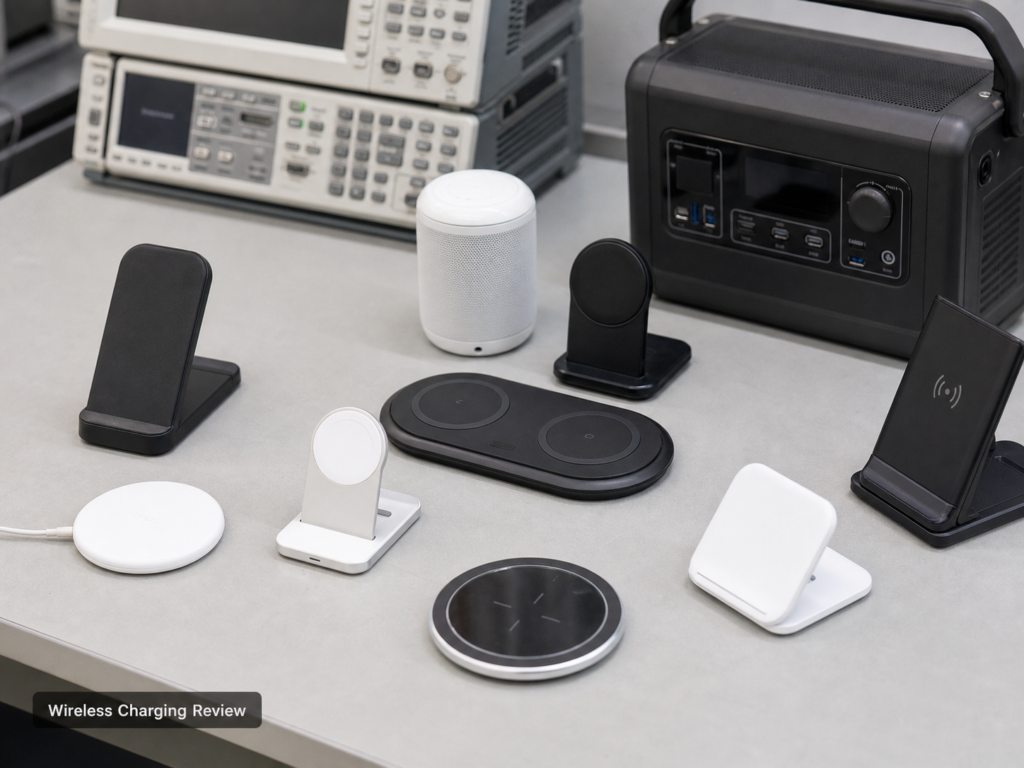
• **Must be further confirmed, usually requires key evaluation**: Wireless chargers, charging docks, outdoor power supplies and other smart charging devices with Bluetooth, Wi-Fi, NFC or cellular communication. Their frequency bands, transmission intensity, radio station categories and applicable technical standards shall be checked separately, and it cannot be directly concluded that certification is mandatory or definitely exempted based solely on the product name;
• **Products usually not involving radio wave compliance**: Pure wired chargers, data cables, power adapters without wireless functions. However, if the product has hidden wireless modules or debugging functions, reconfirmation is still required;
• **Products requiring special verification**: Ordinary Qi wireless charging pads, products with NFC functions, and charging products with hidden wireless functions. Wireless energy transmission, near-field induction and communication functions may be subject to different regulations respectively, which shall be confirmed against the latest rules of the Ministry of Internal Affairs and Communications, and cannot be judged solely by the “Qi” or “NFC” label.
Judgment Logic for Several Special Scenarios
If the product has multiple wireless functions such as Bluetooth, Wi-Fi, NFC or cellular communication, the applicable standards and test items for each transmitter and their combined state shall be confirmed separately. Whether applications can be merged, how the test scope is divided, and how fees are calculated shall be determined by the certification body according to the equipment structure and application system, and not necessarily linearly superimposed based on the number of wireless functions.
If the product uses a wireless module that has completed technical conformity related certification, it may indeed reduce some tests of the whole machine, but whether it can be used directly according to the module’s certification conditions depends on whether the whole machine strictly complies with the module certificate and usage restrictions. It is necessary to check the allowed antenna type, gain, power, installation method, housing conditions and firmware settings of the module.
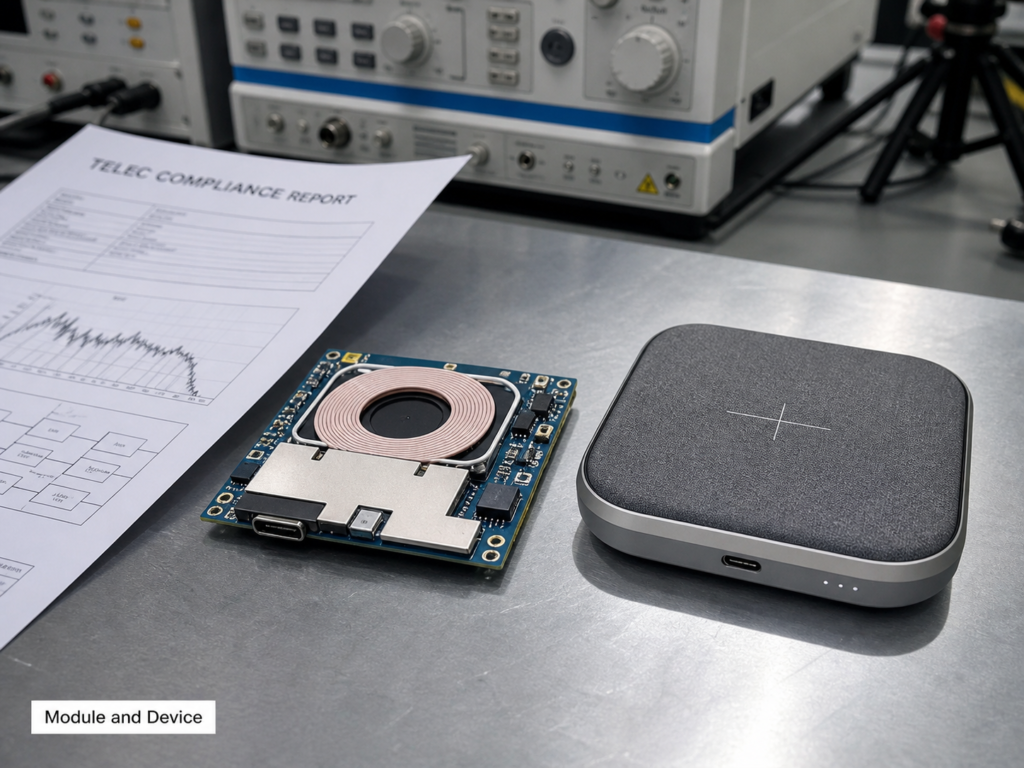
Therefore, module certification does not mean that the whole machine automatically completes all compliance. When changes occur in antennas, power, firmware, housing materials, shielding structures or installation conditions, the certification body shall confirm whether supplementary tests, change applications or re-applications are required.
Choose the Right Path: Certification Types and Core Compliance Requirements
After confirming that the product needs to complete the compliance procedure under the Radio Law, it is also necessary to confirm the applicable system. Common systems under Japan’s Radio Law include:
• **Technical Standards Conformity Certificate**: Confirmation of technical standards conformity for specific wireless equipment by designated bodies, etc.;
• **Construction Design Certification**: Certification for equipment designs that meet certain conditions, suitable for mass-produced products that need to be produced according to the certified design;
• **Technical Standards Conformity Self-Confirmation**: Only applicable to specific wireless equipment within the scope specified by regulations, confirmed by eligible subjects in accordance with regulations, and cannot be generally understood as a “self-declaration” that ordinary sellers can adopt.
The first two systems cannot be simply divided by “small batch” or “large batch”; the specific determination shall be combined with the nature of the equipment, the applicant subject, mass production method, manufacturing management capability and the requirements of the certification body. For finalized mass-produced charging products sold for a long time, Construction Design Certification may be more suitable, but the final confirmation shall still be made by the designated certification body based on the specific product.
Core RF Requirements: Self-Check in Advance to Avoid Retesting
The focus of certification or conformity review usually includes whether the wireless equipment uses allowed frequency bands, whether the transmission intensity meets requirements, and whether indicators such as spurious emissions meet standards. Confirming the following points in advance can reduce later rectifications:
First, the transmission power or electric field strength under specified conditions shall not exceed the limits of the corresponding frequency band and equipment category in Japan;
Second, frequency bands and channels permitted by Japanese rules shall be used. For example, for different sub-bands of 5GHz Wi-Fi, the applicable channels, power and usage conditions in Japan may be different from those in other countries or regions, and the domestic version cannot be directly used for judgment;
Third, spurious emissions shall not exceed the standard, and the product shall not cause harmful interference to other legal wireless equipment;
Fourth, it is necessary to confirm whether the wireless module, antenna, RF front-end, firmware power limit and regional settings are consistent with the application materials.
For charging products, attention should also be paid to the possible impact of wireless charging coils, metal structures, power supply noise and shielding design on wireless communication performance.
Labeling Requirements: Don’t Trip Over Small Matters
After obtaining the corresponding certificate or certification, the technical conformity mark and the specified certification number shall be marked on the equipment body or alternative positions permitted by regulations in accordance with applicable laws and regulations. The marking content, number format, size, position, and whether packaging, manuals or electronic display methods can be used depend on the specific equipment category and applicable system.
If the equipment is small in size, there may indeed be alternative marking methods permitted by regulations, but it cannot be assumed that all products can place the mark on the minimum sales package, nor can it be assumed that all products can use electronic identification. It shall be confirmed with the certification body in advance.
Common non-conformities include non-compliant mark size or format, non-compliant position, inconsistent number with certification documents, or inability to correspond models on products, packaging and manuals. The mark, number and certification documents must be consistent.
Matters to Confirm Before Application
Before formal application, the following matters shall be confirmed:
First, the core materials of the product are basically complete, including wireless module parameters, circuit block diagrams, antenna specifications, firmware versions and manuals, etc.;
Second, overseas manufacturers shall confirm with the intended certification body the requirements for the applicant subject, agency authorization, manufacturer information, importer and domestic contact person in Japan, etc. Even if a certain system allows overseas subjects to apply, when the product is sold and imported in Japan, the corresponding responsible subject and compliance documents shall still be implemented;
Third, the test samples shall be able to represent the planned mass production version. When changes occur in content that affects certification such as wireless modules, antennas, RF circuits, transmission power, firmware frequency bands, housings and installation conditions, the certification body must be consulted before mass production to confirm whether supplementary tests, change applications or re-certification are required.
Prepare Before Applying: Self-Check List Helps Reduce Rework
Many people have slow certification processing because they do not prepare well in advance, either with incomplete materials, or the design is not frozen and keeps changing. Preparing according to the following list can reduce back-and-forth communication.
First Sort Out the Wireless Parameters of the Product
List all wireless-related parameters in a checklist, including all wireless chip or module models, supported communication protocols, operating frequency bands; transmission power of each wireless function, antenna type and gain, firmware version; also confirm whether the product has debugging mode, hidden wireless functions, regional switching settings.
For example, some products can switch regions through software, increase power, or enable different channels. The Japanese sales version shall be clearly limited to settings that comply with Japanese regulations.
For charging products, special attention should also be paid to the usage scenarios of Bluetooth, Wi-Fi or other wireless functions, such as whether they are used to connect to App control, or to remotely count battery level. As long as there are wireless transmission or inductive communication functions, they shall be included in the evaluation and cannot be omitted.
Using Pre-Certified Modules? Check These Points First
If your product uses a wireless module that has completed technical conformity related certification, first ask the supplier for the module’s certification number, certificate or related documents, as well as the official usage restriction instructions. Then check the allowed antenna type, gain, installation conditions and power settings of the module to confirm whether they match the whole machine design.
It is also necessary to confirm whether changes in the whole machine’s housing, power supply, firmware, antenna position and shielding structure will exceed the module certification conditions. Only when the whole machine strictly complies with the module certificate and its usage restrictions can some whole machine RF tests be reduced or avoided.
Emphasize again: Module certification does not equal automatic certification of the whole machine. When the module usage conditions are exceeded, the certification body shall still confirm whether supplementary tests or re-application are required.
Prepare the Application Package All at Once
The formally submitted material package mainly includes the following parts:
Basic information: application form, information of the manufacturer and Japanese importer or relevant responsible subject, product model description;
Technical materials: circuit block diagram of the wireless part, antenna specification sheet, wireless module materials, firmware version description;
Labeling materials: product nameplate drawing, packaging design draft, Japanese manual and the compliance information in it;
Supplementary materials: if pre-certified modules are used, the module’s certification documents and usage instructions shall be attached.
Different equipment categories and certification bodies may require additional documents, and the submission shall be subject to the institution’s list.
Send for Testing Only After the Design is Frozen, Otherwise It’s a Waste of Money
Before sending for testing, try to confirm that the design is frozen, otherwise changing the design halfway through testing may require supplementary testing, which is both costly and time-consuming. The key contents to lock in include wireless chip or module, antenna, RF front-end hardware, frequency band and power limits in firmware, regional setting logic, as well as housing material, metal structure and antenna installation position.
For charging products, special attention should also be paid to changes in wireless charging coils, metal shielding structures and power supply parts. These changes may affect RF performance, and after modification, the original test conclusion cannot be taken for granted.
Follow the Steps: Full TELEC Certification Processing Flow
After the preparation work is done, you can proceed according to the following flow. The actual steps and document names may vary depending on the certification system, equipment category and institution.
Step 1: Preliminary Evaluation and Institution Selection
First find a certification body within the scope of MIC designation or recognition, send the product’s wireless parameters to them, and confirm the product classification, applicable system and test scope required. When selecting an institution, you can prioritize institutions with experience in charging wireless products, as they are more familiar with the impact between wireless modules, antennas and power supply structures.
Here, avoid publicity such as “ultra-low price, super fast certification, guaranteed pass”. When selecting an institution, verify whether it has the corresponding MIC designation or recognition qualification, and whether the documents it can issue are applicable to your product and sales scenario. Intermediaries themselves are not equivalent to certification bodies, and you cannot only look at the promotional page.
Step 2: Submit Materials and Samples
After confirming the institution, submit the application materials and ensure that the materials are consistent with the planned mass production version. The number of samples, sample status and additional materials shall be subject to the requirements of the certification body and specific equipment category, and “usually 2-3 units” cannot be regarded as a unified rule.
The test samples shall represent the planned mass production version. **Checkpoint**: Content that affects certification such as wireless modules, antennas, RF circuits, power, firmware frequency bands, housings and installation conditions must be consistent with the market version or within the scope recognized by the certification body.
Step 3: Testing and Rectification
The laboratory will carry out RF and other related project tests in accordance with applicable requirements. If the test fails, hardware or firmware rectification is required, and supplementary testing may be required after rectification. When the product has multiple wireless functions, the certification body will determine the test scope according to each transmitter and their combined state.
Common failure reasons include excessive transmission power or electric field strength, excessive spurious emissions, non-compliant frequency band or channel settings with Japanese requirements, and mismatched antenna and module usage conditions. Many of these problems can be found during the preliminary evaluation.
Step 4: Review and Certification Issuance
After the test is completed, the certification body will review the test report and application materials, and check whether the model, manufacturer, wireless configuration and applicable conditions on the certificate are accurate. After passing the review, the corresponding Technical Standards Conformity Certificate or Construction Design Certification document shall be issued in accordance with the applicable system, and the corresponding technical conformity mark number and other information shall be determined.
**Checkpoint**: After receiving the documents, check carefully to confirm that the certificate or proof covers the models, wireless functions and specific configurations planned for sale. Whether different models, antennas or firmware settings can share the same document shall be subject to the institution’s confirmation result.
Step 5: Final Verification Before Launch
After obtaining the certificate or certification document, a final check shall be done before going on the market:
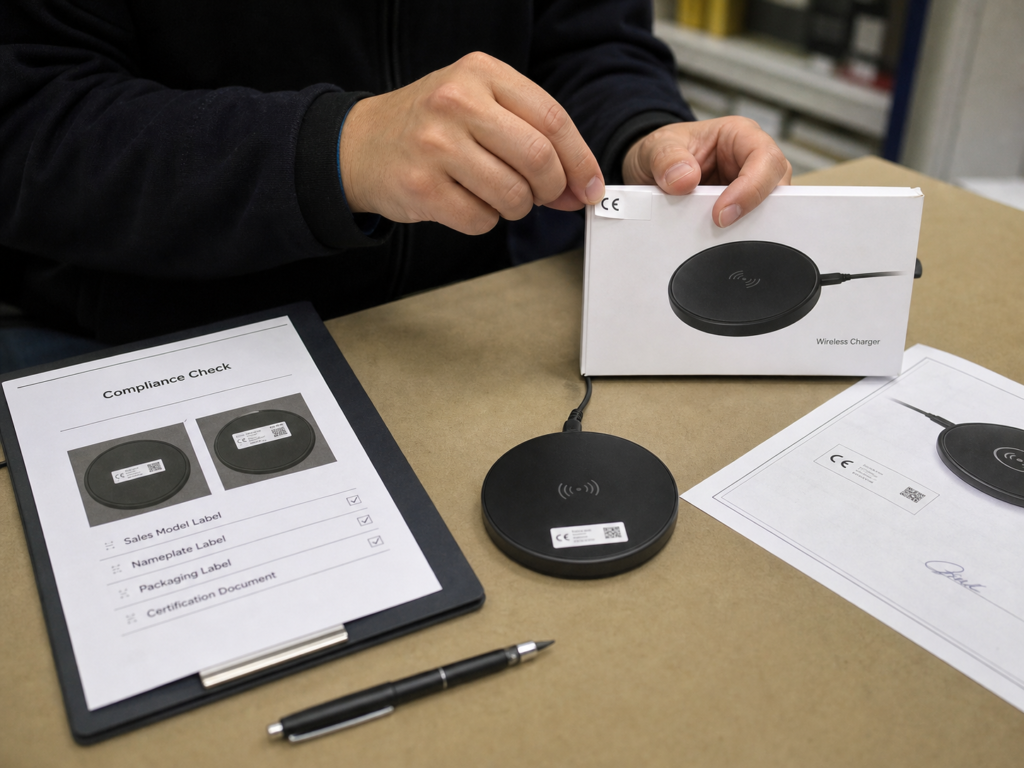
First, affix or mark the technical conformity mark in accordance with applicable rules;
Then confirm that the sales model, nameplate model, packaging model and the model in the certification document can correspond accurately;
Finally, keep the certification documents, test reports, change records and related materials properly, in case platforms, distributors or regulatory authorities require them.
**Checkpoint**: The product model, product photos on the e-commerce page and the actual shipment model must be consistent. The platform may require the provision of technical conformity marks, numbers, photos, test reports or Japanese materials, but the specific requirements depend on the platform, site and product category.
Calculate in Advance: Cost and Cycle Estimation
Before applying for certification, you need to calculate the budget and schedule first. However, there is no unified statutory price for Japanese technical conformity related fees, nor is there a fixed RMB charging standard applicable to all charging wireless products.
Cost Composition and Reference Price
Costs are usually affected by the following factors: wireless frequency band and equipment category, test items, number of samples, whether eligible pre-certified modules are used, whether rectification or supplementary testing is required, and whether agency services and material sorting are included.
Costs may include testing fees, certification application fees, agency service fees and supplementary testing fees after rectification. The specific quotation shall be evaluated by the designated certification body or laboratory based on complete product materials. The cost of multi-wireless function products may not be linearly superimposed simply by the number of functions; whether tests can be merged or some materials can be shared depends on the equipment structure and applicable system.
Therefore, it is not recommended to take “10,000-30,000 RMB for a single Bluetooth low-power wireless charger” as a general budget. This figure lacks conditions such as institution, equipment category, test items, exchange rate and service scope, and the actual quotation may be significantly different.
Cycle Reference and Time-Saving Tips
The cycle is mainly affected by whether the test can pass at one time, whether the materials are complete, the complexity of the product and the institution’s schedule. The processing cycle for low-power, single-function products also cannot be directly promised without specific equipment category and institution schedule.
To save time, you can freeze the design in advance and do not modify while testing; prepare complete wireless parameters, module documents, antenna materials and product pictures in advance; at the same time, reserve time for rectification, supplementary testing and label modification. The schedule may be tight at the beginning and end of the year or before promotions, so it is best to confirm with the institution in advance.
Pitfall Avoidance and Maintenance: Pay Attention Even After Getting the Certificate
Many people think that getting the certificate means everything is done, but in fact, you still need to continue to pay attention to product changes, labeling and consistency of sales materials.
Four Most Common Cognitive Misconceptions
1. **All wireless chargers do not need TELEC certification**: Wrong. Wireless energy transmission, NFC, Bluetooth, Wi-Fi and other communication functions may be subject to different regulations. It shall be confirmed according to frequency band, transmission intensity, equipment category and exemption conditions. Not all wireless chargers can be classified as exempt from certification, nor can all wireless chargers be classified as requiring certification.
2. **CE/FCC can replace TELEC certification**: Wrong. Japan does not directly regard overseas certification as compliance proof under the Japanese Radio Law. CE and FCC reports can be used as technical material references, but cannot directly replace the applicable Japanese procedures.
3. **If the wireless function is turned off by software, no certification is required**: Wrong. As long as the hardware has transmission capability and users can turn it back on, evaluation is required, and certification cannot be evaded solely by software-disabled functions.
4. **Module certification equals whole machine certification**: Wrong. Module certification can only help reduce some tests when the whole machine complies with the module certificate and usage restrictions. When the whole machine’s antenna, power, firmware, structure, housing and installation conditions change, it is still necessary to confirm whether supplementary testing or re-application is required.
Four Most Common Pitfalls in the Processing Process
During the processing, these problems can reduce risks if paid attention to in advance:
1. **Submit application without confirming the Japanese responsible subject**: Overseas manufacturers shall confirm with the certification body in advance the requirements for the applicant subject, agency authorization, importer and domestic contact person in Japan, etc., and cannot understand all systems as the same application mode.
2. **Test samples are inconsistent with the planned mass production version**: If changes occur in wireless modules, antennas, RF circuits, power, firmware frequency bands, housings or installation conditions, it cannot be directly assumed that the original certification is still applicable. The institution shall be consulted before mass production to confirm whether supplementary tests, change applications or re-certification are required.
3. **Certificate model does not correspond to sales model**: It may lead to the platform requiring supplementary materials, suspending sales, and even triggering regulatory risks. Ensure that sales models, nameplates, packaging and certification documents can correspond accurately.
4. **Supplement certification after mass production**: If certification finds that antennas, shielding structures or firmware settings need to be adjusted, the rectification cost after mass production may be very high, and even limited by molds and structures. It is best to complete applicability confirmation and main tests before mass production.
Ongoing Compliance Requirements After Certification
After obtaining the certificate or certification document, it is necessary to continuously maintain the compliance status.
First, certification documents, application materials, conformity inspection records and change records shall be kept in accordance with the specific certification system, requirements of the certification body and relevant Japanese laws and regulations. The types of records and statutory retention periods involved in different systems may vary, and it cannot be generally claimed that the Radio Law uniformly stipulates that all technical conformity certification documents shall be kept for at least 5 years. Enterprises can set a longer internal retention period after confirming the applicable system.
Second, if the product undergoes changes that affect wireless parameters, such as replacing wireless modules, antennas or RF front-ends, modifying firmware frequency bands and power, adjusting housings, metal structures, shielding methods or antenna positions, be sure to consult the certification body in advance to confirm whether supplementary tests, change applications or re-certification are required.
As for whether the document has a fixed validity period, it cannot be generalized without specific system and certificate conditions. You shall check the scope of application, additional conditions of the certification document and relevant regulatory requirements, and re-evaluate when regulations or product design changes.
How to Deal with Market Spot Checks
Japanese market regulators, platforms or distributors may pay attention to the following: whether the technical conformity mark is marked as required, whether the product is consistent with the certification documents, whether the wireless parameters meet applicable requirements, and whether the enterprise can provide relevant technical materials.
If non-conformities are found, consequences such as sales suspension, product removal, administrative disposition, rectification or recall may occur, depending on the nature of the problem and the handling subject.
The response method is to ensure that mass-produced products are consistent with the certified design, and do not replace modules, antennas or firmware without authorization; at the same time, keep complete certification materials, change records, product photos and manuals. Passing platform review does not mean that all compliance obligations under Japanese laws and regulations have been fulfilled.
Multi-Certification Coordination for Charging Products
For charging products entering the Japanese market, it is usually necessary to pay attention to different systems such as wireless, electrical safety and telecommunications terminals at the same time, and cannot attribute all requirements to “TELEC certification”.
Coordination with PSE Certification
Wireless compliance under the Radio Law and PSE belong to different systems. The former mainly focuses on the technical standards conformity and legal operation of wireless equipment, while the latter is the safety supervision of electrical products under the Electrical Appliance and Material Safety Law.
If the product is connected to mains electricity, or is equipped with an AC adapter, it shall be separately checked whether the product body and adapter are applicable electrical products specified in the Electrical Appliance and Material Safety Law, which category they belong to, and what PSE compliance method shall be adopted. Having wireless functions does not automatically mean that the entire product requires PSE; in many cases, the adapter itself is the PSE object that needs key confirmation.
The processing order also cannot be mechanically stipulated as TELEC first, then PSE. A more reliable approach is to sort out the requirements of both systems at the same time first, and then arrange the order according to product design, test schedule and possible structural changes. If wireless testing may lead to changes in antenna, shielding or housing structure, the impact of these changes on electrical safety compliance shall be evaluated in advance to avoid repeated testing.
Other Related Certifications and E-Commerce Requirements
If the product has the terminal function of connecting to a public telecommunications network, the technical standards conformity requirements under the Telecommunications Business Law shall be separately confirmed, and corresponding terminal equipment certification shall be handled if necessary. Cellular communication products may involve both the Radio Law and the Telecommunications Business Law; whether a SIM card is inserted and whether it has cellular communication function cannot be used alone as an absolute judgment standard for JATE applicability.
Products that only have Bluetooth or Wi-Fi functions and do not access as public telecommunications network terminals usually do not fall within the scope of this type of terminal equipment certification, but still need to confirm their applicable requirements under the Radio Law.
E-commerce platforms or distributors may require the provision of technical conformity marks, certification numbers, product photos, test reports, Japanese manuals and other materials, but the requirements of different platforms, sites and product categories are not uniform. Passing platform review cannot replace Japanese legal requirements, and it is still necessary to confirm the requirements of the Radio Law, the Electrical Appliance and Material Safety Law, and the Telecommunications Business Law when applicable, respectively.
In general, when entering the Japanese market with charging products, do not simply understand “TELEC” as a certification name uniformly applicable to all wireless products, nor draw conclusions solely based on “having wireless functions” or “low power”. A more reliable approach is to first confirm the radio station category, frequency band, transmission intensity, purpose and exemption conditions of the product, and then select Technical Standards Conformity Certificate, Construction Design Certification or Technical Standards Conformity Self-Confirmation permitted by regulations according to the specific system. At the same time, check PSE for products connected to mains electricity, and check telecommunications terminal equipment requirements for products connected to public telecommunications networks, so as to more completely complete the compliance of wireless and charging products in the Japanese market.