
If you work with charging products for the US market—whether USB/USB-C charging cables, wall chargers, power adapters, or car chargers—you have almost certainly heard of CPSC: customs-detained goods may be related to it, platform requirements for certificates may stem from it, and even product recalls and administrative fines are inseparable from it. But the first common misunderstanding about CPSC is that people everywhere look for “how to get CPSC certification”—in reality, there is no such thing as a unified “CPSC certification” as a market access certificate. In this guide, we will thoroughly explain CPSC regulations, covering all core points for charging products from basic understanding, product classification, to full-process practical operation. After reading it, you will be able to make basic compliance judgments on your own and avoid the vast majority of common pitfalls.
First, Understand the Basics: What Does CPSC Regulate?
CPSC stands for the U.S. Consumer Product Safety Commission, an official agency at the U.S. federal level that specializes in consumer product safety. Its core authority is not issuing certificates, but formulating safety rules, conducting market spot checks, initiating product recalls, imposing administrative fines, and collaborating with U.S. Customs and Border Protection (CBP) to directly control non-compliant products at the import stage. For cross-border sellers, U.S. importers, procurement specialists, and e-commerce operators, the value of CPSC compliance is very straightforward: it can avoid direct economic losses such as cargo detention, listing removal, and recalls, as well as indirect risks such as brand damage and consumer claims. CPSC continuously releases recall information for consumer products such as chargers and power banks; specific quantities and losses shall be subject to the CPSC recall database and enterprise announcements.
Here we must first definitively clear up the biggest misunderstanding: **CPSC does not issue any unified market access certification**. Compliance is not “getting a certificate and being done with it”, but a long-term responsibility for enterprises to self-certify product safety and continuously retain supporting documents. The correct expressions are “the product meets CPSC safety requirements” or “holds a valid GCC/CPC certificate”; stop saying “apply for CPSC certification”.
Many people also confuse CPSC with other regulatory bodies, but their jurisdiction boundaries are very clear. We can quickly sort them out with a table:
| Regulatory Body | Core Jurisdiction | Relationship with CPSC |
| CBP (U.S. Customs and Border Protection) | Inspection of imported goods, customs clearance control | Collaborates with CPSC; detains goods at the import stage in accordance with CPSC requirements |
| FCC (U.S. Federal Communications Commission) | Electromagnetic compatibility, radio frequency device compliance | Independent of CPSC; regulates electromagnetic safety but not personal safety, separate compliance is required |
| DOE (U.S. Department of Energy) | Energy efficiency requirements for power products | Independent of CPSC; regulates energy efficiency but not use safety, separate compliance is required |
| NRTL (e.g., UL, ETL, etc.) | Private third-party safety certification | Not government-mandated; certification reports can be used as supporting materials for CPSC compliance, but do not equate to official CPSC recognition |
| State-level rules (e.g., California Proposition 65) | State-specific safety, environmental protection, and recycling requirements | Independent of federal CPSC rules; verified separately according to the state where the product is sold |
| Other federal agencies (e.g., FDA, NHTSA) | Specific categories such as medical products and original automotive parts | Jurisdiction is determined based on the core function of the product; multi-agency joint regulation may exist |
The general principle is: there is no “all-purpose certificate” that covers all requirements; compliance obligations must be determined separately based on product function, sales channel, and sales state.
Is Your Product Regulated by CPSC? How to Determine?
Core Judgment Logic
Consumer products without specific mandatory rules still must not have safety defects that could cause substantial product hazards or unreasonable risk of injury; enterprises shall conduct design verification and reasonable testing based on product risks, and fulfill applicable reporting obligations. If the product is subject to CPSC mandatory safety rules, it must additionally meet the requirements of those rules. If the product is intended for use by children aged 12 and under, the stricter rules of the Consumer Product Safety Improvement Act (CPSIA) shall also apply.
For charging products, the control level can be specifically judged from four dimensions:
• **Use and target users**: Finished products for household/personal use fall within the scope of regulation; products exclusively for industrial use shall be judged based on actual use;
• **Finished products vs. components**: Finished products sold separately must definitely be compliant; although internal components are not directly regulated, component suppliers may also be held liable if safety problems occur with the finished product;
• **Product structure and parameters**: Products with mains input have a higher risk level; low-voltage cables also require risk assessment combined with parameters such as current and insulation, it is not the case that “low voltage means no regulation”;
• **Whether it contains a battery**: Products with built-in lithium batteries shall also be verified based on product defects, substantial product hazards, and applicable specific rules.
Comparison of Compliance Requirements for Common Charging Products
We have compiled the core requirements of the most common types of charging products into a table for quick comparison:
| Product Type | CPSC Requirements | FCC Requirements | DOE Energy Efficiency Requirements | Special Notes |
| Low-voltage cables without built-in batteries (USB/USB-C cables, adapters) | General safety obligations + applicable mandatory rules | Passive cables have no radio frequency requirements | None | When no lithium battery is built-in or included, special lithium battery transportation requirements usually do not apply, but verification shall still be conducted based on product composition, transportation method, carrier, and applicable dangerous goods rules |
| Wall chargers/power adapters with mains input | General safety obligations + applicable mandatory rules | Electromagnetic compatibility requirements shall be verified | Shall be verified (10 CFR Part 430) | E-commerce platforms often require NRTL reports |
| Car chargers powered by cigarette lighter | General safety obligations + applicable mandatory rules | Usually no intentional radio frequency emission requirements, but products containing switching power supplies or digital circuits still need to verify FCC Part 15 unintentional radiation requirements and applicable SDoC/testing requirements | None | Original on-board charging components of vehicles are not under CPSC jurisdiction |
| Chargers with wireless/radio frequency functions (e.g., wireless chargers) | General safety obligations + applicable mandatory rules | Radio frequency/EMC requirements shall be verified | Shall be verified | Platforms often require NRTL + FCC reports |
| Charging products with built-in lithium batteries (e.g., power banks) | Verified based on product defects, substantial product hazards, and applicable specific rules; products containing button/coin batteries also need to verify Reese’s Law and 16 CFR Part 1263 | Shall be verified if they have radio frequency functions | If the product is an external power supply, charger system, or other regulated product covered by 10 CFR Part 430, the scope of application, testing, and energy efficiency requirements shall be further verified; not all products with charging functions are automatically subject to these requirements | Transportation must meet applicable lithium battery transportation rules, and state laws require additional verification of battery recycling requirements |
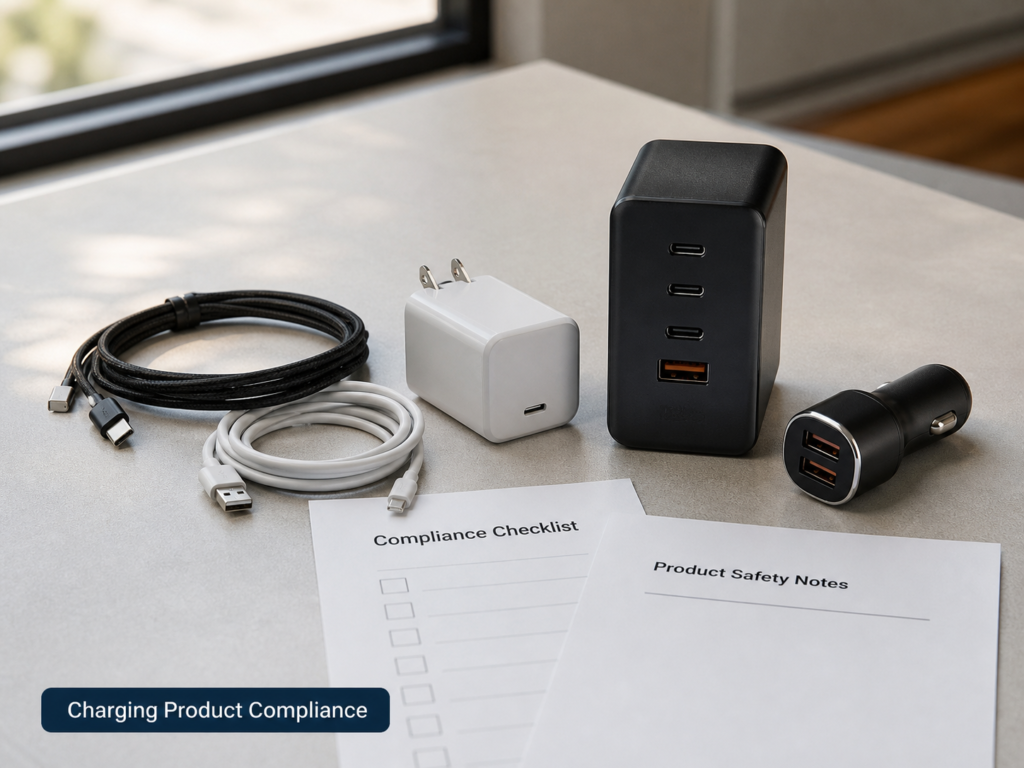
The products covered by this guide are mainly three categories: cable category (USB/USB-C charging cables, data cables, adapters), wall charger category (wall plug chargers, power adapters, multi-port charging stations), and car charger category (cigarette lighter-powered car chargers); special categories such as medical products and original automotive parts are not included.
Children’s vs. Adult Products: The Most Common Boundary Pitfall
Many sellers are required by platforms to provide CPC (Children’s Product Certificate) because they cross the boundary of “children’s products”. The core of judgment here is: **only products designed for or primarily used by children aged 12 and under are considered children’s products**; accidental use by children does not count.
Judgment shall be made comprehensively based on appearance, packaging, promotion, sales channel, and target users. Several common boundaries need attention:
• Printing only cartoon patterns does not necessarily make a product a children’s product; marketing positioning also matters;
• Labeling as “student gift” or “household use” does not directly equate to a children’s product; it shall be judged in combination with the age range;
• Accessibility to children does not mean that the primary users are children.
If you are worried about misjudgment, be sure to retain materials such as product positioning descriptions, promotional materials, and sales channel certificates. Once a product is judged to be a children’s product, the requirements will be much stricter: stricter chemical limits, mandatory testing must be conducted by a CPSC-accepted laboratory, a CPC certificate must be issued, and a permanent tracking label must be added.
Core Compliance Framework: 5 Levels from Mandatory to Optional
Many people are confused about what is mandatory and what is optional. CPSC-related compliance requirements can be understood as 5 levels from mandatory to channel requirements:
**Level 1: CPSC Federal Mandatory Rules**
These are legally mandatory requirements; violations will directly lead to cargo detention, fines, and recalls. For example, lead limits in surface coatings and lead requirements for children’s product substrates all fall under this level.
**Level 2: Industry Voluntary Reference Standards**
For example, UL and IEC series safety standards have no legal mandatory force in themselves, but can be used to prove that the product has no obvious safety risks. They only have legal mandatory force when relevant requirements are incorporated into applicable federal regulations or mandatory rules by law; CPSC’s citation of voluntary standards in guidance documents or law enforcement does not automatically turn the entire set of standards into mandatory regulations.
**Level 3: NRTL Certification**
These are the commonly heard certifications such as UL and ETL, which are private third-party safety certifications, not government-mandated requirements, but can be used as supporting materials for compliance. Note: NRTL certification is not equivalent to official CPSC recognition, nor does it automatically cover FCC and DOE requirements.
**Level 4: State/Local Rules**
States and localities may impose additional requirements through electrical codes, product energy efficiency, chemical warnings, or recycling systems; whether NRTL listing or other electrical certifications are required shall be specifically verified based on the product installation location, sales state, and local law enforcement requirements. California Proposition 65, battery recycling requirements, etc., may apply concurrently with federal requirements.
**Level 5: Platform/Supermarket Requirements**
These are the channel’s own rules, which are usually stricter than the minimum federal requirements. For example, many e-commerce platforms require NRTL reports for charging products, otherwise they will not be allowed to be listed.
GCC and CPC Certificates: What Exactly Are They?
Many people regard GCC and CPC as “CPSC certification”, but in fact they are just declarations of conformity issued by enterprises themselves; CPSC does not issue or review such certificates.
• **Prerequisite**: Only when a product is subject to one or more CPSC mandatory safety rules is the corresponding certificate required; not all products need it.
• **GCC (General Certificate of Conformity)**: Applicable to non-children’s products subject to mandatory rules, self-issued by U.S. manufacturers or importers. The testing basis can be third-party testing, production line testing, engineering evaluation, etc., which shall be implemented in accordance with the requirements of the rules. The certificate must include information such as product identification, applicable mandatory regulations, testing basis, issuing entity, and testing date/location.
• **CPC (Children’s Product Certificate)**: Applicable to products judged to be children’s products for children under 12 and subject to mandatory children’s safety rules. Also self-issued by U.S. manufacturers or importers, but testing must be based on valid reports issued by accepted laboratories listed on the CPSC official website, and laboratory information must be additionally marked on the certificate.
Certificates are not once-and-for-all. In case of changes in product model/rated parameters, changes in production factories/key safety components, updates to applicable regulations, or changes in importers/brands, it is necessary to evaluate whether the certificate needs to be updated.
Commonly Used Reference Standards for Charging Products
At present, these are the commonly used reference standards in the industry. Note that they are all non-mandatory, and their specific applicability shall be confirmed by a professional laboratory based on the product structure:
• Wall chargers/power adapters: UL 62368-1 is the mainstream; the old version UL 60950-1 is no longer recommended for new applications;
• Car chargers: UL 2089 is commonly used, applicable to low-voltage on-board charging products powered by cigarette lighters;
• Cables: UL 9990 is commonly used, but there is no universal standard for all categories; applicability shall be judged in combination with interface, structure, and rated current.
Special reminder: UN 38.3 is a transportation testing standard for lithium batteries and cannot replace CPSC’s use safety testing; do not confuse them.
How to Check Official Information?
If you have questions about the rules, be sure to verify them through official channels:
• Regulation inquiry: CPSC official website regulations page, eCFR database; verify rule numbers, applicable products, exemption conditions, and effective dates;
• Accepted laboratory inquiry: CPSC official website’s accepted laboratory directory; only mandatory testing for children’s products and other items requires the use of listed laboratories;
• Recall information inquiry: CPSC Recall database, which can be searched by product category and brand;
• Incident reporting: Safety hazard reports can be submitted through SaferProducts.gov.
Testing Cost Reference
CPSC does not set a unified testing fee; fees must be quoted separately by the laboratory based on product structure, applicable standards, testing items, number of samples, certification scope, and rectification situation. Different laboratories, testing scopes, and product complexity may lead to large differences in quotations, so a fixed price range cannot be regarded as a market threshold stipulated by CPSC or federal regulations.
By Category: What Are the Core Safety Requirements for Charging Products?
If a product does not have specialized CPSC mandatory rules, CPSC usually does not have a unified testing list, but enterprises shall still conduct risk-proportionate design verification and reasonable testing, and additionally meet applicable FCC, DOE, state law, transportation, and platform requirements. The core logic is three steps: first identify risks such as electric shock, fire, and mechanical injury; then reduce the risks to a reasonable level through design, materials, and processes; finally retain evidence such as design verification, production line spot checks, third-party test reports, and complaint tracking records.
General Labeling and Document Requirements
There are no unified requirements for labeling, which shall be confirmed separately according to applicable rules:
• Federal mandatory labeling: Labeled in accordance with applicable CPSC mandatory rules;
• Other federal labeling: FCC and DOE labels (if applicable);
• State-level labeling: Labeled according to the requirements of the sales state, such as warning statements, energy efficiency, or chemical-related information;
• Platform/certification labeling: Labeled in accordance with NRTL certification and platform requirements.
Documents that need to be retained include test reports, structural inspection records, label drafts, etc., to facilitate subsequent verification.
Cable Category (USB/USB-C Charging Cables/Data Cables/Connectors)
Individually sold cables and adapters fall within the scope of regulation; purely internal components shall be judged based on finished product liability. The main hazards of this type of product are short-circuit fire, electric shock/cuts caused by exposed copper due to pulling, and insulation damage.
It is recommended to select verification items based on risk assessment: for electrical safety, check whether the wire diameter current-carrying capacity matches, whether the insulation layer strength is sufficient, and whether there is protection for live parts of the interface; for mechanical safety, conduct joint tensile tests, bending endurance tests, and shell sharp edge inspections; for material safety, conduct flame retardant tests.
Common misunderstandings: First, thinking that low-voltage cables have no safety requirements—in fact, even 5V cables must fulfill corresponding safety obligations based on product risks; second, thinking that all cables must comply with UL 9990—in fact, applicability shall be judged based on structure and use, and it is not a mandatory requirement.
Wall Charger Category (Wall Plug Chargers/Power Adapters/Multi-Port Charging Stations)
Consumer-grade products with mains input fall within the scope of regulation, except those exclusively for industrial use. The main hazards are electric shock, overheating and fire, broken prongs, and cracked shells exposing live parts.
Recommended verification items include: electric shock protection (insulation withstand voltage test, prong insulation protection, live part protection), overheating/fire protection (full-load temperature rise test, overcurrent/overvoltage/overheat protection test, shell flame retardant test, short circuit test), mechanical safety (prong strength test, drop test, sharp edge inspection), and abnormal operation (overload test, abnormal output test).
Common misunderstandings: First, thinking that having a UL report means it must meet CPSC requirements—it is necessary to confirm whether the model, parameters, and standards covered by the report match the actual product; second, ignoring the risk of false labeling of rated parameters—false labeling of power will cause excessive temperature rise, which instead brings safety hazards.
Car Charger Category (Cigarette Lighter-Powered Car Chargers)
On-board charging products powered by cigarette lighters fall within the scope of regulation, except original vehicle components. The main hazards are short-circuit fire, heating due to loosening from bumps, and damage to electrical equipment due to overvoltage.
Recommended verification items include: electrical safety (overvoltage/overcurrent protection test, interface live part protection, input voltage adaptation test), environmental adaptability (vibration test, high and low temperature operation test), and mechanical safety (insertion and extraction force test, sharp edge inspection).
Ordinary car chargers usually do not have intentional radio frequency emission functions such as Bluetooth and Wi-Fi, but products containing switching power supplies or digital circuits still need to verify FCC Part 15 unintentional radiation requirements and applicable SDoC/testing requirements. You cannot directly assume that no safety or electromagnetic compatibility assessment is required just because the on-board voltage is low.
Chemical Hazardous Substance Requirements
Many people think that all products need to be tested for a bunch of chemical substances, but in fact only products/components covered by corresponding rules need to be tested:
• **Federal lead limit in surface coatings (16 CFR 1303)**: Only applicable to products covered by the rule (e.g., children’s products with paint/coating, furniture, etc.), not applicable to all adult products. The limit is lead content ≤90ppm; inaccessible internal coatings, coatings for specific industrial uses, etc. may be exempted. Specific details shall be checked against the rule;
• **Total lead requirement for accessible parts of children’s products**: Applicable to accessible parts of children’s products aged 12 and under, or parts covered by corresponding mandatory rules. The limit is ≤100ppm (mandatory); inaccessible parts, specific materials/uses may be exempted, confirmed according to current rules;
• **Phthalate requirements for children’s toys/childcare articles**: Only applicable when the product is both a children’s toy/childcare article and involves accessible plasticized materials; not all children’s charging products are automatically subject to this requirement. The content of each of the 8 restricted phthalates is usually ≤0.1%;
• **Mandatory tracking label for children’s products**: Children’s products aged 12 and under require permanent labeling of the manufacturer, production location, and production date/batch.
For adult products, except for applicable mandatory chemical rules, there is no unified federal chemical limit, so there is no need to blindly add tests and waste money.
From Product Selection to After-Sales: Full-Process Compliance Practical Steps
Preparatory Work: First Clarify Responsibilities and Materials
First, the subject of import responsibility must be clarified: the U.S. importer refers to the entity that imports products into the U.S. territory, and is also one of the core responsible parties for CPSC compliance. The division of responsibilities varies with different customs clearance modes:
• Self-shipping/overseas warehouse: The U.S. importer entity must be clarified; a third party can be entrusted, and responsibilities are divided according to contracts and regulations;
• Platform FBA/fully managed: The platform may provide customs clearance services, but the main responsibility for product safety still lies with the brand/seller;
• U.S. local buyer procurement: The buyer assumes responsibility as the importer, and the seller needs to provide compliance documents.
Before conducting a compliance assessment, four types of materials must be prepared first: basic product information (photos, structural schematic diagrams, BOM, key safety component certificates, input and output parameters), packaging and marketing materials (packaging design drafts, manuals, marketing materials, target user positioning description), supply chain materials (production factory information, supplier’s existing test reports/certification documents), and sales information (U.S. importer, sales state scope, sales channel).
Step 1: First Determine the Control Level
You can judge step by step according to this logic:
1. Is it a consumer product intended for U.S. consumers? If yes, it is necessary to verify applicable product safety requirements under the CPSA;
2. Is it a children’s product for children aged 12 and under? If yes, the stricter CPSIA rules apply, and mandatory testing must be conducted by a CPSC-accepted laboratory;
3. Is it subject to CPSC mandatory safety rules? If yes, adult products require GCC, and children’s products require CPC;
4. Are there other concurrent regulations? Judge FCC, DOE, state law and other requirements based on product functions.
If you are unsure, you can check the product classification on the CPSC official website, or consult a professional third-party laboratory.
Step 2: Supply Chain Compliance and Report Verification
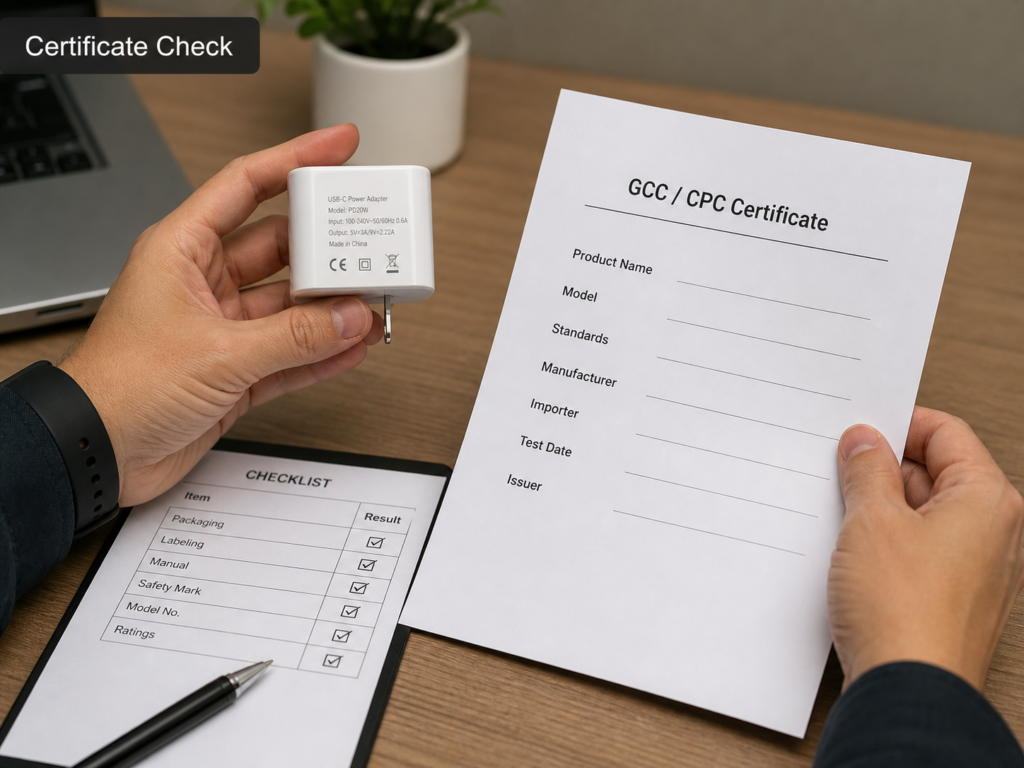
After receiving the test report provided by the supplier, you cannot use it directly; you must first verify it:
• **Qualification verification**: Mandatory testing for children’s products must be issued by a CPSC-listed laboratory; for adult products, it is recommended to choose a laboratory with ISO 17025 accreditation;
• **Content verification**: The model, parameters, structure, and manufacturer on the report must be completely consistent with the actual product; reject generic or template reports;
• **Validity verification**: Whether a test report can continue to be used shall be confirmed in combination with applicable regulations, test plans, standard versions, production control, changes in factories and key components, and requirements of platforms or certification bodies; conclusions cannot be drawn solely based on the fact that the product has not changed.
If the product requires GCC/CPC, it is also necessary to verify whether the product name/model, applicable regulations/standards, importer/manufacturer, test date/location, and issuer information on the certificate are complete and accurate. In addition, product labeling and warning drafts shall also be checked in advance to ensure compliance with legal requirements and platform rules.
It is recommended that when signing a contract with the supply chain, clearly write down the sharing of compliance responsibilities and testing fees, advance notification of key changes, and division of responsibilities for safety accidents/recalls, to avoid disputes afterwards.
Step 3: Ensure Consistent Information in the Import Chain
From production to sales, products involve multiple entities including overseas manufacturers, U.S. importers, brands/sellers, fulfillment service providers, and sales platforms. Information correspondence must be well maintained. Legal fields such as product identification information, model, key parameters, and manufacturer/importer must be consistent with the actual product and applicable certificates; brand, sales entity, and platform information shall be verified separately according to their actual roles in regulations, labels, and certificates; not all entities must appear in every test report or certificate.
Step 4: Do a Good Job of Acceptance Before Shipment
Basic checks must be done before shipment to avoid low-level mistakes:
• Document verification: The model parameters of the test report and GCC/CPC (if any) are consistent with the actual product;
• Appearance and mechanical spot check (internal enterprise inspection, cannot replace laboratory testing): The shell has no sharp edges or burrs, prongs/interfaces are not loose, the charging cable connector does not come off and expose copper wire under moderate tension, and the charger shell has no obvious easily detachable gaps;
• Label verification: The rated parameters on the product, packaging, and manual are consistent, no false labeling, and legal labels are clear and not easy to erase.
Note: This instrument-free inspection can only check for obvious appearance defects and cannot replace professional safety testing.
Step 5: Customs Clearance and Listing Preparation
When importing, applicable commercial and customs declaration documents shall be prepared, and it shall be ensured that GCC/CPC and testing/technical materials have been issued and saved as required, so that they can be provided when required by CPSC, CBP, or the platform; whether to submit them with the goods or in customs declaration shall be confirmed according to the specific product and import arrangement. Before e-commerce listing, organize compliance documents in advance; platforms will require uploads from time to time, and non-compliant products will be directly removed from the shelves. It is also necessary to do a good job of batch traceability, retaining production batches, shipment records, and supplier information, to facilitate quick investigation when problems occur.
Step 6: Change Management: Do Not Use Old Reports Casually
For any change that may affect product safety, first evaluate the compliance impact, then decide whether to retest and update documents:
• **Minor changes**: For example, packaging text modification, non-safety-related appearance adjustment, non-parameter label correction, only document review is required, no retesting needed, just update the documents synchronously;
• **Moderate changes**: Usually, after evaluation by a professional laboratory, partial retesting or safety assessment shall be carried out, and documents shall be updated after compliance is confirmed;
• **Major changes**: For example, replacing core safety components (insulation materials, prongs, PCB, protection circuits, etc.), changing circuit schemes/adjusting rated parameters, changing production factories (testing items can be reduced after laboratory evaluation), changing product children’s positioning/brand/model, usually require full retesting, and update certificates and labels after passing.
After the change assessment is passed, update GCC/CPC, product labeling, tracking information, and technical files synchronously.
Step 7: Continuous Monitoring After Launch
Compliance is not done once the goods are shipped; risks must be continuously monitored after launch:
• Daily attention should be paid to keywords such as “heating”, “smoking”, and “electric shock” in return reasons, customer service complaints, and negative reviews;
• You can set your own internal warning threshold (not a legal requirement, for enterprise reference only): 1 high-risk incident requires immediate investigation, and 2 or more similar safety complaints for the same model require immediate suspension of sales for investigation;
• Regularly pay attention to CPSC recall announcements, standard updates, and platform policy changes, and adjust compliance plans in a timely manner.
In terms of document retention, test reports, GCC/CPC, production batch records, supplier qualifications, complaint records, and recall handling records must all be retained. Certificates and related records subject to GCC rules are usually kept for at least 5 years; at the same time, longer periods stipulated by specific product rules, state laws, platforms, or certification schemes shall also be verified to ensure traceability to product model, batch number, production date, production factory, supplier, importer, and sales channel.
Tips for Legally Reducing Compliance Costs
Compliance does not have to cost a lot of money; here are a few practical tips:
• Prioritize public mold products with existing compliance test reports when selecting products, to save separate testing fees;
• Products of the same series, same structure, and different power can be tested in series to reduce the number of tests;
• Choose factories that have long-term cooperation with formal laboratories to avoid repeated testing.
But note: mandatory testing items must never be omitted; otherwise, the loss from one accident is far higher than the cost of dozens or hundreds of tests.
Enforcement and Recall: What Are the Consequences of Non-Compliance?
CPSC has many channels to discover non-compliance. In addition to the familiar CBP customs spot checks and consumer complaints, there are also hospital emergency injury data reports, voluntary notifications from e-commerce platforms, competitor reports, media exposure, and even safety hazards reported by enterprises themselves.
Section 15(b) Incident Reporting Obligation
Many people do not know that Section 15(b) of the CPSA stipulates the incident reporting obligation of enterprises: if a product may cause death/serious personal injury, has a substantial safety defect, or does not comply with applicable safety rules, manufacturers, importers, distributors, and retailers all have the obligation to report; it is not only the entity that first obtains the information that is responsible. The reporting time limit is to report immediately after obtaining reportable risk information, and the statutory time limit is usually 24 hours.
Note: Submitting a report does not mean admitting a defect or violation; concealing and not reporting will instead aggravate the penalty; minor non-conformities do not necessarily trigger the reporting obligation, so there is no need to report every trivial matter.
Recall Types and Disposal
There are two types of recalls: voluntary recall is when an enterprise proactively reports hazards and cooperates in handling, which is a compliance behavior encouraged by regulations; mandatory recall is a mandatory procedure initiated by CPSC when the enterprise refuses to cooperate. Voluntary recall does not automatically exempt civil/administrative liability, and mandatory recall does not directly equate to heavier penalties; the specific situation depends on the circumstances and degree of cooperation.
Common recall disposal methods include stopping sales, removing all listings, notifying consumers to stop use, and providing refunds/exchanges/repairs. The consequences of non-compliance may include civil fines, criminal liability, product seizure, recall costs, and civil claims, the amount of which is far higher than compliance testing fees.
Safety Incident Emergency Handling Process
If a safety incident actually occurs, handle it according to these steps:
1. Immediately preserve relevant samples, products of the same batch, production records, test reports and other materials; do not modify or destroy them arbitrarily;
2. Assess the risk level; if it is a high-risk hazard such as electric shock, fire, or severe overheating, immediately suspend the sales of the corresponding model;
3. Confirm whether the Section 15 reporting obligation is triggered, and contact a compliance consultant or lawyer if necessary;
4. Synchronize information with U.S. importers, brands, and sales platforms for coordinated handling;
5. Retain all communication and handling records for regulatory verification.
How Are Responsible Parties Divided?
Different roles have different responsibilities; do not blindly take responsibility nor take chances:
• Overseas manufacturer: Responsible for the safety and compliance of product design and production quality, and provides true and valid test reports and technical documents;
• U.S. importer: Responsible for compliance declaration at the import stage, issuing GCC/CPC, and retaining compliance documents; specific responsibilities depend on import arrangements and contract agreements;
• Brand/private label seller: Bears the main responsibility for product safety and is responsible for supply chain compliance management;
• Distributors and retailers: Shall not continue to sell products that are known or should be known to be non-compliant or have substantial safety risks, and may bear applicable reporting, recall cooperation, and product liability; specific responsibilities shall be judged in combination with federal regulations, state laws, actual conduct, and contractual relationships;
• E-commerce platform: Reviews seller qualifications according to platform rules, and cooperates with regulators to remove non-compliant products.
Product liability insurance can reduce compensation costs, but cannot replace compliance obligations; specific responsibilities shall be judged in combination with regulations, contracts, and actual control situations.
4 Real Scenarios: How to Solve Common Compliance Problems?
Scenario 1: Overheating Complaint of 65W USB-C Wall Charger Under Full Load
A consumer reported that the 65W charger they bought gets hot under full load and is worried about fire. Don’t panic at this time, first judge according to the process:
1. First verify whether the rated power of the product is falsely labeled, and whether the actual output meets the standard;
2. Check whether the test report covers full-load temperature rise and over-temperature protection tests, and whether the temperature rise meets the requirements;
3. Sampling products of the same batch for verification to confirm whether there is an unreasonable safety risk.
Materials to be prepared include test reports (including temperature rise and over-temperature protection items), product BOM, samples of the same batch, and promotional page parameters.
Common misunderstandings: First, thinking that having a UL report means it must be compliant—ignoring the coverage of the report; second, directly equating consumers’ subjective feelings with regulatory violations—whether it is a violation depends on test data.
Scenario 2: Charging Cable Connector Pulls Off and Exposes Copper, Scratching Consumer
A consumer said that after using the USB-C charging cable for 1 month, the connector fell off and exposed copper, and they were scratched. The judgment process is very clear: check whether the test report includes tensile and bending tests, and confirm whether the core fixing structure meets the requirements. Mechanical performance test reports, connector structure drawings, and supplier production records need to be prepared.
Situations such as connector falling off and exposed copper may cause cuts or electric shock risks; whether reporting or recall is needed shall be evaluated in combination with samples, batches, and test results.
Common misunderstanding: Thinking that charging cables are small accessories and do not need mechanical safety testing.
Scenario 3: Cartoon-Style Charging Cable Required to Provide CPC
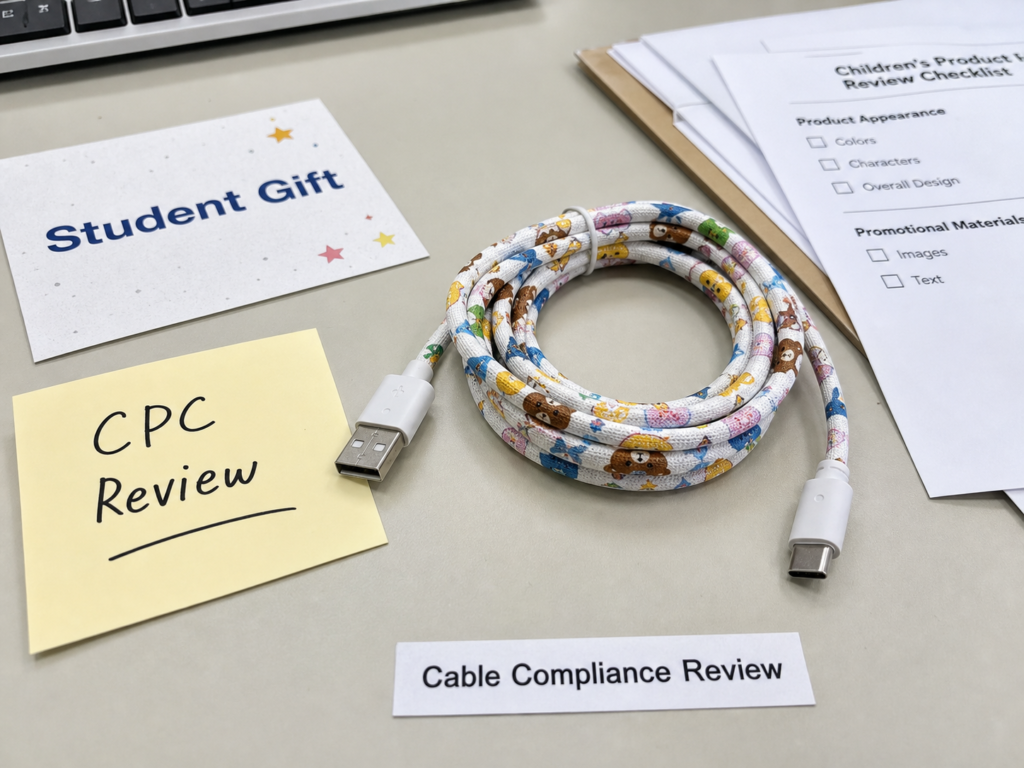
A seller sells charging cables printed with cartoon patterns, labeled as “student gift”, and is required by the platform to provide CPC. At this time, don’t just go for children’s product testing directly; first make a comprehensive judgment based on the children’s product judgment rules, combined with appearance, promotion, target users, and sales channels: if it is indeed intended for children under 12, then supplement the testing and CPC; if it is just an ordinary adult product, submit product positioning certification materials for appeal.
If it is indeed a children’s product, you need to prepare a children’s product test report, CPC certificate, tracking label draft, and product positioning certification materials.
Common misunderstanding: Thinking that if it is not marked “for children only”, it is not a children’s product—the orientation of appearance and promotion is also an important basis for judgment.
Scenario 4: Using Old Test Report After Changing Factory Is Investigated
A seller changed the production factory of the charger, but still used the test report from the original factory to submit for review, and was judged non-compliant. The handling process at this time is:
1. First verify whether the structure, materials, processes, and parameters of the new factory’s product are completely consistent with the original test sample;
2. If they are completely consistent, the laboratory can issue a change assessment report to confirm that the original report is valid; if there are differences, retest according to the change level;
3. If the manufacturer on the test report is inconsistent with the actual factory, it cannot be directly used as proof of compliance;
4. After the validity of the report is confirmed, update GCC/CPC and product labeling synchronously.
Materials to be prepared include the new factory’s product BOM, laboratory change assessment report/new test report, and updated GCC/CPC.
Common misunderstanding: Thinking that old reports can be used if the appearance parameters are the same—differences in production sites and processes may also affect product safety.
Finally: Core Competencies You Need to Master and Common Questions
After reading this guide, you should have the following core competencies: able to quickly judge the CPSC control scope and level of charging products (adult/children, whether GCC/CPC is needed); able to distinguish the jurisdiction boundaries between CPSC and CBP, FCC, DOE, NRTL, and state-level rules; able to complete compliance self-inspection from product selection to shipment according to the process, avoiding common non-compliance risks; able to independently verify the compliance validity of test reports and products; understand CPSC enforcement and recall rules, and clarify your own responsibilities and incident emergency response directions.
Finally, we have compiled several of the most frequently asked questions:
Do U.S. chargers require CPSC certification?
CPSC does not have a unified market access certification. Chargers need to meet applicable product safety requirements, and enterprises retain supporting documents such as test reports on their own. Only when a product is subject to specific CPSC mandatory safety rules is a GCC (General Certificate of Conformity) required.
Do charging cables need GCC?
It depends on whether the charging cable is subject to CPSC mandatory safety rules. Most ordinary low-voltage charging cables, if there are no corresponding mandatory rules, only need to fulfill corresponding safety obligations based on product risks, and do not need GCC; if they involve components or uses covered by mandatory rules, they need to be issued as required.
Do USB-C chargers need FCC?
Whether a USB-C charger requires FCC conformity assessment depends on whether it contains digital circuits or other radio frequency functions subject to Part 15. Ordinary unintentional radiation devices are usually tested according to applicable rules and adopt SDoC; when containing intentional transmitters such as Bluetooth and Wi-Fi, additional procedures shall be handled according to FCC equipment authorization rules.
How to get CPC for U.S. children’s products?
First, confirm that the product is indeed a children’s product for children aged 12 and under and is subject to CPSC mandatory children’s safety rules; then entrust an accepted laboratory listed on the CPSC official website to conduct relevant tests. After passing the test, the U.S. manufacturer or importer shall issue the CPC certificate on its own. The certificate must include necessary fields such as product identification, applicable regulations, laboratory information, test date and location, and issuing entity.
In general, CPSC compliance is not a one-time deal of “spending money to buy a certificate”, but a continuous responsibility throughout the product’s entire life cycle. For charging products, as long as you first clarify the control level, distinguish regulatory boundaries, and retain compliance evidence according to the process, you can reduce the risks of cargo detention, listing removal, and even recalls. Compliance is not only a cost, but also an important risk guarantee for stable operation after products enter the U.S. market.