
Merchants selling charging products to Europe have most likely heard of the “EU New Battery Law” in the past two years, but many are still confused: I sell ordinary chargers, do I need to comply? What preparations should be made for power banks? I heard there are also battery passports and carbon footprints, do all products need them?
Don’t panic. This guide is specifically for charging products (power banks, wireless chargers, chargers, energy storage power supplies, etc.), from entry-level judgment to practical implementation, to advanced pit avoidance, to clarify the core content of the EU’s new battery regulations, so that even beginners can get started quickly.
Basic Understanding: Regulation Positioning and Effective Logic
After figuring out whether your products are subject to the regulation and what responsibilities you need to bear, let’s talk about the basic situation of this regulation: what exactly it is, when it takes effect, and what the consequences of non-compliance are, to help you build a complete basic understanding.
Regulation Positioning
The full name of the EU’s new battery law is the (EU 2023/1542). It is a regulation at the EU level, directly applicable to all EU member states, and does not need to be separately converted into national laws by each country.
But this does not mean that one registration can cover the entire EU. The regulation is directly applicable in member states, but producer registration, EPR, language, regulatory procedures and some implementation requirements in the country of sale still need to be checked separately.
Its scope of jurisdiction includes not only separately sold batteries, but also all finished products with built-in batteries, such as wireless chargers with batteries and power banks, which are all within the scope of jurisdiction.
Compared with the previous old battery directive, the new regulation does not start from “only managing waste battery recycling”, but on the basis of the existing producer responsibility, collection and recycling, and hazardous substance restrictions of the old directive, further adds and refines full life cycle requirements, including sustainability, carbon footprint, recycled materials, removability, battery passport and supply chain due diligence.
Its core goal is to improve the environmental protection of batteries, improve the recycling system, and promote the recycling of key metals such as cobalt, lithium and nickel.
General Timeline of Effective Dates
Many people think the new battery law will be implemented in 2025, but that is not the case. The regulation has been rolled out in phases, and specific requirements should in principle be judged in combination with the application date of relevant clauses and the time when products are placed on the market.
However, “non-retroactivity” cannot be simply understood as: products launched before a certain date will never have to worry about subsequent obligations. Obligations such as continuous supply of products already placed on the market, EPR, recall, regulatory cooperation and record-keeping cannot be simply regarded as exempted, and the transitional provisions must be checked one by one.
We have organized the key nodes related to charging products into a table for your convenience:
| Effective Time | Core Requirements | Scope of Application |
| 2023.8.17 | The regulation officially enters into force; most clauses apply from February 18, 2024, the old battery directive is in principle repealed from August 18, 2025, and specific requirements are implemented according to the phased dates of each clause | All regulated batteries and battery-containing finished products |
| 2024.2.18 | The core compliance obligation framework begins to apply | All regulated products |
| From 2025 | Carbon footprint requirements are rolled out in phases according to battery types and specific clauses | EV batteries, LMT batteries, and eligible industrial batteries, etc. |
| 2026.8.18 | Most labeling requirements are mandatory | Applicable according to specific clauses |
| From 2027 and other statutory dates | Removability and replaceability, QR code and battery passport shall be checked for applicable dates according to Articles 11, 13, 77 and relevant transitional provisions respectively | Corresponding applicable products |
| From 2031 | The minimum proportion requirements of recycled materials for key metals are implemented in phases, and some requirements will be further increased in 2036 | Corresponding applicable battery types |
When checking, you should combine your own product type, launch time, and specific rules of the target member state. The most authoritative information is subject to the official updates of the European Commission’s Directorate-General for Environment (DG ENV), and we will also talk about official inquiry channels later.
Actual Consequences of Non-Compliance
Don’t think the regulation is far away from you. The consequences of non-compliance are real:
• **Customs link**: Goods are detained, returned or even destroyed, resulting in loss of payment for goods and freight;
• **E-commerce platforms**: Listings are taken down, and you may even face fines;
• **Regulatory spot checks**: If you are found unqualified in a spot check, you may need to recall the products, and the relevant costs and responsibilities shall be borne by the corresponding responsible subject.
Core Differences from the Old Battery Directive
To briefly summarize three differences from the old rules, it is convenient for friends who have known the old regulations before to quickly update their cognition:
1. **Scope and requirement upgrade**: On the basis of the existing market placement, hazardous substance restrictions, producer responsibility and waste battery management of the old directive, it further covers more full life cycle requirements;
2. **Sustainability requirement upgrade**: New and refined requirements such as carbon footprint, recycled materials, removable design, and battery passport are added;
3. **Responsibility upgrade**: The compliance responsibilities of all subjects in the whole chain are clarified, and manufacturers, importers, distributors and remote sales producers all need to perform their respective obligations.
**Common Misconceptions in Basic Understanding**
1. It is not that the EU only issued the battery regulation in 2025 — the regulation officially entered into force in August 2023, and 2025 is only the year when some special requirements begin to be rolled out in phases.
2. It is not that all requirements take effect at the same time — the regulation is rolled out in phases, and you need to check in combination with the time your products are placed on the market and specific clauses. Products already on the market cannot of course be exempted from ongoing obligations such as EPR, recall, regulatory cooperation and record-keeping.
Entry-Level Practical Operation on the Procurement Side: 5 Steps from Product Selection to Launch
Knowing the requirements, how to implement them specifically in the procurement and launch links? We have sorted out a 5-step practical process, even beginners can follow it step by step without missing items.
Step 1: Product Selection and Classification, Clarify Applicable Requirements
First of all, you need to sort out all the products you plan to sell, classify them according to the four levels of “whether they contain statutory batteries → battery category → sales country → launch time”, and finally output a corresponding compliance requirement list for each product.
If you encounter uncertain products, such as chargers with memory function and consumer-grade outdoor power supplies, be sure to ask the supplier for the battery specification sheet, and judge the category according to the design purpose and statutory conditions. You can’t judge by feeling, nor can you only classify by capacity.
In addition, products without batteries should also be sorted out for other EU general compliance requirements, such as CE, RoHS, REACH, etc., don’t miss them.
Step 2: Supplier Screening, Request Compliance Materials
After determining the compliance requirements of the product, the next step is to screen suppliers that can provide corresponding compliance materials. This step is very critical, and many pitfalls are buried here by suppliers.
List of Required Documents
Sorted into three categories, don’t miss:
1. **Battery-specific documents**: Battery declaration of conformity (DoC), hazardous substance test report, safety performance test report, cycle performance report (as needed).
2. **Complete machine compliance documents**: Complete machine technical documents, risk analysis report, BOM list, charging management plan, complete machine DoC, instruction manual, label draft.
3. **Transportation documents**: UN38.3 test summary. Special attention should be paid here: UN38.3 is only a safety requirement for the transportation of dangerous goods, not a compliance certificate for EU market access, and cannot replace the relevant documents of the battery law.
Key Points of Document Verification
You can’t use the documents directly after getting them, you must check three points:
1. **Subject consistency**: The signing subject of the DoC should be consistent with the manufacturer in the sense of the regulation, and the parameters on the document should match the actual product.
2. **Cell consistency**: The supplier and batch of the cells should be consistent with the declaration materials, and the test report of the cells cannot replace the documents of the finished battery.
3. **Standard validity**: The standard version and scope of application used for testing should match the product, and outdated or irrelevant standards cannot be used.
Division of Responsibilities
The regulatory manufacturer is responsible for completing the conformity assessment, establishing technical documents and signing the EU declaration of conformity. When a brand party launches products under its own name or trademark, it usually assumes the manufacturer’s responsibility.
Ordinary importers are mainly responsible for verifying product compliance, fulfilling obligations such as importer information labeling and document provision, and cooperating with regulatory authorities. If the importer is not the regulatory manufacturer, it cannot sign the manufacturer’s EU declaration of conformity on behalf of the manufacturer.
Suppliers can provide test reports, DoC drafts, raw material traceability materials, etc., but the drafts provided by suppliers cannot replace the official DoC finally signed by the regulatory manufacturer.
**Common Misconceptions**
1. It is not that you don’t need to care if the supplier provides a test report — importers and brand parties have the responsibility to verify, and you can’t only use the supplier’s documents as a shield when problems arise.
2. It is not that UN38.3 is a compliance certificate for battery regulations — it is only a requirement in the transportation link and cannot replace market access documents.
3. It is not that the importer can sign the manufacturer’s DoC on behalf of the manufacturer after getting the supplier’s draft — you should first confirm who the regulatory manufacturer is, and then the corresponding subject signs the official declaration.
Step 3: Label and Packaging Verification
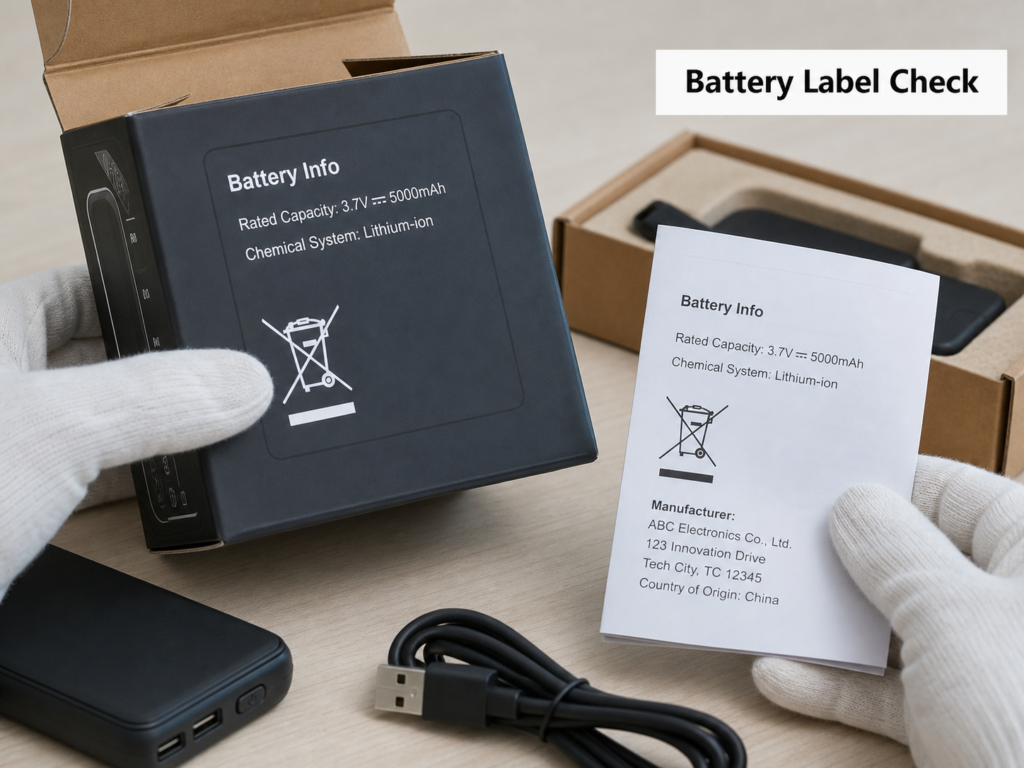
Labels are the most likely to be spot-checked by customs and platforms, so be sure to check in advance, don’t wait until the goods arrive to find problems.
Verification Process
Take two steps:
1. **Before arrival**: First ask the supplier to send the label draft, and check the mandatory labeling, carrier and language requirements according to Article 13, Annex VI and relevant transitional provisions. Don’t just look at the battery body, but also check the product, packaging, instruction manual, QR code and other applicable carriers.
2. **After arrival**: Spot check the labels of actual products to confirm that the position is clear and visible and not easy to wear; for products with built-in batteries, confirm that the instruction manual or outer packaging provides battery information in accordance with regulatory requirements.
In addition, you should also check the effective time to confirm whether new labels such as QR codes need to be added. Specific requirements shall be judged according to applicable clauses, and QR codes, removability requirements and battery passports cannot be simply regarded as taking effect on the same date.
Key Verification Points for Typical Products
We have sorted out the verification points for 4 common charging products, you can directly compare:
• **Ordinary power bank (portable)**: Check the rated capacity, chemical system, separate collection symbol, manufacturer information and other content on the product, packaging and instruction manual according to regulatory requirements, as well as the specific carriers and effective dates of these information.
• **Wireless charging base with built-in battery**: According to applicable clauses, provide battery parameters and safety information on the outer packaging, instruction manual or other specified carriers; the product body must also meet the complete machine labeling requirements.
• **Battery-free USB-C charger**: No battery-specific labels are required, as long as it meets the general electronic product labeling requirements.
• **Outdoor power supply**: First judge the battery category according to the design purpose and statutory classification, and then check the requirements such as labels, QR codes, carbon footprint or battery passport according to the corresponding category.
If product pages, packaging and marketing materials use maximum capacity, typical capacity or available capacity, the definition, test conditions and units must be clearly stated, and the maximum capacity shall not be used to impersonate the statutory rated capacity or make misleading publicity. Statutory labels and instruction manuals shall mark the rated capacity as required.
**Common Misconception**: Rated capacity, maximum capacity, typical capacity and available capacity may correspond to different test conditions. You cannot use “maximum capacity” to replace the statutory rated capacity, nor can you mix these indicators without explaining the definition and unit.
Step 4: EPR Registration and Declaration
EPR is a pit that many cross-border sellers easily step into, especially sellers selling in multiple markets, must pay attention.
• **Preparatory work**: First sort out the required materials: enterprise qualification, product battery type, target sales country, estimated annual sales volume or total battery weight.
• **Registration handling**: Submit materials to the competent registration authority of each target sales country or its prescribed producer responsibility registration system, perform it on your own according to local rules, or join a compliance scheme or producer responsibility organization. It is recommended to handle the core markets (Germany, France, Italy, Spain) first, and then expand to other countries.
• **Regular declaration**: After the registration is completed, you must declare the actual sales volume at the frequency required by the local registration system or compliance scheme, and pay the recycling fee. You can’t just register and ignore it.
• **Multi-market notes**: If you add new sales countries later, you need to separately check and complete the battery EPR obligations of that country; if the product is an electronic finished product, you also need to handle WEEE and packaging EPR simultaneously.
Overseas remote sales producers usually also need to designate a battery producer responsibility authorized representative recognized by the relevant member state in that member state. This authorized representative is not the same as the CE authorized representative, nor can it automatically replace the registration, declaration and payment obligations of each country.
**Common Misconception**: Many people think that with an EU authorized representative, you don’t need to register EPR in each country, but that’s not the case. The responsibilities and scope of the battery producer responsibility authorized representative shall be judged according to the rules of the member state and the content of the entrustment, and EPR registration, declaration and payment still need to be checked separately.
Step 5: Pre-launch Document Retention and Management

After all compliance work is completed, you must also keep the documents well, and you need to be able to take them out at any time when the regulatory department conducts spot checks.
• **Core documents to be retained**: including DoC (battery + complete machine), test report, EPR registration certificate, supplier qualification, battery specification sheet, technical documents, change records.
• **Retention period requirements**: Manufacturers need to keep technical documents and DoC for at least 10 years, calculated from the date when the last batch of products is launched; the retention period of verification records of importers and distributors, as well as EPR-related records, shall be subject to the provisions of the member state, and some countries may have longer than 10 years.
• **Management requirements**: They shall be archived by product model and batch for traceability; if the supplier replaces the cells or the product parameters are changed, the compliance needs to be re-evaluated and all relevant documents updated; version records shall be kept to avoid mixing old and new documents.
**Common Misconception**: It is not that all documents only need to be kept for 10 years. The retention period of records required by member states such as EPR may be longer, and shall be subject to local regulations.
Practical Tools and Competency Summary
Finally, we have sorted out several practical tools for you to help you quickly check your compliance progress, as well as case references for typical products, which can be used directly after reading.
Quick Self-Check List for Battery Compliance of Charging Products
You can check one by one against this list, the checked ones are completed, and the unchecked ones need to be made up quickly:
□ Confirmed whether the product contains batteries as defined by the regulation and whether it needs to bear special obligations
□ Clarified the battery category according to the design purpose and statutory conditions, and listed the corresponding compliance requirements
□ Requested and checked all necessary compliance documents (battery + complete machine), and the parameters are consistent with the actual product
□ Confirmed that product labels, instruction manuals, and packaging meet mandatory labeling, carrier and language requirements
□ Completed applicable battery EPR, WEEE, and packaging EPR obligations in all sales member states
□ Retained all compliance documents in accordance with regulatory requirements, meeting the retention period
□ Battery-free products have been simultaneously checked for other EU general compliance requirements
Compliance Judgment Cases of 4 Types of Typical Charging Products
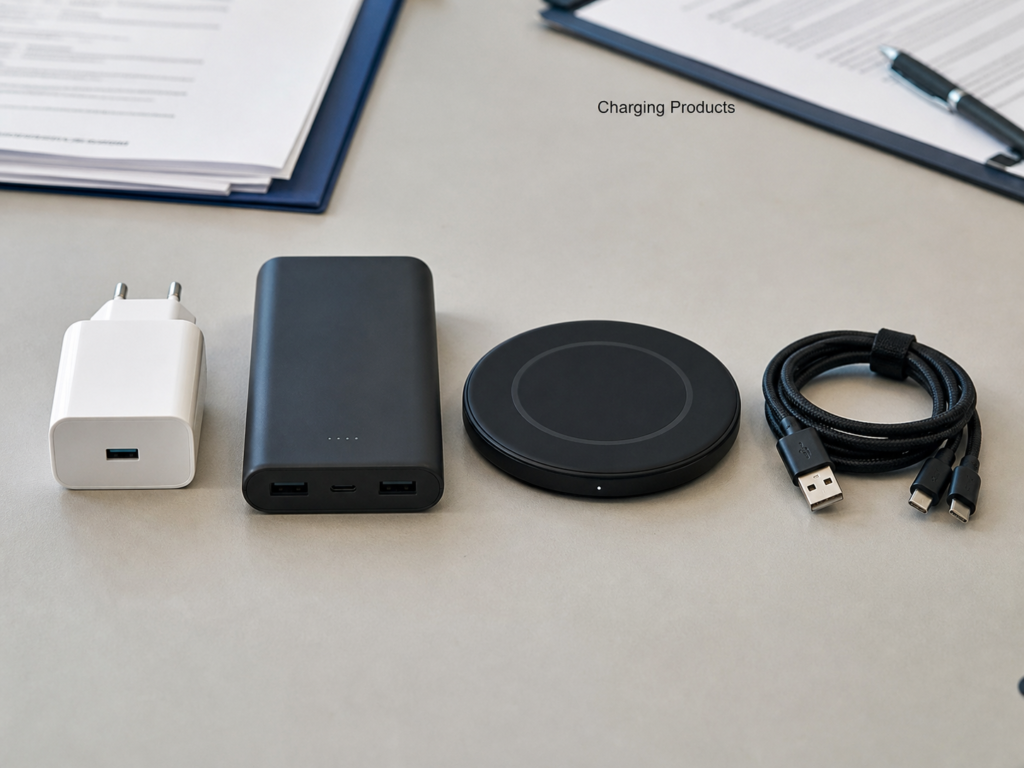
We have selected 4 most common charging products for your reference, you can directly compare your own products:
1. **Ordinary 10000mAh power bank (portable lithium battery)**
• Scope of jurisdiction: Subject to the battery regulation
• Core requirements: Basic labeling, battery conformity assessment and DoC, hazardous substance restriction, performance requirements, battery EPR
• Not currently involved: Usually does not trigger carbon footprint and battery passport requirements specific to EV, LMT or industrial batteries just because it is a portable battery
2. **Wireless charging base with 2000mAh built-in battery (battery-containing finished product)**
• Scope of jurisdiction: Subject to the battery regulation; those with wireless communication functions also need to comply with the RED directive
• Core requirements: Built-in battery compliance, finished products provide battery parameters according to applicable carriers, complete machine compliance, and corresponding EPR obligations such as battery, WEEE, packaging, etc.
• Not currently involved: Usually does not automatically trigger carbon footprint and battery passport requirements due to this capacity
3. **65W wall-plugged battery-free charger + USB-C cable set**
• Scope of jurisdiction: Not subject to special obligations of the battery law
• Other regulations to comply with: CE (check LVD/EMC according to product and voltage range), RoHS, REACH, WEEE, packaging regulations, GPSR
4. **2.5kWh consumer-grade outdoor power supply**
• Scope of jurisdiction: Cannot be judged solely by capacity. It is necessary to first exclude portable, LMT, SLI and EV according to the design purpose of the battery and the statutory classification in Article 3, and then judge whether it is an industrial battery
• If judged as portable: The core requirements are the same as those of ordinary power banks, and usually do not automatically trigger the carbon footprint and battery passport requirements of industrial batteries just because the capacity exceeds 2kWh
• If it is judged as an industrial battery according to the design purpose and statutory classification, and the internal energy storage capacity exceeds 2kWh: then further check the requirements such as carbon footprint and battery passport
• Supplementary judgment: Weight and sealing can only be used to judge the corresponding conditions in the definition of portable, and cannot alone determine that the product belongs to an industrial battery
Procurement Side Compliance Decision Tree
If you don’t know where to start, you can follow this decision tree step by step:
1. Step 1: Does the product contain batteries as defined by the regulation? → No: Follow the general electronic compliance process; Yes: Proceed to Step 2.
2. Step 2: Judge the battery category according to the design purpose and statutory conditions? → Match the corresponding compliance requirement list.
3. Step 3: In which country is the product sold and when will it be placed on the market? → Match the specific effective time, transitional provisions and EPR registration requirements.
4. Step 4: Can the supplier provide corresponding compliance documents (battery + complete machine)? → Yes: Procure after verification; No: Replace the supplier or request supplementation.
5. Step 5: Have label verification, EPR registration, and document retention been completed before launch? → Yes: Can be launched; No: Launch after completion.
Things You Can Complete Independently After Learning This Guide
At this point, the core content of the EU’s new battery regulation for charging products is finished. After learning, you should be able to independently complete these things:
• Quickly judge whether any charging product needs to bear the special obligations of the EU battery regulation;
• Identify battery categories according to statutory conditions, and list core compliance requirements and key time nodes;
• Complete basic operations such as supplier screening, label verification, EPR registration, and document retention on the procurement side;
• Identify common compliance risks and distinguish the boundaries between the battery law and other EU related regulations;
• Formulate a basic transitional compliance plan for products with long life cycles.
In general, the EU’s new battery regulation seems to have many entries, but as long as you first figure out the four core issues of “whether the product has a battery, which category it belongs to, who it is sold to, and when it is sold”, and then implement the basic work such as procurement, labeling, EPR, and document retention step by step, you will not step on big pitfalls.
For most merchants selling portable charging products, there is no need to be scared by the seemingly complicated requirements such as carbon footprint and battery passport for the time being. It is a more prudent approach to first do a good job in the current basic compliance, and then plan in advance according to the product category, sales cycle and specific effective date.