
Many charging product sellers who are new to the European market fall into compliance pitfalls with their first shipment: they think getting a “CE certificate” from the supplier and affixing a label is all that’s needed, only to have their goods detained as soon as they arrive at the port, either returned or destroyed, with losses often amounting to tens of thousands. In fact, European import compliance is a complete set of logic, not something that can be solved with a single certificate. Today, focusing on common products such as charging cables, USB/USB-C data cables, connectors, chargers, power adapters, and wireless chargers, we have compiled a practical checklist from entry-level judgment to self-verification, which you can use directly after reading.
First, Clarify the Boundaries: Does Your Situation Require Compliance?
Before listing specific requirements, let’s first clarify the scope of application that is most easily misunderstood, to avoid wasting money or missing items.
Coverage Area: Not All “Europe” Uses the Same Set of Rules
The European compliance system is not unified, and requirements vary by region:
• **Core Unified Area**: The 27 EU member states plus Norway, Iceland, and Liechtenstein of the European Economic Area (EEA). These regions use a large number of unified EU product regulations, but registration, declaration, and enforcement usually need to be confirmed separately according to the actual country of sale; a single certificate does not apply to the whole of Europe.
• **Special Separate Compliance Zones**:
• Mainland UK (GB): Mainly uses the UKCA mark, and currently still recognizes the CE mark; specific requirements are subject to the latest announcements of the UK government;
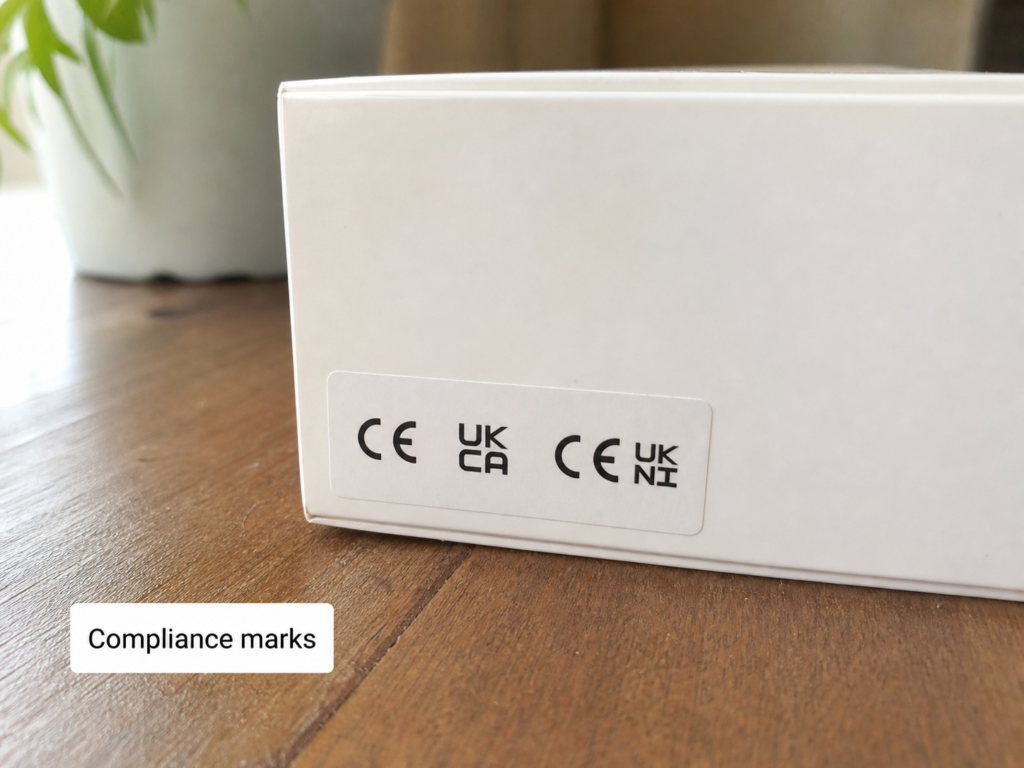
• Northern Ireland: Applies EU rules; if a UK accreditation body is used for conformity assessment that requires third-party participation, UKNI shall be added next to the CE mark. UKNI cannot be used alone, nor does it apply to the GB market;
• Switzerland: Applies its own market access rules. Many products can use EU compliance documents or the CE mark provided they meet Swiss equivalence requirements or relevant mutual recognition arrangements, but specific product, labeling, language, and liability requirements still need to be confirmed in accordance with Swiss regulations.
Applicable Scenarios: Commercial Placing on the Market Usually Requires Regulation
Whether a product is subject to a certain regulation depends on the product definition, whether it is placed on the market, its intended use, and the requirements of the specific regulation. Products commercially placed on the EU market usually must meet applicable product safety, chemical, waste, packaging, and other special requirements, including cross-border direct mail, FBA stock replenishment, offline wholesale, as well as bulk gifts and purchasing agents’ goods used for sales or commercial promotion.
Imports for personal use usually do not count as commercial placing on the market, but may still be subject to customs, transport, and product-specific regulations. You cannot infer that all requirements are exempt just because the goods are small parcels or in small quantities.
There is another common misunderstanding in judgment: if your product is only supplied as a component of a finished product and not sold separately to consumers, for example, supplying built-in charging cables to European finished product manufacturers, then the integration of the finished product and the compliance of the final product are usually the responsibility of the finished product manufacturer. However, component suppliers still need to fulfill applicable obligations such as RoHS, REACH, and WEEE according to whether the component is a product placed on the market independently, and provide authentic documents with a clear scope of application.
Consequences of Non-Compliance: Not Just Goods Detention
The consequences of non-compliance are divided into two stages, which are more serious than many people think:
• **Customs Stage**: If non-compliance is found, in mild cases, goods will be detained and supplementary materials required; in severe cases, goods will be directly returned or even forcibly destroyed, and all losses shall be borne by the party concerned;
• **Market Stage**: If verified through platform random inspection, market supervision patrol, or consumer complaint, you may face measures such as listing removal, fines, sales restrictions, and product recalls. In serious cases, you may be prohibited from entering the relevant market. Recall costs are often higher than the value of the goods.
Applicable Regulation Matrix for Charging Products: Find Requirements by Matching Your Product
There are many categories of charging products, and different products are subject to different regulations, so you don’t need to do everything. We have compiled the applicable rules for five common types of products, which you can directly compare:
| Product Type | Core Applicable Regulations | Remarks |
| Ordinary passive charging cables/connectors | RoHS, REACH, as well as applicable WEEE, GPSR, and packaging EPR requirements | Basic models without chips or active electronic components; whether purely passive connectors fall within the scope of WEEE shall be confirmed according to product definition and sales form |
| Chip-equipped data cables (E-Marker/high-speed) | RoHS, REACH, as well as applicable WEEE, GPSR, and packaging EPR requirements; LVD depends on voltage, and usually does not apply when DC < 75V | Those with E-Marker chips or high-speed signal functions require additional assessment of EMC and other requirements |
| USB chargers/power adapters | LVD, EMC, RoHS, REACH, as well as applicable WEEE, ErP, GPSR, and packaging EPR requirements | Whether ErP applies shall be confirmed in combination with the definition of external power supply, rated parameters, output type, and exclusions |
| Wireless chargers | LVD, EMC, RoHS, REACH, as well as applicable WEEE, ErP, GPSR, and packaging EPR requirements | Those with wireless communication functions such as Bluetooth/Wi-Fi need to additionally comply with RED |
| Power banks/chargers with built-in batteries | LVD, EMC, RoHS, REACH, as well as applicable WEEE, battery regulations, GPSR, and packaging EPR requirements | Products with built-in batteries require additional assessment of battery regulations, recycling, and transport requirements |
Note: All “as the case may be” items need to be confirmed in combination with the specific parameters, functions, and sales scenarios of the product, and cannot be generalized. GPSR usually plays a supplementary role when the product is not fully covered by other special product regulations, or still needs to meet general safety requirements.
Here are some common practical examples for your reference:
• Chip-free ordinary USB-C 60W passive charging cable: It is necessary to assess RoHS, REACH, applicable WEEE, GPSR, and packaging EPR requirements. Independently sold cables usually need to bear WEEE producer responsibility, but the specific situation shall still be confirmed according to product definition;
• 65W GaN USB-C charger (sold separately): It must comply with LVD, EMC, RoHS, REACH, as well as applicable WEEE, ErP, GPSR, and packaging EPR requirements. Whether it falls under the scenario of included chargers covered by the USB-C unified interface rule cannot be judged solely by having a USB-C interface or being sold as a “matching” product;
• 15W Qi wireless charging base with Bluetooth: It must comply with LVD, EMC, RoHS, REACH, as well as applicable WEEE, ErP, GPSR, and packaging EPR requirements, and additionally assess RED due to the Bluetooth wireless communication function;
• 20000mAh power bank with built-in cable: It must comply with LVD, EMC, RoHS, REACH, as well as applicable WEEE, battery regulations, GPSR, and packaging EPR requirements.
Interpretation of Core Compliance Requirements One by One: Understand What Each Regulation Governs
Many people’s impression of compliance is “getting certifications”, but in fact, each regulation has clear regulatory objectives and requirements. Once you understand the logic, you won’t waste money.
CE Mark: Not a Certificate, But a Self-Declaration
This is the point that most people get wrong: the CE mark is not a quality certificate issued by the EU official, but a **self-declaration made by the manufacturer itself** — meaning “I promise this product complies with all applicable CE-type regulations”, and the mark can only be affixed after all requirements are met.
Regulations covered by CE include applicable CE regulations such as LVD, EMC, RoHS, RED, and ErP, but not all EU regulations fall under the CE category. For example, different obligations in WEEE, GPSR, and battery regulations cannot be simply equated with the traditional CE system. The battery regulation itself also stipulates applicable conformity assessment and CE marking requirements.
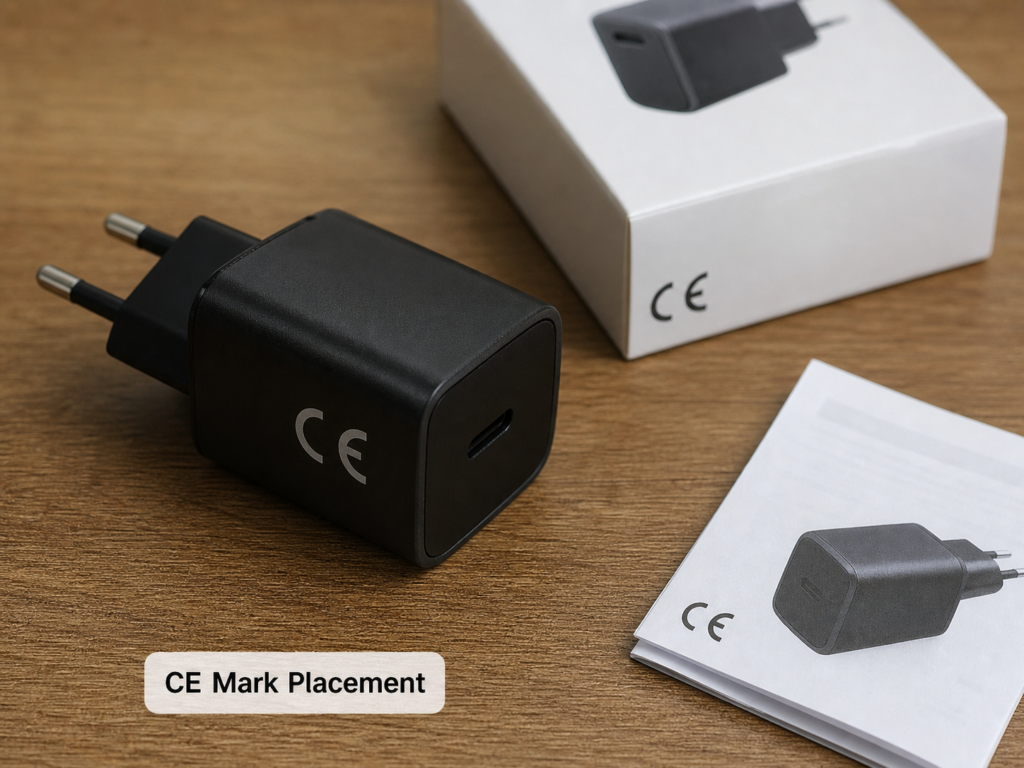
If a product is subject to multiple CE regulations, all of them must be met before the CE mark can be affixed. Affixing the mark after testing only one item is non-compliant.
Common Misconceptions: Asking a third-party institution to “issue a CE certificate”, affixing the mark after testing only one regulation, and randomly affixing the CE mark to products not within the CE scope.
LVD Electrical Safety: Governs Risk of Electric Shock and Fire
LVD is the EU’s electrical safety regulation, with the core goal of preventing personal safety risks such as electric shock and fire.
• **Applicability Judgment**: Electrical products with operating voltage within the range of AC 50-1000V and DC 75-1500V usually need to be judged for LVD applicability; ordinary low-voltage passive charging cables, such as USB-C cables with DC 20V, usually do not fall within the scope of LVD.
• **Key Points for Charging Products**: Electric shock protection and overheat protection of chargers, short-circuit prevention and anti-detachment design of connectors, and insulation and temperature resistance of high-power cables.
• **Compliance Method**: Test according to EU harmonized standards, conduct risk assessment, sort out technical documents, and sign a self-declaration. There is no mandatory requirement to find a third-party institution to issue a certificate.
EMC Electromagnetic Compatibility: Governs Mutual Interference
EMC stands for Electromagnetic Compatibility, which requires that products do not interfere with other equipment when operating, nor are they interfered with by other equipment.
• **Applicability Judgment**: Products containing active electronic components, communication chips, signal conditioning circuits, etc. that may generate or be affected by electromagnetic interference need to be assessed for EMC requirements; ordinary passive cables usually do not apply to EMC regulations.
• **Key Points for Charging Products**: Electromagnetic harassment of switching power supplies, signal interference of high-speed data cables.
Common Misconception: All charging cables need EMC — ordinary passive cables have no active components and usually do not need to meet EMC requirements.
RoHS Restriction of Hazardous Substances: Governs Toxic Substances in Materials
RoHS is the regulation on the restriction of hazardous substances in electrical and electronic products. It requires that homogeneous materials — that is, the same material that cannot be further disassembled, such as cable insulation, solder, and copper wire — be calculated separately, and the controlled hazardous substances in them shall not exceed the limit.
• **Scope of Application**: Charging electrical and electronic products usually need to be assessed for RoHS requirements, whether active or passive.
• **Limit Requirements**: Among the 10 controlled substances, the limit for 9 is 0.1%, and the limit for cadmium is 0.01%, with specific exemption clauses.
• **High-Risk Parts**: Cable insulation, plastic shells, solder, metal plating.
• **Inspection Method**: Ask the supplier for RoHS test reports or supply chain declarations, and focus on verifying the test results of high-risk materials.
REACH Chemical Regulation: Governs Chemical Risks Throughout the Life Cycle
REACH is the EU’s regulation on the registration, evaluation, authorization and restriction of chemicals throughout their life cycle. It covers far more substances than RoHS, and its requirements are divided into two categories — don’t confuse them:
• **Information Transmission Category**: For SVHC (Substances of Very High Concern), if the proportion in homogeneous materials exceeds 0.1%, information needs to be transmitted to the downstream of the supply chain, which does not mean that sales are uniformly prohibited; articles that meet the conditions may also involve the obligation to submit information to the SCIP database.
• **Restriction Category**: Substances restricted listed in Annex XVII may be prohibited from being placed on the market if they exceed the applicable limits.
• **High-Risk Parts**: Basically the same as RoHS, with the addition of adhesives.
• **Inspection Method**: Request supply chain substance declarations to confirm whether obligations such as SVHC information transmission, Annex XVII compliance, and SCIP submission are applicable and have been implemented.
Common Misconception: Products cannot be sold if SVHC exceeds 0.1% — usually, information transmission and SCIP obligations must first be judged; only situations such as restricted substances in Annex XVII exceeding applicable limits may lead to prohibition of placing on the market.
WEEE Waste Electrical and Electronic Equipment Recycling: Governs Disposal After Scrap
WEEE is the regulation on the recycling of waste electrical and electronic equipment. Simply put, after products are scrapped, they cannot be thrown away as ordinary waste, but must be professionally recycled, and sellers shall bear corresponding producer responsibility.
• **Scope of Application**: Independently sold cables usually need to be assessed for WEEE requirements; whether purely passive connectors are electrical and electronic equipment in the sense of WEEE shall be confirmed according to the definition of the regulation, product functions, and sales form.
• **Core Obligations**:
1. Non-EU sellers shall designate a local producer responsibility entity or authorized representative according to the rules of the country of sale;
2. Registration, declaration, and payment requirements in each country of sale usually need to be confirmed separately; registration in one country does not automatically cover the whole of Europe;
3. The “crossed-out wheeled bin” mark usually needs to be affixed to the product or packaging.
Common Misconception: Affixing the WEEE mark means compliance — the mark is only a basic requirement, and you also need to complete applicable registration, declaration, and payment obligations according to the country of sale.
GPSR General Product Safety Regulation: The General Safety Bottom Line When Applicable
GPSR is the EU’s General Product Safety Regulation, which mainly provides general safety requirements for products not fully covered by other special product regulations, and may also supplement product obligations in traceability, risk management, and recall. Whether and to what extent GPSR applies to a product shall be judged in combination with Article 2 of GPSR and other special regulations.
Core requirements include product traceability, risk warning, recall obligations, and the absence of unreasonable safety risks. Many sellers tend to ignore this regulation, thinking that complying with CE is enough. In fact, if the product still has other safety hazards or violates general safety requirements, regulatory measures may still be taken even if the CE documents are complete.
Special Compliance Requirements for Charging Products: These Are Category-Specific
In addition to the general regulations above, charging products have several special requirements, which have been the focus of regulation in recent years.
USB-C Unified Interface Regulation: Compliance Is Not Just Having a C Port
This is a new regulation issued by the EU in recent years, which many people misunderstand:
• **Regulated Objects**: The USB-C rule only applies to the categories of radio equipment listed in the directive, as well as the charging capacity, charging communication protocol, and included charger scenarios specified therein, not all separately sold USB-C products or universal chargers;
• **Effective Date**: From December 28, 2024, portable devices included in the scope are subject to USB-C requirements; from April 28, 2026, laptop computers are subject to USB-C requirements;
• **Fast Charging Requirement**: For devices within the scope of the directive that are charged by wired means and meet the corresponding power conditions, they need to meet the specified USB Power Delivery and related charging communication requirements. Other USB-C products do not automatically apply just because their power reaches 15W.
Common Misconceptions: All separately sold USB-C products must comply, and having a USB-C interface counts as compliance — it also depends on whether the product belongs to the equipment categories and applicable scenarios listed in the directive, and whether the charging communication requirements are met.
ErP Charger Energy Efficiency: Governs Standby Power Consumption
ErP is the EU’s energy efficiency regulation. For the part targeting chargers, the core is to limit excessive power consumption during standby and operation.
• **Scope of Application**: Chargers or power adapters that meet the definition of external power supply, rated parameters, and the scope of application of the regulation need to meet Regulation (EU) 2019/1782 and its subsequent applicable requirements. Specific products shall be checked against the definition, power range, output type, and exclusions, and it cannot be stated that all external power supplies are automatically applicable.
• **Key Inspection Points**: Whether no-load power consumption and average efficiency meet the regulatory requirements of the corresponding power segment.
Common Misconception: High-power fast chargers do not need to meet energy efficiency requirements — as long as the product falls within the scope of the regulation, it must be assessed according to the corresponding requirements, and cannot be judged solely by power level.
RED Wireless Function Special Requirement: Not All Wireless Chargers Need It
RED is the EU’s Radio Equipment Directive. Only products with radio communication or transmission functions need to comply, such as products with Bluetooth, Wi-Fi, NFC, or wireless chargers with data communication functions. Ordinary Qi wireless chargers only have electromagnetic induction charging function and no wireless communication, so they usually do not need RED.
• **Core Requirements**: Use frequency bands allowed by the EU, and meet radio frequency, EMC, and electrical safety requirements.
• **Notified Body Involvement**: The conformity assessment of some radio equipment may require the participation of an EU Notified Body (NB). Whether it is required depends on the specific product and the conformity assessment path adopted.
Common Misconception: All Qi wireless chargers need RED — only those with wireless communication functions need it.
Special Requirements for Products with Batteries: Battery Regulations Have Independent Requirements and Also Include Applicable CE Requirements
Products with built-in or accompanying portable batteries, such as power banks and wireless chargers with batteries, must also meet the special battery requirements specified in Regulation (EU) 2023/1542. This regulation has independent producer responsibility, labeling, recycling, and supply chain obligations, and also includes applicable conformity assessment and CE marking requirements.
• **Specific Obligations**:
1. Check labeling requirements such as capacity, chemical composition, recycling mark, and QR code according to battery type, placement date, and operator identity;
2. Confirm the battery producer responsibility entity according to the rules of the target market, and complete applicable registration, declaration, and payment;
3. Confirm whether supply chain due diligence obligations apply according to the product, raw materials, operator scale, and implementation date specified in the regulation;
4. Complete relevant procedures according to applicable conformity assessment requirements, and use the CE mark when necessary.
• **Transport Requirements**: Lithium battery transportation needs to meet dangerous goods rules such as UN38.3, which is a transport requirement and is a separate set of requirements from product CE compliance.
Common Misconceptions: Battery compliance is only a CE requirement, or all products with batteries are immediately subject to exactly the same labeling and due diligence obligations. In fact, it is necessary to confirm item by item according to battery type, placement time, and operator identity.
Responsible Entities: Who Should Do What
EU compliance is based on role-based responsibility. Clarify your role and obligations to avoid addressing the wrong person.
• **Overseas Manufacturer**: That is, the designer or producer of the product, responsible for product design compliance, preparing technical documents, signing the declaration of conformity, and bearing the main responsibility for product conformity and safety.
• **EU Importer**: Needs to verify the product’s compliance documents, marks, instructions, and responsible person information, ensure that the product does not lose compliance due to its own reasons during storage and transportation, and cooperate with regulatory authorities and necessary corrective measures. The importer is not the “first responsible person” in all cases.
• **EU Authorized Representative (AR)**: Whether an authorized representative is required depends on the applicable regulations and the content of the written entrustment. For non-EU sellers, the EU domestic responsible person shall also be determined in accordance with GPSR and specific product regulations. The authorized representative can only perform statutory obligations within the scope of entrustment after accepting written entrustment, and freight forwarders, warehouses, or ordinary logistics providers cannot be automatically regarded as authorized representatives.
• **WEEE/Packaging EPR Representative**: Responsible for registration, declaration, and payment under the corresponding recycling regulations. Whether it must be held by a local EU entity, and whether it can be concurrently held with other responsible persons, shall be confirmed according to the regulations of the target country and specific qualifications.
• **Distributor**: Needs to verify the product’s compliance marks and responsible person information, and cannot sell products that are known to be non-compliant.
• **E-commerce Platform**: Online platforms must perform corresponding obligations such as seller information, product information, notice handling, cooperation, and listing removal in accordance with GPSR, the Digital Services Act, and other applicable rules. The specific scope of verification and notification depends on the platform’s role and regulatory provisions, and not all platforms bear responsibility in the same way.
Label, Packaging, and Listing Inspection: Visible Compliance Details
These are the details that are most likely to be spot-checked, and also the places where many novices easily make mistakes.
Certification Label Affixing Specifications
• **CE Mark**: Minimum height of 5mm, and the proportion cannot be changed; it is preferred to be affixed to the product body, and for very small products, it can be affixed to the packaging or instructions; it cannot be blurred, deformed, or mixed with other marks.
• **UKCA/UKNI Mark**: The GB market uses UKCA according to current UK regulations or accepts CE under transitional arrangements; Northern Ireland applies EU rules, and if a UK accreditation body is used for third-party conformity assessment, UKNI shall be added next to the CE mark, and UKNI shall not be used alone.
• **WEEE Mark**: The crossed-out wheeled bin mark shall be clearly printed on the product or packaging.
• **Other Marks**: Battery marks (if any) and safety warning marks shall also be labeled according to specific regulations. The country of origin mark is not automatically required for all such electronic products, and shall be confirmed according to customs, trade, or product-specific regulations.
• **Exemption Rules**: For very small products, such as mini connectors, that cannot be labeled on the body, the label can be moved to the packaging or instructions, but it must meet the specific requirements of the regulation.
Mandatory Labeling Information on Products and Packaging
• **General Parameters**: Product model, rated input/output parameters, manufacturer’s name. Parameters must be consistent with the actual product, and false labeling is prohibited.
• **Liability Information**: Information of the manufacturer, importer, or applicable EU/UK responsible person shall be labeled according to specific regulations and the sales market, usually including name, postal address, and specified electronic contact information. UK responsible person information is only provided when required by UK applicable rules.
• **Language Requirements**: Safety warnings, parameters, and other mandatory information shall be provided in accordance with the specific regulations of the country of sale. English cannot default to covering the whole of Europe — for example, when selling to France, you need to confirm French requirements; when selling to Germany, you need to confirm German requirements.
Requirements for Instructions and E-commerce Listings
• **Essential Content of Instructions**: Safe use instructions, troubleshooting methods, waste recycling prompts, and responsible person information.
• **Language Requirements**: Instructions and warnings also need to use the official language specified by the country of sale or other languages recognized by regulations.
• **Packaging Environmental Protection Requirements**: Complete applicable producer registration, recycling system participation, and classification labeling obligations in accordance with the packaging law of the country of sale. For Germany, focus on checking LUCID registration and packaging recycling system participation requirements; for France, check Triman and classification information requirements according to applicable packaging categories, and the Green Dot cannot be used as a general mandatory mark in Germany.
• **E-commerce Listing Requirements**: Consumers should be able to see the information of the manufacturer, EU responsible person, or other responsible entities required by applicable regulations before purchase; the parameters marked on the listing must be consistent with the actual product; fast charging power or compatibility cannot be exaggerated — for example, writing “supports 100W fast charging” but the actual is only 65W is non-compliant.
Technical Documents and Customs Clearance Documents: The Invisible Core
Many sellers think that compliance is just affixing a mark, but in fact, technical documents are the core of compliance, and regulators can access them at any time.
List of Required CE Technical Documents
CE technical documents are not a single certificate, but a complete set of documents, including at least:
1. **EU Declaration of Conformity (DoC)**: Usually signed by the manufacturer or its authorized representative, including product information, applicable regulations, signatory information, and date. The importer shall verify and keep applicable documents; only when it sells under its own name or trademark, or assumes manufacturer responsibility under other statutory circumstances, may it bear corresponding declaration responsibility as the manufacturer.
2. **Risk Assessment Record**: Risk analysis and rectification records for product safety, EMC, etc.
3. **Test Report**: As support for technical documents, it can be self-tested or issued by a third party. There is no mandatory requirement for it to be issued by an EU-accredited body, except for specific RED conformity assessment paths.
4. **Other Supporting Documents**: Design drawings, circuit diagrams, compliance certificates of key components, applicable harmonized standard lists, RoHS/REACH supply chain declarations, etc.
Document Storage and Language Requirements
• **Storage Period**: At least 10 years from the date the last batch of products is placed on the market, and regulatory authorities may request access at any time.
• **Language Requirements**: The language of the DoC, instructions, safety information, and technical documents shall be determined according to each applicable regulation and the provisions of the country of sale. It cannot be assumed that English is sufficient in most member states; when necessary, official language versions required by regulatory authorities shall be provided.
Customs Clearance Process and Required Documents
• **Classification Verification**: Confirm the HS code of the product in advance. Charging cables, adapters, and connectors may involve different tariff classifications, and the code cannot be determined solely by the product name; incorrect coding may lead to tariff differences and also affect compliance inspections.
• **Document Preparation**: Prepare commercial invoices, transport or packing documents, correct commodity classification, certificate of origin and preferential tariff certificate (if applicable) according to the import declaration mode and customs requirements, and provide DoC, technical or product safety documents when requested. EORI is an identification number obtained by relevant economic operators in accordance with regulations, not a usual accompanying document for goods.
• **VAT Scheme**: Eligible non-EU imported B2C distance sales can use IOSS, which is usually limited to consignments with an intrinsic value not exceeding 150 euros and not subject to excise duty; OSS is mainly used for eligible intra-EU cross-border sales, not an alternative import declaration system for imported small parcels. Whether to use it and the specific declaration process shall be confirmed by the sales model, import arrangement, and tax subject. IOSS also does not guarantee faster customs clearance.
Common Misconception: Customs clearance release equals legal continuous sales — customs clearance is only part of import declaration and related inspections. Subsequent market supervision and platform random inspections may still check compliance. Don’t think that everything is fine once you pass customs.
Compliance Verification and Risk Investigation: Checks You Can Do Yourself
Novices don’t need to find a third-party institution right away. Many basic verification tasks can be done by themselves, and most pitfalls can be avoided.
Five-Step Method for Verifying the Authenticity of Compliance Documents
To check whether the reports and DoC provided by the supplier are real and usable, just follow these five steps:
1. **Product Matching**: The product model, hardware version, and rated parameters on the report and DoC must be completely consistent with the actually sold product — don’t use reports of other models to make up the number, as it will be deemed fake compliance if found out.
2. **Coverage Scope**: The documents must cover all applicable regulations. For example, a charger cannot be said to be compliant if only LVD is tested; EMC, RoHS, ErP, and other applicable requirements also need to be assessed.
3. **Regulation Version**: Check whether the standard is still listed in the Official Journal of the European Union, whether it is in the transition period, and whether there are restrictions. Old versions of standards are not necessarily completely invalid, but may lose or partially lose the presumption of conformity.
4. **Institution Qualification (If Any)**: If the report is issued by a third party, confirm that the testing institution has the corresponding testing capability; if it is a RED Notified Body report, confirm that the NB number is valid.
5. **Valid Signature**: The DoC shall be signed by an authorized entity, and the signatory and entity information shall be authentic and verifiable. Usually, an official seal is not a unified statutory condition.
Random Inspection Trigger Scenarios and Responses
Compliance random inspections are not only conducted by customs. Common trigger scenarios include customs inspection, platform random inspection, offline market supervision patrol, and consumer complaint. In case of random inspection, applicable technical documents, responsible person information, and EPR certificates shall be provided in a timely manner, but complete documents cannot replace the compliance of the product’s physical safety, labeling, performance, and chemical substances.
Regulatory authorities may still conduct sampling tests, or take measures such as listing removal, sales restrictions, recalls, returns, destruction, and penalties. Whether correction is allowed shall be handled according to the decision of the competent authority and specific procedures.
High-Risk Non-Compliance Situations
The following categories are the focus of regulation and also the places where problems are most likely to occur:
• **Safety Category**: Products have risks of electric shock, overheating, short circuit, and false labeling of power or fast charging parameters;
• **Labeling Category**: Abuse or forgery of CE mark, false responsible person information;
• **Document Category**: Missing or forged DoC, incomplete technical documents;
• **Environmental Protection Category**: Excessive restricted substances in RoHS/REACH, failure to complete applicable registration or declaration obligations for WEEE/packaging EPR.
7-Step Quick Self-Check Method Before Import
Novices can follow this order step by step to avoid missing items:
1. Confirm the target market and product function type, for example, a 65W GaN charger sold to Germany;
2. List all applicable regulations against the regulation matrix;
3. Implement all responsible entities, including authorized representatives, WEEE/EPR responsible entities, etc., and confirm their applicability and qualifications;
4. Check the mandatory information and language requirements of product labels, packaging, and instructions;
5. Verify the validity of compliance documents provided by the supplier using the five-step method;
6. Complete applicable registration, declaration, and payment for WEEE, packaging EPR, battery recycling, etc. in the target country;
7. Prepare customs clearance documents and a full set of technical documents, and confirm that all information is consistent.
List of Common Pitfalls for Novices
These are the most common mistakes novices make, don’t fall for them:
1. Affixing the CE mark means compliance, no need for technical documents and DoC — wrong, technical documents are the core;
2. Small-batch cross-border small parcels do not need compliance — wrong, commercial placement still needs to judge applicable requirements;
3. English instructions can be sold all over Europe — wrong, they must be prepared according to the language requirements of the country of sale;
4. Freight forwarder/warehouse address can be used as authorized representative — wrong, the authorized representative must accept written entrustment and perform statutory obligations within the scope of entrustment;
5. Passive charging cables do not need any compliance — wrong, they usually do not need LVD and EMC, but still need to assess RoHS, REACH, applicable WEEE, GPSR, and packaging EPR requirements;
6. WEEE/EPR registration in one country covers the whole EU — wrong, registration, declaration, and payment requirements of each country need to be confirmed separately;
7. The supplier’s CE report equals the compliance of one’s own product — wrong, it must be completely matched with the product you actually sell;
8. SVHC exceeding 0.1% means it cannot be sold at all — wrong, first judge the information transmission and SCIP obligations; only situations such as restricted substances exceeding applicable limits may lead to sales prohibition.
Procurement Risk Priority Ranking
When checking compliance before procurement, follow this priority, focus on the most critical ones first to avoid wasting time:
• **First Priority (Safety Category)**: Risks of electric shock, short circuit, overheating, fire, and false parameter labeling — before these issues are clarified, large-scale procurement should not be carried out; once problems are found, you may face rectification, sales restrictions, recalls, returns, destruction, or penalties, and specific measures shall be determined by the degree of risk and the procedures of the competent authority;
• **Second Priority (Special Category)**: Wireless functions, batteries, high power, multi-port, fast charging protocols — these are unique to charging products, easy to miss, and need to be confirmed with emphasis;
• **Third Priority (Environmental Protection Category)**: RoHS, REACH, WEEE, packaging EPR — such problems can sometimes be handled through supplementary registration, declaration, or corrective measures, but it is still necessary to first confirm that the product itself meets the requirements;
• **Fourth Priority (Document Category)**: Labels, language, listing information, document storage, batch traceability — these details are relatively easy to modify, but cannot be ignored either.
Finally: The Core Abilities You Can Master
After reading this checklist, you should have the compliance judgment ability from entry level to semi-proficient: you can match applicable regulations according to the target market and product type, check the compliance of labels, packaging, instructions, and e-commerce listings, verify the authenticity of supplier documents with the five-step method, identify common compliance pitfalls, and reduce the risks of goods detention, fines, and listing removal. You can also distinguish the difference between customs clearance release and legal continuous sales, and know how to arrange procurement inspection work according to risk priority. If you encounter complex products with wireless functions, doubtful regulations, or high power, don’t force it. Seeking help from a professional compliance institution is more cost-effective than shipping with a fluke mentality.
Compliance in the European market seems to have many items, but as long as you sort out the logic and follow the checklist step by step, there will be no major problems. Especially since charging products are a high-risk category, sufficient preliminary work is required to operate stably for a long time.