
For friends doing cross-border business in charging accessories, the most common pitfall when first entering the European market is treating RoHS and REACH as thresholds that “can be passed with any random report” — it is not until goods are detained by customs or e-commerce listings are taken down that they realize the details of these two sets of regulations are far more than imagined.
In fact, for small and medium-sized importers, there is no need to treat regulations as a scourge. As long as you first draw clear boundaries, understand the core logic, and implement them step by step according to the process, you can significantly reduce common compliance risks. This guide focuses on common products such as charging cables, USB-C data cables, chargers, and power adapters, and thoroughly explains the key points of RoHS and REACH that importers need to master, from entry-level judgment to practical pitfall avoidance.
First, Draw Boundaries at the Entry Level: Scope of Application, Responsible Entities, and Consequences of Non-Compliance
Differences in Applicable Regulations Across Different European Markets
First of all, it should be clear that the “European market” is not a unified compliance system, and regulations applicable in different regions are completely different. If you ship the wrong goods or use the wrong documents, they will be directly detained.
The 27 EU member states plus the European Economic Area (EEA, i.e. Norway, Iceland, Liechtenstein) are subject to the EU versions of RoHS and REACH regulations. After the UK’s Brexit, the three regions of England, Scotland, and Wales apply independent UK RoHS and UK REACH. A UK Declaration of Conformity should be prepared in accordance with UK rules, and applicable markings and UK responsible entity requirements should be verified. Supportive tests and technical documents can be reused if their content meets UK requirements; whether the CE or UKCA mark can be used should be verified in accordance with product regulations and the UK’s current recognition policy. Northern Ireland is relatively special: depending on the trade route, a combination of EU and UK rules may apply, which requires separate confirmation before shipment. As for other European countries such as Switzerland and Turkey, the unified EU regulations do not apply, and local chemical and electrical and electronic equipment compliance requirements need to be separately verified.
Legal Status and Liability Boundaries of Importers
Many friends who are new to the industry are most likely to confuse whether they count as “importers” defined in the regulations — after all, there are many cross-border models now, some use overseas warehouses to receive goods on their behalf, some do dropshipping, and it is easy to misstep on liability boundaries.
A natural or legal person established within the EU that first places electrical and electronic equipment from a third country on the EU market is usually an importer within the meaning of EU RoHS; for the UK market, judgment should be made based on the establishment location of the corresponding operator and the import route as specified in UK RoHS and UK REACH. Simply put, if you purchase products from overseas and sell them to consumers or downstream merchants in the EU or the UK, whether you use your own warehouse or a third-party overseas warehouse for delivery, you must carefully judge whether you are an importer in the regulatory sense; service providers that only do logistics receiving and overseas warehouse operations are not importers and do not need to bear compliance responsibilities.
As an importer, you are the first responsible person for compliance. When regulatory authorities find problems, they will come to you first, and you cannot fully shift the obligation to overseas manufacturers — after all, it is difficult for regulatory agencies to hold upstream factories accountable across borders. If you place products under your own name or trademark, or modify already marketed products in a way that may affect their conformity, you shall bear the obligations of a manufacturer; whether simple repackaging changes the role shall be judged based on whether you switch to your own brand, whether conformity is changed, and other applicable regulations.
Two easily confused roles should also be distinguished here: an authorized representative is an institution you entrust to handle compliance matters locally for you, and only bears partial responsibility within the scope of entrustment; distributors do not replace manufacturers and importers in bearing all technical document obligations, but still must verify markings, documents, and traceability information with due diligence; when non-compliance is found or should be found, they shall not continue to place the products on the market, and shall take measures such as correction, withdrawal, or recall.
Judgment on the Scope of Application for Charging Products
After clarifying the market and responsible entities, the next step is to judge whether your products are subject to RoHS and REACH. Many people make omissions in judgment here, resulting in insufficient compliance work.
The charging cables, USB/USB-C data cables, chargers, and power adapters we commonly deal in are typical electrical and electronic products, which are subject to both RoHS and REACH. There are also several types of products that are easily missed in judgment, such as car chargers, magnetic charging cables, adapters with chips, and multi-function docking stations. As long as they have electronic functions, they are within the scope of RoHS regulation and cannot be omitted.
There is another category of products that are only subject to REACH and do not require RoHS compliance: purely mechanical accessories without any electronic functions, such as silicone protective covers for charging cables, pure cloth storage bags, and paper packaging. These are not electrical and electronic equipment, so RoHS does not regulate them, but the chemical requirements of REACH still apply.
If it is a set sold in combination, such as a “charger + charging cable + storage bag” set, each component must separately meet the corresponding regulatory requirements. As an importer, you also bear the compliance responsibility for the labels and documents of the entire set, and you cannot say “it doesn’t matter if one item in the set is non-compliant”.
Actual Consequences of Non-Compliance
Some people may ask, is it really that strict? Let’s first look at the actual cost of non-compliance, and then we will know why it should be taken seriously.
First, direct losses at the customs clearance end: non-compliance with RoHS and REACH may lead to regulatory detention, sales restriction, withdrawal, or recall; the specific enforcement methods and proportions vary by member state and case. After detention, goods may be returned or destroyed, and payment for goods, freight, and customs clearance fees may all be lost.
Then there are losses on the operation end: if you operate on e-commerce platforms, non-compliance will directly lead to listing removal and account suspension. All previously accumulated reviews and invested advertising will be invalidated. In severe cases, it will trigger product recalls, requiring all sold goods to be recovered, which is extremely costly.
As for penalties, penalties for RoHS and REACH are stipulated by the laws of each member state, which may include fines, sales bans, withdrawal, recall, and other measures; the specific upper limit shall be verified in accordance with the domestic enforcement rules of the country where the product is sold.
There are also many hidden costs, such as storage fees caused by backlogged goods in warehouses, losses from sales interruption, impact on brand reputation, and even claims from downstream customers. These combined are often higher than direct fines.
Core Logic Distinction: Plain-Language Differences Between RoHS and REACH
Many people cannot distinguish the difference between RoHS and REACH, thinking that both are “testing for hazardous substances”. In fact, the logics of the two sets of regulations are completely different. Once you understand the differences, the subsequent practical operations will not be chaotic. We first list the core differences in a table for easy comparison:
| Comparison Dimension | RoHS | REACH |
| Regulatory Scope | Only targets hazardous substances in electrical and electronic products, it is an exclusive toxic substance list for electronic products | Targets the chemical safety of all products entering the European market, it is a “safety net” covering all categories |
| Content Calculation Basis | Calculated by **homogeneous material** (the smallest unit that cannot be mechanically disassembled, such as the PVC sheath of cables, the nickel-plated layer of USB connectors) | The SVHC thresholds under Article 33 and Article 7(2) of REACH are judged by each “article”; for complex products, constituent articles shall be identified and evaluated separately, and cannot be diluted by the average of the whole product |
| Core Obligations | Meeting substance limits + EU Declaration of Conformity (DoC) + CE marking | Meeting restriction substance requirements + SVHC information provision/notification + SCIP registration (if applicable) |
| Relationship with CE Mark | The CE mark can prove RoHS compliance | The CE mark has nothing to do with REACH compliance, and the CE mark cannot be used to prove that REACH requirements are met |
Let’s elaborate on several key points in the table to avoid falling into misunderstandings.
First is the difference in regulatory scope: RoHS only regulates electrical and electronic equipment, so non-electronic accessories such as silicone covers and storage bags do not need to consider RoHS, and only need to comply with REACH.
Then is the difference in calculation basis, which is the most common pitfall: RoHS requires that “every layer of material meets the standard”, rather than the average of the entire cable or the entire product meeting the standard. For example, for a charging cable, you need to disassemble it into the smallest units that cannot be further disassembled (i.e. homogeneous materials), such as PVC sheath, copper wire, shielding layer, nickel-plated layer of USB connector, and adhesive. Only when the hazardous substances in each unit meet the limits can it be considered RoHS compliant — even if the lead in the sheath exceeds the standard but the copper wire inside is completely fine, and the average meets the standard, it is still non-compliant.
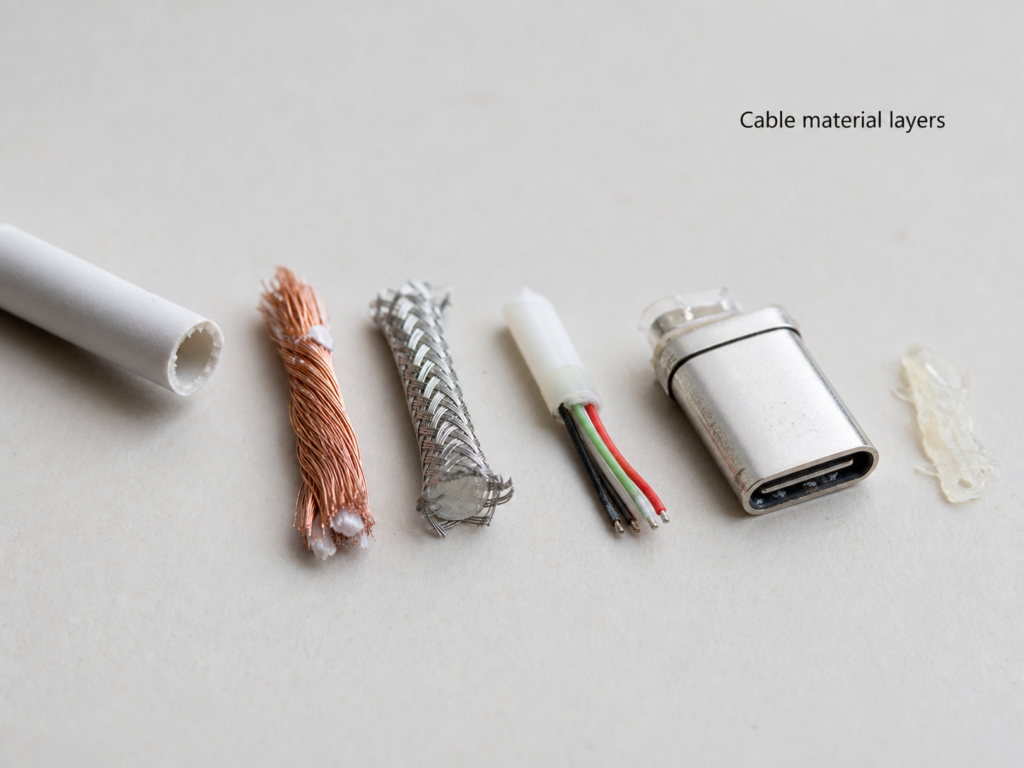
The SVHC threshold of REACH cannot be simply calculated by the average total weight of the whole machine or the entire cable. For complex products, each component that meets the definition of “article” shall be identified, and whether the SVHC content in each article exceeds 0.1% shall be judged separately. Only when a component itself constitutes a single article can it be calculated by the weight of that component; the total weight of a complete charger or the entire cable cannot be used to dilute the SVHC content in a certain component.
The difference in core obligations should also be clearly remembered: RoHS is part of the CE directives, so after compliance, the CE mark can be affixed; but REACH is an independent chemical regulation, and the CE mark cannot prove REACH compliance at all. Many people think that having CE means everything is fine, but end up stumbling on REACH.
Finally, let’s talk about several most common cognitive misunderstandings for beginners, you can check if you have fallen for them:
First misunderstanding: Having a RoHS report equals REACH compliance. Wrong. REACH regulates far more substances than RoHS. For example, nickel release and short-chain chlorinated paraffins are not regulated by RoHS at all, but have requirements under REACH. Therefore, RoHS compliance does not mean that REACH is problem-free.
Second misunderstanding: SVHC are prohibited substances. Wrong. SVHC are “Substances of Very High Concern”. They only require the performance of information provision and notification obligations when the threshold is exceeded, and are not completely prohibited. Only substances included in REACH Annex XIV (Authorization List) require authorization to be used, and restriction substances in Annex XVII are those that are mandatorily prohibited or subject to limits.
Third misunderstanding: Small-batch imports do not need to worry about REACH. Wrong. The restriction substance requirements of REACH have no quantity threshold. Even if you only import 1 charging cable, you must meet the restriction substance requirements. Only the SVHC notification obligation has a threshold of “more than 1 ton imported per year”.
RoHS Practical Operation: Compliance Judgment Method
After understanding the core differences, let’s first talk about the specific practical operation of RoHS, how to judge whether your products are compliant.
Core Regulatory Requirements
RoHS currently regulates 10 hazardous substances, 6 of which are basic categories: lead, mercury, cadmium, hexavalent chromium, polybrominated biphenyls, and polybrominated diphenyl ethers. The other 4 are phthalate plasticizers, which were added later. In terms of limits, cadmium has the strictest requirement, not exceeding 0.01% (i.e. 100 ppm), and the limit for the remaining 9 is 0.1% (i.e. 1000 ppm), all calculated by homogeneous material. Of course, the premise is that your product belongs to Electrical and Electronic Equipment (EEE), that is, products that operate by electric current or electromagnetic fields. The charging products we deal in basically meet this requirement.
High-Risk Parts
The high-risk parts of charging products are relatively fixed. When you get the supplier’s materials, you can focus on checking these places:
For cable products, phthalate plasticizers in PVC or rubber sheaths, lead in shielding layers, and brominated flame retardants in insulating layers are all high-risk areas; for chargers, lead in PCB solder, flame retardants in shell plastics, and hexavalent chromium in pin plating are very likely to exceed standards; common high-risk parts also include metal plating of interfaces, ink in labels, adhesives used for bonding, and stress relief soft rubber sleeves at both ends of cables, which many suppliers will ignore.
Exemption Application Boundaries
RoHS does have exemption clauses, but they cannot be used in all cases. The logic of exemption is that only materials or uses that are technically irreplaceable can apply for exemption, and they are all listed in Annexes III and IV of RoHS. Those not on the list are not counted at all. Exemptions must correspond item by item to the exact entries in Annex III or IV. For example, lead in ceramic dielectric materials and high-melting-point solder are subject to restrictions on specific voltage, material composition, product category, and validity period respectively; they cannot be deemed applicable just because the product is “high-reliability” or “industrial grade”. Ordinary solder used in consumer-grade chargers and data cables is not eligible for lead exemption at all. Don’t listen to suppliers saying “the whole industry uses this exemption”, that’s all a lie. It should also be noted that exemptions have validity periods, the list is updated irregularly, and some exemptions will expire and become invalid, so they cannot be used all the time.
Required Documents and Validity Judgment
After importers receive the documents provided by suppliers, they cannot just put them away directly; they must first judge whether they are valid. The statutory core documents of RoHS are technical documents and the EU Declaration of Conformity (EU DoC). Technical documents shall provide sufficient evidence to prove compliance with the limits, which may include material breakdown tables, supplier material declarations, risk assessments, and appropriate test data; if exemptions are used, there must also be exemption judgment records.

How to judge whether the documents are sufficient to support compliance? Several key points: First, relevant evidence must cover all 10 substances, not just test the 6 old-version substances; second, the evidence should correspond to homogeneous materials, not just look at the average result of the entire product; third, the model and material on the documents must completely match the products you purchase; fourth, if third-party testing is used, the test method, test scope, sample representativeness, and laboratory capability should be evaluated, rather than only looking at a certain qualification.
If you encounter the following situations, the documents are insufficient as a basis for release, and should be returned to the supplier for supplementation: only the whole product is tested without splitting homogeneous materials, only 6 old-version substances are tested, or the model does not match the product you purchased. Documents should also be rechecked after product or material changes and regulatory changes, and cannot be judged solely by a fixed “report validity period”.
REACH Practical Operation: Compliance Judgment Method
After talking about RoHS, let’s talk about the practical operation of REACH. The REACH system is larger than RoHS, and we only talk about the core parts that importers need to master.
Core Regulatory Framework
REACH has three core lists. You don’t need to remember their full names, just know their respective functions:
The first is the SVHC Candidate List, also known as the Substances of Very High Concern list, which lists substances that may be carcinogenic, teratogenic, reproductive-toxic, or environmentally hazardous. When the threshold is exceeded, information provision and notification obligations must be fulfilled; the second is Annex XIV Authorization List, which are higher-risk substances selected from SVHC. For Annex XIV substances, after the sunset date, authorization is usually required if the substance is used in the EU or the substance or mixture is placed on the market for specific uses; for imported finished articles containing such substances, whether authorization is triggered shall be separately judged in accordance with REACH authorization clauses and specific uses. The third is Annex XVII Restriction List, which contains substances that are mandatorily prohibited or subject to limits. No matter how much you import, you must comply with it, and this is the strictest.
The charging products we deal in are generally judged as “articles” (i.e. finished products or components), and do not require registration of pure chemical substances. Only products with “intentionally released substances”, such as scented charging cables, require additional evaluation of registration obligations. Here is a special reminder: many people think REACH is just about checking SVHC, but that’s wrong. The restriction substances in Annex XVII are mandatory requirements, with higher priority than SVHC. If you miss checking them, it is very easy to have problems.
High-Risk Requirements
The high-risk requirements for charging products are mainly concentrated in two categories: in terms of restriction substances, in addition to lead, cadmium, and phthalates that overlap with RoHS, there is another one that is easily missed: **nickel release**. However, the nickel release restriction only applies when metal parts are articles or components intended to be in direct and prolonged contact with the skin. It shall be judged based on the intended use of the product, reasonably foreseeable use methods, and Entry 27 of REACH Annex XVII, rather than sending all USB interfaces and pins for testing uniformly.
The number of entries in the SVHC Candidate List is updated, and the latest version published by the European Chemicals Agency (ECHA) at the time of assessment or placing on the market shall prevail. For example, after the update in June 2025, the Candidate List has 250 entries. Common risk substances in charging products include phthalate plasticizers in cables, brominated flame retardants in plastics, hexavalent chromium in metal plating, etc. The SVHC threshold is: when the weight of a single SVHC accounts for more than 0.1% of the total weight of a single article, the subsequent information provision and notification obligations are triggered.
Importer Obligations When SVHC Exceeds the Threshold
If SVHC really exceeds 0.1%, importers must fulfill three obligations:
The first is the information provision obligation: if consumers ask you whether there is SVHC in the product, you must provide them with relevant information for safe use within 45 days; if you sell to downstream customers, you must also proactively pass on the SVHC substance information to them.
The second is the notification obligation: when the concentration of a certain SVHC in an article exceeds 0.1% (w/w), and the total amount of that SVHC substance imported by the importer per year exceeds 1 ton, in principle, notification shall be made to the European Chemicals Agency (ECHA) in accordance with Article 7(2) of REACH; except for statutory exemption situations such as the substance has been registered for that use, or human and environmental exposure can be excluded.
The third is SCIP database registration: as long as the SVHC in an article exceeds 0.1%, no matter how much you import, you need to register it in the EU’s SCIP database. This database is for waste regulation, to facilitate knowing which products contain hazardous substances when processing e-waste in the future.
Required Documents and Validity Judgment
There are three required documents for REACH: REACH compliance declaration, SVHC declaration (the corresponding Candidate List version must be marked, because the list is updated twice a year), and restriction substance review records.
Key points for judging validity: First, the SVHC declaration must correspond to the latest version of the Candidate List, and old versions from several years ago cannot be used; second, it must cover the requirements of Annex XVII restriction substances, and you cannot claim REACH compliance just by testing SVHC; third, the model on the test report must be consistent with the product you purchase.
If you encounter the following situations, the declaration is invalid: only stating “compliant with REACH” without mentioning any list version, only testing SVHC without covering restriction substances, or the model does not match.
Full-Process Compliance Practical Steps for Importers
What we talked about earlier are all judgment standards. Now we string together the compliance steps of the entire import process, from product selection to post-marketing management. Following them step by step will basically avoid major problems.
Product Selection Stage: Compliance Boundary Judgment
First, confirm whether your target market is the EU, the UK, or other European countries, and the corresponding applicable regulatory system; then judge whether the product is an electrical and electronic product subject to RoHS, and which components only need REACH compliance; next, initially break down the high-risk materials of the product, such as plastic shells, metal plating, solder, adhesives, etc., which will be focused on for verification later; finally, remember that products like chargers, in addition to RoHS and REACH, must also comply with other regulations such as the Low Voltage Directive, EMC (Electromagnetic Compatibility), and energy efficiency, and you cannot only do these two.
Supplier Audit: Reducing Risks at the Source
Don’t wait until the goods are produced to check compliance; you must control the quality when selecting suppliers. You can require suppliers to provide BOM tables, material breakdown descriptions, and RoHS/REACH compliance declarations for preliminary review first; give priority to suppliers with experience in exporting to the EU/UK, as they are more familiar with regulations and have a lower probability of making mistakes; you must agree with suppliers that if they change materials or adjust processes, they must notify you in advance, otherwise your previous compliance documents will all be invalid; most importantly, the procurement contract must clearly state compliance responsibilities, material change notification obligations, and breach of contract compensation clauses, so that in case of problems, you can also hold the supplier accountable.
Document Verification: Checking Validity According to Standards
After receiving the documents provided by the supplier, verify them one by one against the standards we mentioned earlier: for RoHS, check whether the DoC, test report, and exemption records are valid; for REACH, check whether the SVHC declaration, restriction substance review records, and SCIP status meet the requirements. The key points to check are whether the model and material on the report are completely consistent with the products you purchase, and whether the versions of regulations and lists are the latest.
Here we remind everyone that the rapid screening results of X-ray Fluorescence Spectrometry (XRF) can be used as a risk reference; but for substances, concentrations, or materials that XRF cannot reliably judge, appropriate confirmatory analysis methods shall be used. RoHS compliance shall be comprehensively proved by complete technical documents conforming to EN IEC 63000 and appropriate evidence, rather than uniformly taking a certain “chemical dissolution test” as the sole final basis. If the documents are invalid, return them directly to the supplier for supplementation, and they must never be used as a basis for release.
Pre-Marketing Release: Final Inspection
When the goods are ready and the documents are complete, a final inspection must be done before shipment. First is product inspection: confirm that the material and model of the product are consistent with the declared ones, to prevent suppliers from secretly replacing materials, for example, they promised to use lead-free solder but secretly used leaded solder; then is marking inspection: under EU RoHS, the CE mark shall in principle be affixed to the electrical and electronic equipment itself; only when the nature or size of the product does not allow it, can it be affixed to the packaging or accompanying documents. Importers shall mark their name, registered trade name or registered trademark, and postal address in accordance with applicable regulations. For products sold to Great Britain, implementation shall be in accordance with the current UK CE/UKCA recognition rules and the importer marking requirements of UK RoHS; finally is document inspection: the full set of RoHS and REACH documents must be complete and stored in a place that can be accessed at any time.
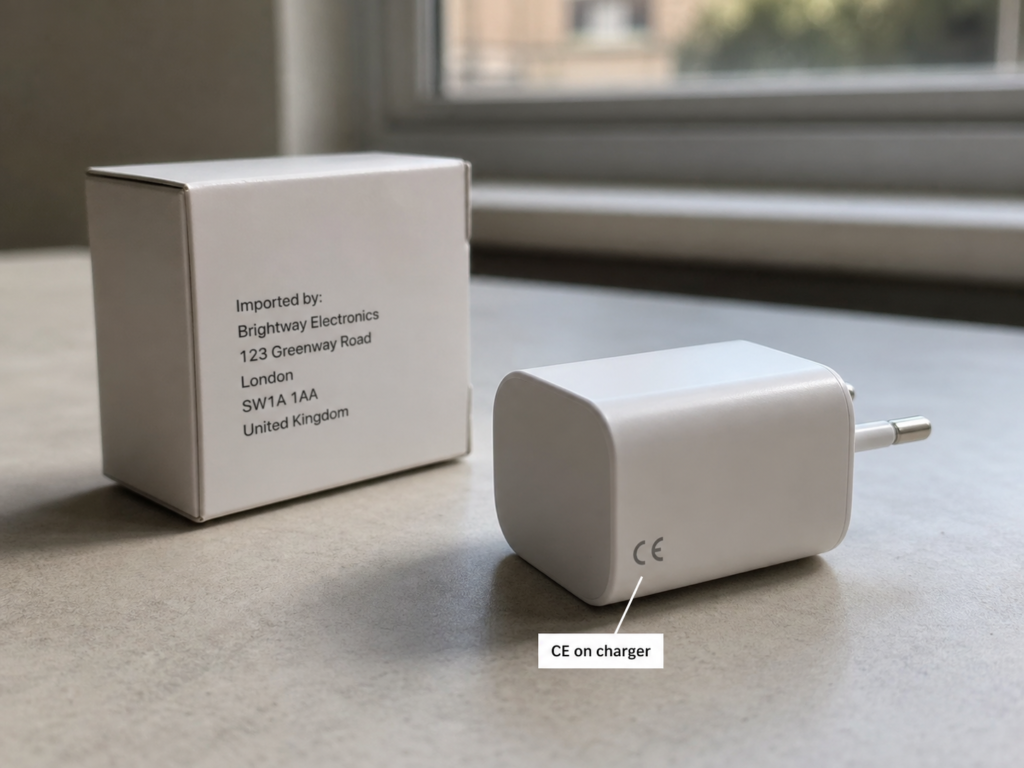
If the SVHC in an article exceeds 0.1% (w/w), information sufficient for safe use shall be proactively provided to the recipient in accordance with Article 33 of REACH, including at least the name of the substance; after a consumer makes a request, a reply shall also be given free of charge within 45 days. The information carrier can be selected according to the supply chain and product conditions, and is not limited to packaging or manuals.
Customs Clearance and Post-Marketing Continuous Management
During customs clearance, you need to prepare your EORI number, Declaration of Conformity, full set of supporting documents, and importer information, all of which may be checked by customs. All compliance documents must be kept for at least 10 years. Electronic copies are also acceptable, but they must be retrievable at any time, and cannot be stored on overseas computers so that they cannot be provided when regulators require them. In case of material changes, supplier changes, product structure adjustments, or regulatory updates, compliance must be re-evaluated, and you cannot keep using old documents. You can also conduct risk classification based on the stability of the supply chain, the completeness of documents, and the sales volume of products. For high-risk products, increase the sampling inspection frequency, and for low-risk products, it can be appropriately reduced to balance cost and risk.
Common Pitfall Avoidance and Non-Compliance Response
No matter how detailed the process is, it is inevitable to encounter pitfalls. We list several types of pitfalls that importers most commonly fall into, so you can avoid them in advance.
RoHS-Specific Pitfalls and Avoidance
First pitfall: only testing the whole product without testing homogeneous materials. Many suppliers provide reports that test the entire product, which seems to meet the standard, but in fact a certain layer of material may exceed the standard. You must require suppliers to split and test according to homogeneous materials.
Second pitfall: using old-version RoHS reports that only test 6 substances. Now RoHS has 10 substances. Reports missing 4 phthalates are invalid. You must verify whether all 10 are covered.
Third pitfall: misusing industrial-grade exemptions. Consumer-grade chargers and data cables are not eligible for lead exemptions for industrial products at all. Don’t listen to suppliers saying “the whole industry uses this”. You must check the applicable scenarios and validity periods of exemptions in RoHS annexes.
REACH-Specific Pitfalls and Avoidance
First pitfall: misjudging nickel release requirements. The nickel release restriction only targets metal articles or components intended to be in direct and prolonged contact with the skin. You cannot regard components such as USB interfaces and charger pins as mandatory testing objects uniformly. It shall be judged whether special nickel release testing is needed in combination with the intended use of the product and reasonably foreseeable contact scenarios.
Second pitfall: only testing heavy metals for SVHC. In addition to heavy metals, SVHC also includes many plasticizers, flame retardants, and organic compounds. You must conduct a comprehensive screening according to the high-risk list, and cannot only test lead, mercury, cadmium, etc.
Third pitfall: thinking that meeting SVHC requirements equals REACH compliance. The core of REACH is restriction substances, and SVHC is only part of it. Only by verifying both restriction substances and SVHC can it be considered complete REACH compliance.
Importer Liability Pitfalls and Avoidance
First pitfall: relying entirely on suppliers’ compliance promises without verifying by yourself. You are the first responsible person. No matter how much the supplier promises, you must verify the core reports by yourself and keep the full set of files, otherwise you will be fully responsible if something goes wrong.
Second pitfall: not marking the local importer’s information on the product. Many people only mark the manufacturer’s address and not their own. This is a very low-level but common mistake. Before marketing, you must check the markings to ensure the information is real and contactable.
Third pitfall: incomplete document retention, unable to find documents. You must establish compliance files by model and batch, and review them regularly. Don’t wait until customs inspection to search for a long time and fail to find them, which will be directly deemed non-compliant.
Non-Compliance/Random Inspection Response Steps
In case you really encounter a non-compliance random inspection or goods detention, follow these five steps to minimize losses:
Step 1: First suspend the sales and shipment of relevant batches, lock the affected models and batches, and prevent more goods from flowing out to expand losses.
Step 2: Verify the specific type of problem, whether it is RoHS substance exceeding the standard, missing REACH documents, or non-compliant markings. First figure out where the problem lies, so that targeted solutions can be made.
Step 3: Request root cause analysis and rectification evidence from upstream suppliers. If necessary, send samples to a qualified laboratory for re-testing to confirm the severity of the problem.
Step 4: Proactively communicate with regulatory authorities, submit rectification plans and supporting materials. Don’t hide — the more you hide, the heavier the penalty. If you cooperate proactively, in many cases you can get lighter treatment.
Step 5: After the rectification is completed, keep the records of the entire closed loop, and update the supply chain control requirements at the same time to prevent the same problem from recurring.
Special Scenarios and Regulatory Update Response
In addition to the regular import process, there are also some special scenarios and regulatory update issues that you need to understand.
Compliance Judgment for Special Import Scenarios
If it is sample or small-batch import with an annual import volume of less than 1 ton, the restriction substance requirements still must be met. Only the SVHC notification obligation does not need to be fulfilled, but the information provision obligation still exists, and you must reply when consumers ask.
If it is a direct mail parcel for personal use, whether non-commercial private use falls within the scope of “placing on the market” under RoHS shall be judged according to the nature of the transaction; but a small amount of personal direct mail cannot be regarded as a general exemption from RoHS, REACH, and other product regulations. If it is commercial sales, even small parcels of dropshipping must meet regulatory requirements.
If it is industrial charging equipment, some RoHS exemption clauses may apply, but the REACH requirements are the same as those for consumer-grade products, with no exceptions.
Document Distinction Between EU and UK Markets
UK RoHS and EU RoHS are two completely independent systems. They shall meet the corresponding regulatory requirements respectively, and the EU Declaration of Conformity alone cannot be directly used as a UK market document; but supporting technical evidence such as test reports, BOM, and risk assessments can be reused if their content meets UK requirements. The update pace of the SVHC lists for UK REACH and EU REACH is different and may not be synchronized, so they must never be used interchangeably; products sold to the UK must be marked with the information of the responsible entity within the UK, and cannot be marked with the EU importer’s information.
Regulatory Update Tracking and Response
RoHS exemptions and the main regulation are updated irregularly in accordance with EU legislation and exemption review procedures; the REACH SVHC Candidate List is usually updated twice a year, but the actual announcement date of ECHA and the current list shall prevail, and you should not rely on a fixed month or fixed revision cycle. You can query the latest regulations through official channels: relevant information on EU RoHS is on the official website of the European Commission, and the SVHC and restriction lists of REACH can be queried on the official website of the European Chemicals Agency (ECHA). As an importer, you must check for regulatory updates at least once a year, or entrust a reliable third-party agency to remind you. Don’t use old standards from several years ago for compliance.
Cost and Compliance Balance Methods
Many small and medium-sized merchants worry that compliance costs are too high. In fact, you don’t need to test everything. Finding the right method can save a lot of money:
Prioritize the control of high-risk materials, such as PVC sheaths, solder, and metal plating, which are prone to exceeding standards. For low-risk materials such as paper packaging, you can accept supplier declarations without sending all of them for testing.
Try to choose suppliers with stable supply chains and compliance foundations. Even if the purchase price is a little higher, it saves additional testing costs and reduces the risk of goods detention, which is actually more cost-effective.
When materials, suppliers, processes, component composition, and applicable conditions are all verified to be consistent, series products can reference common material tests or supply chain evidence; model coverage and difference analysis shall be formed, and supplementary assessment or testing shall be conducted for any differential components or changes that may affect conformity.
Practical Ability Summary
Finally, we divide the abilities that importers need to master into two levels. You can check your own situation to fill in the gaps.
Entry-Level Abilities (70% Mastery)
Able to accurately judge whether your products need to comply with RoHS and REACH, without missing judgments or doing unnecessary work; able to request the correct list of RoHS/REACH compliance documents from suppliers, and not be fooled by a random report from suppliers; able to complete the basic compliance process from product selection, supplier audit, document verification to customs clearance, without major mistakes; able to distinguish the core differences between RoHS and REACH, and avoid the most common entry-level misunderstandings.
Advanced-Level Abilities (30% Mastery)
Able to independently judge whether RoHS and REACH test reports and declarations are valid, without being unaware of invalid documents; able to identify high-risk parts and common compliance pitfalls of charging products, and block risks in advance; able to respond to routine customs inspections and consumer SVHC inquiries without panicking; able to judge compliance requirements for special import scenarios, and adjust their own compliance strategies along with regulatory updates.
Overall, RoHS and REACH seem to have many entries, but their core logic is actually very simple: RoHS regulates hazardous substances in electrical and electronic equipment, calculated by the smallest material unit; REACH regulates the chemical safety of all products, and SVHC shall be judged separately for each actual article. For importers, compliance is not a one-time thing, but a full-process control from product selection to after-sales — as long as you grasp the core points, control suppliers from the source, and do a good job in document verification and continuous tracking, you can minimize compliance costs while avoiding most risks.