
If you do business in charging products for the Mexican market, or have bought a Mexican-version charger, you’ve most likely seen the “NOM” mark printed on the casing. Many people have a vague understanding of it: some think it’s a quality award, others think it’s a randomly affixed label. Today, we will explain NOM certification clearly from the practical perspective of charging products—from what it actually is, to how to judge whether you need to apply for it, to how to verify the authenticity of certificates and avoid compliance pitfalls. You’ll be able to apply what you learn right after reading.
NOM Certification Basics: Must-Know for Charging Product Beginners
Let’s start with a plain-language definition: NOM is a mandatory standard issued by the Mexican government. For charging products that fall within the scope of the corresponding NOM, it is usually necessary to complete conformity assessment in accordance with applicable procedures, and meet import, labeling and sales requirements. Its full name is , that is, Mexican Official Standards, and it is often referred to as “NOM certification” in daily use.
It should be noted that NOM is not a unified certification for all charging products, nor is it a universally required document for customs clearance of all related goods or for listing on all e-commerce platforms. Whether a certificate is required depends on the specific product scope, tariff classification, applicable NOM and corresponding conformity assessment procedures. Its essence is a mandatory conformity assessment requirement stipulated by law, not a voluntary quality award for enterprises, nor a decorative mark printed at will. Its core function is to reduce electricity safety and related product risks.
In the entire NOM conformity assessment system, there are several important participants, and the division of responsibilities needs to be confirmed according to specific products and standards:
• DGN is an important competent department under the Mexican Ministry of Economy responsible for standardization and the management of some NOM conformity assessments. It is not the sole formulator of all NOM rules, and the specific competent authority may vary according to product categories.
• Laboratories, inspection bodies and certification bodies usually need to obtain corresponding accreditation and be approved or authorized by the competent authority in accordance with legal requirements. The specific institutions and procedures depend on the applicable NOM, and it cannot be generally understood that all institutions are directly accredited by DGN.
• The certification, labeling and import responsibilities of many imported products need to be borne by importers, manufacturers, authorized representatives or other entities that meet procedural requirements within Mexico. However, the application eligibility and certificate holder requirements shall be confirmed in accordance with the specific NOM and certification scheme, and cannot be simply summarized as all products must be applied for by the seller.
Many people easily confuse it with several similar concepts when they first接触 NOM. We have compiled a comparison table to make the difference clear at a glance:
| Comparison Object | Nature | Can it replace NOM? | Core Difference |
| NMX Standards | Usually fall under Mexican voluntary standards | Cannot automatically replace | NOM is a mandatory standard, while NMX is usually a voluntary standard; however, if NMX is cited by regulations, technical specifications, contracts or specific industry requirements, it may also become a requirement that needs to be met in relevant scenarios |
| Overseas certifications such as CE/FCC/UL | Compliance certifications of other countries/regions | Cannot directly replace | They are overseas compliance credentials. Test data may be used as a reference for NOM applications, but whether it is accepted is determined by the specific assessment body and certification scheme, and cannot directly replace Mexican conformity assessment |
| Ordinary test reports | Test result certificate for a single sample | No | It can only prove that the submitted sample has completed the specified test items. NOM conformity assessment may also include data review, label verification, subject information and ongoing conformity requirements |
Quick Judgment: Does Your Charging Product Need NOM?
To judge whether a charging product needs NOM, you can’t just look at whether it has a Mexican plug, nor just look at the power level. You can first make a preliminary judgment using the following 3-step logic:
Step 1: First confirm whether the product falls within the product scope of a certain NOM, and whether it falls under the exclusions of that standard. Then check whether it is connected to the public power supply system, its rated voltage, intended use and tariff classification. The common power supply parameter in Mexico is 127 V/60 Hz, and the plug type can also be used as preliminary identification information, but these conditions themselves are not sufficient to determine whether NOM applies.
Step 2: Check whether it is sold independently and imported separately. If it is a power module inside a certain device and is not sold separately, whether a separate conformity assessment is required needs to be confirmed in combination with the complete machine product, import method and applicable regulations, and cannot be generalized.
Step 3: Check whether it has functions such as wireless communication, fast charging, etc. Fast charging usually requires checking all rated operating modes under applicable safety and energy efficiency requirements. The wireless charging function itself does not necessarily belong to communication equipment, nor does it necessarily trigger communication-type NOM or IFT certification; however, if the product also includes radio frequency communication functions such as Bluetooth and Wi‑Fi, it may additionally need to comply with IFT’s radio equipment type approval or related technical requirements.
The final determination shall still be based on the product definition and exclusion clauses of the specific NOM, the official mandatory requirements of Mexico, tariff classification and the corresponding conformity assessment procedures, and cannot be guessed by yourself.
Specifically for charging products, many external power adapters, USB chargers and similar electronic products connected to the public power grid may fall under NOM-001-SCFI-2018 and related energy efficiency and commercial information requirements. For example, wall-mounted USB-A, USB-C, PD chargers, power adapters for mobile phones or laptops, and multi-port USB charging stations all need to be confirmed item by item in combination with specific models, input methods, intended uses and applicable catalogs. Mains-powered wireless charging bases and combined products with power adapter functions also cannot be judged directly by product name alone. Devices with wireless communication functions also need to be additionally checked for whether they involve IFT type approval or other radio requirements.
There are also some charging-related products that may not fall under a certain safety NOM for mains-powered equipment, or need to be determined according to the actual situation. For example, pure low-voltage passive data cables without mains plugs, car chargers that only connect to the car’s 12 V low-voltage power supply, and power modules that are internal accessories of the complete machine and not sold separately, cannot directly draw a conclusion of full exemption just because of “low voltage” or “vehicle power supply”. They still need to be determined according to the specific product definition, applicable NOM, commercial information requirements and tariff classification.
If the charger is imported together with the complete machine, such as a charging head imported together with a mobile phone, whether it needs separate certification needs to be confirmed in combination with the product combination, customs rules and applicable standards, and cannot be generalized. Personal baggage, self-use or non-commercial imports may also apply to different customs declaration and exemption rules, but whether they are exempt from NOM requirements shall be confirmed according to the specific entry method, quantity, intended use and current customs regulations.
There are also several frequently asked fuzzy scenarios, and the determination logic also depends on the actual structure of the product. For example, a charging cable with a fast charging chip, if it is just an ordinary data cable with low-voltage input, even if it has an E-marker chip, it usually does not fall within the scope of safety certification for mains external power supplies; however, whether other NOM or labeling requirements are needed still needs to be confirmed according to the specific product. If it is an integrated charging cable with a mains plug, the corresponding safety NOM needs to be focused on verification.
Another example is a travel charger with replaceable plugs. As long as it is sold with a plug for use in Mexico, it is necessary to check whether the charger, plug and combination method are all within the certification scope, and you cannot default that no assessment is required just because the plug can be removed. Many people also think that low-power chargers do not need NOM, but in fact, power level is not the only judgment condition; whether NOM is required depends on whether the product falls within the scope of specific standards, and cannot be simply divided by 5 W, 20 W or 100 W.
Core Assessment Contents of NOM for Charging Products
Many people think that NOM conformity assessment is just testing whether there will be electric leakage, but in fact, its assessment content is divided into several parts, each with clear requirements. For mains-powered products that fall within the scope of applicable electrical safety NOM, the specified conformity assessment must be completed in accordance with the corresponding standards; different products may apply different standards, and there may also be exclusion clauses.
The core goals of safety assessment are to prevent electric shock, prevent fire, and ensure structural durability. The specific inspection points are closely related to daily use: for example, whether the pins match the applicable socket specifications, whether the mechanical strength is sufficient, and whether they are easy to loosen after long-term plugging and unplugging; whether the insulation performance meets the standard, and whether there is dangerous electric leakage under specified normal and humid environmental conditions; when encountering overload, short circuit, high temperature and other situations, whether fire can be avoided, and whether the shell temperature is within the safe range; also whether the output of USB, USB-C ports complies with the product declaration and applicable standards, to avoid damage to the charged device due to abnormal output.
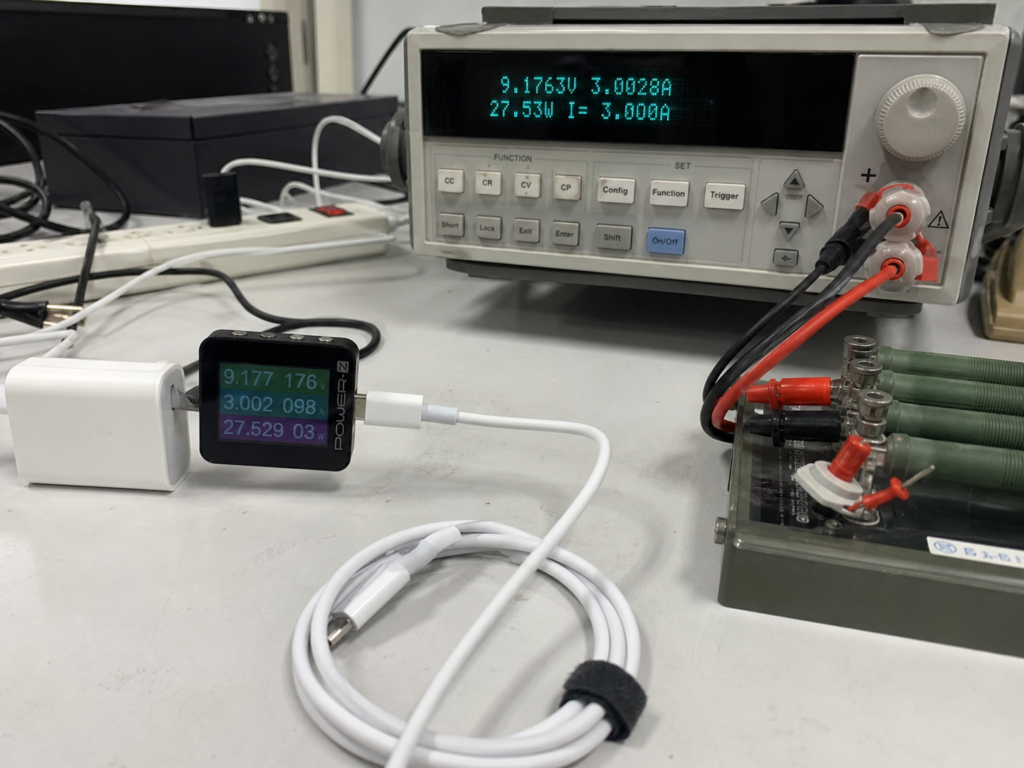
In addition to safety, some chargers also need to meet energy efficiency assessment requirements. The goal of energy efficiency assessment is to reduce the invalid power consumption of products during standby and operation, and avoid wasting electricity. The core requirements usually include standby power consumption and conversion efficiency. External power supplies usually need to be checked against NOM-029-ENER-2017; requirements such as standby power consumption shall be confirmed according to NOM-032-ENER-2013 and its applicable scope, and whether it is specifically applicable still depends on the product type and standard scope.
There is also an assessment that seems simple but causes many people to stumble: labeling and information requirements. Applicable commercial information and safety instructions usually need to be provided to Mexican consumers in Spanish, and the specific content, form and accompanying method shall be implemented in accordance with the applicable NOM and commercial information regulations.
The input and output parameters, power, manufacturer and importer or other responsible subject information on the product shall be marked in accordance with applicable requirements. The use position, form and durability of the NOM mark must also comply with the applicable NOM, certification scheme and mark use rules. Whether the certificate number must be displayed on the product or the minimum sales package is not uniform for all products, and shall be subject to specific requirements. The instruction manual, warning statements and safety use tips also need to be confirmed in accordance with relevant regulations, and the instruction manual requirements for all products cannot be summarized into a completely identical rule.
Now there are more and more USB-C fast charging products, and NOM also has some contents that need to be focused on verification for such products: first, all fast charging output modes declared by the product shall be correspondingly assessed in accordance with applicable standards, and you can’t only look at the ordinary 5 V mode; multi-port chargers should separately state the maximum power of a single port and the total maximum power, and cannot be confused. For example, a dual-port charger with a total power of 65 W cannot only mark 65 W to make consumers think that each port can output 65 W.
For chargers with replaceable plugs, it is also necessary to check the overall safety of the plug and charger after combination, and you cannot default that they can definitely be used in combination after separate assessment just because the components can be split.
In terms of corresponding standards, safety requirements shall be checked against the applicable NOM-001-SCFI-2018 or other special safety NOM; commercial information requirements are mainly checked against NOM-024-SCFI-2013; energy efficiency of external power supplies is usually checked against NOM-029-ENER-2017, and standby power consumption requirements are confirmed according to NOM-032-ENER-2013 and its applicable scope. Specific requirements shall be subject to the current version and applicable scope officially issued by Mexico.
NOM Certification Application Process and Maintenance Rules
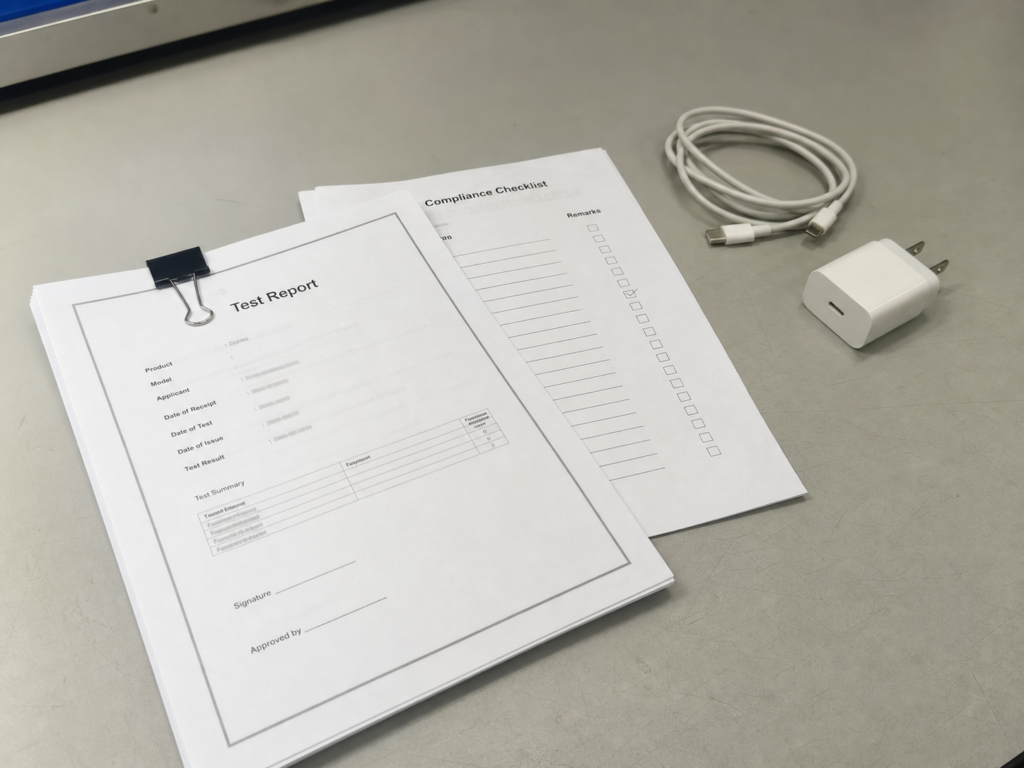
After figuring out whether you need to do it and what is assessed, the next thing everyone is most concerned about is how to handle the NOM conformity assessment and how to maintain it after it is obtained. The entire process varies by product category, applicable standards and certification schemes. The core is to first find the right applicable assessment body, prepare all the materials, and confirm the responsible subject.
Before the formal application, there are 3 necessary preparatory tasks to be done first:
First, confirm whether the product is within the mandatory scope and what types of NOM requirements are involved. For products with wireless communication functions, it is also necessary to consider whether they involve IFT type approval or related radio requirements.
Second, prepare the application materials, including the product specification sheet that clearly states the input and output, interfaces, and fast charging parameters, the design drafts of the nameplate and packaging, and test samples that meet the requirements.
Third, confirm the importer, manufacturer, authorized representative or other responsible subject that meets the specific procedural requirements within Mexico. The application eligibility and certificate holder requirements shall be subject to the applicable NOM and certification scheme.
After preparation, the samples shall be sent to a laboratory that has obtained corresponding accreditation and is approved in accordance with regulations for this NOM scope for testing. The laboratory will test item by item in accordance with the corresponding NOM standards. If the test fails, it is necessary to adjust the product design, components or materials, and then resubmit for testing.
If the product has previously obtained international certifications such as CE and UL, the corresponding test data can be submitted to the assessment body for reference, but whether it is accepted and which items are accepted are ultimately determined by the specific certification body and certification scheme, and the international certification results cannot be directly used to replace the Mexican conformity assessment.
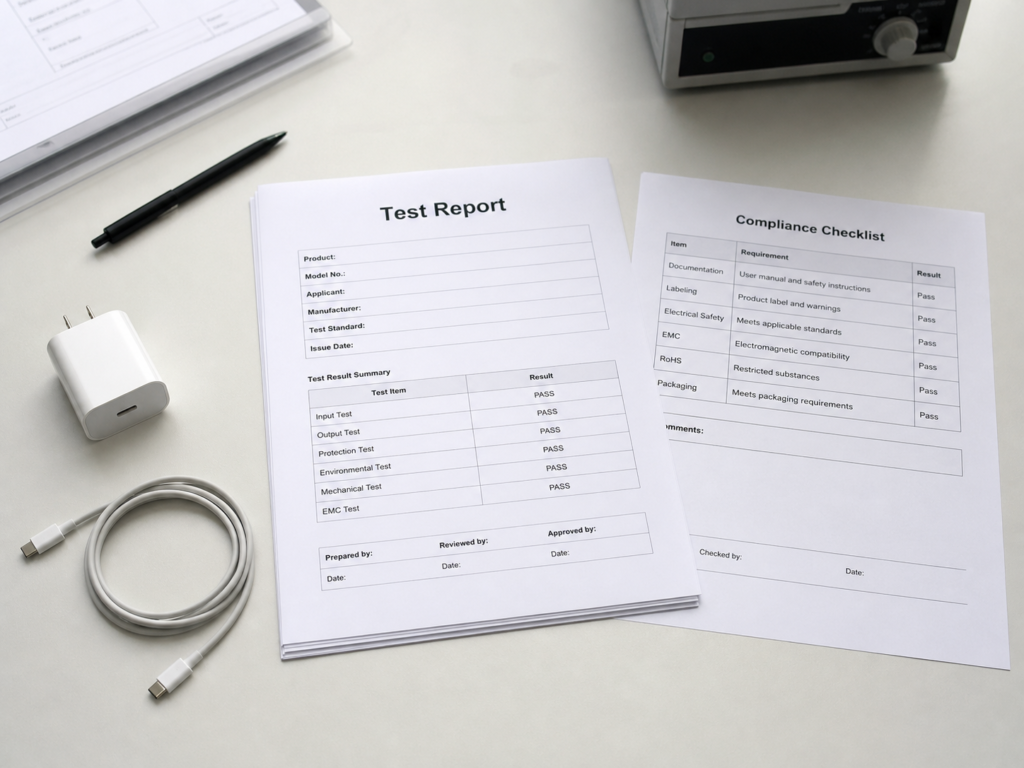
After passing the test, the test report, product materials and subject information shall be submitted together to a qualified certification body for review. Only after obtaining the applicable conformity assessment certificate and completing the specified labeling, import and other regulatory requirements can the corresponding mark be used in accordance with the certification scheme.
The processing time is affected by product complexity, test arrangement, number of rectifications, data completeness and the certification body’s process. It cannot be promised that all products will be completed within 1 to 6 months. Simple products may be faster, and complex multi-port fast charging products may take significantly longer if rectification or supplementary materials are required.
After getting the certificate, it is not once and for all. There are 3 key maintenance rules to follow:
The first is validity period and ongoing conformity. The certificate term, supervision and inspection, factory audit and annual maintenance requirements are not the same for all NOMs, and shall be subject to the applicable NOM, certificate and certification scheme.
The second is renewal. Before the certificate expires, renewal materials shall be submitted in accordance with regulations, and the ongoing conformity requirements shall be met. Even if the product has not changed, it is not automatically renewed, and whether to renew is determined by the certification body in accordance with current rules.
The third is change assessment. If the product changes the fast charging chip, modifies the shell, adjusts the output parameters, changes the plug, or replaces the manufacturer, importer, etc., it shall be submitted to the certification body for evaluation before the change. The body will determine whether filing, supplementary testing, factory audit or re-certification is required according to the impact of the change on safety and conformity, and you cannot continue to use the old certificate after making changes on your own.
4-Step Verification Method: Judge the Validity of NOM Certificates
Whether you are a seller purchasing charging products or a consumer buying things, you may encounter the questions “Is the NOM certificate in hand real?” and “Does the product really meet the requirements?”. Here we teach you a 4-step verification method, with which you can make a preliminary judgment by yourself.
Step 1: First check the appearance and markings of the product. Check whether the NOM mark, model, rated value, as well as manufacturer, importer or other responsible subject information on the product meet the requirements of the applicable NOM and certification scheme. Labels can be in a durable manner permitted by regulations, and you cannot judge a certificate as fake just because a sticker is used; similarly, printing or laser engraving cannot alone prove that the certificate is valid.
Whether the plug conforms to the common Mexican specification can only be used as a preliminary check of product adaptability, and cannot prove that the product has obtained NOM conformity assessment. What is really important is whether the mark, model and responsible subject information are consistent with the certificate and applicable requirements.
Step 2: Verify the authenticity of the certificate itself. You should first verify the certificate number, status, coverage scope and holder information through the official channels of the certificate issuing body. If the relevant competent department or SNICE provides public registration, you can also use its official registration for cross-checking.
When querying, focus on confirming: whether the certificate is still valid, whether it has been suspended, revoked or cancelled; whether the issuing body has obtained corresponding accreditation and is approved in accordance with regulations for this product category; whether the subject, product model and applicable standards on the certificate are consistent with the product materials you have obtained. Mexico does not have a single database applicable to all NOM certificates that is publicly queried uniformly by DGN or the Ministry of Economy, so you cannot rely solely on a so-called “official general database”.
Step 3: Check the consistency between the product and the certificate. Check whether the product belongs to the model, series, rated parameters, manufacturer and brand scope clearly listed in the certificate. Some certificates can cover products of the same series or multiple listed models, but the coverage method shall be subject to the specific text of the certificate and certification scheme; any model or change not clearly listed shall be confirmed by the certification body whether it is covered.
If it is a multi-port charger, it is also necessary to check whether the single-port power, total power and supported fast charging modes exceed the approval scope of the certificate. For example, if the total power listed on the certificate is 45 W, but the actual product is nominally 65 W, it cannot be directly considered to be covered by this certificate.
Step 4: Check the risk of excessive certificate coverage, which is often referred to as the “one certificate for multiple uses” problem. The certificate coverage scope is not automatically determined by the name “charger”, but shall be subject to the products, accessories and combination methods clearly listed in the certificate and certification scheme. Charging cables, detachable plugs or adapters that are not clearly included cannot be regarded as covered on their own.
Chargers with the same appearance but different power cannot be judged to share a certificate just by appearance. It should be checked whether different models are clearly listed in the same certificate or the coverage scope allowed by the certification scheme. Products sold independently cannot directly use the NOM certificate of the complete machine set, unless the certificate and related procedures clearly cover this independent sales form.
Finally, the documents required for different import methods may be different, and the specific situation shall be confirmed in combination with Mexican customs and related regulatory rules, and cannot be generalized.
Common Misconceptions and Compliance Risk Avoidance
After talking about the verification method, let’s sort out several most common cognitive misconceptions, as well as the actual risks of non-compliance, to help you avoid pitfalls in advance.
The first high-frequency misconception is thinking that overseas certifications such as CE, FCC, and UL can directly replace NOM. In fact, these are certifications of other countries and regions, and cannot automatically replace the applicable NOM conformity assessment in Mexico. Their test data can sometimes be used as a reference, but whether they are accepted is determined by the specific assessment body and certification scheme.
The second misconception is thinking that all charging cables need NOM, or conversely thinking that there is no need for compliance at all if there is no mains plug. Ordinary passive low-voltage data cables usually do not fall within the scope of safety certification for mains external power supplies, but whether other NOM, commercial information or labeling requirements are needed shall still be confirmed according to specific products and regulations. Integrated mains products usually require focused verification of the corresponding safety NOM.
The third misconception is thinking that if the NOM mark is printed on the product, it means there is real certification. In fact, the NOM mark must be used in accordance with applicable rules and correspond to a valid conformity assessment certificate and product scope. Unauthorized printing, borrowing certificates of other products, or using the mark beyond the scope may constitute a violation.
The fourth misconception is thinking that low-power chargers do not need NOM. Power level is not the only judgment condition. Whether NOM is required depends on whether the product falls within the scope of specific standards, and cannot be simply divided by 5 W, 20 W or 100 W.
The fifth misconception is thinking that one certification is valid for life. The term, supervision and renewal requirements of NOM certificates depend on specific standards and certification schemes. After product redesign, changes to key components, changes to output parameters or replacement of responsible subjects, re-assessment may also be required, and you cannot be done once and for all after applying once.
The sixth misconception is thinking that a test report is equal to NOM certification. A test report is only one of the materials for applying for conformity assessment. The complete process may also include data review, label verification, subject information confirmation and ongoing conformity requirements, and the corresponding assessment is considered completed only when a certificate that meets the requirements is finally obtained.
What are the actual consequences if it is not compliant? There are three main categories:
The first is the risk at the customs link: the product may be detained, resulting in port demurrage charges, and even be returned or punished. The specific consequences depend on the type of violation and the law enforcement decision.
The second is the risk in the sales link. Some e-commerce platforms or sales channels may require the provision of NOM or other compliance documents, and may take measures such as restricting sales or removing products that cannot prove compliance. The specific review and punishment methods shall be subject to the current platform policies and product category requirements.
The third is the risk of safety liability. If the product causes accidents such as electric shock and fire due to design, manufacturing or compliance issues, the relevant responsible parties may bear corresponding civil, administrative or other legal liabilities, which is usually the most serious consequence.
In fact, it is not difficult to avoid these pitfalls. Just remember 4 basic points:
First, don’t trust promises of “guaranteed pass” or “extremely fast certificate acquisition”. Give priority to regular institutions that have obtained accreditation and are approved in accordance with regulations for the corresponding product category. You need to be particularly cautious about claims that all charging products can get certificates uniformly within a few days.
Second, after getting the certificate, verify its authenticity, valid status and coverage scope through the official channels of the certificate issuing body as soon as possible. Don’t wait until the goods are detained or the product is removed from the shelf to find that there is a problem with the certificate.
Third, before redesigning the product, consult the certification body first to confirm whether filing, supplementary testing or re-assessment is required. Don’t think that just changing a chip or modifying the shell will definitely be fine.
Fourth, ensure that information such as importer, manufacturer, product model, rated parameters and brand are consistent with the certificate and labeling requirements, and do not misattribute them.
Summary
Overall, NOM is not an esoteric quality award, but a part of Mexico’s official mandatory standards and their conformity assessment system. For charging products that fall within the scope of the corresponding NOM, enterprises need to complete corresponding safety, energy efficiency, commercial information and other compliance requirements in accordance with the specific product scope, tariff classification and current regulations.
After reading this article, you should be able to do these things: first, make it clear that NOM is not a unified certification for all charging products, but needs to be judged according to specific standards and product scope; second, use the 3-step method to preliminarily judge whether a charging product may need NOM; third, use the 4-step verification method to preliminarily check the authenticity, status and coverage scope of a NOM certificate; fourth, understand common cognitive misconceptions and non-compliance risks, and avoid basic pitfalls.
If you are not sure whether your product needs to be done, the safest way is to check the applicable NOM, Mexico’s official import and labeling requirements, and consult an assessment body that has obtained corresponding accreditation and approval for this product category, instead of judging by feeling.