
Many overseas sellers and manufacturers of charging products who want to enter the Taiwan region market often encounter issues with NCC verification: Do all chargers need it? Does wireless charging count? What is the difference from BSMI certification? Many people, due to unclear understanding of the rules, either waste unnecessary money or suffer significant losses when goods are detained at customs or rejected by e-commerce platforms. In this article, we will clearly explain the NCC radio frequency equipment verification requirements for charging products from basic knowledge to practical operation. After reading this, you will be able to make preliminary judgments on your own and avoid most common pitfalls. The term “NCC certification” used below is a general term for ease of understanding; in practice, type certification, declaration of conformity, or other verification methods shall apply according to the equipment category.
Basic NCC Knowledge You Must Know as a Beginner
First, let’s clarify what NCC regulates. NCC is short for the National Communications Commission of Taiwan region. Its core responsibility is to regulate the frequency band, power, and signal characteristics of radio frequency (RF) equipment to prevent various wireless signals from interfering with each other and affecting normal communication order — for example, your home wireless charging pad must not interfere with your neighbor’s WiFi, and the Bluetooth of a smart charging head must not send random signals that affect public communication.
Here we need to draw a clear boundary that many people confuse: NCC does not regulate pure electrical safety, such as whether a charging head may cause electric shock or fire — these fall under the jurisdiction of the Bureau of Standards, Metrology and Inspection (BSMI) of Taiwan region; it also does not regulate the performance and quality of non-RF charging products, such as whether the charging speed of a wired charger is sufficient, or whether the charging cable is durable. For charging products, only those that fall within the scope of regulated RF equipment need to comply with NCC requirements.
If your product falls within the regulated scope but enters the Taiwan region market without completing the corresponding verification, you may be required to make corrections, have the goods returned, be prohibited from selling, or be punished in accordance with relevant regulations; whether seizure, fines, removal from shelves, or recycling measures are taken depends on the product category, the facts of the violation, and the handling of the competent authority. Major e-commerce platforms such as PChome and Momo may also block non-compliant products from being listed; downstream distributors and purchasers may also reject goods due to compliance issues, resulting in transaction losses.
Many people confuse NCC and BSMI, but in fact, the two regulate completely different matters. Charging products with wireless functions often need to meet the requirements of both certifications. We have compiled a simple comparison table to help you quickly distinguish them:
| Comparison Item | NCC Certification | BSMI Certification |
| Core Jurisdiction | Radio frequency compliance (prevent signal interference) | Electrical safety (prevent electric shock, fire, etc.) |
| Applicable Scenarios for Charging Products | Products with RF functions such as Bluetooth/WiFi/cellular/wireless charging | Only products that fall under BSMI’s current mandatory inspection commodity categories, such as some power supplies, power banks, or related electrical products, need to undergo corresponding inspections in accordance with announcements; applicability must be verified against the model, rated specifications, and category announcements |
| Dual Certification Requirement | If the product also falls under the BSMI mandatory inspection list, both certifications are required | Same as left |
| Official Inquiry Channel | Announcements on regulated RF equipment on the NCC official website | Announcements on mandatory inspection commodities on the BSMI official website |
In short, for charging products with wireless functions, first check whether NCC verification is required, then check the BSMI mandatory list to see if safety certification is needed. The two are independent and cannot replace each other.
How to Determine the NCC Applicable Scope for Charging Products
Many people think that “as long as it has wireless functions, NCC is required”, but that’s not the case. The determination must be combined with multiple dimensions and cannot be generalized. We can use NCC’s general three-level determination process for preliminary judgment:
The first step is function identification: first, disassemble all wireless-related functions in the product, whether it’s Bluetooth, WiFi, NFC, cellular communication, wireless charging, wireless reception, or even unmarked hidden functions (for example, some chargers have NFC for one-touch transfer), all must be listed without omission.
The second step is parameter verification: match each wireless function with detailed parameters: what frequency band it operates in, what the maximum power is, what antenna is used, what the module model is, and whether it can be turned on simultaneously with the charging function. These parameters will be used to compare with the specifications later.
The third step is announcement verification: check NCC’s latest regulated/exempt list and technical specifications to see if each function is within the regulated scope and whether it meets the exemption conditions. It is best to keep written records of the entire determination process for subsequent verification.
Here we also need to supplement a principle for whole-machine determination: as long as one wireless function falls within the regulated scope, it is necessary to first determine whether the entire product is a regulated equipment, and then see if certified modules can be used to simplify testing.
If you find the three-level process too abstract, you can use the practical tool of “function disassembly determination method”: list all functions of the product (Bluetooth, WiFi, NFC, cellular, wireless charging, wireless reception, wired charging, etc.) one by one, fill in the corresponding parameters for each wireless function: frequency band, maximum power, antenna type, module model, and whether it is turned on simultaneously with charging, then verify them against the second and third steps of the three-level process, so that omissions are less likely.
Determination Reference for Common Charging Products
The following are only preliminary judgment conclusions; the final result shall be subject to NCC’s current announcements and the pre-determination of accredited institutions:
• **Pure wired chargers, charging cables, plugs**: Without any wireless functions, they are most likely not within the scope of NCC regulation. However, it is necessary to check whether there are built-in unmarked wireless functions. For example, some chargers with NFC one-touch transfer appear to be wired but actually have RF functions, so re-determination is required.
• **Pure Qi magnetic induction wireless charging pad (no data communication)**: It belongs to wireless power transmission products. It is necessary to check NCC’s low-power RF announcement to see if parameters such as operating frequency and transmission power meet the exemption conditions. If they do, certification may not be required; if not, the verification process must be followed.
• **Wireless charging pad with Bluetooth network configuration/status feedback**: Bluetooth falls under the common regulated RF category, so this type of product most likely requires NCC certification. Specifically, it is necessary to check whether the Bluetooth frequency band and power are on the exemption list.
• **Smart charging head/power strip/car charger with WiFi control**: WiFi is also a common regulated category. This type of product most likely requires certification, and it is necessary to check the WiFi frequency band, power, and the product’s usage classification.
• **Smart power bank with cellular communication (4G/5G)**: Cellular communication falls under a clearly regulated category, so this type of product definitely requires NCC certification. It is also necessary to check the cellular frequency band, power level, and whether it has other wireless functions.
• **Charging accessories with only wireless reception function**: Many people think that “if it doesn’t actively transmit, no certification is needed”, but that’s not true. If receiving equipment falls on NCC’s receiving equipment regulation list, it also needs to comply with regulations, so it is necessary to check the receiving frequency band and equipment category.
Handling Methods for Ambiguous Scenarios
If you encounter uncertain situations, don’t guess blindly. You can handle them in the following ways: For products with customized or niche functions, directly apply for pre-determination to an NCC-accredited testing institution. Spending a small amount of money for a definite answer is better than encountering pitfalls later. For multi-functional combined products, check all wireless functions one by one, follow the strictest regulatory requirements, and first confirm whether the whole machine is a regulated equipment. For atypical charging products, such as routers with charging functions, they shall be determined separately according to the main category of the equipment, and cannot be directly treated as charging products.
NCC Verification Methods and Module Certification Rules
After confirming that the product requires NCC verification, the next step is to select the correct verification method. NCC mainly has two verification methods:
The first is **type certification**: you find an NCC-accredited laboratory to conduct testing. After passing the test, NCC or a designated certification body will review and issue the certificate. This is the most commonly used method for consumer-grade wireless charging products, with the widest applicable scope.
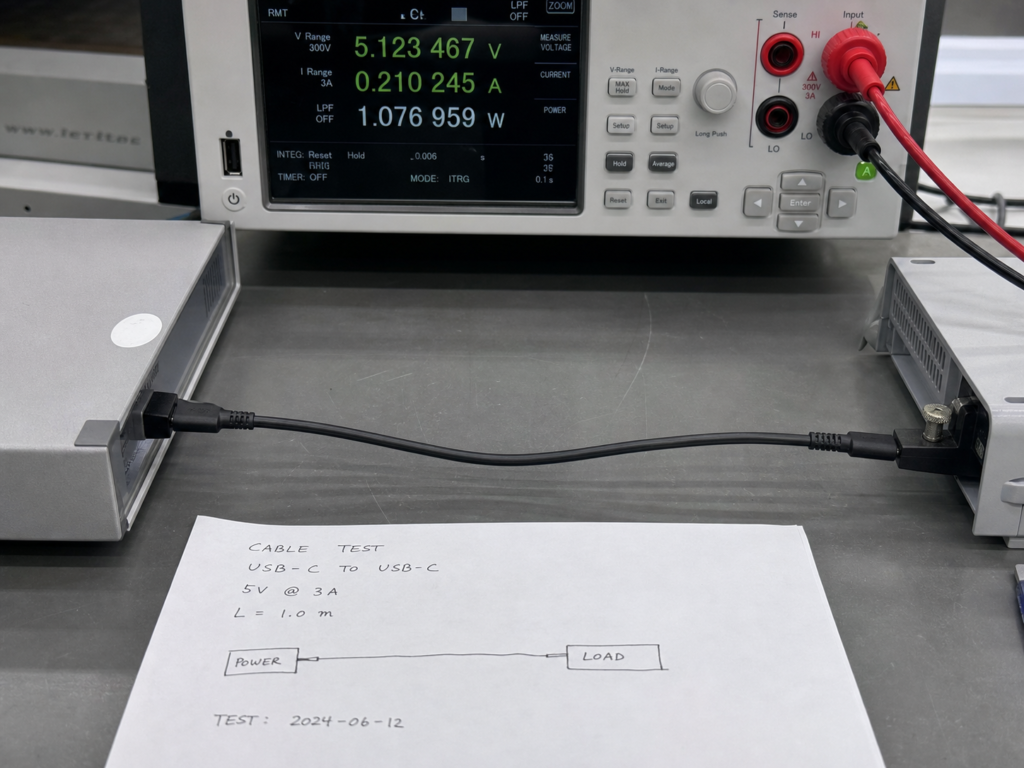
The second is **Declaration of Conformity (DoC)**, which is only applicable to equipment for which the verification management measures and relevant technical specifications explicitly allow the use of this method; the applicant must complete the declaration in accordance with regulations and keep test reports and technical documents, and shall not judge applicability on its own merely based on “low risk”.
Which verification method is suitable for your product shall be confirmed according to the RF equipment category of the product and NCC’s latest verification measures. If you are unsure, you can find an accredited institution for pre-evaluation to avoid being rejected due to wrong category selection, which wastes time and money.
Whole-Machine Simplification Rules for Approved RF Modules
Many friends who make products will ask: The RF module I use already has NCC approval, so does the whole machine not need to be tested? Here we need to clarify the simplification rules for module certification: an approved module does not mean the whole machine is automatically compliant. Whether module approval data can be cited and testing can be reduced or exempted must be verified item by item against the module approval scope, antenna and installation conditions, RF parameters, whole-machine coexistence status, and current technical specifications; when the approval conditions are exceeded, the accredited institution shall evaluate whether supplementary testing, change, or re-verification is required.
Here is a reference for charging products: most common consumer-grade products with Bluetooth, WiFi, and wireless charging are applicable to type certification, but this is only a common situation, not a legal classification. It is best to conduct applicability pre-judgment before formal application to avoid mistakes.
Core NCC Testing Requirements
The core purpose of NCC testing is to ensure that the wireless signals of products comply with the regulations of the Taiwan region and do not interfere with legitimate communications. We emphasize again: testing does not cover the electrical safety of charging; safety requirements should be checked against BSMI regulations.
Different wireless functions have different testing focuses. We list several common directions for you to have a general understanding; the specific requirements shall be subject to official technical specifications:
• Bluetooth and WiFi categories: mainly test transmission power, occupied bandwidth, frequency tolerance (whether the frequency is accurate and whether it drifts), spurious emissions (whether it randomly transmits signals in other frequency bands), electromagnetic compatibility (EMC), etc.;
• NFC and short-range categories: mainly test operating frequency, transmission power, spurious emissions, etc.;
• Cellular communication category: mainly test RF performance, spurious emissions, electromagnetic compatibility, etc.;
• Wireless power transmission category: mainly test operating frequency band, transmission power, out-of-band spurious emissions, electromagnetic compatibility, etc.
Exclusive Testing Conditions for Charging Products
For charging products, the issue of testing conditions is very important, and it is also a place where many people encounter pitfalls: testing usually needs to cover representative and potentially more unfavorable working states required by technical specifications; whether charging load, fast charging protocol, multi-port simultaneous operation, and wireless function coexistence are included in the testing shall be determined according to equipment category, technical specifications, and the laboratory’s test plan.
Why is it so strict? Because many products pass RF testing when no-load, but once a charging load is connected, interference from the charging circuit appears, or when multiple ports are fully charged simultaneously, interference is superimposed and the signal exceeds the limit. Common reasons for failure include: poor charging circuit design leading to signal exceeding the limit, excessive transmission power of wireless charging, superimposed interference when multiple ports are fully charged, and the mass-produced version of the product being different from the submitted test sample.
Trigger Conditions for Human Exposure Assessment
Another question people often ask: Is human exposure assessment required? Common human exposure assessments include SAR (Specific Absorption Rate, simply an indicator measuring the RF energy absorbed by the human body), power density, etc. Not all charging products with wireless functions require it. The trigger basis for whether it is needed is the product’s usage distance, transmission power, operating frequency band, and the corresponding applicable specifications. It should be noted that the human exposure assessment for charging products shall be implemented in accordance with the corresponding specifications, and cannot be directly judged based on the standards for communication terminals such as mobile phones. Moreover, this assessment falls under the category of RF compliance and has nothing to do with electrical safety or electromagnetic compatibility.
NCC Application Process and Full-Cycle Compliance Management
Pre-Application Preparation (Exclusive for Charging Products)
First is the applicant entity: overseas manufacturers shall confirm whether they can act as applicants according to the applicable verification method and application qualifications; if they cannot handle it directly due to regulatory, system, or practical requirements, they shall entrust a qualified agent in the Taiwan region or have the importer handle it, and confirm the attribution of relevant responsibilities.
The responsibilities of all parties must also be clarified: the manufacturer is responsible for the product design and RF consistency, ensuring that mass-produced products are the same as the test samples; the agent or importer in the Taiwan region is responsible for submitting materials, liaising with regulators, and bearing compliance responsibilities in the market; the accredited laboratory is responsible for testing in accordance with specifications and issuing test reports; NCC or the designated certification body is responsible for reviewing materials and issuing approval documents.
Sample requirements are also very important: samples that can represent the mass production and sales status and can complete the full test shall be provided; whether adapters, cables, and other accessories must be submitted simultaneously shall be confirmed according to technical specifications and the laboratory’s test plan. If the submitted test sample is different from the mass-produced or sales configuration, its impact on test results and approval documentation must be evaluated.
In terms of document preparation, product specifications (which must include all charging and wireless parameters), internal and external product photos, RF block diagrams, circuit diagrams, antenna data, user manuals, etc. shall be prepared. The specific list can be obtained from the laboratory or agent.
Standard Application Steps
The formal NCC certification application process can be followed step by step:
The first step is to conduct a pre-review of regulatory applicability: use the three-level determination process we mentioned earlier to confirm the regulatory category of the product, and if necessary, find an accredited institution for pre-evaluation to avoid going in the wrong direction.
After the pre-review is confirmed, you can prepare samples and a full set of technical documents, ensuring that the documents are consistent with the samples.
Next, entrust an NCC-accredited laboratory to conduct testing. If non-conformity is found during the testing process, rectification and re-testing are required. Therefore, it is recommended to conduct a pre-test before formal testing, especially RF testing under charging load conditions, which can greatly reduce the risk of re-testing.
After passing the test, the agent or importer in the Taiwan region shall submit the application through NCC’s online system. If there are problems with the documents during the review process, supplementary materials will be required, and you just need to supplement them as required.
After the review is passed, approval documents will be issued. However, this is not the end. Before mass production and launch, you must recheck to ensure that the mass-produced products are completely consistent with the test samples and that the markings meet the requirements before formal shipment.
Common Pitfalls in Charging Product Applications
There are several common pitfalls when applying for charging products, which must be avoided:
The first pitfall: only testing wireless functions without covering the charging load state, resulting in excessive interference during charging, requiring full re-testing, which wastes time and money.
The second pitfall: the charging cables and adapters used for testing are different from those sold with the product, resulting in invalid test results and wasted testing efforts.
The third pitfall: forcibly applying for series verification for multiple models with different wireless modules or charging circuits, which will be directly rejected, because series verification requires the core RF and charging parts to be consistent, and inconsistent ones cannot be combined.
The fourth pitfall: if product design changes exceed the approval scope, change RF characteristics, or fail to undergo change verification in accordance with regulations, the original approval documents may no longer apply to the changed product, and may lead to sales compliance risks.
Certificate and Change Management After Certification
After getting the certificate, it’s not all smooth sailing. You also need to do a good job in full-cycle compliance management.
First is the validity management of the certificate: the validity period, extension, change, and cancellation of the verification qualification certificate shall be handled in accordance with the verification management measures and the specific verification method; type certification certificates usually have a statutory validity period, and the applicant shall apply for extension or re-verification before the expiration of the period in accordance with regulations, and simultaneously check the contents recorded on the certificate. It is recommended to regularly check the certificate status through NCC’s official system, and also pay attention to whether regulatory updates will affect the validity of existing certificates. Mass-produced products must be consistent with the test samples, and importers shall keep the approval documents and test reports properly for regulatory inspection.
Then there are the evaluation rules for product changes, with the core principle being: **Any change must first undergo an RF impact assessment and keep written records; you must never arbitrarily judge on your own that re-verification is not needed**. We have classified them by risk level for your preliminary judgment:
• **High risk (most likely requiring supplementary testing/re-verification)**: Changing antennas, replacing RF chips, modifying charging circuits, modifying shielding structures, upgrading RF firmware, changing frequency bands or power — these will directly affect RF characteristics and must be re-evaluated.
• **Medium risk (requires evaluation and confirmation)**: Changing the material or structure of the housing, adjusting charging power, replacing matching adapters or cables, changing the configuration of multi-port charging — these may or may not affect RF, and can only be known after evaluation.
• **Generally low risk, but still must be confirmed in accordance with approval documents and current change regulations**: Changing outer packaging, replacing non-RF components, modifying appearance details that do not affect the antenna environment — it is still necessary to confirm that they will not affect verification documents, RF characteristics, and statutory markings; only after confirmation can change records be kept in accordance with regulations, and no change application is required.
If you are unsure about the impact of a change, consult an accredited institution in advance. Don’t take chances; if you are actually inspected, the loss will be greater.
NCC Marking Usage and Authenticity Inquiry
Products that have passed certification shall use the NCC marking in accordance with regulations. The specific requirements are as follows:
Equipment that has passed the corresponding verification shall be marked with the NCC logo and the corresponding approval/verification identification number in accordance with applicable regulations, and shall be marked with identification information such as product model as required; the specific requirements shall be subject to current specifications, and marking requirements vary for different equipment categories, with no universal format.
In terms of position, for products with relatively large volume, such as wireless charging pads, charging heads, and power strips, the marking shall preferably be affixed to a conspicuous position on the product body for easy viewing by users and regulators. If the product is too small, whether the marking can be placed on the minimum sales package, instruction manual, or other locations must also comply with specific marking regulations, and alternative methods cannot be chosen independently.
The size and readability of the marking must comply with regulations; it must not be altered, covered, or affixed to the wrong model.
Many purchasers or sellers need to check the authenticity of certification. How to check? Go directly to the certification inquiry system on NCC’s official website and enter the approval number to check. Publicly available information includes basic information such as product model, applicant company, approval status, and approval date. Non-public information such as wireless parameters, antenna specifications, firmware version, and test reports cannot be queried and need to be requested from the applicant or certification body.
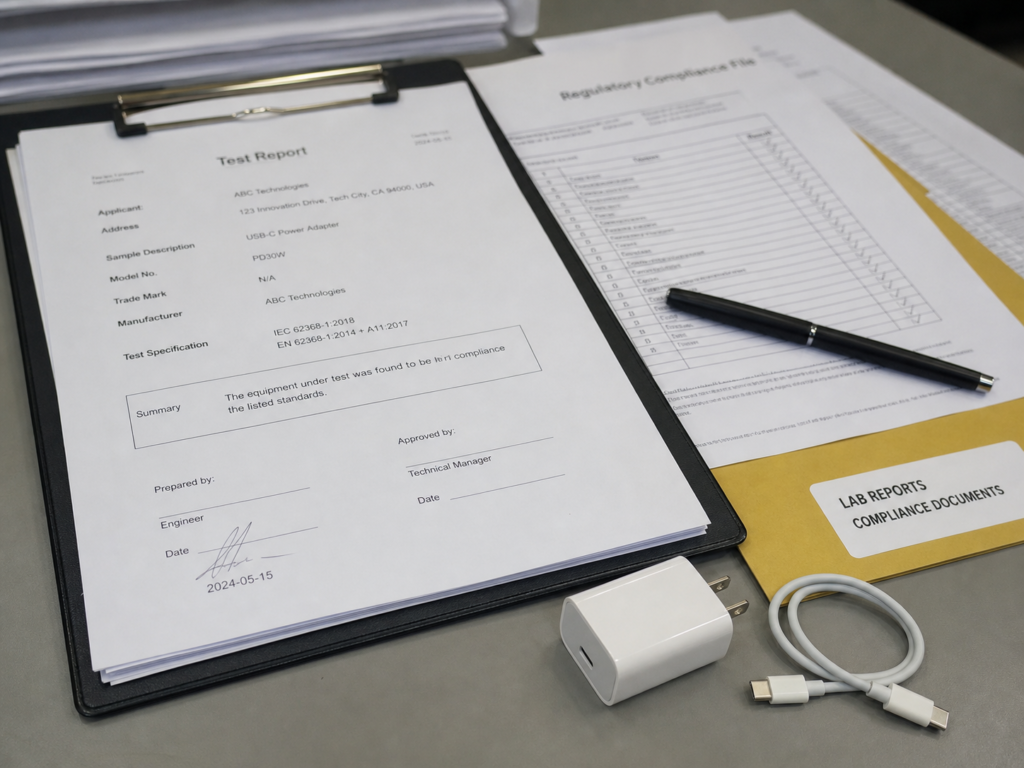
There are several common types of fake certificates: using certification of other models (i.e., using certificates of other models in the same series to impersonate), forging approval numbers, and using certificates that have expired or been cancelled. When checking, pay attention to verifying the model and status.
Common Misconceptions and Compliance Optimization Methods
Common Misconceptions Exclusive to Charging Products
We have compiled several of the most common cognitive misconceptions about charging products to help you avoid pitfalls:
1. **Do all chargers need NCC? Wrong**. Only products that fall within the scope of regulated RF equipment require it. Specifically, it shall be determined according to the three-level determination process, and pure wired chargers basically do not need it.
2. **Do all charging accessories with wireless functions need NCC? Wrong**. Wireless power transmission and receive-only products need to be checked against specialized specifications; not all wireless-enabled products require it.
3. **Can international certifications replace NCC? Wrong**. Certifications from other regions such as FCC, CE, and SRRC cannot directly replace NCC. Only valid reports for the same test items can be used as reference, which may reduce part of the testing, but cannot directly obtain the certificate.
4. **Is a whole machine using approved modules automatically compliant? Wrong**. All conditions for module integration must be met; if the conditions are exceeded, supplementary testing or re-verification is required. It’s not that everything is fine just because certified modules are used.
5. **Is all wireless charging subject to NCC RF certification? Wrong**. For inductive wireless power transmission, parameters must be confirmed according to the regulation list and technical specifications; some that meet exemption conditions do not need to be done.
Methods for Optimizing Charging Product Certification Costs
If you want to reduce certification costs, there are also several practical optimization methods:
First, prioritize selecting RF modules that have obtained NCC approval. As long as they meet the integration conditions, whole-machine testing can be simplified, saving a lot of money and time.
Second, products of the same series with consistent wireless modules and charging circuits can apply for series verification, eliminating the need for separate testing for each model and spreading costs.
Third, conduct RF pre-testing under charging load conditions before formal testing, identify problems and rectify them in advance, to avoid re-testing due to failure in formal testing, which would cost more.
Fourth, conduct difference evaluation for multi-model products in advance, and apply together for those that meet the combination conditions, without the need for separate applications.
Regulatory Documents and Version Management
All certification requirements are subject to NCC’s official regulations. We have compiled several commonly used official inquiry channels and their respective uses:
1. **NCC official website regulatory announcement board**: Check the regulated/exempt list, verification measures, and technical specifications. When making applicability determinations, you must come here to check the latest regulations.
2. **NCC certification inquiry system**: Check the approval status and basic information of certified products, used when verifying the authenticity of certification.
3. **NCC accredited institution directory**: Check the list of legal testing laboratories and certification bodies. When looking for partners, you must check clearly first; don’t choose an unaccredited institution, as the testing will be wasted.
4. **Technical specification documents**: Check specific test items and limit requirements. You can compare them in advance when preparing for testing to improve the pass rate.
Here we specially remind the precautions for version management: all regulations, announcements, and specifications are subject to the latest version. When querying, be sure to record the date and version number; do not use old regulations from several years ago to judge current products. For products that have already been certified, it is also necessary to regularly review regulatory updates and evaluate compliance in a timely manner to avoid that after regulations change, your products no longer meet the requirements. The internal determination records you make shall also be kept with the corresponding regulatory version, so that they can be taken out for verification in case of future disputes.
Full-Process Determination Cases for Typical Charging Products
After talking so much, we use three common charging product cases to connect the entire process for your easy understanding:
Case 1: Pure Wired USB-C Charger + Matching Charging Cable
• **Function disassembly**: Only has wired charging function, no wireless functions at all.
• **Regulatory determination**: It does not fall within the scope of NCC regulation, and no NCC certification application is required; however, it is necessary to separately check BSMI’s electrical safety requirements to see if it is on the mandatory inspection list.
• **Test application**: No need to apply for NCC certification.
• **Marking and launch**: No need to affix NCC marking, nor can it falsely label NCC certification.
• **Risk warning**: If wireless functions are added in subsequent versions, such as NFC, re-determination is required.
Case 2: Qi Wireless Charging + Bluetooth Network Configuration + 20W Fast Charging Wireless Charging Pad
• **Function disassembly**: Includes three functions: Qi wireless power transmission, Bluetooth communication, and wired fast charging.
• **Regulatory determination**: Bluetooth functions usually require corresponding NCC RF verification; the verification method used for the whole machine and whether approved module data can be cited must be confirmed according to the Bluetooth equipment category, current technical specifications, and whole-machine integration conditions; at the same time, BSMI’s safety requirements must be checked to see if BSMI certification is required.
• **Test conditions**: The most unfavorable mode of maximum wireless charging power + Bluetooth full-power transmission + fast charging with load shall be selected for testing to ensure compliance even under the most stringent conditions.
• **Document preparation**: NCC approval data for the Bluetooth module (if a certified module is used), charging parameters, antenna data, etc. shall be prepared.
• **Marking requirements**: The product body shall be affixed with the NCC marking and approval number.
• **Launch risk**: The matching fast charging cable and adapter must be consistent with those used for testing. If they need to be replaced, a change evaluation must be conducted in advance, otherwise it may be non-compliant.
Case 3: Smart Fast Charging Power Bank with Built-in WiFi + 4G
• **Function disassembly**: Includes three functions: cellular communication (4G), WiFi, and wired fast charging.
• **Regulatory determination**: Both cellular and WiFi fall within the regulated scope, and the whole machine requires type certification; it is also necessary to evaluate usage distance, power, etc. to see if human exposure assessment is required; at the same time, BSMI’s requirements must also be checked.
• **Test conditions**: The most unfavorable mode of cellular + WiFi simultaneous activation + full-power charging shall be selected for testing.
• **Document preparation**: NCC approval data for cellular and WiFi modules (if certified modules are used), usage distance instructions, etc. shall be prepared.
• **Marking requirements**: The marking shall be affixed to the product body; if the volume is too small, it can be placed on the minimum sales package or instruction manual in accordance with regulations.
• **Launch risk**: If subsequent firmware upgrades involve adjustment of RF parameters, a change evaluation must be conducted in advance, and the product cannot be sold directly after the upgrade.
Summary
At this point, the NCC radio certification requirements for charging products have been mostly explained. After reading this article, you should be able to use the three-level determination process to preliminarily judge whether your product needs NCC, distinguish the jurisdiction scope of NCC and BSMI, know the main verification methods, understand the special test condition requirements for charging products, go through the basic application process, avoid the exclusive pitfalls of charging products, correctly use the NCC marking, query certification authenticity, and master the change evaluation methods and basic cost optimization skills after certification.
Of course, all requirements are subject to NCC’s latest official regulations. When encountering uncertain situations, it is best to find an accredited institution for pre-evaluation. Don’t guess blindly; compliance is always the top priority.