
If you run a charging product business in the Taiwan market, or often shop for Taiwanese digital accessories via cross-border e-commerce, you have most likely heard of the term “BSMI certification”. Many people think it is just a simple “safety label”, and even judge based on experience that “low-power products don’t need it” or “having CE is enough”, ending up either wasting money for nothing, or having their goods detained and fined. In fact, BSMI has clear official rules for its applicable scope; you can first complete a preliminary product category screening on your own. When product definitions, combined sales, exemption from inspection, or borderline situations cannot be clarified, you should obtain written classification or exemption confirmation from BSMI.
First, Understand: What Exactly is BSMI
The commonly referred to “BSMI certification” is actually the **mandatory inspection and conformity assessment system** led by the Bureau of Standards, Metrology and Inspection (BSMI for short) of the Ministry of Economic Affairs of Taiwan. BSMI is responsible for affairs such as standards, metrology, and commodity inspection; for relevant electronic products included in the mandatory inspection scope, inspection regulations may cover requirements such as electrical safety and electromagnetic compatibility.
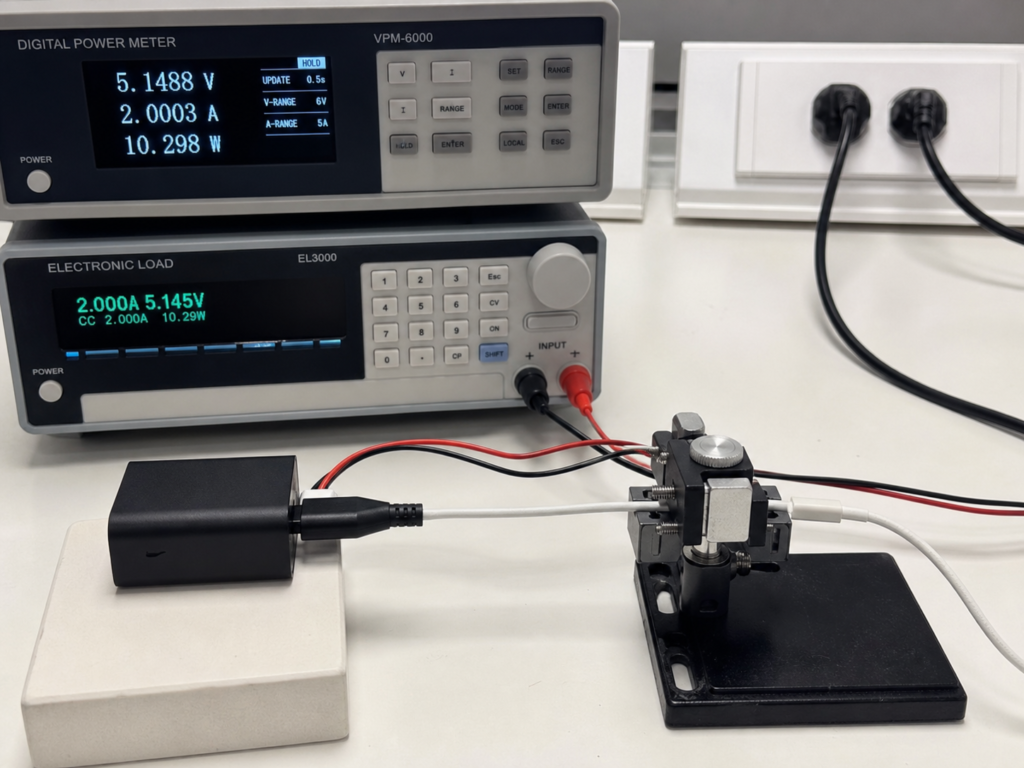
A core principle must be firmly established here: **To judge whether a product is subject to mandatory inspection, it shall be based on BSMI’s current mandatory inspection announcements, commodity category list, corresponding inspection regulations and related notes, transitional provisions, and official interpretations; in case of doubt, written confirmation from BSMI shall be obtained.** The power supply method, function, and sales form of a product can only be used for preliminary screening, and absolutely cannot be used as the final conclusion alone. As long as a mandatory product is publicly sold to Taiwanese consumers (including cross-border e-commerce and purchasing on behalf), it must comply with regulations; when exemption from inspection is approved based on specific exemption reasons, the conditions such as purpose, quantity, and flow direction specified in the reason and approval document must be observed; products exempted from inspection for reasons such as testing, research, and display shall not be resold.
Several Basic Terms You Must Know
Many people can’t distinguish various terms in BSMI, but in plain language they are very simple:
• **Mandatory inspection (compulsory certification)**: As long as a product is included in the officially announced category, it must pass conformity assessment before being sold to the Taiwan market; otherwise, it cannot be marketed.
• **Voluntary verification**: Non-mandatory; enterprises can apply on their own to increase consumer trust, but it absolutely cannot replace mandatory inspection.
• **3 types of conformity assessment methods**: Different categories may apply different methods; the specific methods, applicant qualifications, and inspection procedures shall be subject to the mandatory inspection announcement for that product. They are clearly organized in the table below:
| Conformity Assessment Method | Core Content | Applicant Subject |
| Verification Registration | Conduct type tests and applicable quality management requirements in accordance with the inspection regulations of this category | Subject to the provisions of the mandatory inspection announcement for this product |
| Type Approval Batch-by-Batch Inspection | Obtain type approval first, and import or factory batches still need to be reported for inspection in accordance with regulations | Subject to the provisions of the mandatory inspection announcement for this product |
| Batch-by-Batch Inspection | Conduct inspection on batches in accordance with regulations | Subject to the provisions of the mandatory inspection announcement for this product |
• **Commodity inspection mark**: The commodity inspection mark shall be affixed in the specified position on the product body in the specified manner in accordance with the and the provisions of this category; if the product characteristics are applicable to the exception marking method, it shall be handled in accordance with BSMI regulations.
What’s the Use of Clarifying the Applicable Scope?
Don’t think this is only a matter for the compliance department; for ordinary sellers and practitioners, it is directly related to cost and risk:
First, it can avoid unnecessary compliance costs, so you don’t waste money on things that don’t need to be done;
Second, it can avoid goods detention, return, fines, and platform removal caused by missed inspection;
Third, the inspection processes, cycles, and fees corresponding to different categories vary greatly, so the earlier you clarify, the earlier you can plan.
Two Easily Confused Boundaries
Let’s first clarify two of the most common misunderstandings, so you won’t go astray later:
1. **Overseas conformity marks/reports such as CE, FCC, and CCC cannot automatically replace BSMI mandatory inspection requirements**. Even if your product has obtained certifications from all over the world, as long as it is sold to Taiwan, it must follow BSMI rules.
2. **Products with radio functions such as Bluetooth and Wi-Fi shall separately confirm whether they are devices that require certification or declaration by the NCC; if the entire product also falls within the scope of BSMI mandatory inspection, it must meet the applicable requirements of BSMI and NCC respectively, and documents from either system do not automatically replace the other.**
Preparation Before Judgment: Get to Know Your Product Thoroughly
To judge whether a product is within the BSMI scope, the first step is not to check the category list, but to first sort out your own product information—if you can’t even explain what the product is, no matter how complete the category list is, it’s useless.
You Need to Prepare This Information
It doesn’t need to be too complicated; just gather these types of materials:
• **Basic identity**: Brand, model, product/nameplate photos, sales packaging style;
• **Electrical parameters**: Rated input and output parameters, interface type;
• **Internal structure**: Whether there is a battery, active power circuit, radio frequency module; a circuit block diagram is better if available;
• **Circulation information**: Whether it is retailed separately, or included as a gift with the complete machine, and whether the sales target is ordinary consumers or industrial customers.
Structural Breakdown of Common Charging Products
The structure of charging products is the basis for judging classification. The following categories are the most common, and you can match them with your own products:
• **Wall-plug charger/power adapter**: The charging head that plugs into the wall, converts mains alternating current (AC) to direct current (DC), has an active conversion circuit inside, and no battery.
• **Wireless charging transmitter**: Ordinary wireless charger, with wired input and wireless output, has an active control circuit inside, and some models have a built-in battery.
• **Power bank (portable charger)**: Built-in energy storage battery, DC input and DC output, with charge and discharge management circuit.
• **Ordinary passive charging cable/adapter**: Only has conductors and connectors, no active circuits at all, only responsible for power transmission or adaptation, such as the most basic USB-A to Micro USB cable.
• **Charging cables with electronic markers or signal conversion devices**: Shall be checked against the actual circuit, function, and category definition. For example, PD fast charging cables may contain E-Marker electronic marker devices, but do not necessarily have power conversion functions.
• **Car charger**: Plugs into the car’s cigarette lighter, converts the low-voltage DC in the car to DC for equipment use, has an active conversion circuit inside, and no battery.
• **Socket/power strip with USB port**: Connected to mains, has both ordinary mains sockets and USB charging ports, with an active conversion circuit inside.
Quick Preliminary Screening: Which Products Need Priority Verification
After clarifying the product structure, you can first use a set of quick preliminary screening methods to pick out high-risk products for priority inspection to save time. As long as any of the following characteristics is met, it falls within the scope of priority verification:
1. Directly connected to Taiwan’s mains power, such as 110V/60Hz or 220V/60Hz; the specific situation shall be confirmed based on the product’s rated input and actual power supply method;
2. Built-in energy storage battery (such as power banks, wireless chargers with batteries);
3. Contains active power conversion circuit (such as car chargers, adapters with conversion function);
4. Has wireless charging function;
5. Sockets, extension cords, wall-plug products with USB charging ports;
6. Charging accessories retailed separately to Taiwanese consumers.
Role and Limitations of Preliminary Screening
Preliminary screening only helps you sort the priority of verification to avoid missing high-risk products, but it is absolutely not the final conclusion: **Products that do not trigger the above characteristics cannot be directly judged as exempt from inspection; you still have to check the official category list**. In addition, output power, interface type, fast charging technology, number of ports, etc., do not change the preliminary screening priority—for example, a 10W charging head and a 100W charging head are both connected to mains power, and both need priority inspection; you can’t think that low power means you don’t need to worry about it.
Formal Verification: How to Match Common Charging Products to Categories
After preliminary screening, formal verification must be carried out against the official category list. It must be emphasized here: when verifying, you can’t just look at the product name; you must compare one by one from the dimensions of product type, parameters, structure, sales form, category definition, rated range, implementation date, and notes. All conclusions must match the current official announcements, and cannot be judged based on experience.
Below, according to product type, we will explain the key verification points and common boundaries for different products:
Priority Verification Category (Key Products Triggering Preliminary Screening Characteristics)
This type of product has many characteristics that require priority verification, but whether it is subject to mandatory inspection still needs to be compared item by item with the current commodity category list, commodity definitions, and notes.
1. Wall-plug Charger/Power Adapter
Typical characteristics are mains connection, AC to DC power supply, and active conversion circuit. When searching, use the keywords “power supply unit” and “charger”.
Pay attention to the boundary: if it is a built-in power module that is not sold separately (such as the power board in a router), it shall be confirmed whether the complete machine category already covers this module, and whether the module is imported or supplied as an independent commodity; whether separate handling is required shall be subject to current announcements and BSMI classification opinions.
2. Mains-connected Wireless Charging Devices
Typical characteristics are mains connection, wireless power transmission for charging, and active control circuit. Search for “wireless charger” and “power supply unit”.
Boundary tip: If it is a wireless power bank with a built-in battery, you need to check the power bank category at the same time—because it has both wireless charging function and energy storage battery, it is a cross-category product.
3. Socket Products with USB Charging Ports (Power Strips/Wall Plugs/Extension Cords)
Typical characteristics are mains connection, with both mains sockets and USB charging ports. Search for “socket” and “power supply unit”.
Boundary tip: If it is a charging hub with only USB ports and no mains sockets, it shall be verified as a power adapter and does not belong to the socket category.
4. Power Bank (Portable Charger/Mobile Power)
Typical characteristics are built-in energy storage battery, and the core function is to charge external electronic devices. Search for “mobile power” and “battery pack”.
Boundary tip: Special energy storage power supplies for industrial supporting use and not for ordinary consumers shall be verified separately and cannot be directly counted as power banks. In addition, inspection items shall be subject to the inspection specifications of the corresponding category; there are no unified and fixed items, so don’t listen to others saying “power banks only test those few items”.
5. Home/Car 2-in-1 Charger
Typical characteristics are with mains plug, can be connected to household mains, and contains active conversion circuit. Search for “power supply unit” and “car charger”.
Boundary tip: For products that only have a cigarette lighter plug and no mains input, just verify the car category separately.
Category Requiring Case-by-Case Confirmation (Products That Cannot Be Directly Concluded)
This type of product has no unified “yes” or “no” conclusion; you must carefully check the category, and even seek official confirmation:
1. Charging Cable/Data Cable
Key verification points: Is it purely passive? Is there a chip or power conversion module? Is it retailed separately? Is there an independent category?
Special note: **You cannot only use the presence or absence of an E-Marker chip as the dividing line for whether inspection is required**—having an E-Marker does not necessarily mean it is required, and not having one does not necessarily mean it is not required; everything is subject to the category definition.
2. Adapter/Conversion Plug
Key verification points: Is it purely passive low-voltage adaptation or mains conversion? Is there an active circuit? Is there an independent category?
Special note: Even for low-voltage adapters without circuits, you must check whether there is a corresponding regulated category, and cannot directly say that inspection is not required.
3. Car Charging Products Only Connected to Low-Voltage DC
Key verification points: Is there a battery/wireless charging function? Is there a corresponding category for car chargers?
Special note: You cannot directly exclude inspection requirements just based on “low-voltage DC input”—car chargers also have low-voltage input, but are very likely to be in the mandatory category.
4. Multifunctional Charging Products (Desktop Charging Stations, Smart Chargers with Screens, etc.)
Key verification points: Does the core function of the complete machine fall into the mandatory category? Is the charging module independently regulated? Will additional functions change the classification?
Special note: You cannot judge that inspection is required just because the product has a charging function; it shall be based on the classification of the complete machine. For example, a Bluetooth speaker with a charging port has the core function of a speaker, and may be verified according to the speaker category, not the charger category.
Advanced Rules: How to Judge Borderline Situations
In addition to the structure and parameters of the product itself, factors such as circulation method, product changes, and regulatory updates will also affect the judgment of the applicable scope; these are the keys to avoiding pitfalls.
Boundary Judgment of Circulation Forms
All exemptions must meet official conditions; you cannot claim exemption on your own:
• **Accessories included with the complete machine**: They are not automatically exempt from separate inspection; they must be confirmed in combination with category, combination method, model, and import documents. For example, a charger given with a mobile phone may not need to be done separately if the complete machine has passed BSMI and the charger is a matching model, but it must meet official conditions.
• **Built-in power module**: Even if the complete machine has been inspected and the module is not sold separately, you must confirm whether the module needs to be separately regulated; it is not necessarily exempt just because it is installed inside.
• **Samples/test items/exhibition display items, personal use entry**: When imported for specific purposes such as testing, research, display, or personal use, it shall be confirmed in accordance with BSMI exemption regulations and announcements whether application is required, as well as quantity and purpose restrictions; products approved for exemption must be used in accordance with the approved purpose, and must not violate sales or transfer restrictions. Customs clearance rules cannot alone replace BSMI exemption judgment.
• **Industrial/medical special charging equipment**: Cannot be exempted solely based on claims of “industrial use” or “medical use”; it must be confirmed in combination with product classification, purpose, and sales target, and corresponding supporting documents are required.
All special situations must retain corresponding supporting documents, and you absolutely cannot claim exemption on your own.
Re-evaluation After Product Changes
If a product has already obtained a certificate and is later revised, you cannot use a set of general classifications to judge on your own whether it needs to be redone. When a certified product undergoes changes in specifications, key components, circuits, rated values, models, markings, or packaging, you shall confirm in writing whether it is necessary to apply for certificate change, supplementary testing, re-inspection, or re-certification in accordance with the inspection regulations of the category, the scope of certificate coverage, and the requirements of BSMI or the accepting agency.
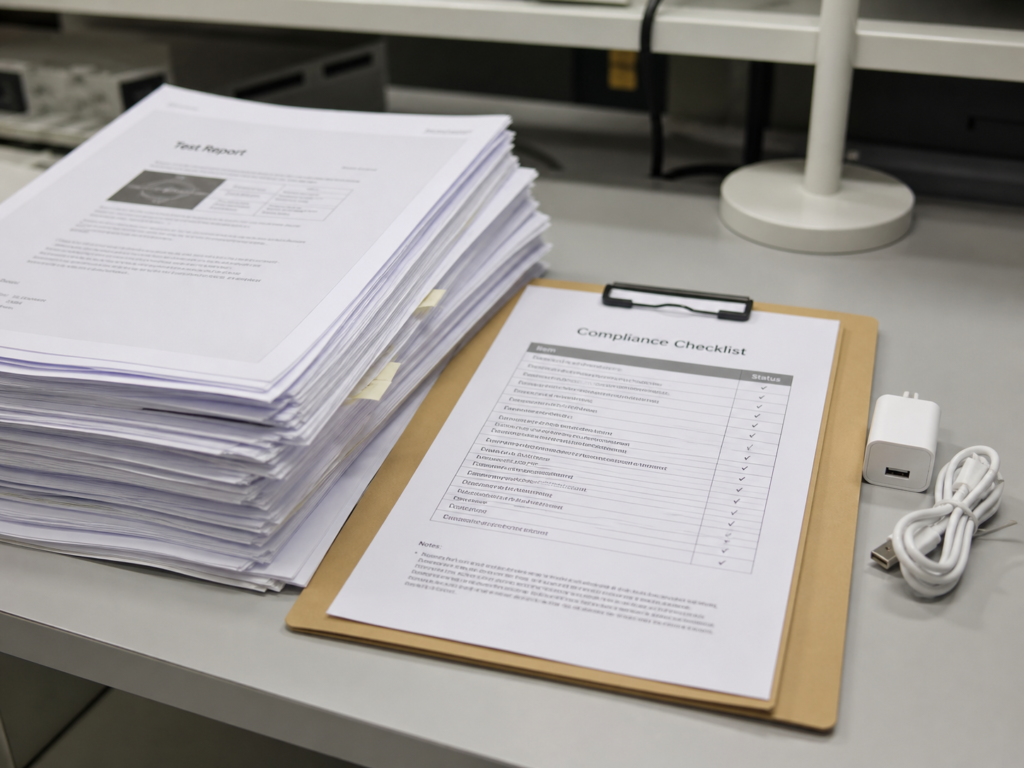
Note that the premise for sharing a certificate for series models is compliance with BSMI’s series rules and certification body requirements; the core parameters and structure must be consistent, and you cannot randomly put products with different structures into the same series.
Impact of Regulatory Updates
BSMI adjusts the mandatory inspection category list from time to time, which may add categories, remove categories, or adjust the scope. Newly applied products shall be implemented in accordance with the new regulations; the validity of already obtained certificates depends on the transitional provisions of the announcement, the type of certificate, and the notification of the certification body.
Therefore, before a product is launched, you must check the latest version of the announcement, and absolutely cannot use old experience from a few years ago to judge.
Practical Operation: How to Check by Yourself and How to Keep Evidence
After talking about so many judgment logics, the most practical thing is how to check by yourself and how to keep good evidence to avoid problems in the future.
Which Official Materials Should Be Prioritized for Verification?
You should first confirm the currently effective laws, mandatory inspection announcements and their category lists, inspection regulations and transitional provisions for that category; if there are subsequent amendment announcements or BSMI written interpretations, they shall be verified together according to their applicable scope and effective date. Certification body documents are only used for procedural requirements within their authorized scope and cannot replace BSMI statutory announcements.
How to Check? What to Check?
You can directly open the “Mandatory Inspection Commodity Category List” section on BSMI’s official website to query. Recommended search keywords are “power supply unit”, “charger”, “mobile power”, “wireless charger”, “USB cable”, “socket”, etc.
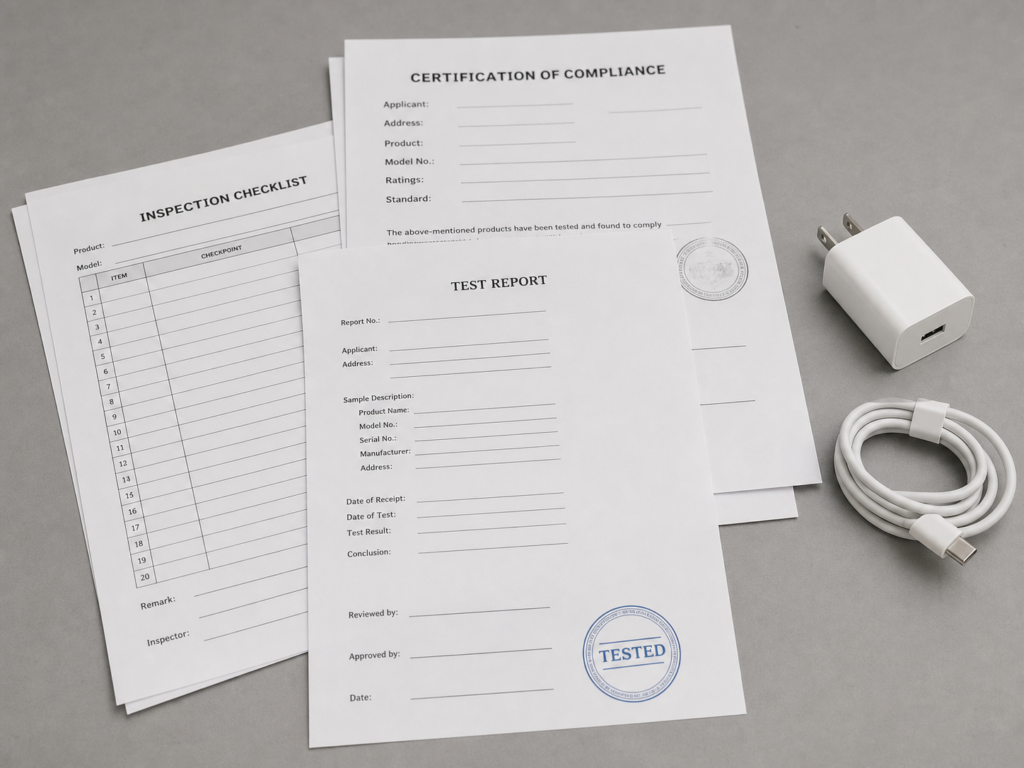
When verifying, focus on these fields: category number, name, commodity definition, rated parameter range, inspection method, implementation date, and notes—none can be missed.
Four-Step Formal Judgment Method (Can Retain Compliance Evidence)
Following these steps will not only make accurate judgments but also leave compliance evidence, so you won’t be afraid if you are inspected later:
1. **Organize complete product information**: Collect all materials according to the information template mentioned earlier.
2. **Search the latest version of the category list**: Find the corresponding category, check the definition and parameter range, and be sure to record the query date and category number—because the category list will be updated, the date of the query is very important.
3. **Cross-verify**: Combined with the triggering characteristics of the preliminary screening, focus on checking the remarks column and related announcement interpretations for any special regulations.
4. **Handling doubts**: If you are unsure, you should apply to BSMI for written classification or exemption confirmation, don’t guess on your own.
Two Query Examples (Only for Process Demonstration, Not Official Conclusions)
65W USB-C PD Wall Charger
• Data organization: Input 100-240V, output 65W USB-C PD, retailed separately, no battery, no radio frequency;
• Search keywords: power supply unit, charger;
• Key comparison points: input voltage range in category definition, product purpose, whether it is AC to DC;
• Evidence retention: Save screenshots of the category list, query date, and product specification sheet.
USB-C Charging Cable
• Data organization: USB-C cable with E-Marker electronic marker device, no power conversion function, retailed separately, rated 5A/100W;
• Search keywords: USB cable, data cable, power supply unit accessories;
• Key comparison points: whether the category definition includes cables with identification chips, whether they are separately regulated;
• Evidence retention: Save screenshots of the category list, query date, and product structure description.
What to Do If No Matching Category Is Found?
If your product is relatively special and cannot be directly matched to a category, follow this process:
1. Prepare product photos, specification sheets, circuit block diagrams, manuals, and sales method descriptions; samples are better if available;
2. You should first apply to or consult BSMI for written classification/exemption confirmation. Certification bodies or laboratories can provide technical assistance, but their opinions shall be regarded as auxiliary materials;
3. The final basis for the scope of mandatory inspection or exemption shall be subject to BSMI’s current announcements or BSMI’s traceable written replies, and you absolutely cannot make a conclusion on your own.
Compliance Actions After Confirming the Scope
After the judgment, handle it in two situations:
• **Falls within the mandatory inspection scope**: Select an appropriate conformity assessment method according to the category requirements, submit the application by the corresponding subject, and after obtaining the conformity certification document, complete the marking in accordance with the commodity inspection mark regulations, the inspection regulations of this category, and applicable commodity labeling regulations. The models, rated specifications, and certification information stated on the product, packaging, and sales pages shall not exceed the coverage of the certificate/approval document or be inconsistent with the actual product; if it is a series model, it shall be marked in accordance with the manner listed in the certificate.
• **Does not fall within the mandatory inspection scope**: You should also keep all the basis for queries and classification to avoid being unable to explain clearly when inspected later.
Remember: The commodity inspection obligor shall be determined according to the actual factory delivery, import, and sales forms; manufacturers, importers, and sellers may respectively bear legal obligations such as application, inspection reporting, marking, and not selling unqualified products.
Compliance Evidence Retention List
The retention period shall be determined in accordance with the inspection regulations of the category, conformity assessment method, certificate conditions, and other applicable regulations; before the legal period is confirmed, it is recommended to continuously keep complete materials during the period when the product is in the market and may be traced back.
• Official documents: category list announcement link/document, query date, category number, related announcement interpretations;
• Product materials: product specification sheet, nameplate/packaging photos, circuit block diagram (if available);
• Supporting documents: test reports, certification/approval documents, importer information, official/certification body written replies;
• Change records: product parameter/structure change records, corresponding re-evaluation documents.
Pitfall Avoidance Guide: Common Misconceptions and High-Frequency Questions
6 Most Common Judgment Misconceptions
1. **Misconception: Low-power chargers don’t need BSMI**
Correct: Mains-connected chargers, regardless of power, must be checked against the category list and cannot be judged by power.
Next step: As long as it is a mains-connected charging product, directly check the category list.
2. **Misconception: CE/FCC/CCC can replace BSMI**
Correct: Overseas conformity marks/reports cannot automatically replace BSMI mandatory inspection requirements.
Next step: No matter how many overseas certifications you have, you must separately verify BSMI requirements.
3. **Misconception: All charging cables need/don’t need BSMI**
Correct: Whether a charging cable requires inspection depends on the category, structure, and sales form; there is no unified conclusion.
Next step: Check the corresponding category according to product structure and sales form.
4. **Misconception: Chargers with wireless functions only need NCC**
Correct: Products with radio functions such as Bluetooth and Wi-Fi shall separately confirm whether they are devices that require certification or declaration by the NCC; if the entire product also falls within the scope of BSMI mandatory inspection, it must meet the applicable requirements of BSMI and NCC respectively, and the two cannot replace each other.
Next step: For charging products with Bluetooth/Wi-Fi, first verify the applicable scopes of NCC and BSMI respectively.
5. **Misconception: Small-batch cross-border e-commerce/purchasing on behalf doesn’t need BSMI**
Correct: As long as a mandatory product is publicly sold to Taiwanese consumers, it must comply with regulations regardless of the quantity.
Next step: As long as it is sold to Taiwanese consumers, first check the category, and do it if required.
6. **Misconception: Industrial/medical chargers are automatically exempt from BSMI**
Correct: Exemption shall not be claimed solely based on purpose; it must be confirmed in combination with classification, purpose, and sales target.
Next step: Prepare purpose proof, check the category, or consult the official.
Quick Answers to High-Frequency Questions
• **Do USB-C charging cables need BSMI?**
It needs to be confirmed in combination with structure, sales form, and the latest category list; there is no unified conclusion.
• **Do all power banks need BSMI?**
It needs to be confirmed in combination with product definition, rated parameters, purpose, and the latest category list; it cannot be judged as required just because it has a battery.
• **Do chargers included with the complete machine need separate BSMI?**
It needs to be confirmed in combination with category scope, combination method, and import documents; it is not automatically exempt.
• **Do revised products with existing BSMI certificates need to be redone?**
It shall be evaluated in accordance with the inspection regulations of the category, the scope of certificate coverage, and the requirements of BSMI or the accepting agency; it cannot be decided on your own.
• **Do individuals need BSMI to bring chargers into Taiwan?**
When imported for personal use, it shall be confirmed in accordance with BSMI exemption regulations and announcements whether application is required, as well as quantity and purpose restrictions; customs clearance rules cannot alone replace BSMI exemption judgment, and after approval for exemption, sales or transfer restrictions must not be violated.
Summary: What You Can Do by Yourself Now
After reading this article, you can first complete most of the preliminary screening work for BSMI applicable scope:
First, you can distinguish between BSMI mandatory inspection (compulsory) and voluntary verification, and know that overseas conformity marks cannot automatically replace BSMI;
Second, you can organize charging product materials according to the product information template and accurately identify the product structure type;
Third, you can sort verification priorities through 6 types of triggering characteristics, and clarify that preliminary screening cannot replace official category verification;
Fourth, you can query categories by yourself according to current effective announcements, category lists, inspection regulations, and the four-step judgment method, and retain compliance evidence;
Fifth, you can identify 6 common judgment misconceptions and know that you should apply to BSMI for written confirmation when in doubt;
Sixth, you can know that after product changes, re-evaluation is required according to product-specific regulations and certificate requirements, as well as the basic compliance actions after confirming the scope.
Just remember one core point: all judgments are subject to BSMI’s current effective official announcements, commodity category list, and related regulations; don’t rely on experience, don’t listen to rumors; obtain BSMI written confirmation in time when encountering borderline situations, and you can greatly reduce compliance risks.