
If you have just moved to Brazil, or plan to do business in charging products for the Brazilian market, you will most likely encounter an unavoidable term: INMETRO. Some say it is Brazil’s “3C certification”, some say a CE certificate can replace it, and others say you just need to stick a label — in fact, none of these statements are accurate. Today we will explain INMETRO safety certification thoroughly, from the most basic definition to how to distinguish authenticity and avoid pitfalls. Whether you are an ordinary consumer or a seller, you can put what you learn into use right after reading.
First, understand what INMETRO actually is
First of all, INMETRO is the National Institute of Metrology, Quality and Technology of the Brazilian federal government, responsible for metrology, quality and technology, and is also one of the competent authorities for many product conformity assessment and market supervision rules. What we often call “INMETRO safety certification” is the conformity assessment requirement implemented by this system for specific product categories. It is not a unified certification that covers all products in general, nor is it a quality gold award or high-end certification.
If a specific product is included in the scope of the current INMETRO mandatory conformity assessment rules, the conformity assessment, certification or registration required by the rules must usually be completed before commercial import and sale; whether it applies shall be confirmed item by item according to product category, intended use, import method, NCM and current decrees. For some charging products, the core function of this set of requirements is to check safety risks, such as electric shock, fire and overheating, after all, chargers and power adapters may be directly connected to the mains supply.
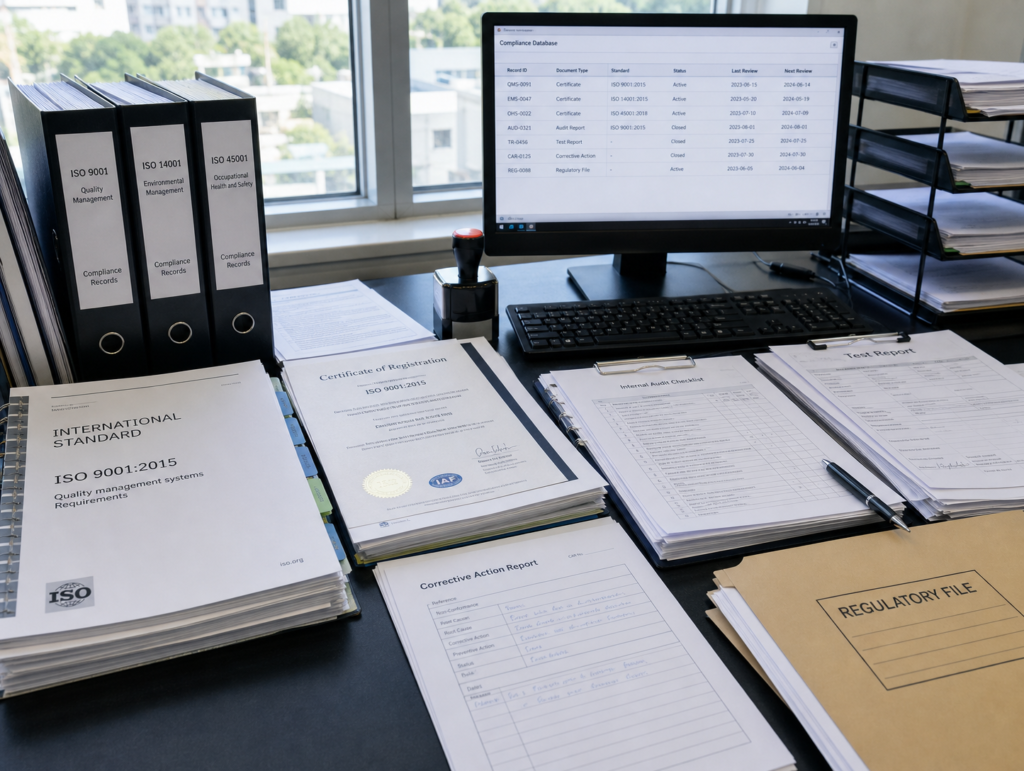
Many people think that INMETRO conducts testing and issues certificates itself, but that is not the case. The entire certification system has a three-party division of labor, each responsible for its own affairs: INMETRO is the rule-maker and supervisor, responsible for formulating certification rules, authorizing certification bodies, and conducting market spot checks, and does not directly issue certificates itself; the specific audit, certification issuance, and follow-up supervision work are handled by certification bodies authorized by INMETRO. Such institutions are called OCP, which you can understand as officially recognized “certificate issuance windows”; product safety testing is carried out by laboratories with corresponding accreditation scopes or qualifications, and must be implemented in accordance with applicable Brazilian safety standards and certification rules. To put it simply: INMETRO manages the rules, OCP manages certificate issuance, and laboratories manage testing. The three parties are separate and restrict each other.
People who are new to this are most likely to confuse INMETRO with other certifications. We have compiled the most common types to clarify them all at once:
| Certification/Standard Name | What it mainly covers | Can it replace INMETRO safety certification? |
| ABNT Standard | Formulates Brazil’s local technical standards (such as plug specifications) | No. Compliance with standards is only one of the technical bases for certification; whether certification is still required depends on applicable regulations |
| Overseas certifications such as CE/FCC/UL | Safety, electromagnetic compatibility or related compliance requirements in the European Union, the United States and other regions | Usually cannot directly replace applicable Brazilian INMETRO certification or registration; whether overseas test data can be used shall be confirmed according to specific RAC, accreditation and mutual recognition requirements |
| ANATEL Certification | Brazilian telecommunications product certification (e.g. devices with regulated radio transmission functions) | No. When a product has Bluetooth, Wi-Fi, cellular communication or other radio transmission functions subject to ANATEL rules, ANATEL certification needs to be verified; ordinary wireless power supply function itself does not automatically equal ANATEL certification |
| USB-IF compliance or USB Power Delivery protocol conformity | Interoperability requirements between USB interfaces, protocols and devices, which may also involve electrical and labeling requirements | No. It belongs to the USB technical compliance system and cannot replace applicable mains safety conformity assessment requirements in Brazil |
| Procel Label | Brazilian energy efficiency grade label (indicates energy saving performance) | No. It mainly focuses on energy consumption, which is a different requirement from safety access |
Special attention should be paid to ANATEL here: when a product has Bluetooth, Wi-Fi, cellular communication or other radio transmission functions subject to ANATEL rules, it is usually necessary to verify ANATEL certification requirements. Ordinary wireless power supply functions such as Qi themselves do not automatically require ANATEL certification just because of “wireless charging”. Whether the product also requires INMETRO shall be judged separately according to its specific product category and current rules.
Why charging products need to pay special attention to INMETRO
You may ask, there are so many products in Brazil, why are charging products always easy to attract attention? This starts with the actual impact on both consumers and sellers.
For ordinary consumers, applicable INMETRO conformity assessment requirements are an important safety reference, but they cannot guarantee that all products are suitable for any electrical environment. When purchasing, you should still check the input voltage, frequency, plug and grounding requirements specified on the product nameplate. There are 127V and 220V power grids in different regions of Brazil, and only products clearly marked to support the corresponding voltage range can be used with the corresponding power grid. Incorrect plugs, sockets, wiring or usage methods may cause malfunctions even if the product has relevant conformity assessment.
If a specific product falls within the scope of mandatory conformity assessment, completing certification or registration means that it has undergone the required testing, audit or other assessment procedures in accordance with the corresponding rules. If a problem really occurs or the product is recalled, consumers can also keep the invoice, product model and certification information to seek handling and complaint basis from the seller, relevant certification body or regulatory authority. However, certification does not mean that the product will never be damaged, nor does it replace correct use and after-sales responsibility.
For sellers or importers, whether INMETRO certification, registration or other conformity assessment is required must first be confirmed according to product categories and current rules. For products within the mandatory scope, corresponding compliance documents may be required for import, sale, customs clearance and listing on some e-commerce platforms. It cannot be simply assumed that all charging products must obtain the same type of INMETRO certification, nor can it be assumed that small sellers or small-value sales are naturally not subject to supervision.
If it is determined that there is no certificate or non-compliance, the seller may face risks such as cargo detention, fines, product removal, rectification, and recall. The specific measures depend on the facts of the violation and the regulatory procedures. Even for sales on social platforms or small-scale sales, “selling less” should not be regarded as a general exemption condition.
There are three core reasons why charging products are easy to attract attention: First, some chargers and power adapters are directly connected to the mains, and if the insulation is not done well, it may cause electric shock; second, fast charging power is getting higher and higher, and multi-port chargers with 65W, 100W or even higher power put forward higher requirements for heat dissipation and protection design, and inferior products may overheat; third, if the plug and interface do not meet applicable requirements, resulting in loose insertion or poor contact, the light consequence is failure to charge or device damage, and the serious consequence is abnormal heating. To put it bluntly, charging products are directly linked to electricity safety, so specific categories often require careful verification of applicable rules.
Which charging products require INMETRO? You can judge in 30 seconds
Since it is so important, which charging products actually require INMETRO certification? Which ones don’t? In fact, you don’t need to memorize it by rote, but you can’t just look at “whether it plugs into the wall” or “whether there is a chip inside”, but judge based on the product category and the current mandatory list.
Whether mains chargers, power adapters, etc. fall within the scope of mandatory certification shall be confirmed according to their specific product categories, intended uses and current INMETRO rules. Mobile phone chargers, laptop power adapters, GaN (gallium nitride) chargers, multi-port charging devices and other power conversion products cannot be uniformly deemed to require or not require certification solely by their names.
Whether a USB-C cable contains an E-Marker chip also cannot independently determine the INMETRO mandatory certification obligation. E-Marker is a chip used to identify and manage the capabilities of some USB-C cables; ordinary data cables or charging cables cannot be judged to necessarily be INMETRO mandatory certified products solely based on “supporting 100W” or other power ratings. Cables shall be verified according to specific product categories, intended uses and the current mandatory list.
Plugs, sockets, travel adapters and power conversion equipment shall also be checked against the applicable INMETRO mandatory list and technical regulations respectively. It cannot be uniformly deemed that INMETRO certification must be obtained solely because the appearance is a Brazilian standard plug, or the product has voltage transformation and rectification functions. A travel adapter may be just a mechanical converter, or it may contain a power conversion circuit, and the applicable requirements for the two may be different.
Conversely, purely passive charging cables with no electronic components at all usually cannot be deemed to require INMETRO certification just because they are “charging cables”; passive adapters that only adapt to low-voltage USB and have no active circuits shall also be confirmed according to specific product categories, and the requirements for mains equipment cannot be directly applied.
There are also several easily confused boundary categories, which we will discuss separately: first, power banks, also known as portable chargers. They cannot directly apply the rules for chargers, nor can they be simply equated with individual batteries. Power banks are usually composed of batteries, protection circuits, charge-discharge circuits and casings, and shall be confirmed item by item according to their complete product composition, lithium battery requirements, input and output circuits, as well as current INMETRO and transportation regulations.
Wireless chargers also cannot be automatically classified under ANATEL just because of the word “wireless”. If the product has Bluetooth, Wi-Fi, cellular communication or other radio transmission functions subject to ANATEL rules, ANATEL certification needs to be verified; ordinary wireless power supply function itself does not automatically equal telecommunications certification. Whether INMETRO applies to mains safety requirements shall be judged according to product categories and current rules.
If chargers and cables are sold as a set, it shall be confirmed whether the OCP certificate and applicable RAC clearly cover the set and its accessories. It cannot be assumed that the requirements for cables will “follow the main unit” or that no separate assessment is required just because they are sold as a set; if the cable belongs to another mandatory product category, it may still need to meet corresponding requirements.
In fact, you don’t need to remember so much. You can use a more reliable quick judgment method: first look at the product category, then look at the intended use, input method, import method and the current INMETRO mandatory list. Direct plug-in to Brazilian mains, with active circuits, and for public sale can only be used as a reminder that further verification is needed, and cannot be regarded as a unified legal judgment condition. Personal use or small-volume overseas shopping imports also do not naturally exempt from import, customs, product safety or other regulatory requirements; whether commercial sales certification requirements apply shall be confirmed according to specific regulations and customs rules.
What does INMETRO actually check? Breakdown of core assessment points
You may be curious, what exactly does INMETRO-related conformity assessment test? Why can’t some products get certified? The specific items depend on the applicable product rules and standards, but for beginners, it can be understood from three aspects: electrical safety, local adaptation, and labeling specifications.
The first category is electrical safety, which is the most core life-saving indicator: first, electric shock protection and mechanical strength — places that can be touched by human hands, such as pins, interfaces, and casings, must not have dangerous live states that do not meet requirements; the structure of the product must also be strong enough, for example, it cannot easily crack during normal use and plugging/unplugging, exposing internal live parts. Then there is fire resistance and temperature resistance — under applicable load and test conditions, there must be no fire, and the casing must not have deformation or melting that affects safety. There is also abnormal protection — in case of short circuit, overload, over-temperature and other situations, the protection measures specified in applicable product standards shall be provided. The protection method may be current limiting, shutdown, fusing, thermal protection or other standard-compliant designs, and not all are required to be implemented in the way of “automatic power off”.
The second category is local adaptation, that is, it must conform to Brazil’s actual electricity environment: the product shall meet the rated input voltage, frequency and allowable deviation specified in applicable standards, and be clearly marked on the nameplate. Brazil has common 127V and 220V systems, but it cannot be inferred that every product must support dual voltage; some products may be single-voltage, and some support a certain range of input voltage, which must be subject to the nameplate and instruction manual.
In terms of plug adaptation, it shall meet the Brazilian plug, socket and interface requirements applicable to the product, and the insertion must be firm, and cannot be loose causing poor contact. It should be noted here that although Brazilian plugs look a bit like Chinese three-pin flat plugs, the size and spacing of the pins may be different, so you cannot judge whether they can be used safely solely by appearance.
Environmental adaptation is also not an indicator that is exactly the same for all products. If applicable standards specify high temperature, high humidity or humid environment tests, the product must meet the test conditions and safety judgment requirements specified in the standard. 40°C and 90% relative humidity cannot be regarded as uniformly applicable INMETRO indicators for all charging products.
The third category is the assessment of labels and instructions. Simply put, you can’t label randomly, and consumers must be able to understand: the product body or packaging shall be marked with real input, output and power information in accordance with applicable rules, and false labeling is not allowed. Portuguese safety warnings and instructions shall also meet applicable requirements, and the content shall be consistent with the certified or registered product parameters.
The specific composition, location and information requirements of the conformity assessment mark depend on the applicable RAC and INMETRO labeling rules. Generally speaking, the INMETRO conformity assessment mark, OCP information and registration or identification information required by regulations shall be marked in accordance with regulations, but the three items of “INMETRO logo, OCP number, and unique certification number” cannot be regarded as a unified fixed format for all products. Certificate numbers, object registration numbers and registration information on labels may also be different concepts, which shall be subject to the certificate and official rules.
Basic rules of certification: Getting a certificate is not a once-and-for-all matter
Now that we understand what is assessed, let’s talk about the basic rules of certification — many people think that everything is fine once they get the certificate, but that’s not the case. INMETRO conformity assessment usually also involves certificate maintenance and post-market supervision.
First of all, a core logic must be clarified: if a product falls within the scope requiring third-party conformity assessment, the testing, audit or certification shall usually be completed by laboratories and OCP with corresponding qualifications in accordance with applicable rules. An enterprise’s own declaration that “I meet the standards” cannot automatically replace legal procedures.
The frequency of supervision, retesting and factory audit after certification, as well as rectification, suspension or cancellation measures after non-compliance, are determined by the specific certification mode and RAC. Not all INMETRO certifications have unified “annual supervision”, nor will all non-compliance result in direct revocation. Products may also be subject to INMETRO market supervision spot checks.
Many people think the certification process is very complicated. In fact, the beginner version can be summarized into several steps: Step 1, first confirm whether your product is in the mandatory scope and match the corresponding certification rules, so as not to work in vain; Step 2, prepare samples, technical documents, and label drafts that are consistent with the mass production version. You cannot use engineering samples from the laboratory for testing and then change them during mass production; Step 3, select a laboratory with corresponding accreditation scope or qualifications for testing according to the applicable RAC, and then the OCP shall implement factory audit, sampling and certification maintenance in accordance with the provisions of the RAC; Step 4, whether the factory audit can be simplified and what certification mode to adopt cannot be judged solely based on parameters such as “low risk” or 5V2A, but shall be subject to the specific RAC.
Certification is not valid for life, but there is no unified validity period and maintenance cycle applicable to all charging products. The specific situation shall be subject to the applicable RAC, the certificate issued by OCP and the INMETRO registration status. When it expires or the status changes, maintenance, update or recertification shall be handled in a timely manner.
If the product is redesigned, for example, the interface is changed, the power is adjusted, the core circuit or the plug is replaced, as long as it may affect safety or the certification scope, you should re-contact the OCP for evaluation, and retest if necessary. You cannot continue to use the original certificate after making changes on your own.
If there are changes in the brand, manufacturer, importer, production site or key structure, you shall also apply to the OCP for change or re-evaluation in accordance with the applicable RAC before sales or import, and update the necessary INMETRO registration information simultaneously. Whether it is a certificate change, recertification, or update of registration materials depends on applicable rules, and it cannot be uniformly asserted that “it will be directly invalid if not reported”.
Many people will ask: How long does it take to get INMETRO certification? How much does it cost? In fact, there is no fixed answer, because there are too many influencing factors. The length of the cycle depends on the complexity of the product, the laboratory’s schedule, the number of rectifications for failed tests, and whether the documents are complete. Whether existing IEC or ABNT test data can reduce repeated testing shall also be confirmed item by item by applicable Brazilian technical rules, standard versions, report scope and OCP; you cannot infer that certification can be accelerated solely based on compliance with IEC 60950. IEC 60950 has been gradually replaced by IEC 62368-1 in most information technology and audio-visual equipment fields, and whether the report version is applicable especially needs to be checked.
As for the cost, it generally includes testing fees, certificate fees, annual supervision fees or other maintenance fees, but the specific composition depends on the certification mode and product rules, and the quotations of different products and different OCPs are also different. It is recommended to directly inquire with formal OCP institutions, and do not use unauthorized intermediaries.
How to distinguish authenticity? Practical pitfall avoidance guide
After talking about so many rules, let’s finally talk about the most practical thing: how to identify the authenticity of INMETRO-related conformity assessment information. It is useful whether consumers are buying things or sellers are selecting products.
Formal products shall be marked with the corresponding conformity assessment mark and necessary OCP, registration or identification information in accordance with applicable regulations. The specific labeling elements and labeling methods are determined by the conformity assessment rules applicable to the product, and “official INMETRO logo, OCP number, and unique certification number” cannot be regarded as a fixed format common to all products. Solely relying on the label on the packaging or product cannot prove that the certificate, registration status and physical model are necessarily consistent.
Ordinary people don’t need to understand professional knowledge, they can first do three steps of verification: Step 1, look at the appearance. If the label is printed blurry, crookedly, peels off when scratched with a fingernail, or the parameter information is obviously incomplete, you should be vigilant. Step 2, check the parameters. The model, power, and voltage printed on the product must be consistent with those in the instruction manual, and also match the model, manufacturer and product scope in the certificate or registration information — for example, if the model printed on the bottom of the product is completely different from the model advertised by the merchant, further verification is needed. Step 3, check official information. Use the fields supported by the INMETRO official object registration or certification query system to verify the registration status, certificate holder, manufacturer, model and applicable product information.
The query fields, public information and display methods of the official database may vary depending on the certification or registration system. Not all certificates can have their full validity period checked solely by product model or so-called “certification number”. Missing query results may also be due to mismatches in fields, models, certificate types or database scope, and cannot be directly equated with fake certificates. If you are unsure, you should further verify with the certificate holder, the issuing OCP or INMETRO.
There are several common fake certification scams, everyone should be careful: The first is “one number for multiple uses”, that is, the merchant uses the certification number of one product on several different products. You can find the number when you check, but the model does not match; the second is “expired and invalid”, the certification status has changed, but the merchant continues to use the old information; the third is “impersonation with overseas certification”, saying that “having CE/UL equals having INMETRO”, in fact, overseas certificates usually cannot directly replace applicable Brazilian certification or registration requirements; the fourth is “false parameter labeling”, the certified power is 30W, but the product is marked 65W. The label or certificate may be real, but the actual product is inconsistent with the certification scope. Here we also need to clarify the boundary of verification: the conformity assessment mark is only the basis for preliminary screening, not the only standard for judging authenticity. It must be judged together with appearance, parameters, official query results and actual model.
Finally, here are some targeted pitfall avoidance suggestions for different groups of people: If you are an ordinary consumer, don’t buy parallel import charging products without applicable compliance labels and with vague parameters, even if they are cheap, don’t joke about safety; even if there is relevant certification or registration information, you should also check whether the interface, input voltage and power match your device, it’s not that the higher the power, the better.
If you are a seller or purchaser, before selecting products, go to the INMETRO official website to check the current mandatory list and applicable rules. Don’t take chances to try to get through, the loss will be greater if you are caught. When applying for certification, you must find a formal OCP institution, and don’t trust unauthorized intermediaries who claim “guaranteed pass, no testing needed, get certificate in a week”. Even if the other party provides a certificate, you should also check whether the certificate holder, manufacturer, model, product family and current status are consistent with the actual goods.
In general, INMETRO conformity assessment is a safety and compliance regulatory requirement implemented by Brazil for specific product categories, not a unified certification set for all “charging products”. Chargers, power adapters, charging cables, power banks and products with wireless functions must be judged separately according to current product rules, and cannot be generalized.
After reading this article, you should already know that to judge whether a charging product requires INMETRO, you can’t just look at whether it plugs into the wall, whether it has a chip, or whether it is sold publicly, but must combine the product category, intended use, import method and the current mandatory list; you also know how to initially verify information through the official system, and distinguish the differences between INMETRO and other systems such as CE, USB-IF, and ANATEL. Whether you are buying charging products for yourself or doing business in the Brazilian market, remembering “safety first, compliance first” is always correct.