
When many merchants selling charging products expand into the Brazilian market, the first stumbling block is “Does my product need INMETRO certification?”. If you apply for certification for products that do not require it, you will waste tens of thousands or even more than 100,000 in certification fees; if you fail to do so for products that do require it, in mild cases, goods will be detained by customs and fined, and in severe cases, all products in your e-commerce store will be removed from the shelves. Charging products are a category under frequent supervision in the Brazilian market, and the probability of running into compliance pitfalls is much higher than that of ordinary consumer goods. Before formally explaining the judgment methods, we first clarify a core premise: the final certification obligation for all products is subject to the current valid regulations of Brazil’s INMETRO. The methods in this article are only for preliminary screening and cannot replace official compliance judgments.
Essential Basics: The Relationship Between INMETRO and Market Access for Charging Products
To figure out the applicable scope, you must first understand the basic logic of INMETRO and the market access of charging products. The full name of INMETRO is the National Institute of Metrology, Quality and Technology of Brazil, which is the official agency responsible for the safety control of consumer electrical products in Brazil. Its core supervision covers items directly related to electrical safety, such as electric shock prevention, fire protection, plug compliance, and standby energy efficiency. For specific products subject to mandatory conformity assessment, certification or other conformity assessment methods shall be selected in accordance with the corresponding ministerial announcements, technical regulations or RAC provisions. For categories that require certification and registration, INMETRO-accredited certification bodies (abbreviated as OCP) organize the assessment, accredited laboratories are responsible for relevant testing, and registration, labeling, as well as import and sales requirements shall be completed in accordance with regulations. The specific processes and sequences cannot be generalized.
There are two core reasons why it is important to clarify the applicable scope: First, cost saving. Products that do not fall within the scope of a certain mandatory conformity assessment usually do not need to apply for that INMETRO certification, and there is no need to spend money unjustly; however, it is still necessary to verify other applicable regulations, import requirements, labeling and product safety responsibilities. Second, risk avoidance. Non-compliant products may face administrative or market measures such as detention, fines, and removal from shelves. The specific consequences depend on the product category, illegal facts and law enforcement procedures. Because charging products are directly exposed to strong electricity, they are a category that requires key attention in the Brazilian market, and the probability of running into pitfalls is much higher than that of ordinary products.
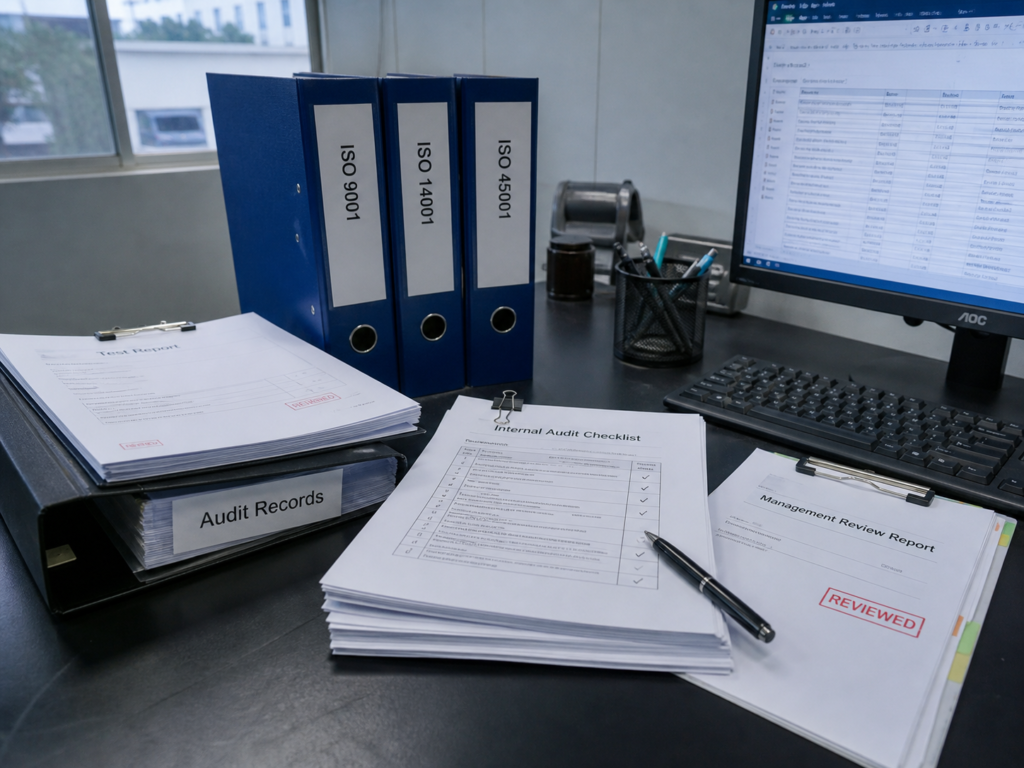
There are 4 core roles in the entire access process, with different divisions of labor, so don’t go to the wrong party: The first is INMETRO itself, which participates in formulating and implementing product conformity assessment rules, and stipulates the applicable scope, assessment methods and requirements of specific products through corresponding ministerial announcements, technical regulations, RAC and other documents, which is equivalent to “the one who sets the rules and implements supervision”. The second is OCP, that is, INMETRO-accredited certification bodies, which are responsible for accepting certification applications, organizing conformity assessments, reviewing materials and issuing certificates, which is equivalent to “the one who reviews materials and issues certificates”. The third is accredited third-party testing laboratories, which are responsible for conducting safety tests according to standards and issuing test reports, which is equivalent to “the one who conducts testing”. The fourth is ANATEL, the Brazilian Telecommunications Agency, which is responsible for the access control of wireless and radio frequency functions. For example, for a smart charger with Bluetooth, in addition to verifying INMETRO requirements, it is also necessary to verify the relevant rules of ANATEL, which will be explained in detail later.
Merchants who are new to this field are prone to fall into three entry-level misunderstandings, which we will correct for you here first:
The first misunderstanding is thinking that all charging products require INMETRO certification. In fact, pure low-voltage data cables or power banks without wall plugs usually do not directly fall into the mains-powered category of wall-plug power supply products, but it cannot be concluded that they are completely free of INMETRO or other compliance requirements. Verification shall be carried out according to the function, structure, purpose and current regulations of the specific product, and do not spend money blindly just for the sake of “being safe”.
The second misunderstanding is thinking that only products produced locally in Brazil require certification. Whether they are manufactured by local factories or imported from overseas, regulated products that are imported and placed on the Brazilian market usually must comply with corresponding regulations. Whether cross-border e-commerce, small parcels, samples or non-commercial imports are eligible for exemption or simplified procedures shall be verified on a case-by-case basis in accordance with current import and conformity assessment rules. “Dropshipping” itself is not the sole condition for determining legal obligations.
The third misunderstanding is thinking that overseas certifications such as CE and FCC can replace INMETRO. Overseas marks or reports such as CE and FCC cannot replace the applicable Brazilian INMETRO conformity assessment and labeling requirements; however, whether their technical documents can be adopted by the OCP shall be determined by the corresponding regulations and OCP review. That is to say, overseas materials may become reference materials in the assessment process, but they are not equivalent to INMETRO certificates of conformity.
Core Judgment Framework: 4-Step Preliminary Assessment of Certification Obligations
After clarifying the basic concepts, you must want to know how to quickly judge whether your product needs certification. The following 4-step preliminary assessment framework can help you quickly screen out the general scope and avoid detours. Note that this is only a preliminary judgment, and the final conclusion must be verified against current regulations.
Step 1: Determine the Power Supply Path
That is, whether the product is directly connected to household mains (127V/220V high-voltage alternating current from wall sockets). First, a basic common sense: the mains voltage in Brazil is 127V/220V, with a frequency of 60Hz. The compliance requirements for Brazilian household plugs and sockets are usually based on applicable INMETRO regulations and the referenced ABNT NBR 14136; product compliance cannot be judged solely by the shape of the plug. If your product has a plug that can be directly plugged into a wall socket, it is a category that requires key verification and must proceed to the next step of regulatory judgment; if the product only draws power from a low-voltage interface, such as only USB-C input, or a car charger plugged into a cigarette lighter (car power supply is usually 12V/24V low voltage), then proceed to the second step of judgment. A special reminder here: wide voltage range (such as 100-240V) only means that the product can adapt to Brazil’s voltage, which is completely different from passing INMETRO certification. These are two different things, don’t confuse them.
Step 2: Determine Product Attributes and Sales Form
That is, who the product is for and how it is sold. If it is a consumer-grade product (for civil or ordinary commercial use, sold to ordinary consumers or small enterprises), and is sold independently or circulated as part of a set, further verification is required; if it is a product for special purposes, such as a special charger for industrial equipment, a charging power supply for medical equipment, or power supply equipment for scientific research laboratories, you cannot directly apply the rules of a certain category of consumer products, but must verify the corresponding special regulations, and at the same time confirm whether it still falls within the scope of general electrical products or other INMETRO mandatory requirements.
If it is a built-in component, such as the power supply motherboard inside a charger, which is not sold separately to the public, it can usually be assessed together with the complete machine, but it must be confirmed that the component is not separately regulated and has been clearly included in the scope of the complete machine certification. You cannot draw a conclusion solely based on “not sold separately”. If the product only transits through Brazil to other countries and is not sold locally in Brazil, you cannot conclude that Brazilian requirements are completely inapplicable solely based on “transit”. It is still necessary to verify in combination with the import method, whether it enters the Brazilian market, and applicable exemption clauses.
Step 3: 4 Core Bases for Regulatory Verification
This step is the core. You cannot just look at what the product is called, but must make a comprehensive judgment based on 4 bases:
First, look at the Portuguese name and actual use. Don’t draw conclusions solely based on the Chinese name or interface form. For example, both are called “adapters”, but a strong electric plug adapter and a USB signal adapter are completely different things. Second, look at the product’s parameters, structure and power supply path, and clarify whether it is strong current input or low-voltage input, which is an important judgment condition. Third, the NCM code, which is the Brazilian customs tariff code, similar to the HS code in China. This can only be used as an auxiliary reference. You cannot say that a certain NCM code definitely requires or does not require certification; the final decision still depends on the product itself. Fourth, verify the current RAC, ministerial announcements and relevant technical regulations to see if the product category is within the mandatory scope, whether there are exemption clauses, and whether there are transition requirements.

Step 4: Cross-verify the Conclusion
You cannot make a final decision based on only one condition, but must make a comprehensive judgment by combining product parameters, regulatory scope and sales scenarios. If you encounter ambiguous boundary situations, for example, the product has both an industrial version and a consumer-grade version, or has a special purpose, never guess blindly. Be sure to consult the OCP or a local compliance service provider for confirmation.
Scope Judgment for Common Charging/Power Supply Products
To allow you to compare more intuitively, we have sorted out the judgment points of common charging and power supply products into the table below. You can first screen your own products against it:
| Product Category | Core Judgment Basis | Typical Products | Common Precautions |
| Wall-plug Chargers/Power Adapters | Verify the corresponding specific INMETRO ministerial announcements, RAC and referenced standards based on the product’s use, input and output, structure and sales configuration | Digital wall chargers, laptop adapters, multi-port desktop chargers, PD fast chargers | “Power supply RAC” cannot be used as a unified regulation name; fast charging protocols do not change product attributes; models with replaceable plugs must be equipped with Brazil-compliant plugs; multi-port chargers are evaluated as complete products |
| Plugs, Sockets and Power Accessories with Charging Ports | Plug and socket RAC, applicable INMETRO regulations and their referenced NBR 14136 requirements, depending on product type and whether they are sold independently | Brazilian standard plugs, sockets/power strips/extension cords with USB ports, Brazilian-side adapters | Compliance of pins with NBR 14136 is not the sole judgment basis; European two-round-pin plugs do not meet Brazilian standards; both the mains side and USB side of USB-equipped power strips must be compliant |
| Cables with Mains Connection | Based on the actual product structure, verify the specific regulations for cable assemblies or corresponding complete machines, depending on whether they are retailed separately | Integrated charging assemblies with mains input parts, detachable power cords for adapters, built-in cords for power strips | Only cable assemblies that include mains plugs, connectors or mains input parts are verified according to their specific structure; pure USB or Type-C low-voltage output cables shall be judged separately; for power cords shipped with the product, it is necessary to check whether the complete machine certification covers them, and it cannot be generally concluded that separate certification is required or not required |
| Charging Peripherals with Mains Input | Complete machine RAC, power supply-related regulations, depending on whether they have built-in mains input and whether an additional adapter is required | Power banks with built-in pins, charging desktop hubs, wireless chargers with built-in power supply | For wireless chargers powered by an external adapter, the scope of the adapter is verified separately, and the charging pad is judged according to corresponding regulations |
Pitfall Avoidance at Boundaries: Distinguishing Non-Mandatory Cases from False Exceptions
After reading the above classifications, you may still encounter some ambiguous situations, such as “Does my sample need certification?” “Do low-power products not need certification?”. These are all high-frequency boundary issues. We will explain non-mandatory situations and false exceptions separately to help you avoid pitfalls.
Common Cases Not Subject to Mains-Type Mandatory Assessment
Note that these products are usually not judged based on the mains input characteristics of wall-plug power supply products, which does not mean that other requirements are completely ignored:
The first type is pure low-voltage data cables, that is, data cables without a mains terminal or strong current input part, such as ordinary charging cables of USB-A to Type-C or Type-C to Type-C. Such products usually do not fall within the scope of wall-plug mains power supply products, but it is still necessary to verify labeling, import and other applicable requirements, which does not mean that they are completely unregulated.
The second type is power banks with only low-voltage input, that is, power banks without wall plug pins, which can only be charged via USB or Type-C interface input. Such products are usually not judged as wall-plug power supply products, but it is still necessary to verify whether there are other mandatory requirements based on battery type, function, structure, wireless capability, purpose and current import regulations.
The third type is car chargers, that is, those plugged into car cigarette lighters. They are usually not judged as wall-plug mains input products, but low-voltage input cannot be used as a sufficient condition for “no INMETRO required”. It is still necessary to verify whether they fall within the scope of other INMETRO products, and whether they involve ANATEL or relevant requirements in the transportation and automotive fields.
The fourth type is pure signal conversion adapters, such as USB to Lightning, Type-C to HDMI and other adapters that only transmit data or signals. They usually do not fall within the scope of wall-plug mains power supply products, but it is also necessary to verify other regulatory requirements for the corresponding products.
False Exceptions That Require Scenario-Based Distinction
Many people think that these situations do not require certification, but in fact, such a simple judgment cannot be made:
The first category is samples, gifts and promotional items. Regulated products circulated through commercial sales, gifts or promotions usually cannot evade requirements solely on the grounds of “free of charge”; however, whether certification test samples, display items, repair parts or non-commercial imports are eligible for exceptions must be verified in accordance with specific INMETRO regulations and import procedures, and cannot be generalized.
The second category is cross-border e-commerce commercial parcels. Don’t think that cross-border dropshipping is definitely not subject to supervision. Goods within the mandatory scope may be detained and inspected by customs; however, whether small parcels, samples and other import situations are eligible for simplified or exemption procedures shall be judged based on specific import and conformity assessment rules, and cannot be determined solely by the size of the parcel or the delivery method.
The third category is personal use, repair replacement parts, and second-hand private resale. Such situations shall be judged in combination with import rules and actual law enforcement, and are not absolutely exempt. But if you are engaged in commercial sales, don’t try to fall into this category, it definitely does not count.
The fourth category is low-power products. Low power does not automatically mean exemption. Power, voltage, current, purpose and structure may all affect product classification, applicable regulations and testing requirements. For example, a 5W small charger and a 65W fast charger must be verified against current regulations respectively. You cannot assert that they both fall within the same mandatory scope just because both are wall-plug consumer-grade products.
The fifth category is “the factory has certification”. Many suppliers will say that they have INMETRO certification, but the certification only covers specific models and configurations. For example, a factory has a certificate for 18W single-port chargers, which does not mean it can be used for 65W dual-port chargers. You must verify the models and configurations one by one, and don’t feel relieved just because the supplier says “we have certification”.
If you encounter really ambiguous boundary situations, such as industrial-specific charging equipment or charging power supplies for medical use, since professional use does not automatically mean that general electrical products or other INMETRO requirements do not apply, you cannot exclude certification obligations solely based on “non-consumer grade”. You should first verify whether there are special regulations, and at the same time confirm whether they still fall within the scope of general electrical products or other INMETRO mandatory requirements. If you are not sure, consult the OCP or a local compliance service provider. It is best to obtain a written judgment opinion. Don’t trust verbal promises, as no one will take responsibility when something goes wrong later.
Advanced Judgment: 4 Key Issues Related to Scope
If you can already make basic judgments and want to go further, such as how to tell if a certificate is real, or what to do with products with wireless functions, you need to understand these 4 key issues.
Division of Responsibilities with ANATEL
Many people cannot figure out the relationship between INMETRO and ANATEL. Generally speaking, INMETRO focuses on the electrical and structural safety of applicable products, while ANATEL is responsible for communication, radio and related radio frequency transmitting equipment within its supervision scope. Ordinary chargers and power strips without communication or wireless transmission functions usually do not fall within the scope of ANATEL communication product certification, but they should still be verified against ANATEL’s current product list and technical rules. Wireless charging, Bluetooth, Wi-Fi and other radio frequency transmission functions shall also be judged separately, and you cannot just look at whether there is Bluetooth or Wi-Fi.
For smart charging devices with Bluetooth, Wi-Fi or other regulated wireless functions, such as smart power strips with Bluetooth and wireless chargers with Wi-Fi, it is usually necessary to verify ANATEL certification; if their electrical structure and purpose also fall within the mandatory scope of INMETRO, they need to meet the corresponding requirements respectively. Not all smart charging devices necessarily require both certifications.
Method for Judging the Coverage of Certified Models
A certificate does not mean everything is fine. You have to verify 4 points:
First, verify the complete model. Products of the same brand with different parameters may belong to different controlled models, and you cannot say that they are universal just because they are of the same series. Second, verify the sales configuration. For example, if you sell a charger with a free power cord, the cord must be in the certified configuration list or applicable scope. Otherwise, even if the charger has a certificate, the set may still be non-compliant. Third, verify the physical product labeling. Provide the required conformity assessment marks and information on the product, packaging or instruction documents in accordance with applicable regulations and certification rules. The model, configuration and manufacturing address must be consistent with the coverage of the certificate or registration, and you cannot only look at the webpage display. Fourth, pay attention to the validity period of the certificate. After the regulations are updated, verify the effective date, transition period and certificate conversion requirements of the revised documents; whether old certificates remain valid and whether supplementary testing or certificate replacement is required shall be confirmed by the corresponding regulations and OCP.
Core Determinants of Certification Mode and Cost
Many people ask “How much does INMETRO certification cost?”. In fact, the price varies greatly, which is mainly determined by 6 factors: First, the applicable regulations and certification mode. Different product categories have different certification modes, some require factory audits and some do not. Second, the number and complexity of test items. For example, a multi-port fast charger has many more test items than an ordinary 5W charger, so the cost is naturally higher. Third, the location of the factory and audit requirements. For example, if the factory is in Brazil or in China, the travel and labor costs for audits are different. Fourth, the division rules of model families. If multiple models can be classified into one model family and placed on the same certificate, the cost can be shared. Fifth, annual supervision and maintenance requirements. Some certifications require annual factory audits and annual fees, so the long-term costs are different. Sixth, the requirement for a local representative in Brazil. Many certifications require a local Brazilian company as the representative, which also incurs costs.
Method for Querying Official Certificates and Registration Status
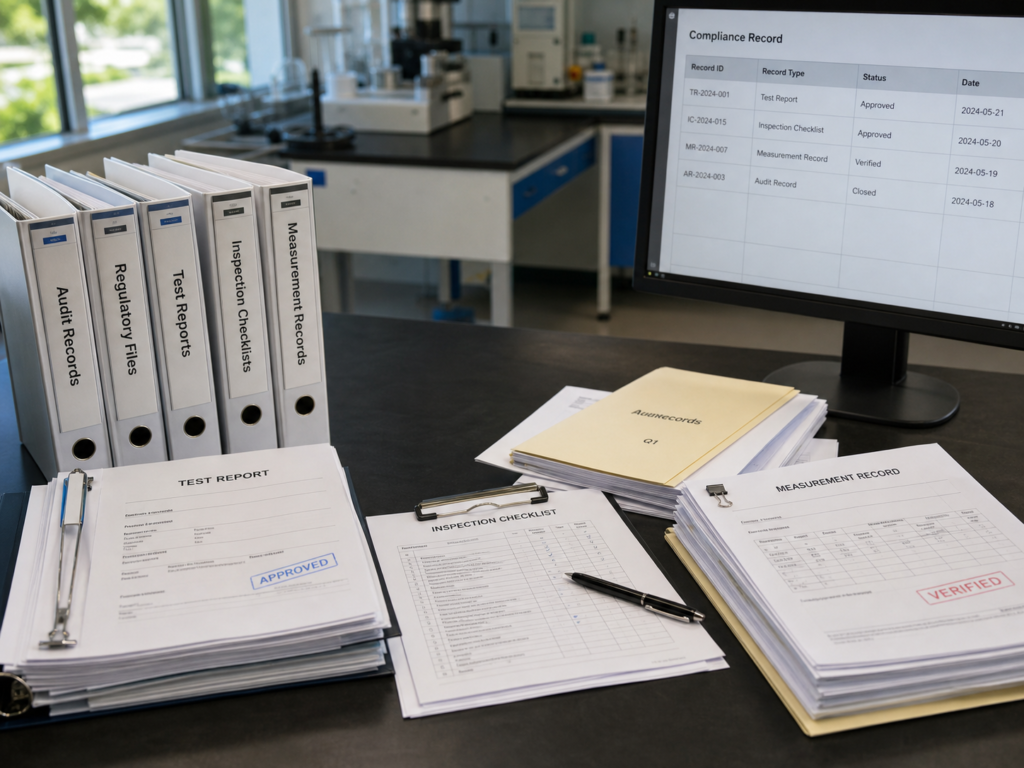
You don’t need to go to a third party. You can use INMETRO’s official certificate or product registration query system. Search using information such as certificate number, enterprise, brand, model, etc., according to the fields actually provided by the system; certificate query and product registration query are not the same status, and the validity of the certificate and the product registration status shall be verified separately.
When querying, you need to verify several key points: whether the applicable scope of the certificate is correct, whether it is in valid status, whether the covered models include your product, whether the production address is consistent, and whether the registration status is normal. Finally, note that the labeling and product information on the physical product must be consistent with the official query results and applicable regulatory requirements. Otherwise, even if the certificate is real, if the physical product configuration or labeling does not match, it may still be non-compliant.
Practical Tools: Self-Check Decision Tree and Information Package
After talking so much, you may still feel a bit confused. We have prepared two sets of practical tools for you, which can be used from entry-level preliminary judgment to precise verification.
Entry-Level 1-Minute Preliminary Judgment
You can quickly classify your products into 4 levels of conclusions:
The first level is low risk, that is, situations such as only low-voltage input, professional use or transit. These can only be used as preliminary screening clues, and cannot directly lead to an exemption conclusion. Verification is still required in combination with specific regulations, import methods, whether the product is placed on the Brazilian market and applicable exemption clauses;
The second level is to be verified, that is, products with mains input, circulated in consumer-grade channels, but with uncertain categories, which require further regulatory verification;
The third level is high probability of being regulated, that is, consumer-grade charging and power connection products with Brazilian plugs, which usually require key verification of the mandatory scope;
The fourth level is prohibited practices: that is, you must never draw a final conclusion solely based on plug shape, power level, or platform requirements. These are only references and cannot be used as basis.
Advanced Verification Information Package
If you need to find an institution for accurate judgment, preparing these materials in advance can save a lot of time: Basic information includes the product’s Portuguese name, actual use, sales form (sold separately or as a set), and circulation area; technical parameters include input and output parameters, plug form, number of interfaces, and power supply path; auxiliary materials include NCM code (if any), product photos, nameplate, and instruction manual; additional information includes whether it has wireless functions and whether it is a special-purpose product.
If you are still not sure in the end, follow these three steps: first, sort out the above verification information package completely, then connect with an INMETRO-accredited OCP or a local compliance service provider. Be sure to ask for a written judgment opinion, and don’t trust verbal promises to avoid subsequent disputes.
Summary After Learning
By now, you have basically mastered the core content of the scope of products subject to INMETRO certification. After learning this, you can independently complete 3 things: First, you can make a preliminary judgment on the INMETRO mandatory scope of common charging products, and clarify which categories require further verification; Second, you can recognize that “samples, gifts, low power, CE or supplier’s existing certificates” cannot automatically determine compliance obligations, and verify corresponding exceptions and certification scope according to specific regulations; Third, you can use the preliminary judgment method to quickly screen products, query the validity of certificates in the INMETRO official system, and know how to deal with ambiguous boundary situations.