
Most sellers who export charging products to India have heard of WPC certification, but many have fallen into pitfalls related to its validity period: some assume their old certificates are permanently valid, only to find them expired and their goods detained upon arrival at the port; others confuse Qi certification with WPC certification and get rejected when listing products on Amazon India. In fact, the validity rules for WPC are not complicated, but requirements vary greatly across different documents and scenarios. Coupled with the fast iteration and frequent model changes of charging products, it is easy to hit the minefield of premature expiration.
First, Understand: What Does WPC Certification Regulate, and Which Charging Products Need Attention?
WPC is the abbreviation of India’s Wireless Planning & Coordination Wing. The certification it issues is India’s official mandatory wireless spectrum access certification, with the core function of regulating the frequency band use of wireless devices to avoid interference with local communication networks — note that it is completely different from the Qi certification of the Wireless Power Consortium (also abbreviated as WPC) that we often mention, and we will distinguish them in detail later.
For charging products, not all products require WPC certification; only those with wireless transmission functions fall within its jurisdiction:
- Products requiring certification: Wireless charging pads/charging docks, smart chargers with wireless functions such as Bluetooth/Wi-Fi, power banks/car chargers with wireless transmission functions
- Products not requiring certification: Pure wired chargers, ordinary charging cables, power adapters without wireless transmission functions
Also note that WPC certificates are bound to the certificate holder. Both local Indian importers and overseas manufacturers can be certificate holders, but changes to the holder must go through official procedures; private transfer will result in certificate invalidation.
Don’t Confuse: These Certifications Are Unrelated to WPC Validity Period
Sellers who are new to this field easily mix up several types of certification, thinking that having one can replace WPC. In fact, their rules are completely independent:
- Qi certification: It is an industry compatibility standard launched by the Wireless Power Consortium, which only ensures that wireless chargers and devices of different brands can charge compatibly. It has nothing to do with India’s official spectrum access, and their validity periods are not interchangeable. Even with a Qi certificate, you still need to apply for Indian WPC certification.
- India BIS safety certification: It is a mandatory electrical safety certification that regulates safety issues such as electric leakage and fire of products. It is a separate system from WPC’s wireless spectrum management, with completely independent validity rules and cannot replace each other.
- Wireless certifications from other countries: Such as US FCC ID and EU CE-RED, are only valid in corresponding countries and regions, cannot replace Indian WPC, and their validity periods cannot be used to infer the validity period of WPC.
Why Must You Pay Attention to the Validity Period?
The consequences of expired WPC certification are straightforward: first, during customs clearance, goods may be temporarily detained by customs, required to supplement documents, fined, returned, or have their release affected, and the specific handling is subject to the requirements of the port, official authorities, and customs clearance agents; second, Indian e-commerce platforms (such as Amazon India) regularly verify the certification status of products on sale, and expired products will be directly removed from the shelves; in addition, due to the fast iteration of charging products, many sellers do not notice changes in wireless parameters when modifying models, and even though the certificate has not reached the expiration date, it has actually become invalid, and they only realize it when they are inspected.
Comparison of Validity Periods of WPC-Related Documents (For Charging Products)
What many people call “WPC certification” is actually a general term. Different documents are used in different scenarios, with great differences in validity periods and uses. We have sorted out four types of documents commonly used for charging products into a comparison table, so you can quickly correspond to your own situation:
| Document Type | Core Function | Validity Period | Sales Permission | Expiration Handling | Applicable Scenarios for Charging Products |
|---|---|---|---|---|---|
| Equipment Type Approval (ETA) | Proves that the product model is wireless compliant | Most newly issued in recent years are 10 years (subject to the certificate) | Supports batch sales | Apply for renewal/re-issuance before expiration | Batch-sold products such as wireless charging pads and smart chargers with Bluetooth |
| Temporary Sample Permit | For sample customs clearance and testing | 3-6 months | Not allowed for batch sales | Re-apply for sample permit after expiration | Wireless power bank samples for testing, exhibition samples |
| Import License | Import customs clearance permit for specific batches of products | Usually 1 year (per batch) | Only valid for the corresponding batch, not universal | Re-apply for import license after expiration | Import of a batch of smart car chargers with Bluetooth |
| License-exempt Band Compliance Document | Proves that the product meets exemption requirements | No fixed validity period (updated with rules) | Can be sold in batches under the premise of meeting exemption requirements | Re-evaluate compliance after rule updates | Low-power wireless charging accessories that meet exemption requirements |
Among them, Equipment Type Approval (ETA) is the most commonly used document for the vast majority of batch-sold charging products, which is what people usually call “WPC certificate”. The core rules later will also mainly focus on ETA.
Core Rules: Details of ETA Certificate Validity Period
How Long Is the Validity Period Exactly?
For ETA certificates newly issued by Indian WPC in recent years, the common validity period is 10 years, calculated from the date of certificate issuance. There is no automatic renewal, and you need to apply proactively before expiration.
But note that 10 years is only a common situation, the final validity period must be based on three pieces of information: first, the validity period field clearly marked on the certificate, second, the certificate status on WPC’s official Saral Sanchar portal, and third, the latest policy notice issued by WPC. You cannot rigidly stick to the 10-year figure.
If you have an old certificate, or the certificate does not mark the expiration date, you must never assume it is permanently valid. You must verify it in four steps: first check the validity period field on the certificate itself, then log in to the Saral Sanchar portal to check the certificate status, then check whether WPC’s latest announcement has adjusted the rules for old certificates, and finally confirm the actual requirements of the port with the Indian importer or customs clearance agent to avoid pitfalls due to policy changes.
License-exempt Bands ≠ No Need for ETA
Many sellers think “my product uses a license-exempt band, so I don’t need to apply for WPC”, but that’s not right. Whether you need to apply for ETA depends on the device category, operating frequency band, transmission power, import/sales purpose, and the current rules of WPC. It is not that all products in license-exempt bands are necessarily exempt. Even if they meet the exemption requirements, compliance will change with updates to WPC’s exemption list. For example, low-power devices that were previously exempt may require supplementary certification after the power threshold is adjusted.
General Coverage Rules of Validity Period
Many people ask: the certificate was issued in 2024, can products of the same model produced in 2030 use it? Will the production date affect the validity period? Here we clarify the judgment boundaries of several common business nodes:
- Starting point: The validity period is calculated from the date of certificate issuance, and has nothing to do with the production date and import date of the product.
- Coverage scope: As long as it is a product of the same model and with the same wireless parameters, no matter how many batches are produced, the same certificate can be used. For example, a 15W Qi wireless charger with a certificate issued in 2024, and the same model produced in 2030, as long as the certificate is still within the 10-year validity period, can be cleared and sold normally.
- Requirements for each business node: The production date has no impact at all; there is no mandatory requirement for the shipping date, as long as the certificate is valid when arriving at the port for customs clearance; the certificate must be valid when listing on e-commerce platforms, and the platform will regularly verify; even during inventory sales and after-sales stages, as long as the product is still circulating in the Indian market, the certificate needs to remain valid, it’s not that you’re fine once you sell out.
Note: These Situations Will Cause the Certificate to Expire Early
Many people think that as long as the expiration date on the certificate has not been reached, it will always be valid. In fact, for charging products, many situations will cause the certificate to expire early, and it cannot be used even if it is still within the 10-year validity period.
Most Common: Changes to Core Wireless Parameters
Charging products have frequent model changes, but not all model changes affect the validity of WPC. The key depends on whether the core wireless parameters are modified:
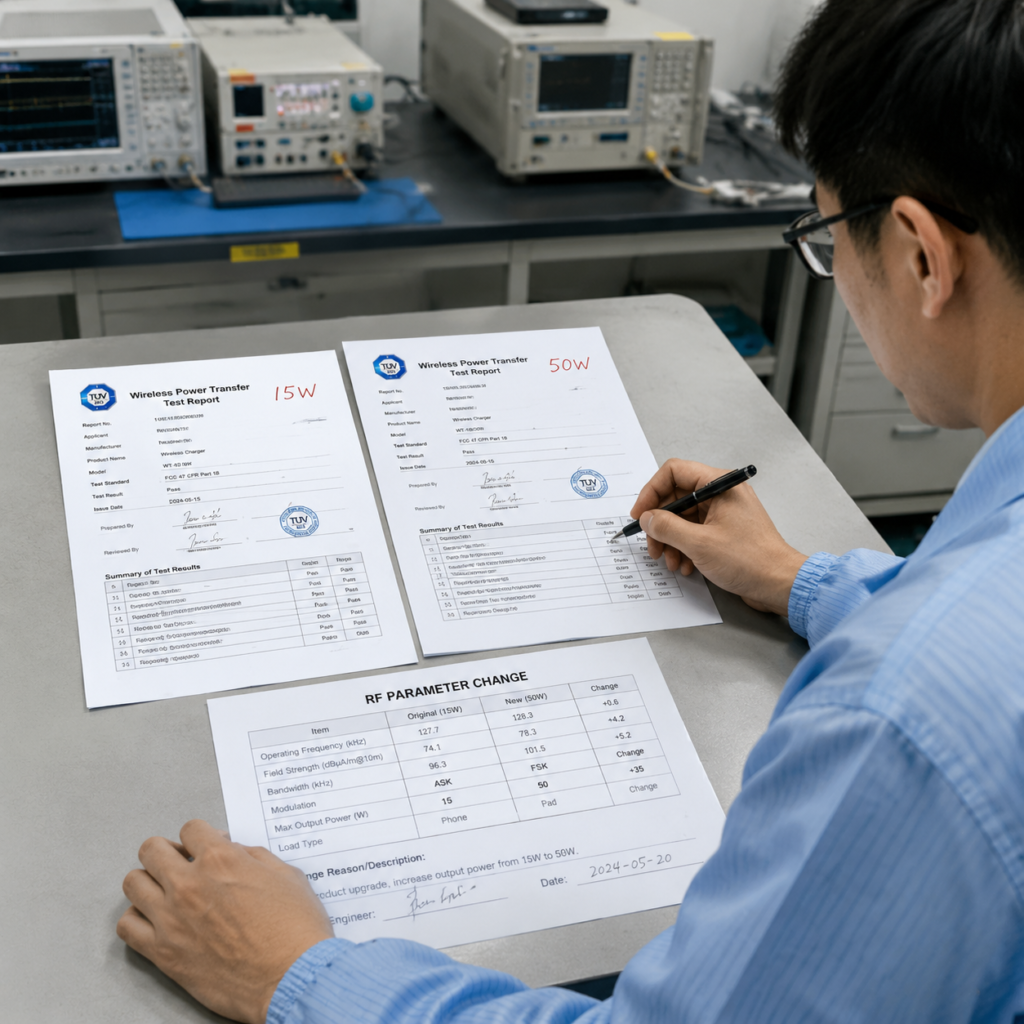
- Changes that require re-certification: Changes to wireless charger power/operating frequency band, replacement of wireless modules, adjustment of antenna type/gain — these modifications that directly affect radio frequency parameters will invalidate the original certificate, and you must re-apply.
- Changes that have no impact at all: Pure appearance, color, packaging modifications, non-RF wired interface changes, adjustment of parts not involving wireless functions — these will not affect the validity of WPC, and there is no need to modify the certificate.
- Changes that require evaluation: Adjustment of coil/antenna structure, change of shielding structure, upgrade of RF control firmware — such modifications require engineering evaluation: if the final RF parameters and spectrum occupancy have no substantial changes, there is no need to re-apply; if there are obvious changes, you need to re-test and re-certify.
For example: a 15W wireless charger upgraded to 50W, with the coil and the entire RF solution replaced, definitely needs to re-apply for WPC; but if you just change the matching wired charging cable from 1 meter to 2 meters, which does not involve the wireless part at all, there is no impact.
Certification Information/Subject Change
Some information changes only require going through the filing process and will not affect the validity period, provided that the core wireless parameters are completely consistent and the official acceptance is passed: for example, company name/address change, eligible certificate holder transfer, addition of new models with the same parameters and in the same series, certificate loss reissuance or information correction — these can continue the validity period of the original certificate without recalculation.
But if the model name is completely inconsistent with the certificate, or the certificate holder is changed privately without going through official procedures, the certificate will be directly invalidated.
Official Regulation Adjustment
If WPC adjusts the frequency band or power limit, there is usually a transition period. After the transition period ends, the original certificates that do not meet the new rules will become invalid and need to be re-certified. If the certification process or testing standards are updated, you also need to supplement materials or re-apply according to official requirements. For example, if India adjusts the scope of license-exempt bands for wireless chargers, existing certificates need to be re-issued after the transition period ends, otherwise they will be non-compliant.
Other Invalidation Situations
If the certificate is revoked or cancelled by the official due to false declaration or illegal use, it is invalid even if the expiration date has not been reached. Note: Expiration of the import license only affects the customs clearance of the corresponding batch, and is not an invalidation situation of ETA itself.
How to Choose: Renewal, Modification, or Re-application?
When encountering situations such as the certificate is about to expire, product model change, or information change, many people do not know which process to take, and choosing the wrong one will waste time and money. We have sorted out a clear decision-making logic:
Renewal: Extension of Expiration with Unchanged Parameters
If the core wireless parameters of the product have not changed, and the original certificate has not been revoked or cancelled, you can go through the renewal process. It is recommended to apply 3-6 months in advance to avoid gaps.
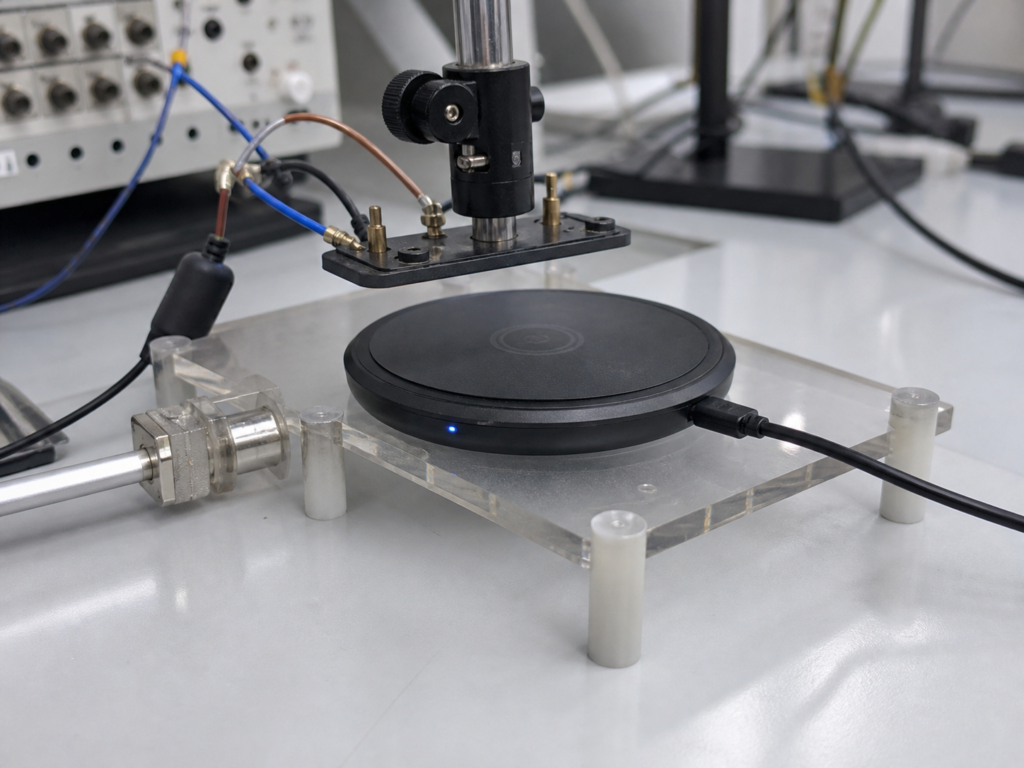
The validity period after renewal is implemented according to the official rules at the time of renewal. In recent years, it is common to extend for 10 years, and the final is still subject to the new certificate. For charging products, under the premise that the core wireless parameters are consistent, the certificate status is normal, and the existing test data is still accepted by the official, renewal usually focuses on data review, without redoing the full set of wireless tests, with low cost and short cycle; if WPC rules are updated, old test reports do not meet current requirements, or the official random inspection requires supplementary certificates, you may still need to supplement tests or handle as a new application.
Change/Addition: Non-core Information Adjustment
If it is just company information change, addition of new models with the same parameters, non-core information correction, or certificate loss reissuance, you can go through the change/addition process, provided that the core wireless parameters are completely consistent and the official acceptance is passed. In this case, the validity period will continue the time of the original certificate and will not be recalculated.
Re-application: Major Changes to Core Parameters or Models
If the core wireless parameters of the product are changed, the product model is completely replaced, or the original certificate has expired and cannot be renewed, you need to re-apply according to the brand new process, which requires re-testing, and the validity period will also be recalculated.
How to Remedy If It Expires?
If the ETA certificate expires, you can no longer use the original certificate for customs clearance or sales, and you should make up for the renewal or handle it as a new application as soon as possible, subject to the official statement; if only the import license expires, as long as the ETA is still valid, just re-apply for the import license, which does not affect the compliance of the model.
Validity Period Management Timeline
To avoid business impact due to certificate expiration, it is recommended that you manage according to this timeline:
- 6 months in advance: Take inventory of all products sold in the Indian market, sort out the validity period of certificates, and list the items to be renewed or changed
- 3 months in advance: Prepare application materials and confirm whether the wireless parameters of the corresponding products have changed
- 1 month before expiration: Officially submit the application to ensure that the certificate is still valid during the review period and there will be no gap
- Already expired: Immediately suspend customs clearance with the original certificate, remove the corresponding products from e-commerce platforms, and complete the formalities as soon as possible
Practical Operation: 3 Steps to Verify the Validity of WPC Certificate
When you get a WPC certificate, how to quickly judge whether it is real and valid? Especially for charging products with miscellaneous parameters and frequent model changes, follow these 3 steps to check, and you will basically not make mistakes.
Step 1: Check Key Information on the Certificate
First look at the core fields on the certificate: certificate type, issuance date, expiration date, certificate holder, product model — these basic information must match the actual situation.
For charging products, you also need to focus on checking the wireless technology type, operating frequency band, and transmission power to see if they are consistent with the actual product — for example, the certificate says 15W Qi wireless charger, but the actual product sold is 50W, even if the model name is similar, it is invalid.
Step 2: Verify Authenticity Through Official Channels
Log in to the official Saral Sanchar portal of Indian WPC, enter the certificate number to query the status, and confirm two points: first, the certificate status is normal, not revoked or cancelled; second, the model and parameters registered in the system are completely consistent with the paper certificate. Note that some certificates, although not expired, are revoked due to violations, and are also invalid.
Step 3: Self-inspection of Product Consistency
Finally, check the information of the product itself: brand, model, hardware version, wireless module model, operating frequency band, transmission power, antenna/coil structure, test report number. As long as the wireless-related parameters are consistent with the certificate, the certificate is valid; if the core parameters do not match, even if the certificate is real, it is equivalent to invalid.
We have sorted out several real scenarios for charging products, you can compare and understand:
- Valid: A 15W Qi wireless charger that obtained ETA in 2024, with wireless parameters completely consistent with the certificate. The same model produced in 2030, as long as it is still within the 10-year validity period, has no problem with customs clearance and listing.
- Re-application required: The original 15W wireless charger is upgraded to 50W, with the coil and RF module replaced, and the core wireless parameters have changed. Even if the original certificate has 8 years of validity left, you must re-apply for WPC certification.
- No WPC required: Ordinary USB-C charging cable, without any wireless transmission function, does not belong to the jurisdiction of WPC at all, no need to apply for certification or check the validity period.
- Only need to update the import license (with prerequisites): For a GaN charger with Bluetooth, if the ETA certificate holder is still the overseas manufacturer or the original certificate holder has not changed, and only the Indian importer/customs clearance subject of this batch is replaced, usually you only need to re-apply for the import license of the corresponding batch, and the ETA remains valid; if the ETA certificate holder itself is the original importer, you need to first go through the subject change, transfer or re-application according to WPC’s official procedures, and cannot directly use the original certificate.
Pitfall Avoidance: 7 Common Misconceptions
Finally, we list the 7 most common pitfalls that everyone easily falls into. Avoiding these can reduce 90% of WPC validity-related problems:
- Misconception: Equate official Indian WPC certification with Qi wireless charging certification
Correct: The two are completely independent, cannot replace each other, and their validity periods are not interchangeable. - Misconception: WPC certification is permanently valid
Correct: Most newly issued ETAs in recent years are valid for 10 years, with no automatic renewal; old certificates need to be checked for official status, and parameter changes or regulation adjustments may cause premature expiration. - Misconception: All charging products need to check WPC validity period
Correct: Only charging products with wireless transmission functions are under the jurisdiction of WPC. Pure wired chargers, ordinary charging cables, and power adapters without wireless functions do not need to be processed. - Misconception: BIS and WPC have the same validity period rules
Correct: The two belong to two independent certifications of electrical safety and wireless spectrum respectively, with unrelated validity rules, and need to be verified separately. - Misconception: Charging products of the same brand and same series can share one WPC certificate
Correct: Only products of the same model and same wireless parameters can share. Products with different powers and different wireless modules need to be processed separately. - Misconception: No need to pay attention to WPC validity period after products are sold out
Correct: Products need valid certificates during all circulation links in the Indian market (including inventory and after-sales), and e-commerce platforms will conduct random inspections regularly. - Misconception: Expired import license equals WPC certification invalidation
Correct: The import license only corresponds to single-batch customs clearance, and expiration does not affect the compliance effect of the ETA model.
After reading this, you should be able to handle three things independently: first, distinguish the validity rules of different WPC documents, and quickly judge the conventional validity duration of charging products with wireless functions; second, when encountering product model changes, information changes, or regulation adjustments, you can accurately judge whether the certificate is valid, and choose the right process of renewal, modification, or re-application; third, you can independently verify the authenticity and validity of the certificate through the Saral Sanchar portal, avoiding compliance risks in customs clearance, listing, and inventory links. If you are unsure about special situations, it is preferred to confirm with a local Indian customs clearance agent or certification service provider, subject to the latest official requirements.