
Many overseas sellers and cross-border e-commerce practitioners who deal with charging products often get confused by terms like “SRRC” and “CMIIT ID” when they first encounter China’s market access rules: Do ordinary wired fast chargers need to apply? Is one more certification enough for Bluetooth-enabled wireless chargers? If a pre-certified wireless module is used, does the whole device not need to be handled?
As China’s mandatory access system for radio transmission equipment, SRRC is directly related to whether charging products can be smoothly imported, listed on e-commerce platforms, and sold compliantly. This article will combine the actual scenarios of charging products to sort out the definition, scope of application, labeling requirements, application rules, and common misconceptions of SRRC, to help you quickly master the basic compliance judgment methods.
First, Understand: What Exactly is SRRC?
Definition and Core Function
SRRC is the common name for “Radio Transmission Equipment Type Approval”, managed by the radio regulatory authority of the Ministry of Industry and Information Technology of China (MIIT for short). It mainly regulates equipment that is included in the type approval catalogue, has active radio transmission functions, and does not fall under exemption circumstances. Its core role is to ensure that parameters such as operating frequency and transmission power of such equipment comply with Chinese regulations, to avoid unregulated signal transmission interfering with key services such as public communications, aviation navigation, and radio and television. The final determination shall be subject to the current catalogue, exemption list, and special provisions.
Unlike the “optional certification” that many people assume, SRRC is a mandatory access requirement for the Chinese market: radio transmission equipment that is required to undergo type approval according to regulations cannot be imported into China, sold domestically, or listed on domestic e-commerce platforms if it has not passed approval and does not have a compliant label.
Basic Regulatory Logic
The core premise of SRRC’s regulatory logic is whether the product has the function of actively transmitting radio signals, but whether it needs to be applied for ultimately still needs to be confirmed in combination with the , the micro-power/short-range device exemption list, and special provisions. If the product only receives wireless signals, or is completely wired, it is not within the regulatory scope of SRRC.
Whether products manufactured overseas are imported into China for sale, or products manufactured within China are sold domestically, they must comply with this rule. If you violate the rules, in mild cases, products will be detained by customs and removed from e-commerce platforms; in severe cases, you will be fined. For overseas sellers, the loss of detained goods is often much higher than the certification cost.
Three Key Terms You Must Know First
Before continuing, let’s clarify the three most commonly used terms, otherwise it’s easy to get confused later:
• **CMIIT ID**: You can think of it as the “compliance ID number” for radio products, a unique number exclusive to each product that has passed type approval, and it is the core proof of SRRC compliance.
• **Type Approval**: The entire process of sending samples to a qualified institution for radio parameter testing before the product goes on the market, and obtaining the CMIIT ID after confirming compliance, which is a product-level compliance certification.
• **Sales Filing**: After obtaining the type approval certificate, the entity responsible for selling the product within China (such as importers, distributors, e-commerce sellers) must also report their sales information to the regulatory authority, which is a required procedure in the sales link.
How to Judge: Does Your Charging Product Need SRRC?
This is the issue that overseas users care about most. We provide you with a set of judgment methods from core to supplementary, so you don’t have to memorize them by rote.
Core Judgment Method
The most fundamental basis for judgment is whether the product **has the function of actively transmitting radio signals**.
For easy memorization, you can use this simple mnemonic: only supplies power, does not transmit wireless signals → no need to apply; can transmit wireless signals such as Bluetooth, Wi-Fi, 4G/5G, NFC → most likely needs to be applied for.
Two supplementary rules to note:
First, even low-power or micro-power wireless products cannot be directly assumed to be exempt. You must check the latest exemption list issued by MIIT; only products on the list do not need to apply.
Second, even if the wireless module you use has already passed SRRC approval, you cannot directly assume the whole device is compliant. You still need to verify whether the wireless parameters of the whole device meet the requirements; module approval does not directly cover the whole device.
Which Charging Products Must Apply for SRRC?
Combined with common products in the charging industry, the following categories basically need to apply for SRRC:
• Fast chargers, power adapters, desktop charging stations with Bluetooth and Wi-Fi functions (such as smart fast chargers that can connect to an app to adjust power)
• Charging cables, USB-C docks with active NFC read-write/point-to-point communication, or radio frequency remote control modules (such as active NFC charging cables that connect with a single tap, docks that support radio frequency remote control); if it is only a passive NFC tag or infrared remote control, it should not be directly judged as subject to SRRC, and it is necessary to confirm whether there is an active radio frequency transmission module
• Shared power banks, outdoor energy storage power supplies, smart charging cabinets with 4G/5G cellular communication (those that need to connect to the network to upload data)
• Wireless charging pads, car wireless charging mounts with Bluetooth and app control functions (such as wireless chargers that can adjust charging modes and have positioning functions)
Which Charging Products Do Not Need to Apply for SRRC?
Conversely, the following common charging products do not need to apply for SRRC at all because they have no active radio transmission function:
• Ordinary wired chargers, power adapters (only have AC to DC voltage conversion function, no wireless transmission module)
• Ordinary charging cables, pure plugs, passive charging ports/adapters (only responsible for power transmission or wired data transmission, no wireless function)
• Devices that only support wired fast charging protocols such as PD and QC — it should be specially noted here that the protocol handshake for fast charging such as PD and QC communicates through the wired pins of the charging cable, which does not count as radio transmission. Therefore, even a 100W wired PD fast charger does not need SRRC.
Special Judgment Rules for Wireless Charging Products
Many people think that SRRC is mandatory when they see “wireless charging”, but that is not the case. You cannot just look at the word “wireless”; you must judge based on three factors: operating frequency, transmission power, and whether it has a communication module.
• If it is a **pure wireless charging product**, that is, it has no additional communication modules such as Bluetooth, Wi-Fi, or NFC, and only has wireless charging function, you must check the latest version of the in accordance with the special requirements for wireless charging to see if it is within the regulatory scope. Not all pure wireless chargers need to apply.
• If it is a **wireless charger with communication modules such as Bluetooth and Wi-Fi**, then the communication module part definitely falls within the regulatory scope of SRRC and must meet the requirements.
The final determination shall be subject to the latest issued by MIIT, because the catalogue will be updated according to industry conditions, and you should not directly apply experience from several years ago.
What Does a Formal SRRC Label Look Like?
Many people think the SRRC label is the pattern that looks like a signal tower, but that’s not the case. The core compliance proof is the CMIIT ID.
Core Components of the Label
The SRRC label is divided into two parts:
• Optional part: The official unified SRRC label pattern (a mark with radio wave style), which is not mandatory to be affixed.
• Mandatory part: The unique CMIIT ID, usually marked in the form of “CMIIT ID: approval code”. The approval code must be completely consistent with the type approval certificate and official query results. This is the core proof of compliance; without this ID, the pattern alone is not valid.
You don’t need to look for information such as validity period or manufacturer on the label. As long as there is a legal CMIIT ID, all compliance information can be found through official channels.
Affixation Location Requirements
There are also clear requirements for the location where the CMIIT ID is affixed; it cannot be pasted anywhere:
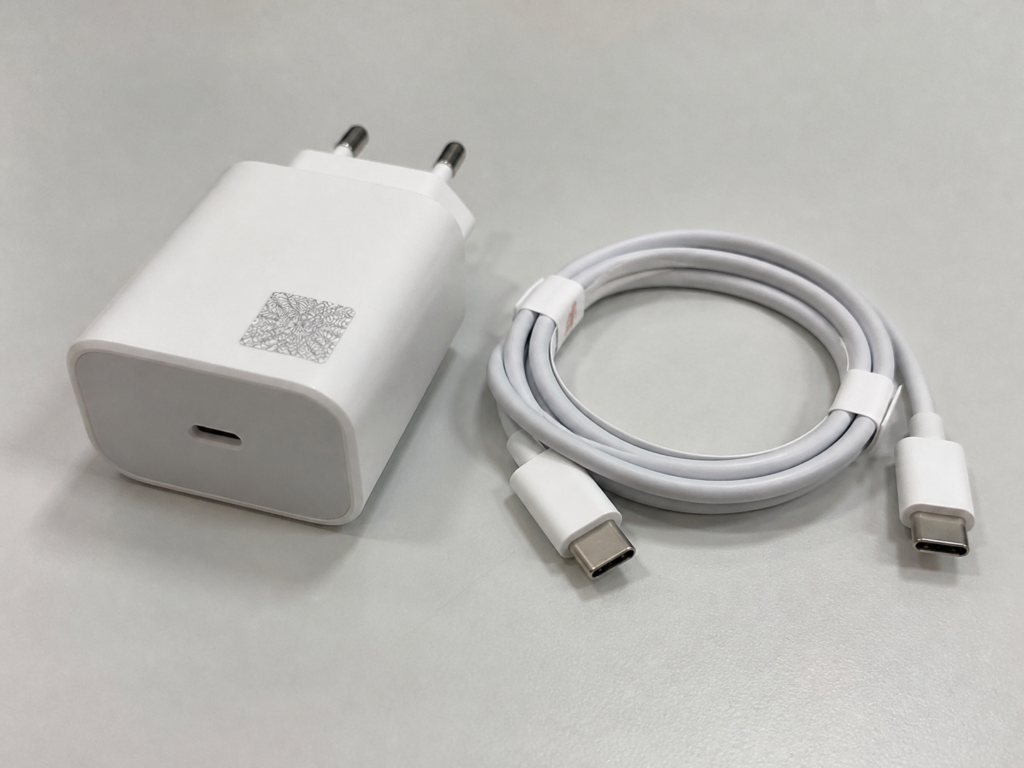
• It is preferred to affix it in a prominent position on the product body, such as the side nameplate of the charger, the bottom of the wireless charger, or the back of the power bank, so that users can see it directly when they get the product.
• If the product is too small to be affixed on the body (such as a very thin charging cable with active NFC), it can be marked on the minimum sales package and instruction manual, but it cannot only be affixed on temporary packaging that users will throw away when they receive it, such as express boxes and plastic shrink wrap.
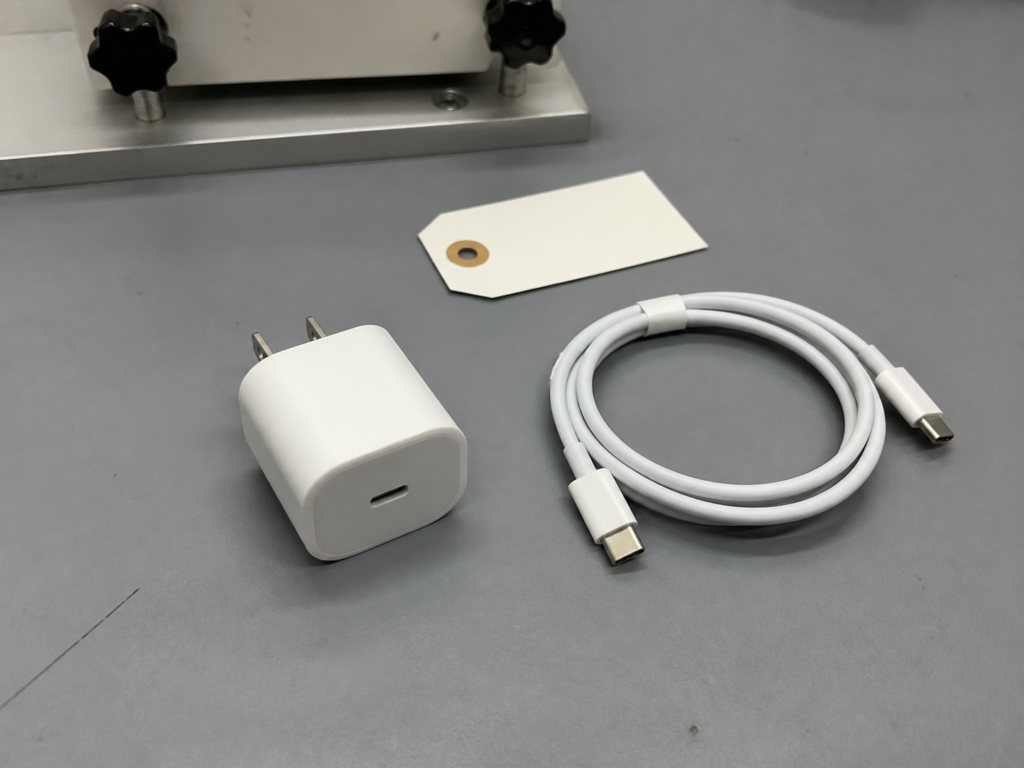
• Smart charging devices with screens (such as shared power banks with screens, smart energy storage power supplies) can use electronic labels to display the CMIIT ID, but they must meet relevant regulatory requirements, such as stable display and easy access.
No matter where it is affixed, the general requirement is that the label is clear, wear-resistant, and not easily erased or covered.
Key Points for Compliance Verification
If you purchase ready-made charging products for sale, you can first check whether the label is compliant from these points after getting the samples:
First, the CMIIT ID must be complete and clear, with no alteration or blurring;
Second, the product model and brand corresponding to the ID must be completely consistent with the physical product you receive. You cannot affix the ID of model A to model B;
Third, the label cannot only be affixed to detachable temporary packaging, such as express boxes and outer plastic shrink wrap, which are not valid;
Fourth, the ID printed on the e-commerce product detail page and product manual must be exactly the same as the ID on the physical product. You cannot have one ID on the detail page and another on the physical product.
Must-Read for Overseas Sellers: Approval and Filing Rules
For overseas brands and sellers, there are several special rules for SRRC application and filing that are different from domestic enterprises. Figuring them out in advance can save a lot of detours.
Relationship Between Type Approval and Sales Filing
Many people think that getting the SRRC certificate is the end of the matter, but that’s not the case. Type approval and sales filing are two independent links, both indispensable:
• Type approval is processed first, targeting the product itself, proving that its radio parameters meet Chinese requirements, and is the prerequisite for obtaining the CMIIT ID;
• Sales filing is processed later, targeting the sales entity, that is, the domestic merchant selling the product must report to the regulator “I want to sell this compliant product”;
If you only have the type approval certificate and have not done sales filing, you may still be judged as non-compliant in the actual sales process, so both links are necessary.
Basic Application Process for Overseas Entities
Overseas enterprises cannot directly apply for SRRC on their own; they must go through a domestic agency. The overall process is as follows:
1. First confirm that your product is indeed within the scope of SRRC application, to avoid wasting money on invalid applications. For example, ordinary wired fast chargers have no need to apply at all;
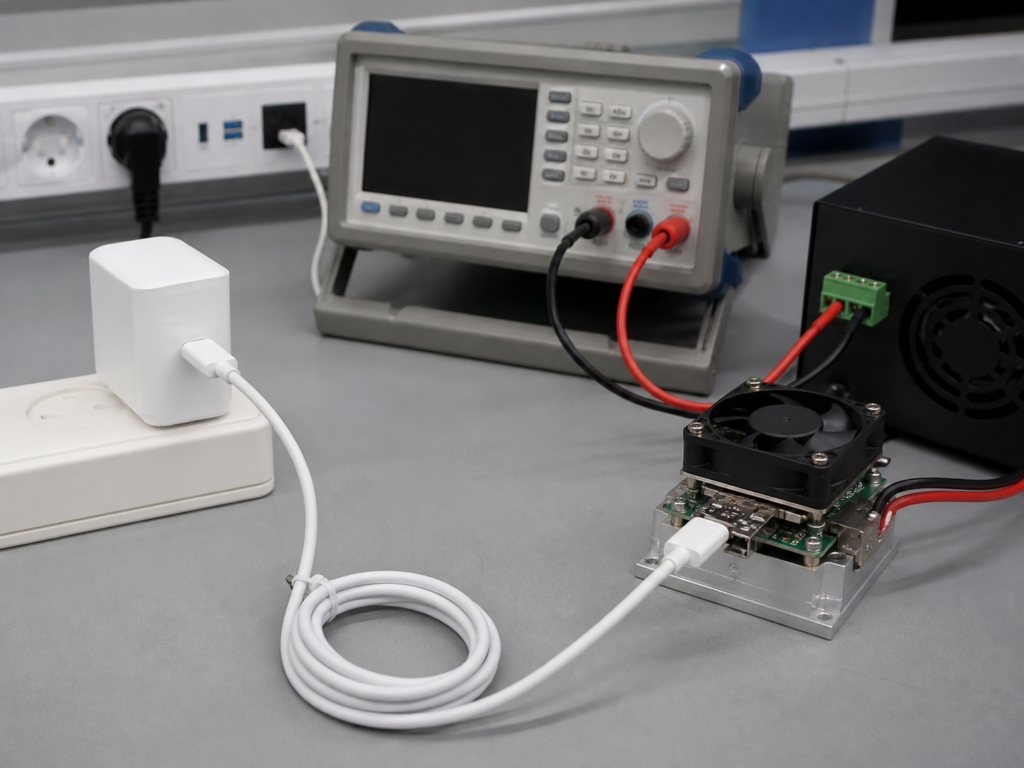
2. Entrust a domestic radio transmission equipment testing institution that meets MIIT’s radio management requirements to test the radio parameters of the product. Test reports from overseas laboratories are not recognized;
3. A legal domestic agency in China (or your importer) submits the type approval application to MIIT;
4. After the review is passed, you will receive the type approval certificate and the unique CMIIT ID for the corresponding product;
5. Print the CMIIT ID on the product, packaging, or instruction manual in accordance with the labeling requirements mentioned earlier.
Special Rules for Overseas Users to Note
There are three rules specifically for overseas entities that are easy to trip over:
First, **test reports from overseas laboratories are not accepted**. Testing must be done by a recognized testing institution within China. Even if you already have FCC or CE test reports, they cannot be used directly, and testing must be redone.
Second, **overseas enterprises cannot directly submit applications**. They must entrust a legal domestic agency or importer in China to handle it. Regulatory authorities do not directly interface with overseas entities.
Third, **the validity period of the type approval certificate is 5 years**. You must go through the renewal procedures in advance before it expires. Otherwise, the certificate will become invalid after expiration, and the product cannot continue to be sold.
Do You Need to Reapply If the Product is Changed?
Product makers often change the appearance, replace accessories, or update firmware. Not all changes require reapplication for SRRC. There is only one criterion for judgment: whether it affects the radio transmission parameters.
• If only the appearance or packaging is changed, and the wireless part is not involved at all, there is no need to reapply, but you must ensure that the model and ID on the product label are consistent with the original; you cannot change the model just because you changed the packaging;
• If components that directly affect radio parameters are changed, such as wireless chips, antennas, transmission power, or operating frequency bands, you must reapply for type approval;
• If it is a firmware upgrade, if the wireless parameters (such as transmission power, operating frequency band) exceed the originally approved range after the upgrade, you must also re-evaluate and reapply if necessary.
Specific Requirements for Sales Filing
The entity responsible for handling sales filing is the **domestic sales entity in China**, such as importers, distributors, or the store-opening entity of domestic e-commerce. If an overseas brand does not have a domestic entity, it does not need to handle it itself; the corresponding sales entity can handle it.
The information required for filing includes: product model, brand, CMIIT ID, sales channels, and basic information of the sales entity. The filing channel is MIIT’s official “Radio Transmission Equipment Sales Filing System”, which can be submitted online, and the process is not very complicated.
Don’t Confuse: Differences Between SRRC and Other Certifications
There are several mandatory access certifications in China. Many people confuse SRRC with CCC and network access license, thinking that if you apply for one, you don’t need the other. In fact, their regulatory directions are completely different and they cannot replace each other.
Differences from CCC Certification
CCC certification (China Compulsory Certification) regulates requirements such as product safety, electromagnetic compatibility, and fire protection. Its core is to ensure that products will not hurt people or interfere with the normal operation of other equipment.
SRRC, on the other hand, regulates radio transmission parameters, with the core of ensuring that the wireless signals of products do not interfere with key services such as public communications.
Take an example from the charging industry: ordinary wired USB-C fast chargers usually do not involve SRRC, but they still need to check CCC, energy efficiency, and relevant safety/EMC standard requirements according to product categories; but a wireless charging pad with Bluetooth must meet both safety requirements (CCC) and radio transmission requirements (SRRC), both are required for sale.
A common misconception is that “having CCC means all functions are compliant”. In fact, this is not the case. CCC does not cover radio transmission requirements. The two are completely independent and cannot replace each other.
Differences from Network Access License
The network access license regulates **telecommunications terminal equipment that accesses public telecommunications networks**. Simply put, it is for devices that can insert a SIM card and connect to the operator’s 4G/5G network, which must meet the requirements for accessing the public network.
SRRC regulates all radio transmission equipment. Whether you access the public network or not, as long as you actively transmit wireless signals, you may be within the regulatory scope.
Still using charging products as an example: shared charging cabinets with 4G/5G need both SRRC (for radio transmission) and network access license (for accessing the public network) because they need to connect to the operator’s network to upload data; while ordinary Bluetooth and Wi-Fi charging products only need SRRC and do not need to apply for a network access license because they do not access the public network.
Generally speaking, ordinary charging products without cellular communication (that is, cannot insert a SIM card, cannot connect to the 4G/5G public network) will not involve a network access license.
Quick Check of Compliance Requirements for Common Charging Products
For your quick comparison, we have sorted out the mandatory compliance requirements for common charging products into a table, which is clear at a glance:
| Product Type | Common Compliance Requirements | Remarks |
| Ordinary wired PD fast charger | CCC (including safety, electromagnetic compatibility and other evaluation items) + energy efficiency (when applicable) | No wireless transmission function, no SRRC/network access license required |
| Bluetooth smart charger | CCC + SRRC | With Bluetooth wireless transmission, additional radio transmission compliance requirements must be met |
| Outdoor energy storage power supply with 4G | CCC + SRRC + network access license | With cellular communication, three types of requirements must be met at the same time |
| Wireless charging pad with Bluetooth | CCC + SRRC + special requirements for wireless charging (when applicable) | The communication module requires SRRC, and the wireless charging function must comply with special rules |
Pitfall Avoidance Guide: Common Misconceptions and Authenticity Verification
Many sellers fall into pitfalls not because they intentionally violate regulations, but because they are misled by some common false statements. We have sorted out the four most frequent misconceptions and the method for verifying the authenticity of CMIIT IDs.
Four High-Frequency Misconceptions
First misconception: **All chargers need SRRC**.
This is the most common misunderstanding. The judgment logic can refer to the core method mentioned earlier: only chargers with active wireless transmission functions need to apply. Ordinary wired chargers and wired fast chargers, no matter how high the power is, do not fall within the regulatory scope of SRRC.
Second misconception: **If an approved wireless module is used, the whole device does not need to be handled**.
Many people think that since the Bluetooth module I use has already passed SRRC, the whole device does not need to apply again. In fact, this is not the case. Module approval is only for the module itself. The antenna design, housing structure, and usage scenarios of the whole device may affect wireless parameters. Therefore, the whole device still needs to undergo separate type approval and affix its own CMIIT ID, and cannot directly use the module’s ID.
Third misconception: **Overseas certifications such as FCC and CE can replace SRRC**.
SRRC is a unique mandatory access requirement in China. There are differences in radio frequency planning and transmission power limits among countries. Overseas certifications such as FCC and CE cannot replace SRRC at all, and must be applied for separately when entering the Chinese market.
Fourth misconception: **CMIIT IDs can be borrowed or shared**.
Each product model corresponds to a unique CMIIT ID, which is a one-to-one correspondence. They cannot be borrowed or shared. Using an ID fraudulently is a serious violation. Even for OEM/ODM private label products, you must confirm whether the original ID authorization scope includes your brand and model, and you cannot casually affix the factory’s ID to your own products.
How to Verify the Authenticity of a CMIIT ID
If you have received a CMIIT ID from a supplier and want to confirm whether it is real and whether it corresponds to this product, you can directly query on MIIT’s official “Radio Transmission Equipment Type Approval Query Platform”, which is the most authoritative channel. Do not use third-party query websites.
When querying, after entering the CMIIT ID, you must check three pieces of information: whether the product model is consistent with your product, whether the applicant is consistent with what the supplier said, and whether the wireless parameters (such as operating frequency band, transmission power) are consistent with the actual product.
If the information cannot be found, or the found information does not match the actual product, do not purchase or list it for sale first, to avoid losses due to non-compliance.
Practical Checklist for Overseas Users: Check Before Listing
If you are an overseas seller of charging products, you can follow the checklist below to check step by step before listing or importing to ensure compliance:
1. Function Check Before Project Initiation/Listing
• First confirm whether the product has an active radio transmission function;
• Then confirm the specific type of wireless function: Bluetooth, Wi-Fi, cellular, NFC, or only wireless charging;
• Confirm whether the wireless parameters of the Chinese version and the overseas version are consistent, such as whether the transmission power and operating frequency band meet Chinese requirements;
• Combined with the judgment methods mentioned earlier, confirm whether the product is within the scope of SRRC application. It is best to keep the judgment records for subsequent verification.
2. Compliance Document Check
• Whether there is a valid SRRC type approval certificate, pay attention to whether it has expired;
• Whether the product model and brand corresponding to the CMIIT ID are completely consistent with the product you want to sell;
• If the product uses an approved wireless module, confirm whether the approval scope of the module covers the actual usage scenarios of the whole device;
• Whether the entity responsible for sales within China has completed sales filing.
3. Label and Promotion Check
• Whether the CMIIT ID is marked on the product body, minimum sales package, and instruction manual as required;
• Whether the ID on the e-commerce product detail page and external promotional materials is exactly the same as the ID on the physical product;
• Do not use vague expressions such as “compliant” or “certified”, and be able to provide real approval certification documents.
4. Product Change Review Check
• If only the appearance or packaging is changed, check whether the model and ID on the label are consistent with the original;
• If the hardware or firmware is changed, evaluate whether the wireless parameters exceed the originally approved range;
• If it is a major change involving the wireless part (such as changing the wireless chip or modifying the antenna), confirm in advance whether you need to reapply for type approval. Don’t wait until you start selling to find out it’s non-compliant.
In general, to judge whether a charging product needs SRRC, the core is to see whether it has an active radio transmission function, and then make a final confirmation combined with the current approval catalogue and exemption list. You can verify the authenticity of the CMIIT ID through the official MIIT platform, distinguish the different regulatory directions of SRRC, CCC, and network access license, avoid applying for unnecessary certifications, and save compliance costs. Before listing or importing, overseas sellers can check one by one against the practical checklist, avoid common misconceptions such as module approval replacing whole device approval and overseas certifications being universally applicable, and reduce risks such as cargo detention and product delisting.