
If you are an overseas seller of charging products planning to enter the Chinese market, or a user who frequently purchases wireless-enabled charging accessories via cross-border overseas shopping, you have most likely heard of SRRC certification. Those encountering it for the first time can easily fall into cognitive bias pitfalls, wasting unnecessary money or affecting product market access. Today, we will thoroughly explain the validity period rules of SRRC certification in combination with the actual scenarios of charging products.
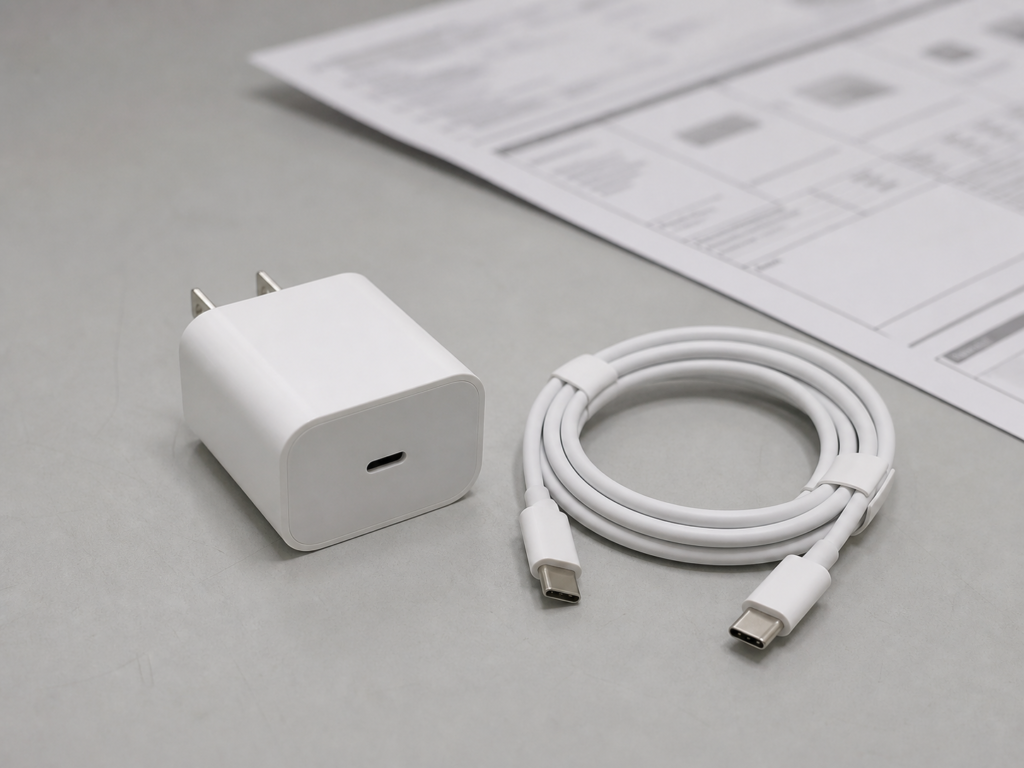
Basic Knowledge: First Understand What SRRC Is
The full name of SRRC is **Radio Transmission Equipment Type Approval**, which is China’s mandatory access certificate for radio transmission equipment, equivalent to a “pass” for products with wireless transmission functions to enter the Chinese market. Each certificate has a unique number called CMIIT ID, which is equivalent to the radio “ID number” of this model. It does not regulate product safety, but whether the wireless frequency band and transmission power comply with China’s radio management regulations, to avoid interfering with other legal radio signals.
Let’s first clarify the applicable scope: not all charging products require SRRC, only those with independent active wireless communication or control transmission functions require further assessment.
Why Overseas Users Should Pay Attention to the Validity Period
Only SRRC certificates within their validity period are legally valid for market access. If the certificate expires, the product cannot clear customs, cannot be listed for sale through formal channels, and in serious cases may face administrative penalties. Several categories of charging products are high-frequency areas for regulatory spot checks: smart fast chargers with Bluetooth/WiFi/2.4G functions, wireless chargers with communication modules, and USB-C docks with wireless functions. Relevant sellers must pay extra attention.
Three Most Common Cognitive Misconceptions
People who are new to SRRC can easily fall into these three pitfalls. We will first clarify the core conclusions in advance, and the details will be elaborated later:
1. **Not all charging products require SRRC**: Only products with independent active wireless transmission functions require it; pure wired and pure wireless power transmission products do not. Specific categories can be compared with the certificate requirement table later in the article.
2. **SRRC is not valid for life**: Do not directly apply the experience of overseas FCC ID or CE RED; SRRC has a clear fixed validity period.
3. **The validity period is not calculated from the production/launch date**: It starts from the issuance date on the certificate, and has nothing to do with the product’s production or sales launch time.
Core Validity Period Rules
After clarifying the basic concepts, let’s look at the core validity period rules and how to judge whether your charging products are subject to the regulations.
Basic Validity Period Standards
At present, the mainstream validity period of SRRC certificates is 5 years (the maximum is no more than 5 years). The starting point is the issuance date marked on the certificate. The final validity period is subject to the “valid until” date stated on the certificate, and in special cases, subject to official system records. After the certificate expires, you must apply for renewal before you can continue to produce, import, or list new products of the corresponding model for sale.
Does Your Charging Product Require SRRC?
There is only one core criterion for judgment: **whether the product has independent active radio communication/control transmission functions**. If the product only has basic control supporting wireless power transmission and does not have independent communication transmission capabilities (such as accessories that only receive power, pure wireless chargers without Bluetooth/WiFi and other functions), SRRC is usually not required; however, if the same product is additionally equipped with independent active transmission modules such as Bluetooth, NFC, cellular, or 2.4G, it still needs to be judged as radio transmission equipment.
For quick comparison, we have compiled the certificate requirement status of common charging products:
| Charging Product Type | Is SRRC Required? | Judgment Basis |
| Ordinary wired charger/charging cable/plug | No | No radio transmission function at all |
| Qi/magnetic wireless charger without communication function | No | Only used for wireless power transmission, does not have independent active wireless communication transmission functions such as Bluetooth/WiFi/NFC/cellular/2.4G; its power transmission-related control mechanism is not equivalent to the wireless communication function that requires SRRC |
| Wireless charging receiving accessories (such as receiving pads) | No | Only receive power, do not have active wireless communication transmission capabilities |
| Smart fast chargers, wireless chargers, charging stations, and USB-C docks with Bluetooth/WiFi/NFC/cellular communication/2.4G transmission functions | Yes | Have independent active wireless communication/control transmission functions; if equipped with cellular communication function, it may also involve network access license |
If you are still unsure, there are two quick preliminary judgment methods: First, pure wired products are directly excluded, no need to consider further; second, check whether there is a CMIIT ID on the product nameplate or packaging, and if so, you can directly verify it in the official system to confirm.
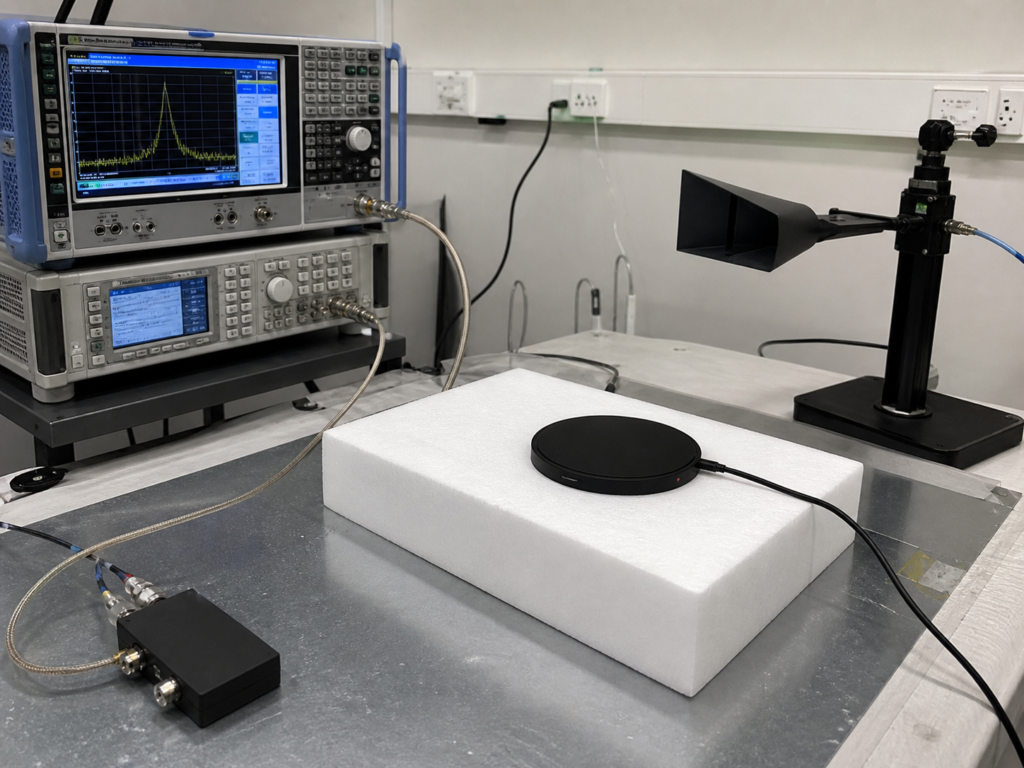
Here is a special note on one category: pure wireless power transmission products (such as ordinary Qi wireless chargers without Bluetooth or APP control, magnetic car wireless chargers) do not require SRRC, but need to comply with China’s wireless charging management regulations — this is another set of compliance requirements, completely different from SRRC, and the difference between the two will be specifically explained later.
Relationship Between Validity Period and Product Circulation
Many people are confused about “whether inventory can still be sold after the certificate expires”. Here we clarify it by situation:
• **Production/import link**: Must hold a valid certificate within the validity period. This is a hard requirement with no room for negotiation.
• **Inventory circulation**: If it is compliant inventory that was legally produced and imported before, it can continue to circulate in principle after the certificate expires.
• **Special restrictions**: E-commerce platforms, bidding projects, and regulatory spot checks usually require products on sale to hold currently valid certificates. In this case, inventory corresponding to expired certificates cannot be listed or participate; if the product’s certification is officially revoked, the product is recalled, or the transition period of the corresponding standard ends, even inventory cannot continue to circulate.
Take a specific example: a wireless charger with Bluetooth dimming function has an SRRC certificate valid until October 2028. If a merchant legally imports a batch of goods in 2025 and stores them in a domestic warehouse, by 2029, this batch of inventory can still circulate offline in principle, provided that the product has not been revoked or recalled, is not subject to circulation prohibition restrictions during the transition period of new standards, and the sales channel does not require a currently valid certificate; however, after the certificate expires in October 2028, new batches must absolutely not be imported, nor can new product links be created on mainstream e-commerce platforms (most platforms require products on sale to hold valid SRRC).
Do Not Confuse with These Two Periods
The SRRC validity period is completely unrelated to two familiar periods, do not confuse them:
• **≠ Product warranty period**: Warranty is the after-sales promise given by the manufacturer to consumers (such as 1-year replacement), and has nothing to do with the access effect of SRRC. Even if the warranty expires, as long as the SRRC is within the validity period, the product’s legal access status remains unchanged; conversely, even if there is a long time left on the warranty, if the SRRC expires, new products cannot be produced or imported.
• **≠ Product service life**: For example, a charger has a designed service life of 10 years, which is also unrelated to the SRRC validity period. The certificate validity period will not be extended just because the product can be used for 10 years.
Early Invalidation, Renewal and Change of Certificates
The validity period of SRRC is not fixed. Some situations will cause the certificate to become invalid in advance, and renewal can be applied for before expiration. The handling methods for different situations are completely different.
Several Situations of Early Invalidation
It is not only expiration that will cause the certificate to be invalid. The following three situations will affect the validity of the certificate:
1. **Product modification involving wireless parameters**: For example, replacing the Bluetooth chip, modifying the WiFi antenna, or adjusting the 2.4G transmission power. As long as the modification affects the wireless transmission parameters, the original certificate cannot continue to cover the modified product; for the original model that has not been modified and is still consistent with the certified parameters, whether it remains valid is subject to the certificate status and official records.
2. **Certificate is officially revoked/cancelled**: For example, submitting false materials during application, or lending the certificate to other models for use. If found by the authorities, the certificate will be revoked and become invalid immediately.
3. **Regulations/standards update**: After regulations or standards are updated, if the competent authority sets a mandatory transition period, and old certificates/old products no longer meet current requirements after the transition period, renewal, change or re-approval is required as required; whether it is invalid is subject to official announcements and the status of the query system.
Renewal Rules
If the product has not been modified, renewal can be applied for before expiration. This is the part that overseas sellers are most concerned about:
• The official required application time limit is **at least 30 working days before the certificate expires**, but we recommend overseas users to prepare 3-6 months in advance — after all, it is necessary to arrange sample delivery, testing, and process procedures. In case of standard updates that require supplementary testing, buffer time can also be reserved to avoid a gap period.
• Prerequisites for renewal: The product model, core wireless parameters, and manufacturer have not been modified, and the product complies with current relevant standards. If the core parameters or manufacturer are changed, the renewal process cannot be followed.
• Renewal efficiency: Products with a single Bluetooth function are usually faster; products with multiple wireless functions (such as Bluetooth + WiFi) may require supplementary testing if they coincide with standard updates, and the time will be longer.
• Renewal result: After passing, a new certificate will be issued, and the validity period will be recalculated.
The following are common market references for handling, and do not constitute official fixed fees or committed time limits: The renewal fee is approximately 30%-60% of the first certification, and the cycle is generally 4-8 weeks. The number of wireless standards, whether supplementary testing is required, sample rectification, laboratory scheduling, and agency service fees will all change the actual cost and cycle. The final result is subject to the actual quotation and the progress of the official/laboratory.
• Notes for overseas handling: Be sure to entrust a domestic agency with formal qualifications, verify the other party’s qualifications, and avoid obtaining fake certificates.
Boundary Between Change and Re-application
Many people are confused about when to go through the change process and when to re-apply. Here is a clear division for everyone:
• **Change process applicable (does not affect the original validity period)**: Changes to enterprise information (name, address, etc.), model name adjustment but the hardware remains completely unchanged (for example, the model name on the packaging of a fast charger is changed, but the internal circuit and wireless module are not touched). In such cases, you only need to apply for a change, and the validity period of the original certificate remains unchanged.
• **Re-application required (original certificate cannot cover modified products)**: After replacing wireless chips/modules, modifying transmission parameters/antennas (for example, a WiFi charging station is replaced with a new WiFi module), the modified product needs to re-apply for SRRC certification; whether the product with the original certified configuration is still valid is subject to the certificate status, corresponding model, and official system records.
How to Query and Verify the Validity Period and Authenticity of SRRC
Whether you are a seller or a buyer, you must learn to check the authenticity and validity period of the SRRC certificate by yourself to avoid pitfalls.
Official Query Channel
The official query channel is the **Ministry of Industry and Information Technology Radio Transmission Equipment Type Approval Query System**. This system can be accessed directly without a VPN or registration. The query method is very simple: enter the CMIIT ID or product model to search. All certificate information is subject to the official records of this system. If paper certificates or screenshots provided by agencies are inconsistent with the system, the system content shall prevail.
Core Verification Information
After finding the certificate, you should focus on verifying four pieces of information to avoid getting invalid or fake certificates:
1. **Verify the validity period**: Confirm that the start and end dates of the certificate are within the valid range you need. Don’t just stop at “having a certificate”.
2. **Verify the product model**: It must be completely consistent with the model on the product nameplate and packaging; if it is an ODM private label product, confirm that the model you sell is within the coverage of the certificate.
3. **Verify wireless parameters**: Including frequency band, transmission power, modulation method, antenna, and wireless module. These must be consistent with the actual product, otherwise even if the certificate is real, it does not correspond to your product.
4. **Verify entity information**: The applicant and manufacturer must match the actual entities, to avoid certificate misappropriation.
Common Invalid/Fraudulent Situations
There are several common types of invalid certificates, everyone should pay attention to identifying them:
• **Certificate misappropriation**: Using the certificate of model A to pass off as model B. Even if the two products look identical, as long as the internal wireless parameters are different, the certificate is invalid.
• **Fraudulent use of expired certificates**: Some merchants will prevaricate with the reason that “the certificate was valid when the product was produced”, but it should be noted that in scenarios such as import, new production, new listing on e-commerce platforms, and bidding, products are usually required to hold a currently valid SRRC certificate. The claim of “valid at the time of production” is not recognized in these scenarios; for existing inventory that was legally produced or imported within the certificate validity period, has not been revoked/recalled, and is not restricted by the standard transition period, the offline circulation rules can be judged with reference to the inventory circulation requirements mentioned earlier.
• **Confusing reports with certificates**: Many people use third-party test reports to claim that they have certification, but test reports are commissioned testing with no fixed validity period, and cannot replace SRRC certificates at all. Only type approval certificates with CMIIT ID are valid.
• **Fraudulent use of module certificates as whole-machine certificates**: Some merchants say “the Bluetooth module we use has already passed SRRC, so the whole machine does not need to be processed again”. In fact, the approval of the module does not necessarily cover the whole machine — because the antenna and structure of the whole machine may change the wireless parameters, and if the parameters are changed, re-evaluation is required, and the module certificate cannot be used directly.
Exclusive Pitfall Avoidance Guide for Overseas Users
Due to the large differences in certification rules between domestic and overseas, overseas users can easily fall into some unique pitfalls. We have compiled targeted action reminders:
High-Frequency Reminders for Overseas Sellers
1. **Set renewal reminders**: Do not follow the habitual thinking that overseas wireless certifications have no fixed validity period. It is recommended to add the SRRC renewal node to the product compliance calendar in advance, to avoid missing the renewal and resulting in customs detention or platform delisting.
2. **Evaluate before modification**: Even for minor changes to wireless parameters (such as replacing the Bluetooth antenna or fine-tuning the transmission power), you must first conduct a compliance evaluation, confirm the corresponding handling path before shipping, to avoid the risk that the certificate does not cover the modified product.
3. **Reserve buffer time**: Do not start the renewal just at the official minimum application time limit. Handling it only when it is about to expire can easily lead to supply gaps due to supplementary testing or process delays. It is more prudent to start preparations at least 3 months in advance.
High-Frequency Reminders for Overseas Buyers and Small Purchasers
1. **SRRC must be checked for sales in China**: If wireless-enabled charging products purchased via cross-border overseas shopping are to be sold in China, you cannot only rely on overseas certifications such as CE and FCC. You must confirm that the product holds an SRRC certificate within its validity period, otherwise it may be detained at customs or cannot be listed for sale.
2. **Do not misjudge the scope of certificate requirement**: Wireless charging receivers and pure wireless chargers do not require SRRC, so there is no need to spend extra time looking for or applying for the certificate.
3. **Avoid redundant certification costs**: Ordinary wired chargers and charging cables usually do not require SRRC; whether they involve CCC or other safety and electromagnetic compatibility requirements should be judged separately according to China’s mandatory certification catalog, product type, and rated parameters. Do not blindly apply for unnecessary certifications.
Distinction Between Easily Confused Compliance Requirements
Many people confuse SRRC with other certifications and regulations. We will compare them one by one clearly:
Differences from CCC Certification
• Regulation direction: CCC regulates safety and electromagnetic compatibility, while SRRC regulates radio transmission parameters.
• Validity period rules: The mainstream validity period of both is 5 years, but CCC certificates usually need to be maintained valid through post-certification supervision, factory inspections, etc.; SRRC generally has no similar annual factory supervision requirements.
• Applicable situations: Ordinary wired fast chargers require CCC but not SRRC; charging products with wireless communication functions may require both (such as smart wireless chargers with Bluetooth).
Differences from Quality Inspection Reports
• Nature difference: Quality inspection is batch-based commissioned testing with no fixed validity period; SRRC is mandatory type approval access, and the validity period is subject to the certificate.
• Function difference: Quality inspection tests whether product quality meets standards, while SRRC is a radio transmission access license. The two cannot replace each other — no matter how many quality inspection reports you have, you cannot import or sell products with wireless transmission functions without SRRC.
Differences from Overseas Wireless Certifications
• Validity period: Most overseas wireless certifications (such as FCC ID, CE RED) have no fixed validity period, and remain valid as long as the product remains unchanged and standards are not updated; SRRC has a clear 5-year validity period and must be renewed upon expiration.
• Applicability: Overseas certifications cannot replace SRRC. China’s wireless frequency band and power requirements may be different from those of other countries. For example, a Bluetooth-enabled wireless charger exported to China must apply for SRRC separately, and cannot directly use the FCC ID.
Differences from Network Access License
• Regulated objects: Network access license is for telecommunications equipment that accesses public communication networks (such as mobile phones, routers with plug-in SIM cards); SRRC is for all radio transmission equipment, regardless of whether they access the public network.
• Applicable situations: Only charging terminals with cellular communication functions may require both certificates at the same time (such as shared power banks with eSIM); ordinary Bluetooth/WiFi charging devices usually do not involve network access licenses; if they have active wireless transmission functions, SRRC should be assessed, while CCC, wireless charging management regulations, etc. still need to be judged separately according to product categories.
Differences from Wireless Charging Management Regulations
• Regulated objects: SRRC targets devices that actively transmit wireless communication/control signals; wireless charging management regulations target pure wireless chargers that only transmit power.
• Requirement difference: SRRC requires application for a type approval certificate, with a clear validity period; pure wireless chargers only need to meet power and frequency band related requirements, do not need to apply for a certificate, and naturally there is no such thing as a validity period.
This is one of the most common misconceptions: many people think that pure wireless chargers also require SRRC, and even ask how long the validity period is. In fact, pure wireless chargers are not within the regulatory scope of SRRC at all, so don’t confuse them.
Final Summary
Finally, we have compiled 5 core action points for overseas users, covering the core compliance actions related to the SRRC validity period:
1. First determine the scope of certificate requirement: Take “whether it has independent active wireless communication transmission function” as the core. Pure wired and power-only wireless chargers do not require SRRC;
2. Remember the validity period rules: The mainstream validity period is 5 years, calculated from the issuance date. The final validity is subject to the “valid until” date on the certificate and the official system records of the Ministry of Industry and Information Technology;
3. Official verification is mandatory: Verify the certificate validity period, model, wireless parameters and entity information through the Ministry of Industry and Information Technology Type Approval Query System, and avoid invalid situations such as certificate misappropriation and expired certificates;
4. Plan changes and renewals in advance: Prepare for renewal 3-6 months in advance. Re-application is required for changes to wireless parameters/modules. For non-hardware information changes, follow the change process;
5. Clarify compliance boundaries: Do not directly apply overseas wireless certification experience. Pay attention to distinguishing between SRRC and different compliance requirements such as CCC, network access license, and wireless charging management regulations.