
If you have ever bought charging adapters or charging cables in Canada, or run a cross-border business selling 3C accessories, you have most likely heard the term “CCPSA compliance”. Many people think it is a certification mark printed on products, while others believe it is only something merchants need to worry about and has nothing to do with ordinary consumers. In fact, CCPSA is the federal baseline safety law that most consumer products intended for ordinary consumers in Canada must comply with; products excluded or separately regulated by specialized laws such as those for medical devices and motor vehicles shall be judged according to the specific applicable regulations. It is directly related to the safety of chargers, power banks, and charging cables we use every day—from overheating charging adapters to fire and electric shock hazards, the underlying safety baseline is set by this law.
What exactly is CCPSA? The safety baseline for Canadian consumer products
The full name of CCPSA is the , which officially came into effect in 2011, replacing the provisions related to consumer product safety in the old law. It is a general baseline consumer product safety law at the federal level in Canada. Its core function is very clear: to prevent the risk of personal injury that may be caused by consumer products, which is equivalent to drawing a non-negotiable safety red line for all products sold to ordinary consumers. Violations are not simply a matter of being “unqualified”, but constitute a violation of the law.
The enforcement of this law involves the cooperation of multiple departments: the competent authority is Health Canada, which is responsible for formulating safety rules, conducting market spot checks, and issuing product recall announcements; the Canada Border Services Agency (CBSA) assists in the import stage, detaining non-compliant imported products at ports of entry to prevent problematic products from entering the market; for electrical safety inspections, such as the insulation and flame retardant performance of charging adapters, provincial electrical safety departments will also cooperate in enforcement.
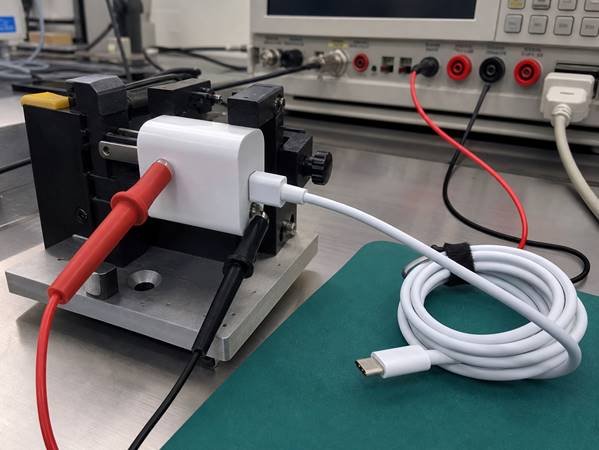
Charging products such as charging adapters, charging cables, and power banks are high-frequency daily-use products, and safety accidents caused by low-quality products are common. Therefore, they have always been a key category for market spot checks by Health Canada.
Which charging products are regulated by CCPSA? How is the scope defined?
Many people think that only charging adapters are subject to CCPSA regulation. In fact, almost all charging-related products intended for ordinary consumers and for personal or household daily use fall within the regulatory scope. Specifically, common categories include the following: first, various charging adapters and power adapters, such as mobile phone fast chargers, laptop power supplies, multi-port charging stations, and car chargers; second, charging cables and adapter connectors, including data cables and adapter connectors of any interface, whether USB-C, Lightning, or other types; third, supporting accessories, such as wireless charging pads, power banks, power strips with USB ports, and travel adapter plugs; ordinary consumer electronic accessories with charging ports, such as USB-equipped docking stations, are also within the regulatory scope.
CCPSA regulation covers the entire lifecycle of products, from design, manufacturing, import, to advertising, sales, after-sales service, and even subsequent recalls, with corresponding requirements for each link; there are no exceptions for sales channels—whether offline physical stores, e-commerce platforms, cross-border personal shopping services, or even commercial free gifts given with purchases, as long as they are consumer-oriented products, they must meet the requirements. For example, a “three-none” charging cable given as a free gift when buying a phone case is also a violation.
Of course, there are boundary cases that are not regulated by CCPSA: charging equipment that is truly only intended for industrial, commercial, or professional scenarios and not for ordinary consumers’ household use is generally not treated as CCPSA consumer products; however, if they are sold to ordinary consumers under the name of “industrial-grade”, judgment must still be based on the intended consumer use and target sales group. In addition, products already regulated by specialized laws, such as chargers for medical devices and original car chargers built into motor vehicles, are regulated by medical device regulations and motor vehicle regulations respectively, and CCPSA does not apply. In addition, for small quantities of charging products purchased by individuals for personal use via overseas online shopping, or second-hand resale between private individuals, individuals do not need to bear the compliance obligations of enterprises, with one prerequisite: they cannot resell products that have been recalled by Health Canada.
The core criterion for judging the scope is actually very simple: it depends on whether the product is intended for ordinary consumers and for personal or household daily use. For example, some merchants label fast chargers as “industrial-grade”, but they are actually marketed to ordinary users for charging mobile phones and laptops—this situation is still subject to CCPSA regulation. Another example: charging products sold by second-hand stores or refurbished product sellers, as long as it is a commercial sales activity, even if they are second-hand, must meet the requirements.
What requirements must charging products meet to comply with CCPSA?
CCPSA compliance requirements for charging products can be divided into several categories, the most core of which is the baseline safety requirement: products must not have reasonably foreseeable safety risks—not only must they not cause problems during normal use, but also possible misuse by users must be taken into account. For example, accidentally splashing water on a charging adapter, or leaving it plugged into a power strip for a long time without unplugging—there must be no safety hazards in these foreseeable scenarios. The following risks are generally regarded as key safety hazards that charging products must prevent and control, and in severe cases may constitute problematic products that may not be sold, imported, or advertised under CCPSA: overheating and fire, electric leakage due to insulation failure, loose or falling prongs, interface short circuits, and user burns from excessively high shell temperature.
Second are labeling and advertising requirements. Charging products sold in Canada usually need to have the following basic label information, and specific requirements may come from CCPSA safety obligations, electrical safety certification conditions, consumer packaging labeling and related standards: the name and contact information of the manufacturer or importer, rated electrical parameters (such as input voltage, output power), and necessary safety warnings; moreover, all mandatory labels and warnings must be bilingual in English and French, which is Canada’s official language requirement. There are also clear restrictions on advertising: power ratings must not be falsely labeled, certification marks must not be forged, and product performance must not be exaggerated. For example, labeling a charging adapter that only has 20W as 65W constitutes false advertising and violates CCPSA requirements.
For market operators, CCPSA also stipulates clear legal obligations. In terms of responsibility division, the importer is the primary responsible party—if a product is imported into Canada from overseas, the local Canadian importer bears primary responsibility for the product’s compliance, and manufacturers, sellers, and retailers also bear corresponding obligations respectively. Compliance records related to the supply chain, import, sales distribution, etc. generally need to be kept for 6 years in accordance with CCPSA requirements; test reports, certification materials, and key component change records should also be retained simultaneously, so that they can be provided during regulatory spot checks or accident investigations. If a safety incident occurs with a product, such as fire or electric shock causing personal injury, the relevant enterprise must submit a preliminary report to Health Canada within 2 days and must not conceal it; the manufacturer or importer is also generally required to submit a more complete written report within the specified period, explaining the incident process, the model of the involved product, known risks, sales scope, and proposed corrective or recall measures. Once a product is confirmed to have safety hazards, the enterprise must actively cooperate with regulatory authorities to carry out a recall. There is also a very important point: enterprises cannot use “the supplier said the product is compliant” as an excuse for exemption from liability, and must proactively verify the supplier’s qualifications and the product’s compliance.
There are several types of charging products that are explicitly prohibited from being sold on the market: first, “three-none” products, that is, products with no brand, no rated parameters, and no manufacturer information; second, products for which Health Canada has issued a recall announcement, which cannot be resold after recall; third, products with forged certification marks or falsely labeled parameters.
Is CCPSA the same as safety certification? What is its relationship with other regulations?
Many people confuse CCPSA with safety certifications such as CSA and cUL. In fact, there is an essential difference between the two: CCPSA is a federal legal framework that stipulates the safety baseline and the legal obligations of enterprises, and is a mandatory requirement that must be complied with. CCPSA itself does not have a separate certification mark, and third-party certifications (such as CSA, cUL, ETL) are one of the important ways to prove that a product is safe and compliant; however, for electrical products connected to mains electricity, such as chargers, power adapters, and power strips with USB ports, it is also necessary to verify whether provincial or territorial electrical safety rules require certification or approval by a Canadian recognized body. One cannot interpret “CCPSA has no mandatory certification mark” as meaning electrical products do not need any certification. The so-called “CCPSA certification” on the market is a misunderstanding; compliance refers to meeting legal requirements, not affixing a specific mark.
Since certification is a common way to prove compliance, how do you judge whether a certification is valid? Common safety certifications applicable in Canada will clearly reflect Canadian-related requirements in the scope of application of the mark or certificate, such as dual certification marks like cULus, cETLus, and cCSAus, and there may also be other Canadian-recognized forms; to judge the validity of a certification, you cannot only look at the icon, but also check the certificate number, applicable countries/regions, corresponding standards, product model, rated parameters, and manufacturing factory. Marks or certificates that only show the US scope of application and have no Canadian scope of application cannot be used as a basis for compliance in the Canadian market. In addition, fake marks, misappropriated marks (where Product A uses Product B’s certification), and inconsistencies between the certified model and the actual product model all constitute invalid certification. There are also requirements for test reports: they must correspond to the specific model, parameters, and manufacturing factory of the product. If the product’s key components (such as transformers, capacitors) are changed, re-testing is required, and old reports cannot be used. For high-power fast charging products of 65W and above, it is also necessary to specifically confirm that the certification scope covers the nominal maximum power of the product—some products are labeled 120W, but the certification only tests up to 65W, and the safety risks at high power are not verified, which also constitutes non-compliance.
In addition to safety certification, attention should also be paid to the relationship between CCPSA and other parallel regulations, and one cannot assume that complying with CCPSA is sufficient. For example, charging products with Bluetooth or Wi-Fi functions (such as smart wireless charging pads with Bluetooth) must also meet the wireless and electromagnetic compatibility (EMC) requirements of Innovation, Science and Economic Development Canada (ISED). CCPSA regulates safety, and ISED regulates wireless signal compliance, and neither replaces the other. There are also energy efficiency requirements, such as the standby power consumption standard for chargers, which are regulated by the energy efficiency regulations of Natural Resources Canada, do not fall within the scope of CCPSA, and also need to be met simultaneously. Certification standards from other countries or regions, such as EU CE and US FCC, are not directly recognized by Canada and cannot be used as proof of CCPSA compliance.
Practical methods to quickly judge whether charging products are compliant
For ordinary consumers and new sellers, you can initially judge the compliance of charging products through several simple methods without sending them to a laboratory for testing.
The most basic is the 10-second label preliminary judgment method. When you get a product, first check three places: first, check the basic information—whether the brand, manufacturer/importer information, and rated electrical parameters are clear and complete; if the printing is blurry and the manufacturer cannot even be identified, there is a high probability of problems. Second, check the language—whether the safety warnings are bilingual in English and French; those with only a single language do not meet conventional requirements. Third, check the certification mark—for chargers, adapters, power strips with USB ports, etc. that are connected to mains electricity, you should first check whether the certification mark or certificate is clearly applicable to Canada, such as cULus, cETLus, cCSAus, or whether the applicable countries/regions of the certificate include Canada; UL/ETL/FCC marks that only have US scope of application cannot be used as a basis for Canadian safety compliance. Of course, this is only a preliminary judgment and cannot replace a complete compliance review. These three steps take less than 10 seconds in total and can eliminate most low-quality products.
If you have already purchased a product, or plan to buy a specific model, you can check Health Canada’s official recall database. The access point is the “Recalls and Safety Alerts” database on Health Canada’s official website, which can be searched by brand, model, and product category. Focus on checking whether there are recall records related to fire, electric leakage, or burns—if a certain charging adapter has been recalled, you absolutely must not buy it, and must not use it anymore.
To identify high-risk products more accurately, you can also look at several advanced features: in terms of appearance, products with rough shell workmanship, loose and wobbly prongs, burrs on interfaces, and particularly thin and soft cables are often shoddy products with no guaranteed safety. In terms of advertising, if only certifications from other countries or regions are labeled and Canadian local compliance proof is not mentioned at all, or the nominal power far exceeds the conventional level of products of the same volume (for example, a fingernail-sized charging adapter labeled 200W), it can basically be judged as false specification labeling or fake certification. In terms of price, if the selling price is much lower than that of regular products of the same specification—for example, a regular 65W fast charger costs 20 to 30 Canadian dollars, but this one only sells for 5 or 6 Canadian dollars—you should be highly vigilant. You cannot draw a conclusion only based on low price; you must also judge in combination with brand information, rated parameters, Canada-applicable certification, official recall records, and physical workmanship. After all, safety components have fixed costs, and products far below the market price have a high probability of cutting corners on materials and workmanship.
What are the consequences of violating CCPSA? What to do if there is a recall?
CCPSA regulation is not just for show; there are multiple conventional enforcement methods: the most common is market spot checks, where Health Canada randomly selects charging products from online and offline sales channels and sends them to laboratories for testing; there are border inspections in the import stage, where the CBSA inspects incoming charging products, and non-compliant ones are directly detained and not allowed to enter Canada; there are also complaint investigations—if a consumer reports a problem or an enterprise submits an accident report, the regulatory authority will launch a special investigation.
In practice, handling results are not fixed tiers stipulated by law, and are usually adjusted based on factors such as the degree of product risk, sales scale, and whether the enterprise proactively reports and cooperates with recalls. Regulatory authorities may legally take statutory measures such as inspection orders, sales suspension, corrective measures, recall orders, administrative fines, or criminal liability. Minor violations, such as incomplete labeling or lack of bilingual warnings, generally result in orders for rectification, completion of labels, and removal of products from shelves; moderate violations, such as products with safety hazards or false advertising, will result in confiscation of products, tiered fines, and requirements for the enterprise to proactively recall; for serious violations, such as continuing to sell products knowing they have fire risks and causing serious personal injury, heavy fines will be imposed, and even criminal liability will be pursued.
If you encounter a charging product recall, don’t panic. First confirm through several channels: the recall database on Health Canada’s official website, official brand notifications, and shopping platform announcements are all formal sources of recall information. After confirming that the product you bought is within the recall scope, just follow the official instructions for handling. Generally, there are several methods: refund, replacement, repair, or safe destruction. Never continue to use it with a fluke mentality, and do not resell it to others casually.
The most common misconceptions about CCPSA
Regarding CCPSA, there are several common misconceptions that need to be clarified to avoid pitfalls.
The first misconception is “having CE/FCC certification means complying with CCPSA”, which is the most common mistake. As explained earlier, CE and FCC are relevant standards of the European Union and the United States respectively, and are not directly recognized by Canada, so they cannot be used as proof of CCPSA compliance.
The second misconception is “CCPSA only restricts merchants and has nothing to do with consumers”. It is true that ordinary individuals do not need to bear the compliance obligations of enterprises, but CCPSA grants consumers the right to complain and seek rights protection through recalls. Moreover, understanding the basic requirements of CCPSA can help you avoid the safety risks of low-quality charging products, and is relevant to everyone.
The third misconception is “CSA certification is required to comply with CCPSA”. CSA is just one of many third-party organizations that can provide safety certification applicable in Canada, and is not a mandatory requirement. Other certifications with Canadian scope of application are also valid; electrical products connected to mains electricity also need to meet the corresponding provincial electrical safety requirements, which shall be subject to local rules.
The fourth misconception is “low-voltage USB charging cables are not regulated by CCPSA”. Many people think that USB is low-voltage and has no safety risks. In fact, low-quality charging cables have insufficient wire gauge and poor insulation, which are prone to overheating and short circuits when overcurrent occurs, and may even cause fires. They are also consumer electronic accessories and are regulated by CCPSA.
The fifth misconception is “products listed on platforms comply with CCPSA”. Most platform reviews are formal reviews, and safety testing is not conducted on every product. Sellers are the primary responsible party for compliance. Even products sold on large platforms may be non-compliant, so you cannot trust them blindly.
The strictness of regulation also varies for different types of charging products: for high-power fast chargers of 65W and above, due to their high power and higher hazard in accidents, the requirements for overheat protection, insulation performance, and flame retardant materials will be stricter; the requirements for internal wire gauge, current-carrying capacity, and interface temperature resistance of high-power fast charging cables are also much higher than those of ordinary 5W charging cables; charging products with wireless functions, in addition to the safety requirements of CCPSA, must additionally meet ISED’s wireless/EMC regulations, otherwise they cannot be marketed.
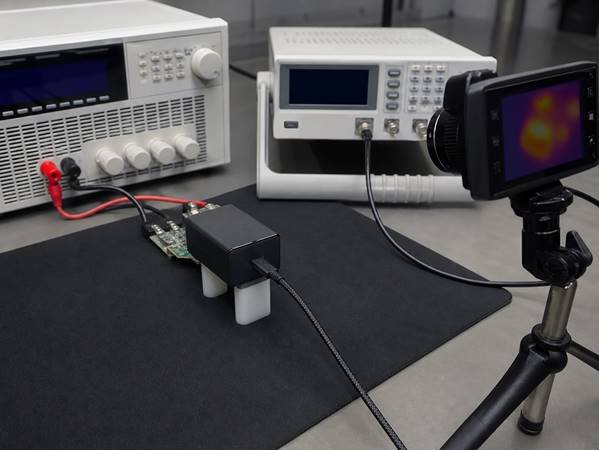
If you actually buy a non-compliant charging product, the correct handling steps for ordinary consumers are: immediately stop using it as soon as possible to avoid safety accidents; then keep proof of purchase, such as order screenshots and receipts; then contact the seller or brand to apply for return or exchange; if the other party refuses to cooperate, you can submit a complaint to Health Canada, and the regulatory authority will intervene to handle it. If small sellers or importers find that products are non-compliant, they must immediately stop selling all relevant products, comprehensively verify the product’s qualification documents, and actively cooperate with the regulatory authority’s investigation. Do not conceal or continue selling, otherwise you will face more severe penalties.
Overall, CCPSA is the baseline safety rule for consumer products in Canada. Whether you are an ordinary consumer buying charging products or a cross-border seller operating related categories, understanding its core requirements can not only help you distinguish the regulatory scope and quickly preliminarily judge product compliance, but also let you know what path to follow when encountering problems, and effectively avoid safety risks.