
Sellers running e-commerce businesses on the Canadian market have most likely heard of NRCan — perhaps a batch of their chargers was detained at the border on the grounds of non-compliance with energy efficiency requirements; or the platform required them to upload NRCan-related filing information, otherwise their listings would be taken down. Ordinary Canadian consumers may not have heard of this agency, but if they have purchased a no-name charger that was ordered to be withdrawn from the market for failing to meet energy efficiency standards, that was also an enforcement action by NRCan behind the scenes.
Many people’s understanding of NRCan stops at “another certification that needs to be done”, but whether you are a seller or a buyer, it is easy to fall into many pitfalls regarding what it regulates, how it enforces the rules, and what the consequences of violations are. Today we will thoroughly explain NRCan’s enforcement mechanism, from the most basic definitions to advanced risk response, which you can apply right after reading.
Beginner Basics: What is NRCan and Why You Should Pay Attention
First of all, it should be clarified that the full name of NRCan is Natural Resources Canada, which is Canada’s official mandatory energy efficiency regulatory agency. It has two core goals: first, to reduce unnecessary electricity waste, such as chargers that are plugged into sockets but not in use yet secretly consume power; second, to unify Canada’s national market access rules, avoiding inconsistent requirements across different provinces that increase circulation costs. Unlike what many people assume — that it “only regulates large manufacturers” — NRCan’s supervision covers the entire chain from import, wholesale to retail. Even cross-border small sellers and white-label products are within the scope of supervision as long as they enter the Canadian market for commercial sale.
What most people easily confuse is the division of responsibilities between NRCan and other common compliance requirements — simply put, NRCan only manages “energy efficiency”, that is, whether the product consumes electricity and whether it wastes electricity, and nothing else. There are special rules for areas such as safety and electromagnetic compatibility, which are completely irreplaceable for one another.
| Relevant Compliance Requirements/Agencies | Responsible Area | Mandatory Attribute | Can It Replace NRCan Energy Efficiency Requirements |
| NRCan (Natural Resources Canada) | Product energy efficiency (standby power consumption, charging efficiency, etc.) | Yes (mandatory for products within the scope of control) | – |
| Applicable electrical safety certifications/marks in Canada (such as CSA, cUL, ETL, etc.) | Safety risks such as electric shock and fire | Usually need to meet applicable electrical safety regulatory requirements (depending on product category and sales region) | No |
| Canadian electromagnetic compatibility or wireless equipment requirements such as ISED/ICES | Electromagnetic compatibility (whether it interferes with other equipment), wireless function compliance | Only applicable to electromagnetic compatibility/wireless equipment within the scope of control (FCC is a similar US regulatory requirement and cannot replace Canadian requirements) | No |
No matter how complete other compliance requirements are, they cannot replace NRCan’s energy efficiency compliance requirements. This is a basic principle that all relevant parties must first remember firmly.
Whether you are a seller or an ordinary consumer, it is necessary to understand NRCan’s enforcement rules. For sellers and importers, violations can result in cargo detention and fines in minor cases, and affect e-commerce platform accounts or even lead to market access restrictions in serious cases; for ordinary consumers, non-compliant chargers often have high standby power consumption and low charging efficiency, which not only cost more electricity bills in the long run, but may also be ordered to stop sales and be removed from the market in severe cases. Do not assume that white-label products and small sellers can escape supervision. NRCan’s enforcement covers all commercially sold products, with no exceptions based on scale.
Regulatory Boundaries: Which Charging Products Are Regulated
Since NRCan regulates energy efficiency, does that mean all charging-related products are within the scope of control? Actually, no. Its scope of control has clear boundaries, and the core is “external power supplies with power conversion functions”, abbreviated as EPS in the industry.
According to the legal definition, EPS refers to power supply devices that are externally connected to electrical equipment, obtain electrical energy from the grid input, and convert it into lower-voltage output usable by the equipment. The focus of this article is on external charging/power supply devices that are plugged into the wall for alternating current (AC) input and output low-voltage direct current (DC), such as USB wall chargers, multi-port USB-C adapters, and laptop AC/DC adapters; power supplies built into equipment, passive cables, and devices that only perform protocol conversion without power conversion functions do not fall into this category of external power supplies. Whether a product is specifically within the scope of control should be comprehensively judged based on legal definitions, nameplate input and output parameters, product use, and exemption clauses. Common wall-plug chargers, multi-port USB chargers, and laptop power adapters are all typical EPS products. Whether it is a separately sold charger or an adapter included with a mobile phone or laptop, as long as it is commercially circulated in the Canadian market, it must meet NRCan requirements.
Conversely, ordinary passive charging cables and pure adapters without power conversion chips (such as USB-C to Micro USB adapters) do not involve power conversion themselves, so they are not within NRCan’s key scope of control. However, it should be noted that if such products are sold as a set with adapters, NRCan will still verify whether the adapters in the set are compliant.
There are also a few special scenarios that may not be included in mandatory supervision as commercially sold products: for example, a small number of non-sale chargers carried from abroad for personal use; samples used by enterprises for R&D and testing and not sold to the public; and original factory repair replacement parts allowed by specific regulations. However, these exemptions must meet the conditions specified in the regulations, such as purpose, quantity, non-sale attribute, and retention of supporting documents. It is absolutely not allowed to apply exemption rules to products intended for commercial sale under the names of “personal use”, “R&D samples”, or “repair parts”.
If you are not sure whether your product needs to meet NRCan requirements, you can use three steps for quick judgment: first, check whether the product is a wall-plugged charger or adapter with power conversion function; second, check whether it is to be imported into Canada or sold commercially in the Canadian market; third, check whether it does not fall into the statutory exemption scenarios mentioned above. If all three conditions are met, it must be within NRCan’s enforcement scope.
Enforcement Basis: What Counts as Compliance
Now that we know which products are regulated, next we will talk about the core rules for NRCan to determine compliance. First is the hierarchy of regulations: at the top is Canada’s , which serves as the basic rule in the field of energy efficiency, empowers NRCan, and also defines what constitutes a violation; below it is the , which have more specific content, clarifying which products are regulated, what the energy efficiency limits are for different products, and what methods to use for testing; for external power supplies such as chargers and adapters, there are also special energy efficiency clauses that are updated irregularly with technological development, so the specific requirements shall be subject to the latest regulations issued by NRCan.
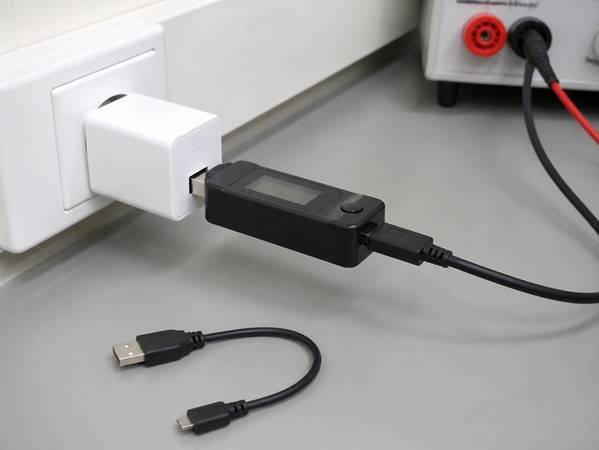
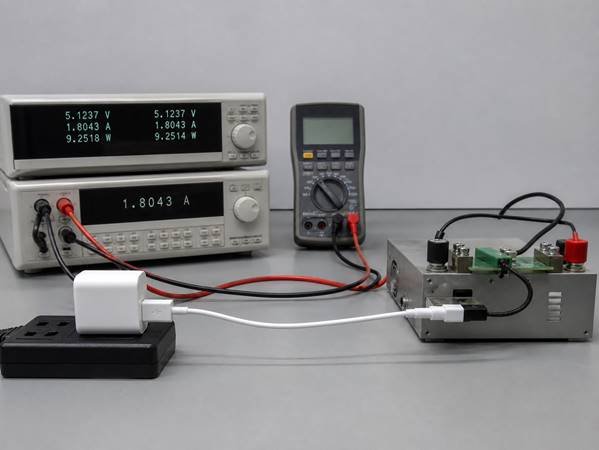
For chargers and adapters, there are two core compliance indicators: one is standby power consumption, that is, the power consumption when plugged into a socket but without a load (no device connected for charging), and this part of the electricity is completely wasted; the other is average operating efficiency, that is, when charging, what proportion of the electrical energy is actually delivered to the device, and how much is wasted as heat. Products with different power levels have different limit requirements, and all tests must be carried out under the unified conditions specified by the regulations, otherwise the results will be invalid.
Here we also need to clarify several very common pitfalls regarding compliance boundaries:
First, US DOE energy efficiency certification is not universally applicable. Many sellers think that the requirements of the US and Canada are similar. In fact, although the limits are close, the report format, filing requirements, and labeling rules are all different. It will not work to use US DOE reports to deal with NRCan.
Second, ENERGY STAR is a voluntary certification. Even if a product has the ENERGY STAR mark, it does not mean it meets NRCan’s mandatory requirements and cannot replace them.
Third, testing must be carried out in accordance with the applicable test standards cited in the . Compliance reports, energy efficiency data, and verification marks shall come from laboratories or certification bodies that meet the requirements of the Canadian accreditation system. The specific scope of accreditation shall be subject to the information published by NRCan and relevant accreditation bodies; the results of self-testing by enterprises cannot be directly used as the basis for compliance.
Enforcement Process: How Violations Are Discovered
What many people are most curious about is NRCan’s enforcement process — how exactly violations are discovered, and what the steps of investigation and handling are.
There are four main scenarios that trigger enforcement: the most common is batch random inspection upon entry. Chargers are a category that is frequently selected in border inspections due to their large circulation volume and uneven compliance levels; second is random inspection in the market circulation link. Whether it is offline physical stores or Canadian local e-commerce platforms, NRCan conducts irregular sampling; reports and complaints from consumers or peers can also trigger investigations; in addition, if the import declaration information does not match the product information filed with NRCan, it will also directly trigger verification.
In specific enforcement, different departments have clear division of labor: NRCan’s Energy Efficiency Branch is the lead department, responsible for both formulating rules, organizing random inspections, and making disposal decisions; the Canada Border Services Agency (CBSA) is responsible for cooperating in inspections at the border entry stage and can directly detain suspicious products; in terms of responsible parties, the importer is the first responsible party. When problems arise, the importer is the first to be held accountable, but relevant parties such as manufacturers and sellers shall also bear joint responsibility.
The border entry stage is where many sellers first encounter NRCan enforcement. Border inspections mainly check three things: whether the energy efficiency labels on the products are compliant, whether the product information filing has been completed with NRCan, and whether there are corresponding compliance test documents. If the inspection finds non-compliance, the goods will be temporarily detained. The importer can choose to supplement and submit compliance materials to apply for release, or choose to return the goods. Among them, unmarked white-label products and high-power multi-port USB-C chargers are more likely to be required to supplement materials or undergo further verification if there are missing compliance documents, unclear labels, or inconsistent declaration information.
If the investigation is triggered by market random inspection or a report, the process will be more complete. First is document review: NRCan will verify the product’s filing information, the qualification of the test report, and whether the model on the report corresponds to the actually sold model. If the documents are in order, it may pass directly; if there are doubts about the documents, samples will be sent to a designated laboratory for actual testing. Whether the result is compliant or non-compliant, NRCan will formally notify the responsible party. If there is an objection to the result, evidence must be submitted within the time limit specified in the notice, or a review or retest must be applied for in accordance with the procedures. Cost bearing, sample arrangement, and result recognition shall be subject to NRCan’s formal notice and applicable procedures.
Consequences of Violations: Differences in Penalties for Different Circumstances
Once a violation is determined, the severity of the penalty will vary greatly depending on the circumstances, and the core is whether the violation is unintentional or intentional.
Minor violations are generally first-time, non-subjective intentional situations, such as non-standard printed labels, incorrect filing information, or temporarily incomplete compliance documents. Such situations usually result in warnings, rectification within a time limit, and temporary suspension of sales. As long as the rectification is completed within the specified time, sales can be resumed.
Serious violations are much more severe, such as intentionally falsifying energy efficiency labels, having no compliance documents at all, counterfeiting energy efficiency labels, or repeatedly violating regulations despite repeated corrections. Such situations may result in fines, import restrictions, or prohibition of sales in the Canadian market. In particularly serious circumstances, criminal liability may also be pursued.
In addition to direct penalties, there are also many derivative impacts: some enforcement progress or violation information may be made public through official channels, and e-commerce platforms may also take down related products simultaneously based on compliance risks; the violating entity will also be listed as a key monitoring target, and the probability of random inspection of products imported or sold in the future will be greatly increased; at the same time, it will also have a negative impact on brand reputation and seller account operation.
Common high-risk violation situations are mainly concentrated in two types of products: one is unmarked white-label chargers. If compliance documents are incomplete, they are likely to trigger inspections during entry or market random inspections, and those that cannot supplement materials may be returned or refused entry; the other is high-power multi-port USB-C adapters. If they fail to meet energy efficiency standards in random inspections, they may be required to stop sales, rectify, or be fined.
Beginner’s Guide: Basic Compliance and Pitfall Avoidance
After understanding the enforcement rules, whether you are a seller or an ordinary buyer, you can make basic compliance preparations and avoid pitfalls.
For sellers, to achieve basic compliance, there are four things that must be done: first, complete product testing in accordance with regulatory requirements and obtain a qualified report that can be used for energy efficiency declaration; second, submit energy efficiency reports and product information to NRCan in accordance with regulations, complete registration or filing, and properly keep the corresponding registration number, filing number, or official confirmation records; third, mark the energy efficiency verification mark, product model, and importer/Canadian responsible party information on the product body or packaging in accordance with applicable regulatory requirements; fourth, all compliance documents must be retained for the traceability period required by the regulations, and cannot be discarded casually, in case of random inspection.
For ordinary buyers, it is not difficult to buy compliant chargers: first, check whether there are clear energy efficiency labels, brand, and entity information on the product and packaging. Try not to buy no-name products with no labels at all; second, try to choose products from regular channels with clear brands, and don’t buy cheap white-label products of unknown origin; if you buy a product suspected of being non-compliant, you can also report it on the NRCan official website.
Whether you are a new seller or an experienced seller, it is easy to fall into four common pitfalls, which must be avoided:
First, do not equate other types of compliance certifications (such as safety, electromagnetic compatibility, US DOE energy efficiency, ENERGY STAR voluntary certification) with NRCan’s mandatory energy efficiency compliance requirements;
Second, you cannot exclude NRCan requirements solely based on low power, online-only sales, or cross-border direct mail. You still need to judge item by item according to the EPS definition, rated power level, commercial import/sales attribute, and exemption clauses. Small sellers and white-label products are also within the scope of supervision;
Third, do not assume that different models with the same appearance can share one test report. NRCan manages by model. Even if the appearance is exactly the same, as long as the model is different and the internal solution is different, the report cannot be shared;
Fourth, do not assume that old products being cleared from inventory do not need to comply with current regulations. As long as the product is still being sold currently, it must meet the requirements of the regulations in force, and old models are no exception.
If you want to quickly self-check whether your product has basic compliance problems, you can check three key points: first, consistent model — the models on the test report, product nameplate, packaging, and sales page must completely correspond; second, matching materials — the test report, NRCan filing information, and import declaration information must correspond; third, compliant labeling — the product or packaging must have required energy efficiency labels and necessary entity information.
Advanced Improvement: Risk Judgment and Response
If you are a senior seller in the Canadian market, or have a relatively large shipment volume, you also need to master more advanced risk judgment and response methods to minimize compliance risks.
First, let’s talk about how to judge the level of enforcement risk of a product. High-risk products usually have the following characteristics: white-label and unmarked, high-power multi-port USB-C, sold through cross-border direct mail channels, without complete compliance documents, and the product model does not match the test report. If your product has several of these characteristics, you need to be especially careful, as the probability of being randomly inspected will be significantly higher. Conversely, products from regular brands, with complete filings and test reports, and going through formal customs declaration channels have much lower risks. In addition, it should be noted that in recent years, multi-port high-power USB-C chargers have been generally listed as high-risk management categories in the industry due to rapid model iteration, many power levels, and difficulty in controlling energy efficiency margins. Relevant sellers must pay extra attention.
Advanced compliance self-inspection is more detailed than basic self-inspection: first, change review — as long as the product’s internal power supply solution is changed, power is modified, or interfaces are added or removed, it is necessary to re-evaluate whether it still meets the original compliance requirements. You cannot take it for granted that there is no problem just because the appearance has not changed; second, version confirmation — confirm that the product meets the current regulatory requirements. If there is a transition period for regulatory updates, you must also abide by the transition period regulations, and cannot stock up on a bunch of products that do not meet the new regulations before the end of the transition period; third, batch management — all import records and sales records must correspond one-to-one with product models, to facilitate quick proof during random inspections.
If you really receive a NRCan inspection or penalty notice, don’t panic. Follow the process to minimize losses: first, verify clearly whether the involved product is yours, whether the model and batch are correct, and whether there is a possibility of a mistake; then immediately suspend the import and sale of related products to avoid the expansion of the scope of violations and heavier penalties; next, organize all core materials, including product nameplate photos, test reports, NRCan filing certificates, and import and sales records; then give a written response within the time limit specified by NRCan, either supplementing the missing materials or applying for review in accordance with the procedures; finally, keep written evidence of all communication with NRCan and the rectification process for future needs.
There is another problem that many sellers encounter: the test in their own laboratory is qualified, why does NRCan’s test find it unqualified? In fact, NRCan’s regulations have unified test conditions, such as strict regulations on ambient temperature, input voltage, and load conditions. If you simplify the conditions during your own test, the results will naturally differ. The test fluctuation between qualified formal laboratories is actually very small. If the difference is large, you should first check whether the test method meets the requirements, rather than suspecting that you are being targeted. In addition, if the product’s energy efficiency index is just near the limit, sufficient margin must be reserved during design, otherwise, due to component tolerances, it is easy to have batch test failures.
Overall, the core of NRCan’s enforcement logic is clear: for external power supply products with power conversion functions, it carries out full-chain supervision around energy efficiency indicators, with the ultimate goal of reducing electricity waste and unifying market access rules. For ordinary consumers and beginner sellers, mastering the judgment of the scope of control, basic compliance requirements, and common pitfalls can avoid the vast majority of risks. Senior sellers with large shipment volumes can further reduce compliance costs and uncertainties through risk classification, advanced self-inspection, and standardized response processes.