
When entering the Canadian charging product market, whether through offline wholesale or cross-border e-commerce, you will encounter the requirement of “NRCan registration” — many sellers only realize that energy efficiency is another mandatory access threshold in addition to safety certifications such as cULus when their first shipment is detained by customs for failing to meet energy efficiency requirements. Many practitioners have confused understanding of NRCan: what is the difference between it and safety certification? Can US DOE/CEC compliance be used universally? Are low-power products exempt? What is the difference between “registration” and “reporting”? This article, from basic judgment to practical pitfall avoidance, helps entry-level users quickly sort out the NRCan compliance requirements for charging products.
1. Get the Basics First: What Exactly Does NRCan Regulate?
NRCan is the abbreviation of Natural Resources Canada, which is responsible for the implementation of federal-level energy efficiency regulations. The energy efficiency requirements for charging products are mandatory access thresholds for the Canadian market, with the core regulatory basis being the and the . The entire compliance logic can be broken down into four core links: products meet the minimum energy efficiency standards, pass energy efficiency verification by an accredited body, submit energy efficiency reports to establish product records, and submit import reports at the time of import to complete traceability.
The core reason why NRCan regulates charging products is the cumulative effect of conversion loss and no-load power consumption of AC-to-DC power supplies: the no-load power consumption of a single charger is only a few tenths of a watt, but millions of devices across Canada are on standby all year round, resulting in a considerable amount of wasted electricity; high-power PD fast chargers and multi-port chargers have a larger energy consumption base, so they are included in the mandatory regulation scope.
Clarification of Boundaries of Frequently Confused Concepts
• Difference from safety certifications such as cULus and CSA: Both are mandatory requirements, but their jurisdictions are completely different and cannot replace each other. Safety certification controls electrical safety risks (such as fire, electric shock), while NRCan controls energy efficiency levels. Passing safety certification does not mean meeting energy efficiency requirements.
• Difference from US DOE and CEC: US DOE/CEC compliance cannot replace Canadian NRCan requirements; even if the test methods are similar, it is still necessary to meet the requirements of NRCan cited standards, accredited laboratories, SCC energy efficiency verification, energy efficiency reports and import reports. Whether existing US test data can be reused shall be evaluated by the verification body in accordance with Canadian requirements, and cannot be directly used universally.
• Difference from Energy Star: Energy Star is a voluntary energy-saving label, which is an honorary certification for “top energy-saving performers”; NRCan is a mandatory access threshold, and products that do not meet the standards cannot enter the Canadian market. The two are at completely different levels.
There are two other common initial misunderstandings that need to be clarified:
First, there is no separate “NRCan certificate”. The official does not issue such certificates. The core of compliance is “publicly verifiable product energy efficiency records + energy efficiency verification mark from an SCC-accredited body”.
Second, power level does not constitute a direct basis for exemption. As long as the product is on the NRCan regulated product list, compliance is required regardless of power level.
2. Does Your Product Need NRCan Compliance? It Can Be Judged in 3 Steps
To judge whether a product needs compliance, you can start with the scope of regulation, and confirm it in combination with function, scenario and the official list.
Mandatorily Regulated Charging Products
At present, there are four main types of charging-related products that are mandatorily regulated by NRCan:
1. External AC-DC power adapters: including external mains-to-DC independent power supply devices such as mobile phone, tablet, and laptop chargers, router and monitor power adapters.
2. Multi-port charging devices: such as desktop charging docks, multi-port charging hubs, and travel chargers with AC conversion.
3. Charging accessories with independent AC-DC modules: such as independently sold USB wall sockets, power strips with USB ports, and travel adapters with conversion functions.
4. Independent battery chargers: such as camera battery dock chargers, power tool battery dock chargers and other independent devices with built-in charging management functions.
The above judgment cannot be based solely on the product name. The final confirmation shall be based on the definitions, exclusions, manufacturing/import dates and the latest list of regulated products such as external power supplies and battery chargers in the .
Products That Do Not Require Compliance
Not all charging-related products are within the scope of regulation. The following categories do not require compliance:
• Pure passive charging cables, adapters, and extension cords do not require compliance, even USB-C cables with E-Marker chips, because they have no AC-to-DC conversion function and only undertake conductive functions.
• Spare parts used only for maintenance and replacement and not entering the market circulation, but proof of use is required, and they cannot be sold normally under the guise of spare parts.
• Complete machines with built-in charging functions (such as mobile phones, laptop computers) are regulated according to the complete machine category and do not fall within the scope of charging accessories regulation.
• Personal used second-hand products, and products that are only for transshipment and not sold in the Canadian market.
3-Step Quick Judgment Method
If the product is in a gray area, it can be judged in the following three steps:
Step 1 Look at the function: Does it have AC-to-DC conversion function, or independent battery charging management function? If yes, it is likely to be within the scope of regulation.
Step 2 Look at the scenario: Is it sold commercially in Canada? Whether online or offline, imported or circulated across provinces, as long as it is for commercial sale, it falls within the scope of regulation.
Step 3 Check the list: Log in to the official NRCan website to check the latest list of regulated products. The list is updated regularly, and new types of products need to be checked carefully.
Judgment Standards for Boundary Products
For common boundary products, the judgment rules are as follows:
• Charging cable + charger set: Only the charger needs to comply with the regulations. The declaration only needs to include the charger information, and the cable does not need to be handled separately.
• Power strip/wall socket with USB port: Those with independent AC-DC modules and sold independently need to comply with the regulations; accessory products without independent conversion modules do not need to comply.
• Wireless chargers: The regulatory requirements for wireless chargers themselves need to be checked separately, but their matching AC-DC power adapters must comply with the requirements for external power supplies.
• Car chargers, pure DC-DC products: Cannot be judged solely by product name. It is necessary to check the current definitions of external power supplies, battery chargers and related exclusions in the ; if imported as a set with regulated equipment, it is also necessary to confirm whether the AC-DC adapter in the set needs to be filed separately. NRCan regulatory definitions are updated regularly, so it is recommended to check the latest list before shipment.
• Adapters included with products: For example, chargers included with earphones, adapters matched with monitors, as long as they are regulated, they still need to comply separately, and the requirements cannot be skipped because they are free gifts.
3. Don’t Be Confused by Industry Terms: What Exactly Are Registration, Reporting, and Certification?
The commonly used terms “registration”, “reporting” and “energy efficiency certification” in the industry are different from the official legal definitions, which can easily lead to process mismatches. The specific corresponding relationships are as follows:
| Industry Common Term | Corresponding Actual Legal Meaning |
| NRCan registration | Submitting an energy efficiency report to NRCan, and forming a publicly verifiable product energy efficiency record after passing the review (commonly known as “energy efficiency file” in the industry, corresponding to the record number generated by the system) |
| NRCan reporting | Includes two types of operations: one is the information change reporting of products that have been filed, and the other is the import report submitted at the time of import |
| NRCan energy efficiency certification | Energy efficiency verification completed by an SCC-accredited body, with authorization to use the energy efficiency verification mark |
Core Differences Between Registration and Reporting
• Registration is a mandatory action for new products entering the market for the first time, which is equivalent to applying for an “energy efficiency ID card” for the product. After passing the review, an energy efficiency record corresponding to the product is generated. Usually, one compliant model corresponds to one public record.
• The “reporting” mentioned in the industry is divided into two different operations:
• Change reporting: Used to update non-core information of filed products, and will not generate a new record number;
• Import report: Used to provide compliance traceability information to CBSA/NRCan during the import link, and usually does not modify the energy efficiency record of the product itself.
Comparison of Applicable Scenarios
• Registration required: Brand-new models of charging products entering the Canadian market for sale for the first time.
• Reporting/submission required: Non-core changes of filed products (go through change reporting), or when the product is imported (submit import report).
• Neither required: The same model only changes color, only changes the text on the outer packaging, or modifies labels that do not involve energy efficiency parameters.
It should be noted that reporting cannot replace first-time registration; if the core energy efficiency parameters of the product change (such as replacing the power supply solution, adjusting the output power), change reporting is not allowed, and re-registration is required.
Processing Cycle (on the premise of complete materials)
• Registration: The review cycle is 4-8 weeks, and it is valid for a long time after passing (except when regulatory updates require re-testing and filing).
• Change reporting: The review cycle is 1-2 weeks.
4. What Are the Responsible Parties for NRCan Compliance?
NRCan compliance responsibility is not borne by only one party. All relevant entities selling regulated products in Canada are responsible, including manufacturers, importers, brand owners, and local Canadian distributors. Even if overseas brands sell directly to Canadian consumers through e-commerce, they also need to bear compliance responsibilities. Among them, the Canadian importer is the first responsible person for customs and NRCan supervision. Cross-border sellers cannot rely solely on importers to avoid their own responsibilities. If the product is non-compliant, the importer will trace back to the supplier.
The core responsibilities and risks of different roles are as follows:
• Overseas manufacturers/suppliers: Provide accurate product parameters and qualified compliance documents, and ensure that the energy efficiency of mass-produced products is consistent with that of test samples.
• Canadian importers: Confirm that imported products have completed energy efficiency filing, submit import reports on time, properly keep compliance documents, and cooperate with NRCan spot checks.
• Cross-border sellers/brand owners: Confirm that the sold models have been included in the energy efficiency records, and the e-commerce promotion and customs declaration parameters are consistent with the record information.
• White-label/OEM procurement, multiple brands sharing hardware: It is necessary to ensure that their own brand and model have been included in the NRCan energy efficiency records, and cannot directly use the compliance records of the factory’s same hardware model; all brand models sharing hardware must be listed in the records.
• Replacement of suppliers or power supply solutions: The compliance status needs to be re-evaluated, and the original records cannot be directly used.
5. Core Requirements for Energy Efficiency Testing and Verification
NRCan energy efficiency testing has clear qualification and method requirements, and reports that do not meet the requirements are not officially recognized.
Basic Requirements
First, the product energy efficiency must meet the minimum standards of the corresponding category (such as the average efficiency and no-load power consumption limits of external power supplies, the standby power consumption requirements of battery chargers, etc.).
Second, the test must be completed by a laboratory with ISO/IEC 17025 qualification, and adopt the current standards cited by NRCan — 17025 is an internationally recognized laboratory testing capability certification, which is the basic prerequisite for officially recognized test results.
Finally, the energy efficiency verification must be completed by a body accredited by the Standards Council of Canada (SCC) to obtain the verification mark authorization. This step is a necessary condition for submitting registration, and only holding a test report cannot complete registration.
The valid conditions for compliance documents are: the product parameters are consistent with the actual ones, and the qualifications of the laboratory and certification body, and the test methods all meet the requirements. If the key components, power, and structure of the product change and affect energy efficiency, the original test report will become invalid and re-testing is required.
Core Test Indicators for Charging Products
Different categories of products have different test indicators. For charging products, the following items are mainly concerned:
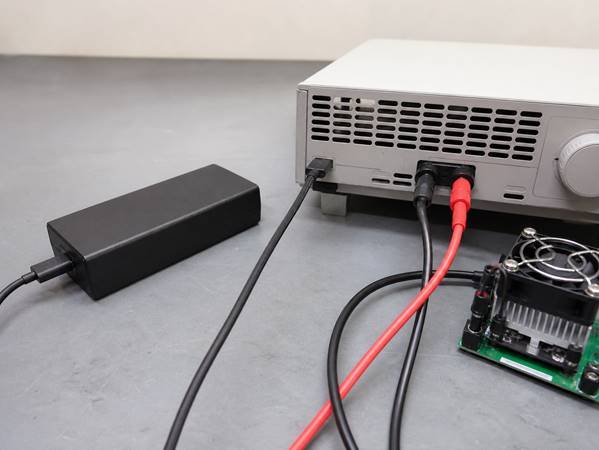
• External power supply category: The core is average efficiency and no-load power consumption. The regulations have clear limits for these two indicators, and if they do not meet the standards, the verification cannot be passed.
• Battery charger category: The core is standby power consumption, maintenance mode power consumption and charging efficiency.
• Multi-port, USB PD or adjustable output products: It is necessary to cover the specified output voltage, load points and representative modes according to the applicable test methods cited by NRCan, and the input conditions must meet the requirements of Canadian mains power; the minimum power or single gear cannot be used instead of the whole machine evaluation.
6. Registration Practice: How to Complete Product Energy Efficiency Filing
Registration, which is called “NRCan registration” in the industry, is essentially to establish a publicly verifiable energy efficiency file for the product. The practical process is as follows:
Preconditions
Before submitting registration, three conditions must be met first:
1. The energy efficiency test has been completed, and the test data meets the minimum requirements of NRCan.
2. The energy efficiency verification by an SCC-accredited body has been passed, and the verification mark authorization has been obtained.
3. The Canadian market responsible party/Dealer has been confirmed (usually a Canadian importer, local distributor or authorized agent), who is responsible for submitting and maintaining the energy efficiency file. The authority and responsibility shall be subject to the NRCan system rules and regulatory requirements.
Materials to Be Prepared
Before registration, the following materials should be prepared to avoid repeated corrections:
• Product identity information: brand, model, product category, electrical parameters, nameplate/packaging style drawings.
• Test materials: official energy efficiency test report issued by a 17025 laboratory.
• Verification materials: energy efficiency verification documents issued by an SCC-accredited body, mark use authorization.
• Entity information: Canadian responsible party information, manufacturer information.
• Same-series model description: If multiple models have exactly the same energy efficiency, they can share the same test and verification documents. The differences between the models need to be explained to ensure that all models are included in the final energy efficiency record.
Submission Steps
1. Complete energy efficiency testing and SCC verification, and obtain all qualified documents.
2. Log in to the NRCan online system with the Canadian responsible party account, fill in the product information and upload materials.
3. Cooperate with the official to supplement and correct materials (if any). After passing the review, obtain the product energy efficiency record number, and the product information is synchronized to the NRCan public database.
4. Synchronize the brand model, number and other information of the energy efficiency record to procurement, customs declaration, operation and other links to ensure that the information of all links is consistent.
Boundaries of Compliance Mark Use
• Energy efficiency verification mark: It is a mandatory requirement to affix it on the product, packaging or manual as required. The nameplate of compliant products usually has this mark printed on it, often side by side with the safety certification mark.
• Energy efficiency record number: It is mainly used for internal traceability and regulatory verification, and there is no mandatory labeling requirement; if the e-commerce platform requires filling in, it can be provided according to the platform rules.
• Product promotion parameters must be completely consistent with the energy efficiency records, verification information, and actual product parameters, and false labeling is prohibited.
• It is not allowed to lend or share the records or verification qualifications of other models, otherwise it is a serious violation.
7. Reporting Practice: Requirements for Change Reporting and Import Reports
The “reporting” mentioned in the industry is divided into two categories: product information change reporting and import reports in the import link. The functions and requirements of the two are completely different and cannot be confused.
Change Reporting: Only Applicable to Non-Core Changes
Only non-core changes that do not affect energy efficiency can go through change reporting, such as modifying labels that do not involve parameters, changing packaging colors, etc. If it is a core change that affects energy efficiency (such as replacing the power supply solution, adjusting the output power) or the transfer of the responsible party, reporting is not allowed, and re-registration is required.
The materials to be submitted for change reporting include: the original product energy efficiency record number, the comparison description before and after the change, and relevant supporting documents. The process is to submit the change materials in the NRCan online system. After passing the review, the original record is directly updated without generating a new record number. The review cycle is usually 1-2 weeks.
Import Report: Cross-Border Sellers Need to Focus On It
Import reports are exclusive requirements for cross-border scenarios. Their function is for the Canada Border Services Agency (CBSA) and NRCan to verify product compliance and form a complete traceability chain, and usually do not modify the energy efficiency record of the product itself.
The information to be submitted at the time of import is divided into two categories:
One category is the core information for NRCan energy efficiency verification, including product name/category, brand, model, NRCan energy efficiency file number/record number, importer/Dealer information, import purpose, etc., which shall be filled in according to the official system requirements;
The other category is customs declaration materials such as quantity, country of origin, HS code, commercial invoice, etc., which also need to be consistent with the energy efficiency record information. The specific declaration fields shall be subject to the latest official requirements.
Common customs declaration errors need to be avoided:
• Vague category declaration, such as only declaring “electronic accessories” without specifying “power adapter”, which is easy to be spot-checked.
• The declared model does not match the model in the NRCan energy efficiency record.
• Set products miss reporting the internal charger, for example, a charging set only declares “charging cable”.
• When multiple models are mixed, some models are missed in the declaration.
It should be noted that cross-border small parcels and self-shipped regulated products for commercial sale in Canada should also complete energy efficiency filing first, and provide compliance certificates when importing; this requirement does not apply to non-commercial scenarios for personal use or transshipment only.
8. Compliance Maintenance and Common Pitfall Avoidance Guide
NRCan compliance is not a one-time thing. After completing registration, daily maintenance is still required to avoid common risk points.
Daily Maintenance Requirements
• When any change occurs to the product, it is necessary to timely evaluate the impact on energy efficiency, and go through change reporting or re-registration according to the corresponding process.
• All compliance documents, import and sales records must be kept in accordance with the requirements of the and the , including energy efficiency test reports, SCC verification authorization documents, NRCan energy efficiency file information, import reports, change records and sales/discontinuation records. After the product is discontinued, they must still be kept for the legal period for spot check and traceability. The retention period shall be subject to the official provisions, and must cover the complete supervision cycle of the product during sales and after discontinuation in Canada.
• Regularly pay attention to NRCan regulatory updates, and check the latest regulations before new products are launched to avoid non-compliance caused by regulatory adjustments.
Common Pitfall Avoidance Guide
Application Link
• Invalid report due to unqualified qualifications: If the laboratory does not have 17025 qualification, or the certification body has not obtained SCC accreditation, the issued reports and verification documents are not officially recognized. Pitfall avoidance method: Verify the 17025 qualification of the laboratory and the SCC accreditation qualification of the certification body in advance, and cannot only use price as the selection criterion.
• Unable to submit without a local responsible party: Those who have not confirmed a Canadian local responsible party cannot register and submit. Pitfall avoidance method: Determine the importer or authorized agent in advance to avoid being unable to complete compliance after stocking.
• Rejected due to inconsistent model naming: The model naming in the test report, product nameplate, and registration submission must be completely consistent, otherwise it may lead to failure of the review. Pitfall avoidance method: Unify the model naming of all documents in the early stage, and do not modify it at will.
Exclusive for Cross-Border E-Commerce
• Sharing factory files but own models are not covered: When using factory public mold products with own brand model, if the factory’s energy efficiency record does not include your brand and model, it is still non-compliant. Pitfall avoidance method: Require the factory to add your own brand model to the file, or register separately by yourself.
• Inconsistent listing information with files: In addition to general labeling requirements, special attention should be paid to e-commerce scenarios: the brand model, rated input and output parameters, PD gears/power, and energy efficiency verification mark style displayed on the page must be completely consistent with the NRCan files, verification documents and physical nameplates; if there is a difference between the promotion parameters and the files, it is necessary to first evaluate whether change reporting or re-registration is required.
• Incorrect platform compliance information filling: The NRCan energy efficiency record information required to be filled in by the e-commerce platform must ensure that the model and number correspond one to one, to avoid wrong filling. Pitfall avoidance method: Check the corresponding relationship between the number and the model one by one before filling.
Market Spot Checks and Penalties
NRCan will randomly spot-check market products to verify the consistency of energy efficiency parameters, verification marks and record information. The consequences of non-compliance include cargo detention, removal from shelves, fines, and recalls. Those who fail to provide compliance documents within the time limit will be directly judged as violating the regulations.
9. How to Verify the Authenticity of a Product’s NRCan Compliance?
The authenticity of compliance can be verified through official channels, which is applicable to scenarios such as procurement self-inspection and pre-import verification.
The first is the official database query: log in to the NRCan public energy efficiency product database, enter the brand, model or record number, and you can search for the corresponding energy efficiency record. This is the most authoritative verification method.
Specific compliance verification can be carried out in three steps:
1. Check the database: Confirm that the corresponding brand and model have valid energy efficiency records and the status is normal.
2. Verify information: The product parameters, brand and model in the record are completely consistent with the actual product and promotion information.
3. Check the mark: The product is affixed with a valid energy efficiency verification mark of an SCC-accredited body, and the use meets the requirements.
For verification before procurement or import, you can check item by item against the following list:
| Check Item | Requirement |
| Product attribute | Regulated products have completed NRCan energy efficiency filing |
| Test report | Issued by a 17025-qualified laboratory, with parameters consistent with the actual product |
| Energy efficiency verification | Has passed the energy efficiency verification of an SCC-accredited body and obtained mark authorization |
| Record information | There is a valid energy efficiency record for the corresponding brand and model in the NRCan public database |
| Responsible party | The Canadian local responsible party information is valid |
| Customs declaration information | The customs declaration model and parameters are consistent with the energy efficiency record information |
If the product is found to be non-compliant, you can require the supplier to complete the compliance before shipping, or the importer can complete it by itself as the responsible party; before the compliance is completed, suspend import or sales to avoid cargo detention and fines.
Final Summary
NRCan is a mandatory energy efficiency access requirement for charging products entering the Canadian market. The core processes are energy efficiency testing, SCC verification, report filing, import reporting and daily maintenance. Before entering the market, it is necessary to first judge whether the product needs compliance according to the regulatory definitions in the , distinguish the applicable scenarios of registration and reporting, and focus on avoiding common risks such as unqualified qualifications, inconsistent information, and uncovered own models. The authenticity of compliance can be verified through the NRCan public database and energy efficiency verification marks. Doing a good job of compliance in advance can effectively avoid unnecessary losses such as cargo detention and removal from shelves.