
If you often buy charging accessories via cross-border online shopping, or are a small cross-border seller operating in the Canadian market, you have most likely heard the term CCPSA — maybe your charger was detained during customs clearance, or an e-commerce platform required you to provide compliance certificates. Many people have a vague impression of it: What exactly is CCPSA? Do my charging cables and fast chargers fall under its regulation? Will I be fined accidentally?
This article only discusses chargers, power adapters, charging cables, interfaces, plugs, charging ports and related accessories intended for ordinary consumers; toys, children’s products, complete industrial equipment, etc. are not within the scope of discussion. The content first introduces entry-level quick judgment methods, then explains advanced boundary scenario deduction, so that readers with different needs can view it as needed.
First, Understand the Basics: The Relationship Between CCPSA and Charging Products
Let’s clarify the basic concepts first to avoid getting confused by terminology at the very beginning.
The full name of CCPSA is the , which is the bottom-line regulation governing consumer product safety at the federal level in Canada. Its core purpose is only one: to prevent foreseeable personal injury that products may cause to ordinary people. It does not regulate a single link, but the entire chain from import, distribution, sales to advertising — as long as a product is related to Canadian consumers, it falls within the scope of regulation. Specific law enforcement is mainly led by Health Canada, the Canada Border Services Agency will conduct random inspections at the entry link, and e-commerce platforms must also cooperate to remove non-compliant products.
Why should charging products pay special attention to CCPSA? Because charging products are high-risk consumer electronics. If the quality of daily-used fast chargers and charging cables is not up to standard, problems such as electric shock, fire, and overheating burns are very likely to occur, and in severe cases, fires may even be caused. If they are non-compliant, in mild cases, they will be detained during customs clearance and removed from platforms; in severe cases, they will be subject to mandatory recalls and even face high fines. Whether you are an ordinary consumer, a cross-border online shopper, or a new cross-border seller, it is necessary to figure out whether the charging products you come into contact with fall within the regulatory scope of CCPSA.
Core Judgment Criteria: Basic Prerequisites + Entry-Level 3-Step Self-Inspection Method
To judge whether a charging product is included in the CCPSA regulatory scope, the core is to grasp two basic prerequisites: whether it is a consumer product, and whether it enters the Canadian market for circulation. Potential safety risks are the core regulatory dimension of CCPSA, and also the reason why charging products become a key regulated category — it is not that products without obvious risks are not subject to restrictions, but that charging products generally have foreseeable safety hazards. Therefore, almost all consumer-oriented charging products fall within the regulatory scope of CCPSA after entering the Canadian market. We will first explain each dimension thoroughly, and finally sort them into an easy-to-remember self-inspection method.
The first basic prerequisite is that the product falls into the category of consumer products. Simply put, this product is for ordinary individuals’ daily non-commercial use, not specially made for industrial or professional scenarios. For charging products, as long as they are sold to ordinary consumers, they count — even charging cables with additional functions such as lanyards or small night lights are essentially charging accessories for consumers, and are also within the scope. It should be specially noted that as long as gifts, promotional items, and custom-made products are distributed to ordinary consumers, they are all consumer products, and you cannot exclude them by saying “I didn’t charge for it, it’s a gift.”
The second basic prerequisite is that the product enters the Canadian market for circulation. The scope of “circulation” here is very wide, covering entities including importers, wholesalers, retailers, cross-border sellers, and even merchants that advertise; scenarios are not limited to local transactions, local production and sales, overseas direct mail, distribution and gifting, and exhibition sales all count. The core judgment logic is very simple: as long as you promote this product to Canadian consumers, or deliver the product to Canadian consumers, it is considered to have entered the Canadian market and is subject to CCPSA restrictions.
The third is the core regulatory dimension of CCPSA: the product has potential safety risks. Note that what is mentioned here is “potential and foreseeable personal injury risk”, and it does not require an accident to have actually occurred. The core risks of charging products include electric shock, fire, overheating burns, scratches from interface edges, bulging and leakage of built-in batteries, etc. Even USB products that people think “have very low voltage and are very safe” may cause fires due to short circuits or overheating, so low-voltage USB products are not automatically exempt from CCPSA regulation. In addition, foreseeable misuse risks will also be taken into account — for example, whether a user will get an electric shock if they accidentally pull the charging cable apart and expose the metal wire; such normally conceivable misuse scenarios are also included in the risk assessment.
Simplifying the above logic, it is the entry-level 3-step self-inspection method, which ordinary people can use to make a preliminary judgment in 10 seconds:
Step 1: Check the purpose: Is it a charging product for ordinary consumers’ daily non-commercial use? (Core applicable prerequisite 1)
Step 2: Check the flow: Is it going to enter the Canadian market (sales, gifting, distribution, and promotion to local consumers all count)? (Core applicable prerequisite 2)
Step 3: Check the risks: Identify whether there are foreseeable personal injury risks such as electric shock, fire, overheating, short circuit, and burns, which are used to determine key compliance obligations such as safety testing, warning labels, incident reporting, and recalls; you cannot consider the product not subject to CCPSA restrictions just because it is a low-voltage USB product or no accident has occurred yet.
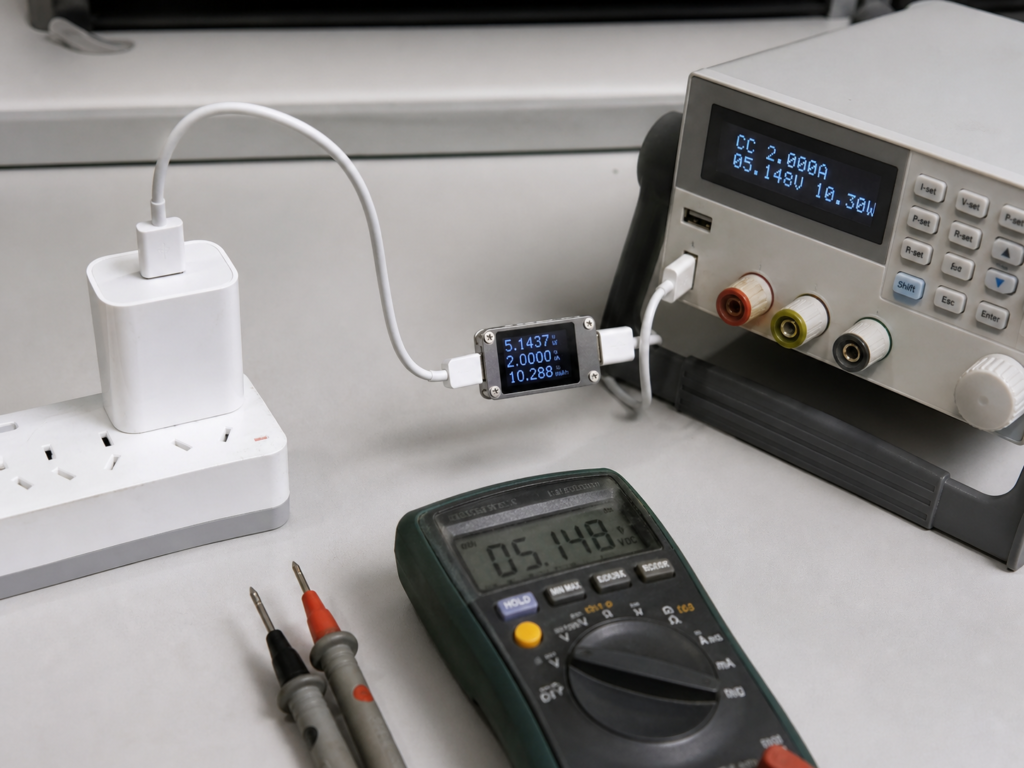
If the answer to the first two steps is “yes”, the product basically falls within the applicable scope of CCPSA; the third step helps you quickly identify regulatory priorities and clarify the specific safety requirements that need to be implemented, rather than being a threshold for determining the applicable scope.
List of Common Regulated Charging Products (Including Examples)
Maybe you still find it a bit abstract, don’t worry, we have listed common charging products regulated by CCPSA, and you can directly compare them.
The first category is chargers and power adapters. Wall-plug types are the most common, such as power adapters for mobile phones, tablets, and laptops, as well as the currently popular gallium nitride (GaN) chargers and multi-port USB/USB-C fast chargers, all count; divided by usage scenarios, car chargers, wireless charging pads/charging docks, and desktop charging stations are also within the scope; there are also energy storage types, such as power banks used by ordinary consumers and small personal portable energy storage power supplies, as long as they are for personal daily use, they are regulated.
The second category is charging cables and interface accessories. Charging cables with various interfaces all count, whether it is USB-A, USB-C, Lightning or Micro-USB interface, and whether it only has charging function or also has data transmission and fast charging functions, they all fall within the regulatory scope; adapter types, such as USB-C to Lightning adapters, USB-A to USB-C adapters, as well as travel conversion plugs for charging, are also included; in addition, separately sold charging extension cables and charging port modules for repair/replacement (such as separately sold mobile phone tail plug modules), as long as they are circulated separately, all count.
The third category is plugs and consumer electrical products with charging ports. For example, detachable Canadian standard power plugs on chargers must also meet the requirements if sold separately; household power strips and wall sockets with USB/USB-C charging ports sold to consumers also fall under CCPSA regulation; there are also independently sold charging port protection accessories, as long as they have potential safety risks (such as being easy to fall off and causing short circuits), they will also be included in regulation.
The fourth category is charging accessories supplied with complete equipment. For example, original chargers and charging cables that come with mobile phones or tablets, or third-party charging accessories given as gifts during complete equipment promotions, these are not exempt just because they are “given as a set”, but are regulated by CCPSA together with the complete equipment.
4 Categories of Clearly Exempt Situations (Key Points to Avoid Pitfalls)
Of course, not all charging-related products are within the jurisdiction of CCPSA. There are four categories of clearly exempt situations, which are also places where many people easily fall into pitfalls, so you must remember them clearly.
The first category is non-consumer dedicated charging products. That is, charging products specially designed for industrial, medical, and professional scenarios and not sold to ordinary consumers, such as power adapters dedicated to industrial production equipment and server rack-mounted power supplies, these all belong to professional scenario dedicated products and are not under the jurisdiction of CCPSA. But note: if the product is a dual-use type — that is, it can be used for both industrial equipment and ordinary consumers’ electronic products, then it is still counted as a consumer product, and you cannot try to exclude it from regulation just by printing “industrial grade” on the packaging.
The second category is small quantities of products for personal use and non-commercial purposes. Simply put, if you buy them via cross-border online shopping or bring them with you when entering the country, only for your own use, not for sale, nor for forwarding for profit, and the quantity is within the reasonable personal use range recognized by the Canadian border, they are usually not treated as commercial import, sales or advertising activities, but it is still subject to the border’s judgment on quantity, purpose and safety risks. But there is a big pit here: if it is for purchasing on behalf of others or buying for profit, no matter the quantity, it is a business activity and must meet CCPSA requirements. Don’t think that “I only send two at a time” doesn’t count as business.
The third category is products that have been included in other federal special regulations listed by CCPSA. Special attention should be paid here: the exclusion of CCPSA application must be based on the officially clearly listed excluded product categories and corresponding special federal regulations, and you cannot determine on your own that it does not apply just because the product has a certain certification, industry standard or partial federal requirements. For example, the original on-board charging system components of motor vehicles are fully covered by federal safety regulations related to motor vehicles, and belong to the exclusion category listed by CCPSA; dedicated charging equipment specially designed for medical devices regulated by the Canadian Medical Devices Regulations and supplied as accessories of medical devices are managed according to the special regulations for medical devices. However, general charging accessories sold separately to consumers (such as replacement USB chargers for household blood pressure monitors and blood glucose meters, and ordinary charging cables) still need to be regulated by CCPSA as consumer products, because they are neither supporting accessories of specific medical devices nor original components of motor vehicles.
The fourth category is products that enter the country temporarily and are not for sale. For example, samples brought to exhibitions in Canada, charging equipment carried by individuals on business trips, and temporary accessories for maintenance, as long as they are taken out of Canada after use and are not sold, given as gifts or distributed locally, they can be exempted. But if the samples are given to local consumers after the exhibition, then they do not belong to temporary entry and are subject to CCPSA regulation.
Advanced: How to Judge 5 Easily Confusing Boundary Scenarios
After talking about the clear scope and exemptions, let’s talk about several boundary scenarios that people often confuse. Learn to use the core criteria to deduce, and you can judge by yourself when encountering situations you haven’t seen before.
The first is charging products as gifts or in promotional packs. Many people have the misunderstanding that “gifts are free so they don’t need to be compliant”. In fact, as long as charging products are distributed to Canadian consumers, whether it is a charger given when buying a mobile phone, a charging cable given for full reduction, or charging accessories exchanged with member points, they all fall within the regulatory scope of CCPSA, and merchants are also responsible for safety problems.
The second is second-hand and refurbished charging products. The core dividing line here is “whether it is commercial sales”: individuals who occasionally dispose of their own idle charging products usually do not fall into the key regulatory scope of CCPSA for commercial entities, but they must not transfer products that are known to have safety defects, have been recalled, or obviously have risks of electric shock and fire, otherwise they may still bear corresponding safety responsibilities. If they are second-hand or refurbished products operated by merchants, such as second-hand chargers sold in second-hand digital stores, refurbished merchants repairing old chargers and selling them as new products, or those who purchase and resell idle charging products in batches, all belong to business activities and are subject to CCPSA regulation; especially those sold as new products after refurbishment, they must fully comply with the compliance requirements for new products.
The third is small-batch products sent via overseas direct mail. Many small sellers mistakenly believe that “overseas direct mail, small quantity and low price are not regulated”, which is a typical misunderstanding. As long as it is a business activity targeting Canadian consumers, whether it is overseas direct mail or local warehouse delivery, it falls within the regulatory scope of CCPSA; low-value direct mail only simplifies customs clearance procedures, and compliance requirements are not reduced, and the border may still conduct random inspections. Non-profit purchasing on behalf of relatives and friends (such as sending a charging cable as a gift to a local friend) belongs to the category of personal use and can be handled according to personal use rules.
The fourth is the difference between independent accessories and embedded components. Many people can’t figure out whether “a separately sold charging port” and “a charging port in a mobile phone” are the same thing. Simply put: independently sold charging cables, plugs, and interface modules are all separate consumer products that need to separately meet CCPSA requirements; but if they are power modules and charging ports embedded in the motherboards of mobile phones and computers, they are managed together with the complete equipment and are not subject to CCPSA alone. In addition, charging accessories for replacement and maintenance, as long as they are circulated and sold separately, need to be evaluated for compliance separately. For example, a separately sold replacement tail plug for mobile phones must meet the requirements on its own, and you can’t ignore it by saying “it is matched with a certain brand of mobile phone”.
The fifth is the application of the advertising and promotion link. Many people think that “I haven’t sold it yet, just advertised, it’s not a violation”, which is wrong. As long as a charging product is promoted to Canadian consumers, it is subject to CCPSA restrictions, and misleading publicity about fast charging power and safety protection functions is not allowed — for example, obviously only 20W power, but promoted as 65W fast charging, or obviously no over-temperature protection, but claiming to have nine-fold safety protection. These situations where the publicity is inconsistent with the actual situation all belong to violations.
Advanced: The Relationship Between CCPSA and Other Compliance Requirements
After clarifying the applicable scope, there is another common misunderstanding to be clarified: CCPSA is the safety bottom line, not a specific certification. Many people think that “having CSA certification means complying with CCPSA”, but actually it is not.
CCPSA is a federal law that regulates that products must not have unreasonable safety risks, and it does not issue any certification marks itself. The cUL, CSA, ETL, etc. that people often hear about belong to electrical safety certifications, which are used by third-party institutions to prove that products meet relevant safety standards. These certifications can be used as a basis for products to meet safety requirements, but they cannot replace the legal obligations stipulated by CCPSA — for example, if you have CSA certification, but your advertisement is false propaganda, or you fail to report an accident as required, you still violate CCPSA.
In actual operation, charging products often need to meet the requirements of multiple regulations at the same time, and CCPSA is only the most basic bottom line. For example, ordinary wall-plug chargers, in addition to complying with CCPSA, must also meet the electrical safety requirements of Canadian provinces; products connected to the mains such as wall-plug adapters, power strips, and wall sockets with USB usually need to be evaluated/certified by accredited bodies according to applicable Canadian electrical safety standards, and meet the provincial or territorial requirements of the place of sale. Products with wireless charging function must comply with the wireless regulations of Innovation, Science and Economic Development Canada (ISED); power banks and portable energy storage devices with lithium batteries must also meet the requirements related to battery transportation and chemical substances. Simply put: CCPSA is the basic safety requirement that all consumer charging products must meet, and other requirements are superimposed according to the characteristics of the product.
It should also be noted that even if a product is covered by other special regulations, it does not mean that CCPSA is completely irrelevant. If the special regulations only cover part of the risks, then links such as advertising, recalls, and incident reporting may still be subject to CCPSA restrictions. For example, for aftermarket car chargers and car USB charging accessories sold separately to consumers, even if they have electrical safety certifications, if consumers complain about safety problems such as fire, Health Canada can still launch an investigation according to CCPSA; while the original on-board charging system components of motor vehicles, because they are fully covered by special motor vehicle regulations, need to be handled according to the corresponding regulations, and the above logic does not apply.
Practical Judgment Tools and Common Violation Consequences
After talking so much, we have sorted out practical judgment tools and common violation consequences for readers with different needs, so that everyone can compare them.
If ordinary consumers want to quickly judge the compliance risk of the charging products they buy, they can start from these points: First, sales channels can only be used as a reference for initial screening. Regular platforms or physical stores do not mean that products are automatically compliant, and the risk of private unqualified channels is significantly higher; second, check the product type, whether it is the common charging products we listed earlier, such products basically require compliance with safety specifications; third, check product labels and relevant certificates, whether there are clear rated voltage, current, power parameters, whether there are safety warning labels, whether compliance certification information is marked, and if conditions permit, you can also check the recall announcements of Health Canada to avoid reported problematic products. Even if it is for personal use via cross-border online shopping, it is recommended to prioritize compliant products to reduce electricity use risks.
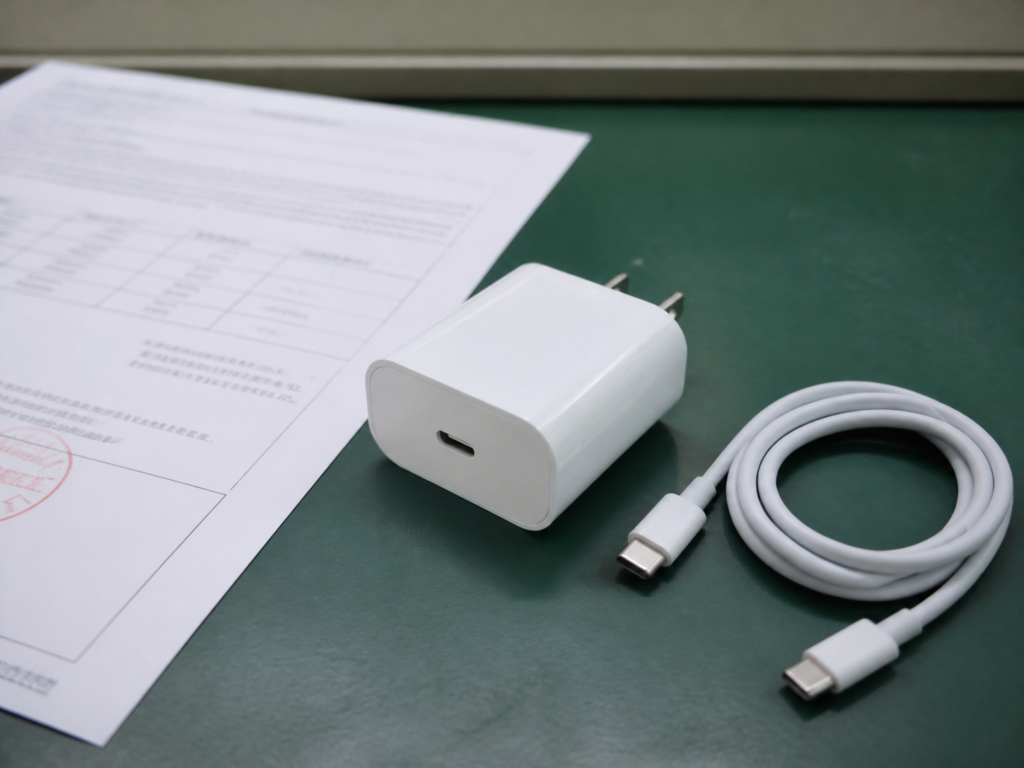
If you are an entry-level seller who has just entered the Canadian market, you can check according to this list before listing or importing: Step 1, use the 3-step self-inspection method mentioned above to confirm whether the product falls within the applicable scope of CCPSA; Step 2, exclude exempt situations, such as whether it is for industrial use, whether it belongs to the excluded categories fully covered by other federal regulations listed by CCPSA, so as not to do compliance work in vain; Step 3, confirm whether other compliance requirements need to be superimposed, such as electrical certification, wireless certification, and battery-related requirements; Step 4, prepare documents such as safety test reports and compliance declarations in advance, so that they can be provided in time in case of random inspection.
Finally, let’s talk about the common consequences of violations, so that everyone has a general idea:
Minor violations: If non-compliance is found during entry random inspection, the products will be detained and returned; if e-commerce platforms find violations, they will directly remove the relevant products.
Moderate violations: If the product has flowed into the market and has safety hazards, the regulatory authority may require corrective measures, including stopping sales, notifying consumers, recalling, etc.; whether a fine is imposed and the amount of the fine depend on the nature of the violation, the degree of risk and the specific behavior of the entity.
Serious violations: If the product causes serious personal injury and there are circumstances such as selling despite knowing the violation, it may face high fines and even criminal liability.
Summary
To understand the applicable scope of CCPSA, the core is to master three levels of judgment logic:
First, be able to use the 3-step self-inspection method for quick preliminary judgment: the first two steps “consumer use, entering the Canadian market” are the core prerequisites for application, and the third step “risk identification” is used to clarify specific compliance priorities. Common consumer-oriented charging products are basically within the regulatory scope.
Second, be able to identify 4 categories of clearly exempt situations: products dedicated to pure industrial/professional scenarios and not intended for consumers, reasonable quantities of products for personal non-commercial use, excluded categories listed by CCPSA that are fully covered by other federal special regulations, and products that enter temporarily and are not brought into local circulation.
Third, be able to deduce boundary fuzzy scenarios: when encountering uncertain situations such as gifts, second-hand/refurbished products, cross-border direct mail, and independent accessories, go back to the two core criteria of “whether it is for consumer use” and “whether it is a business activity targeting the Canadian market” to deduce, and you can basically get an accurate conclusion.
Whether it is ordinary consumers choosing charging products, or entry-level sellers operating in the Canadian market, understanding these rules is essentially to avoid safety risks and compliance risks — after all, charging products are things that are used frequently in daily life, and safety is always the top priority.