
Cross-border suppliers and manufacturers new to the Australian market are often confused by various claims about RCM and SAA: some say SAA has been abolished and only RCM is needed, some say holding an SAA certificate is enough to enter the Australian market, and others hold old SAA certificates from years ago and are unsure if they are valid. To clarify these issues, it is necessary to start from basic concepts, sort out the evolution of the system, and clarify the current compliance logic and judgment methods for historical legacy issues.
First Understand 3 Core Concepts to Avoid 90% of Confusion
The root cause of many people’s confusion about the relationship between RCM and SAA is a deviation in the understanding of basic concepts — either they treat marks as certificates, or they confuse “SAA” with different meanings. Let’s first clarify the definitions of these concepts one by one.
RCM: A Compliance Mark, Not an Independent Certification Certificate
The full name of RCM is Regulatory Compliance Mark, which is under the overall management of the Australian Communications and Media Authority (ACMA, the federal regulator responsible for communications, radio, and electromagnetic compatibility fields) and is a mandatory compliance mark for applicable products in Australia.
In simple terms, RCM is an external mark after a product meets all applicable compliance requirements, similar to a completion badge obtained after finishing all courses. It is not itself a “certification certificate that can be obtained by paying money”. The mark is used by the local Australian responsible supplier to indicate that the product meets the corresponding applicable regulatory requirements, but it does not mean that the product necessarily meets all three types of compliance: safety, electromagnetic compatibility (EMC), and radio — the specific coverage needs to be judged separately according to the product’s function and category.
It is particularly important to clarify the judgment logic of the applicable boundary: the EESS electrical safety regulatory scope and ACMA’s EMC/radio regulatory scope are two independent judgment standards, and neither includes the other. Pure mechanical products and non-electrical products without electrical or wireless functions usually do not involve RCM-related requirements; low-voltage electrical products that are not within the EESS regulated scope still need to complete corresponding compliance and use the RCM mark if they fall within ACMA’s EMC or radio jurisdiction. Relevant rules can be verified on the ACMA official website (acma.gov.au).
Note: Electromagnetic Compatibility (EMC for short) refers to the characteristic that equipment can operate normally in its intended electromagnetic environment and does not cause unacceptable electromagnetic interference to other equipment in that environment.
“SAA” Corresponds to 3 Completely Independent Entities
90% of the confusion stems from the fact that the three letters “SAA” correspond to three completely different types of entities, which are often confused in market statements:
- Standards development organization: The former Australian Standards Association, now named Standards Australia, is Australia’s local standards development body. The unified AS/NZS joint standards for Australia and New Zealand are jointly developed by Standards Australia and the New Zealand standards body Standards New Zealand. Standards Australia is only responsible for standards development-related work, does not carry out certification and issuance business, and does not participate in market supervision.
- Certification body name: For example, SAA Approvals is one of the third-party testing and certification bodies recognized by Australian and New Zealand regulators. It has no current affiliation with Standards Australia and can conduct safety testing and issue certification certificates in accordance with AS/NZS standards.
- Historical/market common name: It has two meanings. One refers to the discontinued old SAA safety mark (formerly the mainstream electrical safety compliance mark in Australia); the other is the “SAA certification” often referred to in Chinese communities, which generally refers to Australian and New Zealand electrical safety testing and certification — regardless of whether the name of the issuing body contains “SAA”, any electrical safety certification that meets regulatory requirements may be called this.
Here we first clarify a validity judgment principle: the legal effect of a certificate cannot be directly judged solely by the “SAA” wording on the certificate; it must be comprehensively verified in combination with the qualification of the issuing body, product category, certificate status, and regulatory recognition scope.
First Correct 3 Basic Cognitive Misconceptions
After clarifying the basic concepts, we first sort out the three most common misconceptions to avoid deviations in subsequent understanding:
- Misconception 1: RCM and SAA are certifications of the same level, and you can choose either one — Wrong. The two are completely different in nature. The current Australian market has a supporting relationship of “compliance framework (RCM mark) + single link (safety certification)”, not a choice between the two.
- Misconception 2: SAA certification has been completely abolished and is useless — Wrong. Only the old SAA safety mark has been discontinued, and safety testing and certification for high-risk regulated electrical products in Australia are still mandatory requirements.
- Misconception 3: All products need SAA to use RCM — Wrong. Low-risk, non-regulated electrical products do not require third-party safety certification; products without electrical or wireless functions do not involve RCM-related requirements.
Why Was RCM Launched? The Decentralized Compliance System Before 2013
RCM was not launched out of thin air, but to solve various problems caused by the dispersion of the old compliance system. We first sort out the characteristics of Australia’s compliance system before 2013.
Core of the Old Regulatory System: Decentralized Management, Inconsistent Rules
Australia is a federal country, and electrical safety is legislated separately by each state/territory, with regional differences in rules. At the same time, different compliance fields are managed by different departments: electrical safety is the responsibility of state electrical regulatory authorities, EMC is the responsibility of communications regulatory authorities, and radio equipment is the responsibility of telecommunications regulatory authorities. Each field has independent marks and application processes.
Although Australia and New Zealand have long unified AS/NZS safety technical standards, the certification processes, marking requirements, and regulatory subjects are all in a decentralized state. Enterprises need to connect with multiple departments, and the cost of rule connection is relatively high.
3 Core Compliance Marks of the Old Era
At that time, there were three main types of compliance marks in the market, corresponding to different regulatory fields:
- Old SAA safety mark: An electrical safety compliance mark historically used within applicable state/territory scopes, which is part of local electrical safety compliance requirements and has actual mandatory nature. Because state/territory safety access rules generally recognize this mark, combined with downstream procurement thresholds and market awareness, it is the core safety compliance credential for overseas manufacturers to enter the Australian market. It is not a nationally unified statutory mandatory mark system, and the specific applicable rules of each state/territory are not completely consistent. The prerequisite for using this mark is that the product must not only pass the corresponding safety certification, but also comply with the access, registration, or labeling rules of the state/territory where it is sold; it cannot be used directly just by obtaining a test certificate.
- C-Tick mark: A special mark for Australian EMC compliance, managed by the communications regulatory authority at that time.
- A-Tick mark: A special compliance mark for Australian and New Zealand telecommunications and radio equipment.
3 Core Pain Points of the Old System
The decentralized system directly brought three aspects of problems, which are also the core reasons driving regulatory reform:
- Enterprise side: The same product needs to complete multiple certifications and affix multiple marks, and cross-state sales may require repeated applications, resulting in high compliance costs.
- Regulatory side: Dispersed marks and inconsistent data make market spot checks and product traceability more difficult.
- Market side: It is difficult for consumers and purchasers to quickly judge the compliance status and coverage of products through marks.
Roles of SAA-Related Entities in the Old Era
During this period, the predecessor of Standards Australia was the core development body for Australian local standards, and the Australia-New Zealand joint AS/NZS standards needed to be developed in collaboration with New Zealand’s standards body; the old SAA safety certification was the most mainstream electrical safety compliance path at that time, and one of the core thresholds for overseas manufacturers to enter the Australian market.
Implementation Process of the RCM System: First Integrate the Communications Field, Then Connect with Electrical Safety
The implementation of RCM was not completed in one step, but started from communications-related fields first, then gradually connected with electrical safety, with an overall transition period of several years.
Phase 1: Integrate EMC and Radio Fields (2013-2016)
In March 2013, Australia’s ACMA officially launched the RCM mark, allowing enterprises to use it voluntarily. In this phase, the two types of marks, C-Tick (EMC) and A-Tick (telecommunications/radio), were first integrated and replaced to unify compliance marks in communications-related fields.
After the transition period ended in March 2016, C-Tick and A-Tick were officially discontinued in Australia, and relevant new products on the market must affix the RCM mark. At this stage, electrical safety had not yet been included in the RCM coverage, and the original mark system was still in use. Relevant time nodes and transition rules can be verified on the ACMA official website.
Electrical Safety Incorporated into the Framework: EESS Gradually Connects with States
The integration of electrical safety is more complex, as each state/territory legislates independently and there is no unified national implementation time. Here, a core framework needs to be clarified: Electrical Equipment Safety System (EESS for short), which is a coordinated electrical safety regulatory framework jointly established by Australian states and territories, and has been gradually implemented in participating jurisdictions since 2013.
Special attention should be paid: New Zealand is not part of the EESS system and has independent electrical safety regulatory rules.
Australian states and territories gradually connect with EESS, linking electrical safety requirements with RCM marking rules. That is to say, the discontinuation time of the old SAA safety mark and specific transition rules are subject to the current regulations of the state/territory where the product is sold, and there is no unified national standard. The summary entry for rules of each state/territory can be queried on the official website of the Electrical Regulatory Authorities Council (ERAC for short) (erac.gov.au) — ERAC is a coordinating body composed of electrical regulatory authorities of Australian states and territories, responsible for promoting the unified connection of national electrical safety regulatory rules.
General Arrangements During the Transition Period
Although the progress of each state varies, the general rules during the transition period are roughly the same: during the transition period, both old and new marks are allowed to be used, and compliant inventory products can be sold according to old requirements; old SAA safety certificates that are still within the validity period can usually be used as safety compliance evidence for corresponding regulatory registration, and specific requirements are subject to the rules of the jurisdiction.
Role Changes of SAA-Related Entities
During the system reform process, the roles of the two types of SAA-related entities have also undergone clear changes:
- Standards Australia only retains the standards development function and does not participate in certification or regulatory-related work.
- Third-party issuing bodies recognized by Australian and New Zealand regulators, such as SAA Approvals (common safety certification issuers in the market during the old system period), can still provide safety testing and certification services, but no longer have the exclusive statutory mark status like the old SAA safety mark — after passing certification, products that comply with jurisdiction rules uniformly use the RCM mark instead of the old SAA safety mark.
Don’t Fall Into the “Australia-New Zealand Unification” Trap: Differences in Compliance Rules Between the Two Countries
Many people think that since Australia and New Zealand share AS/NZS standards, their compliance requirements are exactly the same. In fact, the regulatory systems of the two countries are independent of each other, with large differences in rules, and they cannot be directly applied.
Differences in Regulatory Subjects
- Australia: EMC and radio are regulated by ACMA, and electrical safety is the responsibility of the electrical regulatory authorities of EESS participating states/territories.
- New Zealand: Electrical safety is regulated by WorkSafe (New Zealand’s Work Safety Authority), and radio and EMC are the responsibility of the Radio Spectrum Management (RSM). The rules of the two countries can be verified on the WorkSafe official website (worksafe.govt.nz) and RSM official website (rsm.govt.nz) respectively.
Core Differences in Rules
- Australia and New Zealand share the unified AS/NZS technical standards, but the registration processes, labeling requirements, and responsible subject rules are not completely the same.
- The applicable rules of RCM in New Zealand are different from those in Australia, and Australian RCM requirements cannot be directly applied.
- There are differences between the two countries in the risk classification of electrical safety and the scope of mandatory certification, which need to be checked separately.
Current Compliance Logic of the Australian Market
After talking about the historical evolution, we return to the current rules to clarify the role relationship between RCM and the commonly called “SAA certification” in the compliance system, as well as the specific compliance paths.
Role Relationship Between RCM and SAA Certification Under the Current System
For the Australian market, RCM is a unified mandatory compliance mark for applicable products — the prerequisite for application is that the product falls within the regulatory scope of ACMA or EESS participating jurisdictions; pure mechanical, non-regulated products that do not involve EMC/wireless functions are not subject to this requirement; the marking connection for the electrical safety part is still judged according to the current rules of the selling state/territory.
RCM is the final mark that can only be used after the product meets all applicable compliance requirements. It is supported by two major regulatory pillars: one is EESS (electrical safety regulation of participating jurisdictions), and the other is ACMA (EMC and radio regulation). It should be noted that products only need to complete the compliance requirements of their applicable fields and corresponding registration obligations. Not all products using RCM need to complete both ACMA and EESS registrations: for example, products only involving EMC do not need EESS registration, and EESS Level 1 products usually do not need EESS product registration either.
The “SAA certification” commonly referred to in the industry is a link in the RCM compliance process for electrical safety — only when the product is a high-risk regulated electrical product under the EESS system is it mandatory to provide safety certification issued by a third-party body recognized by Australian and New Zealand regulators, and the issuing body is not limited to those with “SAA” in their name. Low-risk, non-regulated electrical products do not need this link, and can use the RCM mark after completing corresponding compliance requirements.
Advance Explanation of Basic Terms
Before introducing EESS risk classification, we first clarify 4 basic terms commonly used later, and their specific definitions are subject to the current rules of the selling jurisdiction:
- Regulated (in-scope) low-voltage electrical equipment: Refers to low-voltage electrical products that fall within the scope of local electrical safety regulation. Products not within this scope do not need to meet the mandatory EESS electrical safety requirements. The voltage range of low voltage is usually 50V to 1000V AC and 120V to 1500V DC, and the specific definition is subject to the jurisdiction.
- Responsible supplier: Refers to a local Australian entity that bears legal responsibility for product compliance, usually a local importer, brand owner, or its authorized local agent. Overseas manufacturers cannot directly act as the responsible subject to complete regulatory registration.
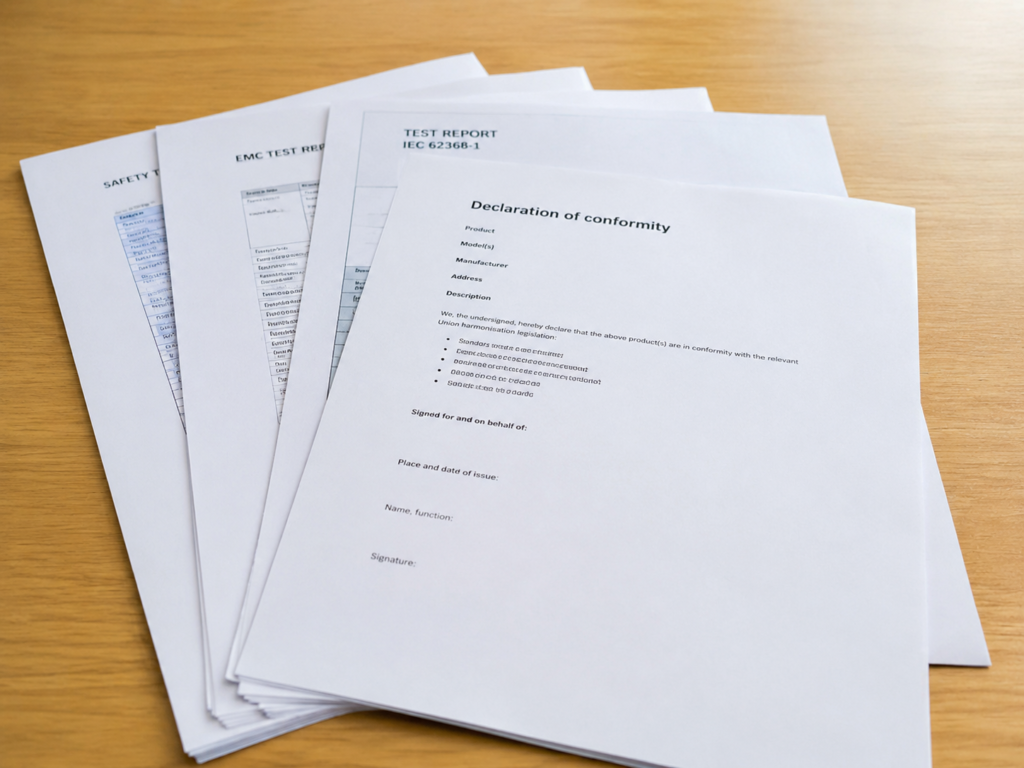
- Declaration of conformity: Refers to a document issued by the responsible supplier that formally declares that the product meets the corresponding regulatory requirements, and must be kept together with compliance evidence such as test reports.
- Compliance document retention requirements: Both ACMA and EESS require responsible suppliers to retain compliance documents for at least 5 years. Specific requirements can be verified on the official website of the corresponding regulatory authority.
EESS Electrical Safety Risk Classification
Special attention should be paid to the premise of classification here: You must first judge whether the product is EESS regulated low-voltage electrical equipment, and then determine the level through the official EESS equipment risk classification database. You cannot judge directly based on common sense alone. Equipment classification and registration information can be queried in the official EESS database (eess.gov.au).
EESS divides regulated low-voltage electrical equipment into three risk levels:
- Level 1 (low risk): Usually no product registration is required, only the supplier’s self-declaration and retention of compliance documents are needed.
- Level 2 (medium risk): Mandatory product registration in EESS is required, a declaration of conformity must be provided, and compliance documents must be retained at the same time.
- Level 3 (high risk): Must hold a safety certification certificate issued by a recognized body (commonly known as “SAA certification”), and then complete mandatory EESS registration.
Common reference: Power adapters, plugs and sockets mostly belong to Level 3, but this is only for reference, and the specific shall be subject to database entries.
Two Core Paths for RCM Compliance
RCM compliance in the Australian market is essentially the superposition of two paths — follow whichever path the product involves, and the RCM mark can only be used after all are completed.
ACMA Path (EMC/Radio Requirements)
Step 1: Determine whether the product falls within the scope of EMC or radio equipment under ACMA jurisdiction;
Step 2: Prepare compliance records. Test reports are common core evidence, and the specific form is determined according to applicable rules and product risks;
Step 3: The local Australian responsible supplier completes ACMA supplier registration and issues a declaration of conformity;
Step 4: Use the RCM mark as required, and retain compliance documents for at least 5 years.
Electrical Safety Path (Regulated Equipment Under EESS Jurisdiction)
Step 1: Determine whether the product is within the EESS regulated scope and confirm the risk level;
Step 2: Prepare compliance documents according to the level: Level 1 is self-declaration, Level 2 is declaration of conformity, Level 3 is third-party certification certificate;
Step 3: For Level 2 and Level 3 products, the local Australian responsible supplier completes EESS product registration;
Step 4: Use the RCM mark as required by the state/territory where it is located, and retain compliance documents for at least 5 years.
Compliance Examples of Two Types of Typical Products
We take two common product examples to help understand the superposition logic of compliance paths:
- Level 1 low-voltage electrical equipment without wireless function: First follow the EESS Level 1 path — no third-party safety certification is required, nor EESS product registration, only the supplier’s self-declaration and retention of compliance documents are needed; if the product also falls within ACMA EMC jurisdiction, it is also necessary to complete ACMA compliance record preparation, supplier registration, and declaration of conformity. After completing all applicable requirements, the RCM mark can be affixed.
- Level 3 power adapter with Wi-Fi: Three applicable paths need to be followed at the same time — EESS Level 3 path (need to hold a third-party safety certification certificate issued by a recognized body and complete EESS product registration), ACMA EMC path, and ACMA radio path. After all requirements are completed and corresponding registrations are done, the RCM mark can be affixed.
Two Types of Comparison Perspectives to Clarify the Difference Between RCM and SAA
Many people directly ask “what is the difference between RCM and SAA”, but the answer to this question depends on the object of comparison. We explain it from two perspectives, which can be clearly distinguished.
Explanation of Comparison Perspectives
- First type of comparison: RCM mark vs old SAA safety mark (historical dimension, comparison of compliance marks in two different periods in Australia)
- Second type of comparison: RCM compliance system vs industry commonly called “SAA certification” (current practical dimension, comparison of overall framework and single link)
First Type of Comparison: Historical Dimension, RCM Mark vs Old SAA Safety Mark
| Comparison Item | RCM Mark (Current) | Old SAA Safety Mark (Discontinued) |
|---|---|---|
| Legal Status | Mandatory unified compliance mark for applicable products in Australia | Discontinued for new applicable products on the market, cannot replace current RCM requirements; historical inventory products that meet the jurisdiction’s transition clauses can be sold according to local rules (specifically subject to jurisdiction rules) |
| Coverage | Can cover three types of applicable requirements: electrical safety, EMC, and radio | Only covers electrical safety |
| Management Body | Joint coordination by ACMA + Electrical Regulatory Authorities Council (ERAC) | Managed by the corresponding historical body |
| Prerequisite for Use | Complete all applicable compliance requirements + applicable filing or registration | Meet the applicable safety certification requirements and jurisdiction approval/registration/labeling rules at that time |
Second Type of Comparison: Current Practical Dimension, RCM System vs Commonly Called “SAA Certification”
| Comparison Item | RCM Compliance System | Industry Commonly Called “SAA Certification” |
|---|---|---|
| Nature | Complete market access compliance framework | Single electrical safety testing and certification link |
| Coverage | Covers all applicable compliance requirements (safety, EMC, radio, etc.) | Only covers electrical safety |
| Responsible/Issuing Body | The responsible subject is the local Australian supplier | The issuing body is a third-party body recognized by Australian and New Zealand regulators |
| Mandatory Nature | Mandatory for products within the applicable scope | Only mandatory for EESS high-risk regulated electrical products |
6 Conditions That Will Change the Comparison Conclusion
The above comparison is for general situations. When it comes to a specific product, the conclusion may change with the following conditions:
- Whether the product is within the regulated scope: non-regulated products are not subject to relevant mandatory requirements;
- Product risk level: low-risk products do not require third-party safety certification, so the conclusion is naturally different;
- Product function: products with wireless functions need to additionally meet radio requirements, and cannot only do safety certification;
- Sales region: there are differences in rules among different Australian states/territories and New Zealand;
- Product launch time: products launched in different periods are subject to the transition rules of the corresponding period;
- Certificate coverage: if the model, parameters, and brand on the certificate are inconsistent with the actually sold product, the certificate is invalid and the conclusion does not hold.
Practical Pitfall Avoidance: Judgment Methods for Historical Legacy Issues
As the system has undergone several reforms, there are many historical legacy issues in the market, as well as many common misconceptions. We have sorted out the core judgment methods.
5-Step Verification Method for the Validity of Old SAA Certificates
Holding an old SAA certificate does not need to be directly judged as invalid, nor can it be directly assumed to be valid. It can be verified in the following 5 steps:
- Verify the current rules of the selling country and the specific Australian state/territory;
- Verify whether the product is within the regulated scope of the corresponding regulation, as well as the risk level;
- Verify whether the certificate issuing body is recognized by the corresponding regulatory system;
- Verify whether the model, factory, and rated parameters covered by the certificate are consistent with the actually sold product;
- Verify the certificate validity period, standard transition arrangements, and acceptance rules of the registration authority.
Special reminder: Standard updates do not necessarily lead to immediate invalidation of certificates. It depends on the transition arrangements of the regulatory authority, and certificates cannot be directly judged as invalid solely based on standard version changes.
Validity Verification Method for “SAA Certification”
Many bodies in the market claim to provide “SAA certification”, and its validity can be verified in the following ways:
- Check whether the issuing body is on the recognition list of Australian and New Zealand regulatory authorities;
- Check whether the product brand, model, rated parameters, and production factory covered by the certificate are consistent with the actually sold product;
- Check whether the standard version cited in the certificate is currently valid and whether it corresponds to the safety requirements of the product;
- For Australian high-risk products, registration information can be queried through the EESS database to verify the validity of the certificate.
5 Most Common Legacy Misconceptions from Evolution
- Misconception 1: Having an SAA certificate means you can enter the Australian and New Zealand markets — Wrong. It is also necessary to complete EMC and radio compliance requirements, as well as corresponding filing and labeling. New Zealand rules need to be checked separately.
- Misconception 2: RCM is just SAA with a different name — Wrong. The two have completely different coverage, management bodies, and compliance logic, and are not a name change relationship.
- Misconception 3: You can sell products by printing the RCM mark yourself — Wrong. Labeling without compliance evidence and without completing applicable filing is an illegal act, which may face penalties such as fines and product recalls.
- Misconception 4: All products need to find a body with “SAA” in its name for certification — Wrong. Any regulatory-recognized third-party body can be selected, and low-risk, non-regulated products do not require third-party safety certification.
- Misconception 5: RCM requirements are exactly the same in Australia and New Zealand — Wrong. There are differences in regulatory subjects, registration rules, and classification requirements, which cannot be directly applied.
Judgment Method for Saleability of Products with Old Marks
If you hold products affixed with old marks (such as C-Tick, old SAA mark), you can judge whether they can continue to be sold according to the following three points:
- Look at the sales region: old mark transition policies vary by country and by Australian state/territory;
- Look at the product compliance field: for EMC and radio products, old marks can no longer be used in Australia after 2016; for electrical safety products, judgment is made according to jurisdiction rules;
- Look at whether it meets the inventory definition of transition clauses: saleability cannot be presumed solely based on production date, and must be subject to the transition requirements of current regulations.
Core Summary
After sorting out the entire evolution process and current rules, you can quickly complete three types of core judgments:
First, RCM and the industry commonly called “SAA certification” are not concepts at the same level. The former is the external manifestation of the current mandatory compliance mark and overall compliance framework, while the latter is only the testing and certification of the electrical safety link, and there is no either-or relationship between them.
Second, whether a product requires third-party safety certification depends primarily on whether it falls within the EESS regulated scope and the corresponding risk level; not all electrical products are subject to mandatory requirements.
Third, there is no unified answer to the validity of old SAA certificates and products with old marks. They need to be verified one by one in combination with the sales jurisdiction, product scope, and transition rules. New Zealand’s compliance rules need to be judged separately.