
Sellers operating 3C accessories such as chargers, USB-C charging cables, and adapter plugs in Europe are often troubled by the two systems of the REACH regulation: for the same European market, the EU and the UK each have their own set of REACH rules. Can an EU REACH report be used directly in the UK market? Many practitioners have taken detours in checklist verification, obligation fulfillment, and document preparation because they have not clarified the differences between the two, which even affects the normal sales of products. Starting from the actual application scenarios of charging products, this article sorts out the core differences and practical key points of the two sets of REACH, covering basic concepts, compliance obligations, and pitfall avoidance methods, to help practitioners make accurate judgments based on their own businesses.
Basic Introduction: The Connection Between REACH and Charging Products
Many people think REACH is a product safety certification like CE and UKCA, but it is not at all. REACH is a set of control regulations for the full life cycle of chemical substances, with the core goal of reducing the risks of chemical substances to human health and the environment. It has nothing to do with electrical performance such as charging function, electric shock prevention, and electromagnetic compatibility. Its core logic can be split into four links: registration, evaluation, authorization, and restriction — among them, registration is usually for chemical substances with an annual local production or import volume of 1 ton or more, which need to complete registration and filing; evaluation is the official verification of the risks and test data of registered substances; substances with particularly high risks need to obtain official authorization before being put into specific uses; for substances with clear health and environmental risks, use restrictions or prohibition requirements will be directly set. REACH covers a wide range of chemical substances and manages their risks through the four links. It is not only targeted at chemicals that have been identified as harmful, and also has clear scope of application and exemption rules.
For merchants selling chargers and charging cables, the products they sell fall into the category of “articles” in the REACH system: that is, finished products with a fixed shape whose function is determined by their shape. The other two types of control objects corresponding to this are: “substance” refers to a single purified chemical raw material, such as pure lead, a single type of phthalate; “mixture” refers to a chemical product composed of multiple substances, such as glue, solder paste, printing ink. (Note: Common plastic pellets are usually composed of polymers, additives, color masterbatches, etc., and are not necessarily single substances in the sense of REACH; judgment needs to be made based on specific components)
A common misconception needs to be clarified first: REACH does not only control chemical raw materials; finished chargers and charging cables are also within the scope of control, because the plastics, metals, and solders in these finished products may contain harmful chemical substances. For charging products, there are five high-risk parts that are most prone to problems: PVC cable sheath, plastic housing, metal contacts, solder, and flame retardants on circuit boards. These are the key points for subsequent testing and investigation.
Before continuing to talk about the differences, let’s explain a few commonly heard terms in plain language to avoid confusion later:
• Substances of Very High Concern (SVHC): Simply put, they are highly hazardous chemicals that are carcinogenic, teratogenic, and difficult to degrade in the natural environment, and are one of the core objects of REACH control.
• Candidate List: The officially regularly updated SVHC list. Enterprises should focus on investigating whether their products contain substances on the list.
• Restriction List: It lists substances that are explicitly prohibited from use or have maximum content limits. Products that do not meet the requirements cannot be placed on the market for sale.
• Authorization List: The substances on it have particularly high risks and must be officially approved before use. Generally, upstream chemical raw material or material suppliers are involved. Finished product sellers only need to confirm with the upstream, and do not need to apply by themselves.
Many sellers confuse REACH with other European regulations. Here is a clear clarification all at once, all related to charging products:
• REACH vs RoHS: RoHS only targets 10 specific harmful substances in electronic and electrical products. REACH covers a much wider range of chemical substances than RoHS, and the two have different control logics.
• REACH vs CE/UKCA: CE and UKCA are conformity marks for product safety, electromagnetic compatibility, etc. They are completely independent requirements from REACH, which controls chemicals, and cannot replace each other.
• REACH vs WEEE: WEEE manages the recycling and treatment of waste electronic products, while REACH manages the safety of substances in products. Each manages its own area.
• REACH vs POP: The POP regulation specifically manages the production, use, and emission of persistent organic pollutants, which is a more segmented special requirement.
For charging products, the order of compliance investigation can be referred to: first check the 10 substances specified by RoHS, then check the REACH Restriction List and SVHC Candidate List, and finally verify the special requirements of POP. It must be remembered: no certification or report can replace another compliance requirement, and all required items must be completed.
Background of Separation and Applicable Region Judgment
The root cause of the separation of the two regulations is Brexit: the UK officially left the EU on January 31, 2020, and the transition period ended on December 31, 2020; UK REACH has operated independently in Great Britain (GB) of the UK since January 1, 2021, based on the EU REACH regulation as of the end of the transition period. Since then, the EU and the UK have updated their rules, substance lists, and regulatory requirements independently, and no longer automatically synchronize — the two have the same initial baseline, but subsequent adjustments are independent of each other, and the differences will gradually expand.
Many people think that if a company is registered in the EU, it needs to do EU REACH, and if it is registered in the UK, it needs to do UK REACH. That is actually wrong. The only basis for judging which set of regulations to apply is the location where the product is finally placed on the market, which has nothing to do with the shipping location and the company’s registration location.
The specific scope of application is:
• EU REACH applies to: 27 EU member states, plus three EEA (European Economic Area) countries: Norway, Iceland, and Liechtenstein.
• UK REACH applies to: the Great Britain region of the UK, that is, England, Scotland, and Wales, referred to as GB.
A very common misconception must be kept in mind: Northern Ireland is subject to EU REACH, not UK REACH.
Let’s take the three most common scenarios for charging product sellers as examples:
• Products sold to Germany (EU member state): implement EU REACH.
• Products sold to London (belonging to England, GB region): implement UK REACH.
• Products sold to Belfast (Northern Ireland): implement EU REACH.
If your products are sold to both the EU and the UK GB region, you need to meet the two sets of compliance requirements separately, and you cannot be lazy and use one set to cope with both sides.
Core Difference 1: Controlled Substance Lists (Key for Charging Products)
For finished product sellers, the most direct difference between the two sets of REACH lies in the controlled substance lists, after all, this is directly related to whether your product can pass inspection and be listed for sale.
First is the difference in the SVHC Candidate List. UK REACH initially inherited the EU SVHC Candidate List at the end of 2020, but since then the two sides have updated independently. Now the two sets of lists have no relationship of one containing the other — some substances are only in the EU list, and some are only in the UK list. Flame retardants and specific phthalate plasticizers are two categories of substances with high differences, but which specific substances are only in one party’s list cannot be judged solely based on industry experience, and must be based on the original text of the latest officially released list.
Then there is the Restriction List directly linked to market access. A common misconception needs to be corrected here: not all phthalates, lead, cadmium, and flame retardants are prohibited or restricted. The scope of application must be checked according to specific entries. For example, some restrictions are only for toys, not for charging products. In the two sets of lists, the common controlled substances related to charging products are mainly concentrated in categories such as phthalates (commonly found in cable sheaths and plastic parts), lead (commonly found in solder and metal contacts), cadmium (commonly found in plating layers), and specific flame retardants (commonly found in circuit boards and plastic housings). However, when it comes to the restriction threshold, applicable product scope, and implementation date of each substance, the two sides are not fully synchronized. This is why you cannot directly use an EU SVHC test report as a UK REACH report — it is very likely that substances unique to the UK list have been missed in the test, and vice versa.
The following is an example of verification of restricted substances commonly involved in charging products, for reference only. The specific situation shall be subject to the latest official list entries:
| Substance Name | Example EC No./CAS No. | Corresponding Restriction Entry Location | Common Charging Components Involved | Typical Limit Requirements | Scope of Application Description | Common Exemptions/Precautions |
| Di(2-ethylhexyl) phthalate (DEHP) | EC 204-211-0 / CAS 117-81-7 | EU REACH Annex XVII Entry 51 / Corresponding UK REACH entry | PVC charging cable sheath, soft rubber housing, plastic buttons | Weight proportion in homogeneous materials ≤0.1% | Applicable to plasticized materials that can be in long-term contact with the public, and electronic and electrical products are generally within the scope | Some industrial-specific seals and specific medical equipment may have exemptions; need to verify the original text of the entry |
| Lead and its compounds | EC 215-678-8 / CAS 7439-92-1 | EU REACH Annex XVII Entry 63, etc. / Corresponding UK REACH entry | Solder, metal contacts, plating layers | Thresholds vary greatly for different application scenarios | Not all lead-containing parts are prohibited; need to be judged according to the use scenario corresponding to the specific entry | Lead in solder for electronic and electrical products needs to be cross-checked in combination with RoHS exemption rules |
| Cadmium and its compounds | EC 231-152-8 / CAS 7440-43-9 | EU REACH Annex XVII Entry 23, etc. / Corresponding UK REACH entry | Metal plating layers, battery contacts, plastic pigments | For most public contact scenarios, homogeneous materials ≤0.01% | Applicable to most civil metal coatings and colored plastics | Specific aerospace and industrial high-voltage components may have exemptions |
| Decabromodiphenyl ether (DecaBDE) | EC 214-604-9 / CAS 1163-19-5 | EU REACH Annex XVII Entry 67, etc. / Corresponding UK REACH entry | Circuit board flame retardants, plastic housing flame retardants | Weight proportion in homogeneous materials ≤0.1% | Flame retardant uses in plastics and circuit boards of most electronic and electrical products are restricted | Some special industrial equipment and military uses may have exemptions |
Third is the difference in the Authorization List. The substance types, application authorities (ECHA for the EU, HSE for the UK), and transition periods of the two sets of authorization lists are different, and the authorization of one party does not automatically take effect in the other. Charging products rarely involve the Authorization List; generally, flame retardants and plasticizers used in upstream plastic materials may be involved. Finished product sellers usually do not need to directly apply for authorization, but need to confirm with upstream material suppliers: whether the authorization of relevant substances covers the corresponding use purposes, applicable regions (EU/UK), validity period, and whether the supply chain information is traceable; if the enterprise itself directly imports or uses relevant controlled substances/mixtures, it may need to independently bear the authorization application or compliance obligations.
Finally, let’s talk about the list query and version management methods, which are very important. Many people waste their efforts using expired lists:
• The three types of EU lists (SVHC Candidate, Restriction, Authorization) can be queried in the chemical database section of the European Chemicals Agency (ECHA) official website, supporting search by substance name, EC number, and CAS number.
• The three types of UK lists can be queried on the controlled chemicals page under the “Comply with UK REACH” section of the UK Health and Safety Executive (HSE) official website.
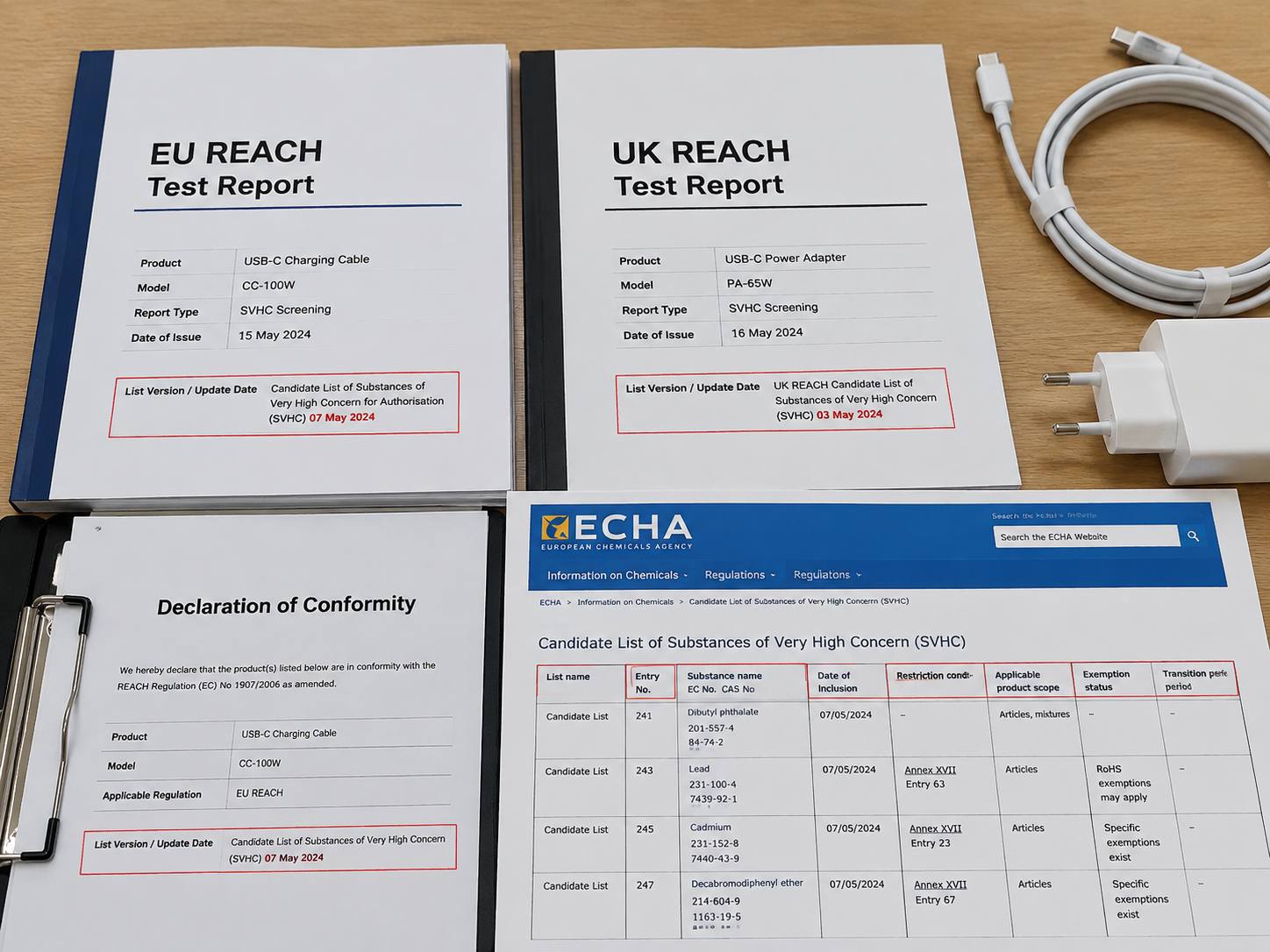
When investigating, you can first check the high-risk substances commonly controlled by both sides, and then supplement the check of unique differential items in the corresponding market, which is more efficient. When verifying the official list, you need to download the official version released by the authority, cross-verify with substance name, EC/CAS number, and entry number, and record the update date of the corresponding list, the effective date and applicable region of the substance. You cannot only use the words “compliant with REACH” on the test report of the testing institution as the sole basis. All test reports and declarations of conformity must be marked with the update date of the corresponding list, and it is forbidden to use expired lists for testing. When checking the official list, be sure to read all these fields: list name, entry number, substance name (including EC/CAS number), inclusion date, restriction conditions, applicable product scope, exemption status, transition period. You cannot draw a conclusion just by looking at the substance name.
Core Difference 2: Article Compliance Obligations (Directly Related to Sellers)
The list is the foundation, and more importantly, the compliance obligations that sellers have to bear are different, all of which are directly linked to daily operations.
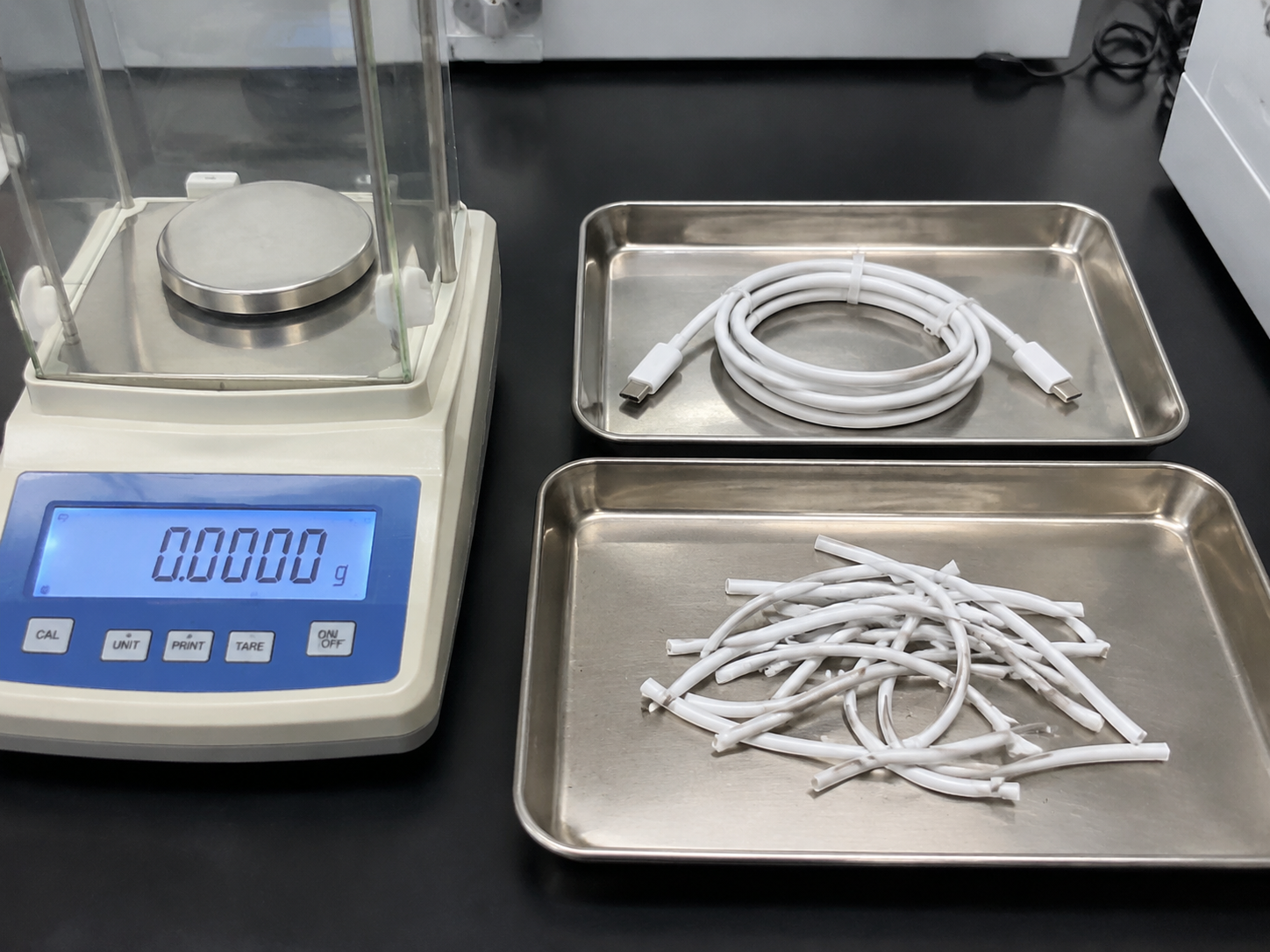
First, let’s talk about the SVHC-related obligations that both sides have, as well as the common trigger rules: in REACH rules, the judgment基准 for the 0.1% (weight proportion w/w) SVHC content is a single article, or an independently identifiable component article in a complex product. To judge whether a component is an independent component article, it needs to be comprehensively determined based on factors such as its shape, function, whether it plays an independent role in the final product, and whether it can be separated separately after assembly. The core principle is: you must never dilute the calculation of the weight proportion of SVHC based on the total weight of the whole machine — for example, a whole charging cable weighs 20 grams, of which the PVC sheath weighs 5 grams and has an SVHC content of 0.3%. You cannot dilute the content to 0.075% based on the total weight of 20 grams; this calculation method is non-compliant.
After triggering the 0.1% threshold, there are three types of general obligations:
The first type is information transfer obligation: it is necessary to provide downstream enterprise customers with SVHC-related safety information, and this information must be transmitted all the way up and down the supply chain.
The second type is consumer inquiry response obligation: if a consumer asks about SVHC-related information in the product, you must respond free of charge within 45 days.
The third type is Article 7(2) notification obligation: two trigger conditions must be met at the same time: first, the SVHC content of the corresponding component article exceeds 0.1%, and second, the total annual import or placement weight of a single SVHC in the corresponding component articles in the corresponding market by a single responsible entity (manufacturer/importer) reaches 1 ton or more. The core rule here is: the tonnage only counts the annual volume of a single responsible entity in the corresponding market, not the total sales volume of all enterprises in the entire market, nor the global total sales volume of the enterprise — for example, an enterprise sells 10 tons of this charging cable globally annually, but only places 0.8 tons of the corresponding component articles in the UK market, then no notification is required for the UK market.
The subject bearing the notification obligation is distinguished according to the region and role of the market where the product is placed:
• EU market: manufacturers within the EU and importers who import articles into the EU bear the primary notification obligation; if an overseas manufacturer appoints a qualified EU Only Representative (OR), the OR can only perform the notification obligation corresponding to the overseas manufacturer’s identity as a “producer” on its behalf, and cannot replace the importer’s statutory primary responsibility.
• UK GB market: manufacturers and importers within the UK GB region bear the primary notification obligation; if an overseas manufacturer appoints a qualified UK OR, the OR can only perform the notification obligation corresponding to the overseas manufacturer’s identity as a “producer” on its behalf, and cannot replace the importer’s statutory primary responsibility.
The notification period is within 6 months after the substance is included in the Candidate List. If it can be proven that the corresponding use of the substance has been officially registered, or that exposure to humans and the environment can be excluded under normal and reasonably foreseeable use and disposal conditions, notification may not be required, but relevant supporting materials need to be properly retained.
Take an actual example of charging products: a PVC USB-C charging cable has a phthalate SVHC content of 0.3% (exceeding the 0.1% threshold). If an EU importer imports this charging cable every year, and the total annual weight of the phthalate SVHC contained in it reaches 1.2 tons, then the importer (or the EU OR appointed by the overseas manufacturer) needs to fulfill the notification obligation to the EU ECHA; if a UK importer imports the same charging cable every year, and the total annual weight of the SVHC is only 0.5 tons, then no notification is required in the UK, as long as information transfer and consumer response are done well.
Next is the obligation only applicable to the EU: SCIP database notification. SCIP is an SVHC information database under the EU waste framework, mainly used for information sharing in the recycling link. The core difference is: the EU requires that if the SVHC content of the Candidate List in articles placed on the market exceeds 0.1% w/w, a SCIP notification must be submitted, and this obligation has no tonnage threshold of 1 ton/year; the UK has no equivalent database requirement, and enterprises only need to retain relevant evidence of SVHC information notification by themselves.
It should be noted that the submitting entity of SCIP is usually responsible entities such as EU-based manufacturers, assemblers, and importers who place articles on the EU market. Overseas sellers do not need to submit directly to ECHA, they only need to confirm with the EU-based importer or brand owner, and the qualified EU-based responsible entity will complete the submission, to avoid duplicate submissions or responsibility vacuums. For charging product sellers, if the SVHC content of USB-C cables and chargers sold to the EU exceeds 0.1%, it is necessary to confirm that the EU-based responsible entity has completed the SCIP notification; products sold to the UK do not need to be submitted.
Finally, let’s talk about the requirements for compliance documents. Many sellers easily confuse the application rules of different documents:
First, it is necessary to clarify: SDS (Safety Data Sheet) is only applicable to substances and mixtures. Finished articles such as chargers and charging cables usually do not need to provide SDS, but if the SVHC content in the article exceeds 0.1%, it is still necessary to fulfill the information transfer obligation under the REACH regulation and provide relevant safety information to downstream customers and consumers. SDS is only required when substances or mixtures such as glue and solder paste are included with the goods. What finished articles need to provide is SVHC declaration of conformity or relevant safety information, and it must correspond to the control list version of each market. EU and UK declarations cannot be directly used interchangeably.
The language and format requirements of documents for different sales regions need to be verified according to the regulatory requirements of the target market, the type of recipient, and the actual supply scenario. Usually, the official language version of the receiving member state needs to be provided:
• For products sold to EU member states, the SDS of substances/mixtures accompanying the goods must comply with the EU REACH Annex II format, the SVHC declaration of conformity for articles must correspond to the latest EU list, and the language must meet local regulatory requirements.
• For products sold to the UK GB region, the SDS of substances/mixtures accompanying the goods must comply with UK REACH requirements, the SVHC declaration of conformity for articles must correspond to the latest UK list, and usually English is sufficient.
• For products sold to Northern Ireland, EU REACH rules apply, and the document requirements are consistent with those of EU member states.
Supply chain documents for the two systems must be archived separately and cannot be mixed.
Core Difference 3: Responsible Entities and Registration Rules
Many sellers are confused about who should bear compliance responsibility and whether the registration obligation has anything to do with themselves. Here is a clear clarification all at once.
First are the competent authorities and submission platforms:
• EU REACH is uniformly managed by the European Chemicals Agency (ECHA). Core REACH businesses such as REACH registration and Article 7(2) notification are submitted through ECHA’s REACH-IT system, and SCIP notification is submitted through ECHA’s dedicated SCIP database.
• UK REACH is led by the UK Health and Safety Executive (HSE), and relevant compliance submissions are handled through the UK’s official “Comply with UK REACH” service platform.
The two systems are completely independent and data is not interoperable, so EU submission records are not recognized in the UK, and vice versa.
Then are the compliance responsible entities for finished articles. We sort out the boundaries one by one according to different roles:
• Overseas manufacturer (such as a Chinese charging product factory): does not directly bear all REACH compliance obligations locally in the EU/UK, but needs to provide local responsible entities (importers, ORs, etc.) with product material composition, SVHC content data, restricted substance compliance information, and timely notification of material changes; they can also appoint a qualified local OR to bear specific registration and notification obligations allowed by regulations to be transferred.
• Local importer: bears the primary compliance responsibility for the link of actual import and placement on the market, including SVHC information transfer, consumer response, Article 7(2) notification, SCIP submission (EU), document retention, etc.
• Brand owner/distributor: needs to verify the authenticity of compliance documents provided by upstream parties, and transmit SVHC-related information downstream; if the brand owner places products on the market in its own name (such as own brand, or private label with itself as the sales entity), it needs to bear the compliance responsibility for the corresponding placement link, and cannot shift all responsibility to upstream parties or importers in all cases.
• Only Representative (OR): can only perform obligations explicitly allowed by regulations such as substance registration and specific SVHC notifications on behalf of overseas manufacturers, cannot replace the importer’s statutory primary responsibility, and cannot cover all finished product compliance obligations. The EU OR must be located within the EU/EEA, and the UK OR must be located within the UK GB region. The two cannot be used interchangeably.
When actually determining the attribution of responsibility, it can be sorted out in three steps: The first step is to confirm who is the first entity that places the product on the corresponding market — if it is a local manufacturer in the EU/GB region, it bears the primary compliance responsibility; if it is produced overseas and placed on the market through import by a domestic enterprise, the domestic importer bears the primary responsibility. The second step is to confirm whether the overseas manufacturer has appointed a qualified local Only Representative (OR). The OR can only bear the obligations corresponding to the overseas producer’s identity that are explicitly allowed by regulations to be transferred, such as SVHC notification and substance registration, but cannot replace the importer’s statutory primary responsibility. The third step is, if the brand owner or distributor places the product on the market in its own name (such as own brand private label sales), it needs to bear the compliance responsibility for the corresponding placement link, and cannot shift all responsibility to the upstream in all cases.
For ordinary charger and charging cable finished product sellers, the core is to clarify the division of responsibilities of the local importer, SCIP submitter, and document retainer, and there is no need to blindly configure an OR. It should be noted that the responsible entity is determined by the entity that actually places the product on the market, not the invoice title, and you cannot randomly affiliate with a company to evade responsibility.
Finally, let’s talk about the boundaries of registration obligations, which is what many finished product sellers are most likely to worry about unnecessarily: REACH registration obligations are for chemical substances themselves, and usually only substances/mixtures with an annual import or production volume of 1 ton or more need to be registered. Ordinary chargers and charging cables, as finished articles, usually do not trigger registration obligations due to the overall product, but there are two types of exceptions that need to be evaluated separately: first, if the article will intentionally release a certain chemical substance under normal or reasonably foreseeable use and disposal conditions, and the annual import/production volume of the substance in the corresponding market reaches the registration threshold; second, the enterprise itself imports or produces substances or mixtures for production use (such as a factory directly importing solder paste or plastic pellets).
It should be particularly clarified that Article 7(2) SVHC notification is an independent obligation for SVHC in articles, which is completely different from substance registration and cannot replace each other. The registration numbers of the two sets of regulations are not mutually recognized at all and need to be applied for separately. EU registrations before Brexit also need to be converted to UK registrations in accordance with HSE requirements, and the specific deadline shall be subject to the latest official notice. For the vast majority of charging product finished sellers, as long as they focus on the SVHC and Restriction Lists, it is enough, and there is no need to waste money on registration.
Core Difference 4: Regulatory Enforcement and Penalties
The regulatory enforcement systems of the two sets of regulations are set up differently, and penalty standards vary by jurisdiction and violation circumstances. There is no unified fixed fine amount.
• EU REACH: The competent authorities of each member state are responsible for enforcement. Violations are punished in accordance with the domestic enforcement laws and regulations of each member state. The penalty intensity varies greatly among different member states — some member states can impose a maximum fine of hundreds of thousands of euros for serious chemical violations, and some member states have a relatively low fine base. Common penalty types include ordering rectification, product removal from shelves, market access prohibition, recall, and fines. The specific amount is directly related to the violation circumstances, involved goods value, and whether it is a repeat offense. Safety Gate, which people often hear about, is a full-category product safety early warning platform, not exclusive to REACH. Early warning information of REACH-violating products will also be synchronized through this platform.
• UK REACH: Enforced jointly by the UK Health and Safety Executive (HSE) and local Trading Standards. Penalties are determined in accordance with the relevant enforcement regulations of UK REACH. Serious violations can be punished with an unlimited fine at maximum, and relevant responsible persons can be sentenced to up to 2 years of imprisonment. At the same time, law enforcement agencies can order products to be removed from shelves, recalled, or prohibited from being placed on the market. The specific situation shall be subject to the formal decision of the law enforcement agency.
For charging products, the key points of random inspection on both sides are basically the same: both take the SVHC and restricted substance content of high-risk parts such as plastic housings, charging cable sheaths, metal contacts, and solder as the core verification direction.
Charging Product Compliance Decision-Making and Pitfall Avoidance
After talking about all the core differences, let’s apply them to the actual operations of charging product sellers, and sort out compliance path selection, cost optimization, and common pitfall avoidance key points.
Compliance Path Decision (Selected by Sales Region)
• Only sell to EU/EEA/Northern Ireland: do EU REACH compliance, and confirm the completion of SCIP notification as needed.
• Only sell to UK GB region: do UK REACH compliance.
• Sell to both regions at the same time: prioritize testing that covers both lists, and then complete obligations such as notification and responsible entity configuration separately, which saves money compared to doing two separate tests.
If you encounter the following change scenarios, you must re-evaluate the compliance status and cannot make do with old reports:
• Material change: for example, the formula of the PVC cable sheath is changed, the flame retardant is replaced, or the solder or plating is adjusted.
• Supply chain change: for example, the supplier of PCB, cable, or housing is changed.
• Market change: for example, new sales regions are added, or the manufacturing location is changed.
• Regulation change: for example, the SVHC Candidate List or Restriction List is updated.
Compliance Cost Optimization Methods
• If you already have an EU REACH test report, you do not need to retest all items for UK REACH; you only need to check the UK list and conduct supplementary tests for the differential substances, which can save a lot of money.
• When looking for OR services, you can choose an agency that provides both EU OR and UK OR services, which can reduce communication costs and eliminate the need to coordinate with two agencies.
• When testing, follow the priority order: first test the high-risk substances commonly controlled by both sides, then supplement the test of differential items in the corresponding market. There is no need to do all items at the beginning.
High-Frequency Practical Verification Reminders
The 5 most common pitfalls for practitioners include:
1. List version pitfall: Credulously believing the supplier’s verbal promise of “REACH compliance”, failing to verify whether the list version, applicable region, and product model corresponding to the test report match, and using reports with expired lists or mismatched regions to cope with inspections.
2. Threshold calculation pitfall: Diluting the calculation of the 0.1% SVHC threshold based on the total weight of the whole machine. The correct caliber is independent homogeneous components or component articles; the total weight of the whole machine cannot be used to dilute the content of harmful substances in high-risk components.
3. Notification tonnage pitfall: Calculating the 1-ton notification threshold of Article 7(2) based on global total sales. The correct caliber is the annual import/placement volume of a single responsible entity in the corresponding market; the tonnage of different markets and different entities needs to be calculated separately.
4. Obligation completeness pitfall: Thinking that obtaining a test report equals completing REACH compliance, ignoring subsequent obligations such as information transfer, 45-day consumer response, and notification (when tonnage is reached) that need to be fulfilled after SVHC exceeds 0.1%.
5. Document universalization pitfall: Directly using EU REACH declarations of conformity and test reports for the UK market, without supplementary testing of differential substances and adjustment of document formats and responsible entities, resulting in invalid compliance.
Charging Product Compliance Checklist (Directly Executable)
□ Confirm the REACH regulation corresponding to the delivery destination (pay special attention that Northern Ireland is subject to EU REACH)
□ Disassemble high-risk components of the product (cable sheath, housing, contacts, solder, flame retardants)
□ The test report covers the latest list of the corresponding regulation (verify the list version number and update date)
□ There is a compliance responsible entity for the corresponding region (the qualification of the importer or OR meets the requirements)
□ Downstream documents (declarations, SDS <if required>) meet the format and language requirements of the corresponding regulation
□ For products sold to the EU market, confirm whether a SCIP notification needs to be submitted
□ Establish a regular list verification mechanism, updating at least once a year
Core Summary: 3 Steps to Quickly Determine Compliance Direction
Facing the two sets of REACH systems, you only need to grasp three core judgment dimensions to quickly sort out the basic compliance direction:
1. Regional judgment: Based on the market where the product is finally placed, EU/EEA/Northern Ireland are subject to EU REACH, and UK GB region is subject to UK REACH, regardless of the shipping location and company registration location.
2. Substance judgment: The two sets of SVHC Candidate Lists and Restriction Lists are independent of each other and do not include each other. It is necessary to check item by item according to the latest official list of the corresponding market, focusing on high-risk parts such as cable sheaths, housings, contacts, solder, and flame retardants.
3. Responsibility and document judgment: The compliance responsible entities, submission channels, and document requirements of the EU and the UK are different. EU REACH documents cannot be directly copied to the UK market and need to be adjusted according to the corresponding rules.
Mastering the above logic, you can independently complete basic compliance self-inspection and path planning for charging products.