
Sellers of electronic products targeting the Japanese market have most likely heard of the three terms VCCI, PSE, and TELEC, but many still cannot clarify their relationships before shipping: if you have PSE, do you not need VCCI? Do wireless products still need VCCI if they have TELEC? Why has the product already been delivered to the warehouse, but the platform says it cannot be listed due to the missing VCCI mark? In fact, these three regulations govern three completely different types of risks, and applications often need to be combined. Many sellers fall into pitfalls because they do not understand the boundaries. This article starts with the most basic positioning, teaches you to quickly determine which certifications your product needs, avoids high-frequency problems when combining them, improves access efficiency, and reduces compliance costs.
1. Basic Foundation: Core Positioning and Jurisdictional Boundaries of the Three Regulations
To understand how to combine them, you must first understand what each regulation governs and what it does not. Simply put, these three are like three different checkpoints for electronic products entering Japan, and the items they inspect are completely different.
VCCI: Governs whether products interfere with other electronic devices
You can understand VCCI as the “noise management regulation for electronic devices”: when devices operate, they accidentally leak electromagnetic waves, just like people make sounds when they speak. If the sound is too loud, it will disturb people nearby. VCCI governs these “accidentally leaked electromagnetic waves” to prevent them from interfering with surrounding electrical appliances such as TVs, routers, and medical devices.
These interferences are divided into two types: one is transmitted through power lines (professionally called conducted disturbance), for example, a hair dryer plugged into the same power strip will affect the stable operation of a computer; the other is transmitted through the air (professionally called radiated disturbance), just like a mobile phone placed next to a speaker will cause the speaker to make noise. Both of these belong to the “unintentional emission” of the device – it is not that the product actively sends out signals, but that they naturally leak out during operation.
VCCI is a private self-regulatory system in Japan, formulated by the industry organization VCCI (Voluntary Control Council for Interference by Information Technology Equipment), and is not legally mandatory, but it is a default market access requirement: mainstream e-commerce platforms, offline channels, and even importers’ compliance audits will default to checking the VCCI mark, and without it, products basically cannot be listed and sold normally.
Its limit values are divided into two levels: Class B is for household/consumer environments, with stricter requirements, after all, there are many electronic devices in residential areas and they are close to each other; Class A is for commercial/industrial environments, with relatively loose limit values. Its core coverage includes information technology, multimedia, and other devices with digital processing circuits. If a product belongs to the above categories and has digital processing functions, it basically needs to be evaluated for VCCI, unless it is a clearly exempted category. It should be particularly noted that VCCI only governs electromagnetic interference, not safety, nor wireless functions, and cannot replace PSE or wireless compliance requirements at all.
PSE: Governs whether electrical products will leak electricity or catch fire
PSE is the mandatory bottom line for electrical safety in Japan, governing risks that directly threaten personal and property safety such as electric shock, overheating, and fire, just like China’s 3C certification. Its legal basis is Japan’s , which is a genuine statutory mandatory requirement, and non-compliant products cannot be legally sold in Japan.
PSE is divided into two categories: one is diamond-shaped PSE, which targets high-risk “specified electrical appliances” such as power strips and mobile phone chargers. It must be tested and certified by a third-party organization recognized by the Japanese government, with stricter requirements; the other is circular PSE, which targets ordinary-risk “non-specified electrical appliances”, and manufacturers can make self-declarations without mandatory third-party certification. However, self-declaration does not mean no compliance actions are required: the Japanese notified business operator (usually an importer or local sales entity) still needs to bear the conformity responsibility, complete testing according to corresponding standards and keep reports, affix the PSE mark and the name of the business operator as required, and cannot be marketed and sold solely based on the manufacturer’s self-declaration.
Many people easily get the scope of application of PSE wrong: it only covers electrical appliances in the official catalog, not all powered products need it. For example, pure battery-powered main units (such as the main unit part of Bluetooth headsets and power banks) usually do not need PSE, but the matching mains adapter (that is, the wall charger) is most likely in the catalog and needs to be separately certified for PSE.
TELEC (Giteki): Governs whether wireless products occupy frequency bands indiscriminately
The “TELEC certification” that many people often talk about is actually a common name. TELEC itself is a well-known wireless certification body in Japan, and the corresponding official system is the “Technical Conformity Certification” stipulated by the , abbreviated as Giteki. Because TELEC started early and has high popularity, the industry is used to calling Giteki certification TELEC certification. It should be noted that TELEC is not the only one that can issue this certificate; any organization recognized by the Ministry of Internal Affairs and Communications (MIC) of Japan can issue it.
Giteki governs products with wireless transmission functions, ensuring that their frequency, power, bandwidth, etc. comply with Japan’s spectrum rules, and that they do not occupy frequency bands indiscriminately to interfere with normal communications – just like cars on the road must drive in the corresponding lanes, and cannot randomly occupy emergency lanes or drive in the wrong direction. What it controls are the active radio frequency parameters of the product, such as the operating frequency of Bluetooth, the transmission power of WiFi, the bandwidth range of signals, and spurious emissions (that is, signals of other frequencies leaked when the wireless module is working).
All products with wireless transmission functions, whether Bluetooth, WiFi, cellular, Zigbee, or remote control functions, need Giteki certification. But there are also two common misunderstandings: first, devices that only have receiving functions and do not transmit signals (such as ordinary radios and TV receivers) usually do not need this certification, but if the device also has other electrical or digital functions, it still needs to be evaluated for corresponding requirements such as PSE and VCCI; second, cellular terminals connected to public communication networks (such as mobile phones and SIM card routers) may also need to comply with telecommunication terminal-related compliance requirements in addition to Giteki, which is another set of systems and cannot replace each other with Giteki. For entry-level judgment, it can be simply identified: if the product has a SIM/eSIM, cellular communication module, or can directly access Japan’s public mobile communication network, it is necessary to additionally check the terminal equipment compliance requirements under the .
Quick Overview of Core Differences Among the Three
The governance directions of these three regulations do not overlap at all, and there is no mutual substitution relationship. For your quick comparison, they are organized into the following table:
| Comparison Item | VCCI | PSE | Giteki (commonly known as TELEC) |
| Governance Direction | Electromagnetic interference (conducted/radiated disturbance from unintentional emission) | Electrical safety (electric shock, overheating, fire) | Wireless spectrum (active transmission RF parameters) |
| Mandatory Attribute | Private self-regulation, de facto market mandatory | Statutory mandatory () | Statutory mandatory () |
| Certification Issuance Requirements | Registration after testing by a compliant laboratory is sufficient | Specified categories require review and certification by officially recognized organizations | Requires review and certification by MIC-recognized organizations |
| Overseas Certification Reference | CE/FCC etc. are only for testing reference, cannot be directly replaced | CE/UL etc. are only for testing reference, cannot be directly replaced | CE/FCC ID etc. are only for testing reference, cannot be directly replaced |
2. Why Combination is Needed: Japan Market Access Logic and Consequences of Non-Compliance
After understanding their respective responsibilities, you may ask: why does my product need several certifications at the same time? Can I just do one? This brings us to the access logic of the Japanese market.
Complementary Logic of the Three: Covering Three Types of Core Risks
These three regulations essentially prevent three completely different types of risks and complement each other: PSE is the first statutory threshold for powered products, ensuring personal and property safety; VCCI maintains the order of the public electromagnetic environment, preventing products from interfering with surrounding electronic devices; Giteki is a statutory requirement for wireless spectrum, ensuring that public communications are not affected by illegal transmissions. Today’s smart electronic products often involve multiple functions at the same time. For example, a WiFi smart socket needs to be plugged into the mains, so it involves electrical safety; it has a digital processing circuit, so it will generate electromagnetic interference; it has WiFi function, so it involves wireless spectrum. Naturally, it needs to meet multiple compliance requirements at the same time, and it is not that Japan deliberately sets up multiple checkpoints.
4 Basic Cognitive Misconceptions to Avoid for Beginners
People who are new to the Japanese market are most likely to make these four mistakes, and many people only understand them after falling into pitfalls:
1. Having PSE means no need for VCCI: This is the most common misunderstanding. The two have completely different governance directions. Passing safety does not mean electromagnetic compatibility – even if a product does not leak electricity, if it interferes with a neighbor’s TV during operation, it is still non-compliant.
2. Having Giteki covers VCCI: Giteki only governs the RF parameters of the wireless transmission part. It does not govern the electromagnetic interference generated by other circuits of the whole machine (such as power supply and main control chip), so VCCI still needs to be evaluated separately.
3. VCCI is voluntary so you can skip it: Although it is not statutorily mandatory, mainstream e-commerce platforms, offline channels, and Japanese importers usually take VCCI as an access condition. Without it, products cannot be listed normally at all, and may even be rejected by channels, so it is a de facto market access requirement.
4. Overseas certifications (CE/FCC) can directly replace Japanese certifications: Japan’s standards, testing procedures, and certification requirements are different from those overseas. Even if you have CE or FCC certification, they are not recognized by the Japanese government and market, and cannot be used directly.
Actual Consequences of Non-Compliance
You may think “the worst case is to deal with it when it is found”, but the actual cost of non-compliance is greater than you think. Moreover, different certifications have different regulatory natures, and risk trigger scenarios are also different. The specific consequences depend on the product category, import method, declaration materials, and the intensity of regulatory/channel spot checks:
• Statutory regulatory category (PSE, Giteki): These two are legally mandatory requirements. If customs verifies that the certification is missing or inconsistent during the entry stage, you may be required to supplement materials, have the goods detained, returned, or even destroyed in severe cases. The loss is not only the payment for goods, but also freight and time costs; if non-compliance is found by regulatory authorities during the sales stage, you may also face fines and product recalls.
• Market access category (VCCI): Although there is no statutory mandatory inspection requirement for entry, mainstream e-commerce platforms, offline channels, and importers’ compliance audits will default to checking VCCI qualifications. If missing, products may not be listed and be rejected by channels; if the product actually generates electromagnetic interference and is complained about, it may also trigger subsequent compliance investigations.
It should be particularly noted that even bulk sales via cross-border direct mail need to meet these requirements. Don’t think that using personal parcel channels can exempt you – as long as the goods are for sale, they are within the scope of supervision.
3. Core Judgment: Certification Combination Rules for Different Products
To determine which certifications a product needs, you don’t have to memorize them by rote, just follow the logic step by step.
Three-Step Quick Judgment Method (for entry-level use)
You can use these three steps for quick screening, and you can get a rough result in one minute:
Step 1: First check whether the product belongs to the information technology, multimedia and other equipment categories covered by VCCI, and has a digital processing circuit – as long as it has a chip, can process data and belongs to the corresponding category, it is defaulted to need VCCI evaluation (except for clearly exempted cases);
Step 2: Check whether there is a wireless transmission function – Bluetooth, WiFi, cellular, remote control, Zigbee all count. If yes, Giteki (commonly known as TELEC) certification is required;
Step 3: Check whether the product itself and the standard accessories sold with it are in the official PSE catalog. If yes, PSE certification is required.
It is particularly reminded here that the judgment must be based on the complete configuration sold in Japan, not just the main unit. For example, if you sell a battery-powered tablet, the main unit does not need PSE, but the matching charger is in the PSE catalog, so the charger must have PSE certification, otherwise the entire set of products is non-compliant.
Responsibility Boundaries of Main Units, Accessories, and Wireless Modules (Easy-to-Miss Points)
Many people easily miss the compliance responsibilities of accessories and modules, thinking that as long as the main unit has certification, everything is fine, but that’s not the case:
• Main unit and power adapter: The compliance requirements of the two shall be judged separately. Most power adapters are high-risk products in the diamond-shaped PSE catalog, and must be separately certified for PSE, which cannot be covered by any certification of the main unit.
• Wireless module: If a wireless module that has obtained Giteki certification is used, it does not mean that the whole machine must meet the requirements. If the whole machine changes the antenna, modifies the transmission power, or replaces the housing that affects RF performance, it may not meet the use conditions of the module certificate, and the Giteki compliance of the whole machine needs to be re-evaluated. The module certificate cannot directly replace the whole machine certification.
• Individually sold accessories: Compliance requirements need to be evaluated separately according to their own functions, and cannot rely on the main unit certification – after all, consumers purchase independent products, and it cannot be proven that they are used with a specific main unit. Among them, chargers, data cables with electronic chips or fast charging identification functions, charging cases for wireless headsets, etc., need to meet relevant certification requirements accordingly; ordinary passive data cables usually do not directly trigger the three certifications, but still need to meet the quality and safety requirements of channels.
Combination Scenarios of Typical Products
To give you a better idea, we take several common types of products on the market as examples. Here, we must first clarify a VCCI judgment premise: VCCI does not cover all powered home appliances, but focuses on equipment within the officially delimited scope such as information technology and multimedia, and evaluation is only required if it has a digital processing circuit; ordinary home appliances only need to focus on checking whether they fall within the scope of VCCI application when they have intelligent control boards, displays, communication or data processing functions. The specifics shall still be subject to the actual functions of the product and the official catalog:
• Mains-powered products without wireless: First judge whether they are in the official PSE catalog. If yes, PSE certification is required; then judge whether they belong to the information technology/multimedia category applicable to VCCI and have a digital processing circuit. If yes, add VCCI. For example, ordinary electric kettles with pure mechanical heating, traditional table lamps controlled by pure knobs (no digital processing circuit and not in VCCI-covered categories) only need PSE (if in the catalog); electric kettles with intelligent temperature control, mains-powered table lamps with dimming and timing (with digital processing functions and within the scope of VCCI application) need PSE + VCCI.
• Battery/low-voltage products without wireless: First judge whether they are in the PSE catalog (for example, power banks are in the catalog scope). If yes, PSE is required; then judge whether they are within the scope of VCCI application and have a digital processing circuit. If yes, add VCCI. For example, flashlights powered by ordinary disposable batteries (no digital circuit and not in VCCI-covered categories) do not need the three certifications; power banks with power display need PSE + VCCI.
• Battery/low-voltage products with wireless: Products with wireless transmission functions need Giteki certification; then judge whether they are within the scope of VCCI application and have a digital processing circuit. If yes, add VCCI. For example, Bluetooth headsets, Bluetooth mice, and smart bracelets usually need Giteki + VCCI; simple wireless remote keys (no additional digital processing functions and not in VCCI-covered categories) can be evaluated for VCCI exemption.
• Mains-powered products with wireless: First judge whether they are in the PSE catalog. If yes, PSE is required; products with wireless transmission functions need Giteki; then judge whether they are within the scope of VCCI application and have a digital processing circuit. If yes, add VCCI. For example, WiFi smart sockets and wireless routers usually need PSE + Giteki + VCCI; traditional remote-controlled mains switches (no digital processing circuit and not in VCCI-covered categories) need PSE + Giteki, and can be evaluated for VCCI exemption.
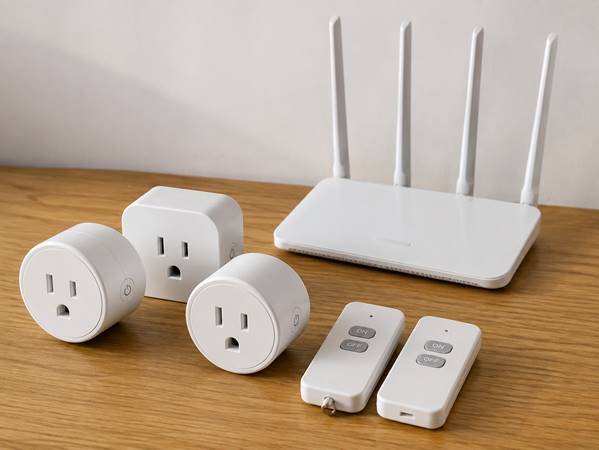
• Wired USB peripherals: For example, wired mice and wired keyboards. First judge whether they are in the PSE catalog. If yes, add PSE; then judge whether they have a digital processing circuit and are within the scope of VCCI application. If yes, VCCI is required. For example, wired keyboards with pure mechanical structure (no main control chip and not in VCCI-covered categories) can be evaluated for VCCI exemption; wired gaming mice with macro programming and RGB lighting effects need VCCI.
• Pure mechanical products without circuits: None of the three certifications are needed, such as manual screwdrivers and plastic storage boxes; but if they have motors or batteries (such as electric toothbrushes and electric toys), they need to be re-evaluated as electronic products.
Boundaries of Exemption Situations (Need to check the latest official list)
Of course, some products can be exempted from corresponding certifications, but it should be noted that all exemptions have clear official qualification conditions, and the official list is updated from time to time. Be sure to take the latest version as the standard, and do not judge by yourself based on vague standards such as “low power” or “industrial use”:
• VCCI exemption: It must simultaneously meet the scope of application exclusion clauses officially issued by VCCI, such as specific equipment only for industrial/scientific research use and not sold to ordinary consumers, or micro-equipment that meets extremely low power limits. The specifics need to be checked against the official VCCI scope of application description.
• PSE exemption: The core judgment basis is the electrical appliance catalog issued by the Ministry of Economy, Trade and Industry (METI) of Japan, as well as parameters such as the product’s rated voltage, power, and purpose; unlisted products for industrial use only and not for consumers can be exempted, but it must be subject to the official catalog and application instructions, and cannot be judged by “low voltage” or “low power” on your own.
• Giteki exemption: Products that only receive but do not transmit wireless signals (such as ordinary radios) are usually exempt; extremely low-power short-range devices can only be exempted if they meet all conditions such as frequency band, power limit, purpose, and device category specified by the Ministry of Internal Affairs and Communications of Japan, and cannot be judged by “low power” on your own.
4. Practical Guide: Efficient Process and Cost Optimization for Combined Applications
After clearly determining which certifications are needed, how to apply to be more efficient and cost-effective? Here are several practical tips.
Most Efficient Application Sequence
Many people like to start all certifications at the same time, but in fact, a reasonable arrangement of the sequence can avoid a lot of rework:
• Prioritize PSE safety testing: PSE involves the structural safety of the product, such as insulation distance and fire-resistant materials. If the test finds that the structure is unqualified and needs mold modification or material replacement, the subsequent electromagnetic compatibility and wireless tests will have to be redone. Therefore, completing the PSE structure and safety tests first, confirming that no major changes are needed, and then doing other tests can save a lot of trouble.
• Giteki and VCCI can be tested simultaneously: Most of the test items of these two are independent. Giteki tests wireless RF, and VCCI tests the electromagnetic interference of the whole machine. As long as the product structure is basically determined, the tests can be started simultaneously, which can shorten the cycle by at least half.
• Do accessory certification in advance: For general accessories such as power adapters and wireless modules, their certification can be completed before the main unit, without waiting for the main unit design to be finalized. In this way, after the main unit is completed, the certification reports of the accessories can be used directly without waiting.
Test Data Sharing Rules (Cost-Saving Tips)
Many people don’t know that reasonable test planning can reduce duplicate work and lower compliance costs, but data reuse has clear prerequisites:
Under the same prototype, same configuration, and same working mode, if the test is completed by a laboratory with corresponding qualifications at the same time, some test data or prototype information can be used as a reference to reduce the workload of repeated testing – for example, some spurious emission data in Giteki testing can be used as a reference for VCCI testing if the test setup and limit requirements meet the corresponding VCCI standards; PSE structure inspection records can also be used for VCCI basic structure evaluation.
It should be clarified that this type of data sharing can only be used as a reference to reduce the workload of repeated measurements under the premise of the same prototype, same configuration, same working mode, and same laboratory accreditation scope, and cannot exempt VCCI whole-machine testing and registration, PSE conformity responsibility, or the official Giteki certification issuance process; if you find different laboratories for testing separately, due to different accreditation scopes and report mutual recognition rules of each institution, supplementary testing may still be required. It is recommended to prioritize selecting a laboratory with all three relevant qualifications for unified planning to maximize efficiency and reduce costs.
Precautions for Application Subjects and Validity Period
Many overseas sellers will ask: I am a Chinese manufacturer, can I directly apply for these certifications? In fact, the requirements for application subjects of different certifications are different, and cannot be generalized:
• PSE: According to the , when products are marketed in Japan, the Japanese notified business operator (usually an importer or a locally registered sales entity in Japan) shall bear the conformity responsibility. Diamond-shaped PSE shall be issued by a third-party organization recognized by the Japanese government, and the certificate holder shall meet relevant local requirements;
• Giteki: The requirements for the application subject are determined by the corresponding certification body. Overseas manufacturers can submit applications through Japanese local agents or qualified entities. The specifics shall be subject to the official rules of the certification body;
• VCCI: Registration shall be completed after testing by a qualified laboratory in accordance with the registration rules of the VCCI Association. The application subject shall meet VCCI’s membership or registration-related requirements.
For overseas sellers, determining the local Japanese responsible entity (importer or compliance agent) in advance can greatly reduce the communication cost of certification applications.
Regarding the validity period, the rules for different certifications are also different, and the core is related to whether the product is changed and whether the regulations are updated:
• Diamond-shaped PSE: The validity period is usually 3-7 years (differentiated by product category). Under the premise that the product design, applicable standards, and notification information have not changed, the certificate needs to be renewed as required before expiration;
• Circular PSE: There is no fixed validity period. As long as the product design, applicable standards, and information of the notified business operator have not changed, the self-declaration remains valid, but complete test records must be kept for inspection;
• Giteki: The certificate/mark is usually continuously applicable under the condition that the certification conditions (model, wireless module, antenna, transmission power, software RF parameters, etc.) have not changed and relevant regulatory requirements have not been adjusted; some certification bodies or some certificate types may be managed or reviewed in a 3-5 year cycle. The specific need for regular updates and renewal shall be subject to the latest rules of the certification body and the Ministry of Internal Affairs and Communications of Japan;
• VCCI: There is no fixed validity period. Under the condition that the product design and configuration have not changed and the VCCI standard has not been updated, the registration is valid for a long time.
Integration Requirements for Markings and Documents
The marks of the three certifications can be placed together in the same area of the product or packaging, and do not need to be pasted separately, but it must be ensured that each mark is clear and distinguishable, cannot cover each other, and cannot be too small to see clearly.
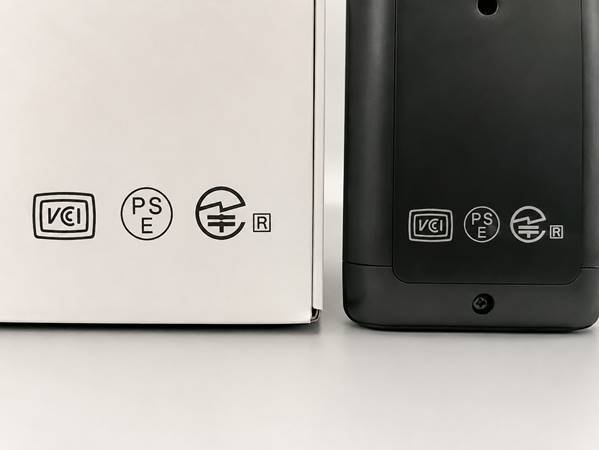
The product manual must contain Japanese compliance information, including the corresponding certification number, the name and contact information of the Japanese responsible entity. It should also be noted that the models and configurations of all certifications must be completely consistent with the actually sold version – for example, if a 1A charger is configured during certification, it cannot be replaced with a 2A one during sale, otherwise it will be considered non-compliant.
5. Pitfall Avoidance for Intermediate Users: High-Frequency Errors and Judgment Skills in Combination
If you want to avoid the pitfalls that others have spent a lot of money on, you should also pay attention to these types of high-frequency errors.
Cognitive Errors: Confusing Regulation Positioning
The first type of error is not understanding the positioning of the regulations at all, and making judgments take for granted:
• Error: Directly replacing Japanese certifications with overseas certifications (CE/FCC)
The core of this type of error is confusing the effectiveness boundaries between overseas certifications and Japanese certifications. As mentioned earlier, overseas certifications cannot directly replace local Japanese compliance requirements.
Pitfall avoidance method: Overseas reports are not completely useless. They can be used as the test basis. You can find a qualified laboratory to do the difference test of Japanese standards, without retesting all items, which can save part of the cost. However, the certification must go through the local Japanese process to obtain the corresponding certificate or registration certificate.
• Error: Choosing VCCI Class A/B randomly
Some people think that Class A has loose limits and is easy to pass, so they choose Class A randomly. But if your product is sold to ordinary consumers and used in a home environment, the Class A limit is not enough. Once you are complained about interfering with other devices, you will definitely be required to rectify, which is even more troublesome.
Pitfall avoidance method: As long as the product is for ordinary consumers, apply for Class B (household/consumer grade) uniformly, and do not choose Class A for convenience.
Judgment Errors: Wrong Scope of Application
The second type of error is inaccurate judgment of the scope of application, either missing certification and having goods detained, or doing too much and wasting money:
• Error: Misjudgment of PSE catalog
The most common misjudgment is “small USB-powered products definitely don’t need PSE”, but in fact, many USB chargers and power banks are in the PSE catalog. If you miss doing it, the goods will be directly detained by customs; there are also some products that are not in the catalog originally, but manufacturers worry unnecessarily and do extra certification, wasting costs for nothing.
Judgment skill: First check the official PSE catalog of the Ministry of Economy, Trade and Industry of Japan. If you encounter boundary products and are not sure, find a qualified third-party laboratory to do a free applicability assessment, and don’t guess by yourself. It is also reminded that if the product adds wireless functions or changes the power supply method, you must re-evaluate the certification combination, and cannot follow old experience.
• Error: Mistakenly thinking that if the wireless module has a certificate, the whole machine doesn’t need to be taken care of
Many people buy wireless modules with Giteki certification and think that the whole machine must be fine, but the module certificate has use conditions – for example, it specifies the antenna type, maximum transmission power, installation method, and housing material. If you change the antenna of the whole machine, adjust the power, or replace the housing that affects RF, it will not meet the use conditions of the module certificate, and the whole machine is still non-compliant.
Pitfall avoidance method: When you get the certification certificate of the wireless module, first carefully check its use conditions. If your whole machine design is different from the conditions, find a laboratory to do the whole machine evaluation in advance, and don’t wait until the goods are shipped to find the problem.
Change Errors: Product Changes Not Synchronously Updated for All Certifications
The third type of error often occurs in the product modification stage: many manufacturers only update the certifications they consider “relevant”, and miss other affected items, resulting in overall non-compliance.
Common scenario: After modifying the power circuit, only PSE is updated, and VCCI is ignored – but the power circuit is the main source of conducted disturbance, and the VCCI test result may be unqualified after the parameters change; after replacing the wireless module, only Giteki is updated, and VCCI is not evaluated – the spurious emission characteristics of the new module are different, which may also affect the VCCI result of the whole machine.
Consequence: Certifications that are not updated synchronously will be directly invalidated. Even if other certifications are within the validity period, the whole machine is still non-compliant.
Pitfall avoidance method: For any hardware change, whether it is modifying the power supply, replacing the motherboard, replacing the antenna, modifying the housing, or adjusting the shielding structure, the impact on the three certifications must be evaluated simultaneously, and do not only focus on a single certification.
Marking Errors: Irregular Use of Marks
The fourth type of error is irregular marking. It is a pity that even though all certifications have been done, the goods are still detained or removed from the shelves.
Common problems: Applying certification marks of other models, the mark size is too small to see clearly, missing necessary information (for example, the name of the Japanese responsible entity must be marked next to the PSE mark, and the certification number must be marked next to the Giteki mark).
Consequence: Customs detention of goods, platform removal, and the previous certification costs and logistics costs may all be wasted.
Pitfall avoidance method: When designing markings, strictly follow the latest requirements of each regulation. Do not randomly change the size or layout by yourself. Before going on the market, find a professional compliance personnel to check it once. It takes more than ten minutes to avoid big losses.
6. Quick Check Tools and Verification Channels
The following two practical tools can help you quickly check compliance requirements.
Quick Check Table for Common Product Certification Combinations
| Product Type | Required Certification Combination Judgment Logic | Typical Examples |
| Ordinary mains-powered home appliances | 1. PSE is required if in the catalog; 2. Add VCCI if it contains a digital processing circuit and is within the scope of VCCI application | Pure mechanical electric kettle (only PSE), intelligent temperature control table lamp (PSE + VCCI) |
| Battery-powered wireless products | 1. Giteki is required for wireless transmission; 2. Add VCCI if it contains a digital processing circuit and is within the scope of VCCI application | Bluetooth headset (Giteki + VCCI), ordinary remote key (Giteki, can be evaluated for VCCI exemption) |
| Mains-powered smart wireless products | 1. PSE is required if in the catalog; 2. Giteki is required for wireless transmission; 3. Add VCCI if it contains a digital processing circuit and is within the scope of VCCI application | WiFi smart socket (PSE + Giteki + VCCI), traditional remote-controlled mains switch (PSE + Giteki, can be evaluated for VCCI exemption) |
| Wired USB peripherals | 1. Add PSE if it belongs to the PSE catalog; 2. VCCI is required if it contains a digital processing circuit and is within the scope of VCCI application | Wired mechanical keyboard (can be evaluated for VCCI exemption), wired gaming mouse (requires VCCI) |
| Power banks, mobile phone chargers | 1. PSE is required if in the catalog; 2. Add VCCI if it contains a digital control circuit (such as fast charging, power display) and is within the scope of VCCI application | Ordinary chargers without digital control: usually require PSE, whether to add VCCI needs to be judged according to the scope of VCCI application and the testing institution; PD fast charging/power banks with digital control: PSE + VCCI |
| Pure mechanical products without circuits | No need for the three certifications | Manual tools, plastic storage boxes |
Verification Channels When Unsure
If you encounter boundary products and are not sure, don’t guess randomly. It is most reliable to find these channels for verification:
1. Local Japanese importers/sellers: They know the specific requirements of the channels best. Some large channels may have stricter requirements than official rules. Confirming in advance can avoid a lot of trouble.
2. Third-party laboratories with all three qualifications: Regular laboratories generally provide free applicability assessment services, have long-term exposure to regulatory updates, and their judgments are more efficient and accurate.
3. Japanese official public documents: The most authoritative basis is the catalogs and rules issued by the government. For example, the PSE catalog of the Ministry of Economy, Trade and Industry, the Radio Law exemption list of the Ministry of Internal Affairs and Communications, and the official VCCI scope of application description can all be queried on the corresponding official websites.
Summary
Generally speaking, the combination logic of VCCI, PSE, and Giteki (commonly known as TELEC) is not complicated: the three govern completely different types of risks, and there is no possibility of mutual substitution. Whichever type of risk the product involves, just meet the corresponding compliance requirements.
After reading this article, you can use the three-step method to quickly judge the certification requirements for electronic products in the Japanese market and avoid basic cognitive misconceptions; when applying, reasonably arrange the test sequence and choose the same fully qualified laboratory, which can effectively improve efficiency and reduce costs; when modifying products, remember to simultaneously evaluate the impact on all relevant certifications, and do not only update a single certification. When encountering uncertain boundary situations, prioritize verification through formal laboratories or official public documents, and most compliance risks can be avoided.