
Anyone working in the Japanese electronics market can hardly avoid the VCCI mark. Many newcomers are easily confused when first encountering it: Is it a mandatory certification or an industry mark? What are the differences between it and PSE, MIC Giteki? What are the consequences of pasting the wrong class or wrong position?
In this article, we systematically sort out the usage specifications of the VCCI mark from basic cognition to practical operation rules, and then to pitfall avoidance and self-inspection. Whether you are a cross-border seller, brand owner, or contract manufacturer, you can find operation references for corresponding scenarios here.
First, Understand What the VCCI Mark Is: Positioning Is More Important Than Usage
Many people are used to calling VCCI the “Japanese EMC Certification”, but this statement is not accurate. VCCI usually refers to the voluntary control system for electromagnetic interference and the corresponding mark launched by the VCCI Council of Japan. It is essentially an industry self-regulatory electromagnetic compliance mark, not a certification project mandatory by the Japanese government.
In plain terms, pasting this mark means that “this product’s leaked electromagnetic wave (i.e., electromagnetic interference/EMI) level meets the corresponding limit requirements under specified test conditions, which can reduce the risk of interference to surrounding electronic equipment”. A core boundary to pay special attention to here: VCCI only covers “products interfering with others”, not “products being interfered with by others” (i.e., immunity). Do not confuse it with full-item EMC certification.
Although it is a voluntary system, VCCI has a high recognition in the Japanese consumer electronics market and is an important compliance reference for information technology products to enter mainstream channels. It is usually not an item inspected by customs item by item according to government mandatory certifications, but some mainstream e-commerce platforms, importers, or offline electrical appliance channels may take it as one of the review materials for listing or supply. Specific requirements vary by product category, platform policies, and seller qualifications. Lack of relevant compliance certificates may affect the listing progress.
Boundaries with Other Japanese Compliance Marks
People who are new to the Japanese market can easily confuse various compliance marks. In fact, they are in charge of completely different fields, and none can replace the other:
• The PSE mark covers electrical safety, such as whether the product will leak electricity or catch fire, and targets products within the scope of the Electrical Appliance and Material Safety Law;
• MIC Giteki (commonly known as former TELEC) covers wireless compliance, such as the frequency band and power of wireless functions like WiFi, Bluetooth, and cellular communication, and targets products within the scope of the Radio Law;
• VCCI only covers electromagnetic interference emissions, targeting the electromagnetic leakage problem of information technology equipment.
If your product has wireless functions, it is likely to need to meet the requirements of both MIC Giteki and VCCI, and even PSE. The three cannot replace each other. In addition, a special reminder: overseas electromagnetic-related certifications such as CE and FCC cannot directly replace VCCI, because there are differences in test standards and limit requirements between the two. The Japanese market only recognizes test results that meet VCCI technical standards.
Who Needs to Understand VCCI Mark Specifications?
Whether you are an electronics brand exporting to Japan, a cross-border seller, an OEM/ODM factory supplying Japanese customers, a local Japanese importer, an authorized agent, or a compliance reviewer of an e-commerce platform, you need to master the usage rules of the VCCI mark. After all, problems in any link from product testing, labeling to listing promotion may lead to rectification, delisting, or even more serious consequences.
Applicable Scope Judgment: Which Products Need to Consider the VCCI Mark
After figuring out what VCCI is, the most common question is: Does my product need to paste this mark? You can judge step by step according to the following logic.
First Look at the Core Applicable Product Categories
First of all, it should be noted that the specific applicable scope of VCCI shall be subject to the currently effective official rules and applicable product category list. Information Technology Equipment (ITE) is its most typical coverage scenario. Computers, monitors, printers, routers, keyboards and mice, USB flash drives, office scanners, etc. that we contact daily all fall into this category.
If the product has components that may generate conducted/radiated emissions, such as digital circuits, switching power supplies, or power adapters, or has communication interfaces such as USB/Ethernet cable/HDMI, this only reminds you that you need to first evaluate whether it falls within the VCCI coverage scope. It does not mean that all electronic products with such structures automatically need labeling. When in doubt, you can check the applicable product category list officially released by VCCI, or consult a compliance laboratory or the Japanese responsible entity.
How to Judge Boundary Products
For ambiguous products, you can follow these rules:
• Products with wireless functions: VCCI only covers the electromagnetic interference part. The compliance of the wireless function itself still requires MIC Giteki. The two are separate. Do not think that passing one is enough;
• Combination/set products: For products sold in combination or sets, the compliance requirements of the main unit, adapters, cables, and peripherals shall be evaluated according to the actual shipping configuration. Attached components may need to be included in the whole machine or combination test. The class statement in packaging and promotion must be consistent with the final compliance conclusion. The compliance conclusion of a single component cannot replace the compliance judgment of the entire set of products;
• Consumer/commercial dual-use products: If your product is sold to both enterprises and ordinary consumers, priority shall be given to the stricter requirements, that is, judged according to Class B, to avoid non-compliance caused by subsequent changes in sales scenarios.
Product Categories That Clearly Do Not Need Labeling
There are two types of products that do not need to paste the VCCI mark at all:
The first type is products that have no electronic circuits at all and do not generate electromagnetic emissions, such as pure manual screwdrivers, ordinary plastic shells, and paper packaging. They themselves do not generate electromagnetic interference, so naturally they do not need compliance;
The second type is specific product categories that do not fall within the scope of information technology equipment and are covered by other special compliance systems, such as heavy industrial equipment and some medical equipment with special compliance requirements. Such products may be subject to other regulations or industry standards. You cannot assume that there are no other electromagnetic-related compliance obligations just because VCCI labeling is not required. If you are unsure, you can directly check the applicable product category list officially released by VCCI, or consult a compliance agency and the Japanese responsible entity. Do not make judgments on your own.
The Two Most Common Misjudgments
Many newcomers fall into these two cognitive pitfalls, which must be avoided in advance:
The first is equating component compliance with whole-machine compliance. For example, the power module you use has passed VCCI, which does not mean that the electromagnetic interference of the whole machine will meet the standard after it is installed in the whole machine. After all, the motherboard, wiring, and shell of the whole machine will affect the electromagnetic emission characteristics, and the test results of the whole machine shall prevail.
The second is mistaking prototype test conclusions as the basis for mass production compliance. Only when the BOM, motherboard, shell, cables, adapters, and firmware configuration of the test prototype are completely consistent with the mass production version can the test conclusion be used as the basis for mass production compliance. If it is only an engineering verification prototype, or the mass production configuration has changed, the prototype test conclusion cannot be directly used.
Class A or Class B? Choosing the Right Class Is the First Step to Compliance
Many people, when seeing VCCI’s Class A and Class B for the first time, will think that Class A is a “higher level”, but this is completely reversed. The two only have different applicable scenarios, with no distinction between high and low. The core difference lies in the strictness of the limits.
We can quickly understand the difference between the two through a table:
| Comparison Dimension | Class A | Class B |
| Applicable Environment | Industrial/commercial premises | Residential/civilian environment |
| Electromagnetic Interference Limit | Relatively lenient | Stricter |
| Mark Appearance | The letter “A” is marked inside the mark | The letter “B” is marked inside the mark |
| Applicable Sales Targets | Only for enterprise/industrial customers | For ordinary consumers/household users |
Core Logic of Class Selection
The core starting point for class selection is the final sales scenario of the product, which has nothing to do with the performance and price of the product itself:
• If your product is only sold to enterprises and factories, and used in commercial/industrial environments such as offices and industrial parks, Class A is sufficient;
• If the product is sold to ordinary consumers and used at home or in residential areas, the stricter Class B must be selected;
• If you are not sure what scenario the product will eventually be sold to, or plan to do both To B and To C channels at the same time, directly choose Class B. Although the test cost may be a little higher, it has a wider scope of application, and you will not need to retest due to subsequent expansion of sales channels.
A special reminder here: Class A is not a “higher level”. If the product may enter residential scenarios, retail channels, or the final use scenario is uncontrollable, Class B requirements should be evaluated first. If Class A products are used in residential environments, there may be a risk of electromagnetic interference, and some channels will also require additional usage instructions.
It should be noted that whether the mark of the corresponding class can be used ultimately depends on whether the electromagnetic interference test of that class meets the standard. Changes in configurations such as hardware, power supply, interfaces, and shielding may change the emission characteristics of the product, thereby affecting the applicability of the class. The class is not fixed once selected. If changes in sales scenarios or hardware configurations that may affect electromagnetic emissions occur, re-evaluation is required. Specific change scenarios will be explained in detail in the re-examination rules later.
Check Before Labeling: These 3 Conditions Must Be Met Before Labeling
The VCCI mark cannot be pasted whenever you want. The following prerequisites must be met at the same time, otherwise it is illegal use.
First: The Product Itself Must Meet Technical Requirements
You need to find a qualified laboratory to complete the electromagnetic interference emission test according to the VCCI technical standard of the corresponding class. Only when the test results meet the standard can it be considered compliant.
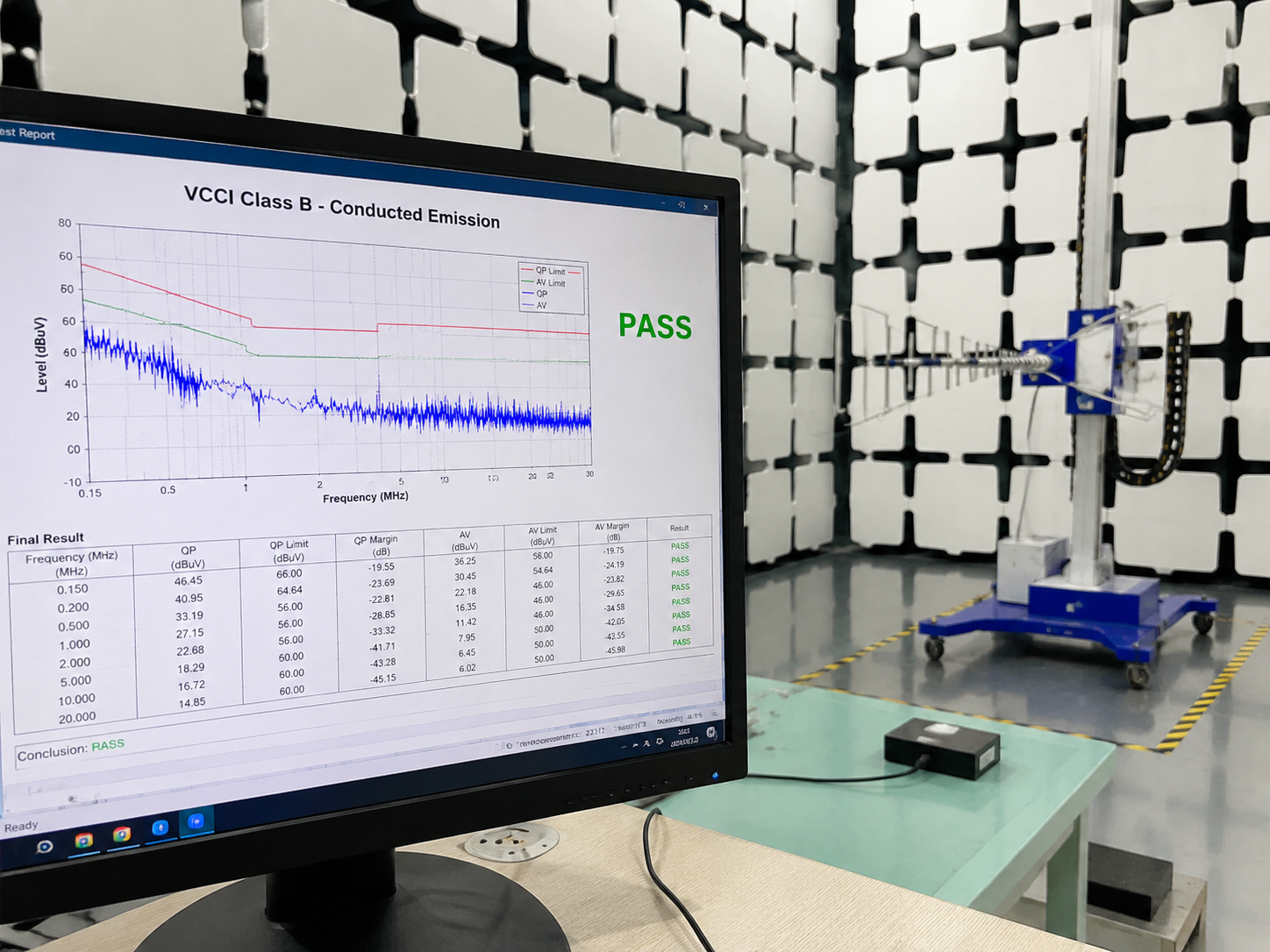
There are two key points to note here: First, the mass production configuration must be completely consistent with the test prototype. From the part numbers of core components to motherboard wiring, shell structure, and shielding solutions, none can be changed at will, otherwise the electromagnetic emissions of mass-produced products may exceed the standard. Second, the limits for different product categories and different classes are different. There is no so-called “universal qualified value”. Do not apply the limits of other products to your own products.
Second: The Japanese Compliance Responsible Entity Must Be Clarified
The use and market circulation of the VCCI mark require a registered member that meets VCCI requirements as the responsible party, bearing compliance-related responsibilities and docking obligations. For products exported to Japan, local manufacturers, importers, or authorized agents that meet VCCI membership qualifications and Japanese market circulation responsibility requirements usually bear external compliance responsibilities. Overseas brands need to complete compliance declarations, data retention, and official/consumer inquiry responses through this responsible entity. Specific requirements shall be subject to the current VCCI membership rules. Do not print the mark in advance before the responsible entity is determined to avoid waste.
Third: Reference Materials Must Be Complete and Consistent
Compliance is not over after labeling. You need to keep a full set of traceable reference materials, including: test reports from qualified laboratories for the corresponding model and class, compliance self-declaration signed by the Japanese responsible entity, product specifications, model list or difference description (if any), and membership or registration information of the responsible entity (if applicable). All materials must correspond one-to-one with the actually sold models, classes, and mass production configurations, and the retention period shall be implemented in accordance with VCCI official requirements for random inspection.
Labeling Red Lines That Must Never Be Crossed
There are three situations that are clearly illegal, and you cannot touch them even if you think they are “almost the same”:
1. Printing and pasting the mark out of thin air without completing the corresponding class test;
2. Pasting the wrong class, or using the mark on products that do not fall within the VCCI coverage scope;
3. Using the mark without a clear VCCI registered member as the responsible entity.
Full-Scenario Usage Rules: Different Requirements for Products, Packaging, and Promotion
After meeting the prerequisites, you can use the VCCI mark. The usage rules are different for different scenarios, which we will explain separately.
Requirements for Pasting on the Product Body
The product body is the main carrier of the mark. When pasting, it must meet the following requirements:
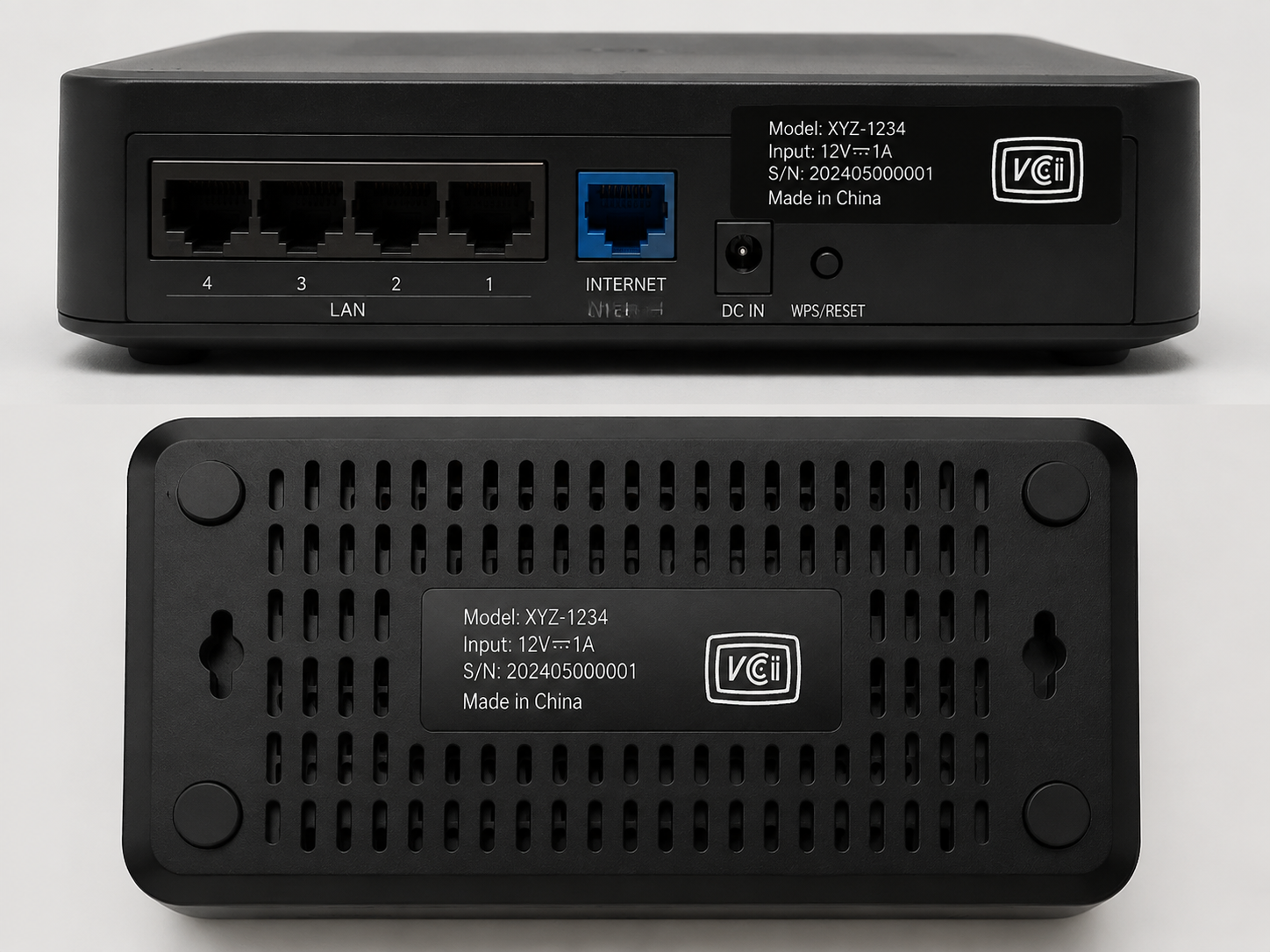
• Position should be conspicuous: Priority is given to pasting on easy-to-see places such as the back, bottom, and next to the nameplate of the product. It cannot be permanently blocked by detachable parts or protective shells. For example, pasting the mark of a small router on the bottom where it is permanently blocked by a wall mounting bracket, or pasting the mark of a power adapter on the side blocked by the chassis after installation, are all non-compliant;
• Should be durable: It must be pasted in a position that is not easy to wear or fall off, to ensure that it can be clearly identified during the normal use cycle of the product;
• Style cannot be changed: The vector image officially released by VCCI must be used, maintaining a fixed aspect ratio. Stretching and deformation, modifying fonts or class letters, changing the logo structure, or using obsolete old patterns are not allowed;
• Flexible color and process: Color printing is not required. Monochrome colors such as black, white, and gray are acceptable, as long as there is obvious contrast with the background and it is clear. Processes such as silk screen printing, laser engraving, and self-adhesive pasting are all allowed;
• No mandatory minimum size: VCCI does not stipulate the minimum size of the mark, but it must be clearly identifiable to the naked eye. Don’t make a mark the size of a rice grain that no one can see.
For particularly small micro products, such as Bluetooth earphones and small adapters, if the body really cannot fit the mark, the mark can be pasted on the minimum sales package, but it must be ensured that the package is the smallest unit that consumers receive.
Usage Rules for Packaging and Manuals
The VCCI mark can also be used on outer packaging and manuals, but it must meet the relevant VCCI mark statement requirements and the review criteria of the corresponding channels:
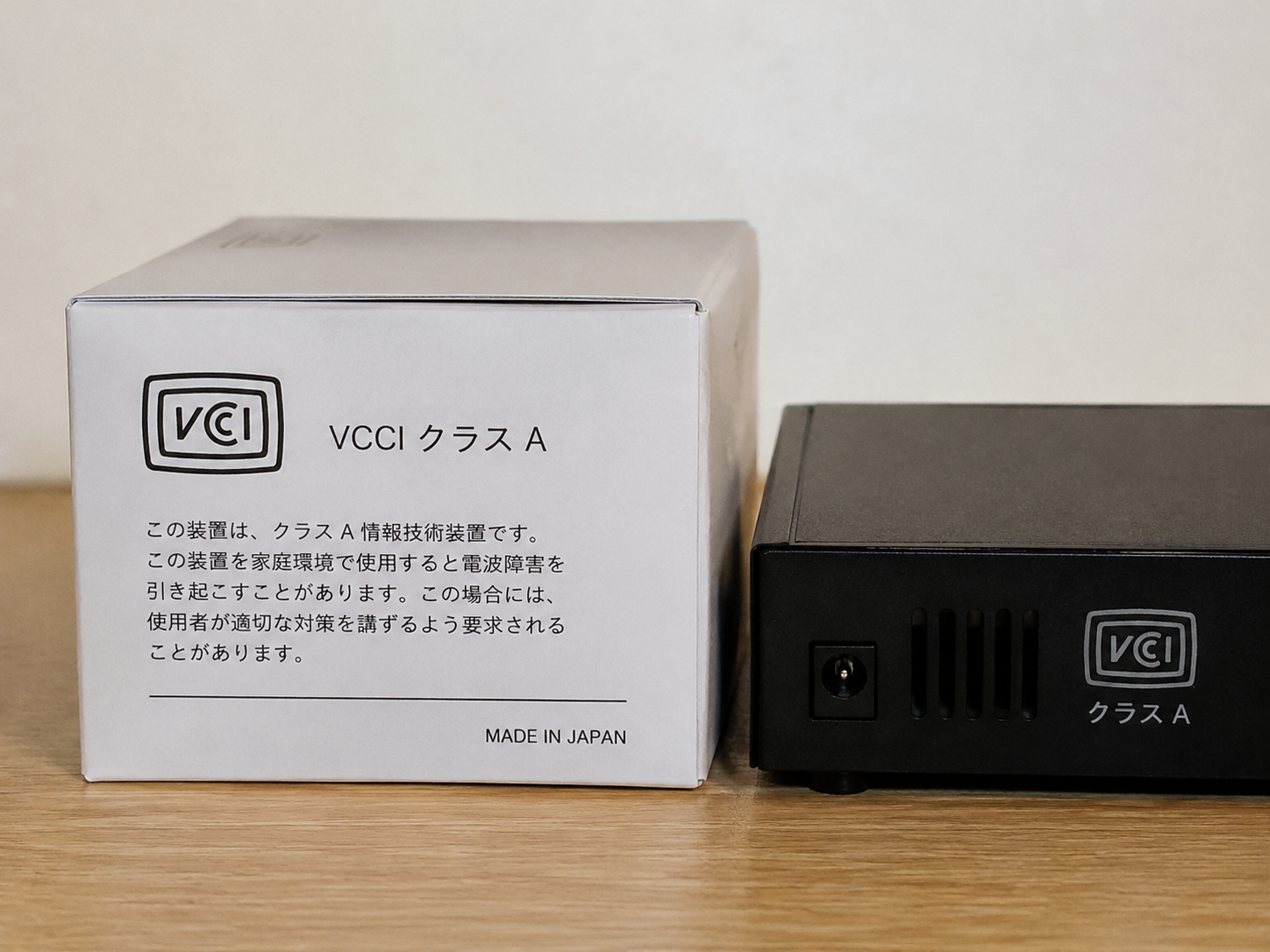
• The outer packaging can be printed with the mark, but the corresponding class must be marked, and it must be completely consistent with the actual class of the product. It is not allowed to print Class B on the packaging and paste Class A on the product;
• The VCCI compliance prompt in the product manual shall be placed according to the product class, applicable environment, and VCCI/channel requirements, and shall indicate the class, applicable environment, and relevant information of the responsible entity (the specific presentation method of the responsible entity shall be subject to official rules, compliance declarations, and channel review requirements); if there are multi-language versions, the meaning of the expressions in each language must be unified, and there must be no contradictions;
• The mark can also be printed on warranty cards and accessory packaging, but these cannot replace the mark on the product body. Except for the micro products mentioned above, the product body must still have the mark pasted.
Usage Rules for E-commerce and Promotion Channels
Online promotion is a high-incidence area for violations, and many sellers easily fall into pitfalls here:
• The VCCI mark displayed on e-commerce detail pages and promotional images must be completely consistent with the model and class of the actual shipped product. When the product changes model or class, the promotional images must be updated in time;
• Promotional statements must be accurate. Using “meets VCCI technical requirements” is very safe. Do not exaggerate by saying “passed the Japanese government mandatory VCCI certification”, nor claim that VCCI compliance means the product has anti-interference ability;
• Do not confuse concepts: It is not allowed to promote component compliance as whole-machine compliance, nor to use compliance materials of old products to promote new models that have not completed testing.
Usage Rules for Multi-Model/Series Products
Many sellers have multiple models of products in the same series. Here are a few rules to note:
• Different models in the same series cannot directly apply the VCCI mark of the tested model; if the model difference involves parts that may affect electromagnetic emissions such as motherboard, power supply, interface, clock, shielding, and cables, tests shall be completed separately, or traceable difference evaluation and representative model test basis shall be formed;
• Different regional versions of the same product, such as overseas version and Japanese version, cannot share the VCCI mark. The Japanese version must undergo a separate VCCI compliance assessment;
• If your product meets the requirements of both Class A and Class B, you can directly paste the stricter Class B mark, which is equivalent to using a higher class for a lower requirement scenario, and this is allowed.
Re-Examination Required for These Situations: Don’t Wait for Violations to Retest
Many people think that one VCCI test is enough once and for all, but that’s not the case. As long as changes in the product’s sales scenario, hardware configuration, software, or supply chain that may affect electromagnetic emissions occur, compliance must be re-evaluated, and if necessary, retested. The original mark cannot continue to be used.
Re-Examination for Sales Scenario Changes
If the final sales scenario of the product changes, for example, it was originally only sold to enterprise customers, but now it is going to expand to household retail channels, or conversely, from civilian use to commercial use, it is necessary to re-evaluate whether the class matches, and if necessary, retest the items of the corresponding class.
Re-Examination for Hardware/Structure Changes
If the hardware or structure of the product has these changes, it must be re-evaluated:
For example, if the motherboard, clock circuit, power supply solution, shielding structure, interface type, shell material are changed, or the supporting cables and accessories are replaced, or even the combination sales method is changed (for example, the main unit was sold separately before, but now a new adapter is included in the set). These changes may affect the electromagnetic emission characteristics of the product, so it is necessary to reconfirm whether it still meets the original class requirements.
Re-Examination for Software/Configuration Changes
Don’t think that only hardware changes require retesting. Software changes may also affect electromagnetic interference:
For example, firmware updates or driver modifications cause changes in clock frequency and working mode, or the factory default configuration is changed (for example, a function that was originally turned off is now turned on by default). As long as it may affect the electromagnetic emission characteristics, compliance must be re-evaluated.
Re-Examination for Supply Chain Changes
Changes in the supply chain may also affect the electromagnetic characteristics of the product:
For example, if the production factory is changed, or the supplier and part number of core components (such as power chips, main control chips, shielding parts) are changed, even if the parameters look the same, the electromagnetic emission performance of products from different manufacturers may be different, so re-verification is required.
Newcomer Pitfall Avoidance and Quick Self-Inspection: 5 Steps to Complete Compliance Verification
Finally, we have sorted out the pitfalls that overseas newcomers are most likely to fall into, the consequences of violations, and a set of quick self-inspection methods to help you avoid most problems.
High-Frequency Minefields for Newcomers
According to common industry situations, people who are new to VCCI are most likely to make these 5 mistakes:
1. Before confirming the local Japanese responsible entity, the mark is printed in advance. As a result, the responsible entity is not finalized in the end, and all printed marks are wasted;
2. Before customs clearance and listing, the mark is not pasted, or the compliance certificate is not prepared, resulting in being intercepted by the sales channel and delaying the listing time;
3. The style, class, and pasting position of the mark do not meet the requirements, and the channel requires rectification. Re-labeling costs money and time;
4. The product has changed configuration or supplier, but no re-compliance assessment is done, and the original mark is still used. It will be a violation if found;
5. Exaggerating the effectiveness of VCCI in promotion, for example, saying it is a government mandatory certification, or claiming that it can improve the anti-interference ability of the product.
Common Consequences of Violations
For violations of different degrees, the corresponding consequences will vary depending on the nature of the violation, the performance of membership responsibilities, and the rules of sales channels:
If it is just non-standard marking, such as wrong pasting position, deformed style, or blurred class marking, the sales channel will generally require rectification or temporary delisting, and it can be re-listed after adjustment meets the requirements;
If there are serious situations such as false labeling, wrong class labeling, or unqualified responsible entity qualifications, VCCI or sales channels may require correction. Membership qualifications and channel supply qualifications may be affected depending on the severity of the violation. In some cases, product recall requirements may also be triggered. The specifics shall be subject to official rules and channel agreements;
If it is unclear responsible entity or false promotion of compliance attributes, the product will not only be difficult to enter Japan’s mainstream sales channels, but may also trigger compliance risks related to consumer protection.
5-Step Quick Self-Inspection Method
If you are not sure whether your VCCI mark is used correctly, you can quickly self-inspect according to these 5 steps:
1. Check the applicable scope: First check whether the product has electronic circuits and whether it belongs to information technology equipment. If you are not sure, directly check the official VCCI applicable product category list, don’t guess by yourself;
2. Check class matching: Choose Class B for civilian products and Class A for commercial products. For dual-use or unclear scenarios, priority is given to Class B judgment;
3. Check mark style: Check whether the official standard logo is used, whether the corresponding class is marked, whether there is deformation or blurring, and whether the position is conspicuous;
4. Check supporting materials: Check whether there are test reports for the corresponding model and class, whether there is a responsible entity declaration from the Japanese VCCI registered member, and the corresponding VCCI membership or registration information (if applicable), and whether the relevant materials are consistent with the mass production configuration;
5. Check full-scenario consistency: Check whether the models and classes on the product body, outer packaging, manuals, and e-commerce promotional pages are all consistent, and whether there are exaggerated promotional statements.
Although VCCI is an industry self-regulatory mark, it is often used as an important compliance reference in channel audits of information technology equipment in Japan. The core of its rules is a complete closed loop formed around “electromagnetic emission compliance”: first clarify the applicable boundaries and class matching, then implement the requirements of testing and responsible entities, standardize the use of marks in all scenarios, and finally conduct timely re-examination and evaluation when products or supply chains change. For practitioners who are deeply engaged in the Japanese electronics market, thoroughly understanding these rules and cooperating with the 5-step self-inspection method for regular verification can effectively reduce the risks of rectification, delisting, and repeated testing.