
If you deal in electronic products for the Japanese market, or often buy digital accessories in Japan, you have most likely seen the “VCCI” mark on products. Many people have questions when they first encounter it: Is this a mandatory certification in Japan? What is the difference between it and PSE and Radio Law compliance? Do I need to apply for it for the docking stations I sell?
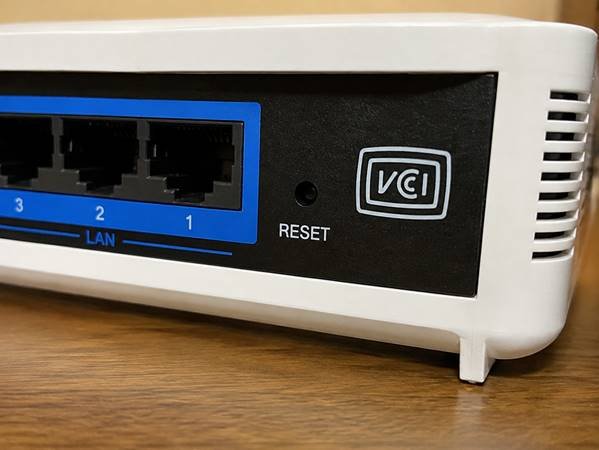
This article systematically sorts out the core definition, scope of application, classification rules, application process and common misconceptions of VCCI, to help you establish a clear judgment logic and know which directions to check the rules when encountering uncertain situations.
Note: This article is compiled based on the current public rules of VCCI. All specific compliance judgments are ultimately subject to the latest technical specifications and procedural documents published on the VCCI official website.
1. Core Nature and Regulatory Boundaries of VCCI
The operating entity of VCCI is the Voluntary Control Council for Interference by Information Technology Equipment and Multimedia Equipment of Japan (abbreviated as VCCI), a professional industry organization dedicated to formulating and managing self-regulatory compliance rules for electromagnetic disturbance of IT/multimedia equipment. All rules are subject to the latest version published on the official website. The commonly known “VCCI certification” in the market is strictly speaking a conformity declaration completed in accordance with current VCCI procedural documents. It is an industry self-regulatory EMC (electromagnetic compatibility) compliance system, not a mandatory certification of the Japanese government.
Many people confuse VCCI with other types of electronic compliance requirements in Japan. The three have completely independent control directions and cannot replace each other. You can quickly distinguish them through the following table:
| Compliance Requirement | Core Control Direction | Nature | Main Applicable Products | Common Corresponding Procedures |
| VCCI | Electromagnetic disturbance (unintended electromagnetic energy generated by equipment does not interfere with the normal operation of other equipment) | Industry self-regulatory | Products with digital information processing functions such as IT, multimedia, and some communication terminals (subject to the official catalog) | Complete conformity declaration in accordance with VCCI rules + use the mark in accordance with specifications |
| Japan Radio Law | Wireless transmission parameters (frequency and power comply with regulations, and do not interfere with public communications) | Government mandatory | Equipment with wireless transmission functions such as Wi-Fi, Bluetooth, and cellular | Complete applicable conformity assessment according to wireless technology and equipment categories; MIC (Ministry of Internal Affairs and Communications of Japan) is the competent authority, and institutions such as TELEC can undertake assessment work for specific equipment |
| PSE Compliance | Electrical safety (prevention of electric shock, fire and other risks) | Government mandatory | Regulated products listed in the Electrical Appliance and Material Safety Law, which need to be confirmed according to product category, rated parameters, structure and sales form | Complete the corresponding conformity procedures according to product categories (processes differ for specified electrical appliances and non-specified electrical appliances) + affix marks according to rules |
Note: For IT/multimedia products with AC power adapters or other components regulated by the Electrical Appliance and Material Safety Law, the applicable PSE requirements need to be checked separately. VCCI electromagnetic disturbance compliance cannot replace PSE electrical safety compliance.
Although VCCI is a self-regulatory system, it is still one of the most recognized electromagnetic disturbance compliance certificates in the Japanese electronics market. Its practical value is mainly reflected in three aspects:
First, for some categories in some offline stores and mainstream e-commerce platforms (such as Amazon Japan) in Japan, the VCCI mark is a common access or supplier audit requirement, which is subject to the rules of the corresponding channel;
Second, the electromagnetic disturbance control of compliant products is more standardized, which can reduce consumer complaints and returns/exchanges caused by interference with other home appliances and electronic equipment;
Third, as an industry-recognized compliance certificate, it can reduce the cost of communicating EMC conditions with channels and consumers.
It should be clarified that self-regulation does not mean that there are no constraints on the electromagnetic disturbance level of products: not participating in VCCI does not necessarily mean violating the law, but if the product has actual harmful interference or violates applicable laws, it may still bear corresponding responsibilities. VCCI is a highly recognized and mature process-based way to achieve electromagnetic disturbance compliance in the industry.
2. Scope of Application and Quick Judgment Method
The following are common product categories for preliminary judgment for beginners, and do not represent the complete official VCCI classification catalog. The final scope of application is subject to the current VCCI equipment definitions, exclusion clauses and technical specifications, and cannot be directly judged solely by product name:
1. Information Technology Equipment
Typical examples: laptops, routers, printers, servers. The prerequisite for application is that they have the core functions of digital information processing, storage or interaction, and are not in the official excluded categories.
2. Multimedia Equipment
Typical examples: smart speakers, home projectors. The prerequisite for application is that they meet the VCCI definition of multimedia equipment and have corresponding digital processing functions. Whether they fall within the scope of application needs to be checked in combination with the circuit structure and core functions of the equipment, and cannot be directly excluded based on vague standards such as “analog circuit” or “no digital processing”.
3. Active Supporting Equipment (Category to Be Verified)
Typical cases to be verified: docking stations, dedicated external power supplies for IT equipment. The prerequisite for application is that they are sold as independent commodities, have independent digital processing or interface conversion functions, and meet the corresponding equipment definitions. Passive accessories that only serve as supporting equipment for the main device and have no independent digital processing function are generally not applicable; VCCI requirements for external power supplies and PSE requirements are independent of each other and need to be checked separately.
4. Some Communication Terminals (Category to Be Verified)
Typical cases to be verified: landline phones, optical fiber modems, Bluetooth headsets. The prerequisite for application is that they meet the clear definition of VCCI communication terminal equipment. They cannot be directly presumed to be applicable solely based on “with digital circuits” or “with wireless functions”, and the official classification rules need to be checked separately.
Situations that can be preliminarily excluded include purely mechanical, passive accessories without circuits (such as ordinary cables, brackets, plastic housings without circuits, etc.), but equipment explicitly excluded by the official or special application situations are still subject to the current VCCI technical specifications. Other active or circuit-equipped products, even if they are not typical IT equipment, must be checked against VCCI equipment definitions and exclusion clauses, and cannot be arbitrarily excluded.
For products with ambiguous boundaries, preliminary judgment can be made based on two core rules:
• IT/multimedia products with wireless functions: radio frequency compliance needs to be judged separately in accordance with the Radio Law, which is parallel to the VCCI electromagnetic disturbance assessment;
• Multi-functional and multi-module equipment: it is necessary to first confirm whether it meets the current VCCI definition of IT or multimedia equipment and is not in the excluded situations, and then judge whether it is included in the assessment scope.
Preliminary judgment can be made through a three-step method, and the final conclusion is subject to official rules:
Step 1: Confirm whether the product is supplied or sold as a commodity in the Japanese market. The expected use environment (residential/non-residential) is mainly used to judge the Class A/B level, and cannot alone determine whether the product falls within the scope of VCCI application.
Step 2: Preliminarily judge whether the product falls into the general category of IT equipment, multimedia equipment or related communication terminals.
Step 3: Check against the latest applicable catalog and exclusion clauses on the VCCI official website in combination with the product’s interfaces, configuration, working mode and expected use environment.
For example, for products also called “smart speakers”, some have a complete digital processing system and interactive functions, while some may only have a pure analog power amplifier structure. The application conclusions are completely different, and must be confirmed in combination with actual functions and technical parameters.
3. Core Control Rules and Class A/B Classification
The core control content of VCCI is electromagnetic disturbance (EMI), that is, unintended electromagnetic energy generated by electronic equipment during operation and propagated through power lines, signal lines or space. Excessive intensity may interfere with the normal operation of other equipment. Electromagnetic disturbance is mainly divided into two categories: conducted disturbance propagated along conductors such as power lines and signal lines, and radiated disturbance propagated through the air.
It should be noted that VCCI only controls “electromagnetic disturbance emitted by equipment”, and the equipment’s immunity to external interference (immunity), electrical safety, radio frequency compliance, product performance and quality, etc., are not within its control scope.
VCCI is divided into two levels according to the expected use environment of the product. The following table is a reference for common scenarios for beginner understanding. The final level needs to be comprehensively determined based on VCCI equipment classification, the expected main use of the product, installation and use environment, and instruction and warning requirements, and is not directly related to product price, size, or sales channel:
| Level | Expected Use Environment | Strictness of Limits | Marking and Warning Requirements | Situations Where Direct Adoption Is Prohibited |
| Class B | Civilian scenarios such as homes and residences | Stricter | VCCI mark and Class B level must be marked | Class B cannot be excluded solely because the product is large in size or high in price, nor can the level be judged solely by the sales channel |
| Class A | Non-residential commercial/industrial scenarios such as offices, factories, and computer rooms | Relatively lenient | VCCI mark and Class A level must be marked, and the specified non-residential use warning text and carrier must be used in accordance with current rules | If the sales, promotion, and user instructions of the product cannot clearly limit non-residential use, Class A cannot be directly adopted; “the customer is an enterprise” or “affixed with an industrial label” cannot be used alone as the basis for judgment |
If the actual circulation scenario of Class A products may flow into residences, the applicable conditions of Class A need to be rechecked, and subjective expectations cannot replace the rule requirements. For example, home routers sold to home users need to be evaluated according to Class B when they meet the applicable conditions of Class B; small office switches clearly sold only to enterprise computer rooms can be evaluated according to Class A only on the premise of meeting all Class A rules.
After completing the conformity declaration, enterprises can use the VCCI mark and the corresponding Class level mark in accordance with the current VCCI marking rules; Class A products also need to check the specified non-residential use warning requirements at the same time. The specific mark style, applicable carrier, affixing position and text content are subject to the current VCCI marking rules. It is prohibited to affix the mark before completing the compliance declaration, fraudulently use the level, or arbitrarily modify the mark style.
4. Application Process, Data Retention and Change Rules
Application Paths and Responsible Entities
There are two main application paths for VCCI conformity declaration, and enterprises can choose according to their own situation:
First, the manufacturer conducts testing by itself, which requires testing conditions and capabilities that comply with VCCI rules, and is suitable for large manufacturing enterprises with their own EMC laboratories;
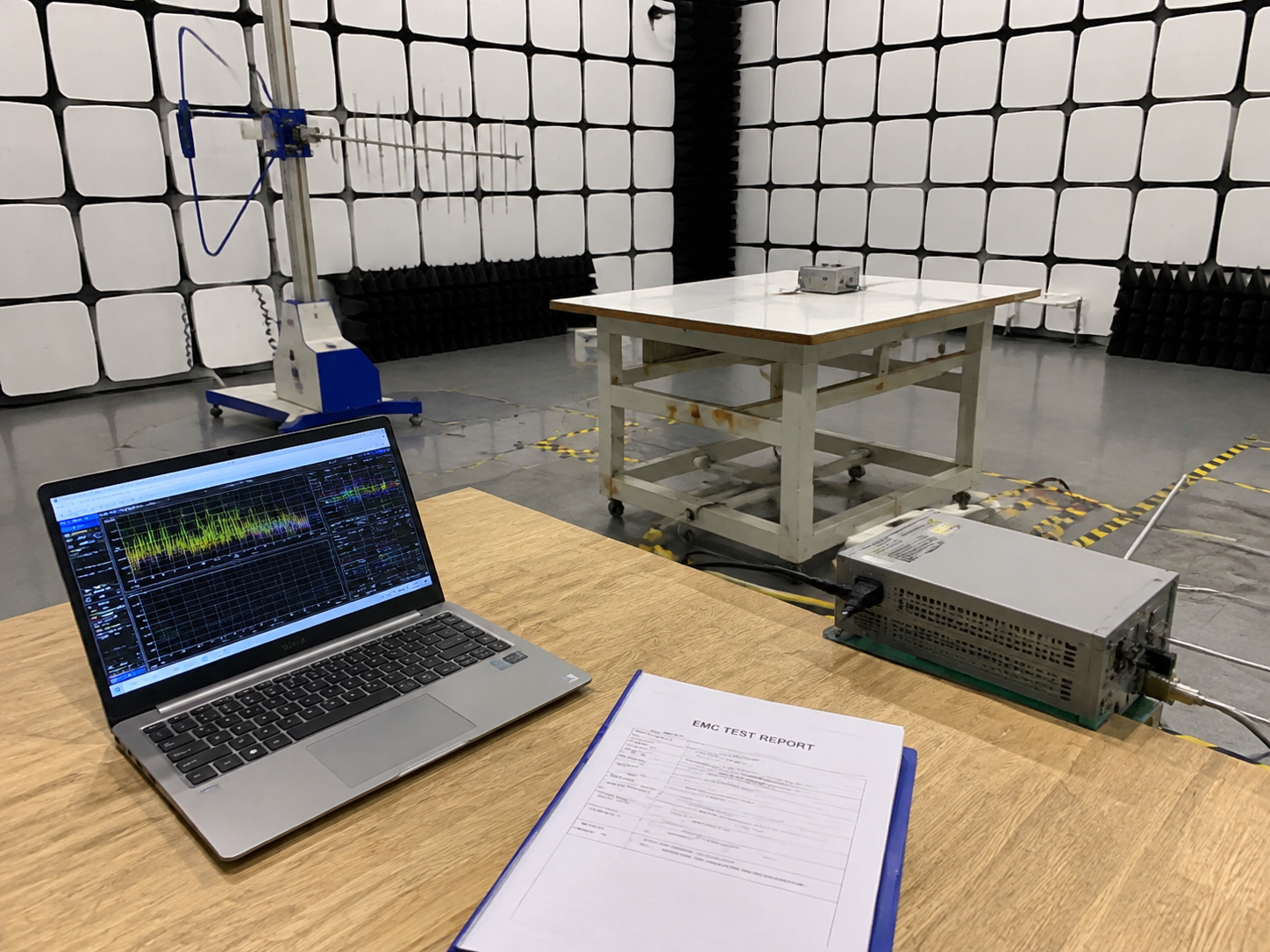
Second, entrust a third party for testing, and select a registered testing facility or testing institution with corresponding capabilities that meets the requirements of VCCI rules, which is a more commonly used method for small and medium-sized sellers and manufacturers.
VCCI does not have a unified government-issued certification certificate, but a conformity declaration process completed by enterprises in accordance with the rules. Testing institutions and agency service providers can provide testing, document sorting or declaration assistance, but the manufacturer or Japanese importer shall bear the final responsibility for the product configuration, the authenticity of test data, the conformity declaration and the consistency of the marketed products, and cannot transfer all compliance responsibilities to the service provider.
The application process involves three types of registration/declaration matters of different natures, with different applicable objects:
1. Qualification of the Declaring Entity
Refers to the enterprise entity registration or membership required to complete the VCCI conformity declaration. The specific requirements depend on the declaration path. Not all manufacturers need to become VCCI members first, which is subject to the current declaration procedures.
2. Testing Facility Registration
Refers to the testing laboratory meeting VCCI requirements and completing registration, which is only applicable to institutions providing VCCI testing services; ordinary manufacturers that entrust registered testing facilities for testing do not need to handle this by themselves.
3. Product Conformity Declaration Record
Refers to the official registration record after the specific product completes the compliance declaration, which is the core certification document for the product’s VCCI compliance.
Standard Application Steps
The standard application process is divided into four stages, each with key checkpoints:
1. Pre-confirmation
Check the product classification, applicable level (A/B), and current valid standard version to avoid subsequent rework due to incorrect standard application.
2. Testing Stage
Complete electromagnetic disturbance tests such as conduction and radiation in accordance with VCCI requirements, and issue a compliance test report; if the test fails, the product design needs to be adjusted (such as adding shielding, replacing filter components) until it passes.
3. Declaration Stage
Submit corresponding materials in accordance with current VCCI procedures, complete the conformity declaration, and retain the declaration record. Some materials such as test reports, product configuration lists, conformity declarations, and mark design drafts need to be submitted for declaration according to the process, and some are retained by the enterprise for future reference, which need to be handled separately according to the rules.
4. Market Launch Preparation
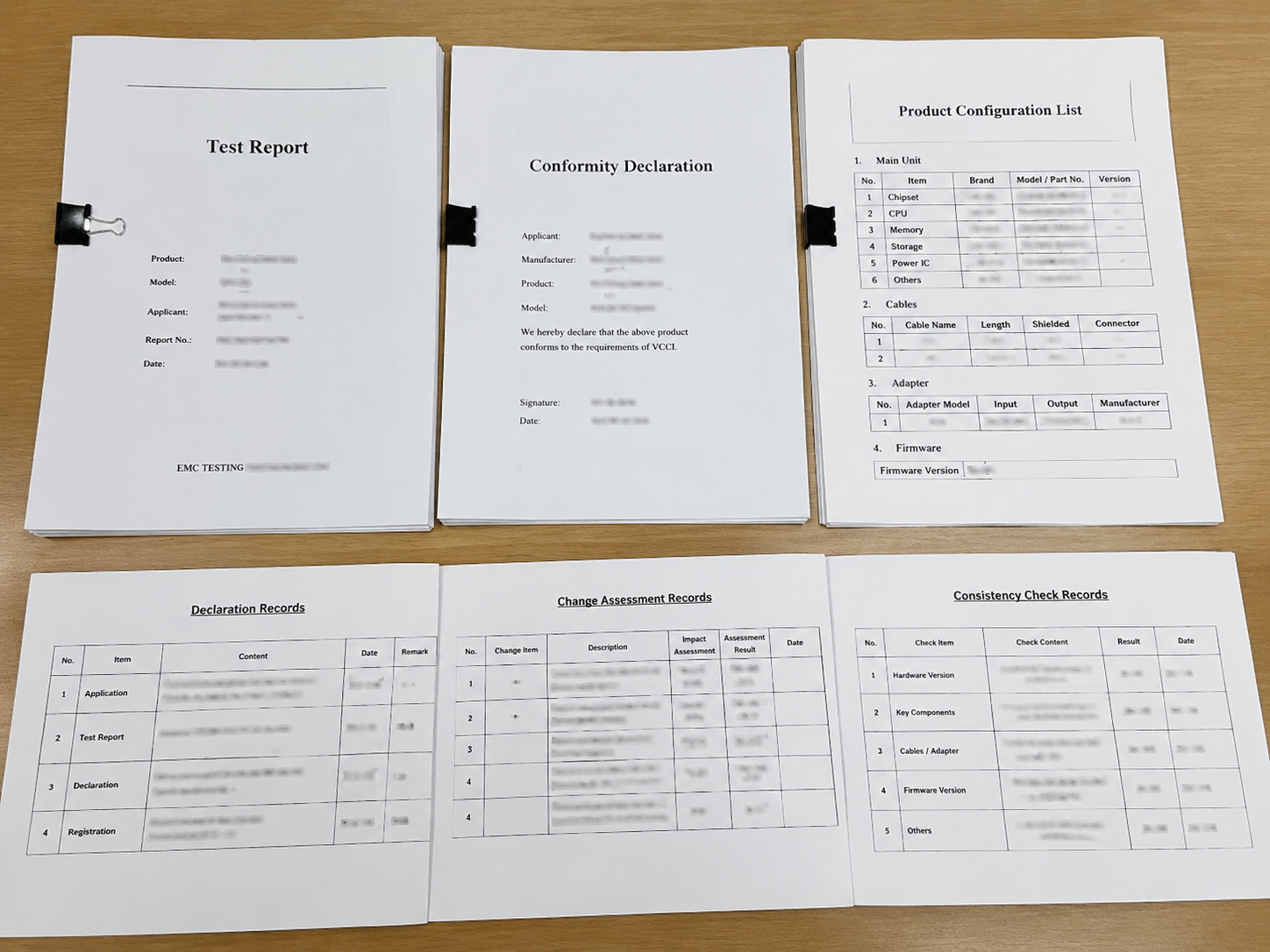
The responsible entity issues a self-conformity declaration and uses the VCCI mark in accordance with the specifications. The manufacturer or Japanese importer must confirm that the hardware version, key component configuration, supporting cables/adapter models, and firmware working mode of the Japanese sales model are completely consistent with the test prototype and declaration records, and retain the consistency check record.
Data Retention Requirements
The compliance data that enterprises need to retain include test reports, conformity declarations, product configuration lists (including information such as key components, cables, adapters, firmware versions), declaration records, change assessment records and consistency check records. All data must be traceable to each other to ensure correspondence with the configuration of marketed products. The data retention period needs to be checked in accordance with current VCCI procedural documents, applicable laws and enterprise quality system requirements, and there is no unified fixed period.
Reassessment Rules After Product Changes
After the product completes the VCCI conformity declaration, if there is a design or configuration change, the core of judgment is “whether the change may affect the electromagnetic disturbance level, test configuration, declaration information or marking requirements”. The following are examples of risk screening for common changes, which are not the official fixed risk classification of VCCI. The specific handling method needs to be determined after conducting a difference assessment first:
| Change Type | Risk Screening Level | Core Judgment Logic | Common Handling Actions |
| Chip replacement, clock frequency adjustment, motherboard layout change, housing/shielding structure change, supporting cables/adapter replacement, wireless module change, firmware working mode adjustment | High | May directly change the electromagnetic disturbance level or test configuration | First conduct a difference assessment, and determine whether it is necessary to retest the corresponding items, update the declaration materials or re-complete the full conformity declaration according to the scope of influence |
| Appearance silk screen adjustment, packaging replacement | Low | Usually does not affect the circuit, shielding and EMI performance | Confirm that the change does not change the product configuration, declaration information and marking specifications, and the original compliance conclusion can be used after forming a written assessment record |
If different models of the same series need to reuse the compliance conclusion, it is necessary to check item by item the motherboard and core component models, clock source parameters, number and type of interfaces, length and type of supporting cables, adapter model, wireless module model, firmware working mode, housing shielding structure, expected use environment, etc., and form a written difference assessment. Only when it is confirmed that all differences do not affect the test configuration, declaration information and electromagnetic disturbance performance, and comply with current VCCI rules, can the original test data and declaration conclusions be reused.
5. Core Differences from Similar Compliance Requirements
Clarifying the boundaries between VCCI and other common compliance requirements can avoid duplicate investment and plan a more reasonable compliance path. The differences between VCCI and domestic Japanese PSE and Radio Law compliance have been explained in Chapter 1. The following mainly supplements the differences from overseas EMC compliance requirements and the key conditions that will change the compliance conclusion.
Differences from Overseas CE-EMC and US FCC Requirements
Many cross-border sellers will ask: if there is a CE or FCC EMC report, can it be directly used for VCCI? The answer is that it cannot be directly used universally. There are three core differences:
1. Different applicable regions and natures
VCCI corresponds to the Japanese market and is an industry self-regulatory system; CE is not a single certification, but a conformity mark affixed by the manufacturer after the product complies with all applicable EU regulations. The requirements related to electromagnetic disturbance correspond to the CE-EMC directive/regulation, which is a mandatory compliance category; the US FCC (Federal Communications Commission) regulates electromagnetic disturbance by distinguishing authorization methods according to equipment categories, which may involve certification, conformity declaration or supplier self-declaration, depending on the product type.
2. Different standards and limits
There are differences in test methods, limit requirements, and covered frequency bands among the three, and the qualified conclusions of other regions cannot be directly applied.
3. Data can be reused to a limited extent
If the product already has CE-EMC or FCC EMC test data, under the premise that the test method, limit/covered frequency band, test setup and equipment configuration, and report information completeness all meet the requirements of VCCI rules, part of the test content can be reused, but it is still necessary to re-judge the conformity according to VCCI standards and complete the full conformity declaration process, which cannot be directly equated with VCCI compliance.
Key Conditions That Will Change the Compliance Conclusion
The following situations require reassessment of the compliance plan, and the original conclusion cannot be directly used:
1. Product adds a new wireless module
It is necessary to first check the applicable requirements of the Radio Law according to the wireless technology category (usually involving TELEC/MIC approval or corresponding wireless compliance procedures, depending on the equipment category). At the same time, because the new module may change the overall electromagnetic disturbance level, the VCCI compliance status needs to be reassessed, and the declaration record of the original model cannot be used.
2. Product changes from single unit to multi-module system sales
If the originally separately sold equipment is combined into a complete system (such as router + docking station + NAS set) for sale, the overall electromagnetic disturbance level needs to be reassessed, and the compliance conclusion of the single unit cannot be directly used, because interference may be superimposed when multiple devices work together.
3. Adjustment of product expected use scenario
If the expected main use scenario of the product changes from residential to non-residential (or vice versa), the applicable conditions of the Class level need to be rechecked to ensure that the product description, warning mark, and sales promotion are consistent with the level requirements (see Chapter 3, Class A/B section for specific judgment rules).
Complete Compliance Judgment Case: Home Router with Wi-Fi
Take a common product as an example to demonstrate the judgment logic. This case is for demonstration only, and the specific compliance conclusion is subject to the actual product parameters, sales form and current rules:
Assume a product is an IT home router sold for residential scenarios, with Wi-Fi function and USB interface, and a matching external power adapter sold together with the whole machine:
• VCCI aspect: on the premise that the equipment is indeed within the scope of VCCI application and the expected use environment meets the Class B conditions, it must meet the electromagnetic disturbance requirements of Class B level, complete the conformity declaration and use the mark in accordance with the specifications;
• Radio Law aspect: because it has Wi-Fi wireless transmission function, it is necessary to check the applicable requirements of the Radio Law according to the wireless equipment category, and usually need to complete the corresponding TELEC/MIC approval or other compliance procedures, depending on the wireless technical parameters and equipment classification;
• PSE aspect: whether the matching power adapter requires PSE compliance needs to be confirmed against the regulatory catalog of the Electrical Appliance and Material Safety Law according to the adapter’s product category, rated parameters, and sales form such as whether it is sold separately.
Core conclusion: the control contents of the three types of requirements are completely independent and cannot replace each other, and the applicable conditions need to be checked separately.
6. Common Misconceptions and Compliance Risk Avoidance
Correction of High-Frequency Cognitive Misconceptions
1. Misconception: VCCI is a mandatory certification of the Japanese government
Correction: VCCI is an industry self-regulatory electromagnetic disturbance compliance system. Strictly speaking, it is a VCCI conformity declaration, not a mandatory certification of the Japanese government; however, if the product has actual harmful interference or violates applicable laws, it may still bear corresponding responsibilities.
2. Misconception: If you have done PSE/CE/FCC, you don’t need to do VCCI
Correction: The control contents and standard systems of different compliance requirements are completely independent and cannot be directly replaced.
3. Misconception: Having a test report means completing VCCI compliance
Correction: Testing is only one of the links in the compliance process. It is necessary to complete the conformity declaration, issue a self-conformity declaration, and use the mark in accordance with the specifications to complete the full compliance process; only holding a test report cannot be used as a valid compliance certificate, and may not be recognized during channel verification.
4. Misconception: Testing one model of the same series of products can be used for all models
Correction: For models of the same series, the original compliance conclusion can be reused only after technical assessment confirms that the differences do not affect EMI performance, test configuration and declaration information, and comply with current VCCI rules; reassessment is required when there are differences in hardware, interfaces, firmware or usage scenarios.
Actual Risks of Non-Compliance
Although VCCI is a self-regulatory system, non-compliance still brings actual risks:
1. Channel risk
Some e-commerce platforms and offline stores in Japan take the VCCI mark as one of the access requirements for some categories. Products without marks, wrong levels or inconsistent qualifications may be restricted from being listed or removed from the shelves, which is subject to channel rules.
2. Dispute handling risk
In channel audits, complaint handling or interference disputes, the lack of test reports, conformity declarations and declaration records will increase the difficulty for enterprises to prove that their products meet the requirements.
3. Regulatory and legal risks
If there are acts such as illegal marking, fraudulent use of qualifications, etc., you may face consequences such as revocation of declaration, rectification, and restrictions on the use of marks. The specific measures are subject to the current VCCI rules and case handling; if the product’s electromagnetic disturbance does exceed the limit and violates applicable laws, it may also trigger corresponding legal liabilities.
Methods for Quickly Verifying VCCI Compliance
If you need to preliminarily check the VCCI compliance status of a product, you can operate as follows:
• Ordinary consumers/purchasers: check the VCCI mark (including level information) on the product, outer packaging or manual, and verify whether the model marked on the mark is consistent with the actual product; the mark is only a preliminary basis for judgment, and the final compliance needs to be confirmed in combination with the declaration record.
• Merchants checking suppliers: in addition to checking the mark, they should also require the supplier to provide test reports, conformity declarations, and conformity declaration records, and verify whether the product configuration, model, level match the declaration information; different channels may have additional document requirements, which need to be confirmed in advance.
Summary
VCCI is a highly recognized self-regulatory electromagnetic disturbance compliance system in the Japanese electronics market, covering core equipment with digital processing functions such as IT and multimedia, and is divided into two levels: Class A and Class B according to the expected use environment. Enterprises need to complete testing, conformity declaration, use marks in accordance with the rules, and retain a full set of traceable compliance data. The control contents of VCCI and compliance requirements such as PSE, Radio Law, overseas CE-EMC, and FCC are independent of each other and cannot replace each other. When planning a compliance path, the applicable conditions need to be checked separately. For products or rule details that you are unsure about, please refer to the latest technical specifications and procedural documents published on the VCCI official website as the final standard.