
Importers doing business in the U.S. market have more or less heard of DOE energy efficiency, but many only truly realize its importance when their goods are detained at the port or they receive a penalty notice. Some think this is a matter for U.S. domestic manufacturers and has nothing to do with importers; some believe that a UL or Energy Star certification is enough; others take a chance, thinking small batches or online sales will not be inspected.
In fact, DOE energy efficiency is a mandatory access requirement at the U.S. federal level, and importers are often the primary responsible party. This article covers the core compliance logic that importers need to master, from basic concepts to practical judgment and risk avoidance.
Must-Know Basics: DOE Energy Efficiency Regulations and Core Responsibilities of Importers
What Are DOE Energy Efficiency Regulations
DOE is the abbreviation for the U.S. Department of Energy. The energy efficiency regulations it issues, to put it simply, set a minimum energy consumption threshold for specific products sold or imported in the United States—products that do not meet this threshold cannot legally enter the U.S. market nor be sold publicly.
It is not an optional “green certification”, but a mandatory compliance requirement just like the FDA regulating food and the CPSC regulating toy safety. Its core purpose is to reduce energy waste across society, while unifying energy efficiency rules for the entire U.S. market to avoid each state acting independently.
Currently, DOE-regulated products are mainly divided into two categories: household consumer products and commercial/industrial equipment. The specific regulatory list is updated regularly, and all conclusions must be based on the valid version officially released by DOE in the current year; experience from several years ago cannot be directly applied.
Why Importers Are the Primary Responsible Party
Many people think that since products are manufactured by overseas factories, compliance should be the factory’s responsibility, but that is not the case. The primary responsible entity under DOE rules is the importer of record filed with U.S. Customs—that is, the U.S. entity you use for customs clearance. Whether you are a trading company, brand owner, or Amazon seller, as long as you clear customs with your own tax ID, you are the legal primary responsible party.
Of course, this does not mean that other entities are not responsible: brand owners, OEM purchasers, and other entities that actually facilitate products entering the market may also be held accountable by DOE. But for Customs and DOE, the first party they will contact is the importer.
A special reminder: compliance responsibility cannot be fully transferred to overseas factories, customs brokers, or third-party service providers through contracts. Even if you sign an agreement with the factory stating that “all compliance responsibilities are borne by the factory”, if something goes wrong, DOE will still hold the importer accountable first, and you can only seek compensation from the factory afterwards.
Practical Impacts of Non-Compliance on Importers
The consequences of DOE violations are across the entire chain, affecting everything from customs clearance to market sales and long-term operations:
- Customs clearance stage: The most direct impact is that goods are detained, incurring hundreds or even thousands of dollars in port demurrage and storage fees every day. Eventually, they may be required to be returned or destroyed, meaning you not only make no money but also have to pay extra for shipping and handling fees.
- Market stage: Even if you manage to clear customs by luck, if you are later inspected by DOE, you will face penalties such as civil fines, mandatory recalls, and delisting from platforms or retailers. The fine amount is not fixed; it is determined based on factors such as the duration of the violation, sales volume, and degree of subjective malice, ranging from tens of thousands to millions of dollars.
- Long-term impact: If the violation is serious, the importer or related product categories may be placed under higher-frequency law enforcement scrutiny. The pressure of import inspection and document verification for similar products will increase significantly in the future, brand reputation will also be damaged, affecting customer cooperation and trust.
Clear Distinction at a Glance: Differences Between DOE and Other U.S. Energy Efficiency/Access Requirements
Many beginners confuse DOE with other common certifications and requirements. In fact, their functions are completely different and they cannot replace each other. The table below can help you quickly sort them out:
| Requirement Name | Core Function | Mandatory | Can It Replace DOE Compliance |
|---|---|---|---|
| DOE Mandatory Energy Efficiency | Sets minimum energy consumption thresholds, regulates test methods and official database filing | Mandatory for regulated products | It is itself the basic requirement for market entry |
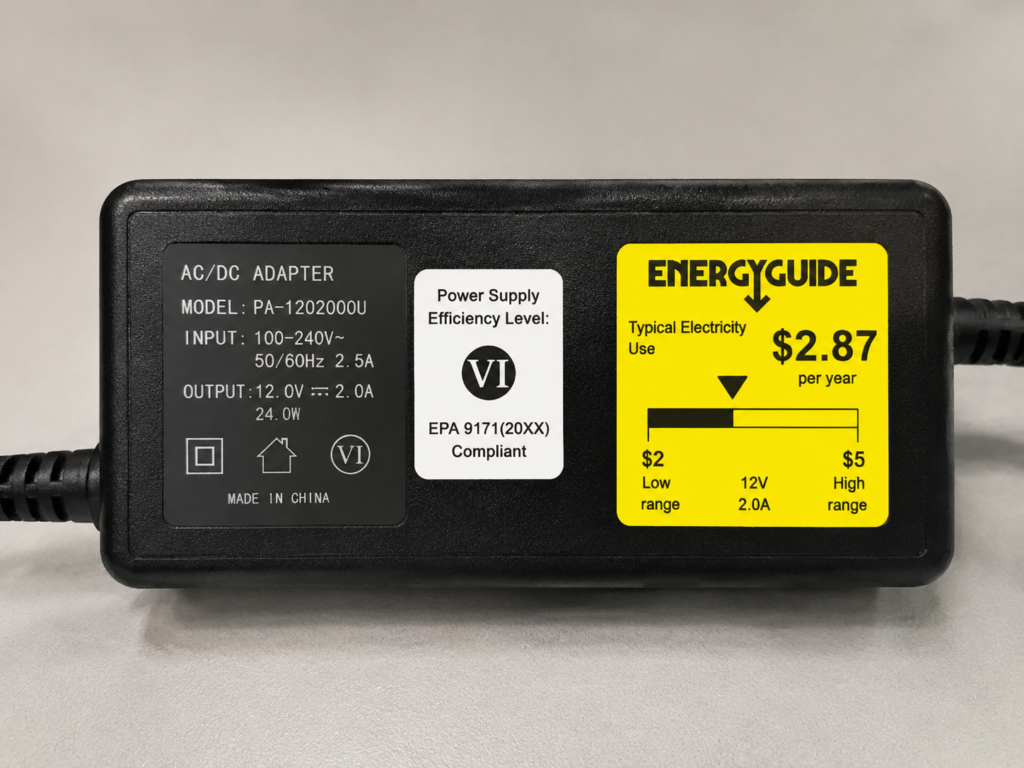
| FTC EnergyGuide | Yellow energy consumption label for consumers, used to disclose energy consumption information | Mandatory for applicable consumer products | No, it is an information disclosure requirement, which is a separate matter from energy efficiency thresholds |
| EPA Energy Star | Voluntary label for high energy efficiency, with requirements usually higher than DOE minimum standards | Voluntary | No, even if you obtain Energy Star certification, you must first meet DOE mandatory requirements |
| Safety certifications such as UL/ETL | Verify product electrical safety to prevent risks such as electric shock and fire | Mandatory in some scenarios | Absolutely not; safety and energy efficiency are two independent compliance dimensions |
| CE/ERP (EU) | EU safety and energy efficiency requirements | Mandatory for the EU market | Absolutely not; the U.S. does not recognize EU energy efficiency standards |
| U.S. Customs and Border Protection (CBP) | Law enforcement agency in the import process, responsible for screening goods and verifying compliance documents according to rules | Law enforcement entity | Not a certification; it is the enforcer of DOE rules. Whether goods are released depends on the submitted compliance evidence and applicable rules |
5 Most Common Cognitive Misconceptions for Beginners
- Misconception 1: Only U.S. domestic manufacturers need to comply, importers are not responsible
Correction: Importers are the primary responsible party for DOE compliance. Both domestic manufacturers and importers bear responsibility. If there is a problem with imported goods, DOE will first contact the importer. - Misconception 2: Having CE/UL/Energy Star certification means meeting DOE requirements
Correction: These certifications are completely different from DOE energy efficiency. Safety certifications regulate safety, EU certifications regulate the EU market, and Energy Star is a voluntary label with higher requirements—none can replace DOE mandatory compliance. - Misconception 3: All electrical products require DOE compliance
Correction: DOE has a clear list of regulated products, and not all electrical products are regulated. However, whether a product is regulated must be judged against DOE’s covered product definitions, combined with energy type, function, and core parameters. You cannot directly exclude a product just because it is small in size or belongs to consumer electronics peripherals. Power adapters, lighting products, some charging accessories, etc. may be subject to DOE rules and require separate verification to avoid missing compliance; do not blindly certify products not on the list, which wastes costs. - Misconception 4: Small-batch/B2B/online sales can skip DOE
Correction: Except for clearly exempted scenarios, even if you only import 1 unit of a regulated product, only do B2B business, or only sell online on Amazon, as long as it is sold in the U.S. market, it must meet DOE requirements. There is no such thing as “small volume means no need to comply”. - Misconception 5: If the supplier says it is compliant, you don’t need to verify it yourself
Correction: Compliance responsibility lies with the importer. The supplier’s oral promises or self-issued certificates are not valid. You must verify the authenticity of compliance documents yourself, otherwise you will still have to pay the fine if something goes wrong.
First Step Self-Check: Determine Whether Imported Products Fall Under DOE Jurisdiction
After understanding the basic rules of DOE, you must first determine whether your products fall within the regulatory scope—if this step is wrong, you will either waste money on certification or miss compliance and have your goods detained.
Core Principles for Determining Product Scope
Many people are used to judging by HS code or product name, which is the most error-prone point. HS codes are used by customs for classification and tax collection, and there is no one-to-one correspondence with DOE’s regulatory scope; the same product name may be within the regulatory scope or not, depending on different parameters and uses.
The correct judgment principle is to make a comprehensive judgment based on the product’s actual use, energy type (electricity/gas/oil, etc.), core parameters, and sales scenarios, not just the name or code. Moreover, DOE’s regulatory list is updated regularly, and all conclusions must be based on the current official version.
Common Imported Finished Product Categories Regulated by DOE
Although the specific details shall be subject to official definitions, common regulated products can be used as a preliminary reference:
- Household consumer category: Refrigerators, freezers, washing machines, dryers, air conditioners, water heaters, lighting products, power adapters, televisions, set-top boxes, etc.
- Commercial/industrial category: Commercial refrigerators, commercial air conditioners, industrial motors, water pumps, commercial lighting, commercial water heaters, etc.
Note: You must never make analogies based on “similar products”. For example, if you think “cosmetic refrigerators and household refrigerators are both refrigeration products, so they should also count”, or “LED light strips and bulbs are both lighting products, so they definitely need certification”—such analogies are likely to be wrong. You must confirm against DOE’s official product definitions.
Clear Typical Scenarios Eligible for Compliance Exemption
- Purely military and aerospace-specific equipment: Special equipment designed according to military/aerospace-specific standards and cannot be used in civilian scenarios is exempt; civilian products converted for military use, or general-purpose equipment that can be directly used in civilian scenarios are not within the exemption scope.
- Prototypes for R&D only: Prototypes in the R&D and testing stage, not in mass production, and not used for sales or commercial purposes are exempt; if you plan to sell them on the market after R&D is completed, you still need to complete compliance.
- Temporarily imported exhibition/test samples: Only samples that are temporarily imported for exhibition or testing, re-exported within 6 months, and in a reasonable quantity are exempt; samples shall not be used for sale or gifting, and compliance procedures must be completed if they are not re-exported after the deadline.
- Separately imported repair parts: Parts used only for after-sales repair of sold products and not sold separately as finished products are exempt; bulk-imported general-purpose parts and products that can be sold separately as finished products are not within the exemption scope.
- Small quantities of used products for personal use: Used products carried by individuals or mailed, for non-sales purposes, and in a reasonable quantity for personal use are exempt; brand-new refurbished machines and bulk used products are not within the exemption scope, and the specific determination shall be subject to customs.
- Products for transit/transshipment only: Transshipment goods that only transit through U.S. ports/bonded zones, do not enter the U.S. market for circulation, and are ultimately shipped to a third country are exempt; goods shall not enter the U.S. domestic sales link and must meet customs transshipment supervision requirements.
4-Step Preliminary Screening Method for Boundary Categories (Use When Uncertain)
If your product is relatively borderline, such as a display cabinet with refrigeration function or customized industrial equipment, and you are not sure whether it is regulated, you can make a preliminary judgment according to these four steps:
Step 1: First, thoroughly understand the core information of the product: What is its actual use? What energy does it use? What are the core parameters (such as volume, power, energy efficiency-related components)? Who is it mainly sold to and in what scenarios is it used?
Step 2: Check the official DOE definition of the corresponding category and compare item by item. Do not rely on product names or HS codes, nor judge by “feeling”.
Step 3: Check whether it meets the aforementioned exemption conditions; if it does, you still need to prepare supporting materials such as proof of use, temporary import/transshipment documents, and quantity descriptions in advance, and declare proactively during customs clearance. You do not need to go through the regular DOE certification process, but you cannot directly claim exemption based solely on internal oral judgments.
Step 4: Record your judgment basis (such as corresponding clauses of DOE definitions, product parameters, exemption certificates) in writing and keep them on file for future reference. Do not only make oral judgments.
Official Confirmation Channels (to Avoid Self-Judgment Errors)
If you are not sure, do not guess blindly; you can confirm through official channels:
- Directly use the free query tool of the “Covered Product List” on the DOE official website, enter product information for verification;
- Entrust a qualified compliance third party to help you check the regulatory interpretation of the corresponding product. After all, regulatory provisions are relatively professional, and third parties have more experience and can help you avoid pitfalls.
Preliminary Judgment Logic for Multiple Models of the Same Series
Many importers import multiple models of the same series, for example, the same refrigerator has different colors and capacities. At this time, pay attention to a core concept of DOE: basic model—that is, a product group with overall consistent energy consumption characteristics. Only products belonging to the same basic model can share a test report and certification.
To determine whether they are the same basic model, you cannot only look at the appearance, nor default that “the same series can share one report”. If core energy consumption components such as compressors, motors, and light sources are different, or changes in capacity, power, and control logic will affect the energy consumption level, they usually cannot be directly classified as the same basic model, and the test and CCMS coverage need to be re-verified. More detailed judgment criteria will be explained in the later semi-proficient section.
Disassembly of Core Requirements: 4 Mandatory Standards That Must Be Met for DOE Compliance
After confirming that the product is regulated by DOE, it must meet four core compliance requirements. The specific rules for different categories shall be subject to DOE’s special regulations.
Minimum Energy Efficiency Standard: The Untouchable Bottom Line of Energy Consumption
The minimum energy efficiency standard is the “pass line” set by DOE, which refers to the efficiency or energy consumption limit that a product must meet under specified test conditions. For example, the annual power consumption of a refrigerator cannot exceed a certain value, the energy efficiency ratio of an air conditioner cannot be lower than a certain value, and the standby power consumption of a power adapter cannot exceed a certain value.
The only basis for qualification is the test result that meets the requirements of the rules, not the supplier’s self-proclaimed “energy saving” or “low power consumption”. Moreover, products of different categories, different capacity ranges, and different energy types have different limits, which cannot be generalized.
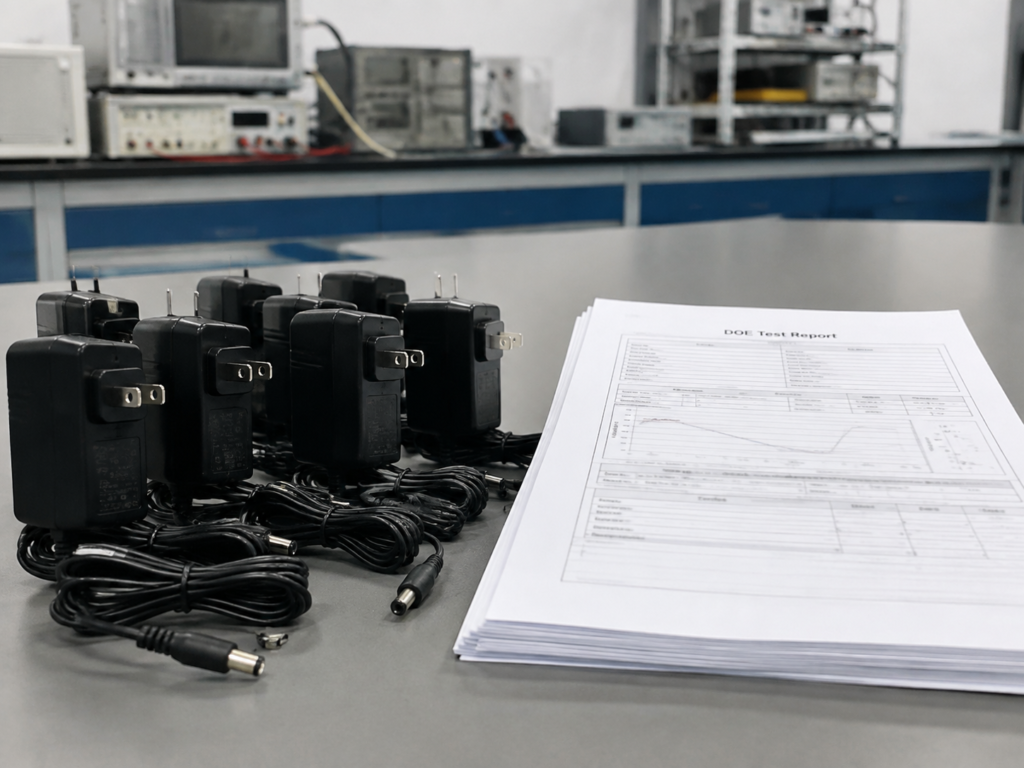
Unified Test Procedure: Prerequisite for Valid Results
It is not enough to have up-to-standard data; the test method must be the standardized test procedure specified by DOE, and the version must meet the current DOE requirements—it is not enough to use the latest industry standard; it must be the version explicitly recognized by DOE.
For example, if you use the latest IEC international standard to test a power adapter, but DOE currently requires a certain version of its own test procedure, even if your test data meets the standard, the report is invalid. In addition, the test samples must be mass-produced goods, not “golden samples” specially optimized by the factory, otherwise the test results will not be valid.
CCMS Certification Declaration: Must Be Entered into the Official Database
Most regulated products need to complete compliance declaration in DOE’s Compliance Certification Management System (CCMS), which is DOE’s official product compliance filing and public query platform.
The relationship between the three is: valid test reports issued by qualified testing entities are the core basis for declaration; importers or responsible entities submit product information, test reports and other materials through CCMS to complete the declaration; after the declaration is approved, the product information will be entered into the public database for verification by customs, retailers, and consumers.
Declaration requirements, materials to be submitted, and review procedures may vary for different product categories, and the specifics shall be subject to the DOE special rules for the corresponding product. Before products enter the U.S. market, the declaration must be completed and the corresponding record can be queried in the public database, otherwise the goods may be detained by customs. Many people think that a test report is enough, but in fact, if you do not file a CCMS declaration, it means you have not filed with the official authority, and it is still non-compliant.
Labeling and Document Retention: Mandatory Requirements for Future Inspection
Compliance is not over after testing and declaration; there are two additional requirements for future inspection that must be met:
- Product labeling: The corresponding energy efficiency label must be affixed as required. Pay attention to distinguishing between DOE mandatory labels and FTC’s yellow EnergyGuide labels, and do not paste them incorrectly. At the same time, the model and parameters on the product nameplate, packaging, and CCMS declaration records must be completely consistent, with no discrepancies.
- Document retention: All compliance-related documents such as test reports, certification records, and declaration receipts need to be kept for 3-5 years (the specific duration depends on the category). DOE may conduct random inspections at any time, and you must be able to provide them within the required time limit; failure to provide them is considered a violation. Note: The 3-5 years here is the legal retention requirement for compliance files, which is not equivalent to the fixed validity period of the test report; whether the report remains valid depends on whether the corresponding DOE energy efficiency standard is updated and whether the core energy consumption parameters of the product have changed.
Full-Process Practice: Compliance Steps from Pre-Shipment to Post-Clearance
After clarifying the compliance requirements, you can complete the full-process operation from shipment to post-clearance according to the following process.
Pre-Shipment: Complete Compliance Preparations in Advance (Most Critical)
The mistake many people make is “remembering to do DOE only after the goods have been shipped”, which delays the shipping schedule and costs a lot of expedited fees. Compliance must be done before shipment, and the steps are as follows:
- First confirm the DOE energy efficiency standard version and test requirements corresponding to the product to avoid wasting money by using the wrong standard;
- Entrust a testing entity that meets the qualification requirements of the corresponding product’s DOE rules to complete the energy efficiency test according to the DOE-specified test procedure and obtain a valid test report;
- Complete the product certification declaration in the CCMS system by yourself or entrust a third party, until the corresponding model can be queried in the public database;
- Print the energy efficiency label as required and affix it to the designated position of the product. Do not paste it in the wrong place or with wrong parameters.
Key check point: Be sure to verify that the model and parameters in the test report and CCMS declaration are completely consistent with the actual mass-produced products shipped—even a single letter difference in the model suffix may lead to customs detention of goods.
During Customs Declaration: Prepare All Required Documents for Customs Clearance
After shipment, prepare all documents during the customs declaration stage to avoid goods being detained due to missing documents. The required documents are divided into two categories:
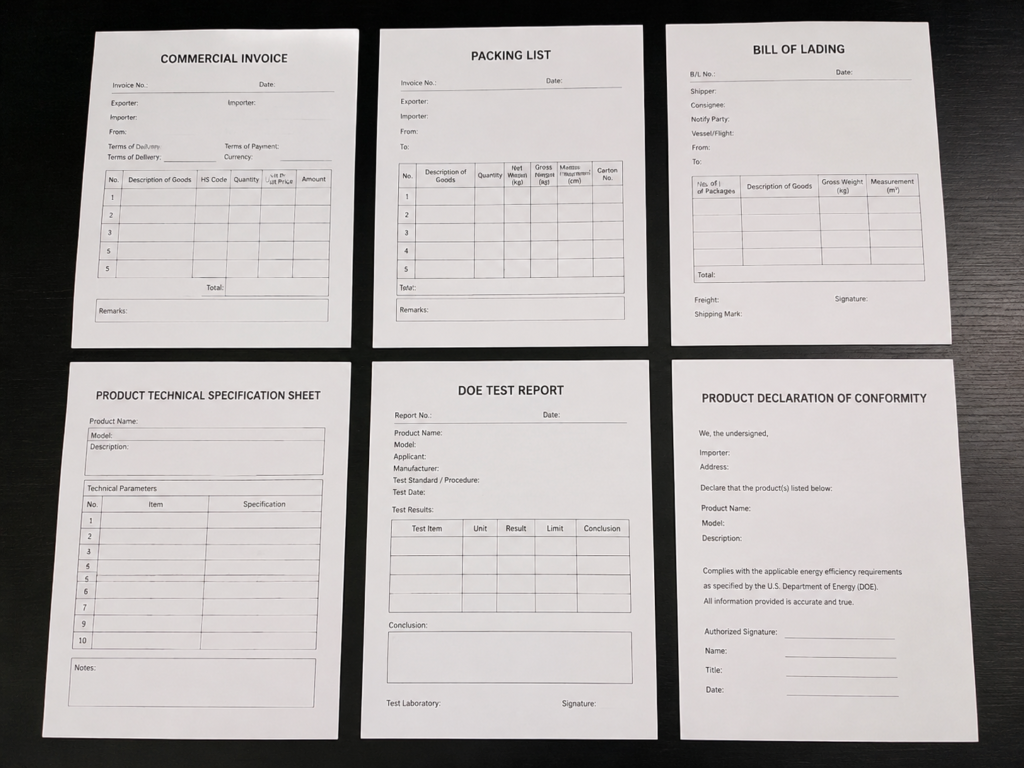
- Basic documents: Commercial invoice, packing list, bill of lading, product technical specification sheet—these are regular customs clearance documents;
- Compliance documents: Copy of DOE test report, CCMS certification number or public query screenshot, product declaration of conformity (i.e., the importer declares that the product meets DOE requirements).
Key check point: The importer information and product model on all documents must completely match those on the customs declaration form, with no discrepancies. In addition, it is recommended to confirm with your customs broker in advance whether the port you use has special requirements for DOE documents. The enforcement standards may vary slightly between different ports, so it is safer to ask clearly in advance.
Post-Clearance: File Retention and Daily Maintenance
Don’t think that everything is fine after customs clearance. DOE may conduct random inspections at any time during product sales, so post-clearance maintenance is also very important:
- All compliance documents should be archived by category, and both electronic and paper copies should be kept to ensure that they can be provided within the required time limit during DOE random inspections;
- Regularly check product labels in the sales link to see if they are peeled off or altered, and whether the parameters are consistent with the declared ones. For example, the energy consumption parameters on Amazon listings cannot be lower than those declared in CCMS, otherwise it is also a violation;
- It is best to establish a product compliance ledger to record information such as the standard version, test report number, CCMS status, and applicable rule version corresponding to each model, for subsequent management convenience.
Pre-Shipment Quick Self-Check List
For your convenience in verification, here is a pre-shipment self-check list that you can print out and check off directly:
□ Confirmed that the product falls within DOE coverage or meets exemption conditions (with written supporting materials)
□ The test report is issued by an entity that meets the qualification requirements of the corresponding DOE rules, the test method meets current regulations, corresponds to the actual mass-produced model, and is not a specially made sample
□ CCMS certification has been completed, and the corresponding model can be queried in the DOE public database
□ The content and affixing position of the energy efficiency label meet the requirements
□ The model and parameters on the product nameplate, packaging, and declaration documents are completely consistent
□ The compliance status has been re-verified after product revision (replacement of core energy consumption components, model change, factory change, etc.)
Semi-Proficient Judgment: Quickly Identify the Authenticity and Validity of Compliance Materials
Many importers have encountered situations where suppliers provide false or invalid DOE materials. Learning to judge the validity of compliance materials can avoid many pitfalls in the procurement process.
How to Judge Whether an Energy Efficiency Test Report Is Valid
A valid DOE test report must meet the following conditions:
- Testing entity qualification meets requirements: The qualification requirements for testing institutions are not exactly the same for different regulated products. Some categories require testing institutions to be included in DOE’s relevant recognition catalog, while some categories allow qualified third-party certification bodies or in-house laboratories to conduct tests according to rules. You can compare the DOE special rules for the corresponding product to verify whether the entity issuing the report has the corresponding qualifications. A report that does not meet the qualification requirements has no compliance effect, no matter how good the data is.
- Correct test method: The test method and version used in the report must meet the current DOE requirements for the corresponding product. It is not that the newer the better, nor is it enough to use industry standards.
- Consistent product information: The product model and core parameters (such as compressor model, volume, power, etc.) on the report must be completely consistent with the product you actually import; not a single parameter can be different.
- Samples are in mass production state: The test samples must be mass-produced goods, not samples specially optimized by the factory. Regular laboratories will state the sample status in the report.
Also note: The test report does not have a fixed validity period. It is not that it “lasts 3 years” or “lasts 5 years”—as long as the DOE standard is not updated and your product has not changed, the report remains valid; conversely, as long as the standard is updated or the core parameters of the product change, the original report becomes invalid.
How to Verify the Authenticity of CCMS Certification
Don’t just trust the PDF screenshots or declaration receipts provided by the supplier; be sure to verify it yourself:
Directly open the CCMS public database of DOE, enter the product’s brand and model to query. If it can be found, then check whether the energy efficiency parameters and responsible entity in the query results are consistent with the actual product—some suppliers will use CCMS records of other brands to fool people, which will be revealed as soon as you check.
How to Judge Whether Models of the Same Series Can Share Test Data
The core premise for multiple models of the same series to share test data is that these models belong to the same basic model as defined by DOE—that is, the overall energy consumption characteristics, key configurations, and regulated parameters of the products are consistent within the scope allowed by the rules. It cannot be judged solely by “same series”, “same platform” or “same appearance”.
In specific judgment, the consistency of core energy consumption components (such as compressors, motors, light sources, heating tubes, etc.) is an important reference, but other factors must also be considered: for example, whether differences in capacity, rated power, control logic, energy efficiency-related function configurations, etc., will cause the energy consumption level to exceed the fluctuation range allowed by the rules. Only when all key factors affecting energy consumption meet DOE’s requirements for the same basic model can test data be shared.
In addition, all coverable models must be clearly listed in the test report or CCMS declaration, and you cannot self-determine that they can be shared. For example, for air conditioners with the same shell, if the compressor horsepower is different, or if they have inverter function or not, even if the appearance is exactly the same, they do not belong to the same basic model and cannot share the report.
Invalid Certificates That Are Easily Mistaken for Compliance Basis
The following materials are often mistaken for DOE compliance basis, but in fact they are completely invalid. Pay attention to distinguishing them during procurement:
- Energy efficiency reports from other countries/regions such as EU CE/ERP and China Energy Label: DOE does not recognize energy efficiency test results from other jurisdictions;
- “Compliance declarations” self-issued by suppliers without valid test report support: They are only self-certification by suppliers and do not have the compliance certification effect required by DOE;
- Energy Star certification: It is a voluntary high energy efficiency label and cannot replace DOE mandatory compliance requirements;
- Test reports issued under old standards: After DOE standards are updated, reports that do not meet current standard requirements automatically become invalid.
Common Violation Risks and Responses: Pitfall Avoidance + Exception Handling
In practice, violations are easily triggered by operational negligence. The following are common risk points and response methods.
6 Operational Pitfalls That Importers Most Easily Fall Into
These are common mistakes made by importers, and knowing them in advance can help you avoid them:
- Using old test reports while the core parameters of the actual product have been modified: For example, the factory secretly replaced the compressor or motor without telling you, and you are still using the original report, resulting in energy consumption not meeting the standard when tested.
- Incorrect affixing of energy efficiency labels, or inconsistent parameters with the report/declaration: For example, the annual power consumption written on the label is lower than the actual value, or the model is different from the declared one, both will be deemed violations.
- Mistakenly thinking that small batches/samples do not need compliance: Except for clearly exempted scenarios, even if you only import 1 unit of a regulated product, as long as it is for sale, it must be compliant. There is no such thing as “small volume means no need to comply”.
- Finding a testing entity that does not meet the qualification requirements of the corresponding DOE rules for testing: You spend money, but the report is invalid, and it is directly rejected during customs clearance, wasting time and money.
- Failure to replace the report in time after DOE standards are updated: Using old standard reports for customs clearance after the transition period ends will result in direct detention of goods.
- Inconsistency between declared model and actual sold model: For example, if you private-label for customers or add a model suffix but do not update the CCMS declaration, it will be deemed a violation if found.
Common Causes of Goods Detention During Customs Clearance and Handling Paths
If you really encounter goods detention, don’t panic first. First figure out the reason, then handle it accordingly. There are three common reasons for goods detention: the model is not in the CCMS database, the declared model does not match the actual goods, and compliance documents are missing.
There are three corresponding handling paths:
- Supplement evidence to apply for release: If it is just missing documents or incorrect information, quickly supplement complete DOE compliance evidence (such as CCMS query records, correct test reports), submit them to customs, and the goods will be released after verification.
- Return or transship: If the product is indeed non-compliant, for example, it has not been DOE certified at all and cannot be rectified, you can choose to return it to China or transship it to other markets that do not require DOE compliance to reduce losses.
- Rectification under supervision: If the problem is an on-site correctable matter such as incorrect label affixing position, missing declaration documents, or model identification that needs correction, you can apply to complete rectification under customs supervision after consulting the customs broker and regulatory authority and confirming that the requirements are met, and re-apply for release after the rectification is qualified; if it involves core compliance issues such as unqualified energy efficiency parameters or invalid test basis, it usually cannot be solved by on-site rectification, and priority should be given to return, transshipment, or re-completing the compliance process before importing.
Preliminary Handling Logic for Receiving DOE Investigation Notices
If you receive a DOE investigation notice after customs clearance, don’t panic, follow these steps:
- Save all records immediately: All relevant documents, emails, shipment records, and compliance materials should be kept intact. Never delete or modify them—modification will instead be deemed intentional violation and result in heavier penalties.
- Confirm the scope of the investigation: Figure out which models are involved in the investigation, which time period, and what the suspected violation points are. Don’t respond randomly without knowing the situation.
- Organize compliance evidence: Sort out the test reports, CCMS records, shipment vouchers, etc. of the corresponding models as soon as possible. If you can’t handle it yourself, quickly find a professional compliance consultant or lawyer for assistance.
- Take the initiative to rectify and seek leniency: If there is indeed a violation, proactively disclose the problem and submit a rectification plan. DOE will usually reduce the penalty at its discretion; if you conceal it or refuse to cooperate, the penalty will be more severe.
Daily Preventive Measures to Reduce Violation Risks
Compared with handling after an accident, prevention in advance is more worry-free and cost-saving. You can start from the following aspects:
- Incorporate product changes into the compliance review process: As long as core energy consumption components are replaced, models are changed, or factories are changed, a compliance review must be conducted first to confirm whether re-testing and CCMS update are needed. Changes cannot be made arbitrarily.
- Regularly subscribe to DOE’s regulatory update notifications to know about standard changes in advance and prepare early. Don’t be unaware until the standard takes effect.
- Sign compliance commitment clauses with suppliers to clarify that if the violation is caused by the supplier (such as providing false reports, product parameters not matching the report), they must compensate your losses—although this cannot transfer your responsibility to DOE, you can seek compensation afterwards.
- Manage by product risk level: List high-risk products that are clearly regulated, have many models, and are frequently revised as key points for priority verification. Low-risk products can be appropriately simplified to improve efficiency.
Special Scenario Rules: Exemptions, Transition Periods and Simplification Methods
In addition to the regular compliance process, some special scenarios have special rules. Using them correctly can save costs and avoid violations.
Practical Notes for Exemption Scenarios
We talked about common exemption scenarios earlier, but in practice, pay attention to a few details, otherwise the exemption may fail:
- All exemptions must be prepared with supporting materials in advance, and declared proactively to customs during clearance. Don’t wait until customs asks, as the goods may already be detained by then.
- Temporary exhibition samples: Not only must you ensure re-export within 6 months, but the quantity must also meet the reasonable requirements of customs. You can’t bring dozens or hundreds of units under the pretext of “exhibition”, as that will definitely be suspected of being for sale.
- Customized special equipment: Must be non-general products that are not sold to the public and only customized for specific customers. You need to provide materials such as customization contracts and customer certificates to prove the specificity of the product.
- Repair parts: Must be used for after-sales repair of sold products, and cannot be sold separately as finished products. For example, if you import a batch of light bulbs claiming they are for repair but sell them on Amazon, you will definitely be deemed in violation.
Transition Rules When DOE Standards Are Updated
When DOE updates energy efficiency standards, it usually sets clear transition arrangements in the final revised rule. The transition period for most categories ranges from several months to one or two years. The specific duration and scope of application are completely subject to the official revision announcement of the corresponding product, and there is no unified time window for all categories. During the clearly defined transition period, products that meet either the old or new standards can usually be imported or sold; after the transition period ends, products newly imported or sold for the first time in the United States must meet the new standard requirements.
Some revision announcements may additionally stipulate a sales buffer period for imported inventory products, special handling rules for goods in transit, etc. Such arrangements only apply when explicitly mentioned in the announcement, and cannot be assumed to be universally applicable.
It should be particularly noted that to determine whether the old or new standard applies to a product, the date of product import or the date of first sale in the United States shall prevail, not the manufacturing date of the product—even if the product was manufactured during the validity period of the old standard, if it is imported or sold for the first time after the new standard becomes mandatory, it still needs to meet the new standard requirements.
Compliance Simplification Method for Multiple Models of the Same Series
If you have many models of the same series that meet the “basic model” requirements, you can share one test report instead of testing each model separately, which can save a lot of costs.
The specific operation is: when declaring in CCMS, list all products belonging to the same basic model clearly, without omission. If new models are added later, as long as the core energy consumption components remain unchanged and belong to the same basic model, you can directly update the CCMS information without re-testing. But if the core energy consumption components change, they can no longer be shared, and testing and declaration must be done again.
Reminder on State-Level Special Requirements
What we talked about earlier are all federal-level DOE requirements, which are applicable throughout the United States, but some states (such as California) have additional energy efficiency requirements for specific products, which may be stricter than federal standards.
If your products are only sold in specific states, you need to additionally check local rules; if they are sold nationwide, preparing according to the strictest requirements is the safest way, so that you will not violate regulations in any state.
Judgments and Operations You Can Complete Independently After Learning This Guide
After learning the above content, you can independently complete the following DOE compliance-related judgments and operations without fully relying on third parties:
First, you can quickly determine whether imported products fall under DOE jurisdiction, conduct self-investigation of boundary categories through the 4-step preliminary screening method, and accurately identify common exemption scenarios, knowing which situations do not require the mandatory compliance process.
Second, you can clearly distinguish the core differences between DOE mandatory energy efficiency, FTC EnergyGuide labels, and EPA Energy Star, and will no longer equate other certifications or labels with DOE compliance, avoiding wasted money or missed compliance.
Third, you can independently complete the full-process basic operations from pre-shipment compliance preparation, customs declaration document sorting to post-clearance file retention, and check one by one against the pre-shipment self-check list to avoid goods detention due to operational omissions.
Fourth, you can independently verify the authenticity and validity of energy efficiency test reports and CCMS certifications, identify common invalid certificates, and will not be misled by false or non-compliant materials provided by suppliers.
Fifth, you can avoid the 6 operational pitfalls that importers most easily fall into, and know the preliminary handling logic and priorities when encountering abnormal situations such as customs detention of goods and DOE investigations, so as not to expand losses due to panic.
Sixth, you can judge whether multiple models of the same series belong to the same basic model and whether they can share test data, and reasonably simplify the compliance process and control costs on the premise of complying with the rules.
DOE compliance has clear boundaries and implementation processes. Completing verification, filing, and document retention as required can effectively avoid the vast majority of risks.