
When buying home appliances, chargers, or small electrical products in the U.S., you may often see terms like “Level 5 energy efficiency”, “Level 6 energy efficiency”, or the markings Level V, Level VI on labels and nameplates. Many people think these are part of a unified rating system, and even compare the energy savings of a Level 6 refrigerator with a Level VI charger, but they are completely different things. DOE energy efficiency rules are directly related to long-term electricity costs, eligibility for energy efficiency subsidies, and even the user experience of products. But to understand the differences between Level 5 and Level 6, we first need to distinguish between two completely independent “Level 5/Level 6” systems.
1. First, Clarify: Which Type of “Level 5/Level 6” Are You Encountering?
Many people do not know that the commonly mentioned “DOE Level 5/Level 6” actually belong to two completely different systems, with different testing rules and rating thresholds, and cross-category comparison is absolutely not allowed.
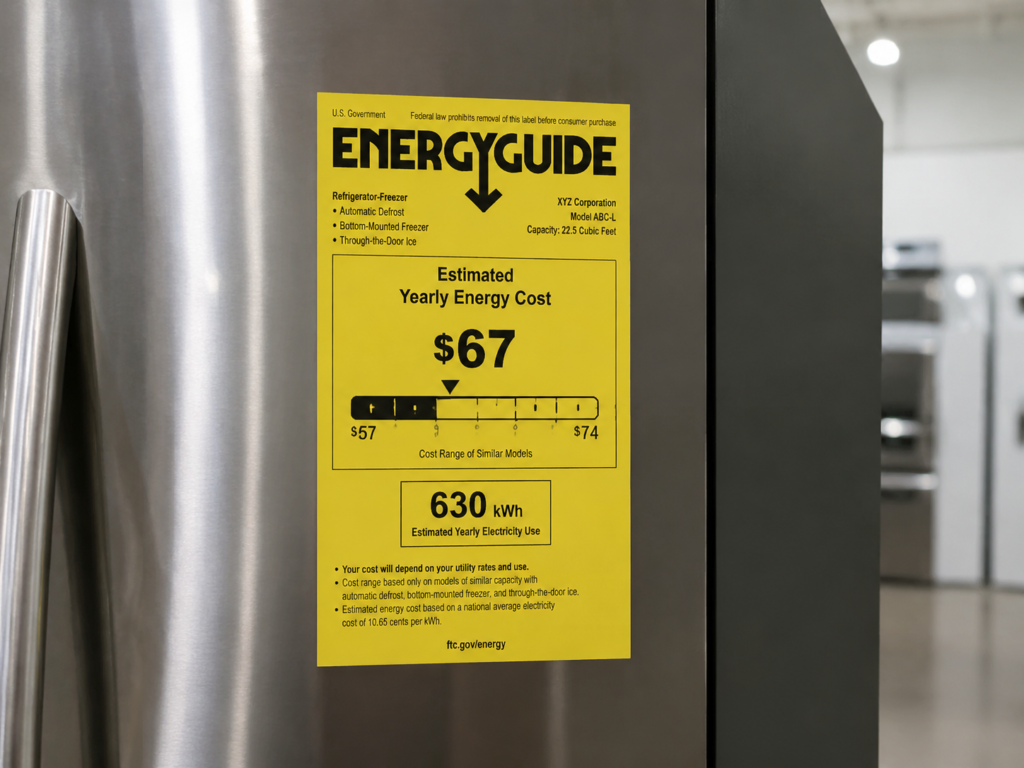
The first type is popular circulation classification for major home appliances/HVAC products: The DOE has not issued a unified official 1-6 level rating label for all major home appliances. Instead, it sets market access thresholds through minimum energy efficiency standards, and requires most household/commercial appliances such as refrigerators, air conditioners, water heaters, and washing machines to affix the yellow EnergyGuide label, which marks the estimated annual electricity consumption, annual energy cost, and the energy efficiency range of similar products. Practitioners and consumers are accustomed to roughly dividing products of the same category into 1 to 6 tiers from low to high according to energy efficiency thresholds, which are commonly referred to as “Level 5” and “Level 6”. This is a colloquial term in the circulation field, not a mandatory official labeling system of the DOE. The larger the number, the higher the energy efficiency, and Level 6 is usually the highest tier in this popular classification system.
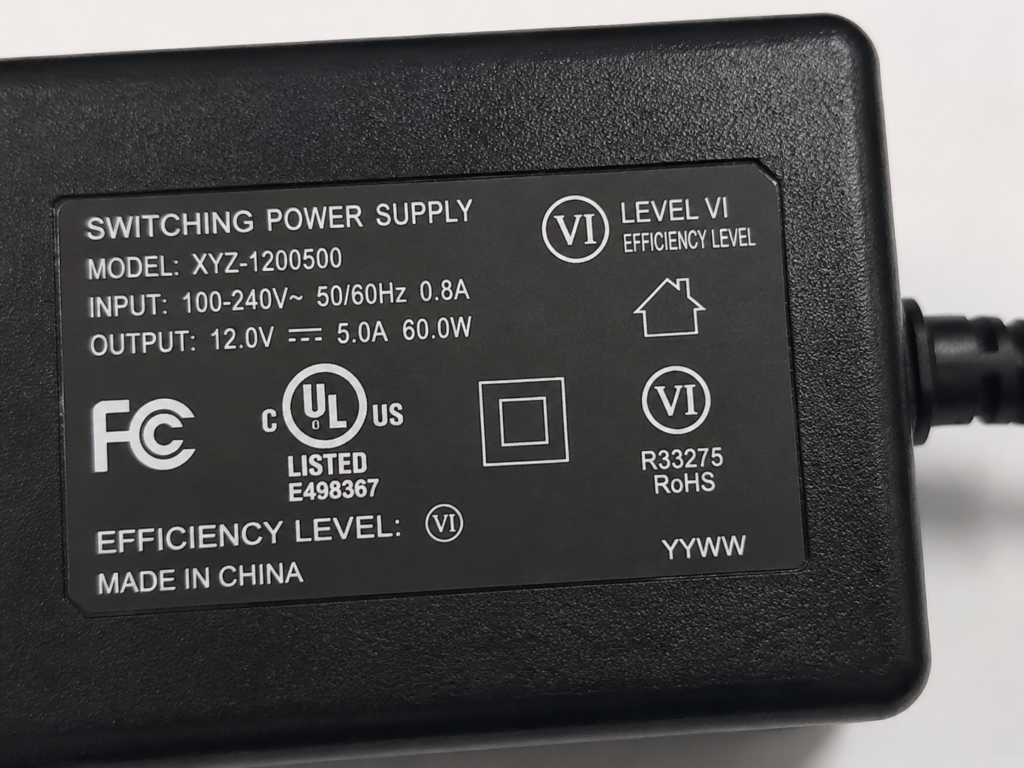
The second type is official Level rating for external power supplies: referring to commonly used accessories such as chargers, adapters, and router power adapters. The DOE has clear official rating rules, marked with Roman numerals Level V (Level 5) and Level VI (Level 6). The rating is usually printed on the nameplate, sticker, or silk-screened information on the power supply housing; the larger the Roman numeral, the higher the energy efficiency.
Regardless of the system, the underlying foundation is the energy efficiency rules formulated by the U.S. Department of Energy (DOE). For product categories explicitly regulated by the DOE, newly sold products in the U.S. market need to meet the corresponding minimum energy efficiency standards. However, the label formats, testing rules, and whether official rating labels are used vary by product category. The core function of this set of rules is to measure the energy-saving level of products with a unified standard, which not only facilitates user purchase but also regulates the overall energy consumption level of the market. The general logic is simple: whether it is Arabic numerals or Roman numerals, the higher the rating, the higher the energy efficiency, and the less electricity is wasted.
Here are three core concepts that are most easily confused, to help you avoid basic pitfalls in advance:
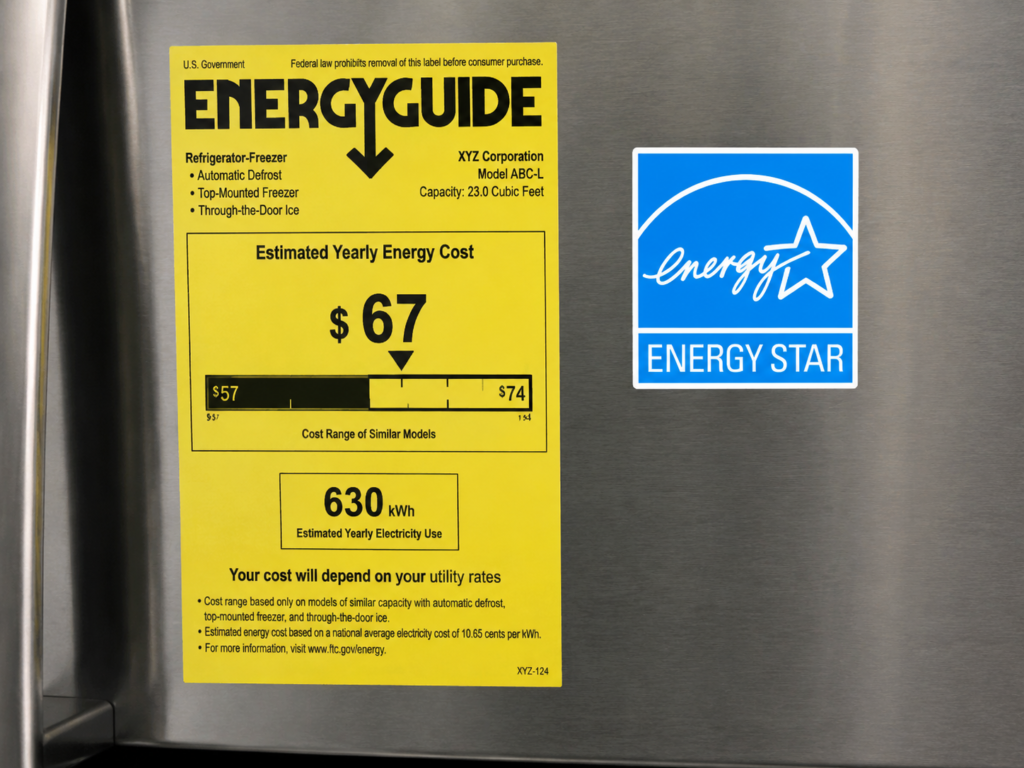
First, DOE energy efficiency ratings are not equivalent to Energy Star. Energy Star is an independent voluntary high-efficiency label jointly launched by the U.S. Environmental Protection Agency (EPA) and the DOE. It usually requires products to be better than the DOE’s mandatory minimum standards, but it does not belong to the DOE’s rating system and cannot be directly equated with DOE Level 5/Level 6.
Second, “Level 6” for major home appliances and “Level VI” for external power supplies are completely different things. The testing methods and compliance thresholds of the two systems are different; you cannot say “Level 6 means the same energy savings”.
Third, “high efficiency” and “energy saving” promoted by manufacturers are not equivalent to officially recognized energy efficiency ratings. Marketing copy has no legal effect; only official labels and registered ratings are valid.
Some people may think, it’s just saving a little electricity, how big can the difference be? That’s not the case. First, the energy efficiency difference of high-power products will be directly reflected in long-term electricity bills. For an air conditioner used for five or six years, the difference in electricity bills between different ratings may be hundreds of dollars. Second, high-energy-efficiency products often generate less heat and lower noise, providing a better user experience. They may also meet the requirements of various energy efficiency subsidies, allowing direct price reductions at the time of purchase. Finally, if you are engaged in cross-border business or supplying products to the U.S. market, the DOE minimum energy efficiency standard is a mandatory compliance requirement; products that fail to meet it cannot be sold on the market at all.
2. Follow These Rules First When Comparing Energy Efficiency Ratings
Many people immediately ask “how big is the difference” when they see Level 5 and Level 6, but energy efficiency comparison has prerequisites; comparisons that do not meet the prerequisites are completely meaningless.
All category comparisons must meet three general prerequisites:
First, they must be products of the same system, same category, and same specification. For example, both are 1.5-ton fixed-frequency household air conditioners, or both are 20W single-output mobile phone chargers. Cross-system, cross-category, and cross-specification comparisons have no reference value.
Second, they must be the same version of the DOE standard. DOE energy efficiency standards are not static; the standard thresholds will be adjusted in different periods. The high energy efficiency rating of the old standard may not even be as good as the medium rating of the new standard.
Third, both must be officially recognized energy efficiency ratings. Self-printed “high efficiency” or “energy saving grade” by manufacturers does not count; they must be registered compliance ratings.
On this basis, different categories have additional comparison restrictions: For major home appliances, the same usage scenario (household and commercial cannot be mixed for comparison) and the same energy type (the energy efficiency logic of electric water heaters and gas water heaters is completely different) must be ensured. For external power supplies, the same output type (single output and multi-output, fixed voltage and variable voltage cannot be mixed for comparison) and the same power range (a 10W charger and a 100W laptop power adapter are not comparable) must be ensured.
There are also several situations where ratings absolutely cannot be directly compared:
The first is categories not covered by the DOE, such as low-power niche appliances, pure battery-powered products, and internal power supplies of equipment. These are originally not within the scope of DOE energy efficiency regulation, so any ratings marked on them are not valid.
The second is cross-national and cross-regional standards. The energy efficiency ratings of the European Union and China have different testing calibers from those of the DOE and cannot be directly mapped.
The third is the energy efficiency of complete machines and components. For example, the overall energy efficiency level of an air conditioner is not equal to the energy efficiency rating of its internal compressor; the testing conditions for the two are completely different.
Then how do you check the real DOE energy efficiency rating of a product? It’s actually very simple: First, look for the official label. For major home appliances, look for the yellow EnergyGuide label on the body; for external power supplies, look for the rating mark on the housing. This is the most direct way. If you are still unsure, you can go to the DOE’s official energy efficiency database and enter the product model to query the registration information, which is the most authoritative. The priority of information credibility is: product nameplate/compliance documents > instruction manual > brand official website > e-commerce promotional copy. Never only look at the large-character promotions on the product detail page.
3. Core Differences: Calculate the Difference Between Level 5 and Level 6 by Category
Now that we understand the comparison rules, let’s talk about the actual differences between Level 5 and Level 6 under the two systems respectively. You can directly correspond to the category you want to buy.
Major Home Appliances/HVAC: Level 5 vs Level 6 in Colloquial Circulation Classification
This type of product has high power and long usage time, so the impact of energy efficiency differences is the most obvious. The following differences are all empirical ranges under the same category, same capacity, same functional configuration, and same version of testing standards. They are not the unified difference value of the DOE for all major home appliances. The specific values are subject to the product’s EnergyGuide label and DOE database registration.
The core difference is the energy-saving effect. Under the same specifications, Level 6 products in the colloquial classification usually have 5%-15% lower annual electricity consumption than Level 5 products, and the difference mainly comes from the energy efficiency improvement during the full-load operation phase. To give a specific example: For a 1.5-ton household air conditioner used 1000 hours a year, the annual electricity consumption difference between Level 5 and Level 6 is about 50 to 150 kWh. Based on the average U.S. residential electricity price of $0.12 per kWh, it saves about $6-18 a year. The above is an example calculation; the actual electricity price is subject to the current data released by the U.S. Energy Information Administration (EIA) and local utility charges. In general, the higher the product power and the higher the usage frequency, the higher the absolute amount of electricity saved.
The second is the difference in purchase cost. Under the same configuration, Level 6 products are usually 5%-20% more expensive than Level 5 products, and the price difference is more obvious in major home appliance categories, mainly because high-energy-efficiency products require higher-specification core components (such as compressors, insulation layers, high-efficiency motors), resulting in higher material costs. A reminder here: Do not blindly believe in Level 6. Some Level 6 products from small brands may meet the core energy efficiency indicators, but have reduced configurations of non-core components such as door seals, circuit boards, and housings, so their overall stability is not as good as Level 5 products from leading brands.
The third is the difference in compliance and policy benefits. In the common circulation classification caliber, Level 5 usually corresponds to a medium-high energy efficiency level, and Level 6 usually corresponds to a higher energy efficiency level. However, whether a product meets the DOE minimum access threshold cannot be judged solely by the colloquial classification; it must be based on the EnergyGuide label, DOE database registration, or official compliance documents. In terms of subsidy policies, federal, state, or local energy efficiency subsidies and rebates are usually determined based on specific categories, efficiency indicators, Energy Star certification, CEE ratings, or project documents, and will not directly use the “Level 5/Level 6” marked by merchants as the basis. High-energy-efficiency models are often more likely to meet subsidy conditions, but before purchasing, you need to check the current project pages of the IRS, DOE, Energy Star, or local power companies for confirmation. In some areas with high electricity prices or active energy-saving policies, local power companies or state-level energy-saving projects may offer more generous rebates for higher-energy-efficiency models, and the difference is sometimes quite obvious. The specific ratio, application conditions, and validity period are all subject to the current local projects.
The fourth is the difference in user experience and lifespan. More efficient core components usually have lower thermal load, which theoretically helps extend service life and reduce operating noise. However, actual lifespan and noise performance are affected by many factors such as brand materials, installation quality, and daily maintenance, and cannot be directly inferred solely from the energy efficiency rating. A boundary must be drawn here: Energy efficiency ratings only measure the ability to save electricity, and do not represent the number of functions, workmanship quality, or safety performance of the product. These still depend on the brand and specific configuration.
External Power Supplies/Adapters: Official Level V vs Level VI
Mobile phone chargers, laptop power adapters, router power adapters, and camera power adapters we use daily all belong to this category. The logic of their energy efficiency differences is completely different from that of major home appliances, mainly reflected in their performance under different load conditions:
First is the difference in energy efficiency requirements, viewed in three load states:
The first is no-load power consumption, which is the power consumption when the input side of the power supply is connected to electricity and the output end is not connected to a device or has no load at all. The no-load power consumption of Level VI is usually more than half lower than that of Level V, and the no-load power consumption of low-power power supplies can even reach about 0.1W. Don’t underestimate these few tenths of a watt; many people keep their router and set-top box power supplies plugged in all year round, and the difference in standby power consumption over a year is actually quite a lot.
The second is light-load efficiency, which corresponds to low-load scenarios such as device standby, low-power operation of routers, and slow charging of mobile phones at night. The efficiency advantage of Level VI is more obvious, which is why many people feel that Level VI power supplies don’t get hot when plugged in.
The third is full-load efficiency, which is when the power supply operates at full power, such as charging a laptop at full speed. The efficiency of Level VI is usually 1 to 3 percentage points higher than that of Level V, and the difference is more prominent for high-power power supplies above 50W.
Then there is the difference in actual power saving and heat generation. Because the power of power supplies is generally not large, the amount of money saved per unit is actually not high: For low-power adapters below 10W, they only save $0.5 to $1 a year, which is almost unnoticeable. For high-power power supplies of 50W to 100W, if plugged in and used all year round, they can save $1 to $5 a year, depending on the usage time and local electricity prices. The difference in heat generation is more intuitive: Level VI power supplies of the same specification theoretically generate less heat due to higher efficiency, and the housing temperature is usually 2-5℃ lower than that of Level V. However, actual heat generation performance is also affected by housing material, internal heat conduction design, heat dissipation space, ambient temperature, and test position. You cannot judge whether it will definitely be cooler solely by the energy efficiency rating or housing material.
Next is the difference in purchase cost and compliance. For new power supplies from regular brands in the U.S. market now, Level VI is basically standard. For new products of the same brand and same specification, there is almost no price difference between Level VI and Level V, and it is even difficult to buy a new Level V power supply. On the contrary, some unbranded or old-model Level V power supplies may be 10% to 30% cheaper, but if these are newly produced conventional direct-plug power supplies, they may not meet compliance requirements for sale in the U.S. For corporate procurement or entry into e-commerce platforms, suppliers are usually required to provide a Level VI compliance statement.
Finally, there is the difference in user experience. Because Level VI power supplies generate less heat during no-load and light-load conditions, they do not get hot even when plugged in for a long time, making them suitable for placement in heat-sensitive places such as desktops, bedside tables, and enclosed power strips. But again, a boundary must be drawn: High energy efficiency does not mean faster charging speed, more supported fast charging protocols, or more stable output. These are related to the circuit design and materials of the power supply, and have no direct relationship with the energy efficiency rating. As for lifespan, theoretically, due to less heat generation and lower thermal stress, Level VI power supplies have a longer lifespan, but actual lifespan still depends on factors such as capacitors and overall design, and cannot be generalized.
4. Advanced Judgment: 3 Variables Affecting the Magnitude of the Difference (Intermediate Level)
If you already understand the basic differences and want to more accurately judge the cost-effectiveness of Level 5 and Level 6, you also need to know three variables that affect the magnitude of the difference. This content is useful when buying major home appliances or making bulk purchases.
The first variable is the impact of the standard version on the value of the rating. The DOE regularly reviews and updates energy efficiency standards by category. The update cycle usually spans several years, and the update frequency and effective date vary greatly by category, with no unified fixed cycle. That is to say, the high energy efficiency rating of the old version of the standard may only be equivalent to the medium rating of the new version, or even lower. The “gold content” of the rating changes with the version. The judgment method is very simple: just look at the standard release year and effective date on the energy efficiency label or nameplate.
Here we need to mention the special rules for external power supplies separately: After February 2016, most direct-plug external power supplies sold in the U.S. market are mandatory to meet the Level VI standard. Therefore, the new regular brand direct-plug power supplies you can buy now are basically Level VI. The old Level V ones are mostly inventory, original power supplies for old equipment, or special categories not within the mandatory scope.
The second variable is the impact of usage scenarios on actual benefits. The energy-saving advantage of Level 6 products is accumulated through long-term use: the higher the usage frequency and the longer the cumulative operating time, the more obvious the advantage of Level 6. For example, a home refrigerator runs all year round, so the benefit of Level 6 is much greater than that of a window air conditioner that is only used for a few months a year. In addition, the higher the local electricity price, the higher the cost-effectiveness of Level 6, and the faster the payback. There is also a small detail: in environments with extreme temperature and humidity or low input voltage, the energy efficiency difference between Level 5 and Level 6 will be slightly narrowed, because the efficiency of all products will decrease in extreme environments.
The third variable is the impact of product attributes on the difference. For major home appliances, the higher the power and the longer the designed service life, the greater the actual impact of energy efficiency differences. For example, for products that are used for more than ten years, such as refrigerators and central air conditioners, the long-term benefit of Level 6 is much higher than that of products that are replaced after two or three years, such as small fans. For external power supplies, for low-power products that are plugged in for a long time, the difference in no-load and light-load is more noticeable; for high-power products that often run at full load, the proportion of energy efficiency difference is smaller. For commercial equipment, because the average daily usage time is much higher than that of household use, the cumulative benefit of energy efficiency differences will be much larger than that of household use. It is more cost-effective to prioritize high-energy-efficiency products when making bulk purchases.
5. Pitfall Avoidance Guide: Common Misconceptions and True/False Rating Identification
There are many widespread misconceptions about DOE Level 5 and Level 6, and you can easily fall into traps if you are not careful. We have compiled the most common types.
First are the cognitive misconceptions common to all categories:
First, Level 6 is not necessarily more cost-effective than Level 5. If the product is used extremely infrequently, such as a backup air conditioner used only a few times a year or seasonal small appliances, the price difference of Level 6 may never be recovered. In this case, choosing Level 5 is more practical.
Second, the higher the energy efficiency rating, the better the overall quality of the product is not true. Energy efficiency ratings only measure the ability to save electricity, and have no direct relationship with the safety, number of functions, or workmanship quality of the product. Do not use energy efficiency as the only criterion for judging the quality of a product.
Third, “high efficiency” and “energy saving” promotions do not mean high energy efficiency ratings. Many merchants use vague terms like “high efficiency grade” and “energy saving model” to mislead consumers, but in reality, the product may just barely meet the minimum access threshold. It must be based on official labels and registration information, and marketing copy cannot be used as the basis.
Fourth, Level 6 products cannot be used to replace Level 5 products casually. Before replacement, be sure to match the core parameters first, otherwise it will not only be unusable but may also damage the equipment.
Then are the exclusive misconceptions for each category:
The most common misconception for major home appliances is equating the Energy Star label with DOE Level 6 in the circulation classification. Energy Star is an independent voluntary certification, and its requirements are usually higher than the DOE’s mandatory minimum standards, but it does not belong to the DOE’s rating system, and the two cannot be equated. The Energy Star threshold for some categories may be much higher than Level 6 in the colloquial classification, while for some categories, the threshold is only slightly higher than the minimum access threshold, depending on the current standard.
There are more misconceptions about external power supplies:
First, thinking that Level VI means safer. Energy efficiency and safety are two completely different sets of standards. Safety depends on third-party safety certifications such as UL and ETL, and has nothing to do with the energy efficiency rating.
Second, thinking that the same interface means universal use. When replacing a power supply, in addition to the interface size, you also need to match the core electrical parameters, otherwise it may not charge, or even burn out the equipment.
Third, thinking that old Level V models cannot be sold in the U.S. That’s not true. Level V power supplies can be sold for old inventory, repair parts, and special categories not within the mandatory scope. However, newly produced conventional direct-plug external power supplies sold to the U.S. market must meet the mandatory Level VI requirements, and it cannot be generalized.
Finally, here are three tricks to quickly identify false energy efficiency ratings:
First trick: Check if there is an official label. If a major home appliance does not have a yellow EnergyGuide label, or an external power supply does not have a rating mark on the housing, the so-called “high rating” is basically unfounded, so purchase with caution.
Second trick: Check official registration. If the rating of a model cannot be found in the DOE’s official energy efficiency database, it is most likely marked arbitrarily by the manufacturer, so don’t believe it.
Third trick: Be vigilant about abnormal prices. If a product claimed to be high-energy-efficiency has a price significantly lower than conventional products of the same configuration and rating, you should first verify the DOE database registration, product nameplate, compliance documents, and sales channel qualifications. Abnormal prices may come from normal promotions such as clearance sales and channel subsidies, but there may also be risks of configuration reduction, refurbishment, or false energy efficiency labeling. Don’t blindly chase cheap prices.
6. Practical Purchasing Guide: Choose Level 5 or Level 6 Based on These Points
After talking about so many differences and misconceptions, here is a simple judgment method for you. Just apply it directly when buying, no need to struggle.
Decision Logic for Major Home Appliances
If the following situations apply, prioritize choosing Level 6 in the colloquial classification: daily usage time of more than 2 hours, planned use of more than 5 years, living in a state with high electricity prices, and there are special subsidies for corresponding high-energy-efficiency products. In this case, the energy-saving benefit of Level 6 will quickly cover the price difference, making it more cost-effective for long-term use.
If the following situations apply, choosing Level 5 is sufficient: extremely low usage frequency (such as backup appliances, seasonal appliances), planned replacement or moving within 3 years, limited budget and no relevant subsidies. At this time, the benefit of Level 6 is not high, so there is no need to spend more money.
If you are still undecided, you can use the 1-minute quick judgment method: Step 1, confirm that the two products are of the same category and specification, and both have officially recognized energy efficiency ratings. Step 2, calculate the payback period: payback period = price difference between the two products ÷ estimated annual electricity savings. Step 3, if the payback period is within 3 years, choosing Level 6 is more cost-effective; if the payback period is more than 5 years, choosing Level 5 is more practical. For situations in between, it depends on your own budget and usage plan.
Decision Logic for External Power Supplies
If the following situations apply, prioritize choosing Level VI: new purchase in the U.S. market, power supply is plugged in for long-term use (such as power supplies for routers, cameras, set-top boxes), placed in enclosed or heat-sensitive locations, bulk purchase. Now Level VI is already the baseline for newly sold conventional products, and the price is not much higher, so it’s fine to prioritize it.
For scenarios of personal use, non-sale/non-new-sale compliance procurement, Level V is also completely acceptable: the original Level V power supply of old equipment has matching parameters and is in normal condition, the power supply is only used occasionally and unplugged after use, the budget is extremely low and the usage frequency is extremely low. However, if it is for new sale in the U.S. market, platform entry, bulk purchase, or replacement parts for sale, it must meet the current DOE Level VI compliance requirements, and Level V products cannot be used.
Here is a special reminder about the priority of replacing power supplies: First, match the output voltage first; if the voltage is wrong, it must never be used. Second, match the output current and power, which should be equal to or greater than the rated current of the original power supply. Third, match the interface size, polarity, and fast charging protocol. Fourth, confirm that the input voltage is compatible with the local power grid. Finally, consider the energy efficiency rating. Never sacrifice the matching of core parameters in pursuit of high energy efficiency, otherwise there will be safety hazards.
Finally, a general decision reminder: If you are purchasing new products in the U.S. market, prioritize choosing the version that meets the current DOE’s highest energy efficiency requirements. It will be more guaranteed in terms of both compliance and long-term user experience.
Summary
In general, by understanding the differences between DOE Level 5/Level 6, you can master three very practical abilities: First, you can accurately distinguish between two completely different “Level 5/Level 6” systems — the colloquial circulation classification for major home appliances and the official Level rating for external power supplies, and will not confuse them with Energy Star or energy efficiency labels of other countries. Second, you can combine your own usage scenarios and local electricity prices to judge whether Level 5 or Level 6 is more cost-effective for products of the same specification, so you won’t waste money. Third, you can quickly identify false energy efficiency ratings and avoid common pitfalls when purchasing and replacing products.