
Many electronic product practitioners entering the U.S. market for the first time are often confused by various certification abbreviations such as UL, ETL, FCC, and NRTL. NRTL is the core electronic product safety certification system for the U.S. market, which directly affects workplace use compliance, installation acceptance, and channel access. The following explains one by one from basic cognition, applicability judgment, certification requirements, process and cycle, authenticity verification to boundary distinction.
First, Understand: What Exactly is NRTL? (Must-Read for Beginners)
Plain-Language Explanation and Regulatory Logic
You can think of NRTL as a “third-party electronic product safety certification system endorsed by the U.S. government.”
Its operating logic is: The U.S. government does not directly issue safety certificates for products. Instead, it first audits the qualifications of third-party testing laboratories to confirm that they have the ability to carry out fair and professional safety testing. These laboratories that pass the audit are called Nationally Recognized Testing Laboratories (NRTL).
The official agency responsible for auditing laboratory qualifications is the U.S. Occupational Safety and Health Administration (OSHA for short). OSHA only regulates the compliance of laboratory qualifications and does not directly participate in product testing and certification issuance. All product certification work is completed by formal NRTL bodies.
The core purpose of this system is very clear: to ensure that electronic products do not cause safety accidents such as electric shock, fire, or mechanical pinching during normal use or in the event of foreseeable failures (such as fan stall, output short circuit, internal insulation failure, etc.). For products nominally intended for outdoor use, humid scenarios, or where standards require consideration of liquid effects, additional risks such as splashing and water ingress will be evaluated.
Why Do NRTL Certification? It’s More Than Just Compliance
The value of NRTL is reflected in four levels, and the lack of it may affect product market access and compliance:
The first is workplace regulatory constraints. OSHA has “recognition/approval” requirements for electrical equipment in U.S. workplaces within its jurisdiction, and conducts random inspections of workplaces. Non-compliant employers may face penalties; requirements for commercial and residential premises depend on local adopted electrical codes, the enforcement scale of AHJ (Authority Having Jurisdiction), product categories and procurement rules, and there is no unified mandatory conclusion nationwide.
The second is market access threshold. E-commerce platforms such as Amazon, offline large retailers such as Walmart and Home Depot, as well as B2B enterprise customers, generally take NRTL certification as a mandatory procurement requirement, and without certification, it is usually impossible to enter the supplier list.
The third is installation acceptance reference. If the product is a device that needs to be fixedly installed in a building, such as a ceiling lamp or a distribution box, the local AHJ responsible for electrical acceptance will often check the NRTL mark when visiting. Those that do not meet the requirements may not pass the installation acceptance, and the specific rules are subject to the local electrical code in force.
The fourth is risk prevention and control support. NRTL certification can be used as evidence of enterprise compliance management and due diligence design, reducing common safety design risks such as electric shock and fire through standardized testing; however, it cannot exempt product defect liability and recall obligations, and accident liability determination still needs to be combined with factors such as product defects, usage scenarios, warning instructions, and mass production consistency.
Beginner’s Pitfall Avoidance: 4 Most Common Misconceptions
People who are new to NRTL almost always fall into these pitfalls. Here we first clarify the boundaries to avoid detours:
The first misconception: UL certification is NRTL certification. Wrong. UL is a well-known NRTL body in North America, but it is just one of many formal bodies. As long as bodies such as ETL and CSA are recognized by OSHA, the NRTL certificates they issue have exactly the same legal effect, only market acceptance may differ.
The second misconception: With FCC certification, you don’t need to do NRTL. Wrong. The regulatory scopes of FCC and NRTL are completely different: FCC regulates electromagnetic compatibility and radio frequency, such as whether the product will interfere with TV and WiFi signals; NRTL regulates electrical safety, such as whether it will electrocute people or catch fire. The two do not replace each other, and products that trigger corresponding requirements need to be handled separately.
The third misconception: All electronic products are mandatorily required to have NRTL. Wrong. Low-risk small electronics powered purely by batteries and some products in specialized regulatory fields may not trigger general mandatory requirements, which need to be comprehensively judged in combination with scenarios and rules.
The fourth misconception: Having a test report means having NRTL certification. Wrong. NRTL is a complete certification system, not just sample testing. It also includes production control verification, mark use authorization, regular supervision and other links. Missing any link is not a formal certification, and a separate test report cannot be used as NRTL.
Which NRTL Bodies Are Formal?
The list of NRTL bodies recognized by OSHA and their recognition scopes are dynamically updated. The specific number, legal entity names and covered standards are subject to the NRTL Program page on the OSHA official website. Formal bodies that practitioners often contact include UL, Intertek (ETL), CSA, TÜV Rheinland, etc. Among them, there may be different certification-issuing entities under brands such as TÜV Rheinland and TÜV SÜD. You cannot only look at the brand logo, but should check the specific legal name, recognition location and corresponding standard scope in the OSHA NRTL list.
The core principle for judging the compliance of a body is very simple: all NRTL bodies recognized by OSHA issue certificates with exactly the same legal effect, only market acceptance may differ. Don’t just look at reputation. Just confirm two points: first, the body is on the OSHA official recognition list, and second, its recognition scope covers the safety standards of the corresponding product.
How to Judge Whether a Product Needs NRTL? 3-Step Quick Screening
It should be clarified first that the NRTL listing requirement is not solely determined by “whether it is an electronic product” or “whether it is connected to 120V mains power”. It is necessary to first confirm whether the product falls within the scope of OSHA-jurisdicted workplaces, or whether it is included in installation projects under the jurisdiction of local electrical codes and AHJ, and then comprehensively judge in combination with applicable product standards, sales channels and contract requirements.
You don’t need to memorize complex standard numbers. Follow these 3 steps to quickly complete the preliminary screening:
First step Check power supply: Is the product directly or indirectly connected to the U.S. mains power? For example, wall-plug chargers and power adapters are directly connected; power banks with charging function and wireless chargers, although they work with batteries, need to be connected to mains power for charging, which falls into the category that requires further evaluation.
Second step Check scenario: Is the product used in workplaces or commercial premises? Or is it a fixed installation type? For example, office printers, shop sign lights, and hard-wired ceiling lamps in residences all have high-demand scenario characteristics and require further verification of local rules.
Third step Check channel: Do sales platforms, retailers, or B-end customers explicitly require the NRTL mark? For example, some categories on Amazon mandatorily require NRTL certification. Even if the product may be in the exemption scope, it needs to be handled as long as the channel has requirements.
Among the first three steps, power supply and usage scenarios are mainly used to judge OSHA regulatory constraints and installation acceptance risks; channel requirements belong to the category of commercial access. Even if they are not within the OSHA mandatory scope, they may need to provide NRTL or equivalent safety certification due to platform or customer rules. It should be noted that the three-step judgment is only a preliminary screening tool: workplace use, fixed installation (need to be combined with local AHJ requirements), and clear channel requirements are high-priority evaluation scenarios, with relatively clear compliance or access requirements; while products that are indirectly connected to mains power, low-voltage with charging/lithium battery/heating functions are only in the risk reminder category, which is not directly equivalent to mandatory regulatory requirements. It is recommended to find a formal NRTL body for further evaluation before determining whether it needs to be handled, and do not draw conclusions blindly.
High-Demand Typical Product Categories
The following categories usually require key evaluation of NRTL needs under corresponding scenarios, for easy matching:
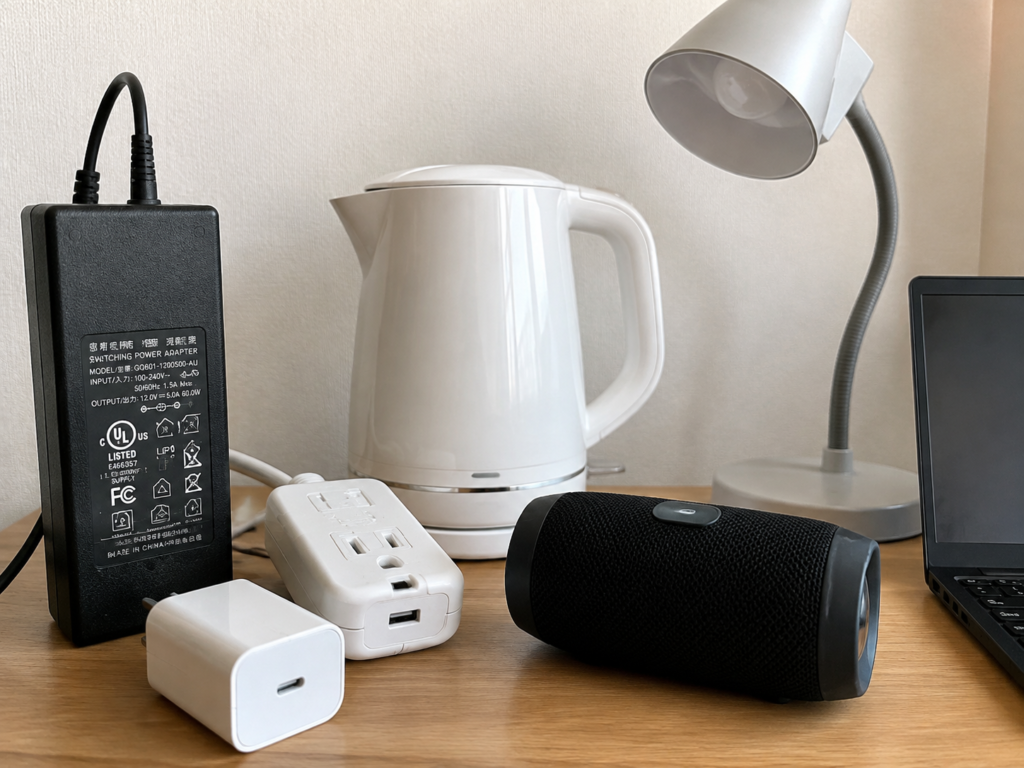
- Mains-connected category: When connected to U.S. mains power, used in workplaces, fixedly installed, or required by platforms/retailers/customers, chargers, power adapters, home appliances, lamps, IT/audio-visual equipment, etc. may require NRTL or equivalent recognized safety certification.
- Fixed installation category: Hard-wired lamps, power distribution equipment, wall-mounted controllers, etc., because they need to pass AHJ installation acceptance, most regions will require NRTL listing, subject to local regulations.
- Workplace use category: Industrial control equipment, laboratory instruments, office appliances, etc., fall within the scope of OSHA workplace supervision and usually need to meet recognition requirements.
- Low-voltage category with risks: Low-voltage products containing lithium batteries, charging circuits or heating functions (such as power banks, high-power wireless chargers, low-voltage hand warmers) need to evaluate certification needs in combination with usage scenarios and channel requirements.
Advanced Boundary: Exemption and Special Situation Judgment (Semi-Proficient)
If the product is not in the typical category, or is in a gray area, you can further judge through these key points:
First is pure battery-powered small low-risk consumer products: For example, calculators powered by button batteries, ordinary wired earphones without charging cases, etc., usually do not directly trigger OSHA general mandatory requirements, but if sales channels or customers have clear requirements, they still need to be handled.
Second, special attention should be paid: low voltage does not mean automatic exemption. Even low-voltage products, as long as they have lithium batteries, charging functions or heating functions, may still need to be evaluated due to fire risk, and cannot be judged as not requiring certification solely by voltage.
Third is products in specialized regulatory scenarios: In-vehicle electronics (mostly under the jurisdiction of the U.S. Department of Transportation), some medical electronics (mostly under the jurisdiction of the FDA), military products, etc., mostly have corresponding federal or industry regulatory systems, and may not follow the general NRTL listing process, but may still have safety certification requirements due to sales scenarios, installation methods, customer specifications or local regulations. It is necessary to confirm with the corresponding regulatory department or certification-issuing body, and cannot be generally considered exempt.
In addition, the same product with different uses has different applicable standards. For example, the same power supply used for a laptop and for a lamp must meet different safety standards and cannot be used universally.
There is also an easily overlooked point: second-hand electrical products that fall within the mandatory scope need to maintain valid NRTL certification. Second-hand electronic products sold in the United States, as long as they fall within the scope of regulatory requirements, must also comply with the rules. The specific requirements depend on the sales region and product category. Don’t think that second-hand products are not regulated.
What Does NRTL Certification Check? 4 Core Dimensions Explained Thoroughly
NRTL safety requirements are systematic. You don’t need to memorize standard numbers, just understand the logic.
Matching Logic of Safety Standards: No Need to Memorize by Heart, Look at the Purpose
NRTL safety standards are matched according to product categories and uses. IT audio-visual, power supply and battery, lamps, home appliances, and industrial equipment have corresponding standards. You don’t need to query a large number of standard numbers by yourself, and the body will assist in matching.
There are two key points to understand: first, purpose determines the standard. The same product used in different scenarios (such as household vs. industrial use, indoor vs. outdoor) may have completely different applicable standards; second, standards are updated regularly. You don’t need to memorize version numbers, just subject to the current valid version recognized by the NRTL body.
There is also a practical tip: if the key safety components in the product (such as power supply, fuse, shell flame-retardant material) already have NRTL certification, some items can be reduced or exempted during the whole machine test, which saves both time and cost.
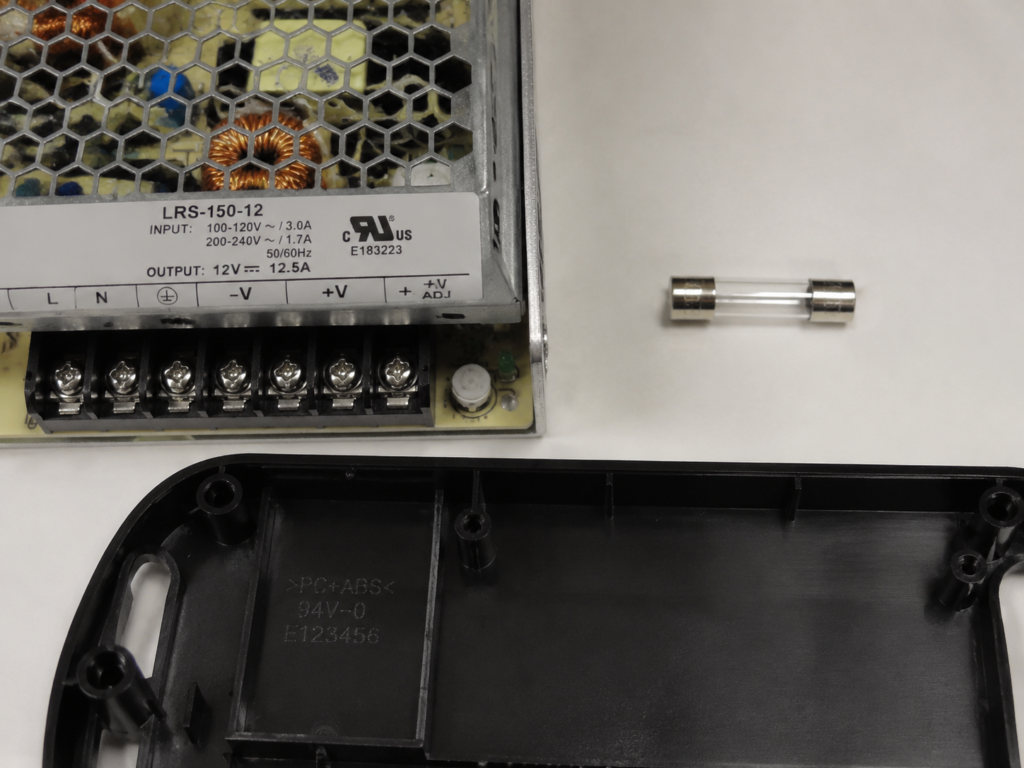
4 Core Dimensions of Product Safety Inspection
No matter what category, NRTL safety inspection basically revolves around four dimensions:
The first is electrical safety: During normal use or in the event of foreseeable failures (such as loose internal wires), there will be no dangerous voltage in places accessible to users, insulation performance meets standards, grounding is reliable, and leakage current is within the safe range, which will not cause electric shock injury.
The second is fire prevention and temperature rise: Materials such as shells and circuit boards must have flame retardancy and will not easily spread fire; the temperature during normal use cannot exceed the safety value, and even under abnormal working conditions (such as fan stall, output short circuit), the temperature will not be high enough to cause a fire.
The third is mechanical safety: The product shell must not have sharp edges that cut users, moving parts (such as the paper compartment of a printer, the door of a home appliance) must not have pinching risks, and the whole machine must be placed stably and will not easily tip over and hit people.
The fourth is environmental adaptability: If the product is used outdoors or in humid scenarios such as bathrooms, it must additionally meet waterproof, dustproof and other requirements, and cannot leak electricity or get dusty when exposed to a little rain.
Labeling and Instructions: Mandatory Requirements That Are Easily Overlooked
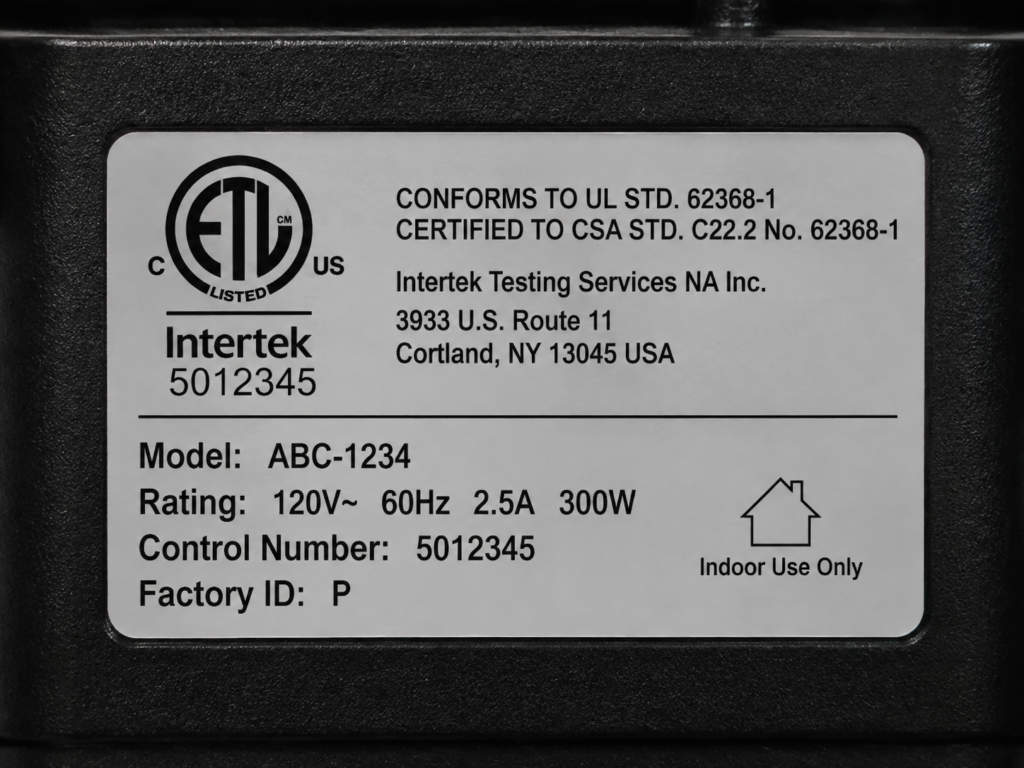
Many people think that as long as the product passes the test, it is fine. In fact, labeling and instructions are also an important part of certification. If they are unqualified, you still can’t get the certificate. The specific labeling requirements are subject to the authorization document of the certification-issuing body and applicable product standards. Not all products are required to mark all fields. Common required information includes: the official mark of the NRTL body, the unique file number/control number or factory identifier, product model, manufacturer/applicant information, rated voltage/frequency/power or current, applicable environment mark, etc.; common parameters for products facing U.S. mains power are 120V/60Hz or wide voltage input, subject to the actual design of the product.
Most products need to be equipped with English safety warnings and use/installation instructions that meet standard requirements. The specific content depends on the product category, and cannot only have Chinese or simple schematic diagrams.
In addition, the label must be firm and wear-resistant, and will not fall off or become blurred during normal use. Printed labels that fall off with a scratch usually do not meet the requirements. In some special scenarios, alternative labeling methods such as on-site evaluation labels may be used, which must ultimately meet the acceptance requirements of the local AHJ.
Full NRTL Certification Process: How Many Steps From Application to Certificate Issuance
Understanding the complete process in advance and making preliminary preparations can effectively reduce the probability of rework.
Pre-Application Preparation: Do These 4 Things to Avoid Detours
Many people have slow certification progress because they do not do a good job in preliminary preparation, repeatedly supplementing materials and modifying samples. Before applying, you must first get these things done:
The first is demand confirmation: Clarify the purpose of certification (whether it is to meet OSHA regulations, platform requirements or customer designation), the usage scenario of the product, and the model range to be covered, to avoid choosing the wrong standard and wasting effort.
The second is body selection: Be sure to check the official OSHA list first to confirm that the body is formal and its recognition scope covers the corresponding product standards. Don’t just listen to the agent’s recommendation.
The third is data preparation: Sort out the product specification sheet, circuit schematic diagram, key component list (mark which ones have certification), internal and external photos of the product, label and instruction draft in advance. Providing all of them at one time can speed up the evaluation.
The fourth is sample preparation: Provide representative samples that can work normally and represent the mass production level; if there are multiple models in the same series, explain the differences between different models in advance, and share tests if possible to save costs.
Typical Continuous Listing Project Process
After preparation, the conventional continuous listing certification process usually includes the following links. The specific steps may vary depending on the body and certification scheme:
The first step is evaluation and quotation: Send the materials to the body, and the body will confirm the applicable standards, test cycle, and total cost. If there is no problem, sign the contract.
The second step is sample testing: Send the samples to the body’s laboratory for testing. If the test fails, you need to rectify and retest. Doing a good job in product compliance design in the early stage can save a lot of time and money.
The third step is initial production control verification: After the test is passed, the body will usually verify the quality control capability of the production site to confirm that the factory has the ability to stably produce qualified products and ensure that the mass-produced products are consistent with the test samples. Whether the initial on-site inspection is implemented depends on the certification-issuing body, certification project and product category.
The fourth step is certificate issuance and authorization: After both the test and production control verification are passed, the body will issue formal certification documents and authorize the use of the corresponding NRTL mark on the product. This is the real acquisition of certification.
Getting the Certificate Is Not the End: Pay Attention to These Maintenance Requirements
Many people think that once they get the certificate, it’s done once and for all. In fact, the validity of NRTL certification needs to be continuously maintained, and violating the rules will invalidate the certificate:
First is production consistency requirement: Mass-produced products should be consistent with the samples that passed the test at that time, especially key safety components (such as power supply, fuse, insulating materials). You cannot casually change suppliers or models. You need to apply in advance for changes and implement them only after approval by the body.
Second is regular supervision: The body will carry out regular factory supervision according to the certification scheme. The inspection frequency, method and cost depend on the product risk level, body rules and service agreement. Usually, the higher the risk of the product, the higher the supervision frequency.
Third is changes must be reported in advance: If you want to replace key safety components, modify the product structure, add new models, or adjust product parameters, you must apply to the certification body in advance, and the change can only be made after the body’s evaluation is passed.
If you do not abide by these rules, such as replacing key safety components or modifying the product structure without approval, it may lead to suspension, revocation of listing or termination of mark use authorization; if you continue to use the mark, you may be required to rectify, remove from shelves, recall by customers, platforms, AHJ or regulators, and bear corresponding accident liability.
Core Influencing Factors of Cost and Cycle (Semi-Proficient)
There is no fixed price for NRTL certification, which is mainly affected by four factors:
The first is product complexity: The more complex the product, the more test items, the higher the cost and the longer the cycle. For example, the certification cost and cycle of industrial control cabinets are definitely much higher than those of ordinary mobile phone chargers.
The second is test pass rate: If the first test fails, you need to rectify and retest, which not only requires additional retest fees, but also lengthens the cycle. Therefore, it is very important to do a good job in product compliance design in the early stage.
The third is number of models: Multiple models of the same series, if the difference is very small (such as only different appearance colors, completely consistent internal structure), can share most of the tests without testing all; if the difference is very large (such as several times the power difference, completely different structure), additional test items are required, and the cost will also increase.
The fourth is production inspection-related costs: Links such as initial production control verification and regular supervision may incur separate fees depending on the body’s charging rules and inspection frequency. Many people do not include this money in the budget at the beginning, so they should reserve it in advance.
How to Verify the Authenticity of NRTL Certification? Official Verification Methods
Whether you are purchasing products or doing certification yourself, you must know how to verify the validity of certification to avoid getting non-compliant certificates.
1-Minute Appearance Preliminary Screening: Quickly Identify Suspicious Certification
First look at the label of the product itself. Those with the following characteristics are most likely non-compliant certification (except for special permitted scenarios):
- Only paper certificates can be provided, and there is no corresponding NRTL mark on the product body;
- The mark does not match the body name, for example, the UL mark is printed but the certificate is issued by ETL;
- The certification scope does not match the product, for example, the certification is for a power supply but it is pasted on the whole machine rice cooker;
- The label is blurry and falls off with a scratch.
A formal NRTL label usually has a clear official body mark, a unique file number/control number, the rated parameters are consistent with the product, and the label is firm and wear-resistant. It should be noted that appearance preliminary screening is only a quick investigation method and cannot directly determine that the certification is invalid: in some special scenarios, alternative methods such as on-site evaluation labels may be used, or the product is too small to print the complete mark. The final validity needs to be confirmed in combination with the body’s certificate or AHJ requirements.
Official Verification Process (More Reliable Verification Method)
Appearance preliminary screening is only the first step. To confirm the validity, you need to go through official channels for verification:
First step Check body qualification: Log in to the NRTL database on the OSHA official website to confirm that the certification-issuing body is on the OSHA recognition list and its recognition scope covers the safety standards of the corresponding product. If the body itself is not recognized by OSHA, the certificate is definitely invalid.
Second step Check product filing: Prioritize through the public certification directory of the corresponding NRTL body (also known as the Listing query system), enter the file number, product model or brand to search for the corresponding filing information. Note: The public directory search granularity and open scope of different bodies vary, and some bodies may not disclose all model information to the public.
Third step Check information: After finding the filing information, carefully check the model, manufacturer, and applicable scenario, which must be completely consistent with the actual product. Even a one-word difference in the manufacturer’s name or an extra suffix in the model may indicate misappropriated certification and is invalid.
If the public directory cannot match, you can first check whether the entered file number, model, brand, and factory name are accurate; if it still cannot be confirmed, you can require the certificate holder to provide the official authorization certificate issued by the body, or directly contact the certification-issuing body for verification. Those who cannot provide valid certificates will be temporarily treated as having no valid certification.
Verification Points for Special Scenarios
There are several special situations that require extra attention during verification:
The first is OEM/ODM private label products: If you find a factory to do OEM and paste your own brand, you must confirm that the certificate covers your brand and model. Otherwise, the certificate belongs to the factory and only corresponds to the factory’s own brand, and you cannot use it.
The second is component certificate: For example, the power supply NRTL certificate provided by the supplier only represents the compliance of the component itself. When verifying the whole machine certification, it is necessary to confirm that the whole machine has an independent NRTL listing.
The third is North American dual certification: For the U.S. market, it is necessary to confirm that the mark corresponds to the U.S. recognition scope of NRTL, and for the Canadian market, it is necessary to confirm whether it covers Canadian safety standards. Common “c”, “us”, “c/us” marks can be used as quick identification clues: marks with “c” or “Canada” usually mean meeting Canadian safety requirements, marks with “us” or “USA” usually mean meeting U.S. safety requirements, and those with “c/us” at the same time mean covering the requirements of both places; for example, cUL and cETL only represent Canadian applicable certification issued by UL and ETL, and cULus and cETLus are dual certifications covering both the U.S. and Canada. Special attention should be paid: mark characters are only quick identification clues. The final validity needs to confirm that the certification-issuing entity is a recognized body in the corresponding jurisdiction (the U.S. needs to be an OSHA-recognized NRTL), and the certification scope covers the corresponding product standards and usage scenarios, and cannot be directly judged solely by mark characters. Certification with only Canadian marks does not automatically meet U.S. NRTL requirements, and conversely, ordinary U.S. NRTL marks do not automatically cover the Canadian market.
Don’t Confuse: Boundaries Between NRTL and Other Compliance Requirements
Many people easily confuse NRTL with other certifications. Here we clarify the relationships of several common types.
NRTL vs FCC: Not Mutually Replaceable, Often Need to Be Handled Simultaneously
This is the most easily confused pair. It is clearer to compare with a table:
| Comparison Item | NRTL | FCC |
|---|---|---|
| Regulatory Content | Electrical safety, fire prevention, mechanical safety | Electromagnetic interference, radio frequency compliance |
| Core Purpose | Prevent products from electrocuting people, catching fire, and injuring people | Prevent products from interfering with other equipment and legally use wireless functions |
| Regulatory Body | OSHA (recognizes laboratory qualifications) | U.S. Federal Communications Commission |
| Applicable Products | Electrical products connected to mains power/with electrical safety risks, specifically judged by power supply, scenario, channel | Electronic products containing digital circuits that generate radio frequency energy, and wireless transmitting devices; specifically judged by FCC equipment categories |
In practical applications, products that are connected to mains power and have digital/wireless functions may need to meet NRTL and FCC requirements respectively; whether pure low-voltage wireless products need NRTL still needs to be comprehensively evaluated in combination with battery, charging, heating functions and scenarios, channel requirements, specifically determined according to their respective applicable rules.
NRTL vs Other U.S. Domestic Compliance: No Overlap, No Mutual Replacement
NRTL only manages electrical safety. There are many other compliance requirements in the United States, which do not overlap with it and cannot replace each other:
- Energy efficiency requirements (DOE/state-level): DOE and state-level energy efficiency requirements such as California stipulate indicators such as energy consumption and standby power consumption for specific regulated products. Some regulated models in categories such as power supplies, lamps, and home appliances may need to additionally meet energy efficiency-related testing, registration or labeling requirements, specifically depending on product definition, test procedures and sales regions.
- CPSC consumer product safety: The U.S. Consumer Product Safety Commission (CPSC) manages injury prevention and recall of consumer products. Even with NRTL certification, if the product still has safety problems, it still needs to be recalled if necessary. NRTL cannot exempt recall liability.
NRTL vs Overseas Certification: Cannot Be Used Directly Interchangeably
Many people ask, with EU CE or CB report, can it be directly used as NRTL? The answer is no:
- EU CE certification: It is a compliance requirement of the EU, completely independent of the U.S. NRTL system, and cannot directly replace NRTL.
- CB report: That is, the test report of the International Electrotechnical Commission CB system, which can be used to assist in applying for NRTL, can reduce some test items and save time and cost, but cannot be directly used as NRTL. You still need to go through the complete NRTL process, make up difference tests and production control verification.
- Canadian certification: The U.S. NRTL mark does not automatically cover the Canadian market. Special North American dual certification (such as cULus, cETLus) is required to sell in both countries at the same time.
Advanced Pitfall Avoidance: Core Precautions From Application to Sales (Semi-Proficient)
When encountering boundary ambiguous situations, you can prioritize reviewing four types of high-risk scenarios: low-voltage product risks, validity of second-hand product listing, distinction between component and whole machine certification, and overseas report conversion progress. The specific judgment logic can refer to the corresponding chapters above.
Practical Pitfall Avoidance Points: For Application/Purchase/Sales
Sort out core precautions in three links:
Application end: When selecting a body, you must check OSHA qualifications, and do not choose unqualified bodies; any changes that affect safety must be reported in advance, and do not modify without permission; absolutely do not purchase certificates or misappropriate certification; the consequences of being discovered are severe; key safety components should preferably have NRTL certification first, which can save test time and cost.
Purchase end: For high-risk mains products, suppliers must be required to provide NRTL certificates, and the validity must be verified; it is necessary to confirm that it is the whole machine certification, not a separate component certification.
Sales end: Before sales, confirm that the product is within the certification coverage, and do not sell beyond the scope; if it is a private label product, be sure to confirm that the certificate covers your own brand and model, otherwise you cannot use the mark.
Special attention should be paid: selling mandatory products without certification requires bearing safety accident compensation liability and regulatory penalty liability. Do not take chances.
Quick Decision Checklist Before Handling
If you are preparing to do NRTL certification, first clarify these questions, which can effectively reduce the probability of rework:
- Confirm the demander: Who requires the certification? Regulations, platforms, retailers or customers? Is there a designated body or standard? For example, if the customer specifies UL, do not do other bodies’ certification to avoid customer non-recognition.
- Confirm the certification object: Clarify whether the certification is for the whole machine or components. Component certification cannot replace whole machine certification.
- Confirm the status of key components: Do key safety components such as power supply, fuse, and shell material have NRTL certification? Is the supply chain stable? If suppliers are changed frequently, subsequent changes will be very troublesome.
- Confirm the usage scenario: Is the product used indoors or outdoors? Household, commercial or industrial use? Different scenarios have different applicable standards. If you choose the wrong one, it will be a waste of effort.
Summary
After reading this article, you can not only preliminarily screen the NRTL certification needs of products through the three-step method of power supply type, usage scenario, and sales channel, but also confirm the authenticity and applicable scope of certification through appearance preliminary inspection combined with the official verification process; you can not only clarify the boundaries between NRTL and various compliance requirements such as FCC, energy efficiency, and CE, but also avoid the core pitfalls in the application, procurement, and sales links. If the product is in a boundary scenario, it is recommended to submit materials to an OSHA-recognized NRTL body that covers the corresponding standards for evaluation.